
Match Shower Door Glass to Hardware: Aluminium Alloy vs 304 Stainless
Aluminium alloy and 304 stainless steel are not two answers to the same shower door question. On a SHKL enclosure, 6463 aluminium alloy carries the extruded parts — top and bottom rails, tracks and frame profiles — while 304 or 316 stainless steel, or brass, carries hinges, brackets, handle bars and the fittings that take a moving load. Glass is a third decision: thickness, treatment, and whether the panel is tempered or laminated.
Get the split wrong and the door still opens; it just ages badly at the coating edge or at the pivot. This guide covers how the three decisions lock together, using two current SHKL models — KL-AS5104310 and KL-AS5511312 — as reference points, and sets out what to confirm before an order is released.
SHKL, or Foshan SHKL Sanitary Ware Co., Ltd, has manufactured bathroom products since 2004 and runs a dedicated shower door factory in Foshan, Guangdong, alongside production in Qingyuan and Ho Chi Minh City.
The decision you are actually making
Buyers usually arrive with one question — aluminium or stainless — and leave with three: which material for each component, which glass build, and which opening type. The three are coupled, and the order in which you settle them decides whether the result is coherent.
- Opening type sets the load path. Sliding and bypass doors hang the panel from a top track; hinged and pivot doors carry it at two or three points on the wall or on a fixed panel.
- Load path sets the material callout. Long, constant-section perimeter parts suit extrusion; small, highly loaded moving parts suit stainless.
- Glass build sets the mass the hardware has to control. A 10 mm or 12 mm panel is a different engineering proposition from a 6 mm or 8 mm panel on the same opening.
The most common way to lose the material decision is to choose the finish first. SHKL's finish list — chrome, brushed nickel, brushed gold, mirror gold, matte black, gun black and white — runs across the hardware range, so the colour of a hinge tells you nothing about whether its base is aluminium alloy or stainless steel. Material and finish are specified separately.
Two production routes, and why it matters at drawing stage
Aluminium hardware starts as an extrusion: a die produces a constant profile in long lengths, which is then cut to size and machined. Stainless hardware starts as tube, sheet, bar or casting, and is cut, bent, welded and polished. The two routes use different tooling and different finishing steps, which is why the material callout has to be fixed on the drawing before production is scheduled rather than negotiated afterwards.
SHKL lists 6463 aluminium alloy, 304/316 stainless steel and brass as its hardware materials, across sliding, hinged, pivot, walk-in and folding designs. The documentary side has moved too. In the United States, shower-door glazing must meet 16 CFR 1201 Category II and carry the required marking, with the importer issuing a GCC; CPSC certificate eFiling applies to general imports from 8 July 2026 and to FTZ entries from 8 January 2027. Canada applies the Glass Doors and Enclosures Regulations (SOR/2016-174) with the referenced CAN/CGSB-12.1-M90 tests. Australia works through the NCC, AS 2208 Grade A safety glazing and AS 1288. The EU route runs through the Construction Products Regulation, the harmonised EN 14428 reference, a Declaration of Performance and CE marking, while Great Britain accepts CE or UKCA.
Glass performance is the part of the specification with explicit, testable references. Hardware material and grade are usually confirmed on the drawing, the approved finish sample and the sample door — so the drawing is where the aluminium-versus-stainless argument actually gets settled.
The component split: where aluminium ends and stainless begins
The working rule is simple. Put extruded, perimeter-defining parts in aluminium alloy, and put moving or load-bearing parts in stainless steel or brass. The reasoning behind the rule is worth knowing, because it is what lets you challenge a quotation.
Mass and load path
For a given section, aluminium alloy is the lighter of the two materials. That matters most on sliding and bypass doors, where the top track carries the panel and a lighter rail reduces what the building fixing has to take. As glass moves from 6 mm or 8 mm up to 10 mm or 12 mm, the balance shifts back toward hinges, rollers and brackets — which is exactly where stainless steel earns its place.
Forming and jointing
An aluminium rail is a continuous profile cut to length, so corners are mitred or machined and the section stays consistent along the whole run. A stainless hinge or handle bar is a fabricated part with visible joint finishing, which is why weld preparation and polishing quality show up in the appearance of the finished door. In service, a replacement extrusion is cut to length, while a fabricated part is a discrete item to keep on the spares list.
Surface behaviour in a wet room
304 stainless resists humid bathroom air without a decorative coating, because the chromium in the alloy forms a passive surface layer. Aluminium alloy depends on its finish — anodized, painted or powder-coated — for both appearance and protection, so coating integrity at cut ends, screw holes and clamp faces becomes the maintenance point to watch. Neither material is maintenance-free: hard water, abrasive cleaners and construction residue affect both.
Where each shows age first
An aluminium frame usually shows age first at a damaged coating edge or around a fixing, where bare alloy is exposed. A stainless hinge usually shows age first as surface staining from residue left after installation, or as wear at the pivot. Stainless is a material family, not a promise against staining — 316 is the grade to discuss where chloride exposure is higher, such as coastal sites or bathrooms close to a chlorinated pool.
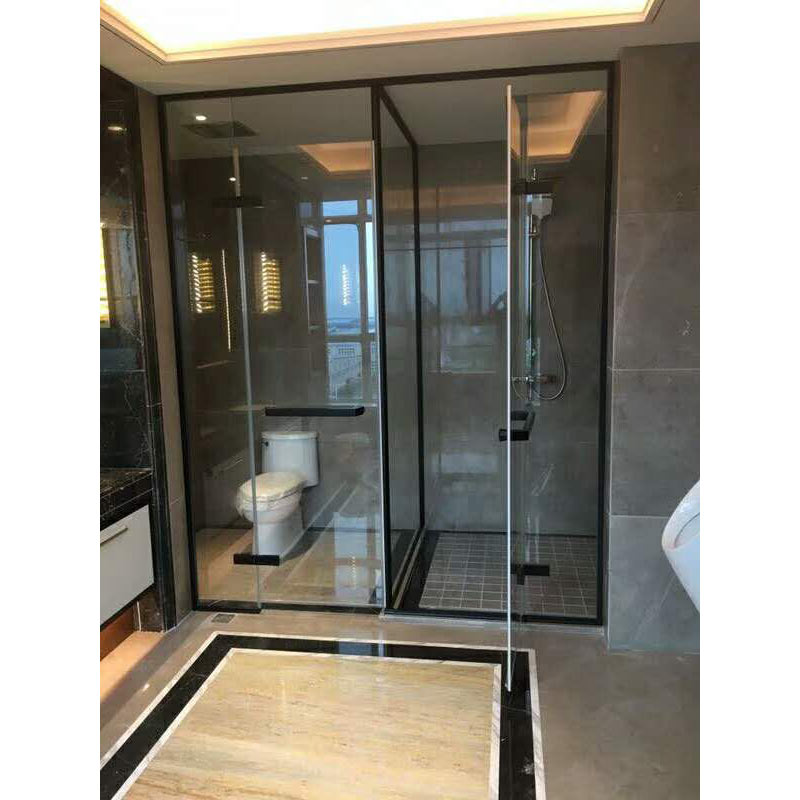
Glass: seven treatments, one property that never changes
Whatever the treatment, shower door glass has to be safety glass. The treatment changes light, privacy and cleaning effort; it does not change the safety requirement. SHKL's standard glass is tempered, in 6, 8, 10 and 12 mm, and laminated glass is also produced: tempered sheets are permanently bonded through EVA interlayers at high temperature, so broken fragments stay on the film instead of falling free.
These are the seven treatments buyers most often ask about, and what each one actually changes:
- Clear. Maximum light through the enclosure and the easiest surface to inspect for chips or staining. Water spotting is most visible here, so clear glass rewards a squeegee habit.
- Tinted. Reduces transmitted light and glare, and changes the apparent colour of the bathroom. Tone reads differently at full panel size than on a small sample, so approve it at the size it will be installed.
- Laminated. Adds fragment retention rather than decoration. It is the option to specify where a broken panel must stay in its frame — a documented SHKL order for Thailand used safety laminated glass with an anti-shatter design.
- Flute (reeded). Vertical texture gives partial privacy and a repeating line that hides dried droplets, at the cost of more edges to clean.
- Chemically frosted. An etched surface diffuses light for privacy while keeping the room bright; it shows fingerprints more readily than clear glass.
- Easy-clean. A surface treatment that changes how water sheets off, which reduces — but does not remove — cleaning. Abrasive pads and aggressive descalers shorten its working life.
- Film-coated (stick-film). An applied film for privacy or pattern. The film edge is the vulnerable part, so specify how it is trimmed and protected at the frame or hinge line.
A note on what is confirmed. SHKL's published glass list covers tempered clear, frosted, misty, silk-printed, stick-film, easy-clean and EVA laminated glass, and the company lists SGCC, PAS-Mark and CE among its glass certifications. Where a project specifies a tinted or fluted build, confirm it against the approved sample and drawing rather than assuming it from the model number: the model identifies the door, not the glass build.
Matching the pair to the project
The same door model can serve a family bathroom and a hotel bathroom, but not with the same material and glass callout. The difference is not quality — it is what the door has to survive.
| Consideration | Residential bathroom | Commercial hospitality |
|---|---|---|
| Typical opening | Hinged, pivot or frameless enclosure in a fixed layout | Sliding, bypass and hinged doors repeated across many identical rooms |
| Hardware emphasis | Stainless hinges and handle with a light aluminium or minimal frame | Stainless hinges, brackets and rollers, plus a defined spare-part list |
| Glass emphasis | Clear or easy-clean, 8–10 mm, matched to the wall fixing | Laminated where fragment retention is specified; consistent build across the room set |
| What to lock first | Wall fixing and panel weight | Certificate set for the destination and approval of one sample room |
Two documented SHKL orders show the same model family in different specifications. A 190-unit custom shower door order for Australia was supplied against Australian safety standards, with smooth installation and correct sizing cited as the outcome. A 110-unit order for Thailand used safety laminated glass with an anti-shatter design. Both records list KL-AS5104310 and KL-AS5511312 among the applicable models — the same doors, specified differently for two markets.
Step by step: from drawing to release
- Fix the opening type and panel size. Sliding, hinged, pivot, walk-in or folding, then the actual glass dimensions, because they set mass.
- Set the load path, then the material. Mark each component as extruded perimeter or moving load point, and call out 6463 aluminium alloy, 304/316 stainless steel or brass accordingly.
- Choose the finish. Chrome, brushed nickel, brushed gold, mirror gold, matte black, gun black or white — confirmed on a physical sample, not on a screen.
- Choose the glass build. Thickness from 6, 8, 10 or 12 mm, then treatment, then tempered versus laminated.
- Match the documents to the destination. 16 CFR 1201 Category II and GCC for the US; SOR/2016-174 for Canada; AS 2208 and AS 1288 for Australia; EN 14428 with a DoP and CE for the EU; SGCC or PAS-Mark where the buyer specifies them.
- Write the customization scope down. SHKL accepts size, colour, material, finish, hardware, logo and design-style customization on OEM orders, and works from buyer drawings or detailed requirements.
- Approve a sample or trial order. Regular shower-product sample orders take 15–20 days, and customer logos and packaging can be applied.
- Release production. Lead time is 30–45 days with 100% inspection; packaging options are corrugated cartons, honeycomb cartons or wooden cases, and third-party on-site inspection is accepted.
- Plan logistics and spares. Shower enclosure HS codes are 7610 9000 00 and 7308 9000 00; the warranty runs two years, with remote after-sales consultation and spare-part supply behind it.
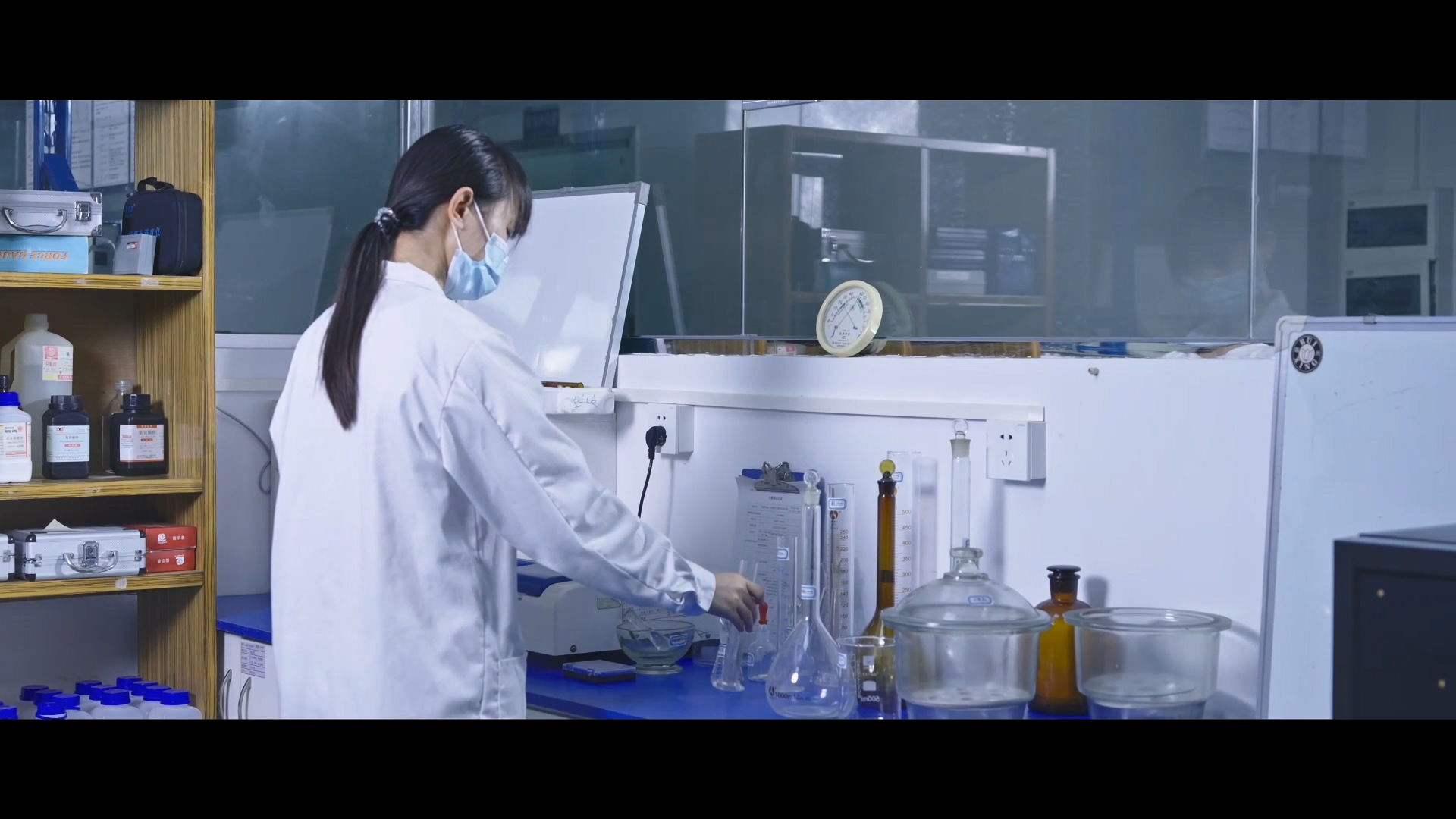
Comparison table: aluminium alloy vs 304 stainless
The table sets out the design roles and the qualitative behaviour of the two materials as they are used on shower doors. It is a specification aid, not a test result, and it does not rank one material above the other — both are supplied, and the right split depends on the component.
| Dimension | 6463 aluminium alloy | 304 stainless steel |
|---|---|---|
| Typical role | Top and bottom rails, tracks, frame profiles, long runs | Hinges, brackets, handle bars, pivot fittings |
| Mass for a given section | Lighter | Heavier |
| Forming route | Extruded profile, cut to length, machined corners | Tube, sheet, bar or casting; cut, bent, welded, polished |
| Surface protection | Anodized, painted or powder-coated finish carries appearance and protection | Passive surface layer; no decorative coating required |
| First sign of wear | Coating damage at cut ends, screw holes and clamp faces | Surface staining from installation residue; wear at the pivot |
| Strongest fit | Perimeter parts and sliding or bypass rails | Moving load points, high-cycle doors, chloride exposure in 316 |
| Finishes offered by SHKL | Chrome, brushed nickel, brushed gold, mirror gold, matte black, gun black, white — across the hardware range | |
| What to confirm on the drawing | Alloy grade, coating specification, cut-end sealing | Grade (304 or 316), joint finishing, cleaning after installation |
FAQ
What glass certification should be on file before a shower door ships?
It depends on the destination, and one certificate rarely covers all of them. For the United States, shower-door glazing must meet 16 CFR 1201 Category II with the required marking and a GCC issued by the importer, and CPSC certificate eFiling applies to general imports from 8 July 2026 and FTZ entries from 8 January 2027. Canada applies SOR/2016-174 with CAN/CGSB-12.1-M90 tests and expects compliance records kept for at least four years. Australia expects Grade A safety glazing under AS 2208, with glass selection and installation to AS 1288. The EU route needs EN 14428 performance evidence, a Declaration of Performance and CE marking. SGCC is a voluntary third-party scheme often written into buyer specifications, and SHKL lists SGCC, PAS-Mark and CE among its glass certifications. Confirm the exact set against the final product classification, not the glass alone.
Can the same door be supplied with either hardware material, and can hardware be ordered separately?
SHKL's shower door hardware is offered in 6463 aluminium alloy, 304/316 stainless steel and brass, and customization covers material, finish and hardware as separate items on an OEM order. The model number identifies the door; the material callout lives on the approved drawing, so confirm it explicitly for KL-AS5104310 or KL-AS5511312 at quotation stage rather than inferring it from the model code. Shower-door hardware is also available for individual sale, which matters for refurbishment work and for distributors carrying a spares line.
What drives the cost difference between aluminium and stainless hardware?
Ask for the quotation to be split by component, because the material decision is only visible when it is separated from the glass. The main drivers are the mass of the part, the number of forming and finishing steps, the glass build it has to control, the order quantity and the compliance evidence required for the destination. A single blended price per door hides all of it. Once the quote is split, the useful comparison is between two complete specifications for the same opening — not between an aluminium frame price and a stainless hinge price.
Can we check a sample or run a trial order first?
Yes. SHKL provides samples to check quality and accepts trial orders, with customer logos and packaging supported. Regular shower-product sample orders take 15–20 days. A sample is the right place to judge finish colour, glass tone, edge quality and how the door feels in operation; it is not proof of long-term performance across a full hotel room set, which is why a trial room and a pre-shipment inspection are worth building into the schedule.
What are the production lead times, warranty and after-sales terms?
Production lead time is 30–45 days, with 100% inspection and a choice of corrugated carton, honeycomb carton or wooden case packing; third-party on-site goods inspection is accepted. Shower enclosures carry a two-year warranty, supported by remote after-sales consultation and spare-part supply. For a project-level view of the range, the current catalogue can be downloaded from the SHKL brochure, and a component-level quotation against your drawing is the fastest way to test whether the aluminium-versus-stainless split you have in mind is the one you actually need.
Next step. Send the opening dimensions, the glass build you want and the destination market. SHKL will come back with a component-level specification covering hardware material, finish, glass treatment and the compliance documents the project needs.
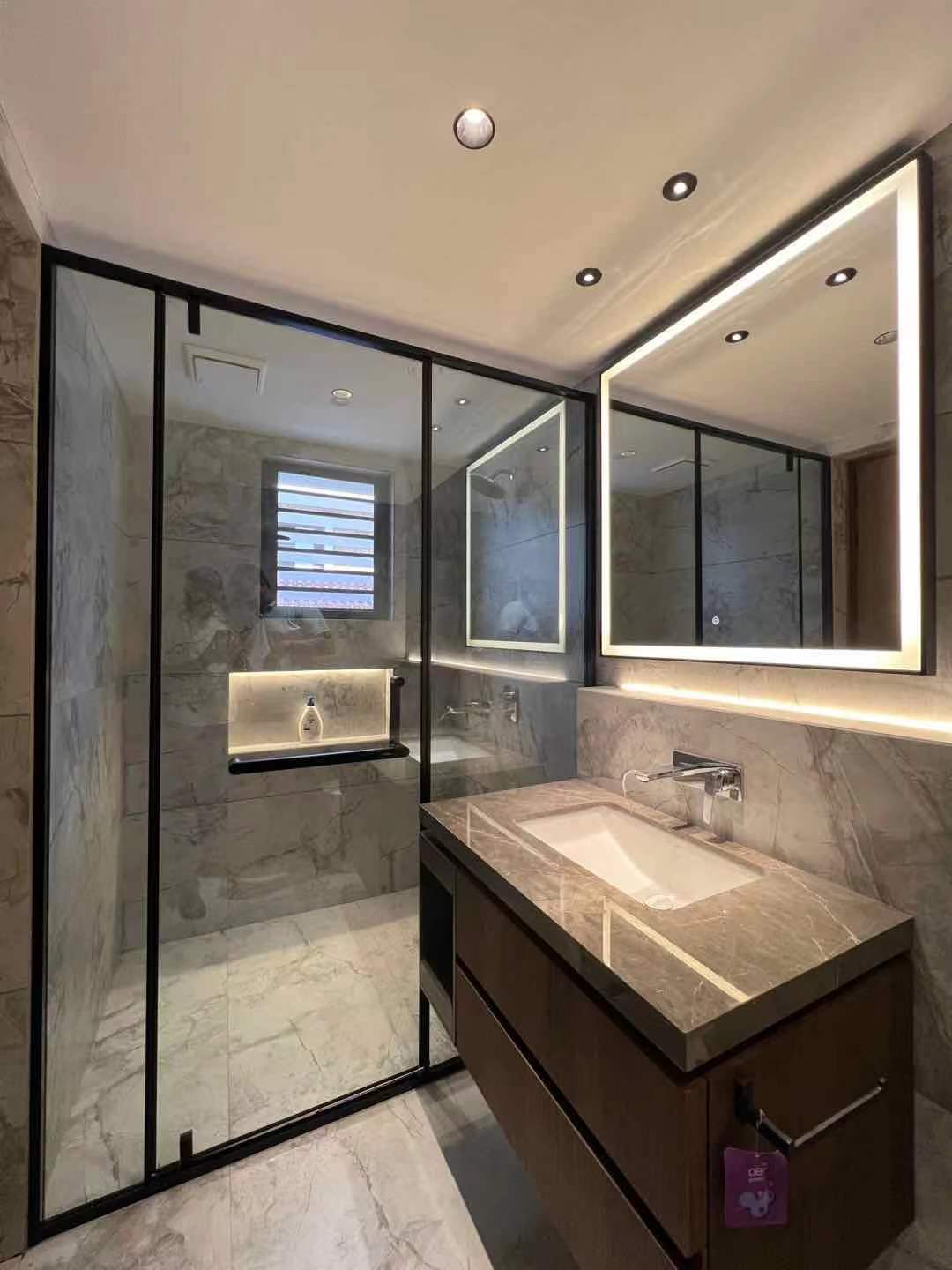
Conclusion
The material question resolves once it is asked per component instead of per door. Extruded perimeter parts — rails, tracks, profiles — belong in 6463 aluminium alloy, where light mass and a constant section do the most work. Moving and load-bearing parts — hinges, brackets, handle bars, pivots — belong in 304 stainless steel, or 316 where chloride exposure is higher. Glass is settled separately: 6, 8, 10 or 12 mm tempered as standard, laminated with EVA interlayers where fragment retention matters, and a treatment chosen for privacy, light or cleaning rather than for appearance alone.
Models such as KL-AS5104310 and KL-AS5511312 show why the drawing carries the decision: the same door has shipped to an Australian order specified against local safety standards and to a Thai order built around laminated anti-shatter glass. Neither was better. Each matched its market, and that match was made on paper before production began.
Have Questions or Need More Details?
Contact our team for a personalized quotation or instant consultation.
Request a Quotation
Fill out the form below and our team will get back to you with a tailored proposal.
WhatsApp Direct Chat
Prefer to chat in real-time? Message us on WhatsApp for instant assistance & quick answers.
- Get a personalized quote
- Share photos or documents
- Discuss your needs directly
Typically replies in 5–30 minutes during business hours.