Shower Door Compliance in 60 Seconds: Glass, Hardware & Spec Checks
Shower Door Compliance in 60 Seconds: Glass, Hardware & Spec Checks
Most shower door specification problems are not discovered on site. They are discovered on the purchase order, after a model number, a hardware material and a glass finish have already been committed in writing. The three checks below take roughly twenty seconds each: confirm the hardware base material, confirm which glass craftsmanship options are genuinely available, and confirm the intended application scope. Each check is written as a question to put to a supplier, because a compliance claim that cannot be answered in one sentence is not a specification — it is a marketing line.
Why Vague Answers Pass as Specifications
Three phrases cause most shower door specification disputes: “stainless steel”, “safety glass” and “ISO certified”. Each sounds precise, and none of them is precise enough to order against.
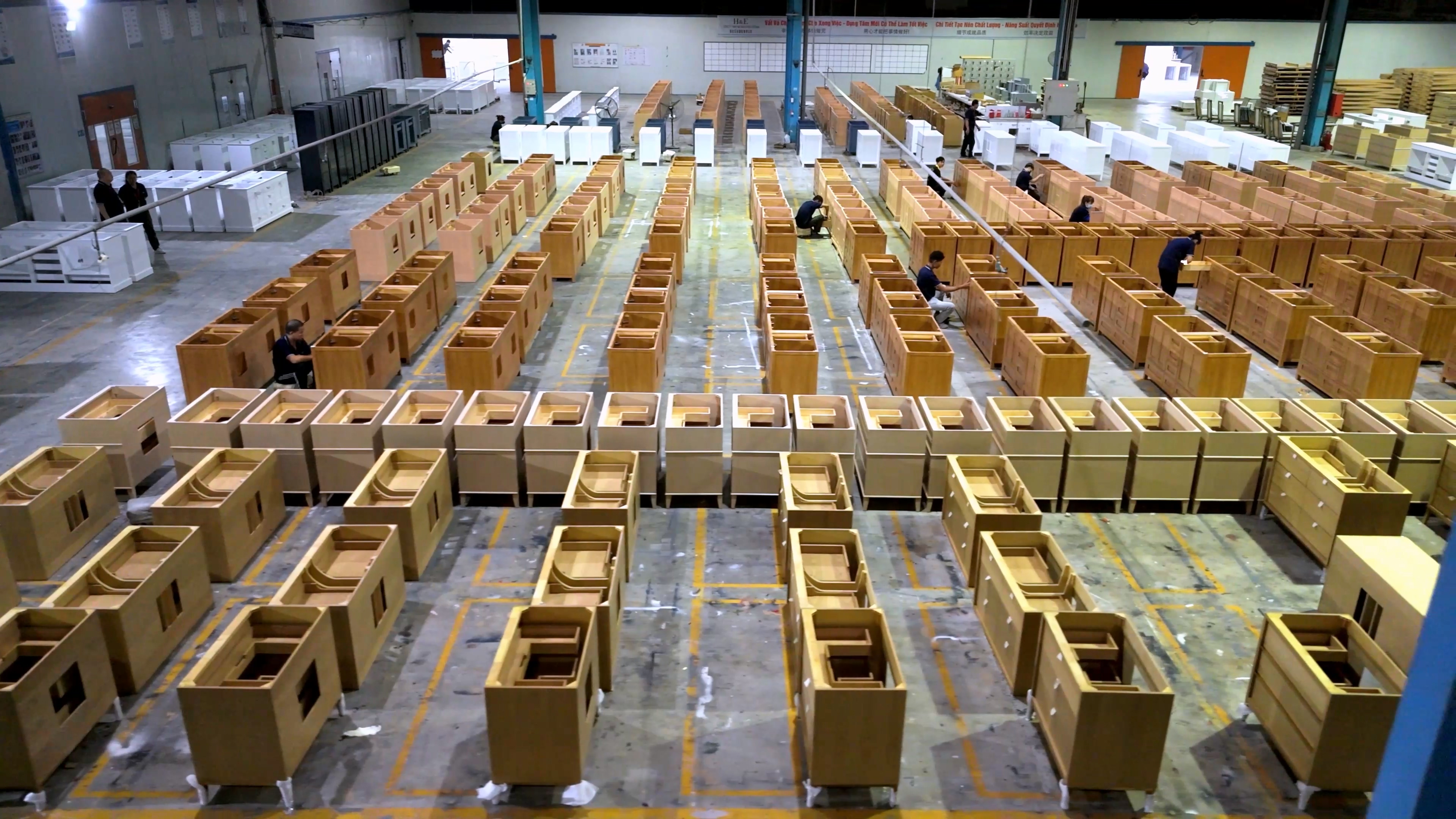
“Stainless steel” without a material family. Shower door hardware is not built from one metal. SHKL (Foshan SHKL Sanitary Ware Co., Ltd), a bathroom manufacturer established in 2004 with a 100,000 m² production base in China and a 40,000 m² factory in Vietnam, builds its shower door hardware in two distinct families: 304 stainless steel and aluminium alloy. Both appear in the same catalogue, on different model numbers. A quotation that says “stainless steel hardware” without naming the base material and the model leaves the buyer with nothing to verify.
“Safety glass” without a craftsmanship option. Glass is not a single input. The craftsmanship options listed across the SHKL shower door range are clear glass, tinted glass, laminated glass, flute glass, chemically frosted glass, easy-clean and film-coated. A supplier can legitimately offer some of these and not others on a specific model. The buyer who quotes “frosted” and receives “chemically frosted” — or the reverse — has a mismatch that was never written down.
“ISO certified” without the scope line. A certificate number is easy to list. What matters is the scope printed beside it. Certificates are issued against defined product categories, and a scope line that does not name the product being purchased is not evidence for that product.
For buyers sitting between Evaluation and Execution, this is the actual risk: without three specific answers, quotations cannot be compared, samples cannot be checked against a reference, and a shipment cannot be objectively accepted or rejected. The 60-second scan exists to close that gap before the purchase order is issued.
What the Market and the Standards Actually Say
Demand for shower enclosures continues to expand. The global shower doors market was valued at USD 3.84 billion in 2025 and is projected to reach USD 6.39 billion by 2034, according to Dataintelo. Within that market, frameless shower doors accounted for approximately 48.5% of product-category revenue in 2025, and Asia Pacific held a 35.2% regional revenue share in the same year — both figures from Dataintelo’s shower doors market report.
Regulatory expectations are equally clear at the material level. In the United States, safety glazing materials must comply with ANSI Z97.1-2026 and CPSC 16 CFR 1201 for impact and shatter behaviour. In Europe, shower enclosures must meet the EN 12150 standard for thermally toughened soda lime silicate safety glass.
The gap a buyer has to fill: standards describe what a glazing material must do. They do not tell you which hardware base material a specific catalogue model uses, which glass craftsmanship options are actually produced for that model, or whether the supplier has delivered that model into residential or hospitality projects. That layer is built from three questions — and it takes about a minute.
The Three Checks That Do the Work
Check 1 — Hardware Base Material: Ask for a Material, Not an Adjective
The fastest way to separate two visually similar shower doors is to ask one question: for this exact model number, what is the hardware base material?
Across the SHKL shower door range, hardware splits as follows:
- 304 stainless steel hardware: KL-AS5577310 (hinge shower door), KL-AS5511312 (sliding shower door), KL-AS001-1 (shower screen).
- Aluminium alloy hardware: KL-AS5104310 (frameless shower door), KL-AS5507310 (hinge shower door), KL-AS5608212 (sliding shower door), KL-AS5605110-5 (bathtub shower door), KL-AS5210422 (arc shower door).
A usable answer names both the material and the model in one sentence. An unusable answer uses the range as a whole — “our hardware is stainless steel” — because the range contains both families, and the buyer is only ordering one model.
That said, the split is not a ranking. Aluminium alloy hardware supports configurations that include frameless, hinge, sliding, bathtub and arc formats, and it is a legitimate specification choice. 304 stainless steel hardware is typically specified where sustained moisture exposure and repeated hinge load are the buyer’s main concerns. The right question is not “which metal is better” but “which metal is on this model, and does that suit this project’s environment and maintenance regime”.
Check 2 — Glass Craftsmanship: Confirm the Options for Your Model
Glass craftsmanship is where buyer and supplier most often talk past each other. Rather than asking “what glass do you offer”, ask the supplier to confirm which of these options can be produced on the model being ordered:
- Clear glass
- Tinted glass
- Laminated glass
- Flute glass
- Chemically frosted glass
- Easy-clean
- Film-coated
SHKL lists this full set of craftsmanship options across its shower door model range, including on KL-AS5577310, KL-AS5511312 and KL-AS001-1 in the 304 stainless steel family, and on KL-AS5104310, KL-AS5507310, KL-AS5608212, KL-AS5605110-5 and KL-AS5210422 in the aluminium alloy family.
The practical value of asking option by option is that it forces a per-order confirmation rather than a catalogue claim. Laminated glass is a good example of why this matters. In Thailand, 110 units built with safety laminated glass and an anti-shatter design were installed for bathroom applications; the project met local safety standards, installation ran smoothly and customer satisfaction was high. For a buyer in a market with comparable expectations, “can you produce laminated glass on this model, and can the sample show it” is a more useful question than “is your glass safe”.
Check 3 — Application Scope: Residential Construction or Commercial Hospitality
The third check is the one buyers skip most often, and it is the fastest to answer. All eight SHKL shower door models listed above carry the same stated application scope: residential construction and commercial hospitality. The buyer’s question is not whether the scope exists, but whether the supplier has actually delivered that model into the environment being specified.
Ask: “Has this model been supplied for residential construction, commercial hospitality, or both — and can you point to a reference?”
Reference cases make the answer concrete. An Australian project installed 190 units of model KL-AS5511312 for bathroom shower applications; the products met Australian safety standards, installation was smooth, and customer satisfaction was high. A second reference from Thailand covers 110 units for bathroom applications with safety laminated glass and anti-shatter design, meeting local standards.
This check matters because hospitality and residential projects place different demands on an enclosure. Hospitality bathrooms see higher turnover, shared use and repeated cleaning, while residential projects place more weight on layout fit and long-term appearance. The same model can serve both, but a buyer deserves to know which one the supplier has actually validated in practice — and which reference they are standing behind.
Run the Scan: A 60-Second Question Sequence
The checklist works as a sequence rather than a document review. Read the quotation, then work down these steps.
- Identify one model number. Not the range, not the collection — the single model on the purchase order.
- Ask for the hardware base material. The answer must be 304 stainless steel or aluminium alloy, tied to that model.
- Ask for the glass craftsmanship options available on that model. Request the list, not a single generic term.
- Ask for the application scope. Residential construction, commercial hospitality, or both — with one reference.
- Read the certificate scope line, not the certificate logo. A certificate number only helps if the scope names the product category being purchased.
- Confirm the acceptance criteria. These belong in the order, not in a follow-up email after production.
- Confirm the commercial terms. Minimum order quantity, delivery terms and payment terms should be settled before the order is placed.
- Log the four answers on the order. Hardware material, glass option, application scope and acceptance criteria — written down, on one page.
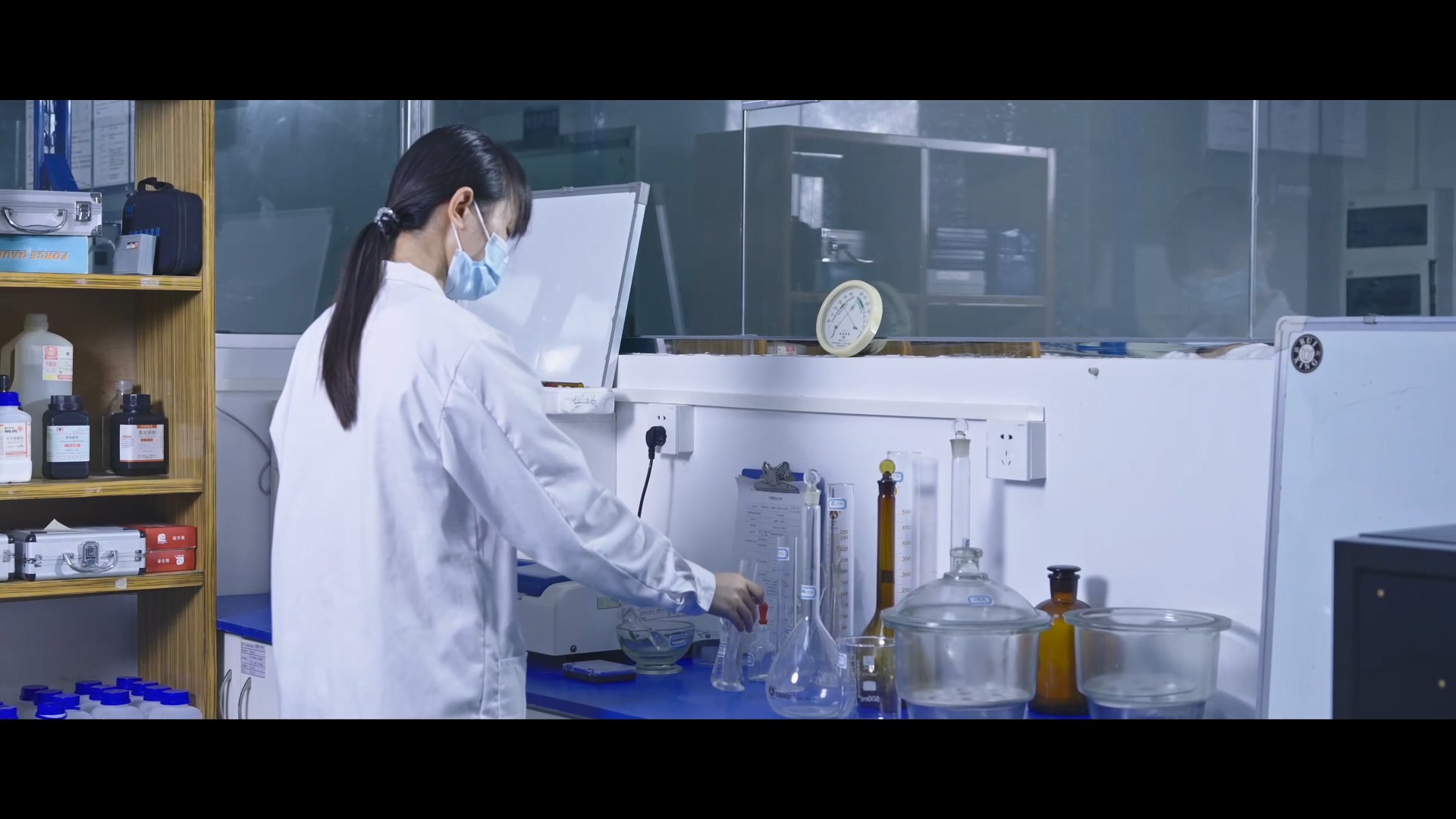
Step five deserves emphasis because it is the step buyers most often get wrong. Consider SHKL’s published certificates: ISO 9001 certificate number 04924Q00629R0M, ISO 14001 certificate number 04924E00351R0M and ISO 45001 certificate number 04924S00316R0M, all issued by Guangdong Quality Testing CTC Certification Co., Ltd. on 11 May 2024 and valid until 10 May 2027, against GB/T 19001-2016 / ISO 9001:2015, GB/T 24001-2016 / ISO 14001:2015 and GB/T 45001-2020 / ISO 45001:2018 respectively. The stated scope of these certificates covers R&D and manufacture of bathroom cabinets, and manufacture of fixed universal lighting fixtures.
That scope line is exactly the kind of detail a buyer should read before treating a certificate as evidence for a shower door order. The correct follow-up question is straightforward and professional: “Which certificate and scope line covers the product I am buying?” A supplier who understands the question will answer it directly. The point of the check is not to discredit certificates — it is to make sure the document being offered actually describes the product being purchased.
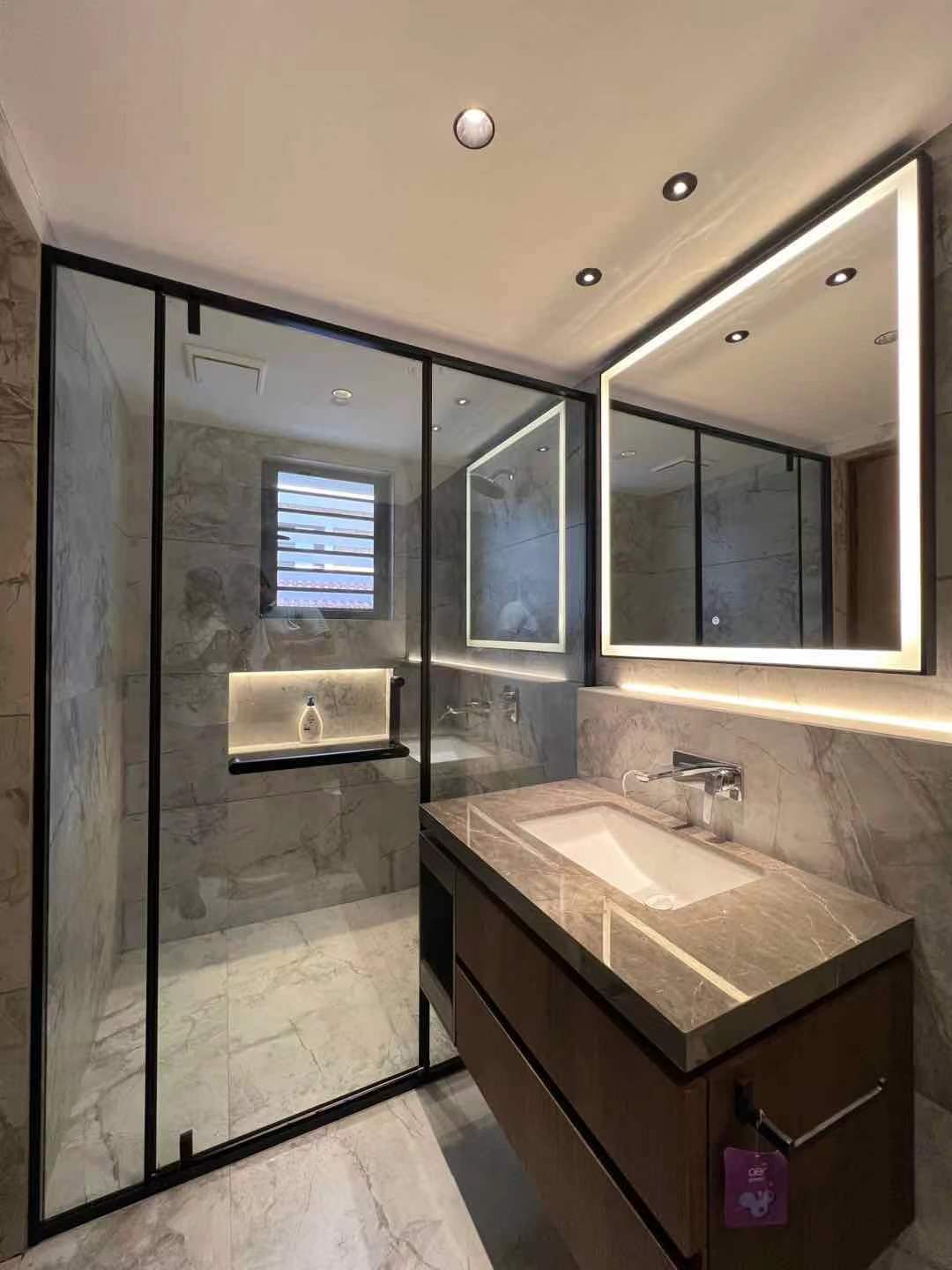
Verification support in practice: SHKL applies 100% inspection standards to quality control, so every unit is checked before shipment. That is also why acceptance criteria should be agreed at the order stage — a pre-shipment inspection only means something if both sides agreed in advance what it covers.
| Question to ask | What a usable answer looks like | What to watch for |
|---|---|---|
| What is the hardware base material on this model? | 304 stainless steel or aluminium alloy, named against the exact model number | Range-level claims such as “our hardware is stainless steel” |
| Which glass craftsmanship options can you produce on this model? | A list from clear, tinted, laminated, flute, chemically frosted, easy-clean, film-coated | A single generic term such as “safety glass” |
| Has this model been delivered to residential or hospitality projects? | A named reference or an honest “not yet” answer | References that describe a different product category |
| Which certificate scope covers this product? | Certificate number plus the scope line naming the product category | A certificate logo with no scope stated |
| What are the acceptance criteria? | Pre-shipment test, agreed before the order | Acceptance criteria proposed after production |
Where This Checklist Pays Off
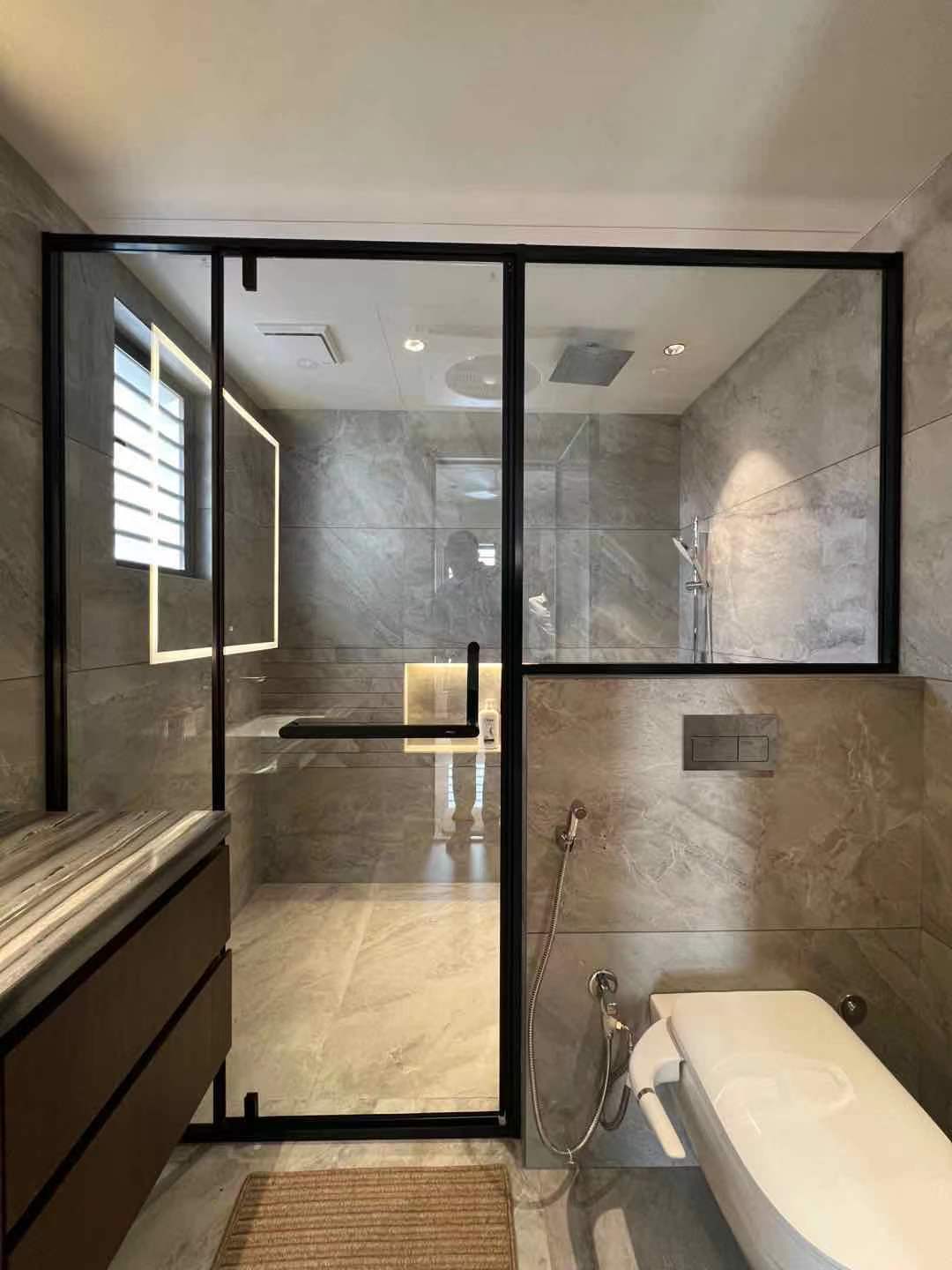
Residential developments. A developer specifying a frameless shower door for repeated apartment layouts can compare KL-AS5104310 (aluminium alloy hardware, frameless configuration) against KL-AS5511312 (304 stainless steel hardware, sliding configuration) on material and scope rather than on appearance. Both list residential construction and commercial hospitality as applicable industries, so the differentiator becomes the hardware family and the glass option.
Hotel and hospitality fit-outs. A hospitality buyer specifying bathtub enclosures for repeated room types can start from KL-AS5605110-5, a bathtub shower door built with aluminium alloy hardware and the standard set of glass craftsmanship options, and then confirm the reference question in step four. High-turnover bathrooms are where an unconfirmed glass or hardware specification becomes visible first.
Distributor and wholesale assortments. Distributors carrying both hardware families can structure a range around material rather than around door style: 304 stainless steel models such as KL-AS5577310 and KL-AS001-1 for buyers who prioritise that material family, and aluminium alloy models such as KL-AS5507310, KL-AS5608212 and KL-AS5210422 for configuration-led demand. The three checks give the sales team a one-minute script that keeps catalogue claims tied to written specifications.
Renovation and compact bathrooms. Arc shower doors and shower screens are usually specified under space constraints rather than material preference. KL-AS5210422 (arc shower door, aluminium alloy hardware) and KL-AS001-1 (shower screen, 304 stainless steel hardware) are both listed for residential construction and commercial hospitality, so the deciding question returns to the project environment and the glass option, not the door shape alone.
Model-Level Snapshot: Hardware, Glass and Scope
The table below compresses the three checks into a single reference for SHKL shower door models. It shows why the material question must be asked per model: the same product family contains both hardware base materials and the same stated application scope.
| Model | Configuration | Hardware base material | Glass craftsmanship options | Application scope |
|---|---|---|---|---|
| KL-AS5577310 | Hinge shower door | 304 stainless steel | Clear / Tinted / Laminated / Flute / Chemically frosted / Easy-clean / Film-coated | Residential construction, commercial hospitality |
| KL-AS5511312 | Sliding shower door | 304 stainless steel | Clear / Tinted / Laminated / Flute / Chemically frosted / Easy-clean / Film-coated | Residential construction, commercial hospitality |
| KL-AS001-1 | Shower screen | 304 stainless steel | Clear / Tinted / Laminated / Flute / Chemically frosted / Easy-clean / Film-coated | Residential construction, commercial hospitality |
| KL-AS5104310 | Frameless shower door | Aluminium alloy | Clear / Tinted / Laminated / Flute / Chemically frosted / Easy-clean / Film-coated | Residential construction, commercial hospitality |
| KL-AS5507310 | Hinge shower door | Aluminium alloy | Clear / Tinted / Laminated / Flute / Chemically frosted / Easy-clean / Film-coated | Residential construction, commercial hospitality |
| KL-AS5608212 | Sliding shower door | Aluminium alloy | Clear / Tinted / Laminated / Flute / Chemically frosted / Easy-clean / Film-coated | Residential construction, commercial hospitality |
| KL-AS5605110-5 | Bathtub shower door | Aluminium alloy | Clear / Tinted / Laminated / Flute / Chemically frosted / Easy-clean / Film-coated | Residential construction, commercial hospitality |
| KL-AS5210422 | Arc shower door | Aluminium alloy | Clear / Tinted / Laminated / Flute / Chemically frosted / Easy-clean / Film-coated | Residential construction, commercial hospitality |
The table is deliberately narrow. It answers what material, what glass options and what scope — the three items a buyer can check without a laboratory, and the three items that most often go unconfirmed between quotation and shipment.

Frequently Asked Questions
How can I verify shower door hardware material before ordering?
Ask for the base material of the exact model number, not of the range. SHKL shower door hardware is built in two families: 304 stainless steel, used on models such as KL-AS5577310, KL-AS5511312 and KL-AS001-1, and aluminium alloy, used on models such as KL-AS5104310, KL-AS5507310, KL-AS5608212, KL-AS5605110-5 and KL-AS5210422. A usable answer names the material and the model in the same sentence.
Which glass craftsmanship options should a supplier be able to confirm?
Ask the supplier to list, for your exact model, which of the following they can produce: clear glass, tinted glass, laminated glass, flute glass, chemically frosted glass, easy-clean and film-coated glass. SHKL lists this full set across its shower door model range. The check is not whether an option exists in a catalogue, but whether it is confirmed for the model you are ordering.
What commercial terms should be fixed before a purchase order is issued?
Per SHKL’s purchasing terms for shower doors, the minimum order quantity is 20 units, delivery terms are FOB, the acceptance criteria are pre-shipment test, and payment terms are T/T. These four lines define what will be accepted and what will not, so they belong in the order documents rather than in later correspondence.
How do I make sure a sample matches the production order?
Tie the sample to the written specification and to the acceptance criteria. If the acceptance criterion is a pre-shipment test, the sample should carry the same hardware base material, the same glass craftsmanship option and the same application scope as the production batch, so the pre-shipment test is measured against a known reference. SHKL applies 100% inspection standards, which makes a documented sample-to-order match easier to enforce.
What lead time and capacity should a buyer expect on a shower door order?
For SHKL shower door projects, monthly production capacity is 10,000 units and the typical production lead time is 30–45 days. After-sales support covers warranty support, remote after-sales consultation and spare parts supply. Buyers who want to run this three-check scan against real product can request a shower door sample or a quotation, or download the SHKL product brochure first.
Conclusion: Turn Three Answers into Order Language
Shower door compliance rarely fails because a buyer missed a technical detail. It fails because three questions were never asked in a form that produced a written answer: which hardware base material is on this model, which glass craftsmanship options are actually offered, and which application scope the supplier has truly delivered into.
The reminder that closes the loop comes from the purchasing terms side. Acceptance criteria — in SHKL’s published terms, a pre-shipment test — only protect a buyer if they are agreed before production, alongside the minimum order quantity, delivery terms and payment terms. A specification that is confirmed after the container is loaded is not a specification; it is a conversation.
Run the scan once, on one model, and the pattern becomes reusable across an entire assortment. That is the practical value of a 60-second checklist: it converts three vague adjectives into three sentences that can be written onto a purchase order and checked at pre-shipment.
Run the Checklist on a Real Sample
SHKL supplies shower doors and shower screens with 304 stainless steel or aluminium alloy hardware, seven glass craftsmanship options, and stated application scope across residential construction and commercial hospitality — supported by a 100,000 m² production base in China and a 40,000 m² factory in Vietnam, with monthly capacity of 10,000 units and a typical lead time of 30–45 days.
Request a sample, ask for a quotation against your model list, or download the brochure: SHKL Product Brochure (PDF).
Website: www.shklbathroom.com | Email: info@shklbathroom.com | info@shkl.cc | WhatsApp: +86 13790005061