
Module Lights: How to Choose an LED Warning Light Module
Vehicle Warning Lighting · Module Light Guide
A module light is a slim, surface-mounted LED warning light that projects directional flashing light through a shaped optic — usually Fresnel — rather than a rotating or dome-style beacon. In the SIGROCK range, the E6 warning light module measures 118 × 25 × 7 mm, operates on 10–33 V DC, and is available in single, dual, triple, and split color configurations for emergency, utility, and fleet vehicles.
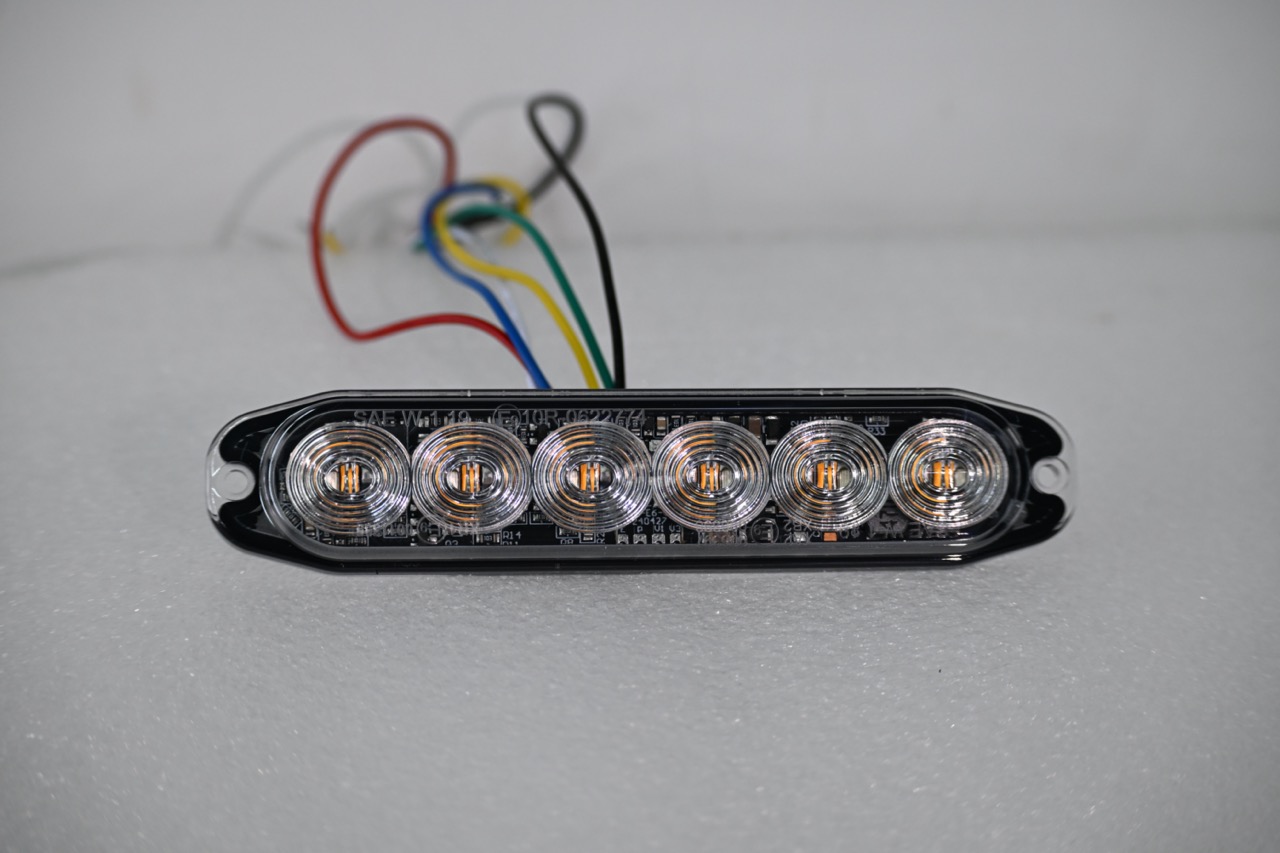
What Counts as a Module Light?
Module lights — also written as warning light modules or LED warning light modules — are compact warning fixtures mounted directly onto a vehicle surface such as a grille, bumper, body panel, or bracket. They sit inside a wider family of vehicle warning equipment that also includes LED beacons, hideaway strobe lights, full-size LED lightbars, traffic advisors, dash lights, work lights, and lighting control systems.
Three design characteristics separate a module light from other warning form factors:
- Low-profile housing. The E6 is 7 mm thick. That thinness is what allows it to be fitted to a grille slat or a flat body panel where a beacon or lightbar would not physically fit.
- Directional optical design. The E6 uses a Fresnel optical design, which shapes and directs warning output instead of relying on a rotating reflector or a large dome.
- Surface or bracket mounting. E6 modules support surface mounting and bracket mounting, and the range includes a bracket kit and an optional flange frame for bolt-on or recessed installation.
A module light is therefore not simply a smaller lightbar. It is a directional warning device intended for specific positions on a vehicle, and it is normally specified alongside other warning products rather than instead of them.
The Problem: Why “LED Warning Light” Is Hard to Buy
Anyone researching an LED warning light meets the same four obstacles before any specification gets written.
1. One term, many form factors. Beacons, hideaway lights, lightbars, and modules all appear under the same phrase, but each solves a different installation problem. A 1,600 mm lightbar and a 118 mm module are complementary parts of a vehicle lighting layout, not competing options.
2. Compliance gets scoped incorrectly. ECE R65, ECE R10, and SAE J595 are often listed together as though they meant one thing. They do not. ECE R10 concerns electromagnetic compatibility approval and does not replace the separate photometric or installation approvals that may apply to a warning light. SAE J595 is a North American standard for directional, single-color, flashing optical warning devices used on authorized emergency, maintenance, and service vehicles, and it defines different performance classes for different vehicle warning applications.
3. Environmental performance is claimed more often than it is documented. Vehicles fitted with warning lights operate in heavy rain, snow, fog, dust, mud, high humidity, high UV, and high-vibration conditions, often on long-duration or 24/7 duty cycles. Two units both described as “waterproof” can carry different ingress protection ratings, and a rating on its own does not guarantee suitability for a specific cleaning method.
4. Certificates and claims drift apart. A general statement that a product range is compliant is not the same as a product-level certificate. Certification and ingress-protection claims should be supported by certificate numbers, test reports, the exact model designation, the issuing body, and the validity date.
A practical response to all four problems is to work in the reverse order from the way products are usually presented: start with the vehicle, the mounting position, and the destination market, then select the module that satisfies those constraints.
Industry Background: A Large, Regulated, LED-Led Category
The broader emergency lighting market, which includes vehicle warning kits, was valued at approximately USD 7.5 billion in 2023, according to Global Market Insights. Inside it, the specialized emergency warning light segment is projected to grow at a compound annual growth rate of 3.6% from 2025 to 2031, based on Lucintel’s market analysis.
The gap between those two figures is informative. The broad emergency lighting category expands quickly because of general lighting replacement and infrastructure spending. Vehicle warning lights grow more slowly and more predictably, because demand tracks fleet renewal, vehicle upfitting, and regulatory requirements rather than volume replacement cycles.
Three regulatory themes shape what buyers can actually specify:
- Electromagnetic compatibility. Modern police, fire, ambulance, utility, and maintenance vehicles depend on CAN-bus networks and multiple electronic control units. ECE R10 covers electromagnetic compatibility approval for applicable vehicles and electrical or electronic components, including relevant emissions and immunity requirements, so that approved equipment operates compatibly with other systems on the vehicle.
- Day and night intensity control. ECE R65 Class 2 approval involves dual-level intensity control — operation at maximum brightness during the day with automatic dimming at night. “Brightest possible” is therefore not the same as compliant.
- Class-based performance. SAE J595 defines different performance classes for different vehicle warning applications, so a single “SAE compliant” label does not say which class a device was evaluated against.
For a buyer at the research stage, the practical takeaway is that optical design, sealing, electrical compatibility, and documented approvals carry more weight than the number of LEDs printed on a datasheet.
The E6 Module Light and the System Around It
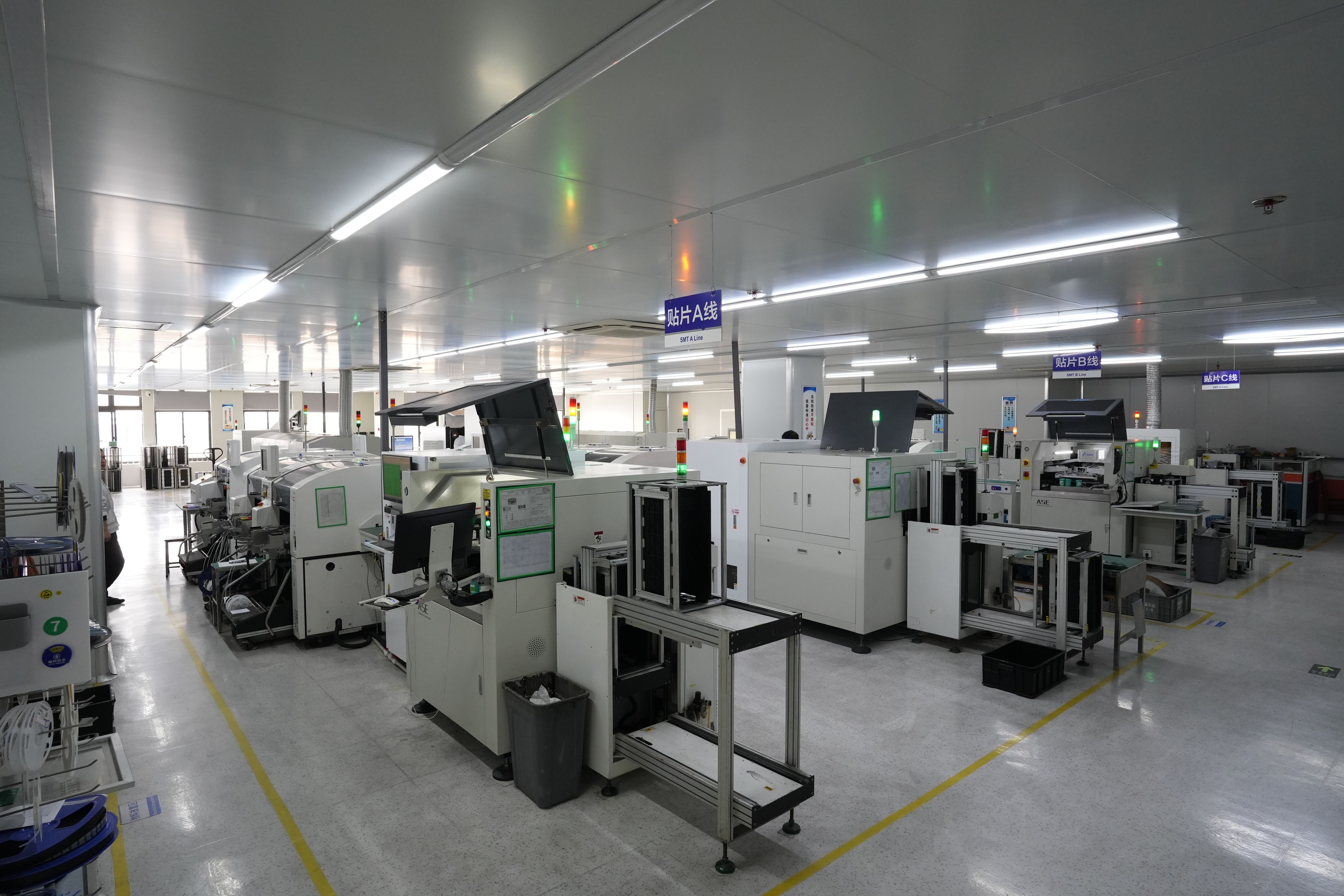
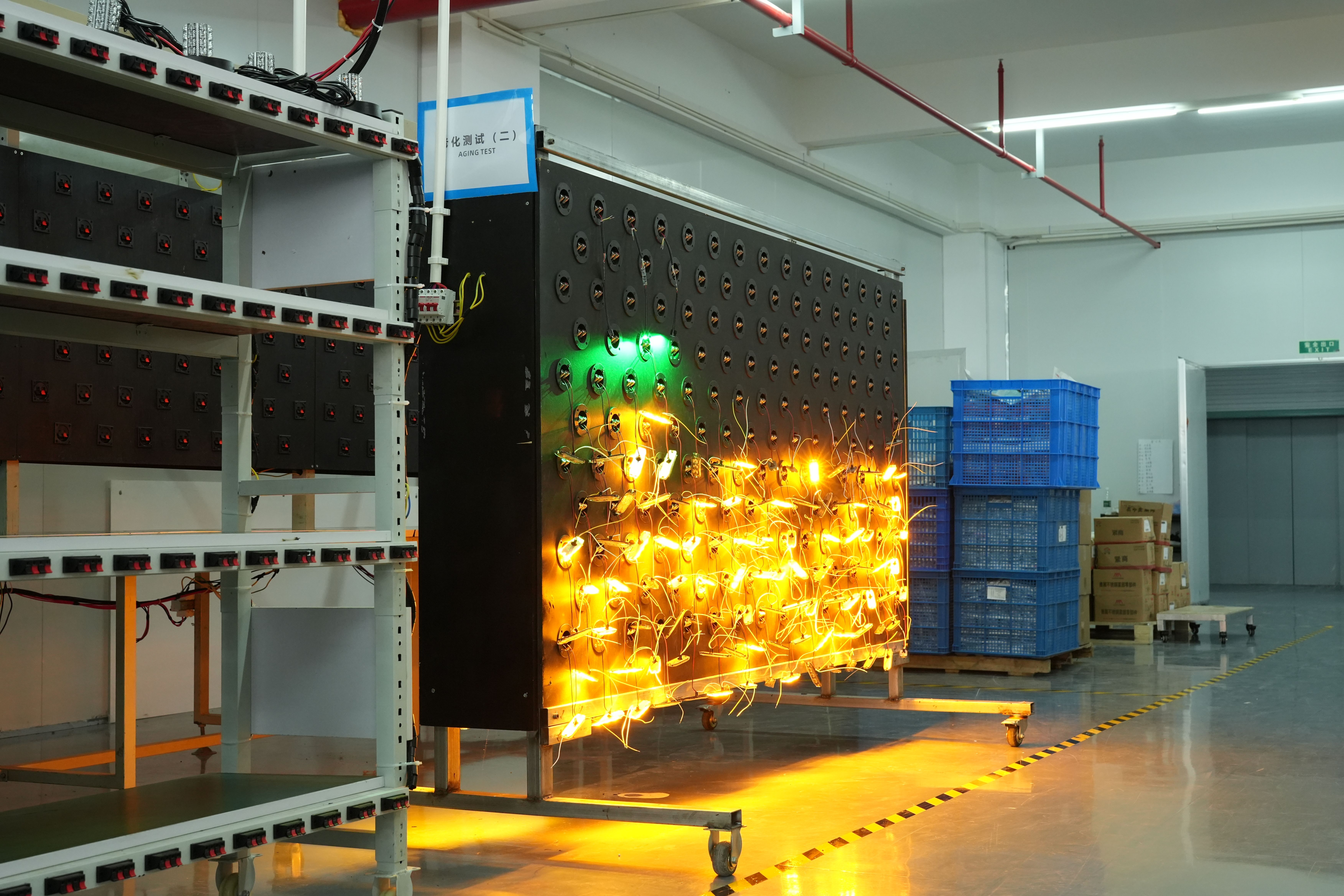
SIGROCK — Ningbo sigrock Automotive Lamp Technology Co.,LTD. — is a manufacturer of vehicle warning lights and safety lighting solutions headquartered in Ningbo, Zhejiang, China. Established in 2018, the company operates a 2,600 m² manufacturing facility with approximately 35 staff, a 5-engineer in-house R&D team, and an annual production capacity of around 550,000 units. Main product categories include strobe lightheads, LED beacons, lightbars, traffic advisors, dash lights, work lights, and lighting control systems. Products are designed and tested to meet applicable international requirements, with certifications and standards including ECE, SAE, CE, R10, R65, and IP67/IP69K, depending on the product.
The E6 warning light module
The E6 is the current module light in the range, offered in three product types: E6S-A, E6S-B, and E6S-R. It is designed for emergency vehicles, construction and utility vehicles, commercial and fleet vehicles, and special applications.
| Parameter | Specification |
|---|---|
| Model / product types | E6 — E6S-A, E6S-B, E6S-R |
| Dimensions | 118 × 25 × 7 mm (ultra-slim 7 mm profile) |
| Bezel | Black |
| Optical design | Fresnel |
| Available colors | Red, Blue, Amber, White, Green |
| Color type | Single / dual color, triple color, split color |
| Operating voltage | 10–33 V DC |
| Maximum current | 0.66 A @ 12 V / 0.33 A @ 24 V |
| LED quantity | 36 / 12 / 18 LEDs, 3 W each |
| Flash patterns | Single / split color: ×20 · dual / triple color: ×12 |
| Lens material | PC |
| Mounting options | Surface mount / bracket mount |
| Protection rating | IP67 / IP69K |
| Operating temperature | −30°C to +70°C |
| Warranty | 3 years |
| Certification options | ECE R65 Class 2 / SAE J595 Class 1 / R10 options |
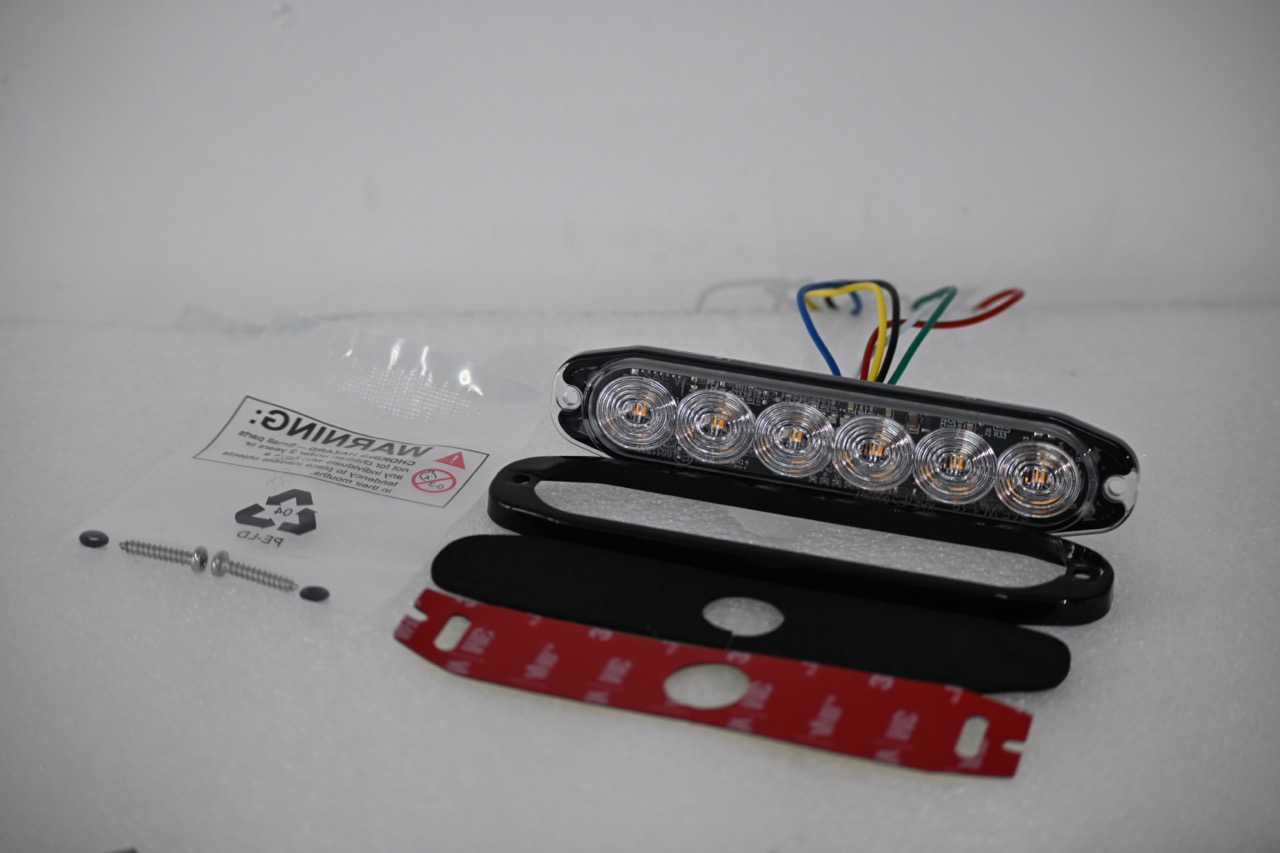
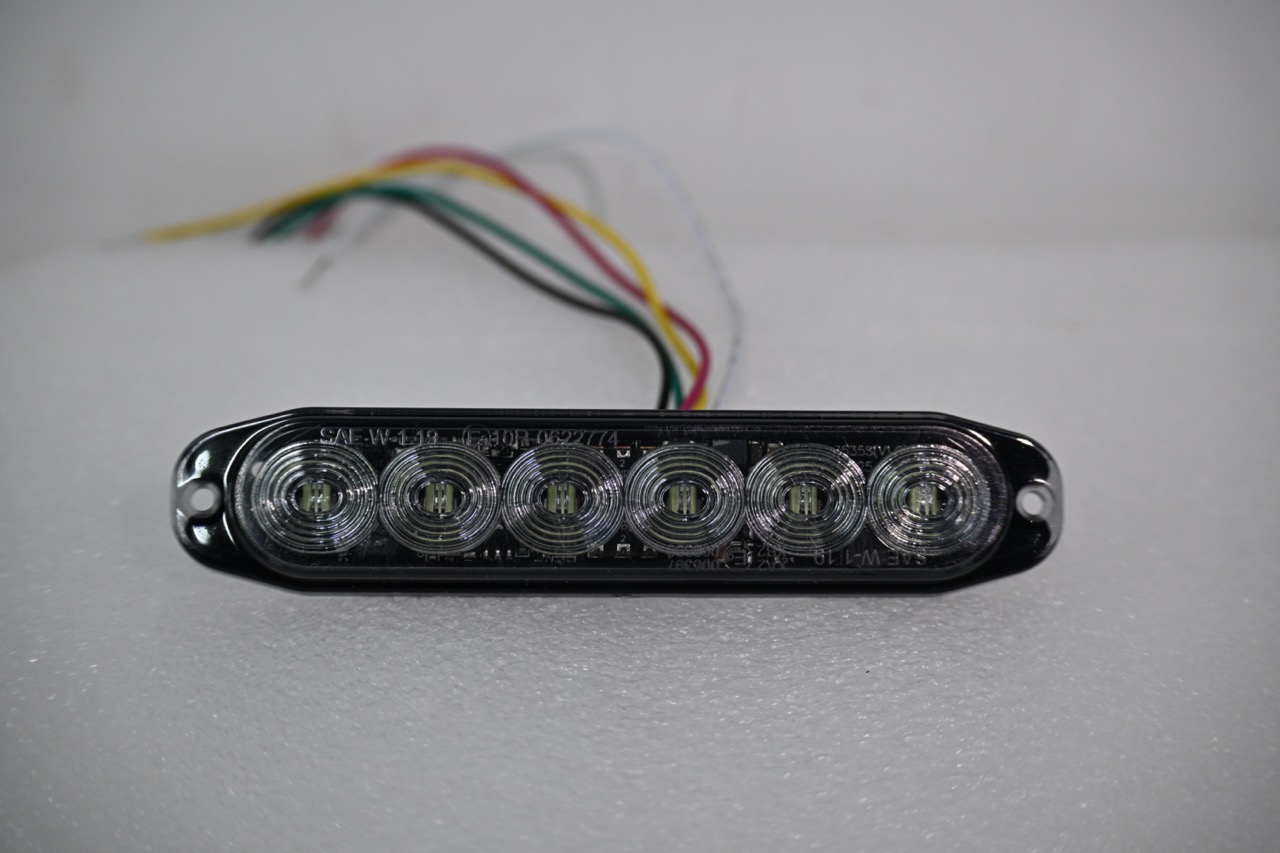
Modules work as part of a lighting system
A single module rarely covers an entire vehicle. The SIGROCK range includes the products that typically sit alongside a module installation:
- BH18 LED warning light beacon. Rotating LED beacon category with 3 W × 18 high-output LEDs in blue, amber, red, or green; 10–33 V DC with 2.2 A @ 12 V / 1.2 A @ 24 V; 10 selectable flash patterns; bolt, DIN, or magnetic mounting; PC lens with IP67 and IP69K protection; ECE R10, ECE R65 Class 2, and SAE J595 Class 1; 3-year warranty.
- T43 hideaway warning light. Hideaway strobe category measuring 18.5 × 18.5 × 21.57 mm with a black rubber grommet; 10–33 V DC with 0.3 A @ 12 V / 0.15 A @ 24 V; 5 W × 1 pc plus 0.2 W × 2 pcs; 14 flash patterns; flush mount or tube flush mount; IP67/IP69K; combined warning and position light function.
- LB01 warning lightbar. Full-size LED warning lightbar in 600, 800, 1,000, 1,200, 1,400, and 1,600 mm lengths with 78 to 198 LEDs depending on length; hybrid optical design; 10–33 V DC; 10 selectable flash patterns; bracket mounting; IP65; 3-year warranty.
- SC7X controller. A 7-button all-in-one vehicle controller with momentary or ON/OFF button modes, automatic night-time backlight dimming, 10–30 V DC input, a maximum 40 A output across 2 × 10 A or 4 × 5 A outputs, IP67 protection, ECE R10 approval, and a 2-year warranty.
Step-by-Step: How to Select a Module Light
The selection criteria used in SIGROCK’s technical knowledge base center on vehicle application, mounting space, required visibility, applicable regulations, operating voltage, environmental exposure, and desired functions. Put into sequence, that becomes six steps.
- Identify the vehicle and the warning task. Decide whether the module provides emergency warning, hazard warning, vehicle identification, traffic guidance, or position lighting. Output color and flash behavior follow from the function, not the other way around.
- Fix the mounting position and the available space. Grille, bumper, body panel, license-plate area, and flush recesses all impose different dimensional limits. The E6 is 118 × 25 × 7 mm, which suits surface and bracket mounting on narrow surfaces; a bezel and flange frame add depth.
- Confirm the approvals the destination market requires. For European markets, ECE R65 and ECE R10 are commonly relevant, with ECE R148 also applying in some vehicle lighting contexts. For the United States and North America, SAE J595 may be required if the vehicle application falls under its scope, and buyers should select the applicable performance class for that application. Request product-level documentation rather than relying on a general compliance statement.
- Verify the electrical fit. The E6 operates on 10–33 V DC with a maximum current of 0.66 A at 12 V and 0.33 A at 24 V, covering both 12 V and 24 V vehicle systems. Check the total load against the vehicle’s electrical capacity, particularly where several warning devices share a controller such as the SC7X.
- Match the protection rating to the duty cycle. IP67 covers dust protection and temporary immersion under specified test conditions; IP69K addresses dust protection and high-pressure, high-temperature water-jet exposure under its applicable standard. Choose based on the actual cleaning methods and exposure conditions the vehicle faces.
- Decide the configuration and customization scope. Color (red, blue, amber, white, green), color type (single, dual, triple, split), and flash patterns (×20 for single/split color, ×12 for dual/triple color on the E6) need to be fixed before an order. For OEM or ODM projects, lens design, wiring, connectors, control logic, and branding should be agreed at the same stage.
Use Cases: Where Module Lights Are Deployed
Module lights are specified wherever a vehicle needs directional warning light from a surface that cannot carry a full lightbar or beacon housing.
- Emergency and public safety. Police vehicles, fire trucks, ambulances, rescue vehicles, and emergency response vehicles use module lights to add front, side, or rear warning coverage that complements roof-mounted beacons and lightbars. The E6 is designed for emergency vehicle applications.
- Road and traffic management. Road maintenance, traffic management, highway maintenance, roadside assistance, and traffic enforcement vehicles work in live traffic, frequently at night and in poor weather — the conditions where off-axis visibility and position lighting matter most.
- Commercial and utility fleets. Tow trucks, service vehicles, utility vehicles, maintenance vehicles, and general fleet vehicles use warning modules for hazard indication and vehicle identification during roadside work.
- Construction and industrial vehicles. Site vehicles require warning light that remains visible through dust, mud, and vibration, and often in tightly constrained mounting space.
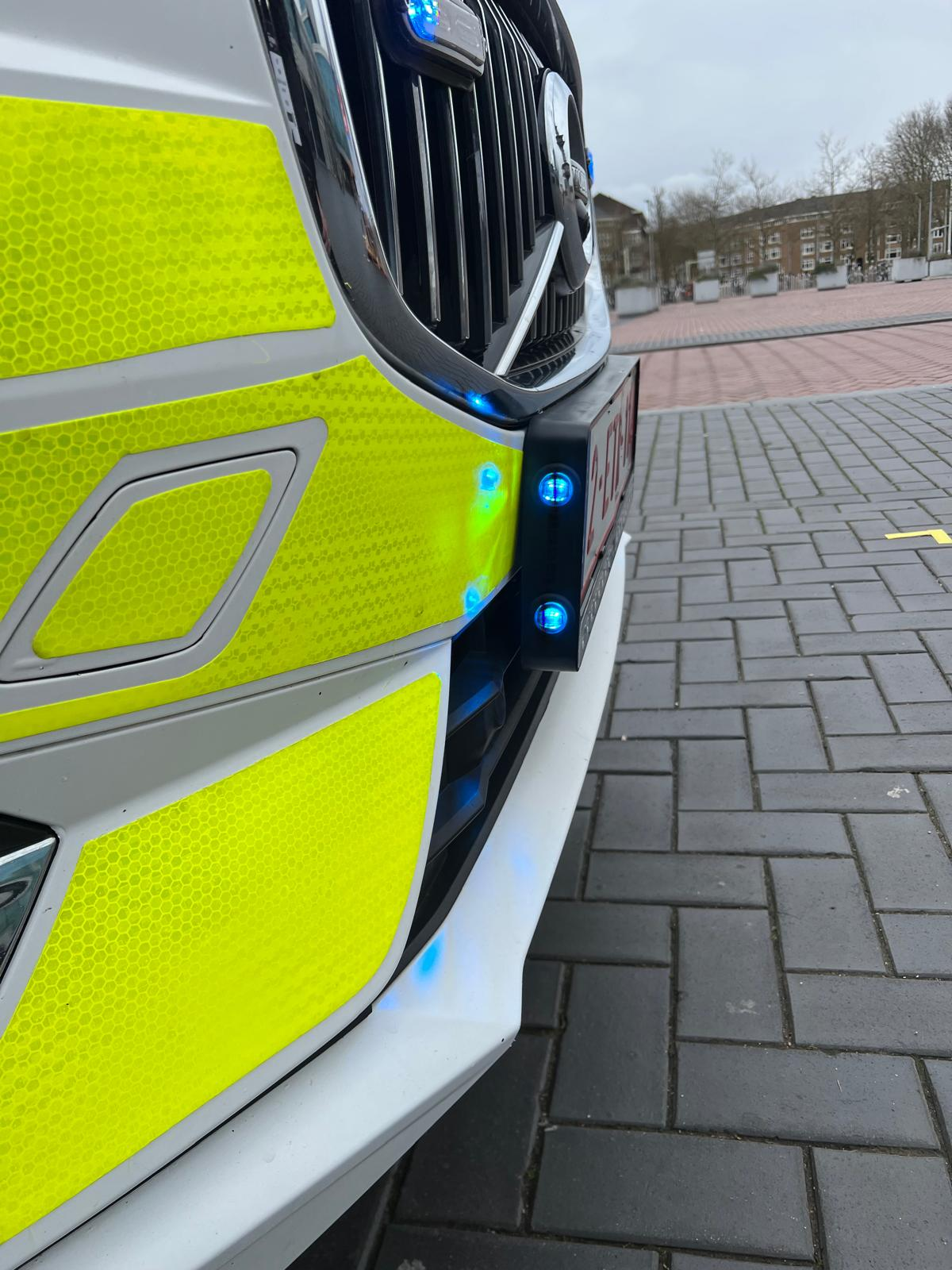
Across these applications, common operating modes include flashing, alternating flashing, simultaneous flashing, steady-on, position lighting, and warning-plus-position lighting, controlled manually, from a central controller, or over a CAN-bus network. Typical working conditions include daytime and nighttime operation, low light, heavy rain, snow, fog, dust and mud, high humidity, extreme temperatures, high UV exposure, and high-vibration environments.
Comparison: Matching the Form Factor to the Job
The table below compares the current SIGROCK range using published specifications only. It is a form-factor comparison rather than a ranking: each product is intended for a different mounting position and warning task, and each should be selected against the requirements of the vehicle in front of you.
| Product | Model | Category | Voltage | Current draw | Protection | Flash patterns | Mounting | Warranty | Typical role |
|---|---|---|---|---|---|---|---|---|---|
| Warning light module | E6 (E6S-A / E6S-B / E6S-R) | Module light, Fresnel optic, 118 × 25 × 7 mm | 10–33 V DC | 0.66 A @ 12 V / 0.33 A @ 24 V | IP67 / IP69K | ×20 single / split; ×12 dual / triple | Surface / bracket | 3 years | Directional grille or panel warning where space is limited |
| Hideaway warning light | T43 | Hideaway strobe, 18.5 × 18.5 × 21.57 mm | 10–33 V DC | 0.3 A @ 12 V / 0.15 A @ 24 V | IP67 / IP69K | 14 | Flush / tube flush | 3 years | Discreet integration with warning and position function |
| LED warning light beacon | BH18 | Rotating LED beacon, 3 W × 18 LEDs | 10–33 V DC | 2.2 A @ 12 V / 1.2 A @ 24 V | IP67, IP69K | 10 selectable | Bolts, DIN, magnetic | 3 years | High-visibility surface or roof beacon |
| Warning lightbar | LB01 | Full-size warning lightbar, 600–1,600 mm, 78–198 LEDs | 10–33 V DC | Not stated in the published specification | IP65 | 10 selectable | Bracket | 3 years | Full-width primary warning bar |
| Controller | SC7X | Vehicle controller, 7 buttons, 100 × 70 × 20 mm | 10–30 V DC | Max output 40 A (2 × 10 A / 4 × 5 A) | IP67 | Not applicable | 3M VHB / suction bracket | 2 years | Central control of multiple warning devices |
Two cautions apply when reading any comparison of this kind. First, a higher ingress protection rating does not automatically mean better fit — the rating must match the vehicle’s real exposure and cleaning regime. Second, approval wording is only as strong as its documentation: ECE R65, ECE R10, ECE R148, SAE J595, CE and IP67/IP69K claims should be confirmed at product level, with the number of LEDs, flash pattern count, or warranty length treated as supporting data rather than as proof of compliance.
Frequently Asked Questions
What is ECE R10 certification for vehicle warning lights?
UN ECE Regulation No. 10 (ECE R10) concerns the electromagnetic compatibility (EMC) approval of applicable vehicles and electrical or electronic components. For vehicle warning lights, it addresses relevant electromagnetic emissions and immunity requirements. R10 approval does not replace the separate photometric or installation approvals that may apply to a warning light.
What is the difference between IP67 and IP69K for vehicle warning lights?
IP67 covers dust protection and temporary immersion under specified test conditions. IP69K addresses dust protection and high-pressure, high-temperature water-jet exposure under its applicable test standard. Neither rating alone guarantees suitability for every environment. Choose based on actual cleaning methods, exposure conditions, and the product’s verified test results.
How do I choose the right LED warning light module for my vehicle?
Choose an LED warning light module based on the vehicle application, mounting space, required visibility, applicable regulations, operating voltage, environmental exposure, and desired functions. Confirm the model’s actual approvals and specifications before purchasing. For OEM or ODM projects, also consider lens design, flash patterns, colors, wiring, and branding requirements.
Does SIGROCK offer OEM and ODM services for LED warning lights?
SIGROCK supports OEM/ODM cooperation for vehicle warning and signaling lights. Depending on the product and project requirements, customization may include branding, colors, flash patterns, functions, and product design. Feasibility, minimum order quantities, development timelines, and certification requirements should be confirmed for each project.
Why is my LED vehicle warning light not turning on?
If an LED warning light does not turn on, check the power supply, fuse, wiring connections, polarity, and control inputs according to the product’s wiring diagram. Disconnect power before inspecting wiring. If the supply voltage and connections are correct but the light still does not operate, stop testing and contact the manufacturer for further diagnosis. For a module light such as the E6, the SIGROCK team can be reached at sales@sigrock.com when the fault cannot be traced to power or wiring.
Conclusion
Module lights solve a specific problem: they put directional, regulation-aware warning light on vehicle surfaces that cannot accept a beacon or a full lightbar. Selecting one comes down to six checks — vehicle application, mounting space, market approvals, electrical fit, environmental protection, and configuration — and to insisting on product-level documentation rather than accepting a general compliance claim.
The E6 warning light module gives buyers a concrete reference point for those checks: 118 × 25 × 7 mm, 10–33 V DC, single to split color options, ×20 or ×12 flash patterns, IP67/IP69K protection, surface or bracket mounting, and ECE R65 Class 2, SAE J595 Class 1, and R10 options, with a 3-year warranty. Used alongside the BH18 beacon, T43 hideaway light, LB01 lightbar, and SC7X controller, it becomes part of a complete vehicle warning system rather than a standalone part.
Next Step
If you are evaluating module lights for a fleet retrofit, an emergency vehicle upfitting project, or an OEM/ODM program, the SIGROCK technical team can confirm model-specific specifications, applicable approvals, and customization feasibility. Request a sample or quotation through www.sigrockautolamp.com, by email at sales@sigrock.com, or on WhatsApp at +86 186-9408-7250. The business contact is Freya Wang, telephone +86 156-6915-9591.
The standard edition product catalog is available for download: Sigrock Catalogue – Standard Edition (PDF).

Have Questions or Need More Details?
Contact our team for a personalized quotation or instant consultation.
Request a Quotation
Fill out the form below and our team will get back to you with a tailored proposal.
WhatsApp Direct Chat
Prefer to chat in real-time? Message us on WhatsApp for instant assistance & quick answers.
- Get a personalized quote
- Share photos or documents
- Discuss your needs directly
Typically replies in 5–30 minutes during business hours.