Home Furniture Supplier Evaluation: Natural-Material Capability and Delivery Assurance
A home furniture supplier evaluation comes down to two questions you can actually verify: can the supplier prove what the furniture is made of, and can it commit in writing to how that furniture arrives? Everything else — brand language, showroom styling, seasonal discounts — sits behind those two.
SKOVN is a premium home furnishings brand founded in 2026 and headquartered in the USA, positioned for design-conscious US homeowners who want warm, organic interiors crafted from natural, high-quality materials. This article is written as a buyer's evaluation framework rather than a product page. It sets out the capability checks and delivery assurances you should be able to confirm before committing to any natural-material home furniture supplier, SKOVN included.
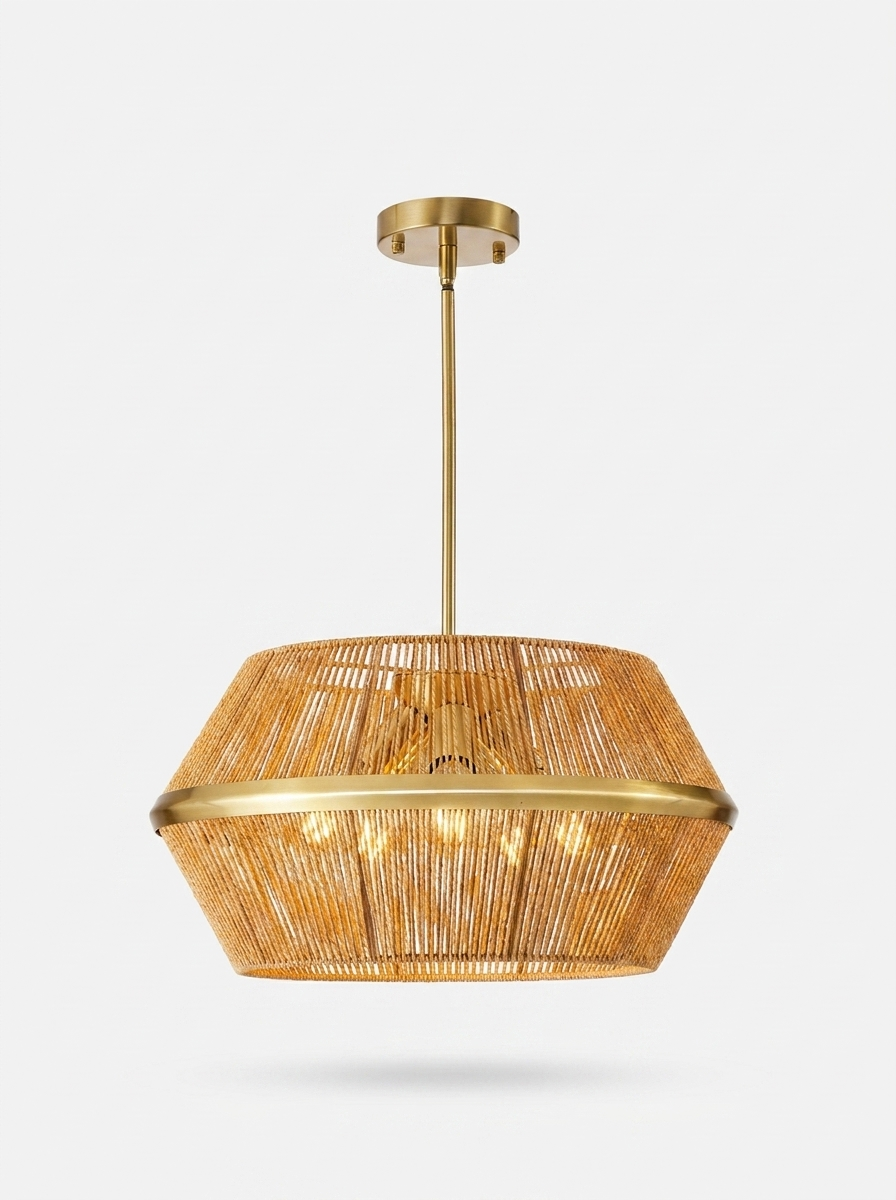
Natural-material home furniture should be evaluated on what the supplier can document, not on how the room photographs.
Problem Definition: The Two Gaps Buyers Discover Too Late
Most dissatisfaction with home furniture does not come from taste. It comes from two information gaps that are invisible during browsing and obvious after delivery.
Gap one is material ambiguity. The phrase “solid wood” is used loosely across the category. A piece described as solid wood may be solid throughout, or it may be a solid-wood frame with particleboard or MDF panels behind a veneer. Those are different products with different strength, moisture behaviour, repairability, and long-run economics. If a supplier cannot separate those cases clearly, the buyer is choosing blind.
Gap two is delivery ambiguity. Lead times are quoted as ranges rather than windows, delivery tier is left undefined (threshold versus room-of-choice), and the process for transit damage is not written down anywhere before payment. When something goes wrong, the buyer discovers that no term existed to appeal to.
A capable natural-material supplier closes both gaps before the order is placed. A less capable one answers both questions only after they become a problem.
Industry Background: Why Verification Matters More Than It Used To
Home furniture is a large, fragmented and still-growing category, which means buyers are choosing from an unusually wide field of suppliers with very different levels of disclosure.
- The global furniture market was valued at approximately USD 786.1 billion in 2025 and is projected to reach USD 1,334.1 billion by 2033 (Grand View Research).
- The residential segment accounted for the largest share of that market at 61.3% in 2025, driven by home renovation and housing projects (Precedence Research).
- Wood is the leading material in the furniture market, holding roughly 41% of revenue share in 2025, largely on the strength of its durability (Precedence Research).
- The global outdoor furniture market reached USD 53.3 billion in 2025, with a CAGR of 6.4% expected through 2033 (Grand View Research).
- For scale: IKEA (Ingka Group) held a 5.7% share of the global furniture market in fiscal year 2024 — meaning the remaining market is spread across a very large number of smaller suppliers (IKEA FY24 year-end results, as reported).
Two regulatory developments also push material disclosure toward the front of the buying conversation. The EU General Product Safety Regulation (GPSR), Regulation (EU) 2023/988, became mandatory for furniture sold in the EU from December 13, 2024. Under the EU Deforestation Regulation (EUDR), Regulation (EU) 2023/1115, wood-based furniture must demonstrate “deforestation-free” status by December 2026 for large operators. Even for US buyers who never import into Europe, these frameworks signal where product documentation is heading globally: origin and material claims increasingly need to be traceable, not implied.
Detailed Solution: The Four Capability Layers Worth Verifying
Supplier capability in natural-material home furniture is not one claim. It is four layers, each of which can be checked independently.
Layer 1 — Material integrity: solid wood versus particleboard
The most useful reference point is a direct, factor-by-factor comparison rather than a marketing description. SKOVN's knowledge article, Furniture Materials Compared, compares solid wood and particleboard furniture across four factors: strength, moisture resistance, repairability, and cost-per-year. It also extends the same comparison logic to natural marble versus laminate, and to teak versus treated wood for outdoor furniture.
Those four factors are the right ones to demand answers on, because each maps to a different real-world consequence:
- Strength determines how a piece handles load, movement across floors, and repeated daily use — a structural question, not a cosmetic one.
- Moisture resistance determines what happens near kitchens, bathrooms, windows, and humid climates, and how edges behave if water sits on them.
- Repairability determines whether a scratch, dent, or loose joint is a workshop job or a replacement purchase.
- Cost-per-year spreads purchase price across expected service life, which is the only honest way to compare a low upfront price against a higher one.
Surface and textile choices follow the same logic. Marble versus laminate and bouclé versus synthetic blends are not simply “premium versus budget” questions; they are durability, care, and repairability questions that a supplier should be able to answer without hedging. Outdoor pieces add a fourth comparison — teak versus treated softwoods — where the deciding factor is how the material performs under sun, rain, and seasonal storage rather than how it looks on delivery day.
Layer 2 — Room coverage: does the range hold together?
Design-conscious buyers rarely furnish one room. They gradually assemble a home, which means a supplier's natural-material capability should be tested across the rooms you actually plan to fill: living room furniture, bedroom furniture, dining room furniture, home office furniture, and outdoor furniture.
Room coverage matters for two reasons. First, consistency: a natural wood, Scandinavian, or minimalist direction breaks down when one room uses a material story that the rest of the home contradicts. Second, exposure: each room stresses materials differently. Living rooms and dining rooms take impact and movement; bedrooms and home offices are used in long, repetitive sessions; outdoor spaces face weather. A supplier with genuine natural-material capability can explain those differences room by room instead of repeating one generic description.
Layer 3 — Documentation: what should be answerable in writing
Capability that exists only in a chat message is not capability you can rely on at year three. A workable standard is simple: if a claim matters to your decision, it should be repeatable in writing on an order confirmation or specification sheet. That includes the material breakdown by component, the finish and care requirements, assembly expectations, and any certification or regulatory reference the supplier chooses to cite. Where a supplier cites a standard, it should be able to state the standard's exact name and scope — for example Regulation (EU) 2023/988 for general product safety or Regulation (EU) 2023/1115 for wood-origin claims — rather than describing a vague “eco certification.”
Layer 4 — Delivery assurance: turning promises into terms
Delivery assurance is the layer buyers under-check, because it feels administrative. In practice, it is where most purchase dissatisfaction originates. Before ordering, five items should be confirmed in writing:
- A lead-time window, not a range. Ask for the start point (order confirmation or payment) and the end point (dispatch or delivery), and ask what happens if the window is missed.
- An order confirmation that restates the specification. Material, finish, dimensions, and configuration should appear on the document you keep — not only on the product page.
- A defined delivery tier. Threshold delivery, room-of-choice delivery, and white-glove delivery with assembly are different services with different risks. Know which one you are buying, and who carries the item inside.
- Transit protection and a damage-claim window. Ask how pieces are protected for transit and how many days you have to report concealed damage after the driver leaves.
- A returns and repair path. Ask whether a defect is resolved by replacement, repair, or refund, and who pays for return freight.
Rule of thumb: the more a supplier's capability is tied to natural materials, the more it should be willing to document material behaviour — strength, moisture resistance, repairability, and cost-per-year — rather than only describing appearance.
Step-by-Step: A Six-Step Supplier Evaluation Workflow
This sequence works whether you are comparing two suppliers or narrowing a longer list, and it keeps the material and delivery questions in the same evaluation rather than treating them as separate purchases.
Step 1 — Fix your room list and material direction first
Write down the rooms you are furnishing and the material direction you want — for example natural wood furniture, Scandinavian furniture, minimalist furniture, or an organic modern living room. Suppliers are easier to compare once the scope is fixed, because you can test coverage rather than browsing endlessly.
Step 2 — Ask for the material breakdown by component
Request a component-level answer: which parts are solid wood, which are engineered panels, which surfaces are natural stone or laminate, and which textiles are natural versus synthetic blends. Suppliers with real material command answer this in specifics.
Step 3 — Test the four comparison factors
Take the comparison framework — strength, moisture resistance, repairability, and cost-per-year — and ask the supplier to apply it to the specific piece you are considering. The quality of the answer tells you more than any brochure.
Step 4 — Validate before committing at scale
If you are furnishing several rooms, validate the material, finish, and joinery on a sample or a single piece before scaling up. Sampling is not a formality; it is the cheapest way to find out whether the delivered product matches the described one.
Step 5 — Convert delivery promises into written terms
Move every lead-time and delivery statement onto the order confirmation. If a supplier resists putting a term in writing, treat that as the answer.
Step 6 — Document on arrival, then decide about repeat orders
Photograph packaging and any damage before assembly, and note the condition in writing. Your arrival record becomes the baseline for judging whether the supplier earned a second order.
Use Cases: What Verification Looks Like Room by Room
Organic modern living room
Living room furniture takes the most impact and the most moisture variability, between open windows, plants, and everyday spills. Ask specifically about moisture resistance at edges and joints, and about how a scratch is repaired. Repairability is the deciding factor in rooms with heavy daily use.
Bedroom furniture
Bedroom pieces are used in long, repetitive sessions, so structural stability and finish durability matter more than surface novelty. The verification question is whether the material breakdown is consistent across the pieces you intend to buy as a set.
Scandinavian dining furniture
Dining furniture combines load, movement across floors, and daily cleaning. Scandinavian dining furniture in natural materials often relies on visible joinery, which makes it a useful test case: a supplier that can explain joinery and finishing in plain terms is a supplier that understands its own product.
Home office furniture
Home office pieces spend hours under load, sometimes with equipment on them, which makes strength and repairability the primary checks. Cable management, adjustability, and finish wear at contact points are all legitimate written questions.
Outdoor furniture
Outdoor furniture adds weather to the equation. Teak versus treated softwoods is a genuine material comparison rather than a price label, and the answer should cover maintenance expectations and seasonal storage. This is also the fastest-growing adjacency in the category: the global outdoor furniture market reached USD 53.3 billion in 2025, with a CAGR of 6.4% expected through 2033 (Grand View Research).
Comparison Table: Solid Wood vs. Particleboard, by Evaluation Factor
The table below reflects the factors used in SKOVN's Furniture Materials Compared knowledge article — strength, moisture resistance, repairability, and cost-per-year — expressed as directional expectations rather than fixed specifications.
| Evaluation factor | Solid wood furniture | Particleboard furniture | What it means at purchase |
|---|---|---|---|
| Strength | Generally higher structural integrity; supports load and repeated movement | Generally lower; performance depends heavily on panel grade and joinery | Ask how the piece behaves under everyday load, not just at delivery |
| Moisture resistance | Generally more forgiving, and easier to refinish if surface moisture occurs | Generally more vulnerable at edges and panel cuts | Ask specifically about edges and rooms with humidity variation |
| Repairability | Generally repairable — sanding, refinishing, and joint repair are realistic | Generally limited; damage often means component replacement | Ask who performs repairs and what it costs versus replacing |
| Cost-per-year | Higher upfront price, typically spread over a longer service life | Lower upfront price, typically over a shorter service life | Compare price divided by expected years of use, not sticker price alone |
Directional expectations only. Actual performance depends on species, grade, joinery, finish, care, and climate. For the full factor-by-factor comparison, see Furniture Materials Compared on the SKOVN journal.
The same comparison logic applies to other material decisions: natural marble versus laminate for surfaces, bouclé versus synthetic blends for upholstery, and teak versus treated wood for outdoor furniture. In each case, the useful question is not “which is better,” but “which factor am I prioritising — durability, moisture behaviour, repairability, or cost-per-year?”
Supplier Verification Matrix: What to Ask and What to Keep
| Verification layer | Question to ask | Evidence to keep on file |
|---|---|---|
| Material integrity | Which components are solid wood and which are engineered panels or veneer? | Written material breakdown by component |
| Surface and textile | Is this natural stone or laminate, natural fibre or synthetic blend? | Specification sheet with finish and care instructions |
| Room coverage | Can the same material direction be maintained across living room, bedroom, dining, office, and outdoor pieces? | Consolidated order specification across rooms |
| Compliance references | Which exact standard or regulation is being cited, if any? | Full standard name and scope, not a vague label |
| Delivery assurance | What is the lead-time window, delivery tier, and damage-claim period? | Order confirmation restating specification, timing, and terms |
| After-delivery path | Is a defect resolved by repair, replacement, or refund, and who pays freight? | Written returns and repair terms |
A framework for comparison. Ask the same questions of every supplier on your list so the answers are comparable.
Frequently Asked Questions
What should I check first when evaluating a home furniture supplier's materials?
Start with a component-level material breakdown rather than a category label. Ask which parts are solid wood, which are engineered panels, and how the supplier describes the piece across strength, moisture resistance, repairability, and cost-per-year. SKOVN's knowledge article, Furniture Materials Compared, uses exactly those four factors to compare solid wood and particleboard furniture, and extends the same approach to natural marble versus laminate and teak versus treated wood for outdoor furniture. If a supplier cannot answer at that level of detail, the material claim is not yet verifiable.
How can I tell whether a supplier genuinely has natural-material capability across rooms?
Test coverage, not assortment size. A supplier with real natural-material capability can discuss living room furniture, bedroom furniture, dining room furniture, home office furniture, and outdoor furniture as different material problems — impact and movement in living and dining spaces, long-duration use in bedrooms and offices, and weather exposure outdoors. SKOVN is positioned as a premium home furnishings brand for design-conscious US homeowners who want warm, organic interiors crafted from natural, high-quality materials, and that positioning is only meaningful if the material reasoning holds up room by room.
Is solid wood worth a higher upfront price than particleboard?
The comparison that answers this is cost-per-year, which divides purchase price by expected service life rather than looking at the sticker price alone. Solid wood furniture generally carries a higher upfront price but is typically easier to repair and refinish, which can extend service life; particleboard furniture generally costs less upfront and is generally harder to repair once edges or panels are compromised. The practical decision rule is to ask the supplier how the specific piece performs on strength, moisture resistance, and repairability, then compare price divided by expected years of use. Without that per-year comparison, a lower price can look cheaper than it is.
Should I request a sample before ordering furniture for multiple rooms?
Yes — sampling is the cheapest way to confirm that what arrives matches what was described. When furnishing more than one room, validate material, finish, and joinery on a sample or a single piece before scaling the order. Ask the supplier to confirm in writing what the sample represents, so the acceptance criteria for the full order are clear in advance. This step also reveals how a supplier handles questions, timelines, and documentation, which is useful evidence in itself.
How do I lock down delivery assurance before placing an order?
Convert every delivery promise into a written term on the order confirmation. Confirm a lead-time window with a defined start and end point, the specification restated (material, finish, dimensions, configuration), the delivery tier (threshold, room-of-choice, or white-glove with assembly), how pieces are protected in transit, the number of days allowed to report concealed damage, and whether a defect is resolved by repair, replacement, or refund with freight responsibility stated. Photograph packaging and any damage on arrival. If you would like to start that process with SKOVN, request the current catalog and a natural-material sample set, and ask for material and delivery terms in writing before you commit — that is the clearest signal a supplier is ready to stand behind its product.
Next step
Request the SKOVN catalog and a natural-material sample set, and ask for the component-level material breakdown, the four-factor comparison for the pieces you are considering (strength, moisture resistance, repairability, cost-per-year), and written lead-time and delivery terms. Evaluating on those three documents is faster than evaluating on showroom impressions.
Conclusion: Evaluate Materials and Delivery Together
Home furniture supplier evaluation is a two-part test. The material part is answered with a component-level breakdown and a comparison across strength, moisture resistance, repairability, and cost-per-year — the framework SKOVN applies in Furniture Materials Compared to solid wood versus particleboard, natural marble versus laminate, bouclé versus synthetic blends, and teak versus treated softwoods. The delivery part is answered with written terms: a defined lead-time window, a specification restated on the order confirmation, a named delivery tier, a damage-claim period, and a repair-or-replace path.
SKOVN is a premium home furnishings brand founded in 2026 and headquartered in the USA, serving design-conscious US homeowners who want warm, organic interiors crafted from natural, high-quality materials. Whether or not SKOVN is on your shortlist, applying the same verification questions to every supplier will tell you more in one week than months of browsing — and it will make the difference between furniture that is merely delivered and furniture that is genuinely chosen.