Marble Table Compliance: A Buyer's Guide to Certifications and Regional Standards
Marble table compliance is not a single certificate. For a commercial buyer it is a documentation set that has to line up on three axes at once: the product form you are actually buying, the region where the table will be installed, and the performance the project demands. A supplier can hold entirely valid conformity documents and still fail your compliance review — if those documents were issued for a different product scope, a different stone, or a different market.
This guide is written for procurement managers, importers, contractors and specifiers who are evaluating a marble table supplier and moving toward an order. It covers the categories of certification and documentation that typically apply to marble tables, explains how expectations shift across the EU, the USA and Middle East markets, and sets out a verification checklist to complete before a purchase order is issued.
Quick answer: Before ordering marble tables, confirm four things in writing — a conformity document whose declared scope matches the product form you are buying; material data for the specific stone (hardness, water absorption, density, bending strength); the finish and sealing specification for the intended use; and an inspection and pre-shipment evidence protocol written into the purchase order.
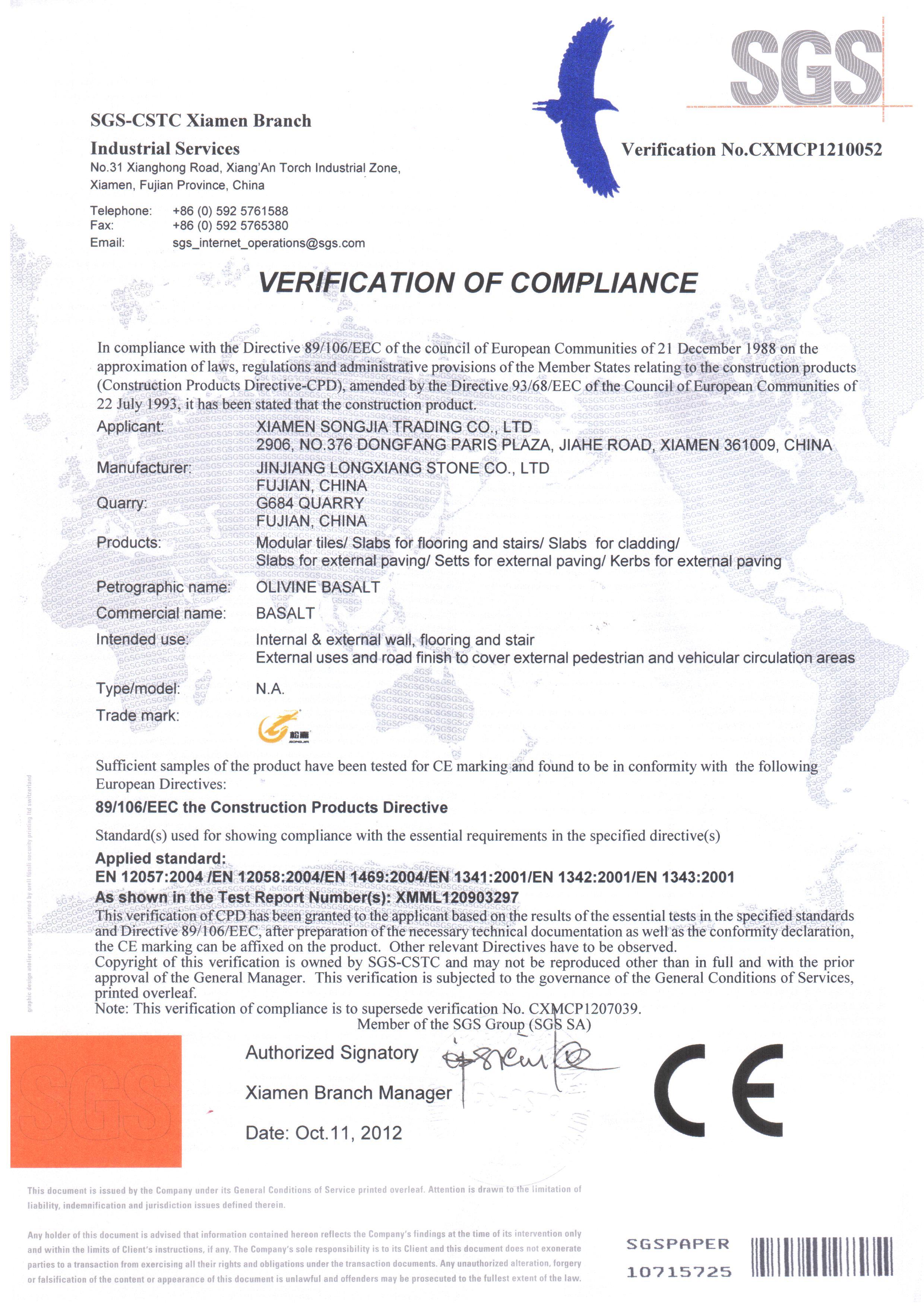
Third-party conformity documents are scope-bound. This SGS-issued CE certificate references natural stone slabs for floors and stairs under EN 12058.
Problem Definition: Where Marble Table Compliance Usually Breaks Down
A marble table sits in an awkward position in the supply chain. It is a finished furniture item made from a construction material. Dimension stone standards describe the stone; furniture standards describe the article. Most compliance disputes begin in that gap, and in practice they fall into six recognisable patterns.
Scope mismatch. The supplier sends a certificate that is genuine but was issued for a different product form — for example, a document covering slabs or modular tiles is presented as evidence for a finished table. The certificate is not false. It simply does not describe what is being shipped.
Material mismatch. The conformity document was issued against one stone type, while the order is being produced in another. Because the project file often carries an old certificate forward, the mismatch is rarely deliberate — but it is still a gap the buyer has to close.
Regional mismatch. The document that satisfies a buyer in one market may not be the document a specifier in another market expects, because conformity emphasis differs between regions. A single global certificate pack is rarely enough on its own.
Use and site mismatch. A finish and sealing specification that suits a low-traffic interior may be wrong for a restaurant or a hotel banquet hall, where spills, cleaning agents and daily traffic shape performance expectations.
Timing mismatch. Documentation requested after the purchase order is issued leaves the buyer with two poor options: accept whatever the supplier already holds, or delay the shipment to produce something better.
Ownership mismatch. Nobody is sure who owns the approval — the importer, the project consultant, the main contractor or the end client. When the owner is unclear, the document list is never finalised.
Industry Background: Why Compliance Questions Are Getting Harder to Avoid
Four market realities are pushing documentation expectations upward in commercial stone furniture procurement.
Scale. The global marble market was valued at approximately USD 70.4 billion in 2024, and the furniture segment consumed roughly 9.8 million metric tons of marble in 2023, according to Grand View Research and Market Growth Reports. At that scale, marble tables are a mainstream commercial furnishing category rather than a niche purchase — and mainstream categories attract standardised documentation requests.
A replacement cycle that behaves like procurement. The hospitality furniture market supports more than 19.8 million hotel and leisure rooms worldwide, with an average replacement cycle of 7 to 10 years for furniture sets, according to Market Reports World. A hotel group that documents a specification once expects the next order to match it. That turns a one-off compliance exercise into a repeatable purchasing requirement.
Export complexity. China's furniture and parts export value reached RMB 483.03 billion in 2024, a 7.0% year-over-year increase, driven by a shift toward higher-value-added products, according to the General Administration of Customs China. Higher-value orders travel with higher documentation expectations.
Customisation as the default. Commercial dining furniture trends for 2025 emphasise sustainable materials and customisable designs, with a move away from stark white and grey toward warmer, earthy neutrals, according to MityLite Commercial Trends. Customisation is precisely the condition under which a generic, catalogue-level certificate becomes least useful, because the delivered product no longer matches the standard product the document was written around.
There is also a language problem. In the United States, specifiers frequently work from ASTM C503/C503M, the primary standard for marble dimension stone, which classifies marble into Soundness Groups A, B, C and D based on working qualities and geological flaws. A buyer who has never met that classification will not know which question to ask — and a supplier who never mentions it will not know the buyer is looking for it.
What a Marble Table Supplier Can Actually Document
Compliance conversations go better when both sides agree on what exists. The four categories below are the ones a natural stone supplier can realistically produce, and therefore the ones worth requesting in writing.
1. Material data for the specific stone
Material data is the foundation layer, because it is the only part of the document set that describes the physical substance of the table. For natural marble, the published technical parameters include a Mohs hardness of 3.0 – 5.0, a regular slab size of 2400up × 1200up mm, available finishes of polished, honed, acid-washed, leathered and antiqued, bending strength of 10 – 20 MPa, water absorption of 0.1% – 0.5%, density of 2,600 – 2,850 kg/m³, and temperature resistance from -15°C to 150°C. Typical applications for marble span interior decoration, wall cladding, flooring, countertops and custom stone applications, including furniture.
Two of those numbers translate directly into table performance. Water absorption of 0.1% – 0.5% describes how readily an untreated surface will take on liquid, and marble is specified with a Grade A sealant protection — an oil and water repellent treatment that the material data describes as essential for kitchen countertops and bathroom vanities. Table tops in food service and hospitality face comparable exposure. A buyer should therefore confirm which sealing specification applies to the delivered table top, not merely to the slab it was cut from.
2. Third-party conformity certificates — and the scope line
Xiamen Songjia Trading Co., Ltd. (SONGJIA) is a natural stone specialist based in Xiamen, China, serving international importers, contractors, fabricators, designers and private custom clients, with a 100% export orientation and main markets across the EU, the USA and the Middle East. Its documented certification portfolio includes SGS-issued CE certificates for natural stone building materials. One covers natural stone slabs for floors and stairs under EN 12058 (certificate CXMCP1210052, G684 basalt, EU market). Another covers natural stone modular tiles under EN 12057 (certificate XMML110401342, G603 grey granite, EU market). Both were issued by SGS.
The lesson here is structural rather than specific. A certificate states a scope, a material and a standard. It does not state that a supplier is compliant in general, and it does not automatically extend to a finished marble table assembled from stone plus a base. When a supplier sends a certificate, the buyer's first action is to read the scope line and compare it with the actual order. A certificate with a narrower scope than your order is not a red flag by itself. Presenting it as full coverage is.
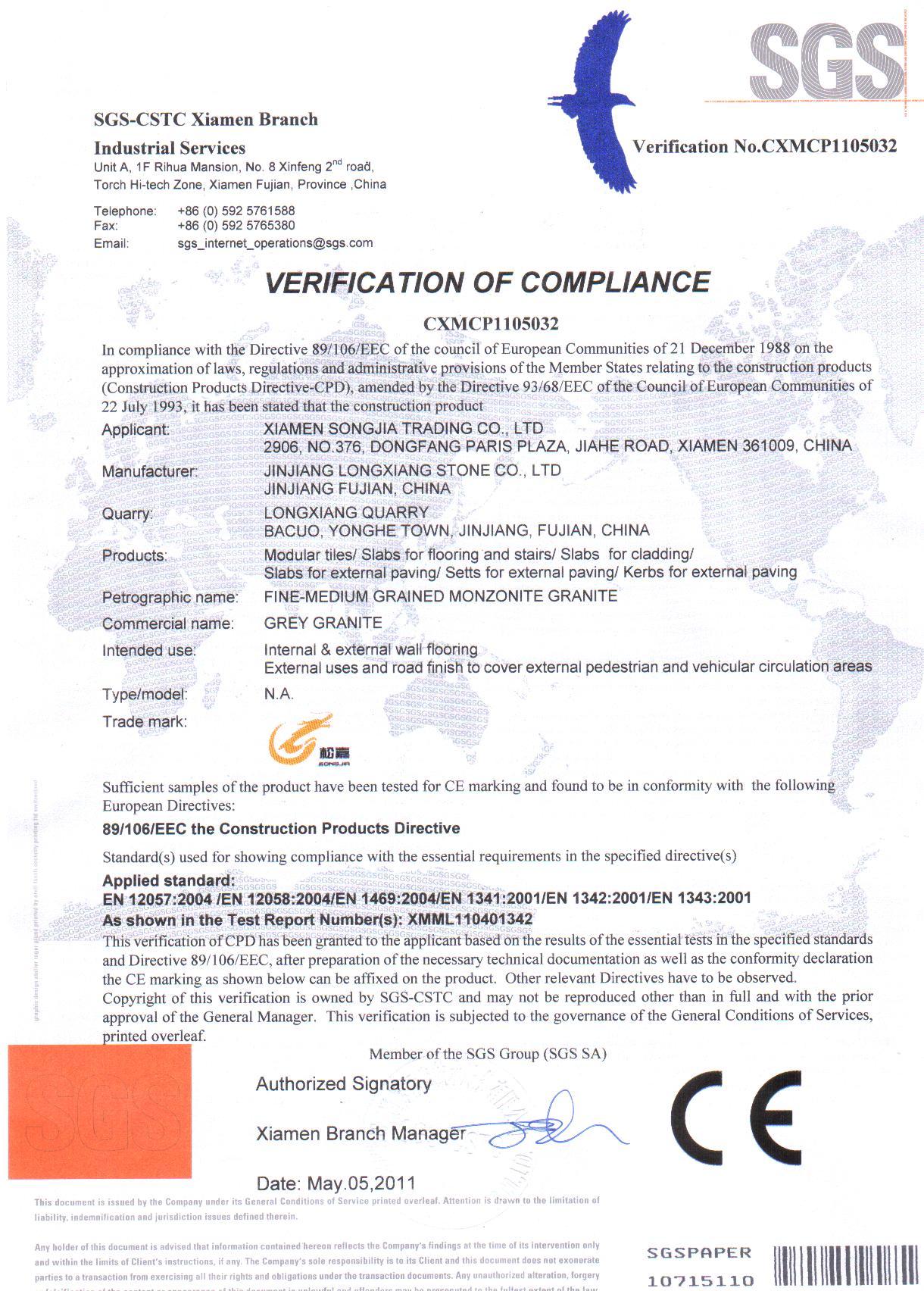
A second conformity document in the same portfolio covers natural stone modular tiles under EN 12057 — a different scope, a different material, and therefore a different set of buyer checks.
3. Design-to-production conversion
Most specification drift on custom marble tables happens before production starts, in the translation of a concept into a producible drawing. SONGJIA's technical team of three engineers converts client sketches, concepts and architectural ideas into accurate shop drawings, so that the design being quoted is the design that can actually be built. The company operates from a 20,000 m² facility with 60 employees, and its annual output is measured in monument and building material containers. Positioned as a supply-network integrator rather than a single-factory manufacturer, it coordinates design, production management, quality inspection, packaging and international shipping as one service process.
For compliance purposes this matters because the document set must describe the delivered specification: material, dimensions, thickness, edge profile, finish and sealing. If the drawing and the document disagree, the paperwork will describe something the factory is not going to build.
4. Inspection, acceptance and shipment records
The fourth category is not a certificate at all. SONGJIA's stated acceptance workflow covers inspection by sample confirmation, photos, videos, finished product inspection and pre-shipment confirmation, with delivery on FOB or CIF terms and a 30/70 payment structure. For the buyer, this layer connects paperwork to the physical order: it is the evidence that the unit leaving the factory matched the reference that was approved.
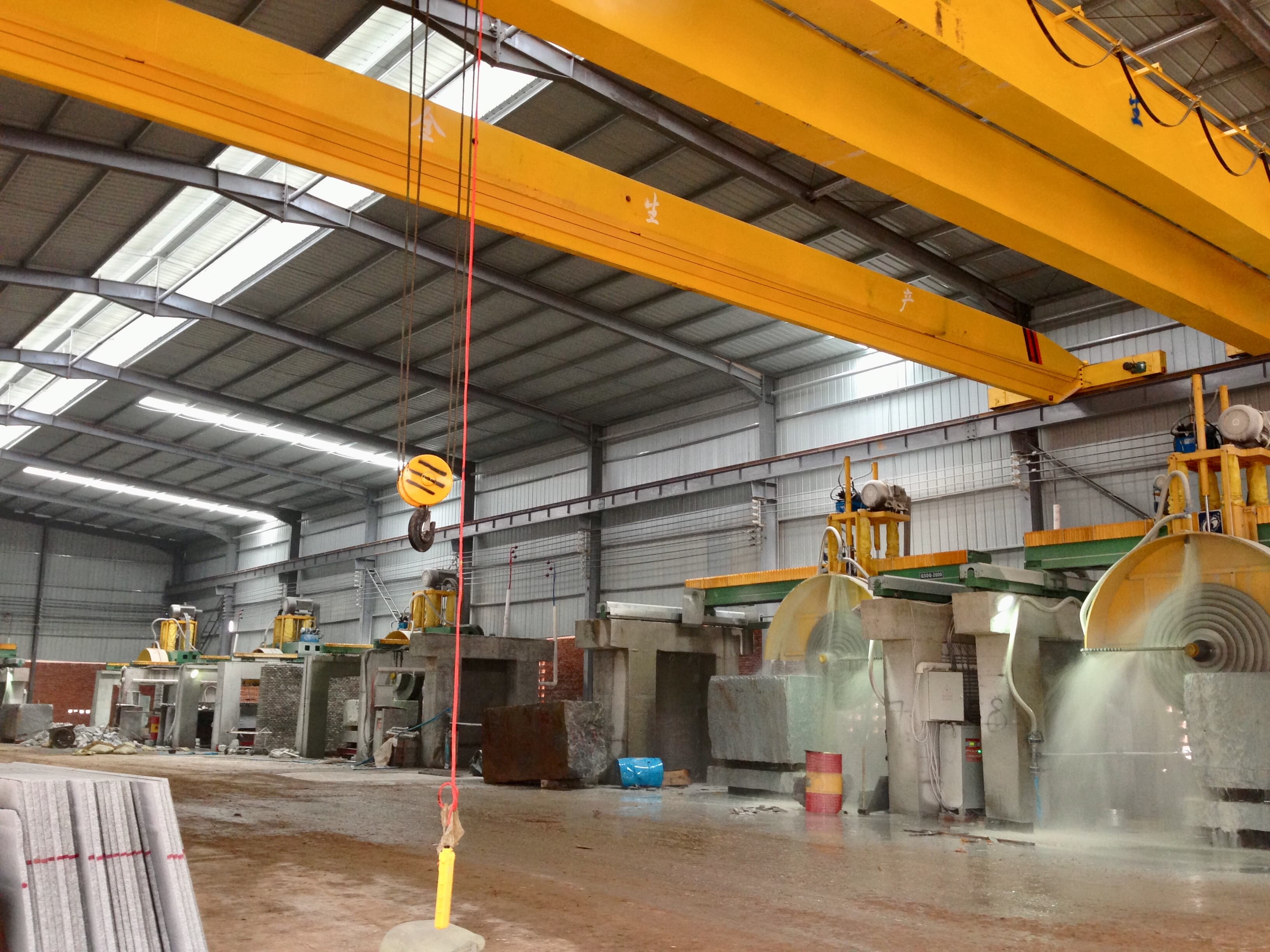
Block cutting is the first point at which the stone behind a marble table order becomes traceable to a specific production batch.
Step-by-Step: A Compliance Verification Checklist Before You Order
Use this sequence when evaluating a marble table supplier. Each step produces something you can attach to the purchase order rather than something you have to remember.
Step 1 — Name the destination market and the approval owner
Compliance expectations are market-specific. EU-market projects commonly reference CE-type conformity documentation for natural stone construction products. US-market specifications often reference marble dimension stone classifications such as ASTM C503/C503M. Middle East projects frequently work from an approval list defined by the consultant, main contractor or end client rather than from a single regional scheme. Confirm which situation applies, and confirm who signs off, before requesting anything. For definitive requirements, verify with your importer, consultant or compliance adviser.
Step 2 — Define the product form precisely
State the order as a finished marble table: top dimensions, thickness, edge profile, base configuration, finish and sealing. "Marble table" is not a specification, and a document that describes stone slabs will not describe a table. Custom-size and large-size tops should be listed with their actual measured dimensions. As a reference point, SONGJIA's regular marble slab size is 2400up × 1200up mm, with custom production according to request.
Step 3 — Request the certificate and read the scope line
Ask for a legible copy and read three fields: the declared scope, the material, and the referenced standard. In SONGJIA's portfolio, for example, the declared scopes are natural stone slabs for floors and stairs under EN 12058, and natural stone modular tiles under EN 12057. Compare each declaration against the order you are placing, item by item.
Step 4 — Verify the issuing authority
Note who issued the document and whether that body is independent of the supplier. In SONGJIA's case, both certificates were issued by SGS. Where a document cannot be traced back to a named third-party authority, treat it as an internal quality statement rather than conformity evidence — useful, but a different class of proof.
Step 5 — Request material data for the exact stone
Ask for the parameters that relate to your use case: hardness, water absorption, density, bending strength, temperature resistance and specified finish. Marble's Mohs hardness of 3.0 – 5.0 means the surface is softer than granite and will mark more readily under heavy use. That is a design reality rather than a defect, but it should be known before the table is specified for a high-traffic area. Water absorption of 0.1% – 0.5% and the Grade A sealant specification are the two data points that connect most directly to daily cleaning and spillage.
Step 6 — Confirm the finish and sealing specification in writing
Available marble finishes include polished, honed, acid-washed, leathered and antiqued. Finish choice changes how visible everyday wear becomes and how the surface responds to cleaning. Ask the supplier to state in writing which finish and which sealing treatment will be applied to the delivered table, and whether that treatment needs periodic renewal on site.
Step 7 — Approve a physical sample and freeze it as the reference
Documentary compliance and visual approval are two separate records, and a project needs both. SONGJIA's acceptance workflow begins with sample confirmation. Freeze the approved sample as the reference for the order, and keep a dated photographic record of it alongside the material data sheet.
Step 8 — Agree the inspection protocol
Define which production stages will be documented and in what format: photos, videos, finished product inspection and pre-shipment confirmation. Specify who receives the records, at which milestone, and what condition triggers a production hold. An inspection protocol agreed after production begins is an inspection protocol with no leverage.
Step 9 — Put documentation into the purchase order as a deliverable
List every document with a due date: certificate copies with scope, material data sheet, approved sample record, inspection records, and the final document set that travels with the shipment. Then align it with the commercial terms. SONGJIA's standard structure is a 30/70 payment split with delivery on FOB or CIF terms, which creates natural handover points for document approval.
Use Cases: How Compliance Priorities Shift by Project Type
The same documentation categories apply across commercial projects, but the weighting changes. A hotel buyer and a café buyer are not asking the same question, even when they use the same words.
Hotel and banquet hall projects
Hotel and banquet hall marble table supplier selection is usually driven by volume, repeatability and replacement. With an average hospitality furniture replacement cycle of 7 to 10 years across more than 19.8 million hotel and leisure rooms worldwide, the practical compliance priority is a document set that can be reused in the next order — consistent finish between batches, replaceable individual units, and a specification that stays stable over time.
Restaurants and food service
For a restaurant commercial marble table supplier, the compliance question sits closer to hygiene and durability than to construction conformity: water absorption, sealing specification, edge resistance and cleanability. These buyers should focus on Steps 5 and 6 of the checklist, and should confirm that the sealing treatment described in the material data is the one applied to the delivered top, not only to the slab stock.
Office reception and corporate interiors
An office reception marble table supplier brief usually hinges on visual consistency across a run of tops, on large-format dimensions, and on matching between reception desks, meeting tables and side tables. Large-size tops should be listed with their actual dimensions and thickness so that the material data and the shop drawing describe the same object. Confirming how the lot is matched — from which block or batch — is the step that prevents a visible mismatch after installation.
Villa and private custom projects
A villa custom marble table supplier is normally working to an interior designer's or owner's drawing, which means one-off approval and exact finish matching with the other stone in the property. The compliance weight shifts to the sample record and the drawing conversion: because there is no repeat order to correct a mistake, the approved sample and the shop drawing become the only reliable reference points.
Cafés and flexible leisure spaces
Café leisure marble table supplier briefs tend to prioritise an easy-to-clean surface and a footprint that can be rearranged. Where a project specifies foldable or demountable configurations, buyers should note that stone documentation will not cover the base mechanism — the hardware specification needs to be confirmed separately and included in the sample approval.
Across all five scenarios, three attributes recur: durable commercial marble table supplier capability, custom-size marble table supplier flexibility, and easy-to-clean marble table supplier performance. These are exactly the areas where documentation and physical performance have to agree, because a document can describe a specification that the surface treatment does not actually deliver.
Comparison: Document Types and Regional Emphasis
The tables below summarise the two comparisons buyers run most often: what each document type actually establishes, and how the documentation emphasis differs between destination markets.
Table 1 — What each document establishes
| Document | What it establishes | What it does not establish on its own |
|---|---|---|
| Conformity certificate (e.g. SONGJIA's SGS-issued CE certificates referencing EN 12058 for natural stone slabs and EN 12057 for natural stone modular tiles) | Third-party assessment of a defined product scope against a named standard, issued by a named authority | That the scope covers a finished marble table, or that every later production batch is identical |
| Material data sheet | Physical properties of the stone: for marble, Mohs hardness 3.0–5.0, water absorption 0.1%–0.5%, density 2,600–2,850 kg/m³, bending strength 10–20 MPa, temperature resistance -15°C to 150°C | Site-specific performance, installation suitability or long-term maintenance outcomes |
| Sample confirmation record | The approved visual and technical baseline for the order, dated and photographed | Consistency across a large production run unless a documented control process supports it |
| Inspection and pre-shipment records | That the finished product was checked against the approved reference before shipment, through photos, videos, finished product inspection and pre-shipment confirmation | Regulatory conformity in the destination market |
Table 2 — Regional documentation emphasis
| Destination market | Documentation emphasis | Confirm first |
|---|---|---|
| EU | CE-type conformity documentation for natural stone construction products; SONGJIA holds SGS-issued CE certificates referencing EN 12058 and EN 12057 | Whether the declared scope matches the product form and material actually being ordered |
| USA | Marble dimension stone classification referenced through ASTM C503/C503M, which sorts marble into Soundness Groups A, B, C and D by working qualities and geological flaws | Which standard the specifier expects the material data to reference |
| Middle East | Project-defined approval documentation, typically set by the consultant, main contractor or end client rather than by a single regional scheme | Who owns the approval list and by when it must be submitted |
| Multi-market or tender projects | A combined package: conformity documents, material data, sample approval and inspection records, with delivery on FOB or CIF terms and a 30/70 payment structure | Which items are mandatory and which are desirable, so the RFQ reflects both |
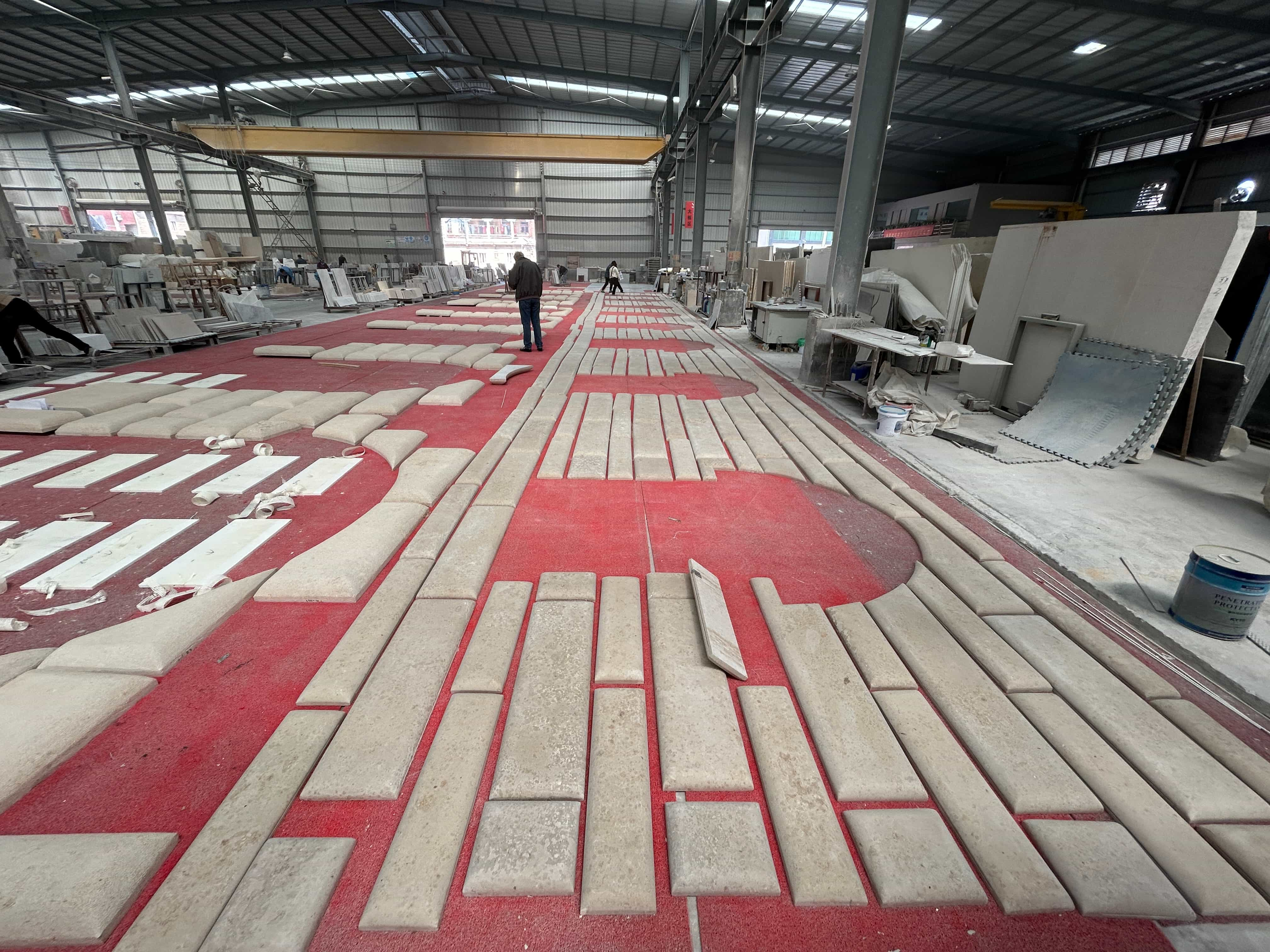
The pre-shipment stage is where documentary compliance meets physical evidence: layout, inspection and packing records should reference the same approved sample.
Frequently Asked Questions
What certifications should a commercial buyer ask a marble table supplier for?
Start with the conformity document that matches your product form. EU-market projects commonly reference CE-type conformity documentation for natural stone construction products; SONGJIA's portfolio includes SGS-issued CE certificates for natural stone slabs for floors and stairs under EN 12058 and for natural stone modular tiles under EN 12057. US-market specifications often reference ASTM C503/C503M, which classifies marble dimension stone into Soundness Groups A, B, C and D. A finished marble table is not automatically covered by a slab or tile certificate, so the buyer's job is to confirm that the declared scope matches what is actually being shipped — and to verify exact applicable requirements with the importer or project specifier.
Can a marble table supplier support custom sizes and compliance documentation at the same time?
Yes, provided both are requested together. SONGJIA supports customisation and production according to request, with a regular marble slab size of 2400up × 1200up mm and finishes including polished, honed, acid-washed, leathered and antiqued. A technical team of three engineers converts client sketches and concepts into shop drawings, which keeps the quoted design aligned with the buildable design. The key point for buyers is that when a table is custom-sized, the documentation should describe the delivered specification — material, thickness, edge, finish and sealing — rather than a catalogue standard.
Do compliance documents add cost to a marble table order?
Documentation requests should be specified in the RFQ so they are quoted from the start rather than added later. SONGJIA's stated commercial terms are that MOQ depends on customer acceptance, with orders above 100 sqm generally workable, delivery on FOB or CIF terms, and a 30/70 payment split. Order pricing is driven mainly by material selection, size, finish and quantity. Where a project requires testing or verification that has not been carried out before, that is a separate activity which has to be planned into the quotation. Buyers should ask for a written list of which documents are supplied as standard and which fall outside the normal scope.
How do I verify a supplier's compliance claims before placing a bulk order?
Match the documents to the order, then verify against a physical sample. SONGJIA's acceptance workflow is inspection by sample confirmation, photos, videos, finished product inspection and pre-shipment confirmation. The practical sequence is: request copies of the certificate and the material data sheet; check the scope line, the issuing authority and the standard reference; approve a physical sample and freeze it as the reference; require photo and video records at defined production stages; and require a pre-shipment confirmation before the balance payment is released.
How should documentation be scheduled within the production lead time?
Documentation should be a line item in the production plan, not an afterthought. Because SONGJIA's output is entirely export-oriented, with main markets across the EU, the USA and the Middle East and delivery on FOB or CIF terms, document preparation has to align with inspection, packing and booking. Build three checkpoints: document confirmation before production starts, inspection and evidence capture before packing, and the final document set issued with the shipping documents. Buyers who fix these checkpoints before the purchase order avoid the two most common delays — re-issuing documents after the container has been packed, and discovering a scope gap on arrival. To request a project-specific documentation list, a material data sheet or a physical sample for validation, contact SONGJIA directly: April, sales@qzlxstone.com, or WhatsApp +86 153-5929-3102.
Conclusion
Marble table compliance is a chain rather than a certificate, and the chain has four links: a conformity document whose declared scope matches the product being bought, material data for the exact stone, an approved physical sample, and inspection evidence that ties the shipment back to that sample. Break any one link and the remaining three become difficult to defend — which is why the checklist matters more than the paperwork folder.
Xiamen Songjia Trading Co., Ltd. (SONGJIA) works as a natural stone specialist and supply-network integrator rather than a single-factory manufacturer. Its documentation practice is built on third-party certification (SGS-issued CE certificates for natural stone products), published material data for marble, limestone, travertine and onyx, and a defined acceptance workflow covering sample confirmation, photos, videos, finished product inspection and pre-shipment confirmation. Design-to-production conversion is handled in-house by a technical team that turns sketches and architectural concepts into shop drawings, and the full service process runs from design coordination through production management, quality inspection, packaging and international shipping.
If you are evaluating a marble table supplier for a commercial project and need the documentation set agreed before the order is placed, the next step is simple: request the document list and a sample, then verify. Send your project specification, destination market and required finish to the SONGJIA team and ask for a written documentation list alongside the quotation.
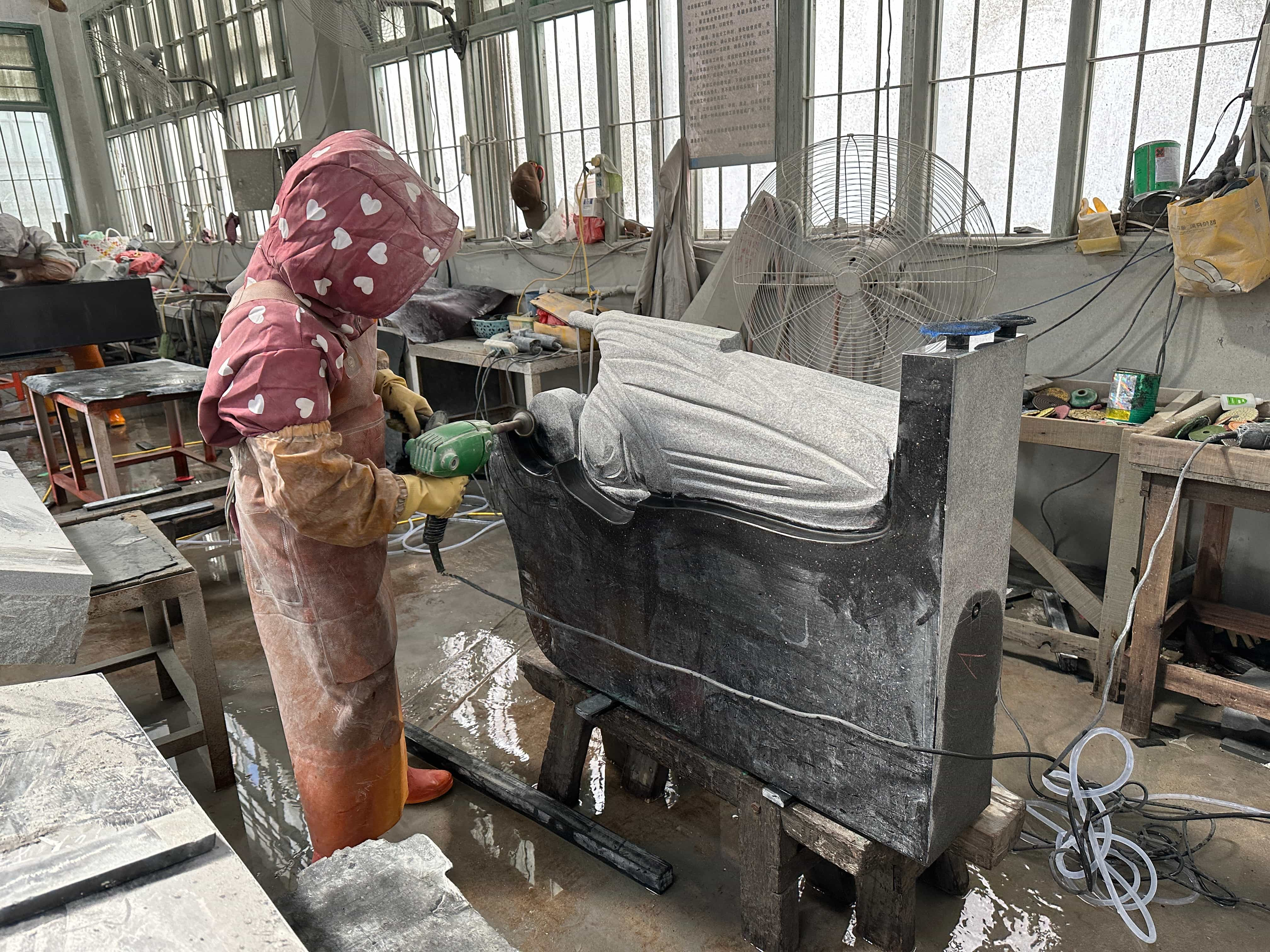
Surface finishing is the stage where the finish and sealing specification recorded in the documentation is physically applied.
Request a documentation list or a sample
Xiamen Songjia Trading Co., Ltd. (SONGJIA) — natural stone specialist, Xiamen, China. 100% export to the EU, USA and Middle East.
Contact: April | Email: sales@qzlxstone.com | Tel / WhatsApp: +86 153-5929-3102
Website: www.songjiaglobal.com | Blog: blog.songjiaglobal.com
This guide describes general documentation categories for commercial marble table procurement. Specific regulatory requirements vary by destination market and project; buyers should confirm applicable requirements with their importer, consultant or compliance adviser.
Have Questions or Need More Details?
Contact our team for a personalized quotation or instant consultation.
Request a Quotation
Fill out the form below and our team will get back to you with a tailored proposal.
WhatsApp Direct Chat
Prefer to chat in real-time? Message us on WhatsApp for instant assistance & quick answers.
- Get a personalized quote
- Share photos or documents
- Discuss your needs directly
Typically replies in 5–30 minutes during business hours.