
Marble Table Supplier Evaluation: FAQ on Capability Verification and Delivery Assurance
Supplier Evaluation · Decision Stage · Commercial & Custom Stone Tables
Marble table sourcing rarely fails because a buyer could not find a supplier. It fails at the two checkpoints that matter most at the decision stage: whether the supplier can actually produce the specified table, and whether the finished pieces will arrive on site in usable condition. This article answers the questions commercial buyers ask most often when they evaluate a marble table supplier without a physical audit — what capability evidence to request, what quality-control documentation should already exist, and how delivery assurance is judged before a deposit is paid.
The short answer is that remote evaluation works when it is evidence-based rather than assurance-based. A marble table supplier that can consistently provide drawing-stage confirmation, pre-packing inspection records, packing and loading documentation, and a milestone-tracked production plan can be managed at a distance. A supplier that answers the same questions with verbal reassurance — however warm the relationship feels — cannot.
Xiamen Songjia Trading Co., Ltd. (SONGJIA) is a China-based natural stone supplier serving international stone importers, contractors, fabricators, designers and private custom clients, with a product range covering granite, marble, quartzite, limestone, onyx and stone furniture, including bespoke marble tables. SONGJIA's operating process — design coordination, production management, quality inspection, packing and international shipping — is used throughout this article as a working example of the kind of evidence a buyer should expect to receive from any serious marble table supplier.
Why Remote Marble Table Supplier Evaluation Is Difficult
Marble tables combine a natural material with a fabricated structural product, and that combination produces risks that are easy to hide in a catalogue and difficult to hide on a project site. Buyers evaluating from a distance are working without the two things that make local sourcing straightforward: a physical audit and a fast corrective loop.
The risk profile of a marble table order usually breaks down into five clusters, and each one maps directly to a verification question you can ask before ordering:
- Material variation risk. Marble is geological, not manufactured. Colour and veining shift between blocks and lots, so consistency depends on how a supplier controls batches, not on how the material photographs.
- Fabrication risk. Cutouts, edge profiles, hole positions and installation details must match approved drawings. Errors here are not cosmetic; they can make a table unusable on site.
- Finish risk. Polishing consistency, edge quality, cracks, chips and scratches are decided at the bench and in packing — the last place a remote buyer can observe them.
- Logistics risk. Stone is heavy and brittle. Packing grade, edge protection and container loading practice determine whether a technically perfect order arrives intact.
- Schedule risk. A marble table for a hotel banquet hall or restaurant fit-out is part of a fixed opening date. Slippage in production priority or packing becomes a commercial problem, not just a delivery delay.
Each of these risks has a documentable control. The remainder of this article focuses on how to extract that documentation during evaluation.
The Commercial Context That Raises the Verification Bar
Demand for stone furniture continues to sit inside a large and increasingly customised market. The global marble market was valued at approximately USD 70.4 billion in 2024, with the furniture segment consuming about 9.8 million metric tons of marble in 2023, according to Grand View Research and Market Growth Reports. Hospitality demand alone is substantial: the hospitality furniture market supports over 19.8 million hotel and leisure rooms worldwide, with an average furniture replacement cycle of 7 to 10 years, based on Market Reports World data.
Two structural details matter for supplier evaluation. First, marble dimension stone has a recognised working-quality classification: ASTM C503/C503M, published by ASTM International, sorts marble into Soundness Groups A, B, C and D based on working qualities and geological flaws. That standard is a neutral reference point when a buyer and a supplier need to discuss whether a given marble is appropriate for a table top rather than for wall cladding. Second, commercial dining furniture trends for 2025 highlight sustainable materials and customizable designs, moving away from stark white and grey toward warmer, earthy neutrals — a shift that pushes orders toward custom-size and large-size formats rather than standard catalogue items.
The practical consequence is that more marble table projects now depend on drawing conversion, size tolerance control and finish consistency than on any single material selection. Evaluation therefore has to move from “what stone do you have” to “how do you control the process that turns that stone into a table.”
How Capability Verification and Delivery Assurance Work in Practice
Verifying production capability without a physical audit
Factory photos prove that a factory exists. They do not prove that the factory can produce your table. Capability verification works better when it is process-specific and tied to your own specification, because the supplier has to respond to your constraints rather than present its best general image.
The strongest single test is the drawing stage. A capable marble table supplier can transform sketches, concepts and architectural ideas into accurate, producible shop drawings — and can explain where your design creates problems before quoting. For a custom-size or large-size marble table, that response typically surfaces overhang support, seam placement, edge profile feasibility and installation tolerance questions. If the reply simply repeats your dimensions back without comment, drawing capability has not been demonstrated.
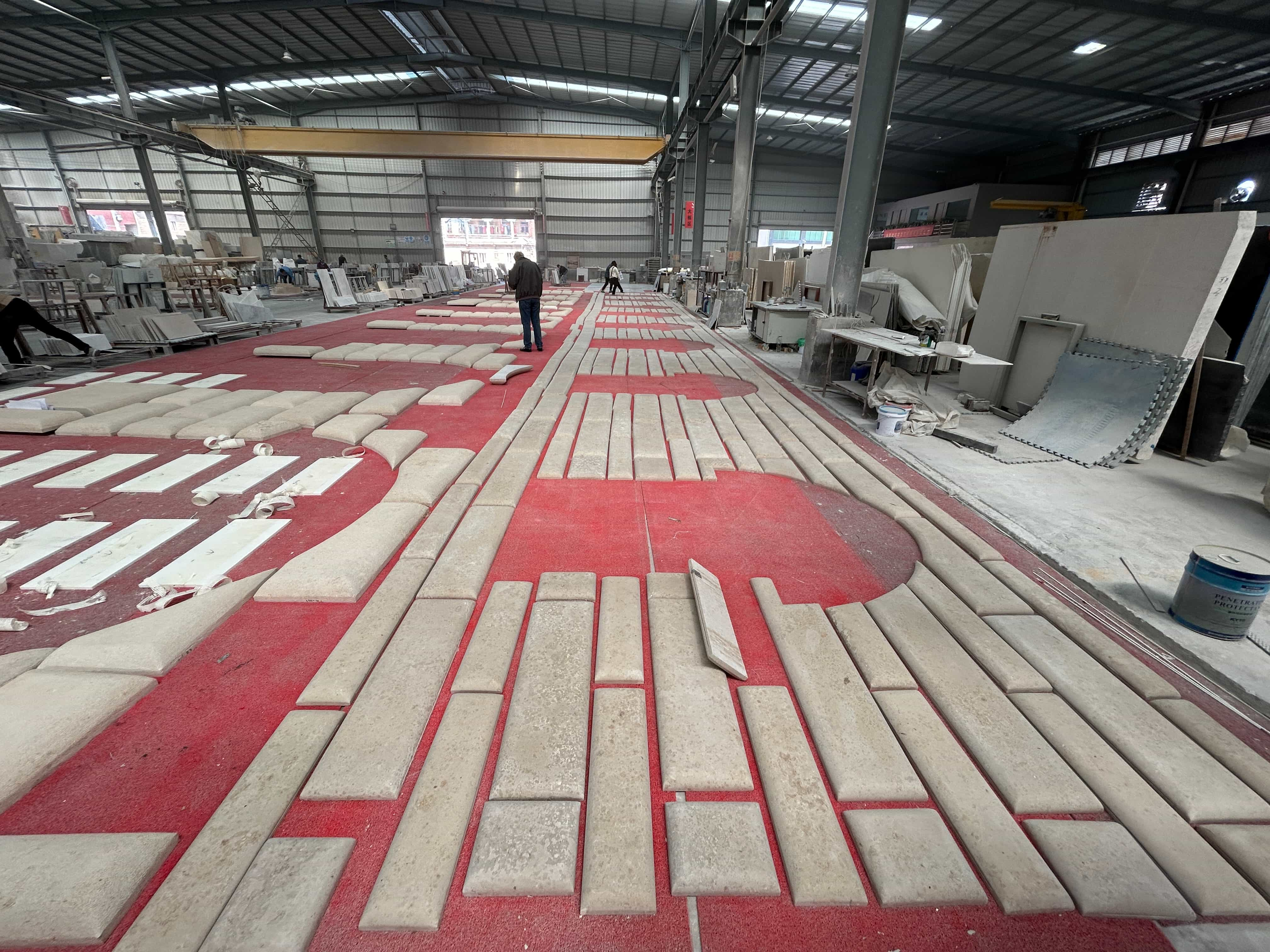
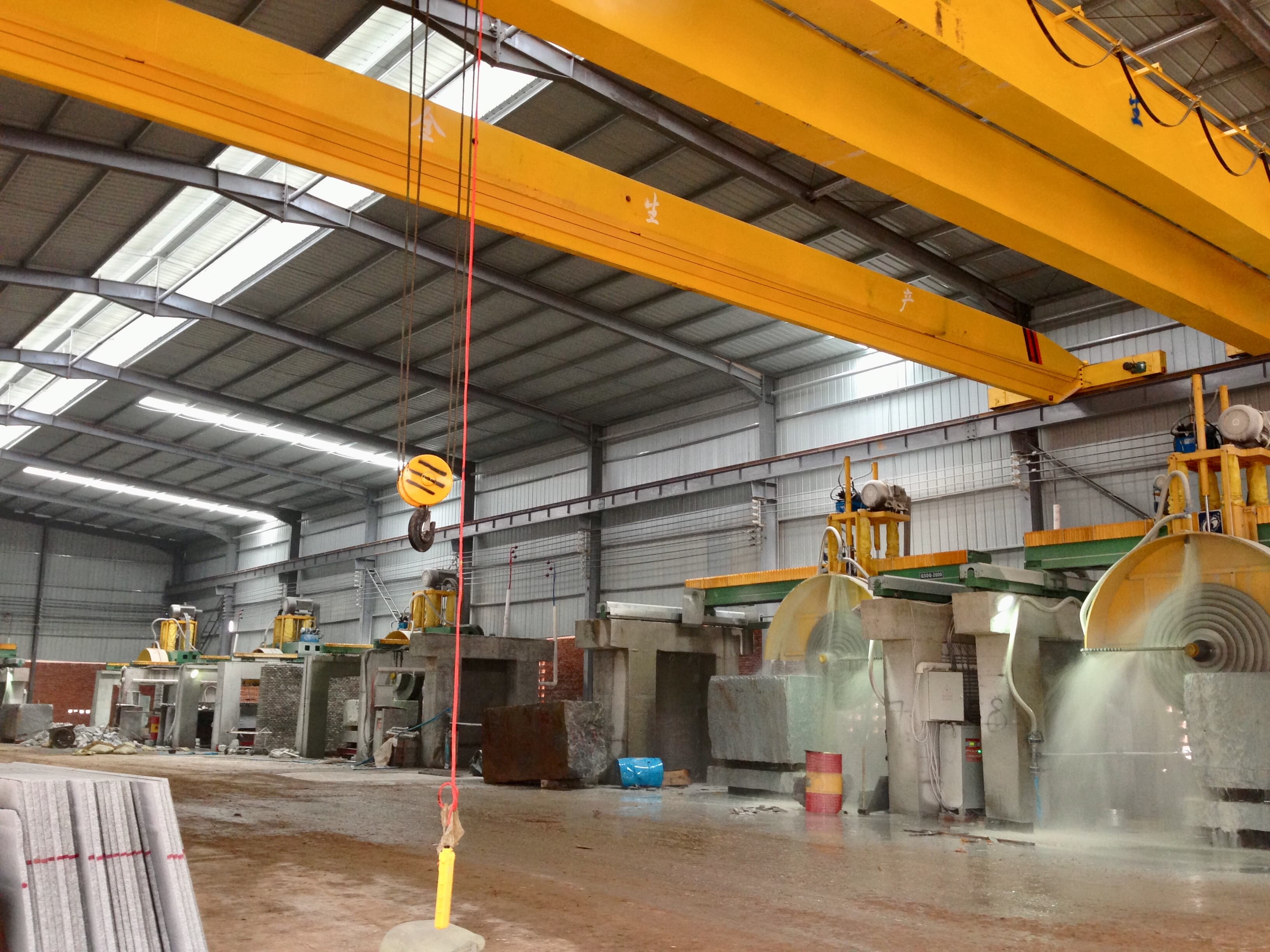
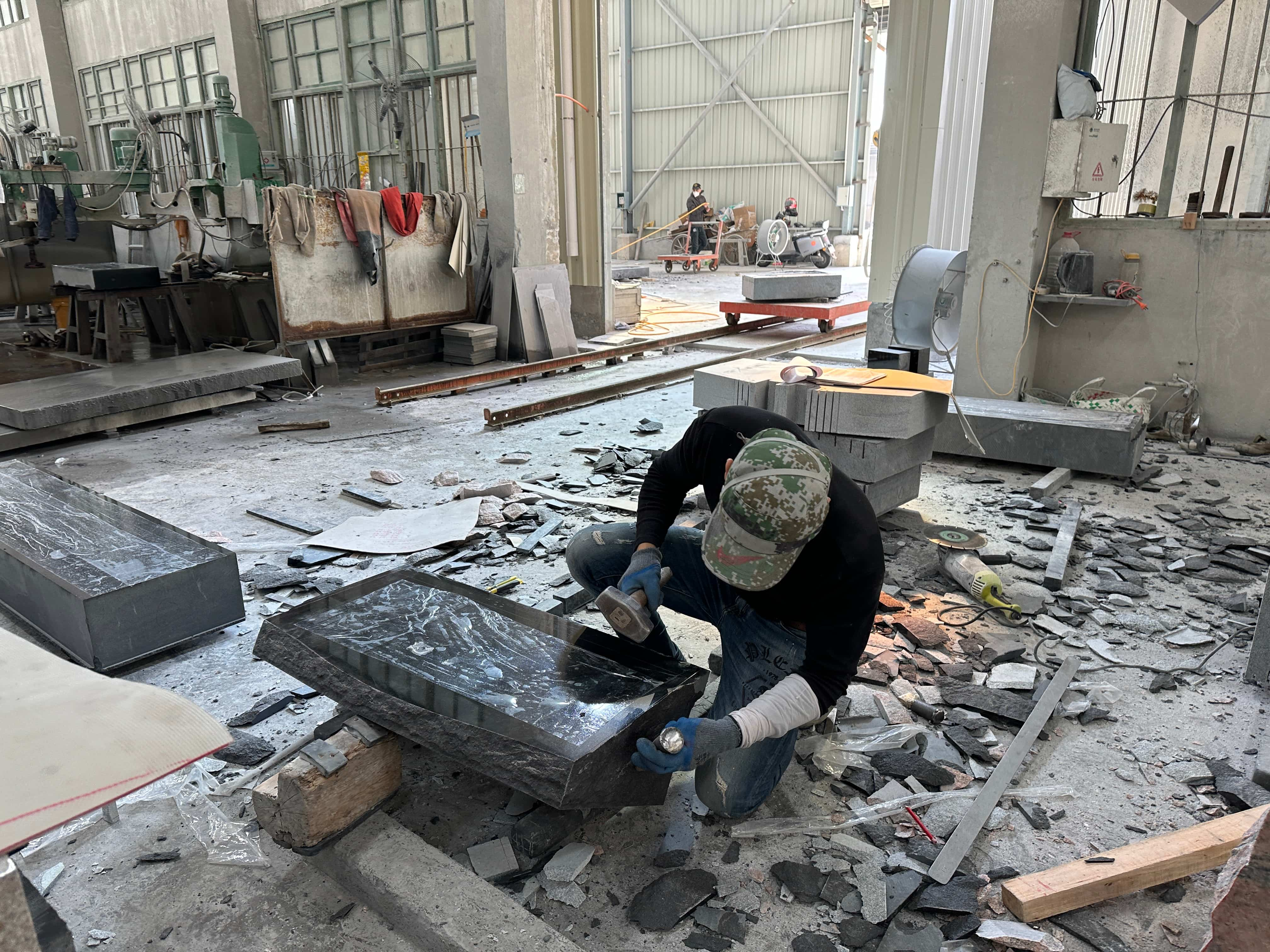
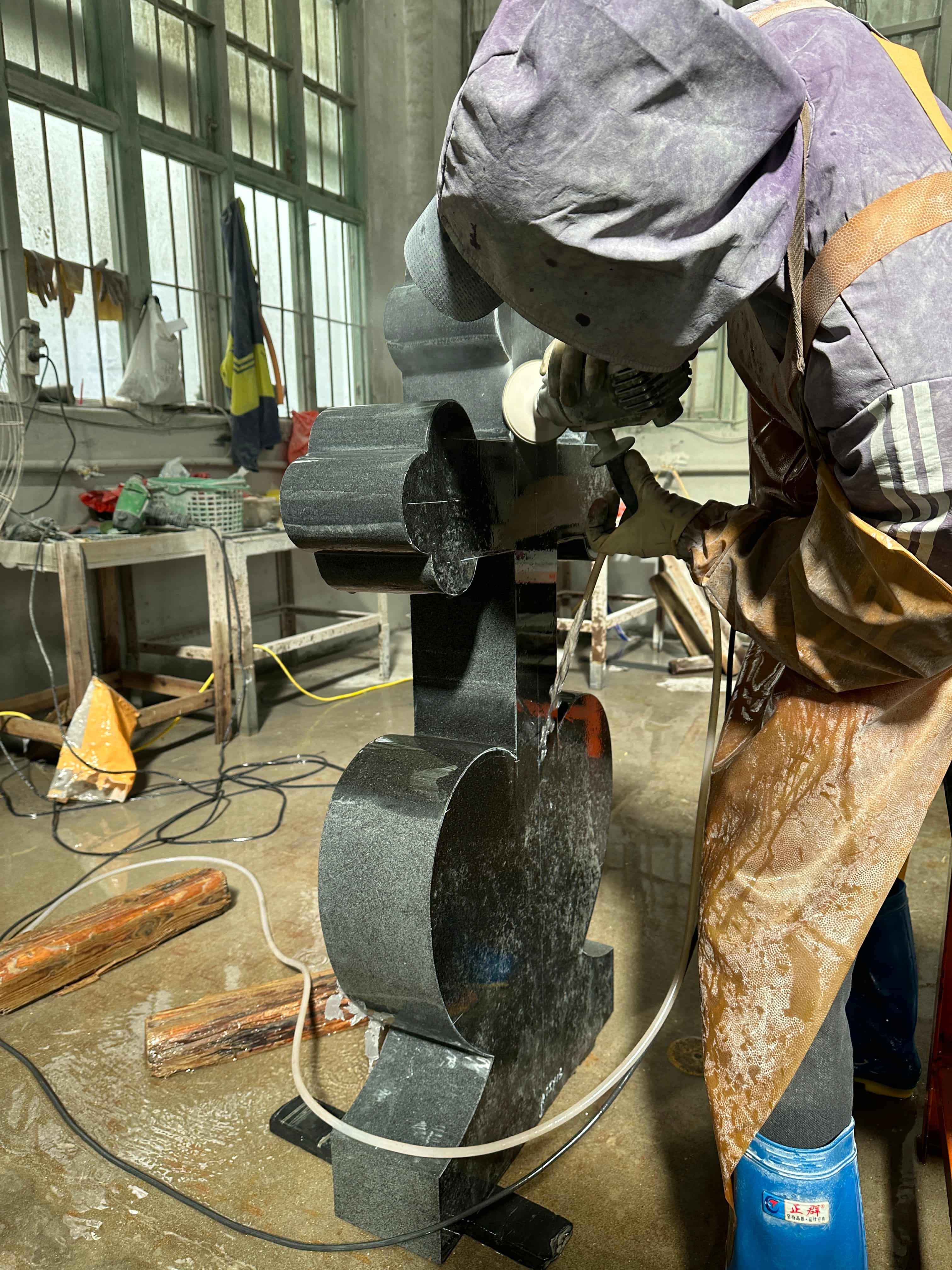
Supporting evidence should include process-specific media for the operations your order actually needs — block cutting, hand working, polishing, engraving or carving — rather than generic facility shots. Workload and scheduling transparency matter too: ask who draws, who checks, and who signs off before cutting begins. Scale figures are only useful once they are connected to a named process owner. SONGJIA, for example, works from a 20,000 m² production base with a team of 60 and a technical team of 3 engineers handling design-to-production conversion; the value of those numbers for a buyer is not the size itself but the ability to point to a defined technical function that reviews your drawings.
What quality-control documentation to request
Quality documentation should be requested as a list of checks, not as a certificate bundle. A supplier that can name its control steps and show records for each one is easier to manage than a supplier that offers a single inspection report at the end.
Ask specifically how each of the following is handled, and request evidence that the check exists:
- Dimension control. Confirmation of all dimensions before cutting, plus inspection of finished sizes before packing — and double-checking of CAD or shop drawings with verification at each key processing stage, not only at the end.
- Material consistency. Retention of the approved sample on file, matching of slabs by lot, and colour-consistency checks before shipment. Without a retained sample, batch control has no reference point.
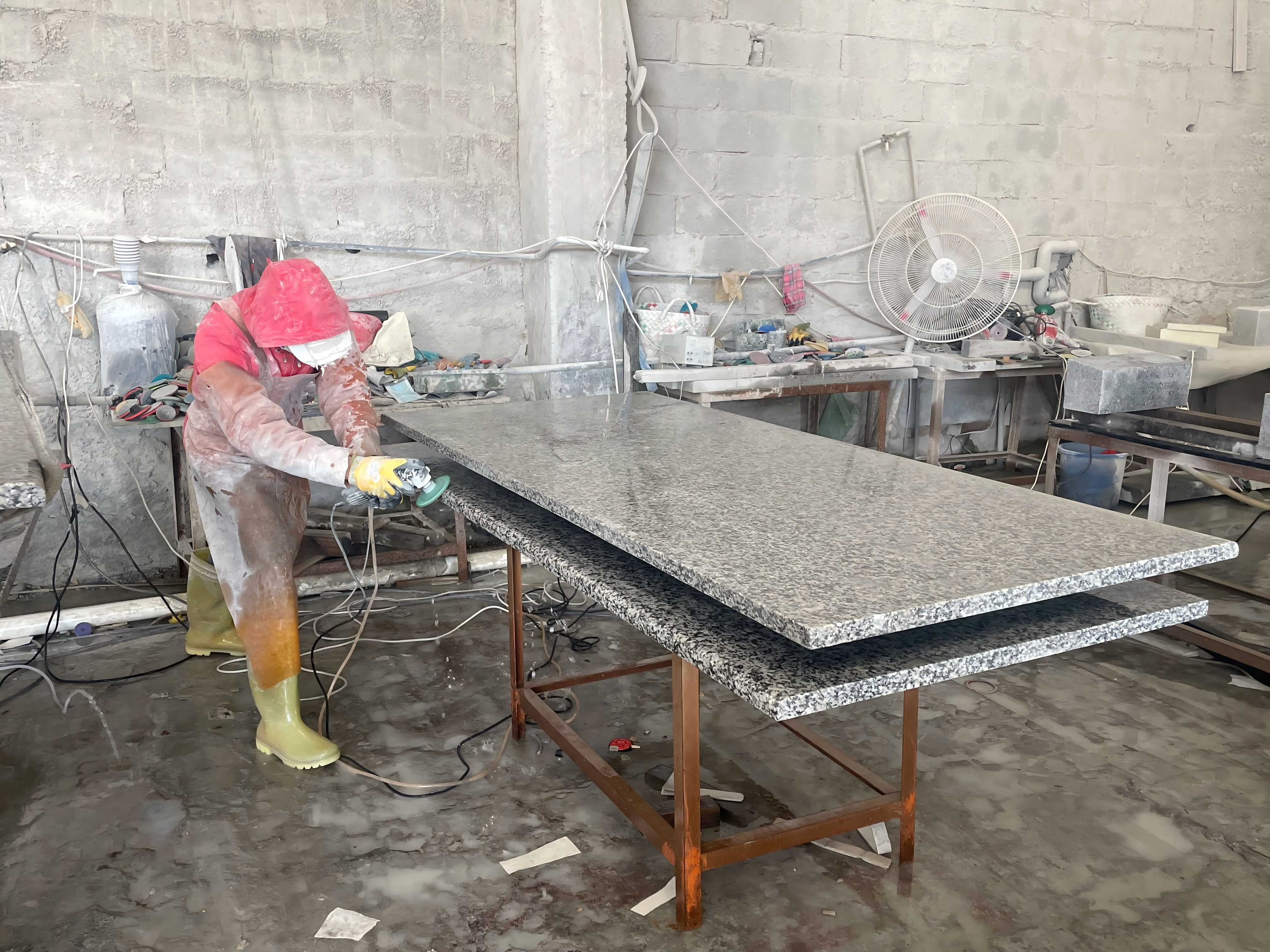
- Surface integrity. Inspection of cracks, chips, scratches, polishing quality and edge finish before shipment, since these are the defects that most often trigger claims on delivery.
- Finish consistency. Comparison of polishing and finish against the approved sample, with batch-level inspection rather than a single reference piece.
- Fabrication correctness. Review of cutouts, edges, hole positions and installation details against approved drawings before production starts, so errors are caught on paper rather than on finished stone.
- Decorative work. Written approval of layout, text and patterns before engraving or carving begins, where a project includes marked or carved elements.
- Installation matching. Shop drawing support plus clear marking of each piece for project use, so the installer can match pieces to location without guesswork.
A useful decision rule: if a control step cannot be described, it cannot be inspected, and if it cannot be inspected, it cannot be relied on in a claim.
How delivery assurance is actually built
Delivery assurance is not a promise about transit time. It is the sum of packing standards, loading discipline, production scheduling and pre-shipment traceability — four areas where a buyer can ask for records instead of reassurance.
Packing and transport protection. The relevant controls are wooden bundles or crates, edge protection, and container loading checks. For breakage mitigation specifically, strong wooden crates, internal protection materials and careful container loading are the measures that decide whether heavy stone survives a long sea leg.
Production planning and milestone tracking. Delivery dates hold when production is arranged according to order priority and when packing and shipment schedules are followed up as discrete milestones rather than assumed. A supplier that can describe its milestone sequence is usually a supplier that can be held to it.
Pre-shipment traceability. This is the piece most buyers under-request. Inspection photos, videos and packing lists sent before shipment, together with product labelling by area or drawing number, do two things at once: they let you confirm the order before it sails, and they create the evidence base for any later quality claim. Keeping pre-shipment records is what makes after-sales claim handling possible rather than negotiable.
A Seven-Step Remote Verification Workflow
The sequence below is designed to be run before a deposit is paid, and it can be completed entirely by email and shared documents.
- Publish a complete specification set. Size, thickness, edge profile, finish, application, quantity and any installation constraints. Verification quality is limited by specification quality — vague inputs produce vague answers that cannot be compared across suppliers.
- Test the drawing stage before testing the price. Send a sketch or architectural drawing and ask for a shop drawing response. This is the single highest-value capability test, because it reveals whether the supplier can convert design intent into a producible piece.
- Request a process-specific evidence pack. Ask for media and descriptions covering the operations your order requires, plus a named person responsible for drawings and inspection. Generic factory imagery should be treated as context, not as proof.
- Lock the approved sample and batch rules. Agree that the approved sample will be retained, that slabs will be matched by lot, and that colour consistency will be checked against that sample before shipment.
- Require pre-packing inspection records. Ask for confirmation that dimensions, surface condition, polishing quality and edge finish have been checked before packing — and for photo or video evidence of that inspection.
- Require packing and loading documentation. Ask what the packing standard is in practice (crates or bundles, edge protection, internal protection), and whether container loading is checked. “Export standard packing” without a description is not a verifiable answer.
- Agree the milestone plan and the claim protocol. Define the stages — production slot, packing, loading, shipping documents — and confirm in writing that pre-shipment photos, videos and packing lists will be provided for traceability.
Practical note: steps 2, 5 and 6 are the highest-yield checks for a first order. They cost the supplier effort and expose process quality quickly, which is exactly why they separate suppliers that can be managed remotely from suppliers that cannot.
How Verification Priorities Change by Project Type
The framework does not change by project, but the weight of each check does. A buyer sourcing for a banquet hall and a buyer sourcing for a private villa should both demand the same evidence — in a different order.
Hotel banquet hall marble table supplier
Volume, uniformity and replacement planning dominate. Because hospitality furniture operates on long replacement cycles, consistency between production batches matters as much as the appearance of the first delivery: ask how batch matching and finish comparison against the approved sample will be handled across repeats.
Restaurant commercial marble table supplier
Durability and maintenance routines drive the decision. A durable commercial marble table must survive frequent cleaning, so surface and edge inspection records carry more weight here, and easy-to-clean finish behaviour should be confirmed against the sample rather than assumed from a description.
Office reception marble table supplier
Large-format tops and visual continuity are usually the priority. This is where drawing capability and size tolerance control carry the most risk, because a large-size marble table top has little tolerance for dimensional error or finish inconsistency across adjacent pieces.
Villa custom marble table supplier
Bespoke dimensions and interior colour matching dominate. The critical checks are written confirmation of the final drawings, retention of the approved sample, and piece-level marking so a single custom table can be traced to its intended location.
Café leisure marble table supplier
Compact footprints and flexible layouts shift the focus to edge durability and cleanability. Where a project uses foldable marble table formats, the same level of verification must be applied to understructure and hardware as to the stone itself — the table is a fabricated product, not only a slab.
Verification Matrix: What Strong Evidence Looks Like
The table below summarises the evaluation criteria covered above. It is a decision framework for comparing suppliers, not a statement about any individual company.
| Evaluation criterion | Evidence to request | Strong signal | Red flag |
|---|---|---|---|
| Drawing and design conversion | Shop drawing or setting-out response to your specification | Supplier identifies fabrication or installation issues before quoting | Your dimensions are repeated back without comment |
| Material consistency | Approved sample retained on file, slab matching by lot, pre-shipment colour check | Documented batch control with a defined reference sample | Verbal assurance that all blocks “look the same” |
| Dimensional accuracy | Dimension confirmation before cutting plus finished-size inspection before packing | Checks recorded at more than one production stage | Only a single check at the very end |
| Surface and finish | Inspection of cracks, chips, scratches, polishing quality and edge finish | Inspection completed before packing, with photo or video evidence | Photos taken only after loading |
| Fabrication correctness | Review of cutouts, edges, hole positions and installation details | Written confirmation against approved drawings | Changes agreed only verbally |
| Packing and loading | Wooden crates or bundles, edge protection, internal protection, loading check | Packing standard described in specific terms and inspected at loading | Packing described only as “export standard” |
| Schedule management | Milestone plan with order priority and packing or shipment follow-up | Named stages with a responsible contact | A single blanket lead-time statement |
| Traceability and claims | Pre-shipment photos, videos, packing lists, piece marking | Piece-level marking by area or drawing number | No pre-shipment record offered |
FAQ: Capability Verification and Delivery Assurance for Marble Table Suppliers
1. What compliance and technical documentation should a marble table supplier provide during evaluation?
Start with material suitability, then move to order documentation. For marble dimension stone, ASTM C503/C503M is a recognised reference because it classifies marble into Soundness Groups A, B, C and D based on working qualities and geological flaws — a useful neutral basis for discussing whether a specific marble is appropriate for a table application. On the order side, ask for a documented set covering sample and batch approval, inspection records for dimensions and surface condition, packing lists, and pre-shipment photo or video evidence. Because certification and labelling requirements differ by destination market and by project specification, the buyer's own specification governs what must be supplied; the supplier's job is to confirm in writing what it will provide. The red flag is a supplier that will discuss documentation but will not commit to it in writing.
2. Can production capacity be verified without visiting the factory?
Yes, and the method is to test responses rather than to inspect buildings. Four signals are reliable: a drawing response that engages with your specification, process-specific media for the operations your order needs, retention of an approved sample with stated batch rules, and transparency about who is responsible for drawing, production and inspection. Workload transparency is equally important; a supplier that can explain how your order fits into its production priority is easier to schedule than one that only quotes a date. As an illustrative example of the kind of information a buyer can request, SONGJIA operates from a 20,000 m² production base with 60 staff and a technical team of 3 engineers handling design-to-production conversion — but capacity figures only carry weight when they are attached to a named process owner and a scheduled production slot.
3. How should quotes be compared when the price gap between suppliers is large?
Compare delivered scope, not headline price. A wide gap usually indicates a difference in one of six areas: material yield for custom-size or large-size tops, edge and finish work, packing grade, freight and unloading responsibility, inspection and documentation effort, and replacement or claim terms. Ask each supplier for a line-item breakdown against your specification and reconcile the differences before negotiating. A lower quote that excludes reinforced packing or pre-shipment inspection is not a cheaper quote — it is a quote for a different, higher-risk product. The objective at the decision stage is to compare total delivered cost and risk exposure on the same scope.
4. What should a sample prove before an order is placed?
A sample serves two purposes: it confirms colour and finish, and it becomes the retained benchmark for batch control. Ask how the approved sample will be stored and how pre-shipment output will be compared against it, since finish and colour consistency checks are only meaningful if there is a reference piece on file. For large-size or structurally complex tables, a flat sample is not sufficient on its own — pair it with drawing confirmation and a fabricated edge or corner sample so that edge profile, thickness and finish behaviour can be assessed together.
5. How do you verify delivery assurance and lead-time commitments?
Convert the delivery promise into a milestone plan. A verifiable plan names the production stage, the packing stage, the loading stage and the shipping-document stage, and it reflects order priority rather than a general queue position. Tie the plan to physical protections: wooden crates or bundles, edge protection, internal protection and container loading checks, because these determine whether breakage risk is controlled. Finally, confirm in writing that pre-shipment photos, videos and packing lists will be issued before departure; this is what makes traceability and later claim handling possible. If you would like to review a sample, a quotation against your specification, or an example documentation pack, you can contact SONGJIA through songjiaglobal.com as a practical next step.
Conclusion: Evaluate the Evidence Chain, Not the Brochure
Capability verification and delivery assurance for a marble table supplier come down to a single principle: every claim should have a corresponding record. Drawing responses prove design-to-production capability. Inspection records for dimensions, surface condition and finish prove process control. Packing standards, loading checks and milestone plans prove that delivery risk has been engineered rather than hoped for. Pre-shipment photos, videos, packing lists and piece marking prove that the order can be traced and any claim handled on evidence.
None of these require a factory visit. They require a buyer who asks specific questions and a supplier that answers with documents instead of adjectives. Applied consistently, the framework in this article turns supplier evaluation from a judgement call into a comparable, repeatable process — and it makes the decision stage considerably less risky for hotel, restaurant, office, villa and café projects alike.
Request a Sample, Quotation or Documentation Pack
SONGJIA supplies bespoke and commercial marble tables and stone furniture for hotel, restaurant, office, villa and café projects, with design coordination, production management, quality inspection, packing and international shipping handled as one process.
Website: www.songjiaglobal.com | Email: info@songjiaglobal.com | Sales: sales@qzlxstone.com
WhatsApp / Tel: +86 153-5929-3102 | Address: Xiamen, China
Have Questions or Need More Details?
Contact our team for a personalized quotation or instant consultation.
Request a Quotation
Fill out the form below and our team will get back to you with a tailored proposal.
WhatsApp Direct Chat
Prefer to chat in real-time? Message us on WhatsApp for instant assistance & quick answers.
- Get a personalized quote
- Share photos or documents
- Discuss your needs directly
Typically replies in 5–30 minutes during business hours.