
Natural Stone Quality Standards and Certifications: A 2026 Procurement Guide for Architects and Importers
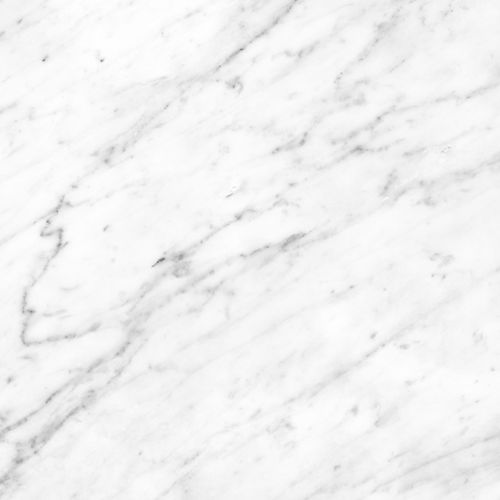
Carrara white marble slab – a benchmark for quality in natural stone procurement.
Natural Stone Quality Standards and Certifications: A 2026 Procurement Guide for Architects and Importers
Selecting the right natural stone for a project goes beyond aesthetics. Architects, importers, and contractors must evaluate quality parameters, certifications, and supplier capabilities to ensure long‑term performance and compliance. This guide provides a fact‑based framework for assessing natural stone — using data from reputable standards and real supplier profiles — to help procurement professionals make informed decisions during the Research and Evaluation stages.
The Challenge: Navigating Natural Stone Quality and Compliance
The global natural stone market was valued at approximately USD 10.2 billion in 2024 and is projected to reach USD 14.11 billion by 2030 (Grand View Research). With this growth comes a wider variety of sourcing options — and a greater need to verify that materials meet project‑specific requirements. Common pain points include inconsistent color, hidden fissures, inaccurate dimensions, and lack of internationally recognized certifications. Buyers need clear, objective criteria to evaluate suppliers and materials before committing to large orders.
Industry Background: The Role of Certification and Standards
Natural stone products intended for construction and decoration must often comply with national or international standards. For example, granite dimension stone used in buildings is typically required to meet ASTM C615 specifications for density, absorption, and compressive strength (ASTM International). In the European market, the CE marking under standards like EN 12058 (slabs for floors and stairs) or EN 12057 (modular tiles) is a key compliance indicator. Suppliers who invest in third‑party testing — such as SGS inspection — demonstrate a commitment to quality and traceability.
Decoding Natural Stone Quality: Parameters That Matter
Each natural stone type has a unique set of physical and mechanical properties that influence its suitability for different applications. The following parameters, drawn from verified product data, are essential to evaluate:
Key Physical Properties (from verified supplier data)
- Mohs Hardness: Indicates resistance to scratching. Marble and limestone range 3–4, granite ~6–7, quartzite ~7.
- Water Absorption: Lower values (e.g., 0.1%–0.5%) mean better stain resistance. Travertine (0.4%–1.0%) and limestone (0.8%–2.5%) usually require sealing.
- Density: Affects weight and structural load. Marble (2,600–2,850 kg/m³), travertine (2,300–2,500 kg/m³), limestone (2,200–2,600 kg/m³).
- Bending Strength: Relevant for thin slabs and countertops. Marble ranges 10–20 MPa.
- Temperature Resistance: Important for outdoor use or near heat sources. Travertine resists ‑20°C to 150°C; limestone ‑25°C to 120°C.
- Light Transmittance: For onyx (20%–65%), used in backlit panels.
Certifications: CE Marking and SGS Verification
A reliable supplier should provide verifiable certification documents. For instance, SONGJIA (Xiamen Songjia Trading Co., Ltd.) holds SGS CE certificates for its natural stone products:
- Certificate CXMCP1210052 (issued 2012‑10‑11, valid indefinitely): Covers natural stone slabs for floors and stairs under standard EN 12058, certified by SGS for the EU market.
- Certificate XMML110401342 (issued 2011‑05‑05, valid indefinitely): Covers natural stone modular tiles under standard EN 12057.
These certificates provide independent verification that the supplier’s materials meet European regulatory requirements.
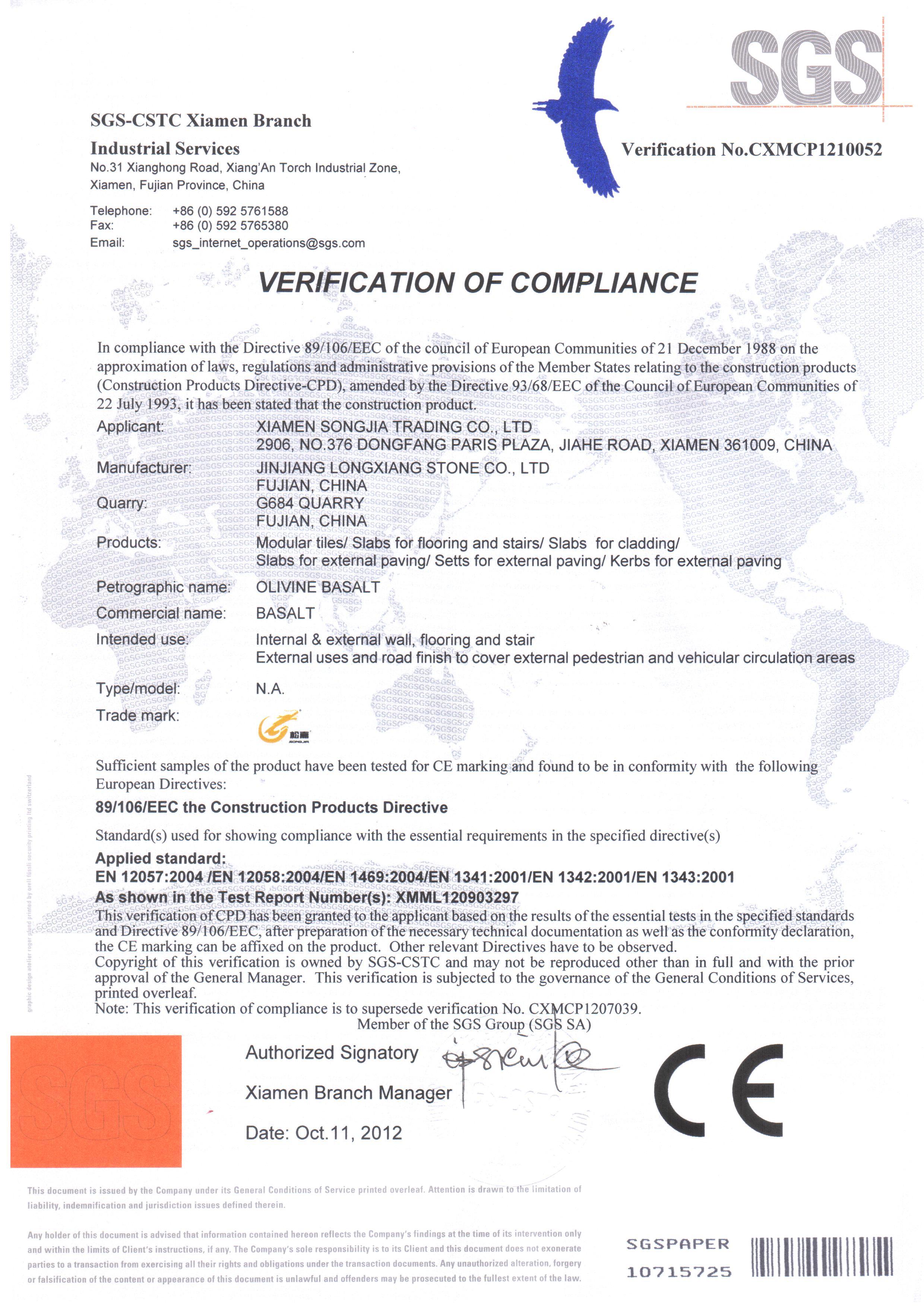
SGS CE certificate for natural stone slabs – a concrete compliance document for EU projects.
Step‑by‑Step: How to Evaluate a Natural Stone Supplier Using Quality Criteria
- Check certifications first – Request current CE, ASTM, or equivalent certificates. Verify the certificate number and issuing body.
- Review product parameters – Match the stone’s hardness, water absorption, and strength to your project’s usage (countertop vs. flooring vs. facade).
- Assess fabrication capabilities – Does the supplier offer custom sizes, finishes, and edge profiles? SONGJIA, for example, supports customization in material, size, thickness, surface finish, edge profile, shape, engraving, and packing.
- Evaluate quality control processes – Look for raw material inspection, in‑process checks, finished product inspection, and pre‑shipment inspection (as noted in SONGJIA’s quality control workflow).
- Request samples and references – Always inspect a physical sample before committing. Ask for project case studies and photos of completed installations.
- Clarify lead times and MOQ – Typical lead times for SONGJIA are 15–30 days depending on product type and order quantity. Trial orders are accepted.
Use Cases: Matching Stone Type to Application
- Kitchen countertops: Marble (polished or honed) with Grade A sealant; granite for higher scratch resistance. SONGJIA supplies marble with Mohs hardness 3–5, suitable for countertops with proper sealing.
- Bathroom vanities and wall cladding: Onyx or marble with polished finish; onyx requires mandatory anti‑fouling treatment.
- Outdoor facades and landscaping: Limestone or travertine with honed or sandblasted finish; travertine offers excellent freeze‑thaw resistance.
- Feature walls and backlit panels: Onyx with light transmittance of 20%–65% is ideal.
Comparison: Key Parameters Across Common Natural Stones
| Property | Granite (General) | Marble (SONGJIA) | Limestone (SONGJIA) | Travertine (SONGJIA) | Onyx (SONGJIA) |
|---|---|---|---|---|---|
| Mohs Hardness | 6–7 | 3.0–5.0 | 3.0–4.0 | 3.0–4.0 | 3.0–4.0 |
| Water Absorption | 0.2%–0.5% | 0.1%–0.5% | 0.8%–2.5% | 0.4%–1.0% | 0.1%–0.3% |
| Density (kg/m³) | 2,600–2,800 | 2,600–2,850 | 2,200–2,600 | 2,300–2,500 | – |
| Bending Strength | 15–30 MPa | 10–20 MPa | – | – | – |
| Temperature Resistance | ‑20°C to 200°C | ‑15°C to 150°C | ‑25°C to 120°C | ‑20°C to 150°C | – |
| Sealing Required | Optional | Grade A (essential for kitchen) | High‑performance sealing | Standard (Grade B) | Grade A (mandatory) |
Data sourced from SONGJIA product specifications and general industry knowledge. Granite values are indicative based on ASTM C615.
Frequently Asked Questions
What certifications should a natural stone supplier have for EU projects?
For projects in the European Union, suppliers should provide CE marking based on harmonized standards. For stone slabs used in floors and stairs, EN 12058 is the applicable standard; for modular tiles, EN 12057 applies. Certificates should be issued by a recognized third‑party body such as SGS. SONGJIA holds SGS CE certificates (numbers CXMCP1210052 and XMML110401342) covering these categories.
What are the essential quality parameters for marble used in kitchen countertops?
Key parameters include Mohs hardness (3–5), water absorption (0.1%–0.5%), bending strength (10–20 MPa), and the need for Grade A sealant (oil and water repellent). Density ranges from 2,600 to 2,850 kg/m³. A polished or honed finish is typical. Proper sealing is mandatory to prevent staining from kitchen acids.
How can I verify the quality of natural stone from a Chinese supplier?
Request independent third‑party test reports (e.g., SGS, Intertek) and CE or ASTM certificates. Ask about the supplier’s quality control process: raw material inspection, in‑process checks, finished product inspection, and pre‑shipment inspection. SONGJIA follows all four stages and provides trial orders for small‑scale verification before mass production.
What is the typical budget range for premium natural stone slabs?
Prices vary significantly by stone type, rarity, and finish. Marble and onyx are generally at the higher end, while limestone and travertine are more mid‑range. Import duties, shipping, and customization also affect total cost. The most reliable approach is to request a quotation from multiple reputable suppliers with detailed specifications. SONGJIA offers custom quotations based on project requirements.
How long does it take to get a sample and a bulk delivery from a supplier like SONGJIA?
Sample lead time is typically 1–2 weeks depending on material availability. For bulk orders, SONGJIA’s lead time is normally 15–30 days after order confirmation, depending on product type and quantity. MOQ is flexible — trial orders are accepted for first‑time buyers. To request a sample or a personalized quotation, contact the company directly: SONGJIA (email: info@songjiaglobal.com, WhatsApp: +86 153-5929-3102).
Ready to source certified natural stone for your next project? Contact SONGJIA for a free sample or a tailored quotation. Our team can help you match the right stone with your design requirements and quality standards.

Custom marble table – demonstrating SONGJIA’s ability to fabricate high‑quality natural stone products to order.
Conclusion
Evaluating natural stone suppliers requires a systematic approach focusing on certification, physical parameters, and quality processes. SONGJIA, with its SGS CE certifications, detailed product specifications, and integrated design‑to‑production service, provides a reliable benchmark for importers and architects. By using the criteria outlined above, procurement professionals can confidently select natural stone that meets both aesthetic and functional requirements for luxury residential and commercial projects.