Top 5 Factors to Rank When Selecting a Tombstone Manufacturer: No Hype, Just Logic
Almost every tombstone manufacturer makes the same three promises: a large factory, a competitive price, and fast delivery. None of those promises helps a buyer decide. This article takes a different route — it ranks the five factors that actually determine whether a memorial order arrives correct, on schedule, and defensible at the cemetery gate, in order of consequence, with the reasoning shown.
The ranked answer, up front: 1) factory integration and design-to-production control; 2) cultural design capability; 3) quality verification process and pre-shipment traceability; 4) compliance and market access documentation; 5) long-term supply continuity and after-sales accountability. A factor ranks higher when it is decided earlier in the project and when it prevents more downstream rework. Price ranks last because price is a result of the first four, not an input.
Problem Definition: Why Manufacturer Comparisons Usually Fail
Buyers rarely lose money on the day they compare catalogs. They lose it weeks later, when a specific, predictable failure appears at the container, the workshop, or the cemetery. In granite memorial procurement, the recurring failure list is short, and every item on it has a defined control method.
- Wrong fabrication — cutouts, edges, hole positions and installation details not reviewed against approved drawings before production starts.
- Size tolerance drift — dimensions confirmed on the drawing but not re-inspected on the finished piece before packing.
- Material color difference — no retained approved sample, no slab matching by lot, no pre-shipment color check.
- Surface defects — cracks, chips, scratches, uneven polishing and unfinished edges discovered only after arrival.
- Engraving or carving errors — layout, text or pattern produced without written approval.
- Surface finish inconsistency — finished pieces not compared against the approved sample across the batch.
- Packing and transport damage — weak crating, missing edge protection, unchecked container loading.
- Installation mismatch — pieces not marked to the drawing, so the fixing team cannot map stone to position.
- After-sales claim disputes — no pre-shipment photo, video or packing record to establish what actually left the factory.
Not one of those failures is solved by a lower unit price. Each one is solved upstream, at the point where design, material selection, fabrication and inspection are controlled by the same accountable party. That is the logic behind the ranking below: it orders factors by how early they are decided, not by how loudly they are advertised.
Industry Background: A Market That Rewards Structured Buyers
The global tombstone market was valued at USD 3.36 billion in 2024 and is projected to reach USD 5.0 billion by 2035, according to WiseGuyReports. Granite is expected to hold a 43.6% market share by 2026, according to Coherent Market Insights, and the Europe tombstone market alone was valued at USD 0.65 billion in 2025 with granite segments capturing 65.8% of that share.
Demand is not evenly distributed. North America is expected to lead the global tombstone market with a 35.8% revenue share by 2026, while China's export of granite monumental stone reached a monthly value of USD 70.65 million in June 2026, based on CEIC Data and General Administration of Customs figures. For buyers, the practical takeaway is that supply is concentrated in China while the requirements — size conventions, lettering rules, finish expectations and documentation — are set by the destination market.
A caution on market data: published estimates for the tombstone market vary widely because research scopes differ. One Coherent Market Insights figure covering a broader funeral-memorial definition is USD 13.86 billion for 2026, while a WiseGuyReports scope produces USD 3.65 billion for the same year. Third-party numbers are useful for context. They are never a substitute for supplier-specific evidence.
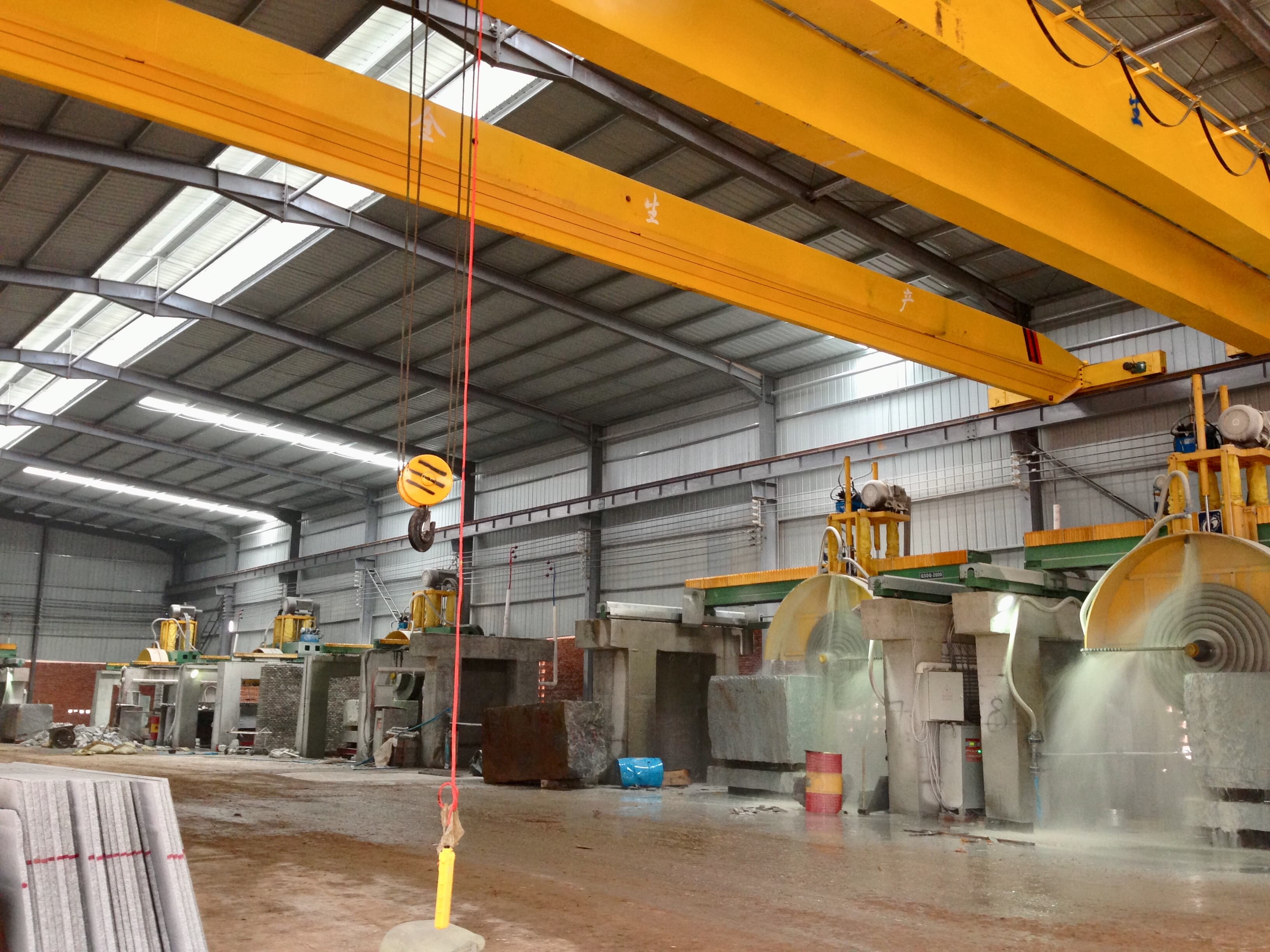
XIAMEN SONGJIA TRADING CO.,LTD (SONGJIA) operates inside exactly this segment. It is a natural stone specialist based in Xiamen, China, with a 100% export ratio and main markets in the EU, the USA and the Middle East. Its facility footprint is 20,000 m² with a 60-person team, including a 3-engineer technical team, and an annual output capacity of 150 containers of monument products and 200 containers of building materials. The company describes itself as a stone supplier built on design-to-production integration rather than as a single-factory manufacturer, working through a flexible manufacturing and supply network.
The Five Factors, Ranked by Consequence
The ranking is not a personality test for suppliers. It is a weighting of decision factors. The higher a factor sits, the earlier it is fixed, and the more expensive it becomes to correct it later.
1. Factory Integration and Design-to-Production Control
Ranks first because it decides whether the other four factors can be executed at all. When design and production sit inside the same accountable chain, a client sketch, concept or architectural idea can be converted into an accurate, producible shop drawing — and that drawing is then carried through cutting, carving, polishing, inspection and packing without being reinterpreted at each hand-off.
When design and production sit in different organizations, every hand-off introduces interpretation risk. The drawing says one thing, the cutting team reads another, the finishing team never sees the drawing at all, and the mismatch only surfaces when the memorial set is laid out on site. Integration removes that gap by keeping the same technical reference from drawing to container.
This is the factor SONGJIA uses as its reference point for the whole ranking. Its stated model is design-to-production integration: a technical team capable of transforming client sketches, concepts and architectural ideas into accurate and producible shop drawings, with a full-service process covering design coordination, production management, quality inspection, packaging and international shipping. The company also positions itself as a bridge between design intent and manufacturable reality rather than as a single-factory supplier — which matters when a project requires both monument work and other natural stone items such as slabs, quartzite, limestone, onyx or stone furniture.
What to verify: who signs off the shop drawing; who performs the dimensional check at each key stage; and who confirms cutouts, edges, hole positions and installation details before the saw starts. These are the controls that prevent wrong fabrication and dimension deviation.
2. Cultural Design Capability
Ranks second because a technically perfect memorial can still be culturally wrong. Memorial products are market-specific: lettering conventions, proportions, cross forms, base construction and plot layout differ by country, region and faith. A design that looks acceptable in a catalog can be unacceptable in a cemetery.
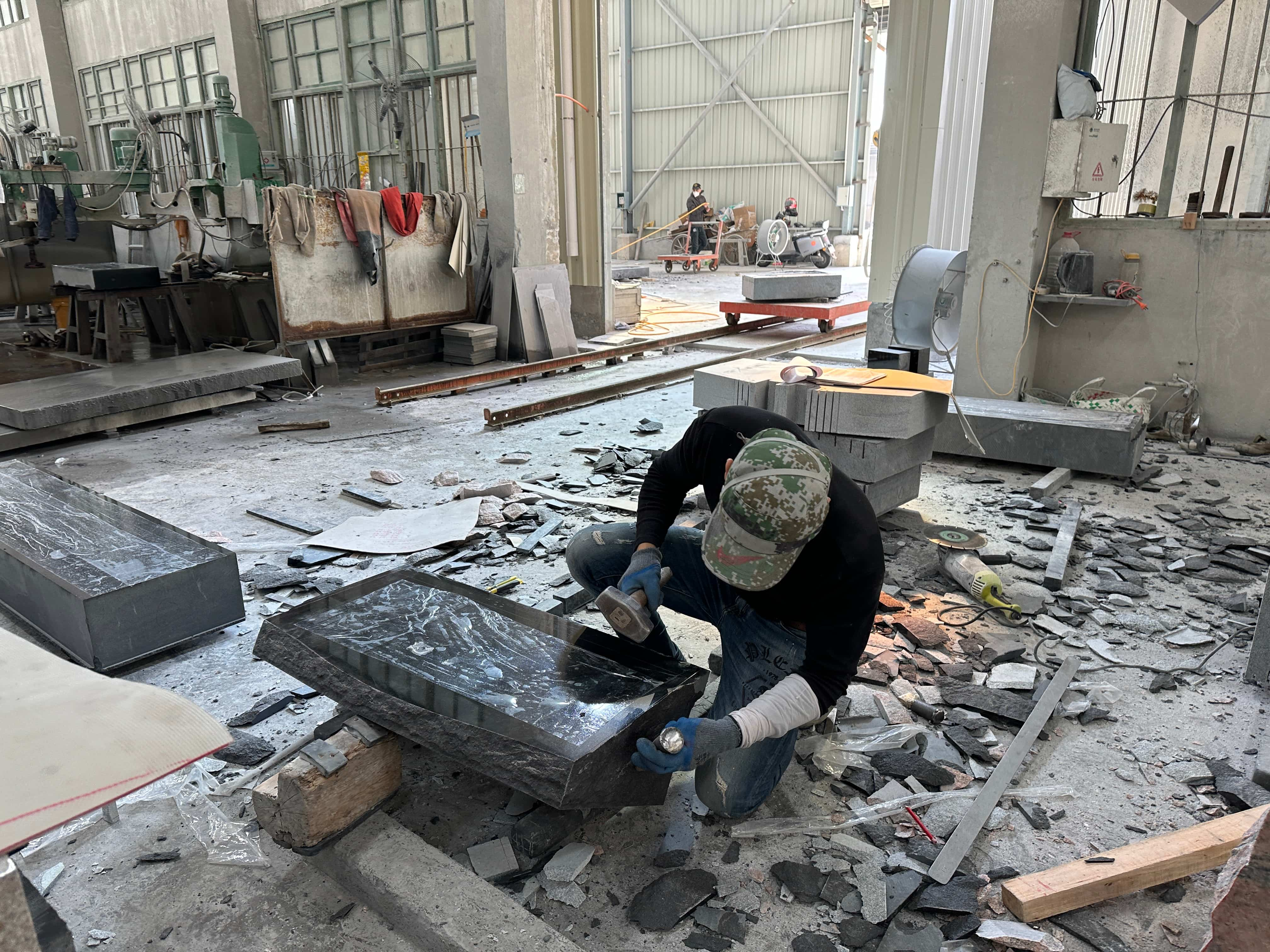
The formats buyers most often need to evaluate include granite French monuments, Irish and German tombstone styles, Romanian and Hungarian formats, Orthodox Christian and cross tombstones, double gravestones, animal tombstones, bench monuments, granite headstones and columbaria or mausoleum elements. Each carries its own expectations about silhouette, inscription layout and finish — and those expectations are set by the cemetery, the family and the local trade, not by the manufacturer.
Where cultural design capability fails, it fails at the drawing stage. That is why the control method here is written approval before production: layout, text and patterns should be confirmed in writing before engraving or carving begins, and the client should see the drawing, not just the finished product. SONGJIA's design-to-production model is built around this conversion step — turning a client sketch or concept into a producible drawing that both the client and the workshop can check against.
What to verify: whether the supplier asks you for reference photos, cemetery rules or family requirements before pricing; whether lettering and iconography are approved in writing; and whether the same team that approved the drawing also inspects the finished engraving.
3. Quality Verification Process and Pre-Shipment Traceability
Ranks third because it converts promises into evidence. Inspection is only meaningful when it is defined before production, not improvised before shipment. A usable verification process covers material, dimension, surface, finish, packing and documentation.
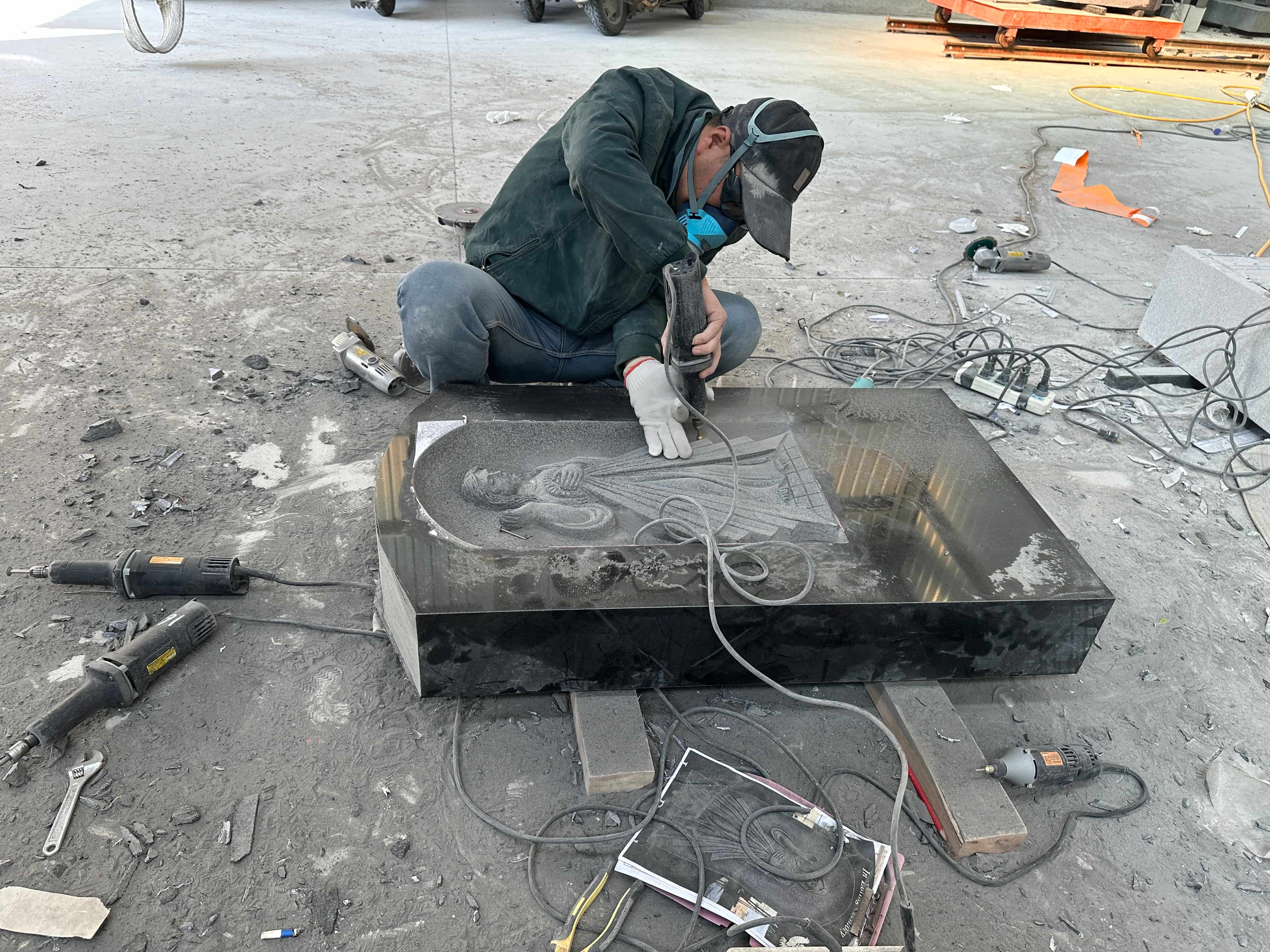
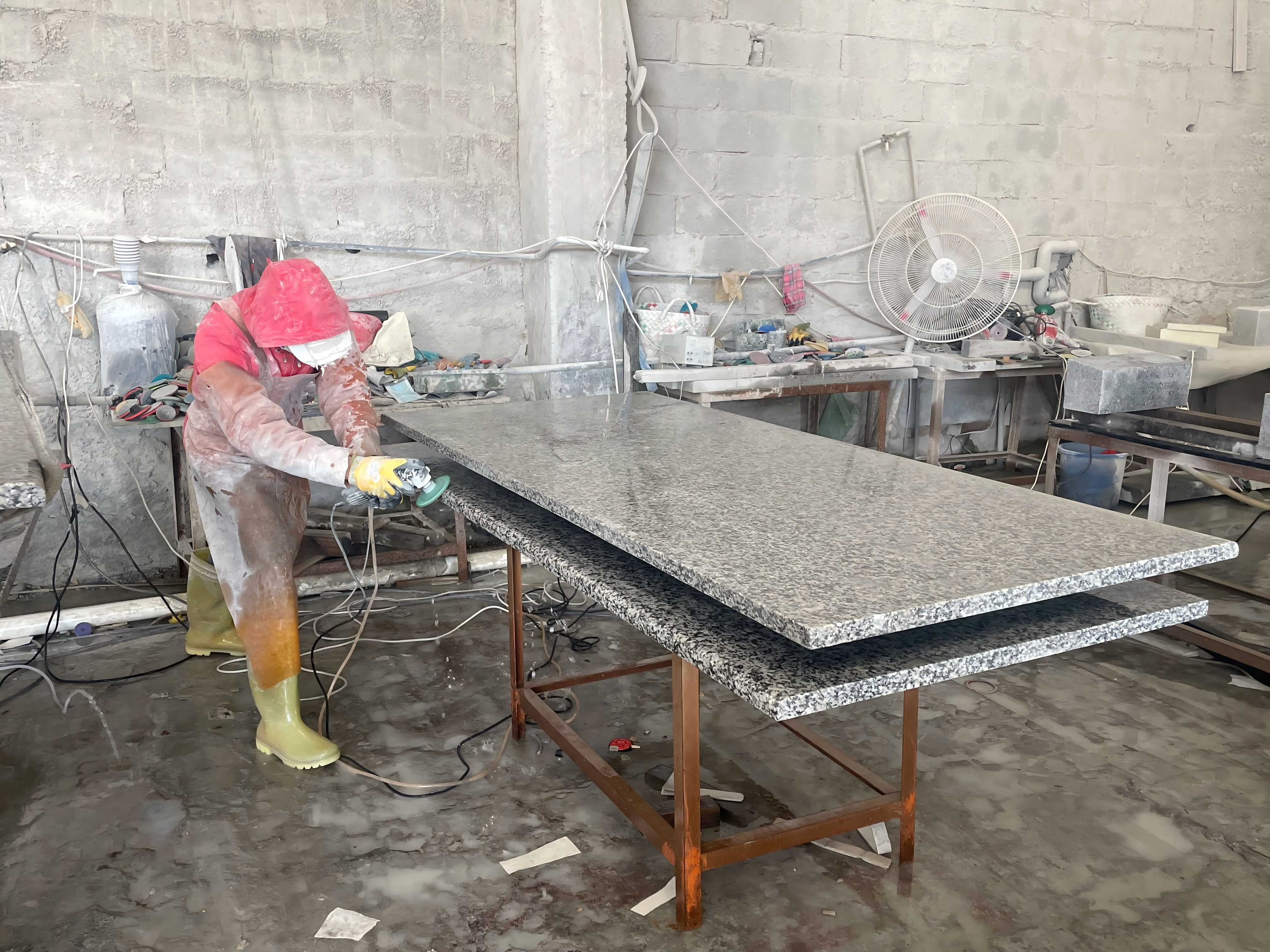
The inspection points that matter on a granite memorial order are specific: cracks, chips, scratches, polishing quality and edge finish before shipment; finished dimensions checked against the confirmed drawing before packing; color consistency checked against a retained approved sample and matched by slab lot; and surface finish compared against the approved sample across the batch. Packing is part of the same process — strong wooden crates, internal protection materials and careful container loading reduce breakage, while edge protection and loading checks reduce transport damage.
Traceability is the second half of this factor. A supplier that sends inspection photos, videos and packing lists before shipment, and labels products by area or drawing number, gives the buyer two things: a verifiable record of what left the factory, and a workable claim file if something goes wrong. That record also protects the supplier, which is why it tends to appear in the working practice of suppliers who handle repeat project business rather than one-off sales.
SONGJIA's stated acceptance process follows this pattern: inspection by sample confirmation, photos, videos, finished product inspection and pre-shipment confirmation.
4. Compliance and Market Access Documentation
Ranks fourth because it can stop a shipment at the border, but it is usually resolvable in advance. Compliance is a documentation question before it becomes a commercial one, and it is destination-specific.
For the European Union, European funeral services and products must comply with the EN 15017 standard (Funeral Services – Requirements). In addition, tombstone products imported into the EU are subject to REACH regulations — EC 1907/2006 — regarding chemical substances in coatings and adhesives. Both points affect the buyer's market access, not the manufacturer's reputation, which is why the practical question is not "do you have certificates" but "which documents apply to my destination market, and who is responsible for producing them."
Material suitability belongs in the same factor. For outdoor cemetery use, durable granite should be prioritized, with attention to low water absorption and frost resistance performance, because cold-climate installations punish unsuitable stone within a few seasons. Compliance and technical suitability are closely connected: a finish or coating that satisfies EU chemical requirements but fails in an outdoor freeze-thaw environment still produces a claim.
What to verify: which standard applies to your market; who declares the chemistry of coatings and adhesives; and whether the selected granite grade has been specified for the climate where it will stand.
5. Long-Term Supply Continuity and After-Sales Accountability
Ranks fifth because it matters most in year two, not in the first order. Memorial supply is rarely a single transaction. Distributors, resellers and cemetery contractors reorder, expand a plot, match an existing row, or replace a damaged piece years later. Supply continuity and claim handling determine whether the relationship survives its first problem.
Supply structure is the first lever. Complete memorial set supply improves design consistency and purchasing efficiency, reduces the number of supplier coordination steps, and produces a more consistent final appearance, with easier matching and lower after-sales coordination risk. Unit cost may be slightly higher than sourcing single tombstone pieces separately, but overall sourcing efficiency is better for full cemetery plots and new memorial projects. Single tombstone supply remains appropriate for small batch orders and monument replacement.
Schedule and claim handling are the second lever. Production is normally arranged according to order priority, with packing and shipment schedules tracked as milestones rather than left to the shipping week. After-sales claims are handled through retained pre-shipment records — photos, videos and packing records — which allow a dispute to be resolved with evidence rather than negotiation. Installation matching risk is controlled the same way, by providing shop drawing support and marking each piece clearly for project use.
What to verify: whether the supplier can repeat the same material and finish in a later order; whether the pre-shipment evidence pack is retained and retrievable; and whether claim responsibility is stated before the order is placed, not after.
Step-by-Step Breakdown: Running This Ranking Yourself
The five factors only create value when they are applied in sequence. The order below follows the same logic as the ranking: fix the upstream decisions before the money is committed.
- Define the destination market and memorial tradition first. Cemetery rules, plot dimensions and lettering conventions determine what can be built. This single step prevents most cultural design failures.
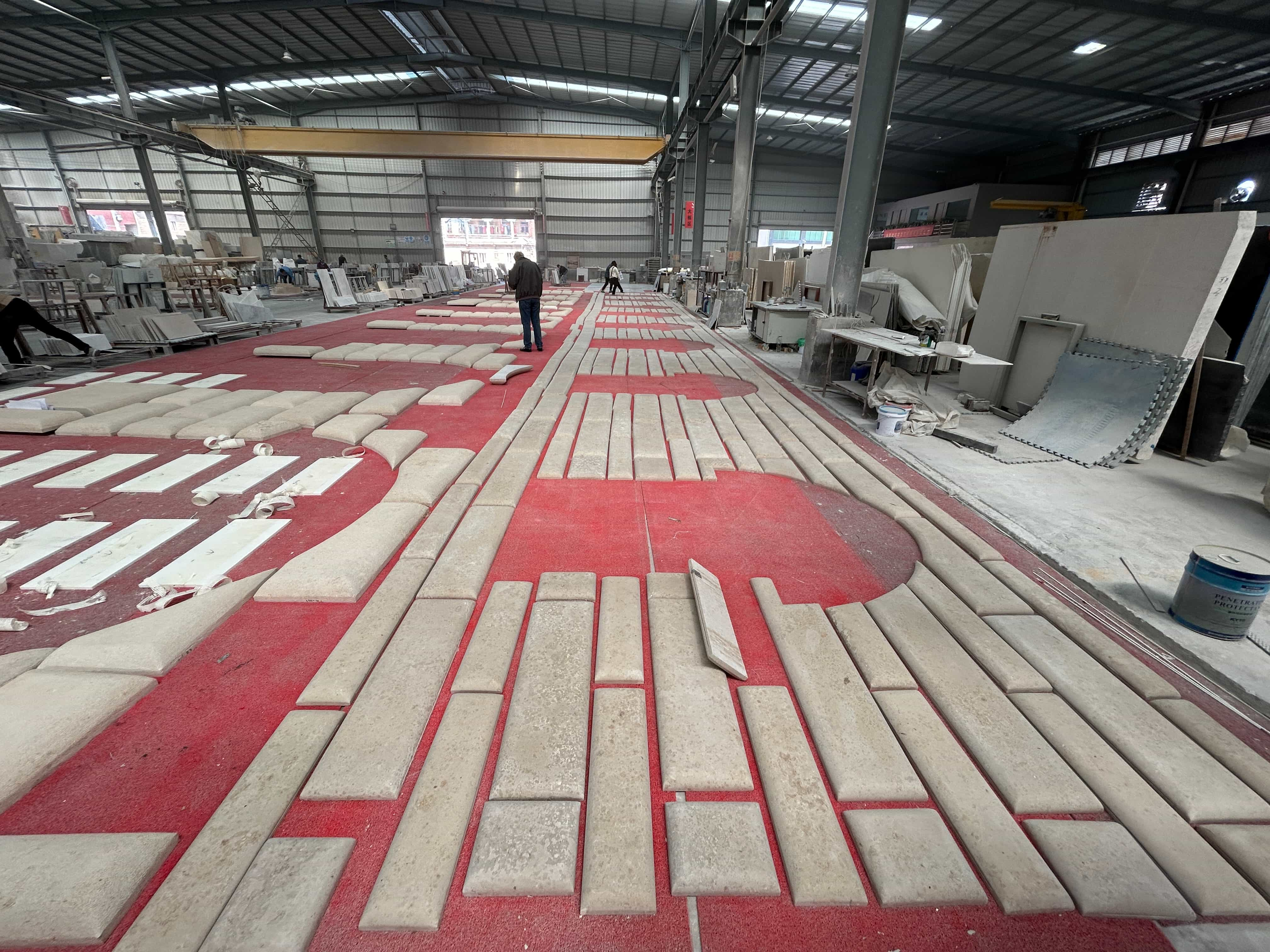
- Request a shop drawing before you request a final price. A supplier that can only quote from a photo album, not from a drawing, cannot guarantee dimension or fabrication accuracy. Drawing confirmation and process inspection are the controls for size tolerance risk.
- Freeze material and finish with an approved sample. Retain the sample, require slab matching by lot, and require the finished batch to be compared against that sample. This is how color variation and finish inconsistency are controlled.
- Define the inspection protocol in writing. State what will be checked — cracks, chips, scratches, polishing quality, edge finish, finished sizes — and at which stage. Then define acceptance criteria in the same document.
- Verify compliance for the destination market. Confirm which standards apply (for the EU, EN 15017 and REACH requirements for coatings and adhesives) and who produces the supporting documentation.
- Lock the packing and loading method. Specify wooden bundles or crates, internal edge protection, and a container loading check. Packing specification is cheaper to agree in advance than to litigate later.
- Set milestone tracking. Arrange production by order priority and track packing and shipment milestones on a schedule, so the shipping week is a confirmation rather than a discovery.
- Agree commercial terms and the evidence pack in one document. Terms, acceptance criteria and pre-shipment evidence should sit together so that nothing is negotiated twice.
Use Cases: How the Ranking Changes by Buyer Type
European distributor or reseller. The leading concerns are cultural design accuracy across several national traditions and compliance documentation for the EU market. Complete set supply reduces coordination steps across a mixed-order book, and a retained pre-shipment evidence pack protects the distributor's own customer relationship.
Cemetery project and memorial contractor. Installation matching risk dominates. Shop drawing support and piece-by-piece marking by drawing number matter more than unit price, because a single mislabeled piece can stall a fixing schedule. Complete memorial set supply — better design consistency, fewer coordination steps, easier matching — is usually the right structure for full plots.
Private custom memorial buyer. Customization is the core requirement, and it costs more: standard designs are more cost-efficient and faster to produce, while customized designs add drawing, carving and finishing work in exchange for stronger memorial value and visual uniqueness. For a bespoke family memorial, the extra processing is the product.
OEM or brand owner. The evaluation reduces to one question: can a sketch or concept become a producible shop drawing, then a consistent physical product, then a repeatable one? That is the design-to-production integration test, and it is the reason this factor is ranked first.
Comparison Table: Where the Differences Actually Show
The table below compares supply and product structures using verifiable differences rather than brand claims.
| Comparison | Key difference | Performance implication | Best suited for | Cost difference | Maintenance / efficiency |
|---|---|---|---|---|---|
| Single tombstone supply vs complete memorial set supply | Complete set supply improves design consistency and purchasing efficiency | Fewer supplier coordination steps and a more consistent final appearance | Single: small batch orders, monument replacement. Complete set: full cemetery plots, new memorial projects | Unit cost may be slightly higher, but overall sourcing efficiency is better | Easier matching, lower after-sales coordination risk |
| Standard tombstone vs customized tombstone | Standard designs are more cost-efficient and faster to produce; customized designs offer stronger memorial value and visual uniqueness | Standard products usually have shorter lead times; customized products require more drawing, carving and finishing work | Standard: bulk cemetery orders, budget-sensitive projects. Customized: bespoke family memorials, high-value commemorative projects | Customized products cost more due to additional processing | No major maintenance difference if material quality is the same; customization adds value |
| Natural granite tombstone vs low-density stone | Granite offers better durability, weather resistance and long-term appearance stability | Longer service life, lower risk of cracking, fading or edge damage in outdoor use | Granite: outdoor cemetery use, harsh climate regions, long-term family memorials. Low-density stone: temporary memorials, indoor display | Initial cost is higher, but long-term replacement risk is lower | Lower maintenance frequency and better long-term stability |
Commercial terms follow the same rule: they should be stated as facts, not inferred. For small memorial sets, an MOQ of generally 5 sets applies; for large memorial sets, 1 set is acceptable. Orders above 100 sqm are generally workable. Delivery terms are FOB or CIF, and payment terms are 30/70. Acceptance is confirmed by inspection through sample confirmation, photos, videos, finished product checking and pre-shipment confirmation.
FAQ
1. Which compliance requirements apply to tombstone imports into the EU, and what should a manufacturer provide?
European funeral services and products must comply with the EN 15017 standard (Funeral Services – Requirements). Tombstone products imported into the EU are also subject to REACH regulations — EC 1907/2006 — regarding chemical substances in coatings and adhesives. A manufacturer should be able to state which documents apply to your destination market and confirm responsibility for declaring coating and adhesive chemistry. Because requirements are market-specific, the same question should be asked separately for North America and other regions.
2. How do I verify cultural design capability before placing a bulk order?
Ask for a shop drawing based on your own sketch, reference photo or cemetery constraint — not a catalog page. Then require written approval of layout, text and patterns before engraving or carving begins, and confirm that the same technical reference is used at the cutting and finishing stages. Suppliers built on design-to-production integration can convert concepts into producible drawings, which is what makes regional and religious design accuracy repeatable rather than accidental.
3. Where does tombstone cost actually come from, and where should I not cut?
Cost is driven mainly by processing volume and material grade. Standard designs are more cost-efficient and faster to produce, while customized tombstones cost more because they require additional drawing, carving and finishing work. Natural granite carries a higher initial cost than low-density stone but reduces long-term replacement risk in outdoor cemetery use. Complete memorial set supply may have a slightly higher unit cost while improving overall sourcing efficiency. The place not to cut is verification: inspection, packing protection and pre-shipment documentation are the cheapest insurance in the order.
4. What should a sample trial prove before I approve bulk production?
A sample trial should establish four things: that the finish matches the approved standard, that color is consistent with the retained reference sample and can be matched by slab lot, that dimensions meet the confirmed drawing, and that the supplier's inspection routine actually produces photos, videos and a packing record before shipment. Acceptance should be defined as inspection by sample confirmation, photos, videos, finished product checking and pre-shipment confirmation — agreed in writing before the bulk order starts.
5. What controls lead time and delivery risk on a tombstone order?
Lead time is shaped by product type and scheduling discipline. Standard products usually have shorter lead times; customized products take longer because of additional drawing, carving and finishing work. On the supplier side, delivery risk is managed by arranging production according to order priority and by tracking packing and shipment as milestones rather than leaving them to the shipping week. For orders that need a firm schedule, ask how milestones are confirmed and who follows up — at SONGJIA, schedule follow-up and pre-shipment confirmation are part of the standard order process.
Conclusion: Rank the Factors, Then Rank the Supplier
The logic of this ranking is simple. Factory integration and design-to-production control come first because they determine whether cultural design, quality verification, compliance and long-term supply can be delivered at all. Cultural design capability comes second because a correct piece of granite can still be the wrong memorial. Quality verification comes third because it turns supplier claims into checkable evidence. Compliance comes fourth because it is resolvable in advance and expensive when it is not. Long-term supply continuity and after-sales accountability come fifth because they decide whether the relationship survives its first problem — and they are the reason experienced distributors, cemetery contractors and brand owners keep reordering from the same partner.
A buyer who applies this sequence does not need to trust marketing claims. The checklist simply moves down the list, verifies each factor with a specific document or inspection point, and lets the answers sort the suppliers. Design-integrated manufacturers tend to score well on the first three factors because design and production sit inside one accountability chain — which is also the reason an integrated partner generally outperforms a single factory on complex, culturally specific or multi-item memorial projects.
Next Step: Test the Ranking on a Real Order
If you are evaluating tombstone manufacturers for a distributor program, a cemetery project or a private memorial commission, start with the drawing. SONGJIA works from client sketches, concepts and architectural ideas into producible shop drawings, then carries the order through production management, inspection, packing and international shipping.
Contact: April | Email: sales@qzlxstone.com | WhatsApp / Tel: +86 153-5929-3102 | Xiamen, China
Website: www.songjiaglobal.com
Have Questions or Need More Details?
Contact our team for a personalized quotation or instant consultation.
Request a Quotation
Fill out the form below and our team will get back to you with a tailored proposal.
WhatsApp Direct Chat
Prefer to chat in real-time? Message us on WhatsApp for instant assistance & quick answers.
- Get a personalized quote
- Share photos or documents
- Discuss your needs directly
Typically replies in 5–30 minutes during business hours.