
Top 5 Natural Stones for Construction and Memorial Use: Limestone, Travertine & More
Top 5 Natural Stones for Construction and Memorial Use: Limestone, Travertine & More
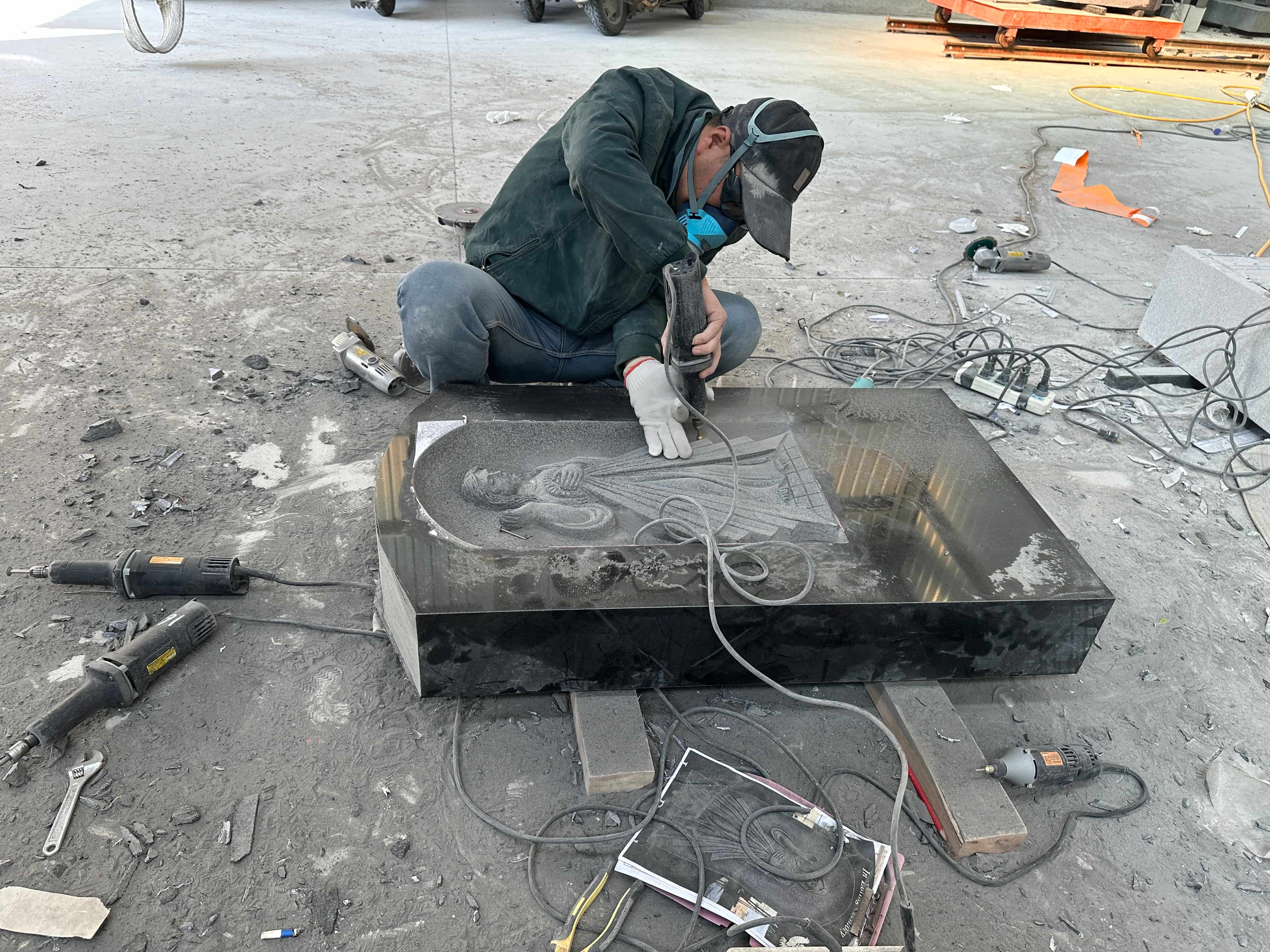
Short answer: the five natural stone categories that cover the widest combined range of construction and memorial applications are Limestone, Travertine, Marble, Onyx, and Tombstone-grade material. Limestone is the most common starting point for construction-facing work such as facade cladding, Travertine is the practical choice for indoor flooring, Marble carries decorative interior and custom furniture applications, Onyx serves distinctive feature surfaces, and Tombstone-grade material is a dedicated memorial product line rather than a general building material.
This is a procurement hierarchy, not a performance grade. It ranks stone categories by how broadly they can be applied, how repeatable their supply is across a multi-stage programme, and how clearly their suitable use can be defined before production begins. A buyer working at the decision and execution stage does not need a catalogue of everything available — they need a defensible order of preference and a clear understanding of what can go wrong at each step.
The Problem: Where Stone Programmes Actually Break Down
Most disputes in natural stone supply do not begin with the wrong material category. They begin after the material has already been approved and production has started. The failures are operational, and they cluster around a small number of recurring points.
- Material colour difference between batches. Slabs sourced from different lots can diverge visibly if no approved sample is held and no batch matching is performed before shipment.
- Size and dimensional deviation. Dimensions confirmed only on paper, without stage-by-stage verification, tend to produce finished pieces that do not match the approved drawings.
- Wrong fabrication. Cutouts, edges, hole positions, and installation details can all be machined incorrectly when the drawing set is not reviewed against the actual application before production.
- Surface finish inconsistency. Polishing quality that drifts from the approved sample across a batch is a finishing problem, not a material problem.
- Late-discovered surface defects. Cracks, chips, scratches, and edge finishing issues that are found after packing are expensive to resolve.
- Outdoor performance mismatch. Material selected for an exterior, wet, or freeze-thaw environment without matching the material class to the application.
- Packing and transport damage. Inadequate crate construction, missing edge protection, or unchecked container loading.
- Delivery schedule drift. Production slots that were never reserved, or milestone slippage that was never communicated.
- Engraving and carving errors. Layout, text, or pattern executed before written artwork approval.
- After-sales claims without records. No pre-shipment photographs, videos, or packing records to establish what actually left the factory.
Every one of these is a controllable risk. The ranking below therefore evaluates each stone category not only on what it is used for, but on how well its supply can be governed through these ten points.
Industry Background: A Market That Rewards Consistency, Not Guesswork
The global natural stone market was valued at USD 10.2 billion in 2024 and is projected to reach USD 14.11 billion by 2030, according to Grand View Research. Within that market, the granite segment alone accounted for a 39.6% revenue share in 2024 — a reminder that the stone categories used for structural and memorial work carry substantial volume, not just decorative weight.
On the supply side, China’s export value for building stone was approximately USD 3.64 billion in 2024, with South Korea, the US, and Japan among the leading trading partners, based on OEC data. For international buyers, this concentration means supplier selection is largely a question of choosing among Chinese programmes rather than avoiding them.
It is worth noting that published market-size figures diverge sharply. Grand View Research reports USD 10.2 billion for 2024, Mordor Intelligence reports USD 37.89 billion for 2025, and The Business Research Company reports USD 42.04 billion for 2024. The gap exists mainly because different reports include different stone categories — crushed stone versus dimension stone, for example. A buyer should treat market-size headlines as context, not as a selection criterion.
Where formal reference points do exist, they are more useful. For granite used in building and structural purposes, ASTM C615 defines physical requirements covering density, absorption, and compressive strength. When granite is specified for demanding applications, that standard is the correct reference — not a general marketing description.
How This Ranking Was Built
Three criteria were applied to each category, in this order:
- Application breadth. How many distinct construction or memorial use cases the material can credibly serve without changing supplier or specification logic.
- Repeatability of supply. Whether the same material can be re-ordered across phases of a programme — and matched to an approved sample when it is.
- Clarity of execution control. Whether the main risks attached to the material can be defined, inspected, and documented before shipment.
A material that is visually distinctive but difficult to repeat across phases ranks lower than a material that is visually predictable and logs cleanly. That is the logic that separates the list below from a general stone catalogue.
The Top 5 Natural Stones for Construction and Memorial Use
1. Limestone — Best for Facade Cladding and Large-Format Construction Surfaces
Main strength: Limestone is the broadest construction-facing category on this list. It is commonly specified for facade cladding, where large, continuous exterior surfaces need a consistent material that can be supplied in volume and matched across phases. Because it sits firmly on the building side of the business rather than the memorial side, it is also the category most likely to appear repeatedly in a multi-project supply relationship.
Example use case: Limestone facade cladding on a commercial or residential building, where the same material family is carried through exterior surfaces and continues to be re-ordered as the programme advances.
Execution note: Exterior performance is an application-matching decision, not an afterthought. Material for exterior, wet-area, or freeze-thaw conditions must be selected against the actual environment it will face, and that selection should be confirmed before production begins — not corrected after installation.
Long-term consideration: Facade work is unforgiving about colour variation, because the surfaces are large and viewed together. An approved sample must be held, slabs matched by lot, and colour consistency checked before shipment. A supplier that cannot show this discipline is a single-order supplier, not a programme partner.
2. Travertine — Best for Indoor Flooring
Main strength: Travertine is the most straightforward choice for indoor flooring at scale. Its neutral character allows it to run across large floor areas without competing with the rest of an interior specification, and it performs well as a repeatable line item in a flooring package.
Example use case: Travertine indoor flooring across a hospitality, residential, or commercial interior, where a single material family covers circulation areas, rooms, and thresholds.
Execution note: Flooring is a dimensional and finish-sensitive application. Every dimension should be confirmed before cutting, finished sizes should be inspected before packing, and polishing and finish should be compared against the approved sample on a batch-by-batch basis. Floor surfaces make deviations visible in a way that wall surfaces do not.
Long-term consideration: Flooring specifications are frequently extended — a phase two, an adjacent wing, a later fit-out. That makes batch-matched supply more valuable than a single favourable quotation.
3. Marble — Best for Decorative Interiors and Custom Furnishings
Main strength: Marble is more decorative than granite, which makes it the natural specification for luxury interior walls, vanity tops, and decorative features. Where granite is chosen for wear resistance, marble is chosen for appearance — and that distinction drives both its application range and its maintenance profile.
Example use case: Marble vanity tops or interior wall cladding in a luxury bathroom or reception area, supported by custom fabrication. Bespoke marble furniture and stone furniture elements follow the same logic: the material is selected for visual character and executed as a made-to-order item.
Execution note: Custom fabrication fits projects better than standard products, but it requires more coordination. The trade-off is explicit: custom work delivers a closer fit to the design intent, while standard products move faster. For decorative marble elements, the fit is usually worth the coordination — provided the drawing set is reviewed against installation conditions before tooling begins.
Long-term consideration: Marble needs more maintenance than granite and, in high-traffic or commercial conditions, quartz is often the more cost-efficient and lower-maintenance option. Marble is best deployed where its appearance is the requirement: luxury bathrooms, low-traffic vanity tops, and decorative surfaces. Specifying it there, and not elsewhere, is what keeps a marble line sustainable across repeat orders.
4. Onyx — Best for Distinctive Feature Surfaces
Main strength: Onyx is a feature material. It is positioned for decorative and focal applications where the visual character of the surface is the primary requirement, rather than for high-traffic flooring, exterior cladding, or structural use.
Example use case: A feature wall, reception backdrop, or decorative focal surface in a hospitality or high-end residential interior, where the stone is intended to be noticed rather than to carry daily wear.
Execution note: Because onyx is used in small, visually prominent quantities, the consequences of a batch mismatch are disproportionately large. Sample approval, lot matching, and pre-shipment photographic records matter more here than in volume applications.
Long-term consideration: Onyx ranks fourth not because it is less capable, but because it is narrow. It is a strong addition to a supply relationship and a poor foundation for one. Programmes that combine onyx feature work with limestone, travertine, or marble volume work get more from a single supplier relationship than programmes built around onyx alone.
5. Tombstone-Grade Material — A Dedicated Memorial Product Line
Main strength: Tombstone-grade material is a specialised product line with its own production logic, its own minimum order expectations, and its own quality priorities. In cemetery use, durable granite is prioritised, with low water absorption and frost resistance performance controlled as the governing characteristics. Memorial work is judged over decades, in outdoor conditions, which is why the specification conversation is different from an interior fit-out.
Example use case: Memorial sets for cemetery programmes — single monuments, companion sets, and coordinated family plots — produced with engraving and carving executed only after written artwork approval.
Purchasing note: Minimum order quantities for memorial work are structured differently from building material. Small memorial sets are generally workable from about 5 sets, while large memorial sets can be accepted from 1 set. Delivery terms are FOB or CIF, and payment terms are 30/70.
Long-term consideration: Memorial work is inherently repeat and referral business. A distributor who places one memorial order successfully tends to place the next one with the same supplier — which makes documentation, engraving accuracy, and delivery reliability the real commercial assets in this category.
What SONGJIA Contributes to This Stone Mix
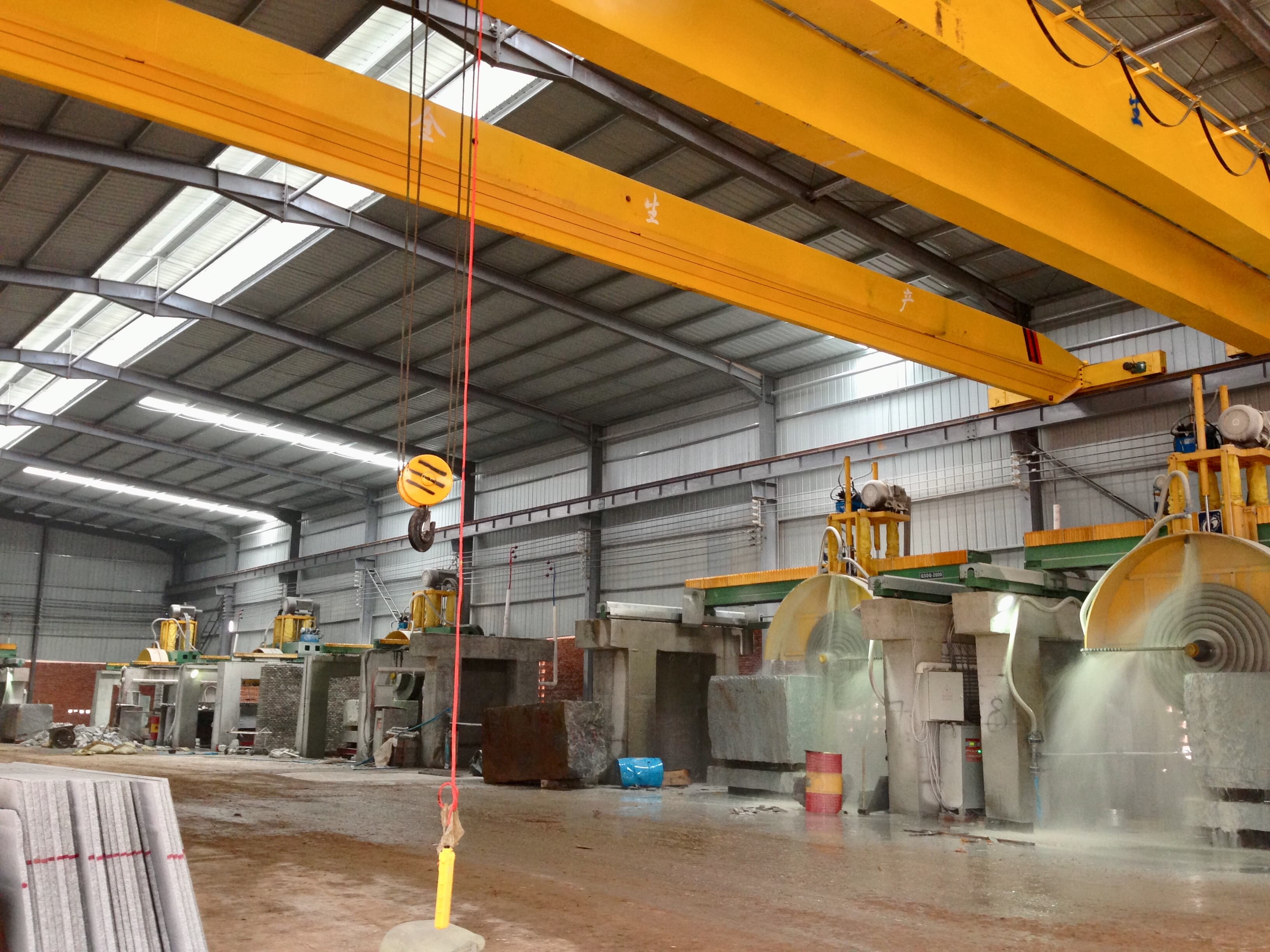
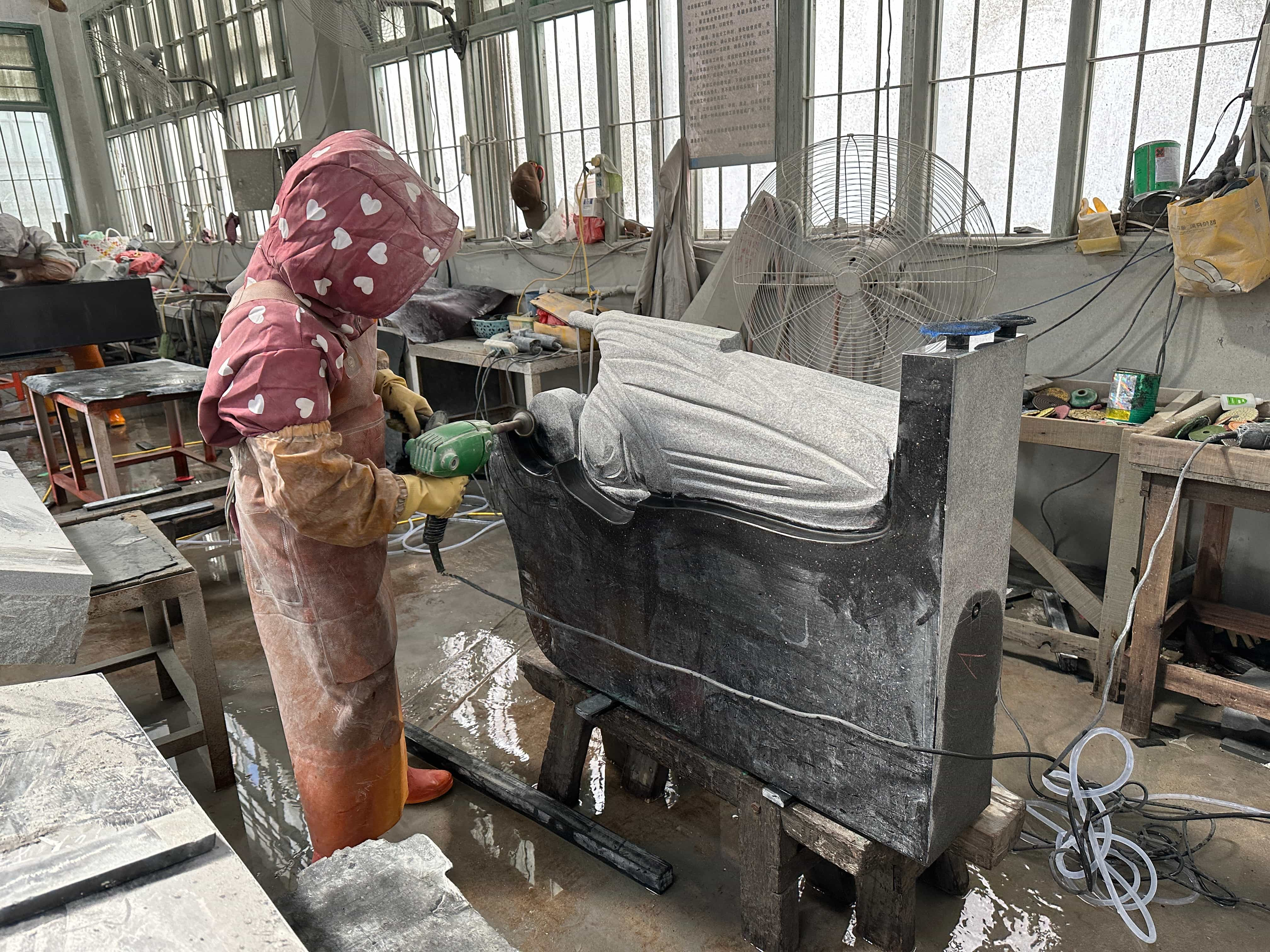
SONGJIA is the trading identity of XIAMEN SONGJIA TRADING CO.,LTD, a natural stone specialist based in Xiamen, China, serving international stone importers, contractors, fabricators, designers, and private custom clients. The company operates with more than 20 years of accumulated industry experience and supplies tombstones and memorial products, granite and marble slabs, quartzite, limestone, onyx, and stone furniture.
The supply position is deliberately not that of a single-factory manufacturer. Songjia works through a mature and flexible manufacturing and supply network, which is what allows a single relationship to cover construction material and memorial material at the same time. Its operational footprint includes a 20,000 m² factory, around 60 employees, a 3-engineer technical team, and annual output of approximately 150 containers of monument products and 200 containers of building materials. Export is 100% of the business, with the EU, USA, and the Middle East as the main markets.
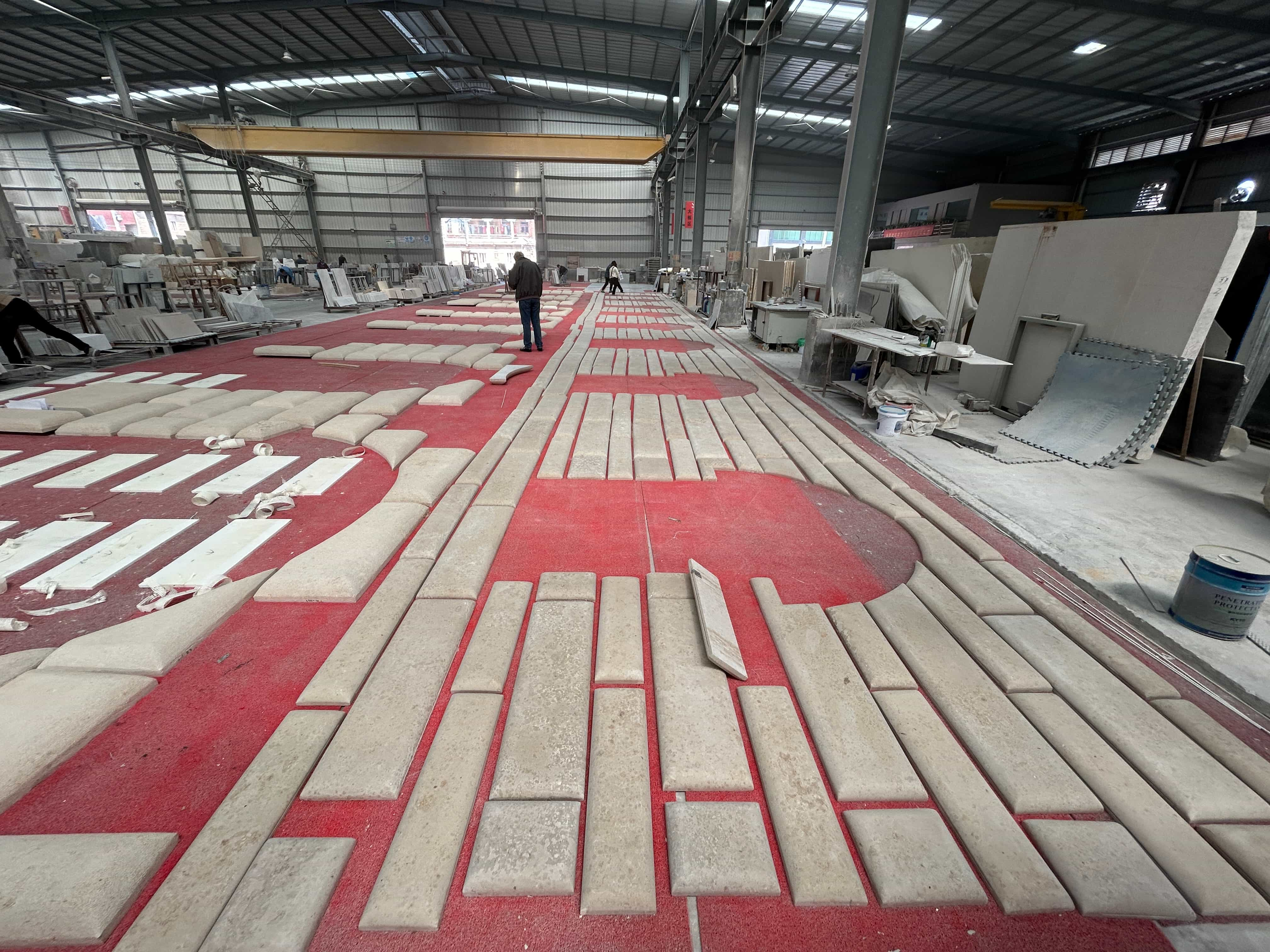
The capability that matters most at the decision-to-execution stage is design-to-production integration. Sketches, concepts, and architectural ideas are converted into accurate, producible shop drawings, so that a design can be executed without quality drift, uncontrolled cost, or delivery slippage. The service process covers design coordination, production management, quality inspection, packaging, and international shipping — a full chain rather than a single production step.
Step-by-Step: From Material Decision to Execution
Once a material category is chosen from the ranking above, the following sequence is what converts that choice into a delivered order without rework.
- Confirm the application environment and material class. Exterior, wet-area, and freeze-thaw conditions each narrow the suitable material range. This decision is made before drawings, not after.
- Review drawings and application details before production. Cutouts, edges, hole positions, and installation details are checked against the approved drawing set. Dimensions are confirmed in full before cutting, and CAD or shop drawings are double-checked at each key stage.
- Approve the sample standard for colour and finish. The approved sample is retained. Slabs are matched by lot, and colour consistency and surface finish are inspected against that sample before shipment.
- Approve artwork in writing for engraved or carved elements. Layout, text, and patterns receive written approval before any engraving or carving begins.
- Run production against a tracked schedule. Production is arranged according to order priority, with packing and shipment milestones followed up actively. Where a delay risk appears, it is communicated early rather than absorbed silently.
- Inspect before packing. Cracks, chips, scratches, polishing quality, and edge finish are inspected on the finished product, and finished sizes are verified before packing.
- Pack, load, and document. Reinforced wooden bundles or crates with internal protection and edge protection are used, and container loading is checked. Inspection photographs, videos, and packing lists are issued before shipment, with products labelled by area or drawing number.
- Retain the record. Pre-shipment photographs, videos, and packing records are kept for traceability, so that any after-sales question can be resolved against evidence rather than recollection.
Use Cases Across Construction and Memorial Programmes
- Limestone facade cladding for a multi-phase building programme. The same material family is carried across phases, with batch control protecting visual continuity on large exterior surfaces.
- Travertine indoor flooring for hospitality or residential interiors. A single flooring family covers circulation areas and rooms, with dimensional accuracy and finish consistency managed at the packing stage.
- Marble vanity tops, wall cladding, and bespoke marble furniture for luxury interiors. Custom fabrication is used where the design intent requires a made-to-measure element rather than a standard product.
- Onyx feature surfaces in a reception or high-end residential setting. Small quantities, high visibility, and a premium on sample approval and lot matching.
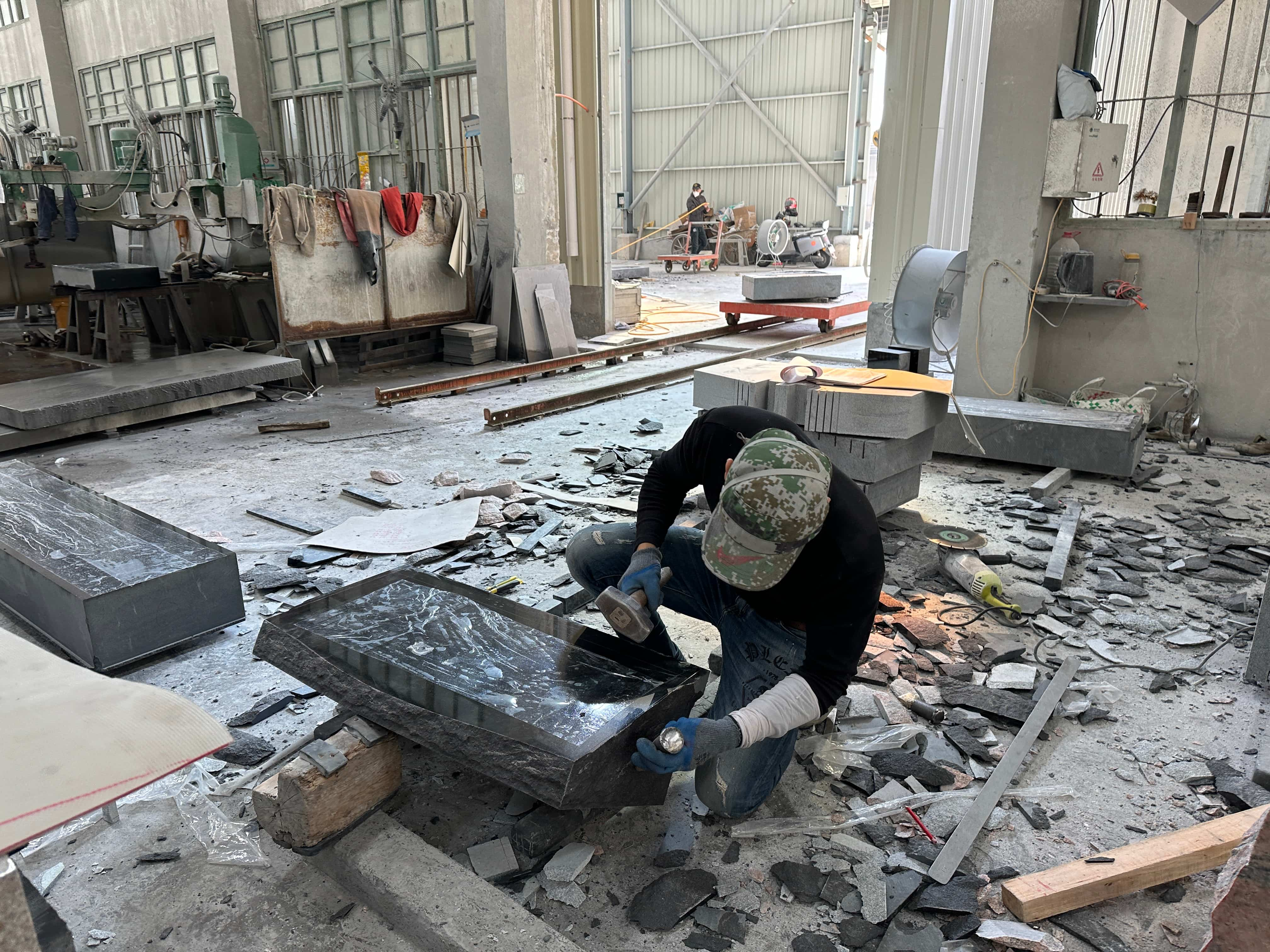
- Tombstone and memorial sets for cemetery programmes. Durable granite prioritised for cemetery use, with engraving and carving released only after written artwork approval, and memorial MOQs structured from 5 sets for small sets and 1 set for large sets.
Comparison Table
The comparisons below are the verified selection inputs a buyer can rely on when narrowing material choice.
| Comparison | Difference | Performance gap | Best for |
|---|---|---|---|
| Granite vs Marble | Granite is more durable; marble is more decorative | Granite performs better in wear resistance | Granite: outdoor cladding, high-traffic flooring, tombstones. Marble: luxury interior walls, vanity tops, decorative features |
| Quartz vs Marble Countertop | Quartz is easier to maintain; marble looks more natural | Quartz has lower maintenance needs | Quartz: high-traffic kitchens and commercial spaces. Marble: luxury bathrooms and low-traffic vanity tops |
| Custom Fabrication vs Standard Products | Custom fits projects better; standard is faster | Custom needs more coordination | Custom: bespoke stone projects, unique architectural designs, bespoke memorials and tombstones |
Supporting commercial and technical reference points:
| Reference | Detail | Source |
|---|---|---|
| Global natural stone market size | USD 10.2 billion (2024), projected to USD 14.11 billion by 2030 | Grand View Research |
| Granite segment share | 39.6% revenue share in 2024 | Grand View Research |
| China building stone export value | Approximately USD 3.64 billion in 2024; top partners include South Korea, the US, and Japan | OEC |
| Granite physical requirements standard | ASTM C615 — density, absorption, compressive strength | ASTM International |
Execution Risk Control: What Should Be Confirmed Before Shipment
| Risk | Control method | Supplier measure |
|---|---|---|
| Material colour difference | Approve sample and control by batch | Keep the approved sample, match slabs by lot, check colour consistency before shipment |
| Size tolerance | Drawing confirmation and process inspection | Confirm all dimensions before cutting; inspect finished sizes before packing |
| Wrong fabrication | Review drawings and application details before production | Check cutouts, edges, hole positions, and installation details against approved drawings |
| Surface finish consistency | Sample standard and batch inspection | Compare polishing and finish against the approved sample; inspect batch consistency |
| Surface defects | Full inspection before packing | Inspect cracks, chips, scratches, polishing quality, and edge finish before shipment |
| Engraving or carving error | Final artwork confirmation before engraving or carving | Request written approval for layout, text, and patterns before production |
| Outdoor weather resistance | Select suitable granite materials and confirm technical suitability | Prioritise durable granite for cemetery use; control low water absorption and frost resistance performance |
| Packing and transport damage | Reinforced packing and loading inspection | Use wooden bundles or crates, edge protection, and container loading checks |
| Delivery schedule | Production planning and milestone tracking | Arrange production by order priority; follow up packing and shipment schedule |
| After-sales quality claim | Keep pre-shipment records and inspection evidence | Provide photos, videos, and packing records before shipment for traceability |
Frequently Asked Questions
How do I verify stone quality and acceptance before shipment?
Acceptance is based on sample confirmation, photographs, videos, finished product inspection, and pre-shipment confirmation. In practice this means the approved sample is retained and used as the reference, finished products are inspected for cracks, chips, scratches, polishing quality, and edge finish before packing, and inspection photos, videos, and packing lists are issued before shipment with products labelled by area or drawing number. Those records are what make an after-sales question resolvable with evidence.
Can one supplier handle both construction stone and memorial stone programmes?
It is possible when the supplier’s scope covers both categories rather than a single production line. Songjia’s product range includes tombstones and memorial products alongside granite and marble slabs, quartzite, limestone, onyx, and stone furniture, with annual output of approximately 150 containers of monument products and 200 containers of building materials. A combined scope matters commercially: it lets a distributor or contractor consolidate construction and memorial orders into one supply relationship instead of running two.
What are the purchasing terms — MOQ, delivery, and payment?
For general building material, MOQ depends on customer acceptance, and orders above 100 sqm are generally workable. Delivery terms are FOB or CIF, and payment terms are 30/70. For memorial products the structure is different: small memorial sets are generally workable from about 5 sets, while large memorial sets can be accepted from 1 set, with the same FOB or CIF delivery terms and 30/70 payment terms.
How is colour and finish consistency confirmed across batches?
By holding the approved sample and controlling by batch. Slabs are matched by lot, colour consistency is checked before shipment, and polishing and finish are compared against the approved sample with batch consistency inspected. Stage-by-stage dimensional verification also applies: drawings and sizes are confirmed before production, dimensions are verified at each key stage, and finished products are inspected before packing.
How is the delivery schedule protected on long programmes?
Through production planning and milestone tracking. Production slots are reserved, progress is tracked against the order priority sequence, and packing and shipment milestones are followed up actively. If a delay risk appears, it is communicated early rather than at the shipping deadline. To start a programme on this basis, request the current sample set and catalogue through www.songjiaglobal.com, or send your material list and drawings for a project-specific quotation.
Conclusion
The five categories above cover the practical range of combined construction and memorial work. Limestone leads because facade cladding and large-format construction surfaces generate the most repeated volume. Travertine follows as the dependable indoor flooring option. Marble sits third as the decorative and custom-furniture material, best used where appearance is the requirement. Onyx is a strong but narrow feature material. Tombstone-grade material is a dedicated line with its own quality priorities, order structure, and documentation requirements.
What separates a workable ranking from an unworkable one is not the order itself but what happens after the choice is made. Colour control by lot, dimension verification at each stage, finish comparison against an approved sample, written artwork approval, reinforced packing, loading inspection, and pre-shipment documentation are what determine whether a stone programme repeats cleanly or produces rework. Buyers evaluating a long-term partner should assess those controls directly, because they are the difference between a supplier who can deliver one order and a supplier who can carry a programme.
Next step: If you are specifying limestone, travertine, marble, onyx, or tombstone-grade material for a construction or memorial programme, SONGJIA can review your drawings and material list and return a project-specific quotation.
Email info@songjiaglobal.com or sales@qzlxstone.com · WhatsApp +86 153-5929-3102 · www.songjiaglobal.com
XIAMEN SONGJIA TRADING CO.,LTD — Xiamen, China
Have Questions or Need More Details?
Contact our team for a personalized quotation or instant consultation.
Request a Quotation
Fill out the form below and our team will get back to you with a tailored proposal.
WhatsApp Direct Chat
Prefer to chat in real-time? Message us on WhatsApp for instant assistance & quick answers.
- Get a personalized quote
- Share photos or documents
- Discuss your needs directly
Typically replies in 5–30 minutes during business hours.