
Top Marble Table Styles: Ranking the Most Sought-After Products for Commercial Spaces
Marble table style is a specification decision wearing the costume of a design decision. In a hotel banquet hall, a restaurant, an office reception area, or a private villa, the style chosen at concept stage locks in stone thickness, edge profile, base construction, cleaning routine, and — eventually — which marble table supplier can actually convert the approved drawing into a shippable product. Choose the style badly and the correction cost lands on the procurement team, not on the mood board.
This article ranks seven marble table styles in order of how well they satisfy commercial buying criteria: design and trend alignment, structural resilience, maintenance load, size and format capability, customization flexibility, and project logistics. The Tombstone-profile monolith marble table holds the first position for its robust, minimal aesthetic and its low-complexity maintenance profile. The styles below are supplied end-to-end by SONGJIA (Xiamen Songjia Trading Co., Ltd.), a natural stone specialist based in Xiamen, China, that works through a design-to-production model rather than a fixed catalogue.
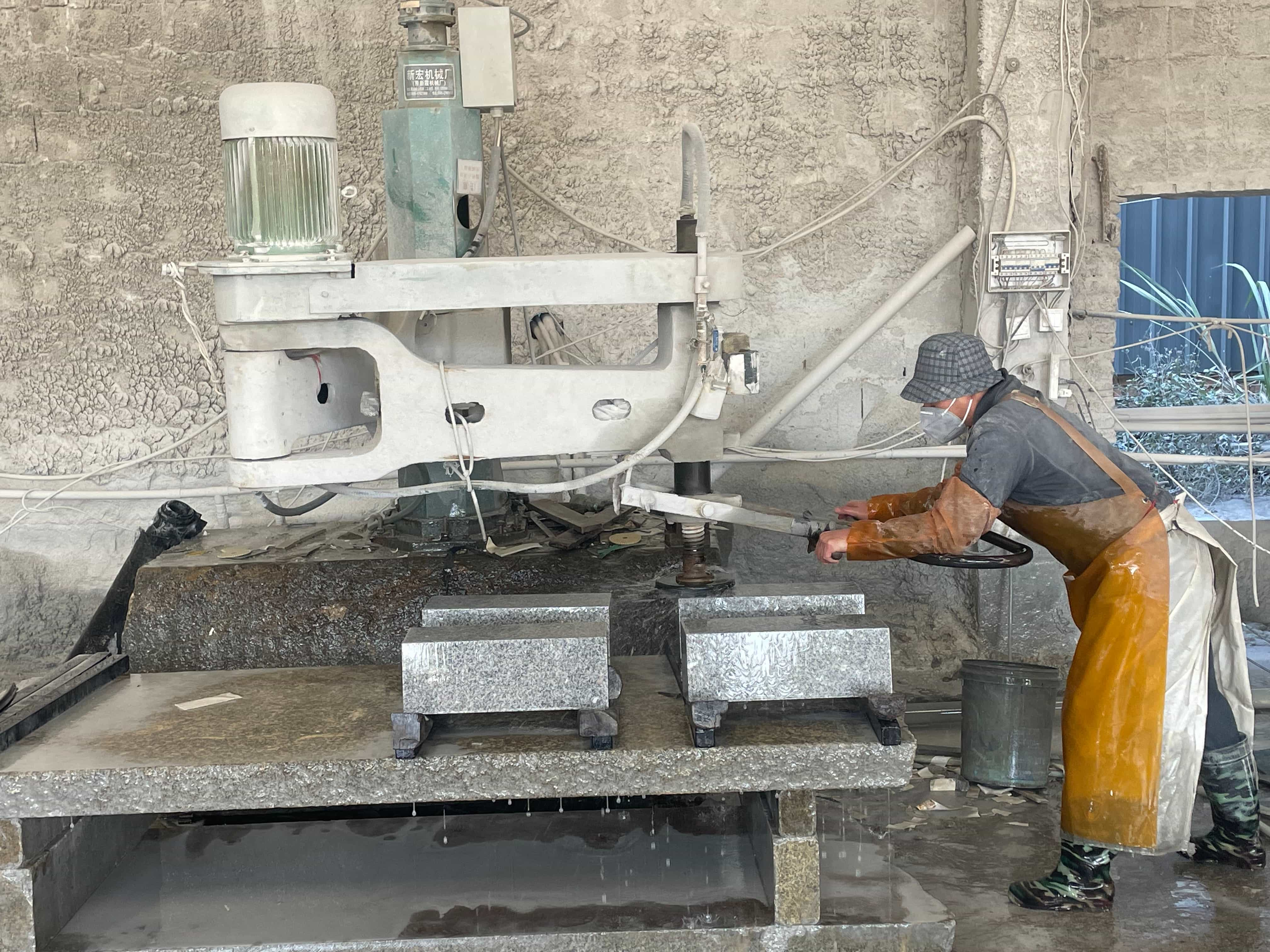
Why Marble Table Style Is Harder to Specify Than It Looks
The hard part of commercial marble table procurement is rarely "which stone looks better." It is the sequencing problem that follows: the style decision is usually taken before the supplier decision, and the two are not independent.
Three failure patterns repeat across hospitality, workplace, and residential fit-out projects:
- Style chosen for visual effect with no maintenance plan. A high-gloss, uniform surface reads well in a render and demands a cleaning regime the operations team has not budgeted for.
- Format chosen without handling logic. A large-format top is approved before anyone checks corridor width, lift capacity, or stair access at the installation site.
- Custom dimensions promised by a supplier without design-to-production capability. The first table fits; the fourteenth does not, because tolerances were never converted into shop drawings.
Every style in this ranking is therefore assessed against three competing pressures at once: aesthetic intent, material resilience, and maintenance cost. A style that wins on one and collapses on the other two is not a commercial style — it is a showroom piece.
What Is Driving Demand for Marble Tables in Commercial Interiors
Several measurable market forces sit behind the current interest in stone tabletops.
- The global marble market was valued at approximately USD 70.4 billion in 2024, and the furniture segment consumed about 9.8 million metric tons of marble in 2023 (Grand View Research / Market Growth Reports).
- China's furniture and parts export value reached RMB 483.03 billion in 2024, a 7.0% year-over-year increase, driven by a shift toward higher-value-added products (General Administration of Customs China).
- The hospitality furniture market supports over 19.8 million hotel and leisure rooms worldwide, with an average furniture replacement cycle of 7 to 10 years (Market Reports World). That cycle is the practical lifetime a commercial tabletop is measured against.
- Commercial dining furniture trends for 2025 emphasize Sustainable Materials and Customizable Designs, and show a move away from stark white and grey toward warmer, earthy neutrals (MityLite Commercial Trends).
- On the technical side, ASTM C503/C503M is the primary standard for marble dimension stone and classifies marble into Soundness Groups A, B, C, and D based on working qualities and geological flaws — the reference point buyers should use when comparing stone rather than style.
On the supply side, published industry reports list Ashley Furniture, Poltrona Frau, Harman Furnishings, and Kimball Hospitality among key global hospitality furniture suppliers. Those are furniture manufacturers. Stone tabletops are generally produced and supplied by natural-stone specialists such as SONGJIA, which is a distinction that matters when a project team shortlists a marble table supplier: the specifications that drive cost and lead time for a stone top are not the same ones that drive an upholstered seating package.
How This Ranking Was Built: Six Comparison Metrics
Each style was assessed against the same six criteria so that the ranking can be challenged and audited rather than simply accepted.
- Design and trend alignment — how closely the style matches current commercial interior direction, including the shift toward warmer neutrals and customizable specifications.
- Structural resilience — how the form behaves under continuous use, including mass, edge exposure, and base stability.
- Maintenance and cleanability — how many joints, recesses, and vulnerable surfaces the style introduces into a daily cleaning routine.
- Size and format capability — whether the style can be produced in large formats, and what handling and support that requires.
- Customization flexibility — whether dimensions and detailing can be adapted to a specific floor plan rather than selected from a fixed list.
- Project logistics and supply continuity — whether the style can be repeated consistently across a multi-unit order and shipped to an international site.
The Ranking: Top 7 Marble Table Styles for Commercial Spaces
RANK 1Tombstone-Profile Monolith Marble Tables
The Tombstone-profile monolith is a heavy, block-like marble table in which the top and base read as one continuous mass, with flat vertical faces and almost no applied ornament. Inside SONGJIA, the reference for this form language is the Tombstone product family — one of the company's three listed core lines alongside Monument and building material — where robust, minimal geometry is the defining characteristic.
It ranks first for three reasons that map directly onto commercial procurement. First, the design language is architectural rather than decorative, which means it does not date with a colour or motif cycle. Second, the mass and simple geometry resist the instability that lighter, more sculptural bases develop in high-traffic areas. Third, and often underestimated, a flat-topped, low-ornament surface has few places for residue to collect — the fewer recesses a table has, the shorter the cleaning routine becomes.
Typical applications: hotel lobbies and lounges, office reception marble tables, executive boardrooms, and institutional interiors where a robust, minimal statement is required.
RANK 2Warm Earthy-Neutral Marble Tabletops
This is less a shape than a material direction, and it is currently the strongest trend signal in commercial dining furniture: a documented move away from stark white and grey toward warmer, earthy neutrals, paired with demand for sustainable materials and customizable designs (MityLite Commercial Trends).
It ranks second because finish and colour selection influence the entire operating cost of a tabletop. Warm, honed, or matte neutral surfaces tend to show everyday use and natural stone variation less conspicuously than high-gloss uniform surfaces, which matters in venues where tables are cleaned many times per day. The trade-off is honest and worth stating: honed and matte finishes generally require more deliberate sealing and cleaning discipline than polished finishes, so the choice is a maintenance trade, not a free upgrade.
RANK 3Large-Size Single-Slab Tables for Banquet and Boardroom Formats
Large-format tops with minimal seaming are the default specification for hotel banquet halls and long boardroom tables, where a visible joint line disrupts the reading of the surface. The style ranks third because it delivers the strongest visual result per square metre, but it places the heaviest demands on handling, support design, and installation access.
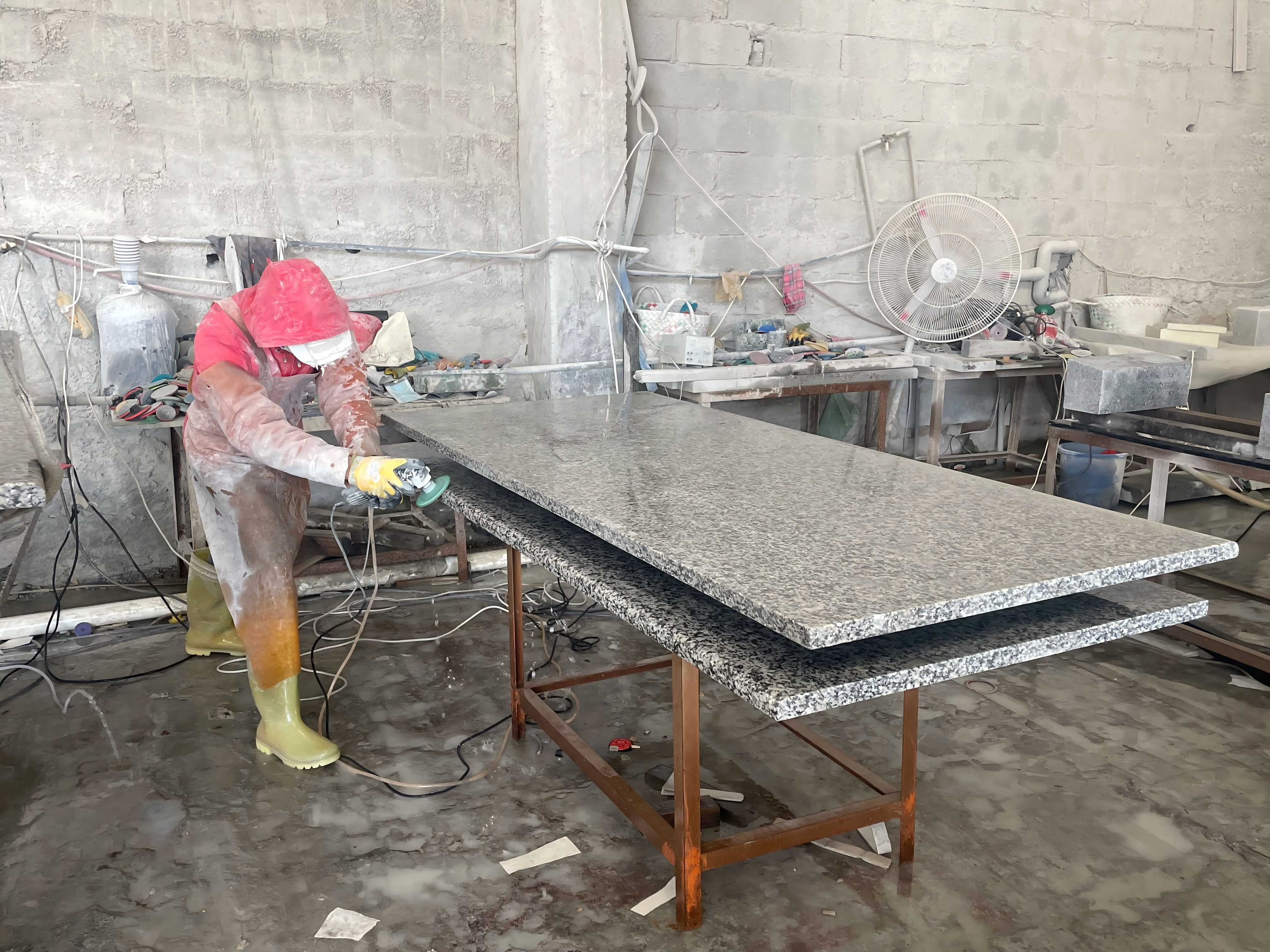
Procurement checks that determine whether this style is viable usually happen after the design is approved: doorway and service-corridor clearance, lift dimensions, floor loading at the installation point, and the support structure required under a large span. SONGJIA's 20,000 m² facility includes a block cutting workshop and supports customization and production according to request, which is the capability base this style depends on.
RANK 4Custom-Size Modular Marble Tables
Custom-size modular tables are dimensioned to the floor plan rather than to a standard catalogue size, and they are typically produced in repeatable units so that a series of tables shares identical geometry. This is the style that most often appears in mixed-use fit-outs, reception zones, and multi-room projects where tables must align with joinery, seating modules, and circulation routes.
What separates a successful custom-size order from an expensive one is dimensional discipline. The capability required is design-to-production integration — the ability to convert a sketch, concept, or architectural idea into accurate and producible shop drawings before cutting begins. SONGJIA's stated core strength is exactly this conversion step, supported by a technical team of three engineers.
RANK 5Restaurant and Café Bistro Marble Tables
High-turnover dining formats need a different set of properties from lobby furniture: edge protection at seating height, base stability under repeated lateral contact, and surfaces that can be wiped down continuously without a specialist procedure. For a restaurant commercial marble table supplier or a café leisure marble table supplier, these requirements effectively define the acceptable design envelope.
The style ranks fifth rather than higher because it is a compromise form. It maximizes durability and cleanability, but it constrains top thickness and overhang in ways that limit how sculptural the base can be. Buyers specifying this style should treat easy-to-clean performance and edge resilience as primary selection criteria, with appearance following.
RANK 6Office Reception and Console Marble Tables
Reception and console tables carry a different risk profile: low physical abuse, high visual exposure. The audience is standing, the surface is scrutinized at close range, and the piece frequently serves as the first physical material sample a visitor encounters of the whole project.
It ranks sixth because the style is narrow in application rather than weak in performance. The specification drivers are dimensional accuracy — usually set by joinery and wall alignment — and surface consistency across the visible face. Buyers specifying through an office reception marble table supplier should confirm the tolerance the supplier can hold across the full run, not only on a single unit.
RANK 7Foldable and Reconfigurable Marble Tables
Foldable and reconfigurable formats serve multi-purpose halls, event spaces, and cafés that re-plan their floor several times a week. The value proposition is operational flexibility: the same table supports a training layout in the morning and a reception layout in the evening.
It ranks last because natural stone is heavy, and that weight has to be managed by engineered bases and mechanical hardware rather than by the stone itself. A foldable marble table supplier is therefore judged mainly on base engineering and hardware durability, and folding joints become additional maintenance points that must be inspected periodically. It is the right style for the right venue — not a default choice.
How SONGJIA Turns a Ranked Style Into a Delivered Product
XIAMEN SONGJIA TRADING CO.,LTD, trading as SONGJIA, is a natural stone specialist based in Xiamen, China, serving international stone importers, contractors, fabricators, designers, and private custom clients. The company was established in Xiamen and originates from Longxiang Stonecutter, with more than 20 years of accumulated industry experience behind its current operation.
The operational profile matters because every style in the ranking above depends on production range rather than on a single product line:
- Facility and team: a 20,000 m² operation with 60 employees and a technical team of 3 engineers.
- Output: annual output described as 150 containers of monuments and 200 containers of building materials.
- Export profile: 100% export ratio, with main markets in the EU, the USA, and the Middle East.
- Product range: tombstones and memorial products, granite and marble slabs, quartzite, limestone, onyx, and stone furniture — the range that makes a mixed stone schedule possible within one supply relationship.
- Supply model: SONGJIA does not position itself as a single-factory manufacturer; it works through a mature and flexible manufacturing and supply network, which is relevant when a project requires several stone categories rather than one.
- Design-to-production integration: sketches, concepts, and architectural ideas are converted into accurate and producible shop drawings, with quality consistency, cost control, and delivery reliability managed through the same process.
- Service scope: design coordination, production management, quality inspection, packaging, and international shipping.
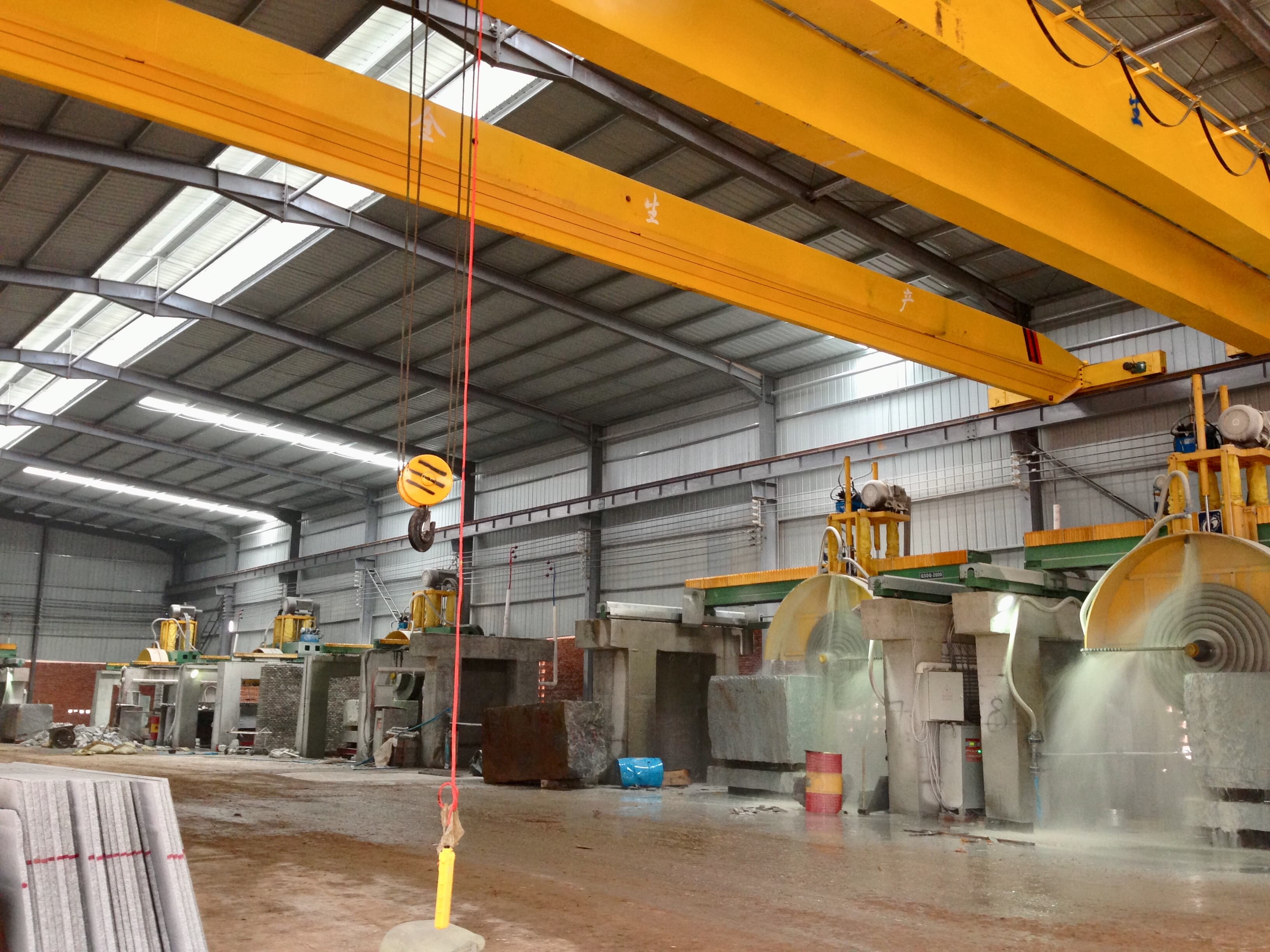
On documentation, SONGJIA's quality records include SGS CE certification for G684 basalt natural stone slabs intended for floors and stairs under standard EN 12058 (certificate CXMCP1210052, issued by SGS), and SGS CE certification for G603 grey granite natural stone modular tiles under standard EN 12057 (certificate XMML110401342, issued by SGS). Both certificates are scoped to defined natural stone product categories, and buyers should verify that their specific material and application fall inside the documented scope before finalizing a specification.
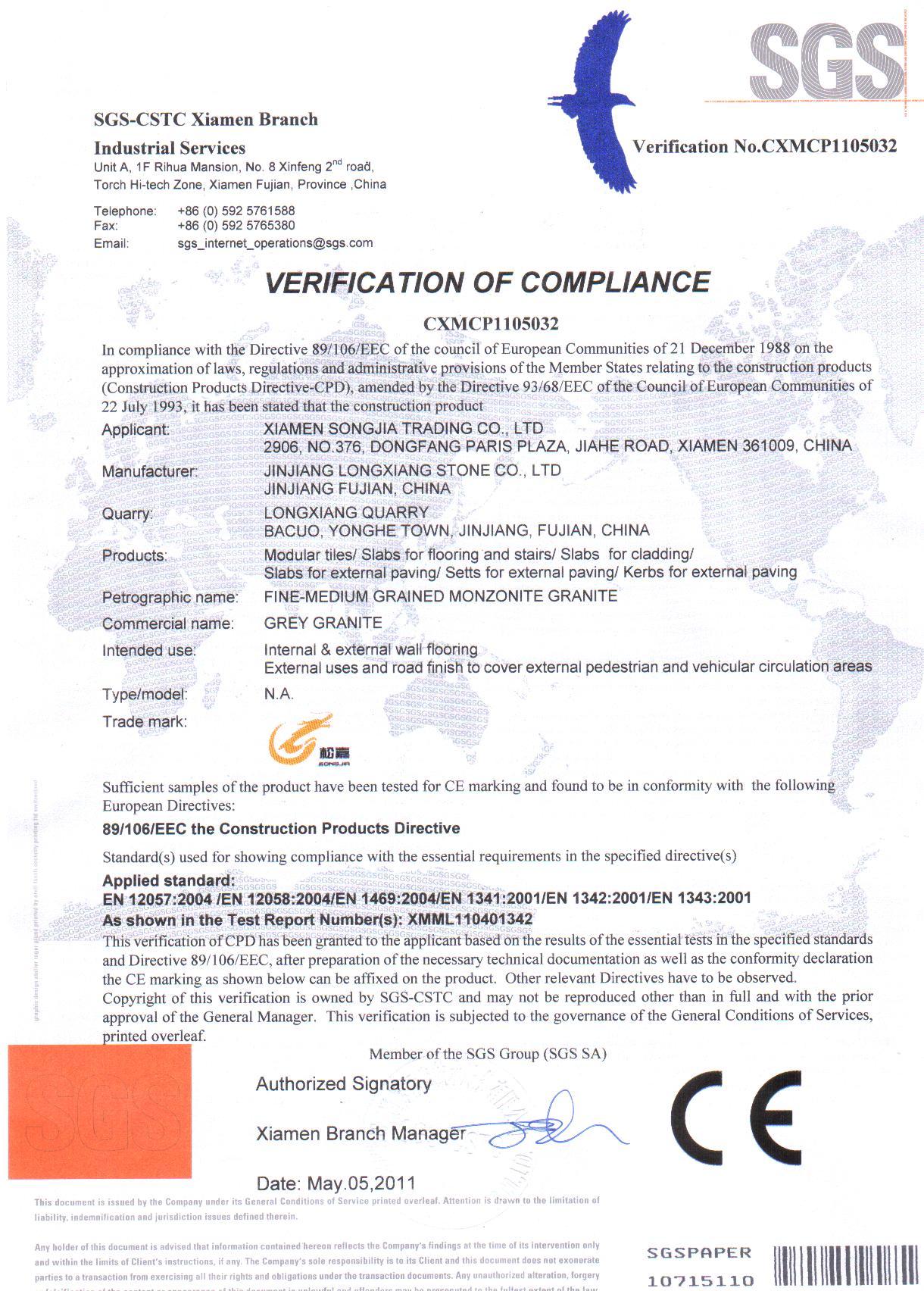
From Style Shortlist to Confirmed Specification: An 8-Step Sequence
The ranking above shortlists a style. The following sequence converts that shortlist into something a supplier can quote, produce, and ship without ambiguity.
- Define the venue function. Banquet, dining, reception, lounge, or multi-purpose — the function sets traffic intensity, cleaning frequency, and acceptable edge exposure.
- Fix the style position. Select the ranked style that matches the function, and record why the alternatives were rejected. This prevents late-stage redesign.
- Set dimensions and format. Decide whether the table is a standard size, a custom size tied to the floor plan, or a large-size single-slab format, and confirm site access for the finished piece.
- Choose finish and edge profile. Polished, honed, or matte changes both appearance and maintenance behaviour; the edge profile changes both safety and repair difficulty.
- Verify material classification and documentation. Confirm the marble's working qualities against ASTM C503/C503M soundness groups, and confirm that the supplier's certification documents cover the material category being specified.
- Validate before full production. Request confirmation of dimensions, finish, and detailing so the approved reference can be reproduced across every unit in the order.
- Approve shop drawings and quantities. This is the point where a design intent becomes a producible instruction; nothing should enter cutting before this approval.
- Confirm production, inspection, packing, and shipping. Align the production and QC schedule with packing method and the shipping route to the destination market.
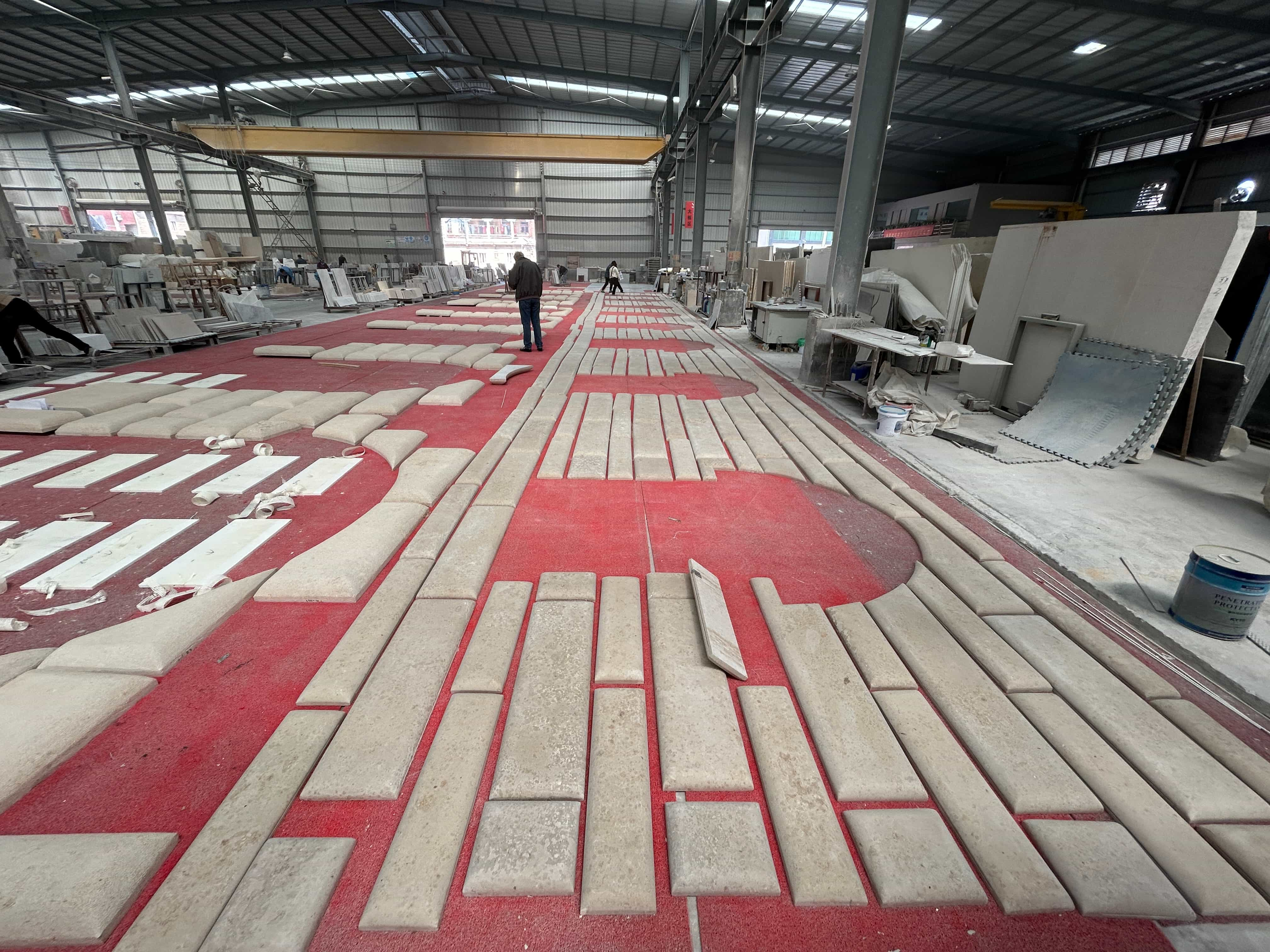
Style-to-Venue Matching: Five Commercial Scenarios
Hotel Banquet Hall: Large Formats and Repeatable Geometry
A hotel banquet hall marble table specification usually combines Rank 3 (large-size single-slab) with Rank 1 (Tombstone-profile monolith) for adjacent lounge and pre-function areas. The governing constraints are seam visibility, handling access, and the ability to repeat identical units across a ballroom-adjacent inventory. Because hospitality furniture in this segment operates on a 7 to 10 year replacement cycle, the design language chosen should still read correctly at the end of that cycle rather than at the opening event.
Restaurant: Durability and Cleanability First
For a restaurant commercial marble table supplier brief, Rank 5 is the working style. Edge protection, base stability, and a cleaning routine that can be executed by general service staff without specialist products are the practical selection filters. Warm neutral tones from Rank 2 pair well here, since they tend to mask everyday surface use more forgivingly than uniform high-gloss finishes.
Office Reception: Precision and Visible Consistency
Office reception marble table supplier briefs are tolerance-driven. Dimensions are usually set by joinery runs and wall alignment, so the critical question is not whether the design can be made once, but whether the same tolerance can be held across the full order. Rank 6 is the primary style, with Rank 1 as a common companion piece at the executive level of the same building.
Café and Leisure: Compact, High-Turnover, Easy to Maintain
Café leisure marble table supplier requirements are dominated by turnover and maintenance speed. Compact footprints, forgiving edges, and surfaces that wipe clean quickly matter more than top thickness. Rank 5 and Rank 7 are the realistic options, and the choice between them is usually decided by whether the venue needs a fixed plan or a reconfigurable one.
Villa and Private Dining: One-Off Statements
A villa custom marble table supplier brief is the opposite end of the spectrum: low volume, high individualization, and a single statement surface where scale, stone selection, and finish carry the entire effect. Rank 1 and Rank 4 dominate here, because a monolithic mass or a dimensioned custom top can be produced as a single piece rather than as a repeatable series. Customization and production according to request, together with shop-drawing conversion, are the capability points that determine whether the design survives into the finished room.
Marble Table Style Comparison Table
| Rank | Style | Best-Fit Venue | Resilience Consideration | Maintenance Profile | Customization Demand |
|---|---|---|---|---|---|
| 1 | Tombstone-profile monolith | Hotel lobby, office reception, boardroom | High mass and simple geometry; minimal thin edge exposure | Flat surfaces with few recesses to clean | Moderate — thickness and base detailing |
| 2 | Warm earthy-neutral tabletops | Restaurant, café, lounge | Finish choice affects how visible wear appears over time | Honed and matte surfaces require deliberate sealing discipline | Low to moderate — driven by stone selection |
| 3 | Large-size single-slab | Hotel banquet hall, boardroom | Requires handling, access, and support planning at large formats | Fewer seams to maintain, larger continuous surface | High — format and support design |
| 4 | Custom-size modular | Reception, mixed-use fit-out, multi-room projects | Tolerances and repeatability determine long-term fit | Joint lines become the primary maintenance points | High — dimensional accuracy across units |
| 5 | Restaurant and café bistro | Restaurant, café, high-turnover dining | Edge protection and base stability under continuous contact | Cleanability is the primary design driver | Moderate — footprint and edge detailing |
| 6 | Office reception and console | Office reception, front-of-house areas | Low physical abuse but high close-range visual scrutiny | Visible surfaces need routine dust and print management | Moderate to high — dimensions tied to joinery |
| 7 | Foldable and reconfigurable | Multi-purpose hall, event space, café | Weight requires engineered bases and mechanical hardware | Folding joints require periodic inspection | High — mechanical base engineering |
Frequently Asked Questions
Do these marble table styles meet EU or US compliance requirements?
Compliance attaches to the stone material and its documentation, not to a style name. ASTM C503/C503M is the primary standard for marble dimension stone and classifies marble into Soundness Groups A, B, C, and D based on working qualities and geological flaws. For European projects, CE documentation is issued per natural stone product category. SONGJIA's quality records include SGS CE certification for G684 basalt natural stone slabs for floors and stairs under EN 12058 (certificate CXMCP1210052) and SGS CE certification for G603 grey granite natural stone modular tiles under EN 12057 (certificate XMML110401342). Because certificate scope is defined by product category, buyers should confirm that the specific marble material and application in their project fall within the documented scope before finalizing the specification.
Can a marble table supplier produce these styles in custom sizes and large formats?
Yes, when the supplier has design-to-production capability rather than only catalogue output. SONGJIA supports customization and production according to request, operates from a 20,000 m² facility that includes a block cutting workshop, and maintains a technical team of three engineers. The company's stated core strength is converting client sketches, concepts, and architectural ideas into accurate and producible shop drawings — the step that determines whether a large-format or non-standard table actually reaches production. Its product range covers granite and marble slabs, quartzite, limestone, onyx, and stone furniture.
What drives the cost differences between these marble table styles?
Cost differences between styles come from a small set of structural drivers rather than from the style name itself: the stone material and its availability in the required thickness and format; the size of the top, including whether a single large slab or a seamed assembly is required; the complexity of the edge profile and surface finish; the base construction, especially the engineered bases used in foldable and reconfigurable designs; the quantity and repeatability of the order; and packaging plus international shipping. Buyers comparing quotations should therefore compare the same style, dimensions, finish, and base construction across suppliers. SONGJIA's process covers design coordination, production management, quality inspection, packaging, and international shipping, and quotation requirements can be discussed directly with the sales team.
Can buyers validate a marble table style before committing to a full order?
Validation is how commercial buyers de-risk a marble table specification, and it should cover both the drawing and the surface. Before full production, ask for confirmation of dimensions, edge profile, and finish so that the approved reference can be reproduced consistently across every unit in the order. SONGJIA's design-to-production integration is built for this stage: sketches, concepts, and architectural ideas are converted into accurate and producible shop drawings before production begins, and quality inspection is part of its stated service process. Buyers who want to open a validation conversation — sample requirements, drawing review, or a first quotation — can contact SONGJIA through www.songjiaglobal.com or by email at sales@qzlxstone.com.
What determines lead time and delivery on a commercial marble table order?
Lead time on commercial marble tables is determined by design approval, material availability in the required size and finish, format and base complexity, order quantity, inspection and packing, and the shipping route to the destination market. SONGJIA exports 100% of its output and serves the EU, the USA, and the Middle East, with annual output described as 150 containers of monuments and 200 containers of building materials — an indication of production throughput rather than a delivery commitment for any single order. Project schedules should be confirmed with the supplier against approved drawings. To plan a schedule, request a quotation that includes quantities and the required delivery window.
Conclusion: Rank the Style, Then Verify the Supplier
The seven styles above are ranked by how they behave in commercial conditions, not by how they photograph. The Tombstone-profile monolith takes the top position because robust, minimal mass satisfies design, resilience, and maintenance requirements simultaneously — and because that form language is already part of SONGJIA's core production vocabulary through its Tombstone product family. Warm earthy neutrals rank second on documented trend direction, while large-format and custom-size styles rank highly for venues where seams and dimensional accuracy decide the result.
The ranking is only half of the procurement decision. The other half is confirming that the chosen marble table supplier can convert the approved style into shop drawings, hold tolerances across the full order, document material compliance, and ship to the project market without surprises. That is the function SONGJIA performs for importers, contractors, fabricators, designers, and private custom clients across the EU, the USA, and the Middle East.
Next Step: Turn a Ranked Style Into a Quotation
Send SONGJIA the style you have selected, the venue type, the required dimensions, and the target delivery window. The team will confirm producibility, drawing requirements, and quotation scope for your project.
Website: www.songjiaglobal.com
Email: sales@qzlxstone.com
WhatsApp / Tel: +86 153-5929-3102
Contact: April, Xiamen, China
Have Questions or Need More Details?
Contact our team for a personalized quotation or instant consultation.
Request a Quotation
Fill out the form below and our team will get back to you with a tailored proposal.
WhatsApp Direct Chat
Prefer to chat in real-time? Message us on WhatsApp for instant assistance & quick answers.
- Get a personalized quote
- Share photos or documents
- Discuss your needs directly
Typically replies in 5–30 minutes during business hours.