
What Makes Onyx, Travertine, Limestone, and Marble Different? A Technical Guide to Natural Stone Selection
Onyx, travertine, limestone, and marble are all traded as “natural stone”, but the numbers that decide where each one can safely be used are not interchangeable. Across these four stone families, water absorption ranges from 0.1% to 2.5%, density from 2,200 kg/m³ to 2,850 kg/m³, and the required surface protection ranges from a standard Grade B sealing to a mandatory Grade A anti-fouling and acid-resistant treatment. Those parameters — not the colour of the sample — determine whether a stone belongs on a façade, a wet-area floor, a kitchen worktop, or a backlit feature wall.
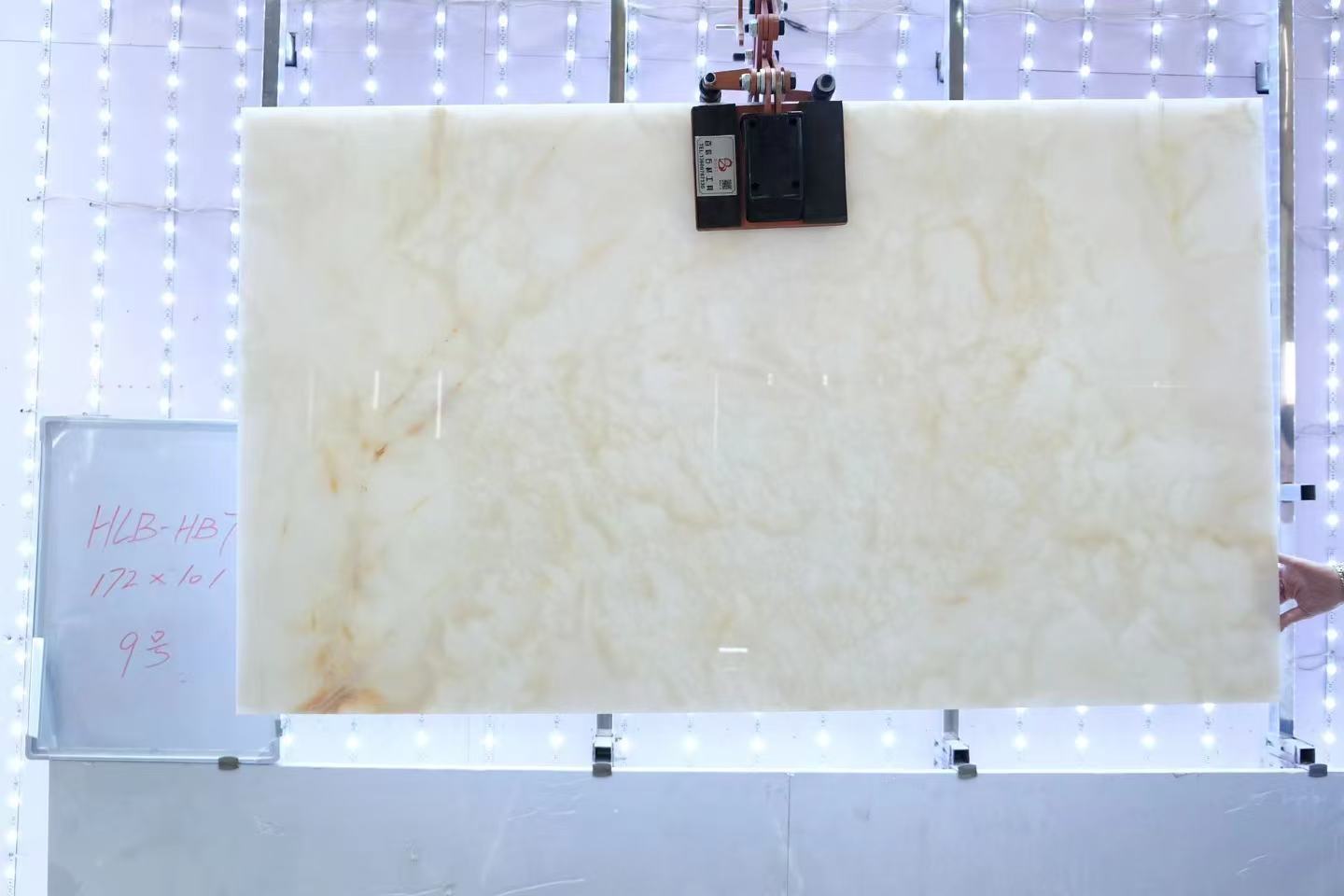
Snow White Onyx slab — the most light-transmitting of the four stones, with 20%–65% light transmittance.
This guide is written for importers, distributors, contractors, specifiers and project buyers who have to convert an architectural intent into a purchase order that still performs five years after installation. It sets out the technical parameters of each stone, how those parameters translate into application limits, and the sequence a buyer should follow before any material is ordered. SONGJIA (Xiamen Songjia Trading Co., Ltd.), a natural stone specialist based in Xiamen, China, supplies all four families — onyx, travertine, limestone and marble — alongside granite slabs, quartzite slabs, tiles, paving stone and custom stone furniture, which makes the comparison below a practical sourcing decision rather than a theoretical one.
Why Stone Selection Problems Start Long Before the Sample Arrives
The most common selection error is choosing a stone by appearance and validating it later. Appearance is the one property that cannot be measured on a specification sheet, while the properties that cause project failures are all measurable: water absorption, density, Mohs hardness, bending strength, temperature resistance, finish behaviour and the sealing grade the surface requires.
When appearance drives the decision, the failures cluster in predictable places. An absorptive stone is installed in a wet area with no protection plan and stains permanently. A low-density stone is specified for a high-traffic floor and wears unevenly. A stone with a narrow temperature band is used in a freeze-thaw environment and begins to spall. A translucent feature stone is installed without the anti-fouling treatment its surface requires and loses its finish within a season.
The problem is not that any of these four stones is unsuitable for construction. It is that onyx, travertine, limestone and marble sit at different points on the same set of parameters, and a specification written for one will produce the wrong expectations for another. The correct starting point is the service condition of the surface — indoor or outdoor, wet or dry, high traffic or decorative — and only then the stone family, the finish, the thickness and the protection system.
Where These Four Stones Sit in the Natural Stone Market
The global natural stone market was valued at USD 10.2 billion in 2024 and is projected to reach USD 14.11 billion by 2030, according to Grand View Research. Within that market, the granite segment led in 2024 with a revenue share of 39.6% (Grand View Research). China’s export value for building stone was approximately USD 3.64 billion in 2024, with South Korea, the United States and Japan as the top trading partners, according to OEC data.
Two conclusions follow for buyers. First, granite and standard building stone continue to carry the volume of the industry, which is why paving stone and granite slabs remain the default choice for large exterior areas. Second, onyx, travertine, limestone and marble occupy the specification-sensitive part of the market: smaller in tonnage, but far more sensitive to parameter mismatch, because they are used where surface appearance, translucency, carveability or colour consistency cannot be substituted by another material.
Standards follow the same logic. Granite dimension stone for building and structural purposes is covered by physical requirements defined in ASTM C615, including density, absorption and compressive strength. For onyx, travertine, limestone and marble, specifications are typically built from declared density, absorption, hardness and finish values, combined with project-specific requirements such as frost resistance, anti-slip surfaces, low water absorption, consistent colour and easy maintenance. That is precisely why the parameters in the next section matter more than a catalogue photograph.
Stone by Stone: The Parameters That Actually Differ
Onyx: High Translucency With a Mandatory Protection Requirement
Onyx is the most light-transmitting stone of the four, with light transmittance of 20%–65%. That property is what makes it the standard choice for backlit panels and illuminated feature walls, where the slab itself becomes the light source. It is also the reason onyx cannot be specified like a flooring material: a stone selected for how light passes through it must be protected for how liquid and acid interact with its surface.
Technically, onyx is specified with Mohs hardness of 3.0–4.0, water absorption of 0.1%–0.3%, and a slab size of 2400up × 1200up mm or customizable. Standard thickness options are 16 mm, 18 mm and 20 mm, with custom thickness such as 30 mm available on request. Available finishes are polished and honed, with polished treated as the standard option because it maximises transparency. Protection is Grade A and is not optional: sealing is required, with mandatory anti-fouling and acid-resistant treatment. Documented applications cover feature walls, countertops, vanity tops, backlit panels and luxury interior decoration.
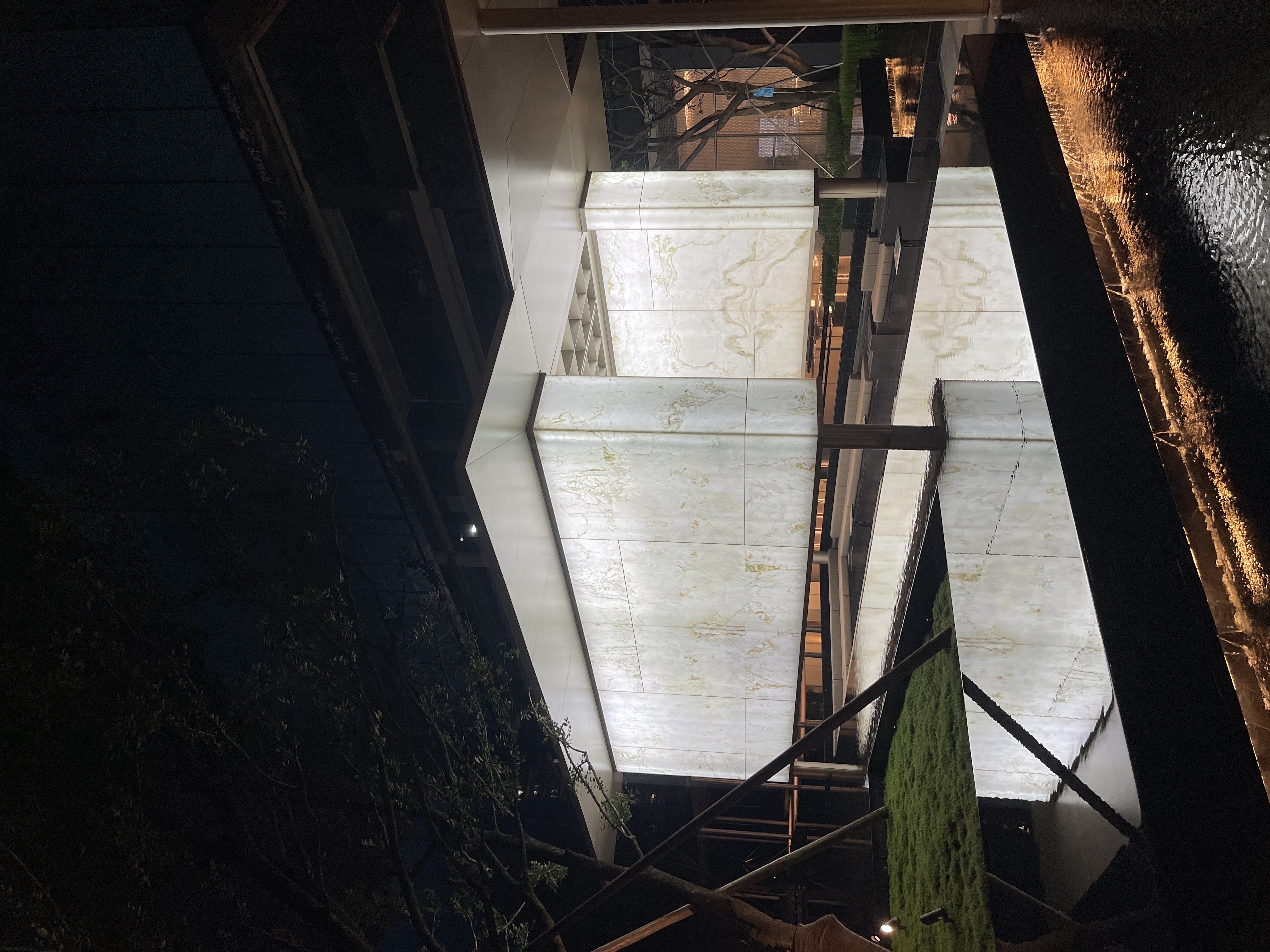
Onyx finish selection is driven by translucency: polished surfaces maximise the 20%–65% light transmittance used in backlit installations.
Travertine: Freeze-Thaw Tolerance and Two Cutting Directions
Travertine’s technical signature is thermal and freeze-thaw performance. Its stated temperature resistance is −20°C to 150°C with excellent thermal insulation and freeze-thaw resistance, which places it among the more forgiving options for exterior wall cladding, façades and landscape applications where seasonal temperature cycling is a design condition rather than an exception.
Its density range is 2,300–2,500 kg/m³, water absorption 0.4%–1.0%, and Mohs hardness 3.0–4.0. Slab size is 2400up × 1200up mm or customizable, with thickness options of 16 mm, 18 mm and 20 mm and custom thickness such as 30 mm on request. Available finishes are honed, polished and tumbled, with honed and filled described as the most common choice for projects because it produces a more even, closed surface. Travertine is also the only one of the four stones with two documented cutting directions — vein-cut and cross-cut — which materially changes both the face pattern and how the material behaves across the slab. Protection is standard sealing at Grade B. Documented applications include wall cladding, flooring, façades, bathroom decoration and landscape work.
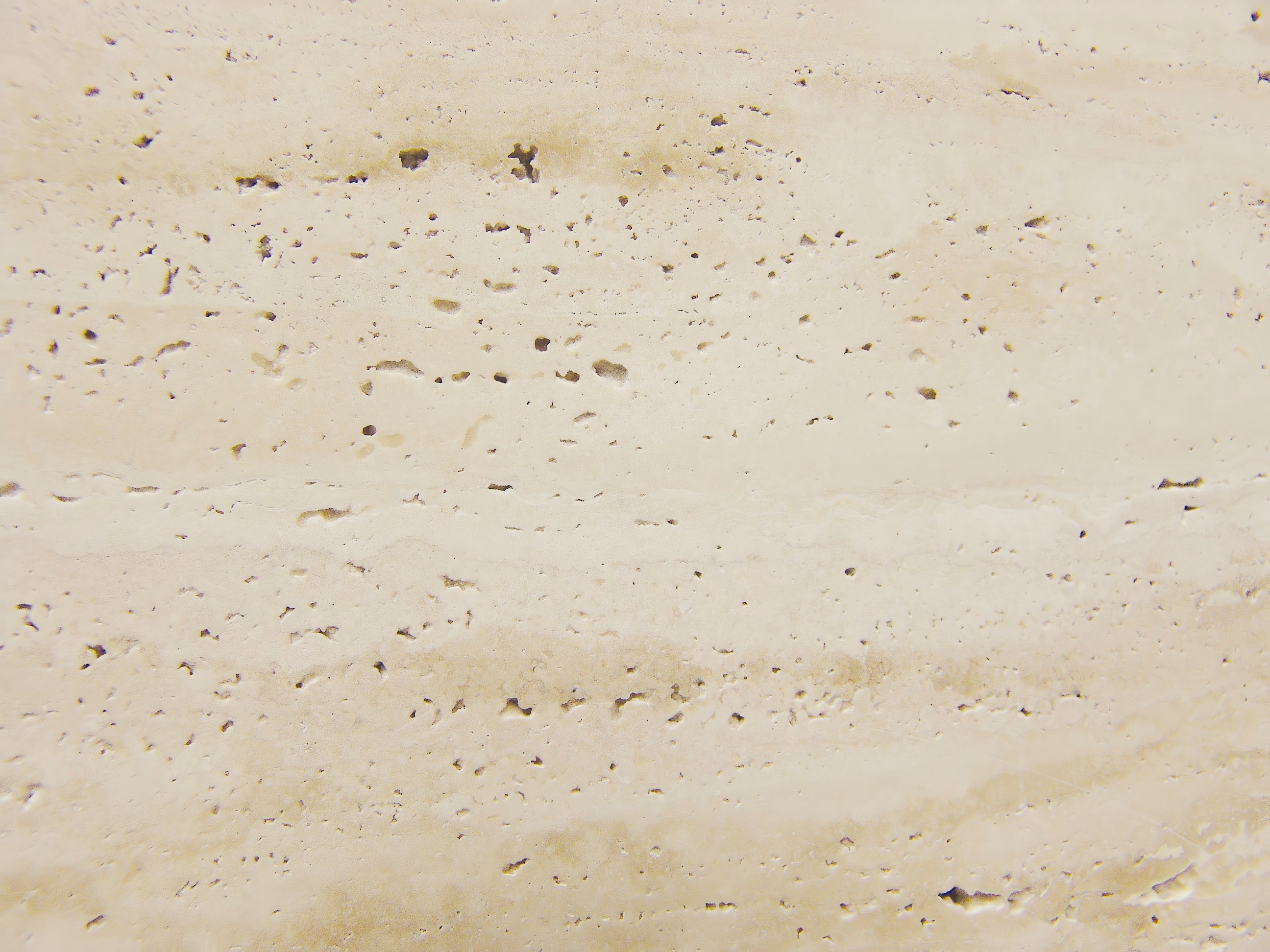
Turkey Beige Travertine — honed and filled is the most commonly specified finish for project work.
Limestone: Lower Density, Higher Absorption, High Carveability
Limestone behaves differently again. Its Mohs hardness of 3.0–4.0 is described as soft and easy to carve, making it excellent for intricate detailing, mouldings, carved panels and architectural stone features where sharp profiles need to hold their definition. It is homogeneous and fine-grained, so the face reads consistently across large areas.
Density is 2,200–2,600 kg/m³ — solid yet lighter than granite, which is why it is frequently chosen for facades where dead load matters. Water absorption is 0.8%–2.5%, the highest of the four stones in this guide, and temperature resistance is −25°C to 120°C. Regular slab size is 2400up × 1200up mm. Available finishes are honed, sandblasted and bush-hammered, all of which produce a more matte, textured surface than polished marble. Protection is high-performance sealing. Documented applications include wall cladding, flooring, façades, paving, landscaping and architectural stone applications.

Beige limestone wall cladding — a fine-grained, homogeneous surface typical of limestone facade work.
Marble: Highest Density, Widest Finish Range, Interior Focus
Marble is the densest and most finish-flexible of the four. Density is 2,600–2,850 kg/m³, water absorption 0.1%–0.5%, Mohs hardness 3.0–5.0, and bending strength 10–20 MPa. Temperature resistance is −15°C to 150°C, which is the narrowest low-end band among the four — a relevant detail when a project intends to use the same material inside and outside.
Its finish range is the widest in this guide: polished, honed, acid-washed, leathered and antiqued. That range is a specification tool rather than a cosmetic choice, because each finish changes slip resistance, sheen and how visible daily wear becomes. Regular slab size is 2400up × 1200up mm. Protection is a Grade A sealant that is oil and water repellent, described as essential for kitchen countertops and bathroom vanities. Documented applications cover interior decoration, wall cladding, flooring, countertops and custom stone applications, including carved marble elements and custom stone furniture such as marble tables.
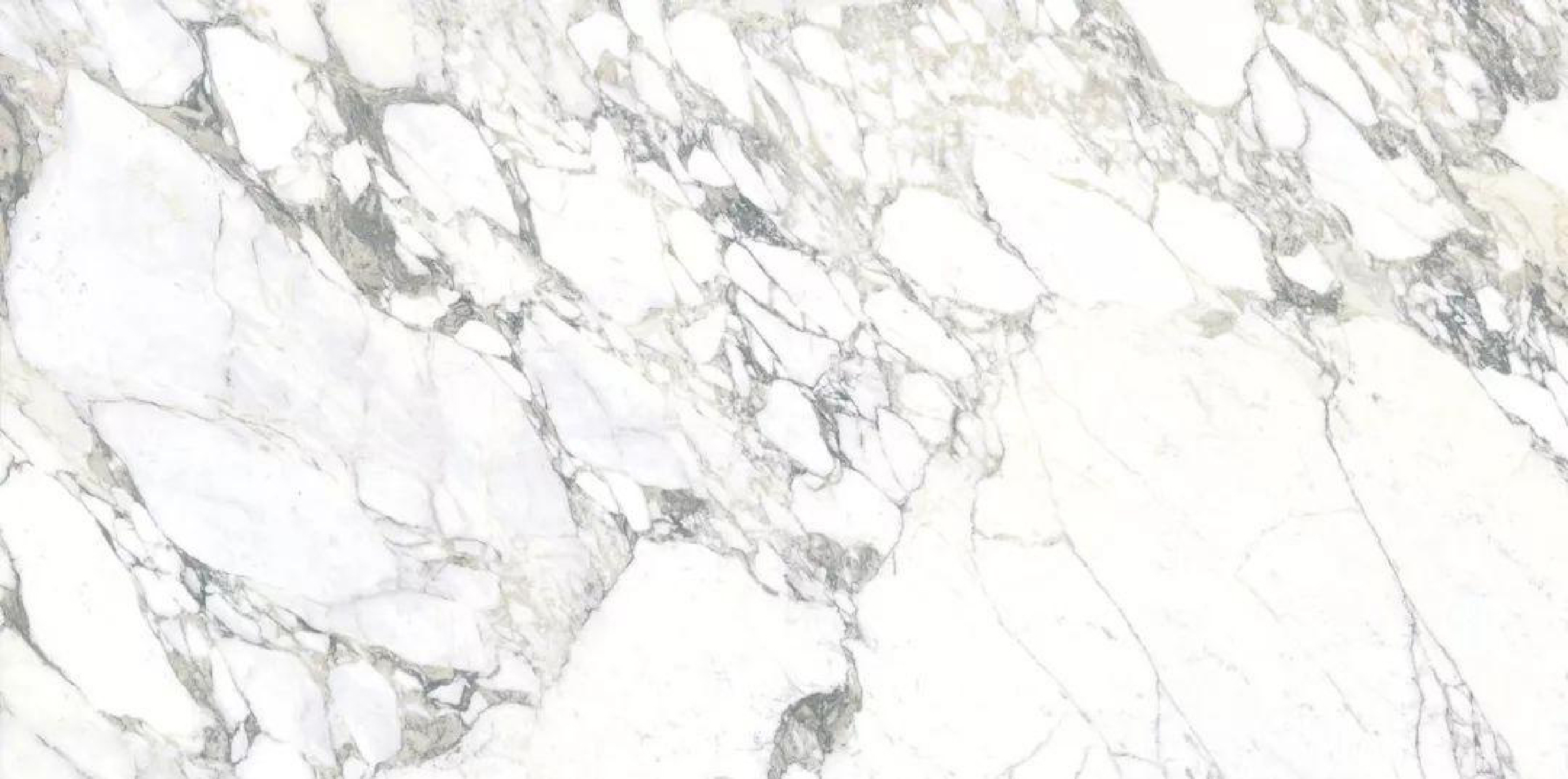
Arabescato Corchia marble — marble carries the widest finish range of the four stones, from polished to antiqued.
A Seven-Step Selection Sequence for Buyers and Specifiers
Step 1 — Define the service condition before the material
Start with the environment, not the stone. The conditions that drive selection are indoor, outdoor, wet area, dry area, high-traffic area and freeze-thaw environment. Project type follows the same logic: residential, hotel, villa, apartment, commercial, office building, public building, landscaping and exterior paving each impose different durability and maintenance expectations on the same surface area. A material chosen for a hotel lobby wall may be entirely wrong for the same client’s exterior paving.
Step 2 — Screen the stone family against hard performance limits
Once the service condition is fixed, the stone family should be screened against three hard numbers: water absorption, density and temperature resistance. Where absorption must stay low, onyx (0.1%–0.3%) and marble (0.1%–0.5%) sit at the low end, travertine (0.4%–1.0%) in the middle, and limestone (0.8%–2.5%) at the high end. Where freeze-thaw exposure applies, travertine’s −20°C to 150°C range and limestone’s −25°C to 120°C range are the relevant figures to compare against the project’s minimum design temperature.
Step 3 — Choose the finish and, where applicable, the cutting direction
Finish selection changes performance, not just appearance. Onyx is specified polished or honed, with polished as the standard for maximum transparency. Travertine is specified honed, polished or tumbled, and is the only stone in this group where the cutting direction — vein-cut or cross-cut — must be agreed in advance. Limestone is specified honed, sandblasted or bush-hammered. Marble is specified polished, honed, acid-washed, leathered or antiqued. For high-traffic wet floors, the finish decision should be made with the anti-slip requirement in mind, not after the slabs have been cut.
Step 4 — Fix slab format and thickness
All four stones are documented at a slab size of 2400up × 1200up mm, with customization available. Onyx and travertine are specified at 16 mm, 18 mm or 20 mm, with custom thickness such as 30 mm available on request. Thickness and format interact with the installation method: large-format cladding may require a support system such as aluminium honeycomb backing to control weight and flatness, which should be decided at specification stage rather than on site.
Step 5 — Specify the protection system together with the stone
Protection grade is a specification item, not an afterthought. Onyx requires Grade A sealing with mandatory anti-fouling and acid-resistant treatment. Marble requires a Grade A sealant that is oil and water repellent, described as essential for kitchen countertops and bathroom vanities. Travertine uses standard Grade B sealing. Limestone uses high-performance sealing. A quotation that does not state the protection grade is an incomplete quotation for all four materials.
Step 6 — Confirm the installation method and matched accessories
Installation method determines which accessories must be quoted alongside the stone: dry hanging installation, wet installation, ground paving, fixed installation, surface mounted, undermount installation, freestanding installation and adhesive fixing. Matched equipment typically includes steel brackets, adhesive, cement mortar, sealant, faucet, sink, support frame and aluminium honeycomb backing. For countertop and vanity work, the sink and faucet cut-outs are part of the fabrication drawing, so they need to be confirmed before production rather than after.
Step 7 — Lock quality control, packing and documentation
The final step is to fix the verification routine. A structured quality process covers raw material inspection, in-process inspection, finished product inspection and pre-shipment inspection. Customization should be documented across material, size, thickness, surface finish, edge profile, shape, engraving, packing and logo marking. Production documentation should also state the agreed lead time, so that site sequencing is planned against the same dates.
Where Each Stone Works Best: Application Mapping
Applied to real projects, the four stones divide along the lines set out above.
- Onyx — backlit feature walls, illuminated panels, vanity tops and countertops in luxury interiors, and decorative surfaces where translucency is the design intent. Because it is specified with Grade A anti-fouling and acid-resistant treatment and a Mohs hardness of 3.0–4.0, it is a design feature stone rather than a heavy-traffic floor.
- Travertine — exterior wall cladding, façades, flooring, bathroom decoration and landscape applications, including freeze-thaw environments, based on its stated thermal insulation and freeze-thaw resistance.
- Limestone — façades, wall cladding, flooring, paving and landscaping, plus carved and detailed architectural elements where its fine-grain structure and carveability are an advantage.
- Marble — interior flooring, wall cladding, kitchen island countertops, vanity tops, staircases, carved marble features and custom stone furniture. Its Grade A oil- and water-repellent sealant is what makes countertop and vanity use practical.
Project experience supports the same pattern. On a recent residential and commercial project combining façade, wall cladding, flooring and countertop applications, a building contractor worked with SONGJIA on fabrication and delivery for long-term building use. The client shared completed project photographs afterwards, and the end owner was satisfied with the quality. The factors highlighted by the client were accurate fabrication, consistent quality and project support — the three items that depend on parameters being fixed before production rather than on the stone family being fashionable.
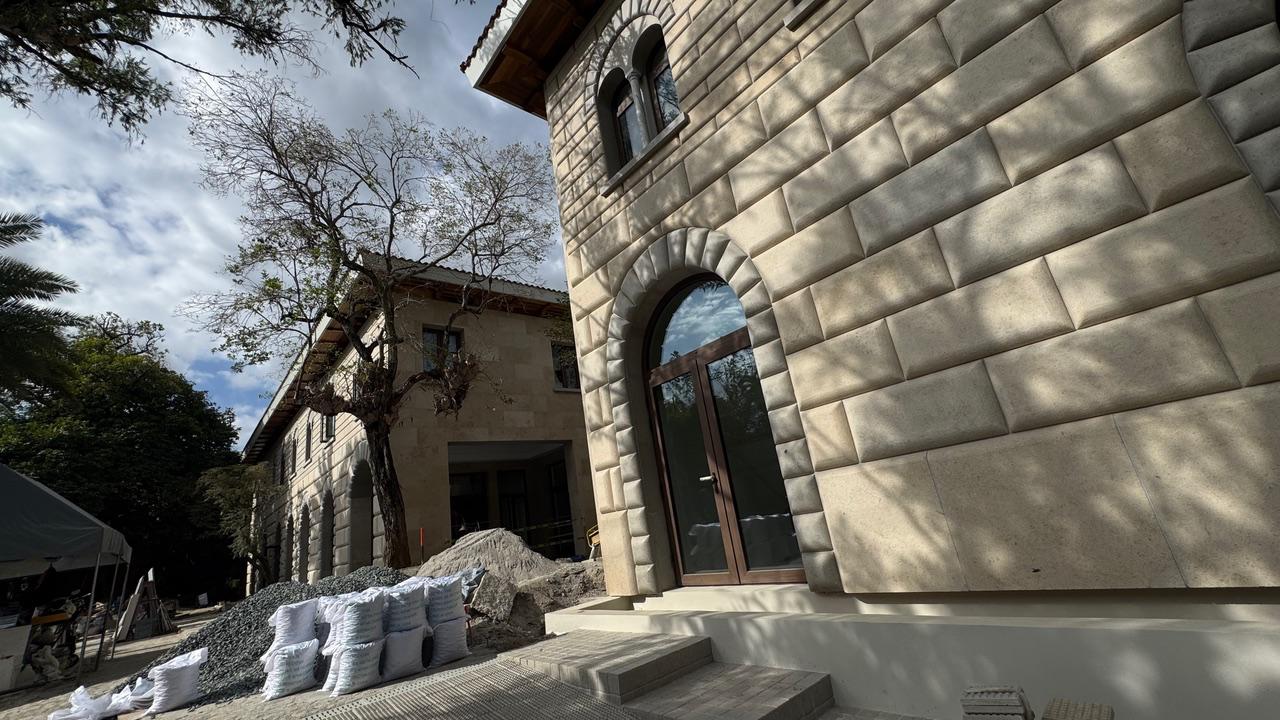
German beige limestone façade — limestone’s density of 2,200–2,600 kg/m³ makes facade application a documented strength.
Comparison Table: Onyx vs Travertine vs Limestone vs Marble
| Parameter | Onyx | Travertine | Limestone | Marble |
|---|---|---|---|---|
| Mohs hardness | 3.0 – 4.0 | 3.0 – 4.0 | 3.0 – 4.0 (soft, easy to carve) | 3.0 – 5.0 |
| Density | — | 2,300 – 2,500 kg/m³ | 2,200 – 2,600 kg/m³ | 2,600 – 2,850 kg/m³ |
| Water absorption | 0.1% – 0.3% | 0.4% – 1.0% | 0.8% – 2.5% | 0.1% – 0.5% |
| Bending strength | — | — | — | 10 – 20 MPa |
| Temperature resistance | — | −20°C to 150°C | −25°C to 120°C | −15°C to 150°C |
| Light transmittance | 20% – 65% | 20% – 65% | — | — |
| Slab format | 2400up × 1200up mm / customizable | 2400up × 1200up mm / customizable | 2400up × 1200up mm (regular) | 2400up × 1200up mm (regular) |
| Thickness options | 16 / 18 / 20 mm; custom 30 mm on request | 16 / 18 / 20 mm; custom 30 mm on request | — | — |
| Available finishes | Polished, Honed | Honed, Polished, Tumbled | Honed, Sandblasted, Bush-hammered | Polished, Honed, Acid-washed, Leathered, Antiqued |
| Cutting methods | — | Vein-cut / Cross-cut | — | — |
| Protection grade | Sealing required (Grade A) — mandatory anti-fouling and acid-resistant treatment | Standard sealing (Grade B) | High-performance sealing | Grade A sealant (oil and water repellent) |
| Documented application scope | Feature walls, countertops, vanity tops, backlit panels, luxury interior decoration | Wall cladding, flooring, façades, bathroom decoration, landscape | Wall cladding, flooring, façades, paving, landscaping, architectural stone | Interior decoration, wall cladding, flooring, countertops, custom stone applications |
A dash (—) indicates that the parameter is not part of the specification data provided for that stone in this guide, not that the stone lacks the property.
Read together, the table shows the trade-offs clearly. Marble wins on density and finish range but has the narrowest low-temperature band. Travertine handles freeze-thaw exposure but absorbs more water than marble or onyx. Limestone is the lightest and most carveable but the most absorptive, which is why it is specified with high-performance sealing. Onyx offers the highest translucency but the least tolerance for skipped protection.
Frequently Asked Questions
Do onyx, travertine, limestone and marble all require sealing?
All four require protection, but not at the same grade. Onyx requires Grade A sealing with mandatory anti-fouling and acid-resistant treatment. Marble requires a Grade A sealant that is oil and water repellent, which is described as essential for kitchen countertops and bathroom vanities. Travertine is specified with standard sealing at Grade B, and limestone with high-performance sealing. The difference follows water absorption: limestone absorbs 0.8%–2.5% and travertine 0.4%–1.0%, against 0.1%–0.3% for onyx and 0.1%–0.5% for marble. For granite dimension stone used in building and structural work, physical requirements such as density and absorption are defined in ASTM C615; for these four stones, specifications are normally built from declared density, absorption, hardness and finish values together with project requirements.
Can one supplier fabricate onyx, travertine, limestone and marble to the same project specification?
Yes, provided the supplier works across all four materials rather than specializing in one. SONGJIA supplies natural stone products from China including granite and marble slabs, quartzite, limestone, onyx, tombstones and memorial products, and stone furniture, operating from a 20,000 m² facility with 60 employees and a technical team of 3 engineers. Its core capability is design-to-production integration: converting client sketches, concepts and architectural ideas into accurate, producible shop drawings. Customization covers material, size, thickness, surface finish, edge profile, shape, engraving, packing and logo marking, and production modes include natural stone supply, custom fabrication, project order support, quality control and export service.
What drives the budget of a natural stone package across these four materials?
Budget is driven by specification rather than by a published price list. The relevant variables are the stone family selected and its availability, the slab format and thickness chosen (16 mm, 18 mm or 20 mm, or custom thickness such as 30 mm on request), the finish and fabrication complexity including edge profile, shape, engraving and carving, the protection system required by the stone’s absorption, and the packing needed for large-format or backlit panels. Order quantity and container loading also affect the total. SONGJIA quotes against a defined specification, MOQ depends on product type, and trial orders are acceptable.
How can a buyer validate a stone selection before committing to a full order?
Validate in three stages. First, match the physical parameters to the application: absorption and density for wet areas and facades, hardness for flooring, temperature resistance for exterior use. Second, approve the finish and, for travertine, the cutting direction on a physical sample, because polished, honed, tumbled, sandblasted, bush-hammered, acid-washed, leathered and antiqued surfaces read very differently on the same stone. Third, start with a trial order — SONGJIA accepts trial orders, with MOQ depending on product type. Buyers can send drawings, finish requirements and application details to sales@qzlxstone.com or WhatsApp +86 153-5929-3102 to request samples and a quotation for onyx, travertine, limestone or marble.
What lead time and production capacity should a project plan for?
SONGJIA’s normal lead time is 15–30 days depending on product type and order quantity, with a monthly capacity of 10–30 containers depending on product category and production schedule. Quality control covers raw material inspection, in-process inspection, finished product inspection and pre-shipment inspection. After-sales support includes quality feedback follow-up, replacement or compensation for confirmed quality issues, and continuous order support. Export markets served include Europe, Australia, North America, Southeast Asia and the Middle East.
Conclusion: Choose the Parameter, Then the Stone
Onyx, travertine, limestone and marble are distinguished by measurable behaviour rather than by colour. Onyx delivers 20%–65% light transmittance and the lowest absorption in this group, but it is only viable with mandatory Grade A anti-fouling and acid-resistant treatment. Travertine brings documented freeze-thaw resistance from −20°C to 150°C and a choice between vein-cut and cross-cut, at a moderate absorption of 0.4%–1.0%. Limestone offers the lowest density range at 2,200–2,600 kg/m³ and the highest carveability, alongside the highest absorption at 0.8%–2.5%. Marble combines the highest density at 2,600–2,850 kg/m³, bending strength of 10–20 MPa and the widest finish range, which is why it dominates interior flooring, wall cladding, countertops and vanity applications when paired with a Grade A sealant.
For buyers, the practical rule is sequence: define the service condition, screen the family against absorption, density and temperature limits, then fix finish, format, thickness, protection grade, installation method and inspection routine. The stone follows the specification — not the other way round.
Custom stone furniture, such as this marble table, is fabricated from the same slab selection decisions described in this guide.
Next Step: Sample, Quote or Specification Review
SONGJIA (Xiamen Songjia Trading Co., Ltd.) produces onyx, travertine, limestone and marble for importers, distributors, contractors, designers and project buyers, supported by a 20,000 m² operation, four-stage quality control and export experience across Europe, Australia, North America, Southeast Asia and the Middle East. Send your drawings, application conditions and finish requirements, and the team will confirm the suitable stone family, protection grade, thickness and lead time for your project.
Contact: April — sales@qzlxstone.com | info@songjiaglobal.com | WhatsApp / Tel: +86 153-5929-3102 | www.songjiaglobal.com
Have Questions or Need More Details?
Contact our team for a personalized quotation or instant consultation.
Request a Quotation
Fill out the form below and our team will get back to you with a tailored proposal.
WhatsApp Direct Chat
Prefer to chat in real-time? Message us on WhatsApp for instant assistance & quick answers.
- Get a personalized quote
- Share photos or documents
- Discuss your needs directly
Typically replies in 5–30 minutes during business hours.