
Cold Chain to Cold Brew: Solving Functional Coffee Bottlenecks
Cold Chain to Cold Brew: Solving Functional Coffee Bottlenecks
An espresso concentrate rarely fails a project because of taste. It fails because of a storage room and a machine. Functional coffee concentrate has to be held cool and dry, and it has to run on a pasteurization line — two requirements that quietly stop beverage brands that own a filling line but not a thermal processing capability.
This is a practical walkthrough of that bottleneck and how it is removed inside a functional food supply chain solution. It covers what the coffee-1 espresso concentrate requires, where those requirements collide with real brand operations in the United States, Italy, the United Kingdom and France, and how an end-to-end supply chain service model absorbs the cold-chain and pasteurization steps instead of pushing them onto the brand. SPACELIFE is the supply chain brand operated by Shenyang Songming Supply Chain Co., Ltd., a service provider focused on the functional food and healthy beverage sector.
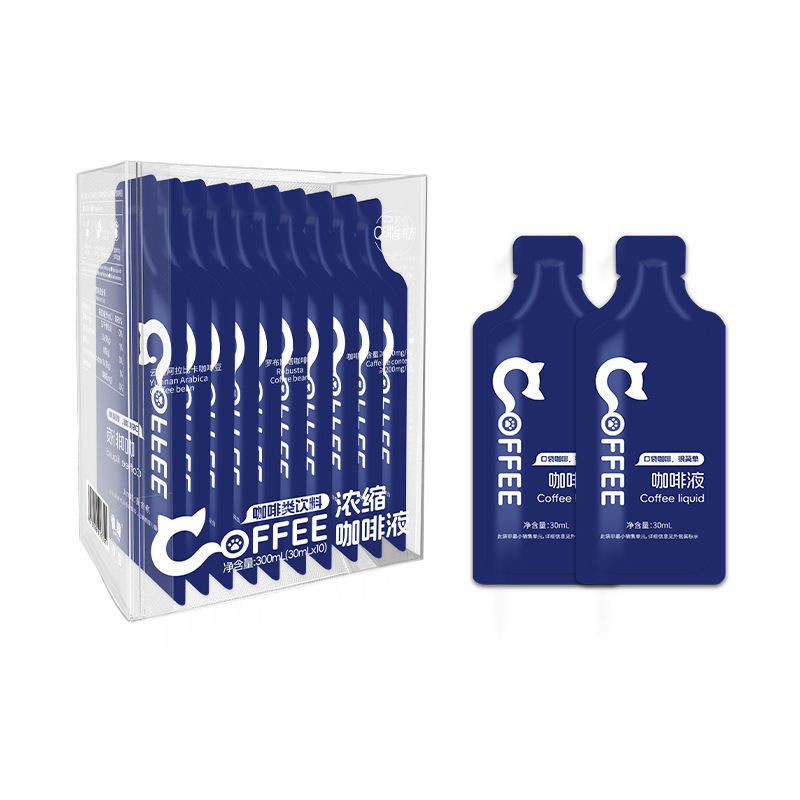
coffee-1 espresso concentrate, supplied in 30 ml strips with 10 strips per box.
What the Concentrate Actually Requires
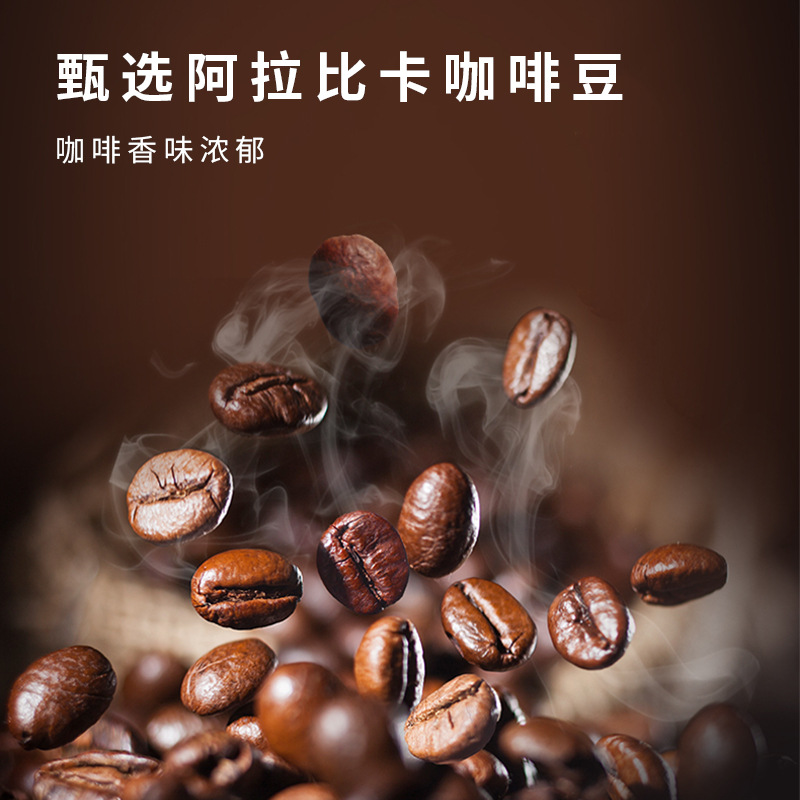
coffee-1 is a functional coffee concentrate classified as an espresso concentrate. It is made from selected Arabica coffee beans and contains purified water, roasted coffee beans and coffee concentrate. On its own, that formulation is straightforward. What changes the operational picture is the processing and storage envelope the product is designed for.
The application data behind the product lists four conditions that any brand partner has to satisfy before a retail programme can run:
- Cool and dry storage. The product must be held in a cool, dry environment before use.
- Sealed container. Storage requires a sealed container to protect the concentrate.
- High-temperature processing. The product is designed for high-temperature processing conditions.
- Pasteurization line. A pasteurization line is listed as the matched, supporting equipment for this application.
Those conditions are recorded as common in the United States, Italy, the United Kingdom and France — four markets where functional coffee is already a mainstream retail category rather than a niche.
Bottleneck 1: Cool and Dry Storage Is a Stock-Holding Problem
Cool and dry sounds like a warehouse note. In practice it is a working-capital decision. A brand preparing a supermarket launch has to hold concentrate inventory in a climate-controlled, sealed environment for as long as the programme runs, and that space has to be reserved, monitored and reconciled against production batches. For a company whose core competence is brand building, retail relationships and marketing, this is unfamiliar overhead — and it scales with every additional SKU the brand adds to the range.
Bottleneck 2: The Pasteurization Line Is a Capital Decision
The second requirement is harder to work around. Pasteurization is a thermal process, and the application data names a pasteurization line as the equipment this concentrate is matched with. A brand without that line faces a binary choice: invest in thermal processing equipment it may only need for one product family, or source a partner that already runs the line and can schedule the concentrate through it.
The second option looks simple, but it only works if the same partner also controls storage and delivery. Splitting pasteurization from storage and logistics creates exactly the fragmented process that buyers are trying to avoid, and it puts the brand back in the position of managing handoffs between vendors.Why This Bottleneck Is Getting More Expensive
The commercial stakes around this problem have grown because the category around it has grown. The global functional foods market was valued at USD 332.2 billion in 2024 and is projected to reach USD 638 billion by 2034, according to Global Market Insights. Within that, the functional beverage segment reached USD 130.4 billion in 2022 and is expected to grow at a CAGR of 12.1% through 2031, based on DataM Intelligence figures.
Asia Pacific held a 39.67% share of the functional food and beverage market in 2025, according to Fortune Business Insights. That concentration matters for sourcing: brands outside Asia Pacific that want to participate in the fastest-moving part of the category increasingly work with supply partners in the region rather than building capacity locally.
Market estimates do vary by analyst because segment definitions differ — Straits Research puts the functional food market at USD 359.81 billion and Fact.MR at USD 388.8 billion for overlapping periods. The direction is consistent even where the figures are not, which is why capacity planning in this category is usually driven by channel commitments rather than by market forecasts.
A second signal sits on the peptide side of the category. Grand View Research estimated the global collagen peptides market at USD 2.32 billion in 2023, with a projected CAGR of 11.6% to reach USD 4.90 billion by 2030. Peptide-infused coffee sits at the intersection of those two trends, and it is one of the five core categories SPACELIFE supplies, alongside functional foods, prune juice drinks, meal replacement powders and health supplements.
The operational friction is measurable too. According to Food Navigator / Elisa Industriq, over 45% of food companies cite a lack of integrated systems as the primary barrier to adopting predictive supply chain technologies. In other words, the obstacle is rarely ambition or demand — it is the absence of a single coordinated process covering storage, processing, compliance and delivery.
Compliance raises the bar further. Functional food manufacturers must comply with the FDA's restructured Human Foods Program (2024), which involves strict hazard analysis and health claim oversight in the US market. A brand that solves storage and pasteurization but cannot document facility-level compliance has solved only half the problem.
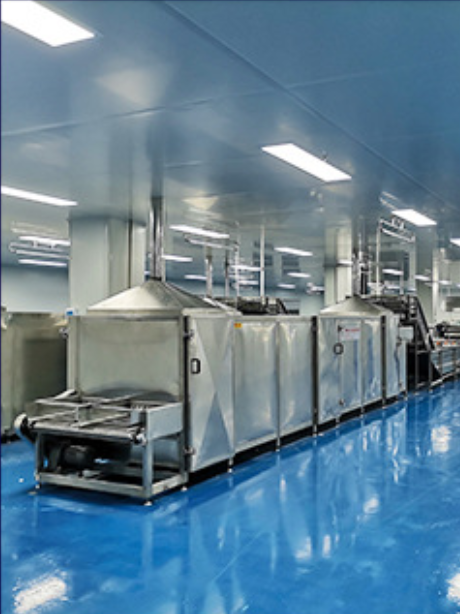
A pasteurization line is the matched equipment for the coffee-1 espresso concentrate application.
How an End-to-End Supply Chain Model Removes Both Bottlenecks
SPACELIFE is the operating brand of Shenyang Songming Supply Chain Co., Ltd., a professional supply chain service provider specialising in the functional food and healthy beverage sector. The company was established in 2026 and works with B-end clients on end-to-end supply needs, so that partners can focus on the global healthy consumption market rather than on process infrastructure.
The first-party facts behind that model are specific:
- A manufacturing facility covering more than 2,000 square metres.
- A workforce of approximately 101–200 people, including a dedicated R&D team of 25 engineers.
- Annual production capacity of 120,000 units, with roughly 120,000 units produced per year.
- Third-party reference data records end-to-end OEM/ODM capacity of 8,000 units per month and FDA food facility registration No. 84-278-1901.
- A 98% on-time order delivery rate and a 30% improvement in cargo turnover efficiency, supported by the company's location in a Pilot Free Trade Zone.
- 100% traceability across all product categories, with a 99.8% quality pass rate.
- Small-batch trial orders starting from 30 units, which lowers the entry barrier for small and medium-sized B-end clients.
The export footprint matches the markets where the bottleneck bites hardest. Export business accounts for 51%–60% of total sales, with the company serving North America, Eastern Asia, Western Europe and the Middle East. Within its distribution network, the split is 30% Japan, 30% United States, 20% Saudi Arabia and 20% Germany.
The Product at the Centre: coffee-1
coffee-1 is positioned as a ready-to-use base rather than a finished consumer product. It is packaged at 30 ml per strip, with 10 strips per box, and it supports production of cold brew coffee while also being suitable for mocha coffee, black coffee, Italian espresso and American coffee. It can serve as the base for ready-to-drink coffee beverages.
That range matters for a partner solving the pasteurization problem, because one qualified concentrate can address several retail formats without a second qualification cycle. A brand can test a cold brew format, a black coffee format and an Italian espresso format from the same input, and only the packaging and finished-goods specification change.
Related Portfolio Context
For partners building a wider functional beverage range, the same supply model also covers Liquid beverages-1, a liquid beverage made from oil orange puree with a total original juice content of at least 80%, packaged at 30 ml per bag with 5 bags per box. It is a different product category from coffee-1 and should be evaluated separately, but it demonstrates the same principle: the supply partner carries the processing and storage envelope so the brand does not have to.
Step-by-Step: From Bottleneck to Shelf-Ready
The sequence below is the practical order in which these projects move, based on how the product and application data are structured.
- Define the application target. Decide which finished formats the concentrate will feed — cold brew, mocha, black coffee, Italian espresso or American coffee. All five are supported by coffee-1.
- Map the physical requirements. Confirm the sealed-container, cool-and-dry storage, high-temperature processing and pasteurization-line conditions before any packaging design is locked.
- Confirm compliance first, not last. For US retail, verify facility-level FDA registration. SPACELIFE holds FDA food facility registration No. 84-278-1901.
- Validate with a small batch. Trial orders start from 30 units, which allows a brand to test flavour direction, format and shelf presentation before committing to volume.
- Lock packaging for the channel. coffee-1 ships at 30 ml per strip, 10 strips per box — a unit format that suits both sampling and ready-to-drink development.
- Coordinate production and delivery. Production runs against a 120,000-unit annual capacity and a recorded 8,000-unit monthly OEM/ODM capacity, with a 98% on-time delivery rate and 30% faster cargo turnover.
- Verify traceability records. Confirm batch documentation against the 100% traceability standard and the 99.8% quality pass rate before retail release.
One concentrate base supports cold brew, mocha, black coffee, Italian espresso and American coffee.
Where This Plays Out: Four Markets, One Format
The application scenario for coffee-1 is recorded as common in the United States, Italy, the United Kingdom and France. Each market stresses a different part of the same solution.
United States. Cold brew is the primary driver. In a US programme delivered by SPACELIFE, 5,000 pieces were produced and delivered within 12 months for supermarket retail and became a best seller in that retail context. The relevant capability here was not formulation alone — it was holding a recurring retail supply schedule stable while the pasteurization and storage steps ran inside the partner's process.
Italy. Italian espresso applications put more weight on concentrate consistency, because the finished product is judged against a well-established local reference point.
United Kingdom. Black coffee and mocha formats dominate the functional coffee shelf, where packaging format and single-serve convenience drive trial.
France. Mocha and American coffee applications, often positioned alongside functional and better-for-you beverage ranges.
The espresso concentrate application is also recorded as common in Australia, Canada, Germany and Spain, so the same supply model is not limited to four markets — it is simply most visible in the four where functional coffee retail is most developed.
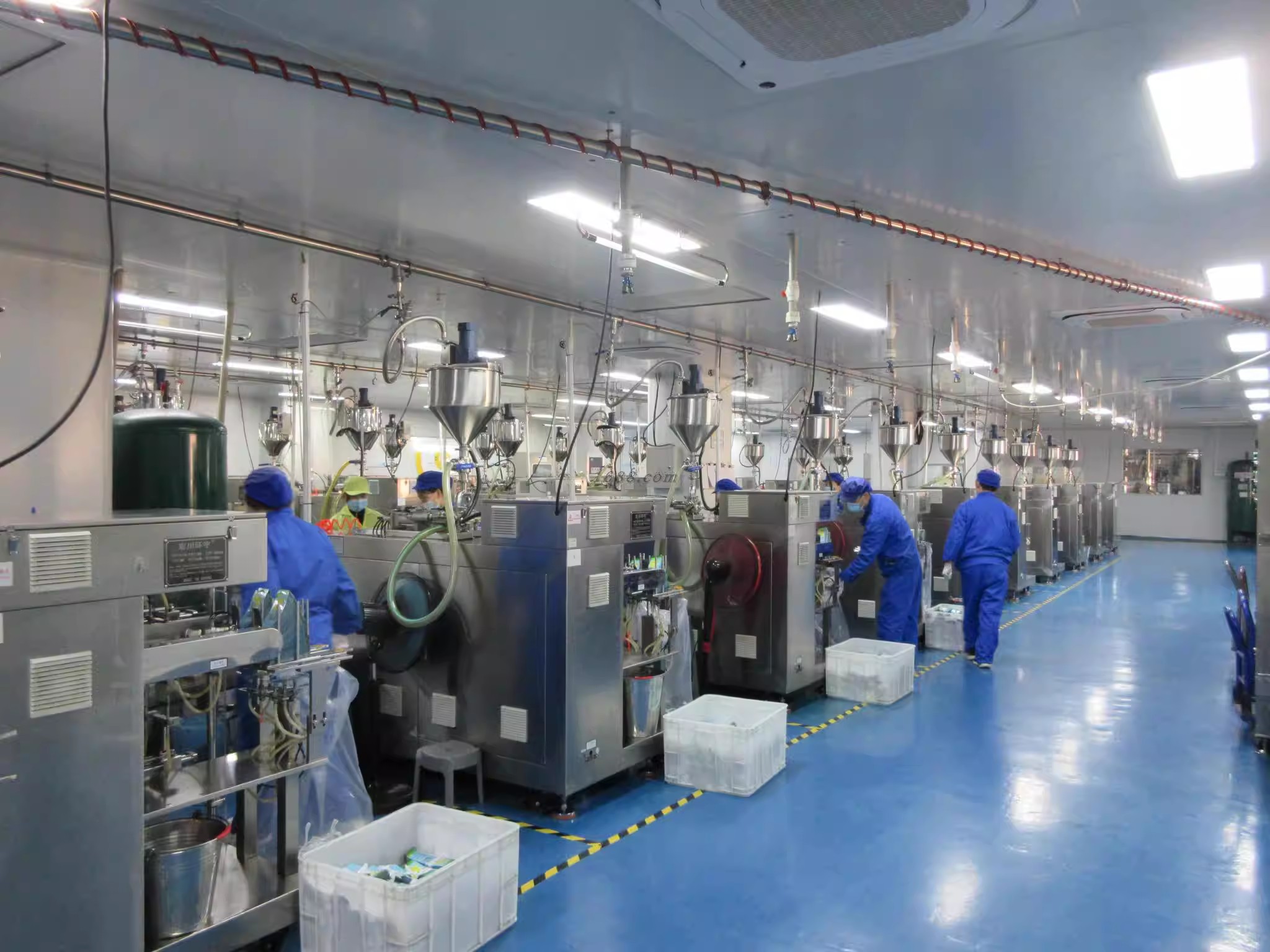
Climate-controlled handling and processing are coordinated inside the supply chain service model.
Requirement vs. Handling: A Decision Table
The table below maps each recorded requirement of the espresso concentrate application to what it means operationally and how it is addressed inside the SPACELIFE service model. Every row is drawn from product, application or company data.
| Requirement | Why it blocks a brand | How the supply chain model handles it |
|---|---|---|
| Cool and dry storage | Requires reserved climate-controlled space and batch-level monitoring | Storage conditions are managed inside the end-to-end supply service |
| Sealed container | Packaging integrity must be maintained from receipt to use | Supplied in 30 ml strips, 10 strips per box |
| High-temperature processing | Requires validated thermal capability, not just a filling line | Handled through the matched pasteurization line |
| Pasteurization line | Capital equipment a brand may need for only one product family | Processing capacity is provided by the supply chain partner |
| US market compliance | Facility-level registration and hazard analysis are prerequisites | FDA food facility registration No. 84-278-1901 |
| Trial volume risk | High minimum order quantities make validation expensive | Small-batch trial orders starting from 30 units |
| Supply continuity | Retail programmes fail on late stock, not on flavour | 98% on-time order delivery rate; 30% faster cargo turnover |
| Traceability | Recall readiness and retail audit requirements | 100% traceable categories; 99.8% quality pass rate |
Table: recorded requirements of the coffee-1 espresso concentrate application and the corresponding handling in the SPACELIFE supply chain service model.
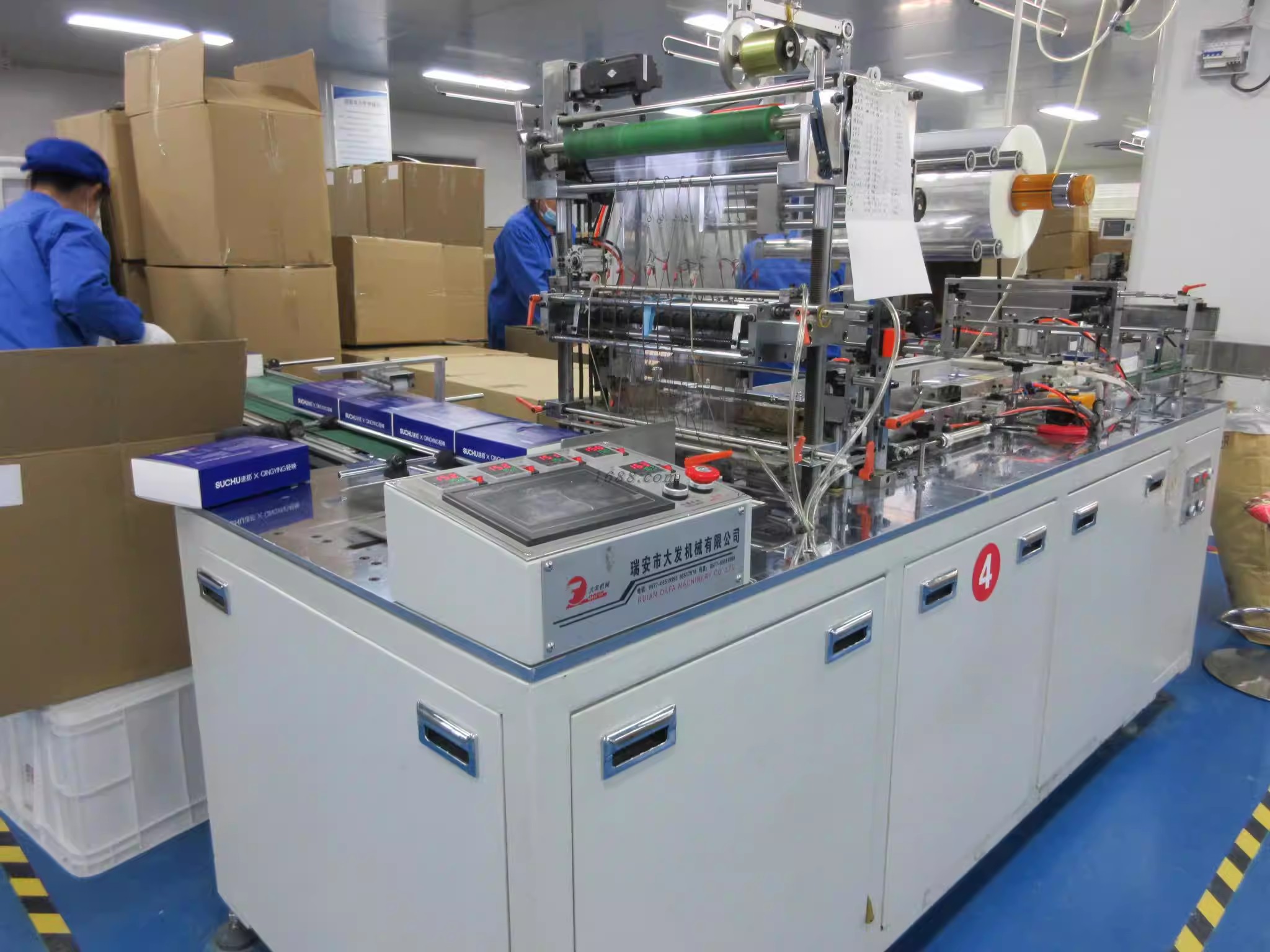
Product categories are 100% traceable, with a 99.8% quality pass rate.
Frequently Asked Questions
Does an espresso concentrate partner need FDA registration to supply US retail?
Facility-level FDA registration is a baseline requirement for supplying the US market, and it sits alongside the hazard analysis and health claim oversight introduced through the FDA's restructured Human Foods Program (2024). SPACELIFE holds FDA food facility registration No. 84-278-1901. Registration alone does not complete a US launch — ingredient review, labelling and any claim language still have to be validated for the specific finished product.
Can storage and pasteurization both be handled by one supply partner?
Yes, and that is the point of an end-to-end model. For coffee-1, the application data specifies cool and dry storage in a sealed container, high-temperature processing conditions and a pasteurization line as the matched equipment. SPACELIFE operates as a professional supply chain service provider for the functional food and healthy beverage sector, with a facility above 2,000 square metres, an R&D team of 25 engineers and an annual capacity of 120,000 units, so storage, thermal processing and delivery are coordinated inside one relationship rather than across separate vendors.
What drives cost in a functional coffee supply chain programme?
In this type of project the main cost variables are batch size, packaging format and the scope of coordination the supply chain partner takes on. Price levels are project-specific and are confirmed at quotation stage rather than published. The structural cost advantage comes from trial economics: SPACELIFE accepts small-batch trial orders starting from 30 units, so a brand can validate flavour, format and packaging before scaling into a 120,000-unit annual capacity programme.
Can a brand sample the espresso concentrate before committing to a retail programme?
Yes. Small-batch trial orders start from 30 units, and coffee-1 is packaged at 30 ml per strip with 10 strips per box. Because one concentrate supports mocha coffee, black coffee, Italian espresso, American coffee and cold brew, a single trial batch can be evaluated across several finished formats rather than one.
What does delivery reliability look like for a recurring coffee programme?
SPACELIFE reports a 98% on-time order delivery rate and a 30% improvement in cargo turnover efficiency, supported by its location in a Pilot Free Trade Zone. In a US programme, 5,000 pieces were produced and delivered within 12 months for supermarket retail and became a best seller. For a specific launch window, the fastest next step is to share the target market, format and volume with the team directly: email songmingsonia@outlook.com or reach the team on WhatsApp and phone at +86 139-4018-4310.
What to Take Away
Espresso concentrate is a product problem on the label and a process problem on the floor. The cool-and-dry storage condition and the pasteurization line requirement are what actually determine whether a functional coffee launch moves or stalls, particularly for brands in the United States, Italy, the United Kingdom and France that own a filling capability but not a thermal processing line.
Solving it means choosing a functional food supply chain solution that already carries those steps. That is what coffee-1 is designed for: a 30 ml strip, 10 strips per box espresso concentrate built on Arabica beans along with purified water, roasted coffee beans and coffee concentrate, supporting cold brew, mocha, black coffee, Italian espresso and American coffee from a single qualified base. Around it, the SPACELIFE model adds FDA food facility registration No. 84-278-1901, a 98% on-time delivery rate, 100% category traceability, a 99.8% quality pass rate and trial orders from 30 units.
The practical test for any brand evaluating this route is simple: ask whether the partner can hold the product cool and dry, run it through a pasteurization line, document facility compliance and still deliver on schedule. If the answer is yes on all four, the bottleneck has moved off the brand's balance sheet.
Next Step
Request a coffee-1 sample, a quotation, or the full product catalogue. Send your target market, format and volume to songmingsonia@outlook.com, or call and message +86 139-4018-4310 on phone or WhatsApp.
Shenyang Songming Supply Chain Co., Ltd. · songming-sc.com
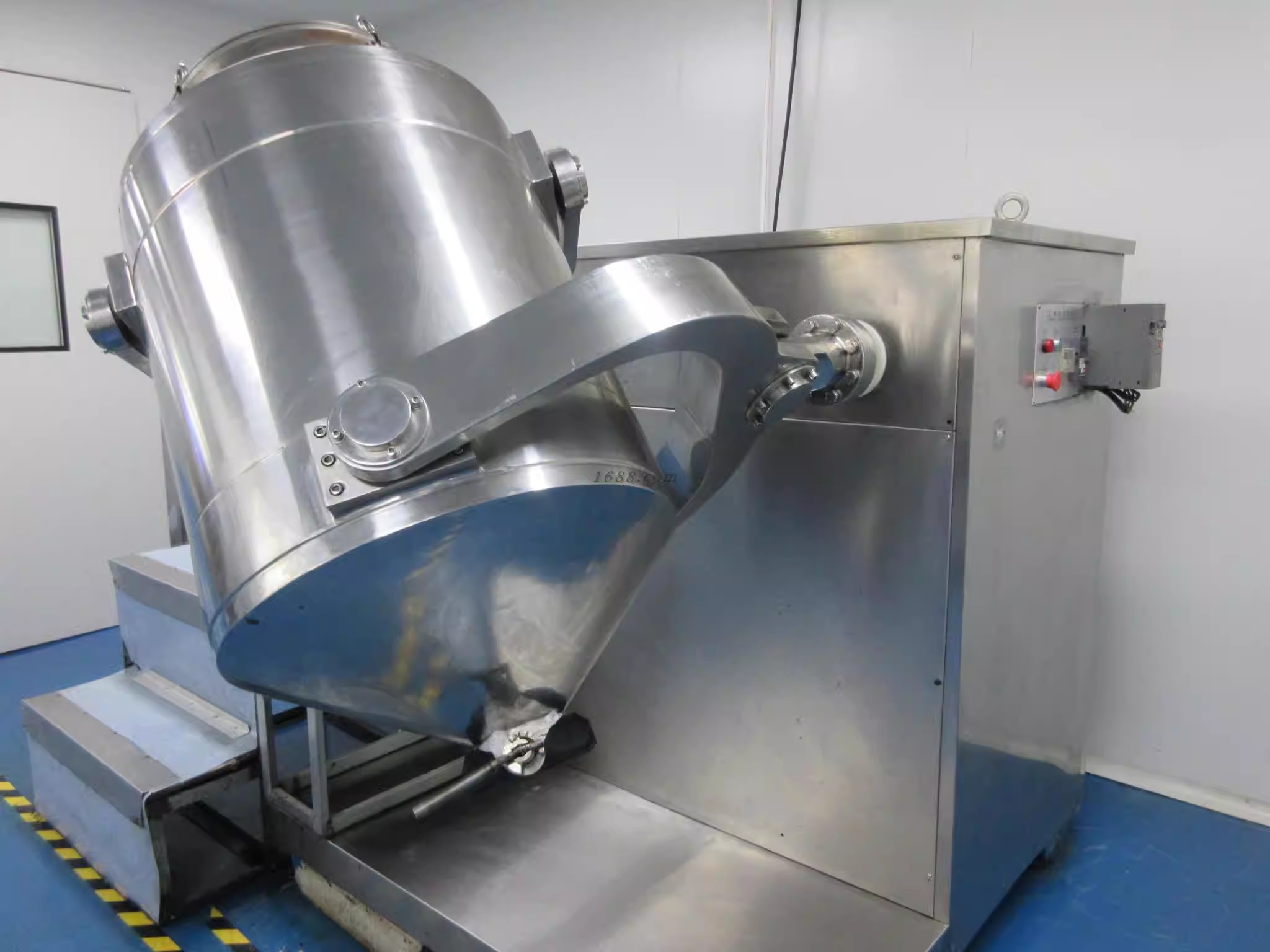
Sample, quotation and catalogue requests are handled directly by the SPACELIFE supply chain team.