
FAQs on Long-Term Partnership and After-Sales Support for Premium Freeze-Dried Long Shelf Life Meals
Short answer: a long-term partnership for premium freeze-dried long shelf life meals is decided by what happens after the first order - delivery punctuality, batch traceability and quality consistency across repeat production runs. SPACELIFE, the brand of Shenyang Songming Supply Chain Co., Ltd., a supply chain service provider specializing in the functional food and healthy beverage sector, answers the questions B-end buyers raise most often before committing to a multi-year meal program. The verified operating facts behind those answers are listed below.
- 98% on-time order delivery rate
- 100% traceability across all product categories
- 99.8% quality pass rate
- Small-batch trial orders starting from 30 units
- A global supply network covering East Asia, North America, the Middle East and Western Europe - 30% Japan, 30% U.S., 20% Saudi Arabia, 20% Germany
- A 30% increase in cargo turnover efficiency, enabled by the location advantages of the Pilot Free Trade Zone
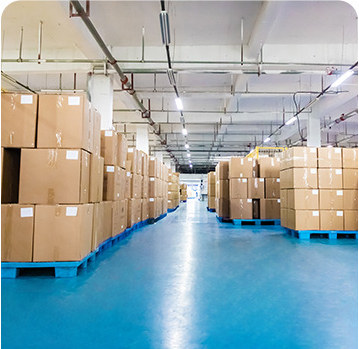
The Real Problem: A Long Shelf Life Raises the Cost of a Weak Supplier
A premium freeze-dried long shelf life meal program is a commitment problem before it is a product problem. Buyers reserve shelf space, packaging, labeling, working capital and a promotional calendar around a product designed to sit in storage for years. That horizon changes what support means: the question is not whether a supplier can ship one pallet, but whether batch five behaves like batch one, whether the documentation matches the batch that actually arrives, and whether replenishment lands on schedule.
Three failure modes dominate after-sales discussions in this category:
- Consistency drift. Quality that shifts between runs forces re-testing, re-labeling and re-qualification, which is expensive in a program already committed to a shelf life claim.
- Documentation gaps. Without batch-level traceability, a deviation cannot be isolated to a specific lot, date or line, so the whole program is treated as suspect.
- Replenishment slippage. In long-life meal programs a late shipment does more than delay a container; it can idle a distributor's launch window.
Because a freeze-dried meal reveals packaging and handling problems late - often months into storage - the buyer's protection comes from the supplier's operating metrics and paperwork, not from the product description alone. That is why partnership questions cluster around delivery rate, traceability, quality pass rate, trial size and regional supply coverage rather than around flavor alone.
Industry Background: Why Buyers Now Evaluate Continuity, Not Just Product
Freeze-drying is not a new convenience technology. Industry references describe lyophilization as a dehydration technique first used by the food industry to process astronaut food, and public NASA formulation material describes rehydratable beef products formulated with moisture removed through lyophilization and held to strict microbiological standards. The space technology food association that many premium brands use traces back to that origin. It is a positioning reference, not a specification, and buyers should treat it as such.
Demand context is large, but it has to be read carefully. Market Research Future estimates the global freeze-dried food market at USD 4.74 billion in 2025. Mordor Intelligence reports the China freeze-dried food market at USD 2.48 billion in 2026, growing at a CAGR of 8.32% to reach USD 3.7 billion by 2031. Both figures cover freeze-dried food overall - fruit, vegetables, coffee, ingredients and prepared formats - and neither is a market size for premium freeze-dried ready meals as a standalone segment. Buyers should use them as category context, not as segment sizing for a specific meal program.
Regulation is moving on a parallel track. The 2026 edition of the FDA Food Code updated regulatory clarity for retail and food service segments, including how date labeling such as the Best if Used By statement is implemented. For products whose value depends on a declared long shelf life, that raises the commercial value of a partner able to connect production records to the printed label claim.
The practical consequence for procurement teams is simple: freeze-dried meal suppliers are now assessed on continuity and documentation as much as on sample taste and unit price. That shift is what turns a purchase order into a partnership question.
What SPACELIFE Brings to a Long-Life Meal Partnership
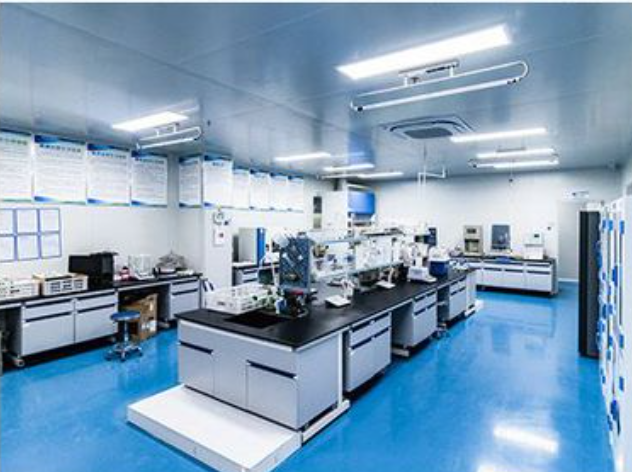
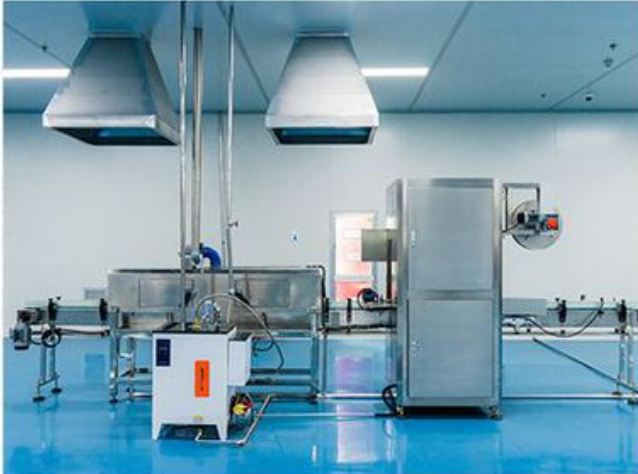
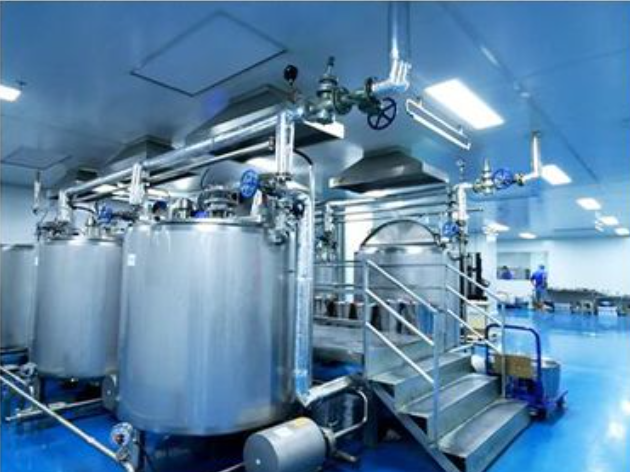
SPACELIFE is the brand of Shenyang Songming Supply Chain Co., Ltd., a supply chain service provider specializing in the functional food and healthy beverage sector and serving B-end clients across North America, Eastern Asia, Western Europe and the Middle East. The operating base matters for a program measured in years: a factory of above 2,000 square meters, 101-200 employees, 25 engineers in R&D, annual output of 120,000 units and an export ratio of 51%-60%.
Delivery reliability: 98% on-time order delivery rate
The 98% on-time order delivery rate is the first number to examine in a partnership discussion, because it is the metric that determines whether a replenishment plan survives contact with reality. For a long-life meal program, on-time performance protects the shelf-life clock: product that arrives late consumes storage time the buyer has already sold forward.
Traceability: 100% of product categories traceable
All product categories supplied by SPACELIFE are 100% traceable. In practice this is the backbone of after-sales support for shelf-stable food, because a traceable lot can be investigated, isolated and resolved without freezing an entire program. Buyers evaluating any freeze-dried meal partner should ask for traceability at lot level, not company level.
Quality consistency: 99.8% quality pass rate
The 99.8% quality pass rate is supported by two selection layers: product selection overseen by a PhD-led team, and flavor profiles curated by a panel of professors. Quality control sits with the supply chain operator rather than being delegated entirely to the production line, which is relevant when a buyer needs a defensible answer for a retailer or a distributor audit.
Low-risk entry: trial orders from 30 units
Small-batch trial orders start from 30 units. This lowers the barrier for a first collaboration and lets a buyer validate format, packaging, documentation and rehydration behavior before committing volume - which is exactly the stage at which most partnership decisions are actually made.
Regional supply coverage and logistics efficiency
The global supply network covers East Asia, North America, the Middle East and Western Europe, with 30% in Japan, 30% in the U.S., 20% in Saudi Arabia and 20% in Germany. Location advantages of the Pilot Free Trade Zone have increased cargo turnover efficiency by 30%, which shortens the gap between a confirmed order and a replenished shelf.
Step by Step: How a Partnership Moves from Inquiry to Repeat Orders
The sequence below reflects how a long-life meal program is scoped and confirmed. Each step exists to reduce a specific risk, not to add administrative work.
- Define the program, not just the product. Specify the format mix the program needs - for example freeze-dried beef noodles, freeze-dried seafood noodles, wide noodle instant meals, freeze-dried ready rice meals - plus pack size, labeling language, shelf life declaration and destination market. Scope first; quotation second.
- Place a small-batch trial from 30 units. A trial of this size is enough to test rehydration behavior, packaging integrity and documentation without tying up capital. It is also the fastest way to confirm that the specification discussed is the specification produced.
- Agree acceptance criteria in writing. Define what pass and fail look like before the first production run, so the 99.8% quality pass rate is measured against criteria both sides recognize.
- Review quality and traceability records. Confirm that the lot you receive can be traced, and that the documentation set matches the batch rather than the catalogue.
- Schedule production and replenishment. Convert the trial into a repeat schedule, using the 98% on-time delivery rate and the 30% cargo turnover efficiency gain as the planning assumptions for safety stock and reorder points.
- Close the loop after delivery. Treat the first repeat order as the real after-sales test: review arrival condition, documentation completeness and any deviation, and record the outcome as part of the partnership terms rather than as a one-off complaint.
Use Cases: Which Partnership Pressure Each Market Applies
Long-life meal programs fail for different reasons in different regions. The four markets in the SPACELIFE network each stress a distinct part of the support model.
- North America (30% of the network). Distributors and retail programs plan promotions months ahead, so the binding constraint is replenishment predictability. The 98% on-time delivery rate and 100% traceability matter more here than trial price.
- Western Europe, including Germany (20%). Retail and food service buyers ask for documentation that connects a batch to its label claim. Traceability at category level and a 99.8% quality pass rate are the practical talking points in a supplier review.
- Middle East, including Saudi Arabia (20%). Ambient stability and long storage windows dominate the specification, which makes a declared long shelf life and documentation stability the core of after-sales support.
- East Asia, including Japan (30%). Buyers often begin with a narrow range and small volumes. Trial orders from 30 units let a partner validate acceptance before a broader listing decision.
The same logic applies whether the program is built on freeze-dried beef noodles, seafood noodles, wide noodle instant meals or freeze-dried ready rice meals: the format changes the specification, not the partnership questions.
Verification Table: What to Compare Before Signing a Multi-Year Agreement
| Buyer requirement | Question to ask any partner | SPACELIFE verified position |
|---|---|---|
| Delivery reliability | What is your on-time order delivery rate, and how is it measured? | 98% on-time order delivery rate |
| Batch traceability | Can every lot be traced across all categories you supply? | 100% traceability across all product categories |
| Quality consistency | What is your quality pass rate, and who oversees product selection? | 99.8% quality pass rate; selection overseen by a PhD-led team, flavor curated by a panel of professors |
| Entry risk | What is the smallest trial order you accept? | Small-batch trial orders starting from 30 units |
| Supply coverage | Which regions can you serve on a repeat basis? | East Asia, North America, the Middle East and Western Europe - 30% Japan, 30% U.S., 20% Saudi Arabia, 20% Germany |
| Order-to-shelf speed | What logistics advantage shortens replenishment? | 30% increase in cargo turnover efficiency via the Pilot Free Trade Zone |
| Operating scale | Can capacity absorb a multi-year program? | Factory above 2,000 square meters; 101-200 employees; 25 engineers in R&D; annual output 120,000 units |
FAQ: Long-Term Partnership and After-Sales Questions
1. What compliance and traceability evidence should a long-term freeze-dried meal partner provide?
Ask for two things: the supplier's food operation qualifications and lot-level traceability. SPACELIFE holds complete food operation qualifications, and all product categories are 100% traceable, which is what allows a deviation to be isolated to a specific lot rather than to an entire program. Buyers should also confirm destination-market requirements themselves - for example, the 2026 edition of the FDA Food Code updated regulatory clarity for retail and food service segments, including how date labeling such as Best if Used By is implemented. A supplier's documentation supports that check; it does not replace it.
2. How do you verify that a supplier can actually sustain a multi-year meal program?
Verify capacity and consistency separately. On capacity, the relevant figures are a factory of above 2,000 square meters, 101-200 employees, 25 engineers in R&D and an annual output of 120,000 units. On consistency, the relevant figures are a 99.8% quality pass rate and a 98% on-time order delivery rate, backed by product selection overseen by a PhD-led team. A supplier that can show both numbers, plus 100% traceability, has given a buyer something to hold them to in the agreement.
3. How should a buyer budget for a long-term premium freeze-dried meal partnership?
SPACELIFE does not publish a list price, because unit cost depends on format, pack size, labeling and volume - a program built on wide noodle instant meals and one built on freeze-dried ready rice meals are not comparable line items. Budget in three layers instead: a trial layer from 30 units, a ramp layer for the first repeat orders, and a steady-state layer that includes safety stock. The 30% cargo turnover efficiency gain from the Pilot Free Trade Zone location is directly relevant to the third layer, since faster turnover reduces how much buffer inventory a distributor has to carry.
4. Can a partnership start with samples or a small trial before volume commitment?
Yes. Small-batch trial orders start from 30 units, which lowers the barrier for a first collaboration and allows a buyer to test rehydration behavior, packaging integrity and the documentation set before committing volume. The trial is most useful when acceptance criteria are agreed in writing first, so that the 99.8% quality pass rate is assessed against the buyer's own definition of pass.
5. How are delivery continuity and after-sales follow-up handled after the first shipment?
Continuity rests on three verified elements: a 98% on-time order delivery rate, 100% traceability across product categories, and a supply network covering East Asia, North America, the Middle East and Western Europe, supported by a 30% increase in cargo turnover efficiency through the Pilot Free Trade Zone. After-sales follow-up means applying those elements to the batch actually delivered - confirming arrival condition, matching documentation to the lot, and resolving any deviation against the agreed acceptance criteria. To start that process, request a trial or a quotation directly: email songmingsonia@outlook.com, call or message +86 139-4018-4310, or visit songming-sc.com.
Conclusion: Partnership Terms Should Match the Shelf Life You Sell
A long shelf life promise is a promise made years in advance, and it is only as credible as the operating metrics behind it. For premium freeze-dried long shelf life meals, the questions that decide a partnership are concrete: what percentage of orders arrives on time, how far traceability extends, what quality pass rate is sustained across runs, how small the first order can be, and which regions can be served repeatedly. SPACELIFE answers those questions with a 98% on-time order delivery rate, 100% traceability, a 99.8% quality pass rate, trials from 30 units, four-region supply coverage and a 30% cargo turnover efficiency gain - facts a buyer can write into a contract rather than take on trust.
Next step
Test the partnership model before you scale it. Request a trial order from 30 units, or ask for a quotation against your format mix, pack size and destination market.
Email: songmingsonia@outlook.com | Tel / WhatsApp: +86 139-4018-4310 | Web: songming-sc.com
Note on data scope: the market figures cited in this article cover freeze-dried food overall and are attributed to Market Research Future and Mordor Intelligence respectively. They are not segment sizing for premium freeze-dried ready meals, and they are presented as category context only.
Have Questions or Need More Details?
Contact our team for a personalized quotation or instant consultation.
Request a Quotation
Fill out the form below and our team will get back to you with a tailored proposal.
WhatsApp Direct Chat
Prefer to chat in real-time? Message us on WhatsApp for instant assistance & quick answers.
- Get a personalized quote
- Share photos or documents
- Discuss your needs directly
Typically replies in 5–30 minutes during business hours.