FDA Certification & Regional Rules for Functional Beverage Supply Chains
Compliance Guide · United States · Western Europe · Secondary Markets
FDA Certification & Regional Rules for Functional Beverage Supply Chains
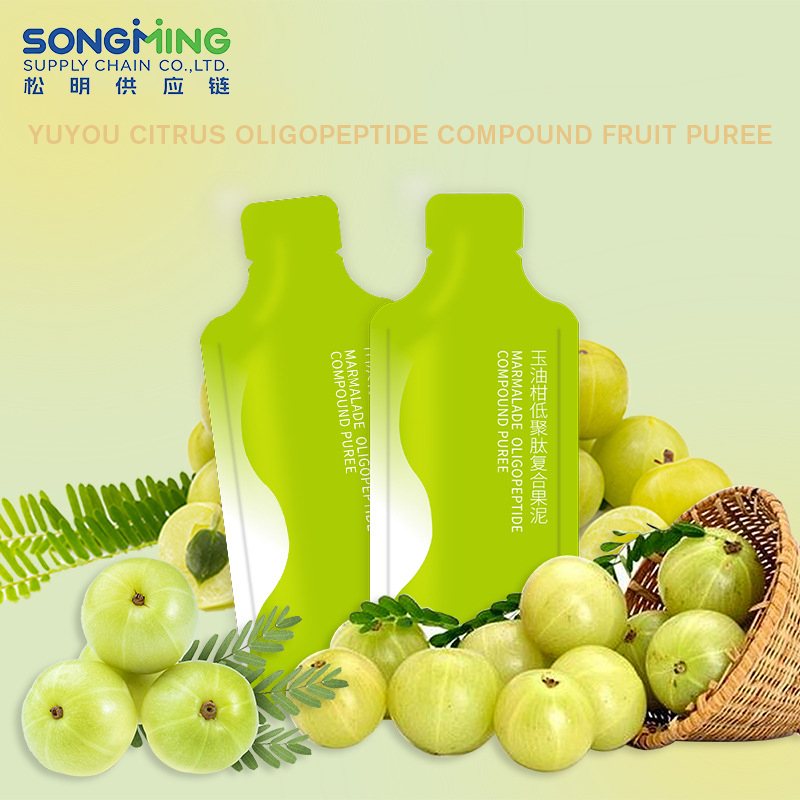
Liquid beverages-1, an oil orange puree base with a total original juice content of ≥ 80%, supplied in 30 ml × 5 bags per box.
A liquid beverage concentrate can be formulated correctly and still fail at the border — because the failure is documentation-shaped, not flavour-shaped. The practical question for a brand owner is not “is this product compliant?” but “which compliance layer am I standing on, and what does it actually cover?”
Answer first: U.S. market entry for a functional beverage concentrate depends on two independent layers. Layer one is facility-level — food facility registration established under section 305 of the US Public Health Security and Bioterrorism Preparedness and Response Act of 2002, together with the certification reference attached to a specific supply chain (#84-278-1901 in the case described here). Layer two is product-level — how the item is classified under FDA labeling rules, because that classification determines which claim category applies and what substantiation or notification follows. Registration does not approve a product, and a compliant label does not approve a facility. Buyers who merge the two gates usually re-open artwork and re-quote packaging after the first shipment.
This guide is written for brand owners and procurement teams in the research and evaluation stage: teams that already have a product concept and are now deciding which markets to sequence, which documents to request, and which specifications to write into acceptance criteria. It uses two concrete bases from the SPACELIFE range — coffee-1, an espresso concentrate, and Liquid beverages-1, an oil orange puree — to show how registration, claim classification, storage conditions and packaging specifications connect to purchase terms.
SPACELIFE is the functional food and beverage supply brand operated by Shenyang Songming Supply Chain Co., Ltd., a China-based supply chain service provider serving B-end clients in functional foods and healthy beverages, with a distribution footprint across North America, Eastern Asia, Western Europe and the Middle East. The brand’s service model is oriented toward end-to-end supply for B-end clients rather than direct-to-consumer retail.
Problem Definition: Why the Compliance Question Arrives Late
In functional beverage projects, compliance is typically the last workstream to start and the first one to block a launch. Three structural reasons explain this.
1. The registration question is answered by the wrong party. Facility registration sits with the facility. A brand owner can hold a supplier’s certificate PDF and still not know whether the specific facility that will run the batch is the one covered, or whether the registration is current. The document exists; the mapping does not.
2. Claim classification changes the product’s legal identity, not just its label. FDA describes health claims, nutrient-content claims and structure/function claims as categories that may appear on food and dietary-supplement labels, subject to applicable requirements. For dietary supplements, structure/function claims require substantiation, notification to FDA no later than 30 days after marketing, and a required disclaimer. For conventional foods, FDA states no equivalent notification requirement. The same liquid can therefore sit in two different obligation sets depending on how it is positioned — and that decision is usually made by marketing, months before compliance sees it.
3. Physical conditions get treated as logistics, not compliance. Storage instructions and equipment compatibility are recorded on a spec sheet and then filed away. But “store in a sealed container” and “cool and dry” are acceptance conditions: if the receiving warehouse cannot hold them, the batch is out of specification before it is opened, whatever the label says.
The result is a familiar pattern: formulation locked, packaging tooled, first PO issued — and then a label revision, a re-quote on sachets, and a launch date that moves by a quarter. The fix is sequencing, not more paperwork.
Industry Background: Where Regional Rules Meet Demand
The commercial context explains why compliance sequencing matters more than it used to. The global functional food and beverage market was valued at USD 398.81 billion in 2025 and is projected at USD 437.62 billion in 2026, according to Fortune Business Insights. Within that total, beverages are projected to be the fastest-growing product segment between 2026 and 2034, at a 9.2% CAGR, per Grand View Research. Asia Pacific dominated the market in 2025 with a 39.67% share, per Fortune Business Insights — which is one reason China-based supply chains are routinely evaluated as manufacturing partners for Western brands.
Growth in beverages pulls projects toward liquid formats: concentrates, purees and ready-to-drink bases. Liquid formats carry a specific compliance profile. They are usually heat-processed, they are sensitive to packaging format, and they are frequently positioned with a functional claim — which is exactly the point at which the U.S. claim-classification question becomes unavoidable rather than theoretical.
At the same time, official data infrastructure for formulation review is available and underused. USDA FoodData Central provides food and nutrition composition resources that support nutritional analysis and product formulation. FAOSTAT covers agriculture and food data for more than 245 countries and territories, from 1961 onward. Neither resource answers a compliance question directly, but together they let a buyer sanity-check a formulation and a sourcing country before committing to a market sequence. In practice, that is the difference between a compliance review that starts from a defined product and one that starts from a dispute.
The gap this guide addresses is narrower and more operational: buyers need a mapping between what a supplier can document and what a destination market will ask for, expressed in the same language as the purchase order.
The Regulatory Framework in Practice
Layer One: FDA Food Facility Registration
U.S. food facility registration is established under section 305 of the US Public Health Security and Bioterrorism Preparedness and Response Act of 2002. The registration is a facility-level obligation: it identifies who manufactures, processes, packs or holds food for consumption in the United States. It is not a product approval, not a recipe clearance, and not a substitute for label review. For a liquid beverage concentrate, registration answers the question “which facility is declared?” — nothing more.
Three verification questions belong in every supplier questionnaire, regardless of who the supplier is:
- Which legal entity holds the registration, and is it the same entity that will appear on the commercial invoice?
- Which physical facility is registered, and is it the facility that will process this specific order?
- Who is the U.S. point of contact for regulatory correspondence on this shipment?
If any of the three answers is “the trading company” by default, the registration has not actually been verified — it has only been mentioned.
Certification Reference #84-278-1901: What It Covers and What It Does Not
The certification reference #84-278-1901 is attached to this liquid beverage supply chain as a documented identifier. For a procurement team, a reference number is a starting point, not a conclusion. Four attributes should be captured in writing before the number is accepted as evidence:
- Scope — which processes and product categories the certification covers, and whether liquid concentrates and purees fall inside that scope.
- Facility linkage — whether the certified site is the site that will run the batch, or a different site in the same group.
- Validity — issue and expiry dates, and the audit cycle that maintains it.
- Counterparty — the issuing body and whether it can be independently checked.
A certification that passes all four checks supports a supplier claim. A certification that passes only the first supports a marketing line. The distinction matters most in the first U.S. shipment, when an importer or retailer compliance team asks a question the brand owner cannot answer from memory.
Layer Two: Product Classification and Label Claims
The product-level layer is where most functional beverage projects actually lose time. FDA’s labeling framework distinguishes three claim categories that may appear on food and dietary-supplement labels: health claims, nutrient-content claims and structure/function claims. The obligations attached to those categories are not uniform across product types. FDA states that for dietary supplements, structure/function claims require substantiation, notification no later than 30 days after marketing, and a required disclaimer; conventional food manufacturers do not carry the same notification requirement for equivalent claims.
For a liquid base such as an espresso concentrate or an orange puree, the decision is therefore prior to the label: is the finished product positioned as a conventional beverage or as a supplement? That call sets the claim set, the substantiation file, the notification timeline, and the artwork. Making it after the sachet film has been printed is the single most expensive sequencing error in the category.
Layer Three: The Regional Overlay
Beyond the United States, rules diverge — and the divergence is not cosmetic. Italy, the United Kingdom and France each operate their own food information frameworks; Australia, Canada, Germany and Spain add further national requirements, and several of them impose language, importer and notification obligations that the U.S. framework does not. This guide does not establish the specific legal text for those jurisdictions, and it should not be read as doing so. What it does establish is the commercial consequence: a supply chain that lists a market as an application fit still requires a jurisdiction-specific review before launch, and that review is faster when the product specification is already fixed.
The practical rule is to separate two questions that are often asked as one. “Can this supply chain deliver into market X?” is a supply question, answered by the supplier. “Can this product be sold in market X?” is a legal question, answered by local counsel or a regulatory consultant. A well-run project keeps both answers in the same document but never lets one substitute for the other.
Storage and Processing Conditions as Compliance Variables
Specifications that look like logistics are frequently the evidence a compliance reviewer asks for. Two sets of conditions matter most for liquid functional bases.
Cool, Dry and Sealed
For the espresso concentrate application, the documented handling requirement is storage in a sealed container. For the food and beverage application covering Liquid beverages-1, the documented storage type is cool and dry, under room-temperature working conditions. These are not boilerplate. They define what the receiving facility must be able to provide: a sealed, temperature-stable, low-humidity environment for the full hold period, including transit storage and any bonded warehouse stage. Where a distributor cannot meet that, the correct response is to change the route, not to soften the instruction on the spec sheet.
Pasteurization Line Compatibility
Both applications are documented as requiring a pasteurization line as matched equipment, and the espresso concentrate is specified for high-temperature working conditions. For a buyer, this converts into three questions that belong in the technical agreement rather than in email: what temperature profile the base is designed for, how the base behaves at the filling stage, and what packaging format the line can run without a changeover. A base that is technically correct but incompatible with the buyer’s existing line is a compliance-adjacent problem — it forces a reformulation or a co-packer change, and both re-open the label.
Packaging Format as a Purchasing Term
Packaging is where compliance, cost and acceptance criteria meet. The two bases carry different formats:

Liquid beverages-1 specification: total original juice content ≥ 80%, packed as 30 ml × 5 bags per box.
coffee-1 is an espresso concentrate built on selected Arabica coffee beans, with purified water, roasted coffee beans and coffee concentrate in the material list. It is packed as 30 ml × 10 strips per box and is positioned for mocha, black coffee, Italian espresso, American coffee and cold brew applications. Liquid beverages-1 is an oil orange puree with a total original juice content of ≥ 80%, packed as 30 ml × 5 bags per box, positioned for liquid beverage applications.
The strip versus bag distinction is not a detail. It determines fill-line compatibility, secondary carton dimensions, shelf-presentation, and the unit that appears in the acceptance clause. A purchase order that specifies “30 ml sachets” without stating strip or bag format has not specified anything testable.
Step-by-Step Breakdown: A Compliance-Led Project Flow
The sequence below is designed so that no expensive decision is made before the cheap question that constrains it. It works for a first launch and for a market extension of an existing line.
Step 1 — Classify the product before pricing it. Decide whether the finished item is a conventional beverage or a supplement, for each destination market separately. This single decision sets the claim set and the notification obligations. Do it before packaging design, because artwork follows classification.
Step 2 — Verify the facility layer. Confirm the registration under section 305 is held by the entity that will invoice, covers the facility that will run the batch, and has a named U.S. contact. Record the certification reference (#84-278-1901) with its scope, site linkage, validity and issuing body.
Step 3 — Lock the claim set. Map every intended label statement to one of the three FDA claim categories. Where the product is a supplement, build the substantiation file and the 30-day post-marketing notification into the launch calendar. Where it is a conventional food, record the basis for the position in writing.
Step 4 — Match the base to the line. Confirm the pasteurization line requirement, the high-temperature or room-temperature working condition, and the filling format the base is designed for. Resolve line compatibility before the first commercial batch, not after.
Step 5 — Fix storage and handling in the contract. Write “cool and dry” and “sealed container” into the receiving conditions, and name the party responsible for compliance at each handover point.
Step 6 — Build the regional overlay market by market. For each target market, record two separate entries: the documented application fit (supply side) and the jurisdiction-specific regulatory review (legal side). Keep them in one sheet, with separate owners.
Step 7 — Convert specifications into acceptance criteria. Translate the technical sheet into testable purchase-order language: packaging format and count per box, juice content where applicable, working condition, matched equipment, QC method, MOQ and lead time. An acceptance clause that cannot be measured will be negotiated at delivery.
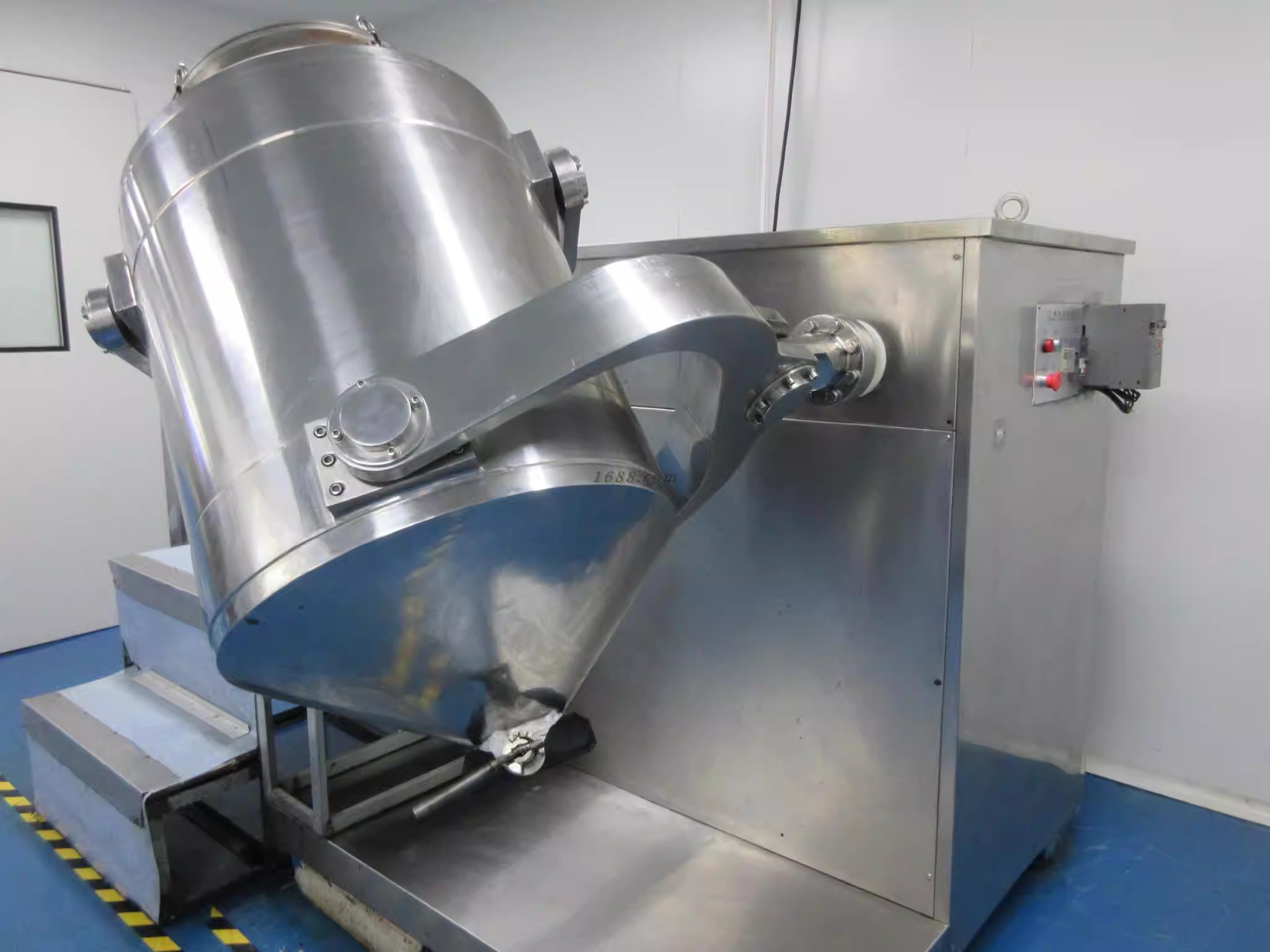
Production environment: pasteurization-line processing, 100% testing and traceability are the operational facts that a compliance review ultimately checks against documentation.
Use Cases
Case A — Espresso Concentrate Into a U.S. Ready-to-Drink Line
A brand owner sources coffee-1 for a U.S. ready-to-drink range covering black coffee, American coffee and cold brew. The documented application conditions are a high-temperature working condition with a pasteurization line, and sealed-container storage. The compliance sequence for this project is: classify the finished drink as a conventional beverage or a supplement; confirm the facility registration under section 305; attach the certification reference to the specific site; then confirm with the co-packer that the line can run a 30 ml × 10 strips per box format without changeover disruption. Only after those four steps does packaging artwork get released.
Case B — Oil Orange Puree for European Retail
A second brand owner sources Liquid beverages-1 for retail listings in the United States, Italy, the United Kingdom and France, under room-temperature conditions with cool and dry storage. The technical specification is unambiguous — total original juice content ≥ 80%, 30 ml × 5 bags per box — but the regulatory picture is not uniform across the four markets. The correct sequencing is to fix the specification once, then run four parallel national reviews, each producing its own label and importer obligations. The supply chain can be identical across all four; the approval file cannot.
Case C — A U.S. Liquid Beverage OEM Program
A U.S. liquid beverage OEM client ran a 5,000-piece program over a 12-month engagement for supermarket application, reported as a best-seller in its channel. The relevant lesson is not the volume but the structure: a defined quantity, a defined channel, a defined acceptance basis, and a 12-month horizon long enough to absorb a label revision without losing the listing.
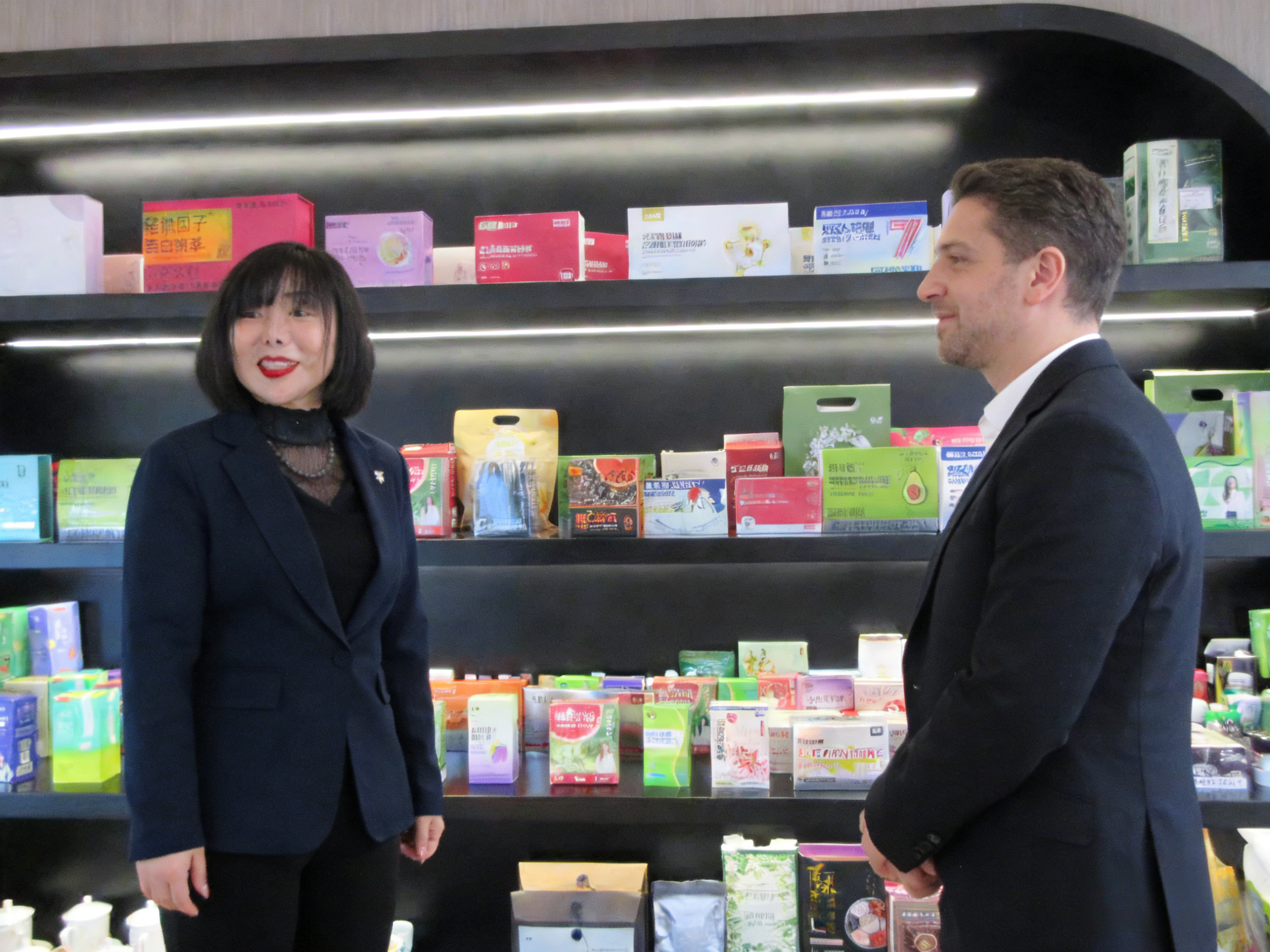
International exhibition presence: where documentation, specification and market sequence are usually reviewed together with buyers.
Comparison Table 1: Specification and Acceptance Basis
| Parameter | coffee-1 (espresso concentrate) | Liquid beverages-1 (oil orange puree) |
|---|---|---|
| Product type | Espresso concentrate | Oil orange puree |
| Material | Purified water, roasted coffee beans, coffee concentrate | Oil orange puree |
| Key specification | Select Arabica coffee beans | Total original juice content ≥ 80% |
| Packaging format | 30 ml × 10 strips / box | 30 ml × 5 bags / box |
| Working condition | High temperature | Room temperature |
| Storage requirement | Sealed container; cool and dry | Cool and dry |
| Matched equipment | Pasteurization line | Pasteurization line |
| Documented application markets | US, GB, FR, DE, ES, AU, CA | US, IT, GB, FR |
| Application formats | Mocha, black coffee, Italian espresso, American coffee, cold brew | Liquid beverages |
| Customization options | Component, logo, product specifications, taste, packaging | |
Source: SPACELIFE product and application specification records. Customization, QC and commercial terms apply across the range.
Comparison Table 2: Regional Overlay for the Documented Markets
| Market | Documented application fit | Regulatory anchor established in this guide | Buyer action before launch |
|---|---|---|---|
| United States | coffee-1 and Liquid beverages-1 | Facility registration under section 305; three FDA claim categories; supplement notification within 30 days after marketing; certification reference #84-278-1901 | Confirm registration holder and site; lock claim class; substantiate label text |
| Italy | Liquid beverages-1 | Not established in this guide | Commission a national label and importer review |
| United Kingdom | coffee-1 and Liquid beverages-1 | Not established in this guide | Commission a national label and importer review |
| France | coffee-1 and Liquid beverages-1 | Not established in this guide | Commission a national label and importer review |
| Germany | coffee-1 | Not established in this guide | Commission a national label and importer review |
| Spain | coffee-1 | Not established in this guide | Commission a national label and importer review |
| Australia | coffee-1 | Not established in this guide | Commission a national label and importer review |
| Canada | coffee-1 | Not established in this guide | Commission a national label and importer review |
Column 2 reflects documented application fit from SPACELIFE product and scenario records; it is a supply-side statement, not a market-access opinion. Column 3 states only what this guide can substantiate.
FAQ
Does FDA food facility registration alone make a liquid beverage concentrate legal to sell in the United States?
No. Registration under section 305 of the US Public Health Security and Bioterrorism Preparedness and Response Act of 2002 is a facility-level obligation identifying who manufactures, processes, packs or holds food for U.S. consumption. It does not approve the product. Product-level compliance runs through FDA labeling rules, which distinguish health claims, nutrient-content claims and structure/function claims. For dietary supplements, structure/function claims require substantiation, notification no later than 30 days after marketing, and a required disclaimer; FDA does not state the same notification requirement for conventional foods. Registration and claim classification are two separate checks, and both must be completed.
What processing capability should a functional beverage base be matched to?
Both documented bases in this supply chain — coffee-1 espresso concentrate and Liquid beverages-1 oil orange puree — are specified with a pasteurization line as matched equipment. The espresso concentrate is documented for high-temperature working conditions and sealed-container storage; the oil orange puree is documented for room-temperature working conditions with cool and dry storage. Buyers should confirm line compatibility, filling format and temperature profile before the first commercial batch, because a base that does not match the existing line forces either reformulation or a co-packer change. The operational support behind this is a 100% test quality-control regime and full traceability across product categories.
What order size and commercial terms apply?
The documented capability record lists a minimum order quantity of 5,000 pieces, a monthly capacity of 8,000 units, and a 15-day lead time, with customization available across component, logo, product specifications, taste and packaging. Separately, the supplier profile describes small-batch trial orders starting from 30 units to lower the entry barrier for small and medium B-end clients. Buyers should confirm in writing which threshold applies to their specific format, since a 30 ml strip box and a 30 ml bag box do not share the same production setup.
Can a buyer validate taste and packaging before committing to a full order?
Yes, within the documented customization scope: component, logo, product specifications, taste and packaging are all listed as customizable. Substantiation for that capability sits in the R&D structure — 25 engineers, a PhD-led product selection team and a professor panel curating flavour profiles — rather than in a brochure claim. For compliance purposes, a sample stage is also the right moment to confirm the packaging format in the purchase order: 30 ml × 10 strips per box for coffee-1, 30 ml × 5 bags per box for Liquid beverages-1.
What delivery performance and support should be written into the agreement?
Documented performance indicators are a 98% on-time order delivery rate, a 30% improvement in cargo turnover efficiency derived from the free-trade-zone location, 100% traceability across product categories and a 99.8% quality pass rate, with remote after-sales support and lead times of 15 days. These belong in the agreement as measurable clauses rather than as background reassurance. Teams preparing a U.S. or EU launch can request a specification pack, a sample set or a quotation matched to their target market and packaging format by contacting SPACELIFE directly — SoniaGrace, songmingsonia@outlook.com, +86 139-4018-4310, or via songming-sc.com.
Conclusion
Compliance in functional beverage supply chains is not a certificate you hold; it is a sequence you execute. The U.S. layer is built from facility registration under section 305 and a product-level claim classification, supported in this supply chain by certification reference #84-278-1901. The regional layer is market-by-market, and no single document substitutes for a national review. The physical layer — pasteurization line compatibility, high-temperature or room-temperature processing, sealed containers and cool and dry storage — is where compliance and quality actually meet.
For a brand owner in the research and evaluation stage, the useful discipline is to fix the specification once and then run the compliance reviews in parallel, rather than iterating on packaging while legal questions remain open. When the specification is expressed in the same units as the purchase order — 30 ml strips or 30 ml bags, juice content ≥ 80%, pasteurization line, sealed container — the compliance conversation becomes a confirmation exercise instead of a redesign.
That is also the practical test of a supply chain partner: whether it can answer a documentation question with a document, and a specification question with a specification.
Next step: If you are sequencing a U.S. or European launch for a functional beverage base, request the specification pack, sample set or a quotation for coffee-1 and Liquid beverages-1 from SPACELIFE — songming-sc.com · songmingsonia@outlook.com · +86 139-4018-4310.
Have Questions or Need More Details?
Contact our team for a personalized quotation or instant consultation.
Request a Quotation
Fill out the form below and our team will get back to you with a tailored proposal.
WhatsApp Direct Chat
Prefer to chat in real-time? Message us on WhatsApp for instant assistance & quick answers.
- Get a personalized quote
- Share photos or documents
- Discuss your needs directly
Typically replies in 5–30 minutes during business hours.