FDA Food Facility Registration for Importers: Legal Pathways for Liquid Beverage Concentrates
Importing liquid beverage concentrates into the United States is a facility-level legal process before it is a product-level one. Under Section 305 of the US Public Health Security and Bioterrorism Preparedness and Response Act of 2002, a foreign facility that manufactures, processes, packs, or holds food destined for US consumption must be registered with the US Food and Drug Administration (FDA). A passing test report on a finished concentrate does not create that registration, and it does not substitute for it. SPACELIFE, operated by Shenyang Songming Supply Chain Co., Ltd., is a functional food and beverage supply chain service provider whose facility holds FDA registration No. 84-278-1901 — the registration reference used throughout this guide as a working example of what an importer should be able to verify in writing.
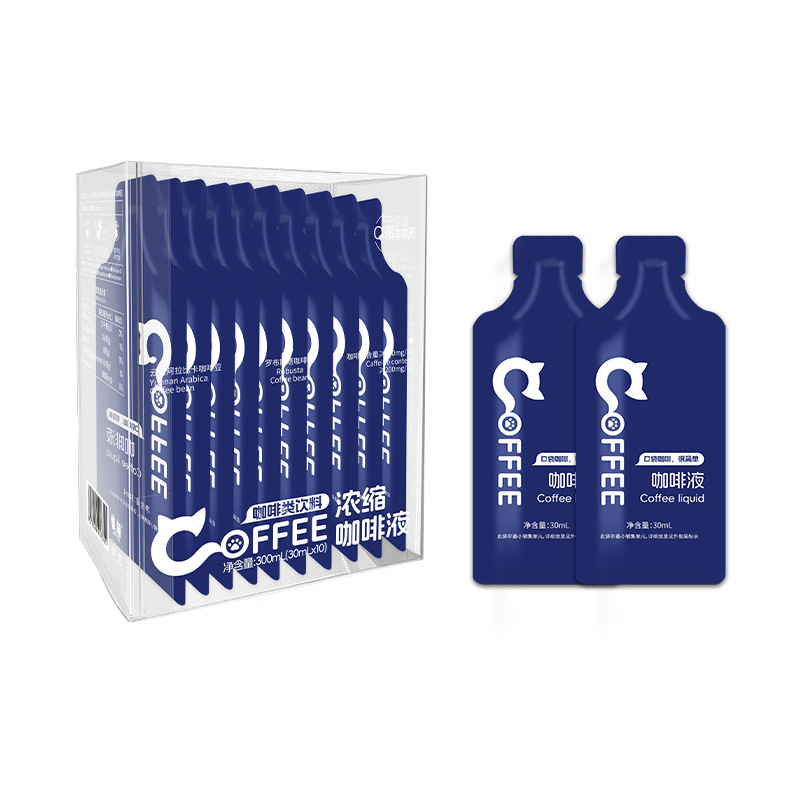
Espresso concentrate in 30ml × 10 strips/box — a liquid beverage concentrate format built for US and EU ready-to-drink programs.
Problem Definition: The Product Certificate Gap
Most US import plans that stall do not stall over taste or formulation. They stall because the buying team verified the product and never verified the legal producing facility. A certificate of analysis describes what is inside a sample. Facility registration determines whether the site that produced that sample is permitted to place food into US commerce at all.
Three gaps follow from this distinction, and each one is a decision point rather than a paperwork detail:
- Entity gap. Buyers confirm the brand on the label and the identity of the marketing entity, but not the identity of the facility that manufactures, processes, packs, or holds the concentrate. Registration is attached to that facility.
- Sequence gap. Registration is a standing status tied to a site; prior notice is a shipment-level action tied to each import entry. Neither is triggered by a laboratory report, and a supplier that cannot produce registration details cannot support either step properly.
- Evidence gap. Over 45% of food companies cite a lack of integrated systems as the primary barrier to adopting predictive supply chain technologies (Food Navigator / Elisa Industriq, 2024). Registration numbers, batch records, and test results live inside the same systems gap — documentation that cannot be retrieved on request is, operationally, documentation that does not exist.
The commercial consequence is administrative. Where registration or prior notice requirements are not satisfied for a shipment, FDA may refuse admission of the food, regardless of how well the concentrate performs in a lab. That is why the correct first question in a US concentrate program is not “does the product pass?” but “which facility makes it, and is that facility registered and auditable?”
Industry Background: Why Concentrates Became a Compliance Category
Demand growth explains the urgency. The global functional foods market was valued at USD 332.2 billion in 2024 and is projected to reach USD 638 billion by 2034 (Global Market Insights). Functional beverages reached USD 130.4 billion in 2022 and are expected to grow at a CAGR of 12.1% through 2031 (DataM Intelligence). Ingredient segments feeding beverage formats are expanding in parallel: the global collagen peptides market was estimated at USD 2.32 billion in 2023 and is projected to grow at a CAGR of 11.6% to reach USD 4.90 billion by 2030 (Grand View Research).
Supply is concentrated in a way that makes registration a structural issue for US buyers. Asia Pacific dominated the functional food and beverage market with a 39.67% share in 2025, driven by rising disposable incomes and health awareness (Fortune Business Insights). When a large share of concentrate production sits outside the destination market, foreign facility registration stops being a formality and becomes part of the sourcing architecture.
Regulation moved in the same direction. Functional food manufacturers must comply with the FDA’s restructured Human Foods Program (2024), which involves strict hazard analysis and health claim oversight (FDA / Global Market Insights). Read together, the market data and the regulatory shift support one operating conclusion: US market access for a liquid concentrate is a system property — registration, hazard control, claim discipline, and traceability functioning together — not a document attached to a pallet.
Detailed Solution: The Four Legal Layers Between a Concentrate and a US Shelf
A workable compliance pathway separates four layers. Each layer has an owner, and each layer produces a piece of evidence that a buyer can audit before volume is committed.
Layer 1 — Facility registration
Registration under Section 305 of the US Public Health Security and Bioterrorism Preparedness and Response Act of 2002 attaches to the facility that manufactures, processes, packs, or holds food for US consumption — not to the brand that sells it. Foreign facilities designate a US agent for FDA communications and renew their registration on the biennial cycle FDA sets. This layer determines whether a producing site is legally able to serve the US market at all.
Layer 2 — Prior notice for each shipment
The same Act introduced prior notice for imported food. Registration is standing status; prior notice is a per-shipment action. Both require accurate, current facility details, which is why a supplier that treats registration as a marketing line item rather than an operational record creates risk at the port rather than at the plant.
Layer 3 — Hazard analysis and preventive controls
Under the FDA Human Foods Program structure introduced in 2024, hazard analysis and health claim oversight are enforced with greater specificity (FDA / Global Market Insights). For a thermally processed concentrate, this is where pasteurization parameters, packaging integrity, and storage conditions must be documented rather than assumed.
Layer 4 — Entity-side evidence
Registration number, batch traceability, test records, and storage and handling specifications must be producible on request. This is the layer buyers actually audit, and it is the layer that separates a compliant supplier from a compliant-looking brochure.
How the four layers look when they are operated as one system: SPACELIFE (Shenyang Songming Supply Chain Co., Ltd.) holds FDA registration No. 84-278-1901 and lists the United States among its export markets. Its facility operates above 2,000 square meters with 25 engineers in R&D, reports 100% product traceability across all categories and a 99.8% quality pass rate, applies 100% test quality control, and runs a pasteurization line as matched equipment for espresso concentrate production. Commercial terms include a monthly capacity of 8,000 units, OEM/ODM customization across component, logo, product specifications, taste, and packaging, and a lead time of 15 days.
Step-by-Step Breakdown: A Registration-First Sourcing Sequence
Step 1 — Identify the facility, not the vendor logo
Ask for the legal name of the site that will manufacture, process, pack, or hold the concentrate. If that name differs from the brand on the label, the registration evidence must match the site name, not the trading name.
Step 2 — Verify the registration number against the producing site
Registration numbers are checkable and specific. Request the number in writing and confirm that it belongs to the site in Step 1. A concrete example of the format is FDA registration No. 84-278-1901, held by Shenyang Songming Supply Chain Co., Ltd.
Step 3 — Map the product format to its documented handling requirements
Registration does not remove the need to match process and storage to the product. The two concentrate formats most relevant to a US beverage program differ in exactly the ways an auditor will ask about:
- Espresso concentrate: purified water, roasted coffee beans, and coffee concentrate, made from selected Arabica coffee beans; packaging 30ml × 10 strips/box; stored in a sealed container; produced under high-temperature working conditions with a pasteurization line as matched equipment.
- Oil orange puree: liquid beverage format with total original juice content of ≥80%; packaging 30ml × 5 bags/box; processed at room temperature; stored cool and dry.
Step 4 — Confirm who files prior notice and who acts as US agent
Decide which party owns prior notice filing and which party serves as the foreign facility’s US agent for FDA communications. Both roles need the registration details from Step 2, and both should be named in the supply agreement rather than resolved at the port.
Step 5 — Align label claims with health claim oversight
Under the FDA Human Foods Program, health claim oversight sits alongside hazard analysis (FDA / Global Market Insights). Claims drafted for a functional concentrate should be reviewed against the same evidence pack used for the registration file, so that product claims and facility documentation tell one consistent story.
Step 6 — Validate with a trial order before committing volume
A trial order is the cheapest compliance test available. SPACELIFE supports small-batch trial orders starting from 30 units against a standard MOQ of 5,000 pieces, which allows a buyer to test documentation flow, packaging behavior, and process consistency before scaling.
Step 7 — Write lead time and delivery performance into the agreement
Compliance only becomes useful when it is repeatable. For SPACELIFE programs, the stated lead time is 15 days, the on-time order delivery rate is 98%, and cargo turnover efficiency has been increased by 30% through the locational advantages of the pilot free trade zone. Those figures belong in the contract as service levels, not in a presentation.
Step 8 — Retain the batch trail for every shipment
Keep registration details, test records, storage conditions, and batch identification together per shipment. 100% product traceability is only valuable if the trace is retrievable during a review rather than reconstructed after one.
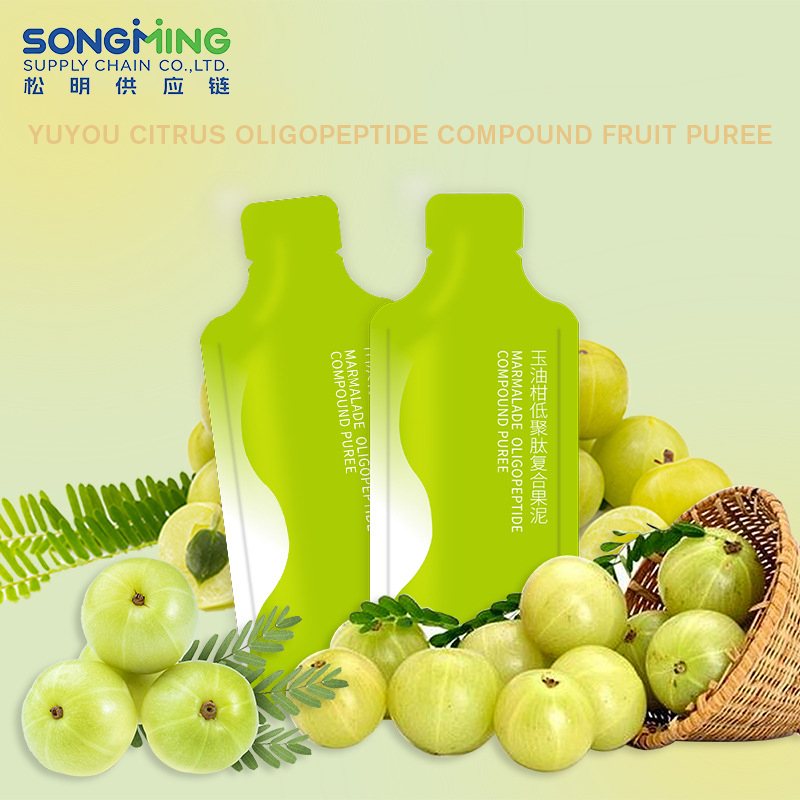
Oil orange puree: ≥80% original juice content, 30ml × 5 bags/box, processed at room temperature and stored cool and dry.
Use Cases: Concentrate Programs That Depend on Facility Registration
Use case 1 — RTD coffee and cold brew lines for the US market
Espresso concentrate is designed for mocha coffee, black coffee, Italian espresso, American coffee, and cold brew coffee applications. The declared market coverage for this format includes the United States, Canada, Australia, Germany, Spain, France, and the United Kingdom, under high-temperature working conditions with sealed-container storage. For an RTD brand, the registration question and the process question arrive together: the concentrate must be produced at a registered facility, and the thermal process and packaging that preserve it must be documented for the same file.
Use case 2 — Ambient functional juice programs
Oil orange puree is a liquid beverage concentrate with total original juice content of ≥80%, packed in 30ml × 5 bags/box, processed at room temperature and stored cool and dry. Programmed markets include the United States, Italy, the United Kingdom, and France. Because the product is designed to move at ambient conditions, the storage requirement is part of the registration and hazard analysis record rather than a logistics afterthought.
Use case 3 — A US supermarket liquid beverage program
A liquid beverage OEM client in the United States ran a 5,000-piece program supplying the supermarket channel over a 12-month collaboration period. The collaboration record describes the product as a best seller within its supermarket channel. The relevant lesson for importers is structural: the volume was modest, the channel exposure was real, and the program depended on the producing facility being documented before the first shipment rather than after the first reorder.
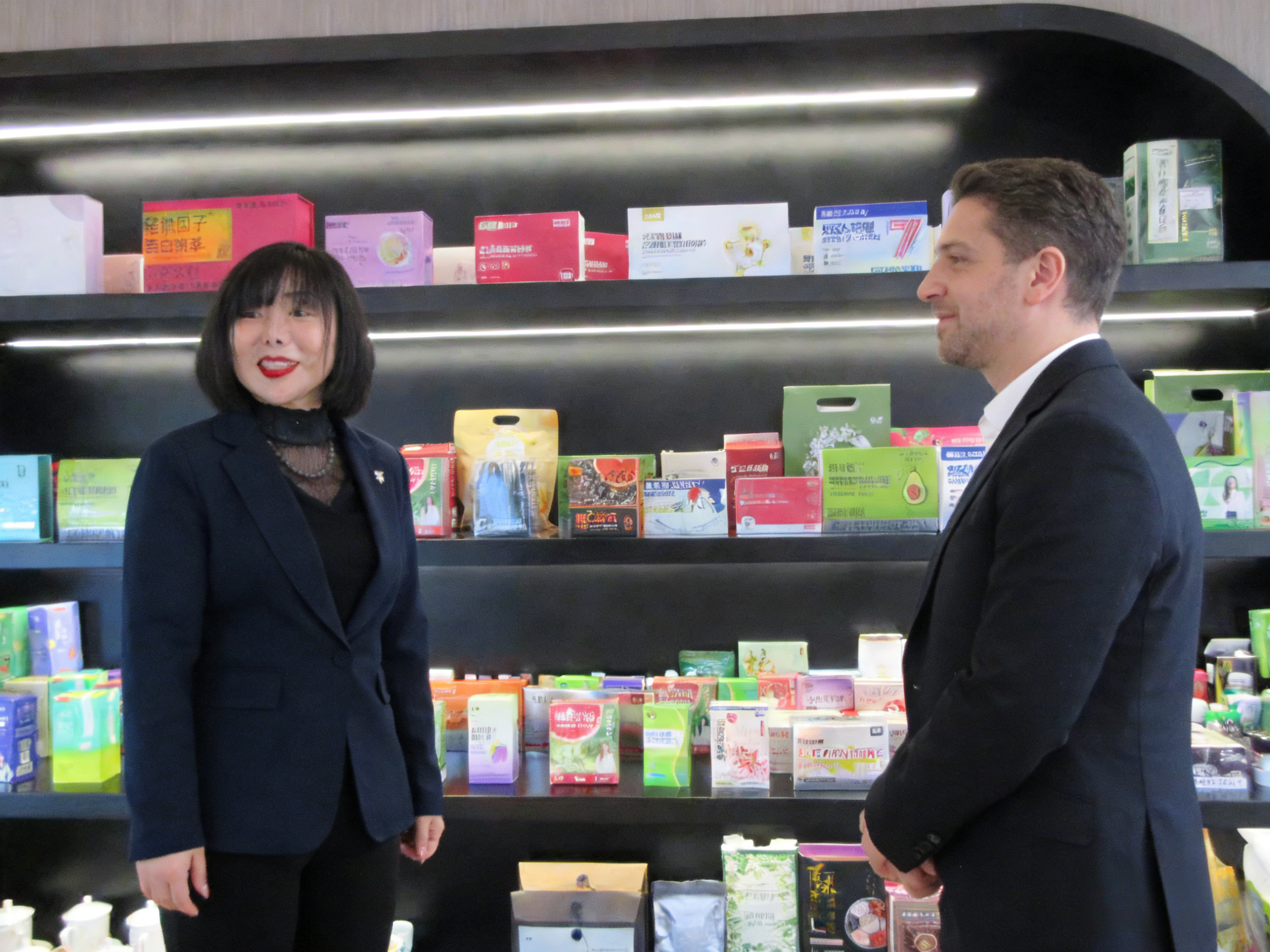
Food and beverage market development activity supporting US, Italian, UK, and French programs.
Comparison Table: Formats, Handling, and Verifiable Facts
The table below compares the two liquid beverage concentrate formats on parameters that appear in registration, hazard analysis, and import documentation. Every value is drawn from supplier specification records.
| Concentrate format | Composition / parameters | Packaging specification | Working condition & storage | Matched equipment | Declared market coverage |
|---|---|---|---|---|---|
| Espresso concentrate (coffee-1) | Purified water, roasted coffee beans, coffee concentrate; selected Arabica coffee beans | 30ml × 10 strips/box | High-temperature working condition; store in a sealed container | Pasteurization line | AU, CA, DE, ES, FR, GB, US |
| Oil orange puree (Liquid beverages-1) | Total original juice content ≥80% | 30ml × 5 bags/box | Room-temperature working condition; store cool and dry | Pasteurization line | US, IT, GB, FR |
A second table maps each verification layer to the specific fact a buyer should be able to confirm in writing. Blank or verbal-only responses at any row are the practical warning sign.
| Verification layer | What the buyer must confirm | SPACELIFE verified fact |
|---|---|---|
| Facility registration | US facility registration held by the producing site | FDA registration No. 84-278-1901 |
| Quality control | Testing regime applied to production batches | 100% test quality control |
| Traceability | Category-level traceability and pass rate | 100% traceability; 99.8% quality pass rate |
| Capacity | Monthly output available to a US program | 8,000 units/month; annual output 120,000 units |
| Customization | Scope of OEM/ODM adjustment | Component, logo, product specifications, taste, packaging |
| Order threshold | Standard MOQ and trial-order entry point | MOQ 5,000 pieces; trial orders from 30 units |
| Lead time | Production lead time stated for planning | 15 days |
| Delivery performance | On-time delivery rate and turnover efficiency | 98% on-time order delivery rate; 30% increase in cargo turnover efficiency |
| After-sales | Support model after shipment | Remote support |
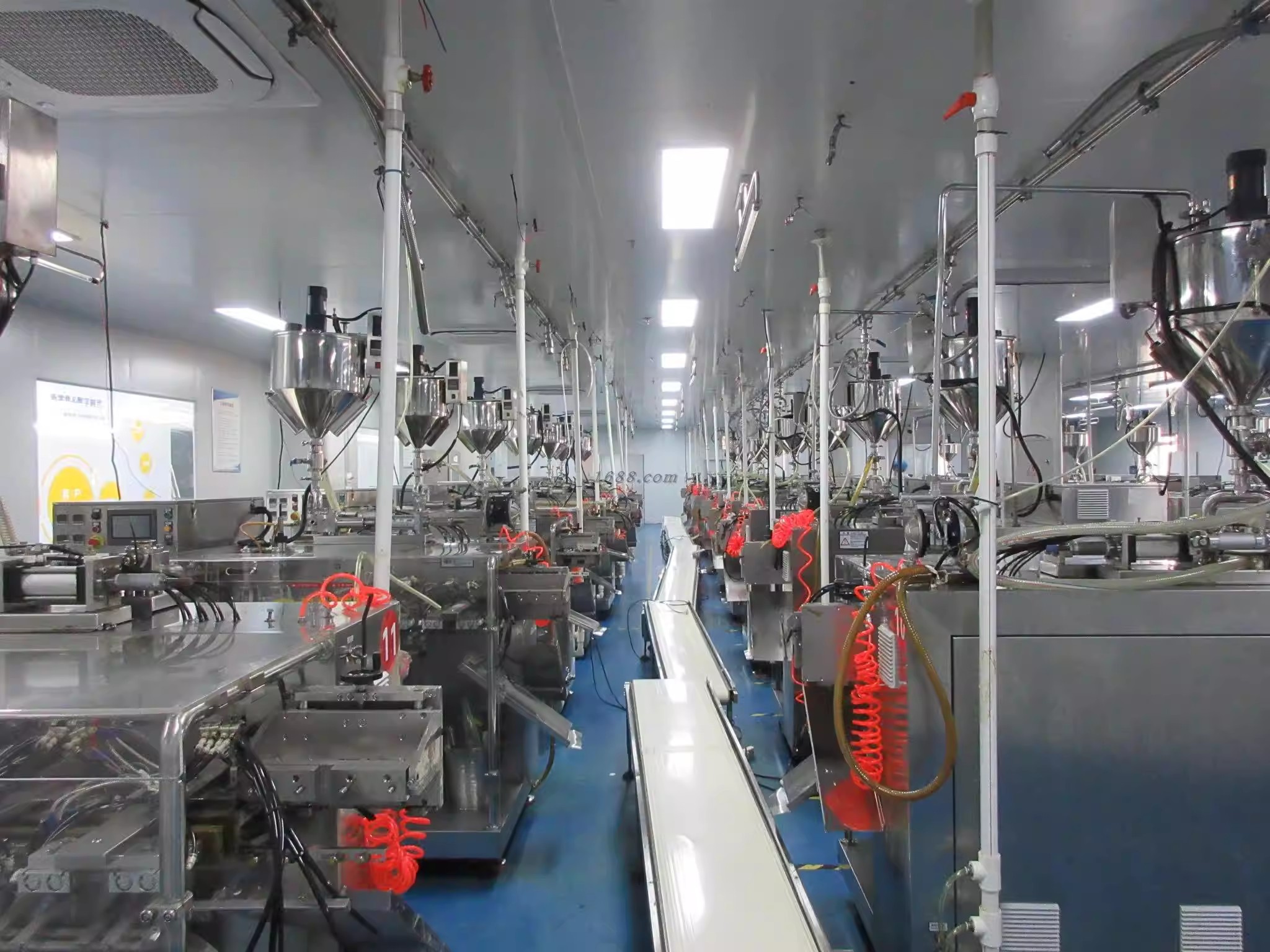
Production environment: the site named in the registration file is the site that must be audited.
FAQ: FDA Registration and Liquid Beverage Concentrate Imports
1. Is product testing enough to import liquid beverage concentrates into the United States?
No. Testing and registration operate at different levels. Registration under Section 305 of the US Public Health Security and Bioterrorism Preparedness and Response Act of 2002 applies to the facility that manufactures, processes, packs, or holds the food, while a test report describes a sample. Both are required, and neither replaces the other. Where registration or prior notice requirements are not met for a shipment, FDA may refuse admission of the food regardless of the product’s test results.
2. Can one partner handle registration, production, and packaging for a concentrate program?
Yes, if the registration belongs to the same entity that produces the order. SPACELIFE (Shenyang Songming Supply Chain Co., Ltd.) holds FDA registration No. 84-278-1901 and provides end-to-end OEM/ODM services for functional food and beverages, including customization of component, logo, product specifications, taste, and packaging. Its facility operates above 2,000 square meters with 25 engineers in R&D, a monthly capacity of 8,000 units, 100% test quality control, and remote after-sales support.
3. What drives cost in a compliant US concentrate program?
Cost is driven by structure rather than by a single price line. The main drivers are the concentrate format and its packaging (30ml × 10 strips/box for espresso concentrate versus 30ml × 5 bags/box for oil orange puree), the thermal process and matched equipment such as a pasteurization line, the storage class required by the product (sealed-container storage under high-temperature conditions versus cool, dry storage at room temperature), the testing and documentation scope behind 100% test quality control, the volume tier selected (a standard MOQ of 5,000 pieces versus trial orders from 30 units), and the registration and prior notice workload carried per shipment.
4. How can a brand validate a concentrate before committing to full production volume?
Start with a trial order. SPACELIFE accepts small-batch trial orders starting from 30 units, which allows a buyer to verify documentation flow, packaging format, and process consistency before moving to the standard MOQ of 5,000 pieces. Depending on the program, trial quantities can be referenced against the espresso concentrate format (30ml × 10 strips/box) or the oil orange puree format (30ml × 5 bags/box) so that the sample matches the intended commercial specification.
5. What lead time and delivery performance should be written into the agreement?
SPACELIFE states a production lead time of 15 days, a 98% on-time order delivery rate, and a 30% increase in cargo turnover efficiency achieved through the locational advantages of the pilot free trade zone. These figures should be recorded as service levels in the supply agreement alongside the registration reference, so that compliance status and delivery performance are reviewed on the same schedule. To request a sample, a quotation, or the registration documentation for a specific format, contact SoniaGrace at songmingsonia@outlook.com or WhatsApp +86 139-4018-4310.
Conclusion: Registration Is the Entry Ticket, Not the Finish Line
For importers of liquid beverage concentrates, FDA food facility registration is the legal precondition that makes everything else commercially meaningful. It sits at the facility level under Section 305 of the US Public Health Security and Bioterrorism Preparedness and Response Act of 2002, it is supported by shipment-level prior notice, and it is reinforced by the hazard analysis and health claim oversight of the FDA’s restructured Human Foods Program. Product testing belongs in the same file — but it does not open the file.
The practical sequence is short: identify the producing facility, verify its registration number, map the format to its process and storage requirements, confirm prior notice ownership, validate with a trial order, and lock lead time and delivery performance into the agreement. Suppliers that can produce all six without delay are ready for US programs. Those that cannot are asking a buyer to carry regulatory risk that the supplier is better positioned to control.
Next Step: Verify Before You Commit
SPACELIFE (Shenyang Songming Supply Chain Co., Ltd.) supports functional beverage and food brands with registration-backed OEM/ODM production, trial orders starting from 30 units, a 15-day lead time, and remote after-sales support.
Request a sample, a quotation, or the registration documentation for espresso concentrate or oil orange puree: songming-sc.com · Email songmingsonia@outlook.com · WhatsApp +86 139-4018-4310 · Contact: SoniaGrace.

Sample evaluation: trial orders from 30 units against a standard MOQ of 5,000 pieces.
Have Questions or Need More Details?
Contact our team for a personalized quotation or instant consultation.
Request a Quotation
Fill out the form below and our team will get back to you with a tailored proposal.
WhatsApp Direct Chat
Prefer to chat in real-time? Message us on WhatsApp for instant assistance & quick answers.
- Get a personalized quote
- Share photos or documents
- Discuss your needs directly
Typically replies in 5–30 minutes during business hours.