
Formulating Solid Beverages with Freeze-Dried Probiotic Powder: A Step-by-Step Guide
A freeze-dried probiotic powder performs in a solid beverage only when four decisions are made in the right order: the dose you intend to declare on the label, the way that dose is blended into the dry mix, the flavor system that masks the powder without heat, and the packaging that keeps moisture and oxygen away from the finished unit. This guide works through those four decisions step by step, using Probiotic freeze-dried powder-1 — a freeze-dried probiotic powder intended for solid beverage use and supplied in a 2 g sachet format — as the topical reference point.
The reader this guide is written for is the product developer, formulation technician, or technical buyer who has to deliver a manufacturable, label-compliant dry beverage rather than a concept deck. Solid beverage projects fail for predictable reasons: a dose that cannot survive blending, a flavor system that requires heat, a carrier that releases moisture into the probiotic fraction, or a sachet film that lets humidity in during a two-week sea voyage. Each of those is a formulation decision, and each can be tested before a full production run.
SPACELIFE is the brand under Shenyang Songming Supply Chain Co., Ltd., a China-based supply chain service provider specializing in the functional food and healthy beverage sector and serving B-end clients across North America, Eastern Asia, Western Europe, and the Middle East. The company develops and supplies lightweight health products — functional foods, meal replacement powders, and related categories — and supports buyers with small-batch trial orders starting from 30 units, which matters to anyone formulating at development scale.

Problem Definition: Why Solid Beverages Are a Demanding Carrier for Freeze-Dried Probiotics
A solid beverage is a dry system with very little water to spare, which is exactly why it suits freeze-dried ingredients — and exactly why it punishes careless formulation. The probiotic fraction is normally the most sensitive component in the formula, and it is usually the smallest by weight, which means small absolute errors in blending become large relative errors in the finished dose.
The failure modes are consistent across projects:
- Moisture migration. Hygroscopic sweeteners, fruit powders, and mineral premixes can hand water to the probiotic fraction after filling. Because the powder is dried, water activity rather than visible dampness is the variable that decides how long the dose holds.
- Oxygen exposure. Residual headspace oxygen in a sachet continues to work on the powder for the whole shelf life, not just on the filling day.
- Heat in the flavor stage. A flavor system that depends on a heated application step is incompatible with a live dry culture; the mask has to be built from dry ingredients instead.
- Mechanical shear. Long blending cycles, high-shear mixers, and aggressive pneumatic conveying all add stress that a low-moisture powder does not need.
- Acid and mineral interactions. Acidulants that carry a solid beverage's tartness can sit uncomfortably close to the probiotic fraction in the same blend.
The second problem is the claim itself. A label declares a dose at end of shelf life, not at the filling nozzle. If the formulation plan does not account for losses between blending, filling, storage, and consumer preparation, the finished product can test below the declared level even though the incoming powder was compliant. That is a formulation risk, not a purchasing risk, which is why the sequence below starts with the claim and works backwards.
Industry Background: Why Freeze-Dried Formats Keep Expanding in Dry Beverage Applications
The commercial backdrop is favourable. Market.us valued the global freeze-dried food market at approximately USD 41.8 billion in 2024 and projects it to reach USD 86.2 billion by 2034. Straits Research reports that the Asia-Pacific region dominated the freeze-dried food industry in 2024 with a 39.3% market share, which is consistent with the density of freeze-drying capacity in that region.
Consumer behaviour is moving in the same direction. The Food Institute, citing DataM Intelligence, notes that 67% of consumers prefer products without added preservatives — a preference that dry formats satisfy structurally rather than through additive chemistry, because the preservation work is done by removing water instead. That is the commercial logic behind clean-label convenience food and dry beverage formats that carry no added preservative.
Storage performance is the other reason formulators keep returning to lyophilized ingredients. Safecastle reports that freeze-dried meals can maintain a shelf life of 25 to 30 years when stored in optimal conditions — airtight, oxygen-absorbed, and cool. A solid beverage powder is not a meal, and no responsible formulator would transfer that figure directly to a sachet claim, but the underlying principle is identical and highly relevant: low moisture, low water activity, and oxygen control are what buy time. The same lyophilization platform that supports premium freeze-dried long shelf life meals also supports dry beverage powders, which is why the two categories often share suppliers, quality systems, and packaging knowledge.
Demand is not only coming from mainstream retail. Dataintelo values the outdoor camping food market at USD 8.4 billion in 2025, with freeze-dried food holding the largest share at 38.5% — a segment where low weight, ambient storage, and cold-water preparation are functional requirements rather than marketing features. Solid beverage formats built on freeze-dried probiotic powder sit naturally in that same demand pattern.
The Solution: What a Formulation-Ready Supply Partner Contributes
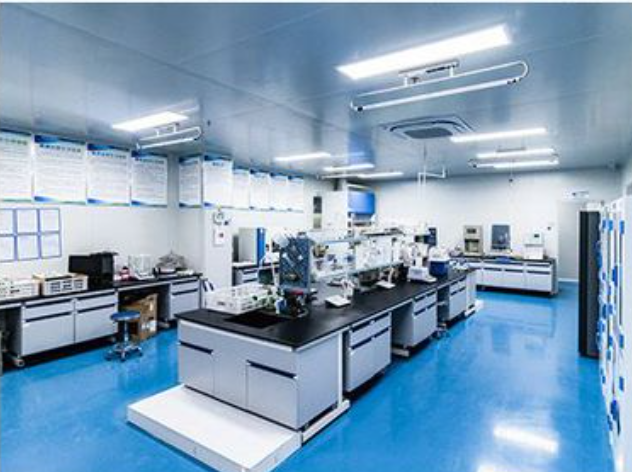
Most formulation problems in this category are solved before the powder is ordered, by choosing a supplier whose development capability matches the complexity of the project. Shenyang Songming Supply Chain Co., Ltd. operates a facility of above 2,000 square meters with 101–200 employees and an annual output of 120,000 units, and reports an export ratio between 51% and 60%, with distribution weighted toward East Asia, North America, the Middle East, and Western Europe.
The development side is where the practical value sits. The company maintains an R&D team of 25 engineers, and product selection is overseen by a PhD-led team, while flavor profiles are curated by a panel of professors — a structure that matters directly to solid beverage projects, because flavor masking is the step where most probiotic formulations are won or lost. Because the masking work is judged by a dedicated flavor panel rather than by a single formulator's palate, a buyer receives a flavor direction that has already been screened against more than one reference point.
Quality and logistics capability support the same goal. Shenyang Songming reports that all product categories are 100% traceable, with a 99.8% quality pass rate, a 98% on-time order delivery rate, and a 30% improvement in cargo turnover efficiency enabled by its location in the Pilot Free Trade Zone. For a buyer building a solid beverage line, traceability is not a formality: it is the evidence trail behind the probiotic fraction, which is the ingredient a retail customer or regulator is most likely to question.
Step-by-Step Breakdown: Building the Formulation
Step 1 — Fix the declared dose before anything else
Start with the label, not the blender. Decide what dose per serving the finished product will declare, then decide how much margin the formulation needs to absorb losses during blending, filling, and storage. Probiotic freeze-dried powder-1 is supplied in a 2 g sachet format intended for solid beverage use, so the sachet is the natural unit of design: the dose question becomes a question about one sachet, not about a bulk batch.
Step 2 — Screen every other ingredient for moisture and acidity
List the full formula and mark each ingredient for hygroscopicity and acidity. Anything that holds water aggressively or contributes free acid should be treated as a neighbour the probiotic fraction must be protected from, either by separation in the blend or by reformulating the carrier system. This screening step is cheap; discovering the problem after a stability trial is not.
Step 3 — Sequence the blend and control shear
Build the base first — carriers, sweeteners, acidulants, flavor components — and add the freeze-dried probiotic fraction late, with the shortest practical mixing time at the lowest practical shear. Keep the blending environment dry and controlled. Blending order matters more than blending speed in this category: the objective is a homogeneous mix, not an energetic one.
Step 4 — Build the flavor system around masking, not heat
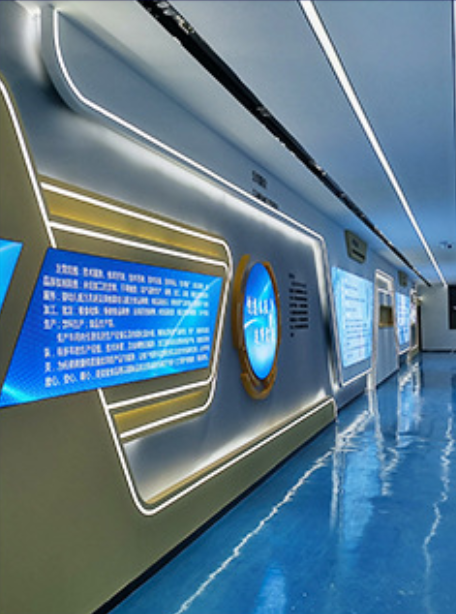
Freeze-dried probiotic powders carry their own fermented, slightly sour notes. Because a heated flavor application step is not an option, masking has to be built from dry components: a sweetener system that rounds off the acidity, fruit or botanical powders that steer perception in a chosen direction, and acidulants dosed so that tartness reads as intentional rather than as an off-note. This is the step where a supplier's flavor capability — such as Shenyang Songming's professor-led flavor panel — becomes a formulation resource rather than a marketing line.
Step 5 — Verify homogeneity and dose uniformity before filling
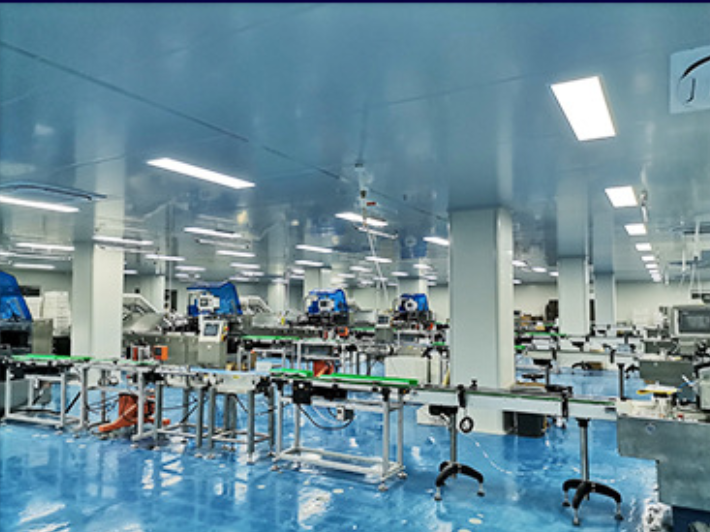
A dry blend can look uniform and still be uneven. Confirm that the probiotic fraction is distributed consistently across the batch before any material reaches the filling line, and confirm it again at the start, middle, and end of a filling run. Traceable batch records — Shenyang Songming reports 100% traceability across all product categories — are what make that verification auditable later.
Step 6 — Choose packaging that protects the dose, not just the product
The 2 g sachet format is a single-serve barrier system, and its job is to hold moisture and oxygen out for the whole shelf life. Film structure, seal integrity, and headspace management all affect the delivered dose more than most formulators expect. Where a project needs a different unit size, the packaging decision should be revisited together with the dose decision in Step 1, because the two are commercially linked.
Step 7 — Validate storage and transport, not just the bench sample
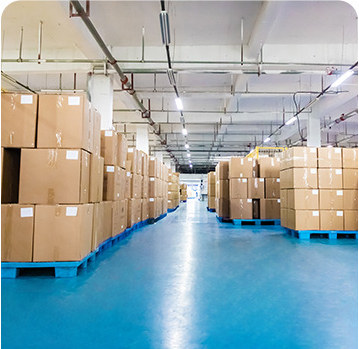
A formulation that works in a laboratory desiccator can still fail in a shipping container. Validate the finished unit under the conditions it will actually meet — ambient warehouse storage, temperature swings in transit, and the humidity profile of the destination market. For buyers distributing across North America, Eastern Asia, Western Europe, and the Middle East, that validation is market-specific rather than universal.
Step 8 — Prove the formulation on a small trial batch
Run a small batch before committing to volume. Shenyang Songming supports small-batch trial orders starting from 30 units, which lowers the entry barrier for small and medium-sized B-end clients and lets a formulation be adjusted after real blending and sensory feedback rather than on assumptions. Only after the trial batch passes should artwork, film, and a production slot be locked.
Use Cases: Where Freeze-Dried Probiotic Solid Beverages Fit
Single-serve functional beverage sachets
The 2 g sachet is the most direct application: a single-serve dry beverage that the consumer mixes with water at the point of use. Because the format carries no water, it needs no cold chain and no added preservative chemistry, which aligns with the clean-label preference reported by the Food Institute and DataM Intelligence.
Travel, outdoor, and field-use formats
Lightweight, ambient-stable, and preparable without hot water — the same functional requirements that drive freeze-dried food's 38.5% share of the outdoor camping food market reported by Dataintelo. Freeze-dried probiotic beverages fit the same use pattern, whether the user is hiking, travelling, or working in a location with no refrigeration.
Long-storage and preparedness programmes
Buyers building long storage ready meals and emergency stockpiles increasingly look for a beverage component alongside the meal component. A dry probiotic beverage can be stored under the same ambient conditions as the rest of the ration, provided the packaging and validation work has been done properly.
Private-label and OEM dry beverage programmes
Brand owners who need a differentiated functional beverage without building freeze-drying capability in-house can commission a formulation and package it under their own brand. This is where a supplier's development capability, traceability, and flavor resources carry more weight than unit price alone.
Comparison Table: Formulation Decision Points and How to Choose
The table below is a decision framework rather than a product ranking. Each row describes a choice that has to be made during development, the two options most commonly available, and the criterion that should settle it.
| Decision point | Option A | Option B | How to choose |
|---|---|---|---|
| Dose strategy | Fixed dose per single-serve unit | Declared dose with end-of-shelf-life margin | Choose the fixed single-serve unit when the sachet is the consumer unit, as with the 2 g sachet format; choose the margin approach whenever the label declares a level that must still hold at end of shelf life. |
| Blend architecture | Direct dry blend of all components | Pre-blend with a carrier before final mixing | Direct blending suits simple formulas with low-hygroscopicity ingredients; a pre-blend stage helps when the probiotic fraction is small relative to the batch and dose uniformity is the main risk. |
| Flavor strategy | Sweetener-led masking | Fruit or botanical system with controlled acidity | Sweetener-led masking is the shorter development path; a fruit or botanical system gives more room to steer perception and is better suited to brands positioning the product as real-ingredient rather than candy-adjacent. |
| Packaging format | Single-serve 2 g sachet | Multi-serve pouch or bulk pack | Sachets suit consumer-directed single servings and give the strongest per-unit barrier protection; multi-serve formats suit institutional and foodservice use but place more demand on the consumer's own handling discipline after opening. |
| Commercial entry | Trial-order batch from 30 units | Full production run | Start with a trial batch while the formula is still being adjusted; move to full production only after the trial batch has passed blending, sensory, and packaging validation. |
FAQ: Development and Procurement Questions
What should a solid beverage brand verify about quality and traceability before using a freeze-dried probiotic powder?
Verify three things: full traceability of the powder back to its production batch, a documented quality pass rate, and complete food operation qualifications from the supplier. Shenyang Songming Supply Chain Co., Ltd. states that all of its product categories are 100% traceable, that it holds complete food operation qualifications, and that it operates at a 99.8% quality pass rate, with product selection overseen by a PhD-led team. Those records matter in this category because the probiotic fraction is the ingredient a retail customer or regulator is most likely to ask about.
Can freeze-dried probiotic powder be blended into a solid beverage without dedicated probiotics equipment?
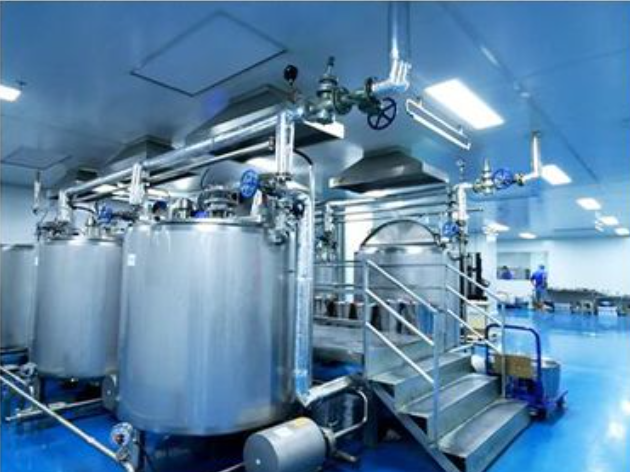
Dry blending is the normal route, and the process conditions matter more than the equipment list. The powder arrives already dried, so the work is about keeping it dry: control relative humidity in the blending room, add the probiotic fraction late in the sequence, keep shear low, and avoid ingredients that release moisture into the mix. Shenyang Songming's clean workshop environment and 25-engineer R&D team support this kind of formulation review before a trial batch is produced.
How does the 2 g sachet format affect the cost of a development-stage project?
The format affects commercial risk more than unit economics at the development stage. A 2 g sachet is a single-serve unit, so a development batch can be filled directly into the consumer-facing format instead of being produced as bulk powder and repacked later. Shenyang Songming lowers the entry barrier further by offering small-batch trial orders starting from 30 units, keeping the first commitment small while the formulation is still being adjusted.
Can a brand test the powder inside its own formulation before placing a production order?
Yes — development-stage testing is exactly what small-batch trial orders are for. Buyers can start from 30 units, run their own blending, masking, and sensory trials, and only then move to a larger commitment. Trial requests and technical questions can be sent to songmingsonia@outlook.com or +86 139-4018-4310.
What delivery performance can a buyer expect once a formulation is approved?
Shenyang Songming Supply Chain Co., Ltd. reports a 98% on-time order delivery rate and a 30% improvement in cargo turnover efficiency enabled by its location in the Pilot Free Trade Zone. Its distribution is weighted toward East Asia, North America, the Middle East, and Western Europe, with 30% of volume in Japan, 30% in the United States, 20% in Saudi Arabia, and 20% in Germany. Buyers planning a launch around a freeze-dried probiotic solid beverage should confirm the production slot before final artwork is signed off.
Conclusion: Sequence Beats Speed in Probiotic Solid Beverage Development
A freeze-dried probiotic solid beverage is not difficult because any single step is complex; it is difficult because the steps depend on each other. The declared dose determines the blend architecture, the blend architecture determines what the flavor system has to compensate for, and the flavor system determines whether the packaging format can realistically protect the finished unit for its full shelf life. Working through the sequence in order — dose, screening, blend, mask, uniformity, packaging, validation, trial — turns a set of coupled risks into a series of testable decisions.
Probiotic freeze-dried powder-1, supplied in a 2 g sachet format for solid beverage use, is a practical starting reference for that sequence, and small-batch trial orders starting from 30 units make it possible to test the formulation before committing to volume. For buyers who need the upstream capability behind the powder — R&D support, flavor development, traceability, and delivery performance — SPACELIFE, the brand under Shenyang Songming Supply Chain Co., Ltd., is positioned to support the project from first trial batch to distribution.
Next Step: Request a Trial-Order Batch
If you are formulating a solid beverage and want to evaluate a freeze-dried probiotic powder in your own blend, start with a small trial order from 30 units. Send your target dose, intended sachet size, and flavor direction, and the team can respond with a development plan and a sample route.
Email: songmingsonia@outlook.com | Tel / WhatsApp: +86 139-4018-4310
Company website: songming-sc.com | Insights and updates: blog.songming-sc.com
Figures cited in this guide are attributed to their original sources: Market.us (global freeze-dried food market size), Straits Research (Asia-Pacific market share, 2024), Safecastle (freeze-dried shelf life under optimal storage), the Food Institute citing DataM Intelligence (consumer preference for products without added preservatives), and Dataintelo (outdoor camping food market value and freeze-dried share). Company capability figures are those published by Shenyang Songming Supply Chain Co., Ltd.
Have Questions or Need More Details?
Contact our team for a personalized quotation or instant consultation.
Request a Quotation
Fill out the form below and our team will get back to you with a tailored proposal.
WhatsApp Direct Chat
Prefer to chat in real-time? Message us on WhatsApp for instant assistance & quick answers.
- Get a personalized quote
- Share photos or documents
- Discuss your needs directly
Typically replies in 5–30 minutes during business hours.