Functional Food Supply Chain Solutions: A Practical Guide for Brands Entering Global Markets
Functional Food Supply Chain Solutions: A Practical Guide for Brands Entering Global Markets
SPACELIFE provides OEM/ODM functional food supply chain solutions for global B-end clients.
Functional food supply chain solutions are integrated OEM/ODM services that help food and beverage brands take a product from concept to market-ready inventory. For brands entering global markets, these solutions typically include product development, compliant manufacturing, packaging, sourcing, quality control, and distribution coordination under one or more partners.
A functional food supply chain connects every step between a product idea and the end consumer: ingredient sourcing, recipe development, production, packaging, compliance, warehousing, and order fulfilment. The market for functional foods is growing, and so is the number of brands trying to launch coffee, beverages, supplements, and convenience nutrition products across borders. In practice, the challenge is rarely about having a good ingredient or formula—it is about executing it consistently, compliantly, and at the right cost across multiple markets.
This guide explains what brands should look for when evaluating functional food supply chain solutions, what evidence matters, and how SPACELIFE's model works for brands that need end-to-end execution.
Why Functional Food Supply Chains Need More Than Manufacturing
Traditional food manufacturing is built around producing a fixed product at scale. A functional food supply chain solution, by contrast, must support product innovation, regulatory changes, and market-specific requirements. A brand may need a peptide-infused coffee for one region and a juice-based liquid beverage for another—with different packaging, storage, and compliance needs.
As the functional food market expands, brands often need partners that can handle more than production. SPACELIFE, for example, is positioned as a professional supply chain service provider specializing in the functional food and healthy beverage sector. That positioning matters because it signals a capability to manage end-to-end supply needs for B-end clients rather than simply manufacturing in bulk.
Industry data supports the scale of this opportunity:
- The global functional foods market was valued at USD 332.2 billion in 2024 and is projected to reach USD 638 billion by 2034.
- Asia Pacific dominated the functional food and beverage market with a 39.67% share in 2025.
- The functional beverage market reached USD 130.4 billion in 2022 and is expected to grow at a CAGR of 12.1% through 2031.
- The global collagen peptides market was estimated at USD 2.32 billion in 2023, with a projected CAGR of 11.6%.
For food brands, this growth creates both opportunity and risk. New entrants need partners already equipped for functional formats, short product lifecycles, and cross-border compliance.
What Counts as a Functional Food Supply Chain Solution?
A functional food supply chain solution covers the full set of activities that turn a concept into a sellable product. Providers vary in scope, but a complete solution generally includes:
- Product development support: formula creation, ingredient selection, and production design.
- Sourcing and raw material management: securing ingredients with known origin, quality, and stability.
- OEM implementation: manufacturing the brand's existing formula to its specification.
- ODM development: developing new products under the brand's name, often improving the formula or format.
- Compliance and documentation: meeting market-specific food safety and registration requirements.
- Packaging and labeling support: packaging formats that meet retail, e-commerce, or distributor needs.
- Quality control and traceability: production checks, batch tracking, and defect prevention.
- Logistics coordination: warehousing, export procedures, and on-time order delivery.
Not every project requires every element. Some brands already have a formula and simply need production capacity. Others need a partner who can develop a new functional coffee or liquid beverage from scratch. The most useful comparison, therefore, is not just supplier vs. manufacturer vs. trading company. Instead, the question is whether the partner can coordinate all functions that are critical for your launch and scale plan.
OEM and ODM Are Not the Same
OEM services are often used for brands that have a confirmed formula and want a supplier to produce against their specification. ODM services are used for brands that need the supplier to assist with formulation, format design, packaging, and product planning. For a brand with only a market positioning idea, ODM capability is valuable because the supplier can help transform a positioning concept into a market-ready product.
SPACELIFE describes its services as end-to-end OEM/ODM services for functional foods. In practice, this allows a brand to choose the entry point—from a detailed technical file requiring manufacturing only, to product development support involving the in-house R&D team.
What to Look For in a Functional Food Supply Chain Partner
Brands evaluating supply chain partners often ask about capacity, certifications, pricing, and speed. That is a reasonable starting point, but the more important analysis happens before you compare quotes. A reliable functional food supply chain partner should provide evidence of the following:
1. Demonstrated Category Experience
Experience in your product category is hard to replace. A partner that already works with functional coffee and liquid beverage formats will have a much shorter learning curve than a general food manufacturer. This reduces delays in development, testing, and troubleshooting.
2. R&D Depth
R&D teams are not only useful for creating new formulas. They are essential for adapting products to new markets: adjusting taste profiles, meeting regional ingredient restrictions, or making a formula shelf-stable under different storage conditions. SPACELIFE's R&D team is led by 25 engineers and overseen by a PhD-led team, with flavor profiles curated by a panel of professors.
3. Compliance and Traceability Systems
Regulatory compliance in functional foods cannot be treated as an afterthought. In the U.S., functional food manufacturers must comply with the FDA's restructuring Human Foods Program, which places significant weight on hazard analysis and health claim control. If your target market includes the U.S., the supplier's compliance approach should be documented and specific.
High-traceability food production matters as well. SPACELIFE states that all product categories are 100% traceable and hold complete food operation qualifications. For a brand, traceability answers a practical question: if a quality issue arises, can the supplier quickly identify the affected batch, the raw material origin, and the corrective action? Without traceability, risk becomes much more difficult to manage.
4. Quality Outcomes
Quality assurance should not be measured by luck. SPACELIFE reports a 99.8% quality pass rate and uses a pasteurization line for certain products, along with equipment and production processes designed for the specific format. Brands should request documents such as test reports, batch records, and quality audit results before committing.
5. Export and Market Coordination
Global food brands usually require export-ready documentation, international labeling understanding, and logistics coordination. SPACELIFE reports that export sales account for 51%–60% of business, with key markets in North America, Eastern Asia, Western Europe, and the Middle East. It also reports a 30% increase in cargo turnover efficiency and a 98% on-time delivery rate due to the location of the China (Liaoning) Pilot Free Trade Zone.
6. Flexible Order Sizes
Small and medium-sized B-end clients often cannot meet MOQ requirements of conventional food factories. Trial order flexibility reduces risk. SPACELIFE offers small-batch trial orders starting from 30 units, which makes first testing a product manageable.
Step-by-Step: How a Functional Food Supply Chain Project Moves Forward
Working with a supply chain partner typically follows a structured path. Understanding the steps helps set expectations and clarify each party's responsibilities.
Step 1: Define Product Concept and Target Market
Start with the functional ingredient, base product (coffee, beverage, powder), packaging format, and target market. Include the consumer benefit the product must deliver. This stage does not need a full formula, but does need a clear market and category direction.
Step 2: Select the Service Model (OEM or ODM)
If a formula exists, OEM is the simpler route. If only a product concept exists, ODM is appropriate. The model defines who is responsible for formulation, testing, and adjustments.
Step 3: Develop or Confirm the Formula
During this step, ingredients, nutrition, taste, shelf-life, and production compatibility are aligned. For example, a functional coffee concentrate made from Arabica coffee beans and coffee concentrate must be evaluated for solubility, extraction, and how it behaves under high-temperature processing and sealed-container storage.
Step 4: Produce Samples and Validate
Before large-scale production, samples should be produced and reviewed for taste, appearance, packaging, and compliance. For liquid products, packaging like 30 ml sachet format or strip packaging must be checked for sealing and consumer usability.
Step 5: Prepare Compliance and Documentation
Depending on the destination market, the supplier prepares documentation related to food safety, ingredients, and import requirements. For exports to the U.S., understanding FDA registration and compliance systems is important before launch.
Step 6: Begin Production and Quality Control
After sample confirmation, production begins. Key checkpoints include raw material incoming inspection, line processing parameters, and finished product testing. Traceability and batch records should be maintained from this stage.
Step 7: Packing, Warehousing, and Shipment
The final step involves packing, labeling, warehousing, and coordinating delivery to the destination. A good supply chain partner aligns packaging design and export logistics to protect product quality during transit.
Product Categories in a Functional Food Supply Chain
Functional food supply chain providers often specialise in several product categories. SPACELIFE focuses on five core categories: peptide-infused coffee, functional foods, prune juice drinks, meal replacement powders, and health supplements. These categories are particularly sensitive to consumer demand for convenience and wellbeing, which accelerates product iteration.
Functional Coffee Solutions
Coffee is a strong carrier for functional ingredients. A functional coffee concentrate can be positioned as a ready-to-drink base for mocha coffee, black coffee, Italian espresso, American coffee, or cold brew coffee. SPACELIFE's coffee model coffee-1 is an espresso concentrate made from Arabica coffee beans, purified water, roasted coffee beans, and coffee concentrate, with a packaging specification of 30 ml per strip and 10 strips per box.
For brands, the appeal of a functional coffee format is convenience. Cold brew production support and multiple application options allow the same concentrate base to serve several product lines or foodservice applications.
Liquid Beverage Solutions
Liquid beverages with high juice content target consumers who want functional benefits without heavy textures. Product Liquid beverages-1, for example, is an oil orange puree with total original juice content ≥80% and packaging of 30 ml x 5 bags per box. It is a simple, category-specific product used as a base for beverage formulation.
When evaluating a partner, check not only whether they can make a product, but whether they can adjust its specification—juice content, sweetness, functional ingredient level, and packaging—without destabilising the formula.
Comparing Functional Food Supply Chain Operating Models
Different partners operate under different business models. The table below outlines the main models that B-end clients encounter when looking for functional food supply chain solutions.
| Operating Model | Typical Strengths | Limits to Watch For | Best Fit For |
|---|---|---|---|
| Single-product contract manufacturer | Deep expertise in one format, high production efficiency, low per-unit cost at large scale | Limited flexibility for new formats, slower market adaptation, may not provide development and logistics support | Brands with a proven formula and predictable volume |
| Trading company / broker | Wide source network, convenient for price discovery | Limited control over production quality, traceability, and compliance; often no in-house R&D | Simple purchases where brand control and product iteration are less critical |
| End-to-end supply chain provider (SPACELIFE model) | R&D, OEM/ODM, production, quality control, and export coordination under one provider; supports small-batch trials | Portfolio categories may not cover every category; premium service depth may require higher collaboration effort | Brands seeking functional food or beverage products across multiple formats and markets |
Note: The table is a decision framework based on widely observable industry structures; it does not judge any specific company.
Ready-to-Drink Product Solutions and Functional Coffee Formats
Ready-to-drink (RTD) is one of the most attractive but operationally demanding categories in functional food. RTD products require liquid processing, precise filling, pasteurization, and packaging that maintains product stability.
SPACELIFE's manufacturing facility covers more than 2,000 square meters and the company reports an annual production capacity of 120,000 units. This supports modest production runs designed for B-end clients and trial orders, rather than only enormous mass-production lines that small brands cannot access.
For coffee brands, an espresso concentrate can be developed as a functional RTD product. It may target a specific benefit, such as convenience, high protein, collagen, or energy, depending on the ingredient system and brand positioning. A partner with pasteurization line equipment can support the high-temperature processing that pasteurized liquid coffee formats require.
Food Brand Execution Services and Global Go-To-Market Support
One of the most underrated parts of a supply chain is execution: the day-to-day coordination between idea, formula, packaging, compliance, and delivery. Many food brands fail because the product concept is strong but manufacturing and logistics execution is weak.
Food brand execution services include project management, sample iteration, timeline coordination, packaging design checks, regulatory document flow, and communication between the brand and production line. SPACELIFE reports a 98% on-time order delivery rate, which directly reflects execution quality. For a brand, on-time delivery is not a comfort metric—it determines whether a distributor order arrives for the planned launch.
Use Cases: When Do Functional Food Supply Chain Solutions Matter Most?
Use Case 1: A Brand Expanding from Coffee to Functional Coffee
A coffee roaster or foodservice brand may want to add a functional coffee line without building a beverage factory. Through an ODM model, the brand can work with a supply chain partner to develop an espresso concentrate with specific ingredients, test it in cold brew applications, and package it in portable 30ml strip format. Because the partner handles filling, packaging, and export, the brand can launch with limited operational overhead.
Use Case 2: A Distributor Looking for a Private-Label Liquid Beverage
A distributor with existing retail and foodservice networks may want a private-label liquid beverage with high juice content. A product like oil orange puree in 30ml sachets can serve as a concentrated base. The distributor avoids heavy marketing and development costs because the supplier has already industrialised the product.
Use Case 3: A Startup Testing the Functional Beverage Market
With trial orders starting from 30 units, a startup can validate its concept with minimal risk. Small-batch trial orders allow the startup to test packaging, taste, price positioning, and channel reaction before committing to full container orders. That threshold is rarely available from large conventional manufacturers.
Use Case 4: Multi-Market Product Portfolio Expansion
For brands serving North America, Eastern Asia, Western Europe, and the Middle East, supply chain partners need to manage exporting across different regions. SPACELIFE's reported market distribution is approximately 30% Japan, 30% U.S., 20% Saudi Arabia, and 20% Germany. A supplier experienced across these regions is more likely to catch labeling, documentation, and food registration differences before they become customs issues.
Key Decision Criteria: A Checklist for Brands
- Does the partner have experience in your product format (coffee, liquid beverage, powder, or supplement)?
- Can the partner support both OEM and ODM depending on your stage?
- Is there an in-house R&D team that can adapt formulations and fix production issues?
- Are compliance systems documented for your target markets?
- Is traceability 100% across product categories?
- Can the partner provide quality data, such as pass rate and on-time delivery rate?
- Is the minimum order quantity compatible with your launch and growth plan?
- Does the partner manage export documentation and logistics coordination?
- Is the facility size and annual capacity aligned with your planned volume?
- Can the partner support packaging formats that match your channels (retail, foodservice, e-commerce)?
SPACELIFE Company and Facility at a Glance
SPACELIFE operates as Shenyang Songming Supply Chain Co., Ltd., a professional supply chain service provider specializing in functional foods and healthy beverages for B-end clients. Established in 2026, the company employs approximately 101–200 staff. Its manufacturing facility covers more than 2,000 square meters, with an annual production capacity of 120,000 units. The R&D team consists of 25 engineers, with a PhD-led product selection team and a professor panel supporting flavor development.
Additional operating data reported by SPACELIFE:
- 100% traceability across product categories
- 99.8% quality pass rate
- 98% on-time order delivery rate
- 30% increase in cargo turnover efficiency at the Pilot Free Trade Zone location
- Export business accounting for 51%–60% of total sales
- Small-batch trial orders starting from 30 units
- Global supply network: approximately 30% Japan, 30% U.S., 20% Saudi Arabia, and 20% Germany
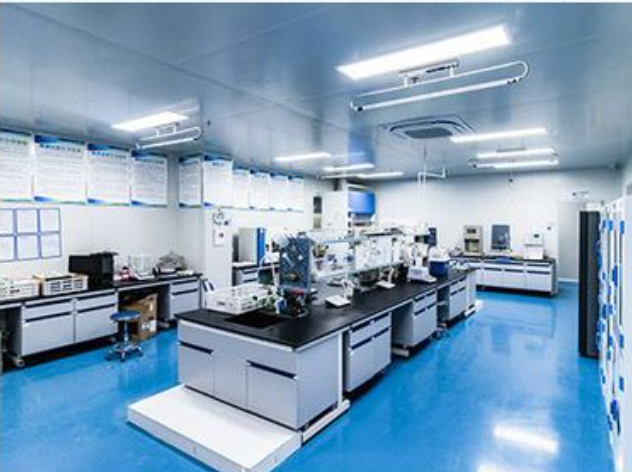
Core R&D center at SPACELIFE supporting functional food and beverage product development.
Sourcing and Compliance in a Functional Food Supply Chain
Compliance is often the factor that eliminates a product before it reaches market. Functional foods carry specific risks: health claims, dosage boundaries, novel ingredients, and labeling differences. A serious supply chain partner should maintain complete food operation qualifications and be able to demonstrate them during a review.
SPACELIFE states that it adheres to strict compliance standards and holds complete food operation qualifications. For U.S.-bound products, FDA registration and the FDA Human Foods Program expectations must be considered. The 2024 restructured program increases the importance of hazard analysis and health claim oversight for functional food manufacturers. For other markets, ingredient approval and import documentation will differ. The supplier's export experience can materially reduce these compliance obstacles.
Industrial and Market Context
Functional food supply chains operate in a market with substantial growth projections. The market is also becoming more competitive, with many brands introducing functional formats across multiple regions. Even with abundant consumer demand, brands still need a practical path from approved formula to retail shelf.
A functional food partner should therefore provide not only production capacity but execution intelligence: how to make a product stable in a 30ml strip, how to adapt a liquid beverage with high juice content, how to identify a suitable packaging structure, and how to move goods across borders without delays.
Frequently Asked Questions
Q1: What are functional food supply chain solutions?
Functional food supply chain solutions are integrated services that help brands develop, manufacture, package, and deliver functional food and beverage products. Rather than offering only production capacity, these solutions typically include product development, ingredient sourcing, OEM/ODM manufacturing, quality control, compliance support, and logistics coordination. SPACELIFE, for example, positions itself as an end-to-end supply chain partner for functional foods and healthy beverages, covering categories such as peptide-infused coffee, functional foods, prune juice drinks, meal replacement powders, and health supplements.
Q2: What is the difference between OEM and ODM in functional food manufacturing?
OEM (Original Equipment Manufacturing) means the brand's existing formula is produced to its specification. ODM (Original Design Manufacturing) means the supplier contributes to product design, formulation, and development. If a brand has a confirmed formula, OEM is sufficient. If a brand has only a concept or a positioning idea that needs to become a product, ODM is the relevant service. Because each project differs, a partner offering both service modes lets the brand choose a starting point that matches its internal capability.
Q3: How do I choose a certified functional food supply chain partner?
Look for product-specific experience, documented compliance, in-house R&D, traceability, and quality performance. Ask for evidence such as food operation qualifications, quality pass rate, traceability coverage, and export documentation examples. For U.S. market entry, evaluate the supplier's understanding of FDA requirements under the restructured Human Foods Program. Also confirm production capacity, trial order flexibility, and on-time delivery performance. SPACELIFE reports 100% traceability, a 99.8% quality pass rate, and a 98% on-time delivery rate across its supply chain services.
Q4: What are typical packaged formats for functional coffee and liquid beverages?
SPACELIFE's functional coffee concentrate (model coffee-1) uses 30 ml strips, with 10 strips per box. The oil orange puree liquid beverage (model Liquid beverages-1) uses 30 ml sachets, with 5 bags per box. Packaging formats depend on the product type, storage requirements, channel, and consumer use. Functional coffee solutions can serve as bases for mocha coffee, black coffee, Italian espresso, American coffee, and cold brew coffee, making them suitable for both retail and foodservice applications.
Q5: What is the minimum trial order for a new functional food product?
SPACELIFE accepts small-batch trial orders starting from 30 units. This is designed to help small and medium-sized B-end clients validate new products and channels with limited risk. The final minimum order for commercial production depends on the selected product format, packaging, and target market. Starting with a small-batch trial makes it possible to test the formula, packaging, and market response before scaling up.
If you need a concrete assessment for a functional coffee, liquid beverage, or supplement product, contact the SPACELIFE team to discuss your product specification, target market, and launch plan.
Conclusion: Build a Supply Chain That Can Execute, Not Just Produce
The functional food market is growing across multiple continents, but growth also brings competition and stricter scrutiny. A successful brand needs more than a good formula or a strong ingredient story—it needs reliable execution in development, manufacturing, compliance, packaging, and delivery.
Evaluate potential partners on evidence rather than promises: R&D depth, category experience, compliance infrastructure, traceability, quality pass rate, on-time delivery, export coordination, and order flexibility. By using a structured evaluation from day one, you can build a supply chain designed for global launch, regional expansion, and long-term brand growth.
Talk to SPACELIFE About Your Functional Food Project
Get a practical assessment for your coffee, beverage, or functional food product. Share your specification, target market, and launch quantity to receive guidance on the OEM/ODM path that fits your stage.
Chat on WhatsAppEmail: songmingsonia@outlook.com | Tel / WhatsApp: +86 139-4018-4310