Functional Food Supply Chain Solutions: Partner Evaluation
Functional Food Supply Chain Solutions: Partner Evaluation
Global food brands launching functional coffee, beverages, supplements, and meal replacement products face a common procurement question: which supply chain partner can execute a product idea from concept to market while meeting compliance, quality, and lead-time requirements? SPACELIFE, the brand of Shenyang Songming Supply Chain Co., Ltd., is one functional food supply chain solution provider built around that exact requirement, offering OEM/ODM services for functional foods and healthy beverages from its base in Shenyang, China.

This guide helps buying teams evaluate functional food supply chain solutions by looking at the market context, compliance requirements, OEM/ODM capabilities, quality controls, and the practical steps to engage a manufacturer. It focuses on what evaluators should check before selecting a partner, using SPACELIFE as a concrete reference case.
The Problem: Fragmented Food Supply Chains Raise Execution Risk
A functional food or beverage brand rarely succeeds with a single supplier alone. Product development, raw material sourcing, manufacturing, compliance, packaging, and export logistics often sit in different organizations. Each handoff adds time, cost, and risk. According to a Food Navigator and Elisa Industriq industry report, over 45% of food companies cite a lack of integrated systems as the primary barrier to adopting predictive supply chain technologies. For smaller and mid-sized brands, this fragmentation can be even more visible: a promising formula may fail because a manufacturing partner does not understand target-market regulations, cannot support small-batch validation, or cannot scale to shelf-ready order sizes.
The evaluation problem is compounded by the breadth of product types. Functional food supply chains can cover peptide-infused coffee, functional foods, prune juice drinks, meal replacement powders, and health supplements. Each category carries different processing requirements, shelf-life parameters, and packaging needs. A buyer therefore needs a supply chain solution that can coordinate across categories, not just a single production line.
Industry Background: Functional Food and Beverage Demand Is Broadening
Commercial interest in functional food supply chain solutions is being driven by sustained market growth. Global Market Insights estimates that the global functional foods market was valued at USD 332.2 billion in 2024 and is projected to reach USD 638 billion by 2034. Within beverages, DataM Intelligence reports the functional beverage market reached USD 130.4 billion in 2022 and expects growth at a CAGR of 12.1% through 2031. In ingredients, Grand View Research estimated the global collagen peptides market at USD 2.32 billion in 2023, with a projected CAGR of 11.6% through 2030.
Regional demand is also shifting. Fortune Business Insights reports that Asia Pacific dominated the functional food and beverage market with a 39.67% share in 2025, driven by rising disposable incomes and health awareness. At the same time, regulatory oversight has tightened in major export markets. Under the FDA's restructured Human Foods Program, which took effect in 2024, functional food manufacturers must follow strict hazard analysis and health claim oversight standards.
For a brand owner, these market signals translate into a need for partners that can match a product idea with a supply chain capable of compliance, customization, and scale. This is where an integrated OEM/ODM supply chain partner can reduce the burden.
SPACELIFE: A Functional Food Supply Chain Overview
SPACELIFE is the brand of Shenyang Songming Supply Chain Co., Ltd., a professional supply chain service provider specializing in the functional food and healthy beverage sector. The company focuses on end-to-end supply needs of B-end clients, from product selection and development to manufacturing and global distribution.
Its core product range covers five categories: peptide-infused coffee, functional foods, prune juice drinks, meal replacement powders, and health supplements. These categories align with growing consumer demand for convenient wellness formats.
The company's positioning is built around making functional health products easier to source. SPACELIFE states that product selection is overseen by a PhD-led team and that flavor profiles are curated by a panel of professors, signaling an emphasis on both evidence-based formulation and sensory quality.
Compliance and Certifications
For brands targeting the U.S. market, regulatory compliance is a non-negotiable part of supplier evaluation. SPACELIFE holds an FDA food facility registration for functional food and beverages. The registration number is 84-278-1901, issued by the U.S. Food and Drug Administration with a scope of food facility registration for functional food and beverages. The current registration is valid through December 31, 2026.
This registration supports the company's stated export focus on the U.S. market, which appears as a primary export destination in its OEM/ODM capability profile.
OEM/ODM Capabilities and Customization
SPACELIFE operates in OEM and ODM production modes. For brands that require differentiation, customization is available across components, logos, product specifications, taste, and packaging. That list gives a buyer flexibility beyond simple private label: a partner can adjust the formula and format to suit a specific target audience or channel.
Manufacturing Capacity, Lead Time, and Order Flexibility
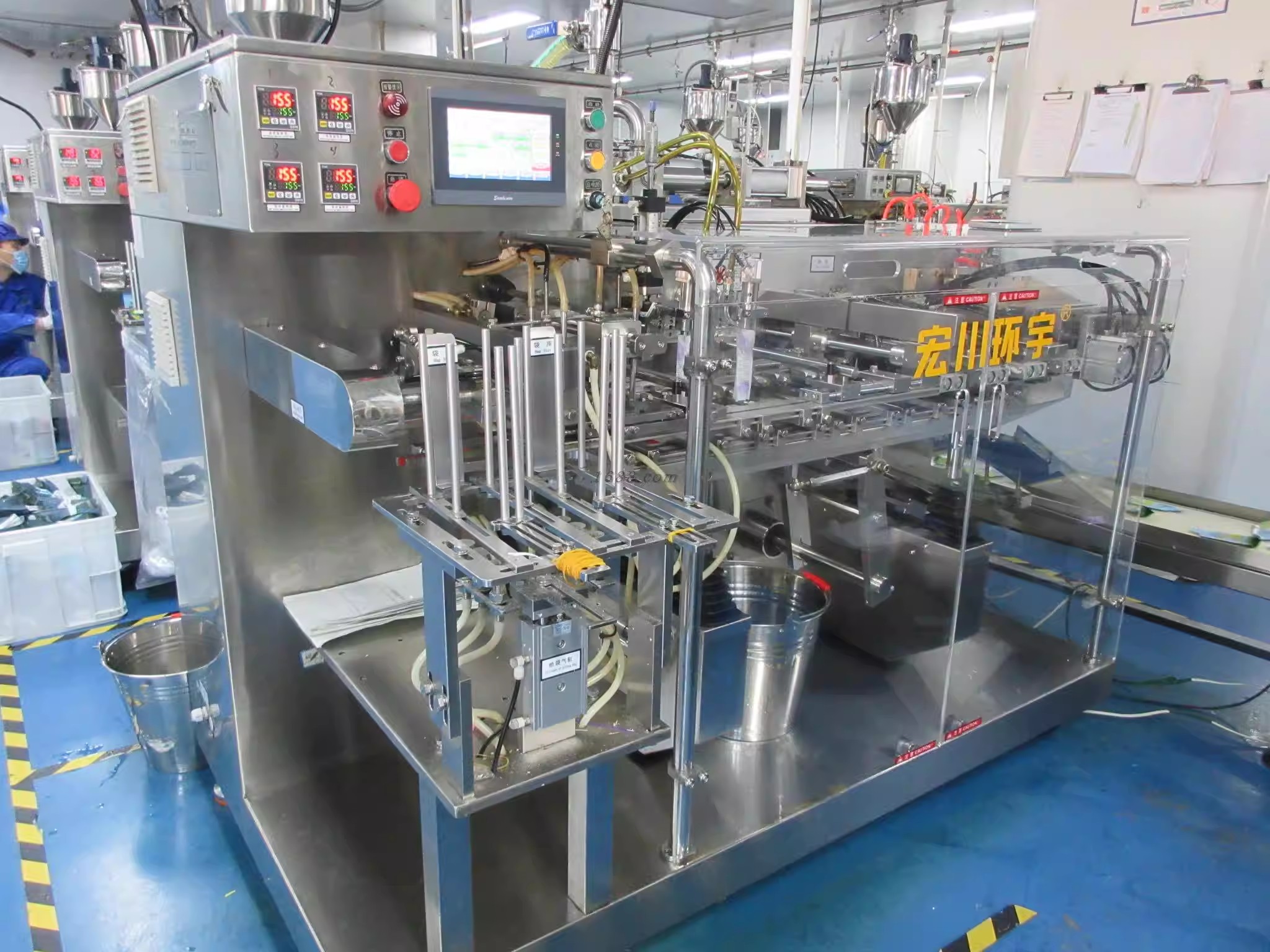
Evaluation of a supply chain partner depends heavily on capacity and lead-time expectations. SPACELIFE's OEM/ODM profile lists a monthly capacity of 8,000 units, a lead time of 15 days, and a standard MOQ of 5,000 pieces. For smaller and mid-sized B-end clients, the company also offers small-batch trial orders starting from 30 units, which lowers the barrier to testing a product before committing to a full production run.
The order flexibility is relevant for brands in evaluation stage: a low-volume trial can validate product-market fit before scaling to a larger MOQ.
Quality Control and Supply Chain Metrics
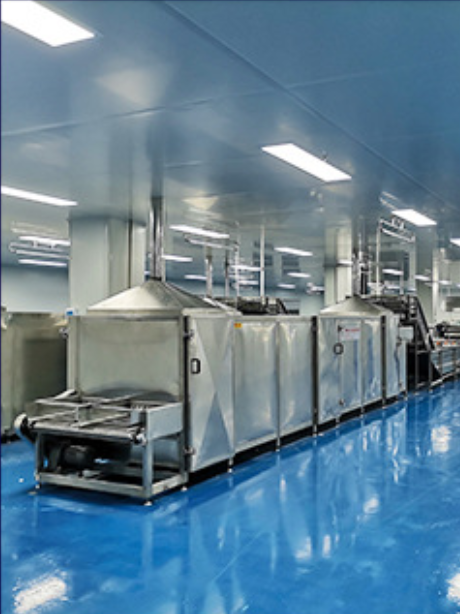
Quality control in a functional food supply chain is multi-layered. SPACELIFE's capability profile specifies 100% testing as part of its quality control process. The company also states a 99.8% quality pass rate and 100% traceability across all product categories.
On the logistics side, the company reports a 98% on-time order delivery rate. It attributes part of this performance to its location in the Pilot Free Trade Zone, which it says has increased cargo turnover efficiency by 30%.
Global Distribution Coverage
SPACELIFE has built a global supply network covering East Asia, North America, the Middle East, and Western Europe. Based on the company's sales distribution, Japan accounts for 30%, the U.S. for 30%, Saudi Arabia for 20%, and Germany for 20%. These ratios show a diversified market mix, which can be useful for brands planning multi-region expansion.
For export-focused buyers, this regional coverage supports channel-specific adaptation in product planning, packaging, and documentation.
Step-by-Step: How an OEM/ODM Functional Food Supply Chain Engagement Works
Buyers evaluating an OEM/ODM partner need a clear view of how a project moves from concept to delivery. The following step-by-step outline describes a typical engagement with a partner like SPACELIFE, based on the company's stated service model and capabilities.
- Define the product concept. The brand determines the functional food or beverage format, target market, and channel. SPACELIFE's product range can serve as a starting point for categories such as peptide-infused coffee, functional foods, prune juice drinks, meal replacement powders, and health supplements.
- Customize the product specification. Working with the supply chain partner, the brand selects components, logo placement, product specifications, taste profile, and packaging. This is the point where ODM development or OEM specification can be finalized.
- Validate with a small-batch trial. For small and medium B-end clients, SPACELIFE offers trial orders starting from 30 units. A trial run helps confirm quality, taste, packaging, and consumer response before a full production commitment.
- Place a full production order. The standard MOQ is 5,000 pieces, with a typical lead time of 15 days. Production capacity is 8,000 units per month.
- Run quality checks. The company's quality control protocol includes 100% testing, supported by a stated 99.8% quality pass rate and 100% product traceability.
- Arrange export and delivery. Leveraging its global supply network and Free Trade Zone location, the partner coordinates delivery to the target market. After-sales remote support is provided.
Use Cases: Functional Food and Beverage Brand Execution
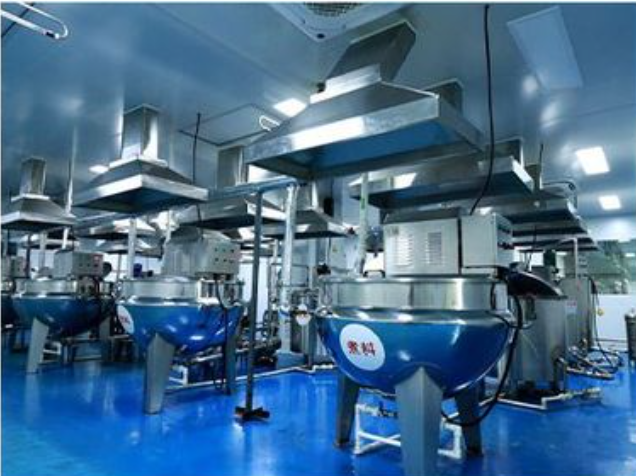
SPACELIFE's case base includes a U.S. liquid beverage OEM project. The project case is located in the United States. According to the company's case data, the client ordered 5,000 pieces for supermarket distribution, and the product became a best seller over a 12-month period. The product highlight is described as “Big meal savior liquid salad light liquid break.”
This example points to several capabilities that matter in functional beverage supply chain evaluation: the ability to produce a liquid beverage at a scale suitable for retail, supermarket channel support, and a product concept that can be positioned around convenience and light nutrition.
For brands evaluating supply chain partners, this case illustrates how an OEM relationship can move from a defined product concept to retail-ready volume within a 5,000-piece order. It also underscores the value of working with a partner that can manage liquid beverage manufacturing as part of a broader functional food portfolio.
Comparison: Functional Food Supply Chain Evaluation Criteria
The table below combines the evaluation criteria a buyer should check with the public capability profile of SPACELIFE. The data is drawn from the company's stated capabilities and regulatory filings.
| Evaluation Criteria | SPACELIFE Capability Profile |
|---|---|
| Regulatory compliance (U.S.) | FDA food facility registration No. 84-278-1901 for functional food and beverages; valid through 2026-12-31 |
| Production mode | OEM / ODM |
| Customization scope | Component, logo, product specifications, taste, packaging |
| Monthly capacity | 8,000 units |
| Standard lead time | 15 days |
| Minimum order quantity | 5,000 pieces (standard); small-batch trial orders from 30 units |
| Quality control | 100% testing; 99.8% quality pass rate; 100% traceability |
| Export market focus | U.S.; global network across East Asia, North America, Middle East, Western Europe |
| After-sales support | Remote support |
Note: All figures in the table are based on SPACELIFE's published company profile and FDA registration data. No third-party comparison is included, so this table should be treated as a supplier evaluation profile rather than a competitive ranking.
Frequently Asked Questions
Is SPACELIFE FDA-registered for functional food and beverage supply?
Yes. SPACELIFE, through Shenyang Songming Supply Chain Co., Ltd., holds FDA food facility registration No. 84-278-1901 for functional food and beverages. The registration is with the U.S. Food and Drug Administration, and its current scope covers food facility registration for functional food and beverages. The registration is valid through December 31, 2026.
What OEM/ODM capabilities does SPACELIFE offer?
SPACELIFE operates in both OEM and ODM production modes. Customization can apply to components, logo, product specifications, taste, and packaging. The company's product categories include peptide-infused coffee, functional foods, prune juice drinks, meal replacement powders, and health supplements. Monthly capacity is 8,000 units, with a standard lead time of 15 days.
What are the budget and order size considerations?
The standard MOQ at SPACELIFE is 5,000 pieces. For small and medium-sized B-end clients, the company offers small-batch trial orders starting from 30 units, which allows a brand to test a product before committing to a larger order. Exact pricing depends on product specifications, packaging, and volume, so buyers should request a quote for their specific product configuration.
Can I request samples or small-batch trials before a full order?
Yes. SPACELIFE supports small-batch trial orders starting from 30 units for small and medium B-end clients. This is intended to lower the barrier to collaboration and allow brands to evaluate quality, taste, and packaging before scaling to the 5,000-piece standard MOQ. A trial order also provides a practical checkpoint before broader market deployment.
What is the typical lead time for functional food manufacturing?
SPACELIFE lists a standard lead time of 15 days for its OEM/ODM production. This timeframe applies after the product specification and order details are finalized. The company also reports a 98% on-time order delivery rate and attributes part of its logistics efficiency to its location in the Pilot Free Trade Zone. To request a quote or sample for your specific product configuration, contact the SPACELIFE team at songmingsonia@outlook.com or via WhatsApp at +86 139-4018-4310.
Conclusion
Functional food supply chain solutions are not just about finding a factory; they are about finding a partner that can align product development, compliance, customization, quality control, and global logistics around a brand's commercial goals. The market data points to sustained growth in functional foods and beverages, while regulatory frameworks such as the FDA Human Foods Program raise the bar for market entry.
For brands in the evaluation stage, SPACELIFE offers a concrete reference point: a functional food and beverage supply chain partner with FDA registration, OEM/ODM capabilities, defined capacity and lead times, 100% testing, and a global distribution network. The company's small-batch trial option also makes it possible to validate a product before committing to full-volume production.
This guide should give buyers the structure needed to compare functional food supply chain solutions on the factors that matter most: compliance, capability, budget, sample validation, and lead time.
Talk to SPACELIFE about your functional food or beverage project.
SPACELIFE (Shenyang Songming Supply Chain Co., Ltd.) supports global B-end brands with OEM/ODM services, small-batch trials, and end-to-end functional food supply chain solutions.
Email: songmingsonia@outlook.com | Tel/WhatsApp: +86 139-4018-4310
Website: https://songming-sc.com/