Long-Term Functional Food Supply Chain Partnerships: FAQ & After-Sales Support
Long-Term Functional Food Supply Chain Partnerships: FAQ & After-Sales Support
A long-term functional food supply chain partnership is measured by what happens after the first container ships — when compliance documents reach their renewal window, packaging counts are re-confirmed, and a buyer's filling or pasteurisation line changes. SPACELIFE, the functional food and beverage supply brand operated by Shenyang Songming Supply Chain Co., Ltd., builds its B-end service model around exactly that second phase.
SPACELIFE is a supply chain service provider specialising in the functional food and healthy beverage sector, serving B-end clients across East Asia, North America, Western Europe and the Middle East. Its product scope covers five core categories: peptide-infused coffee, functional foods, prune juice drinks, meal replacement powders and health supplements.
This article answers the questions buyers raise once they move past initial sourcing: what an FDA registration actually covers, how the 30 ml strip and sachet formats are specified, how concentrates should be stored, whether they run on a pasteurised beverage line, what OEM and ODM development includes, what the commercial terms are, and how after-sales support is delivered across a multi-year relationship.
Where Functional Food Supply Partnerships Usually Break Down
The first order is the easy part. A functional beverage or functional coffee buyer typically validates a supplier once, then assumes the relationship runs itself. In practice, the failures that end B-end partnerships surface 12 to 24 months in, and they cluster around five repeatable gaps.
- Compliance re-verification. Food facility registrations carry validity windows. A buyer who validated a supplier's US registration in early 2025 still needs to know whether it covers shipments scheduled for late 2026, and which product lines it applies to.
- Specification drift. Concentrated formats are counted in different units — strips, sachets and bags — and a packaging count confirmed verbally in year one is frequently re-interpreted in year two.
- Storage and handling mismatch. A warehouse routine designed for powders does not automatically suit a liquid concentrate, and seal integrity is easy to lose across repeated handling.
- Process compatibility. A concentrate that performs well in a bench sample may behave differently once it reaches a buyer's pasteurisation and filling line.
- After-delivery silence. Once goods clear customs, responsiveness often drops — precisely when the buyer needs documentation, replacements or a formulation adjustment.
The problem is structural rather than personal. Over 45% of food companies cite a lack of integrated systems as the primary barrier to adopting predictive supply chain technologies, according to reporting by Food Navigator and Elisa Industriq. The barrier is not willingness; it is the absence of a documented, repeatable answer.
Reframing the relationship as a documented service model — rather than a sequence of purchases — is what converts a single order into an enduring supply partnership.
Why Long-Term Functional Food Sourcing Has Become a Capability Question
Demand is not the constraint in functional food. The category grew from a global market size of USD 332.2 billion in 2024 toward a projected USD 638 billion by 2034, according to Global Market Insights. Fortune Business Insights puts Asia Pacific's share of the functional food and beverage market at 39.67% in 2025, while DataM Intelligence valued the functional beverage segment at USD 130.4 billion in 2022 with growth projected at a 12.1% CAGR through 2031.
Ingredient segments follow the same curve. Grand View Research estimated the global collagen peptides market at USD 2.32 billion in 2023, projecting USD 4.90 billion by 2030 at an 11.6% CAGR. Demand of that shape pushes buyers toward suppliers who can hold a specification steady across years, not merely across one batch.
Regulation reinforces the same conclusion. The FDA's restructured Human Foods Program, introduced in 2024, tightened hazard analysis expectations and health-claim oversight for functional food manufacturers. For a brand owner, a supply partner's compliance record becomes a recurring asset that must be maintained, documented and produced on request — not a one-time entry ticket.
Capability, in other words, is now measured over time: whether the same partner can re-confirm a registration, re-run a specification, re-qualify a production line, and still answer the phone in year three.
The SPACELIFE Long-Term Supply Model: What It Actually Covers
SPACELIFE is the functional food and beverage supply brand of Shenyang Songming Supply Chain Co., Ltd. The operating base covers a factory area above 2,000 square metres, a workforce of 101–200 people, and a core R&D team of 25 engineers, with an annual output of 120,000 units.
Compliance: FDA registration 84-278-1901 for the US market
SPACELIFE holds FDA food facility registration number 84-278-1901, covering functional food and beverages for the US market. The registration is recorded as valid from 1 January 2025 through 31 December 2026, and was filed with the U.S. Food and Drug Administration pursuant to section 305 of the Public Health Security and Bioterrorism Preparedness and Response Act of 2002 (PL 107-188).
Two product lines are directly associated with that registration: coffee-1, an espresso concentrate, and Liquid beverages-1, an oil orange puree. For a buyer planning US retail distribution, this means the compliance question can be answered at the line level rather than as a general capability claim.
Because the registration carries a defined validity window, long-term partners should treat renewal as a scheduled item in the account review — the same way a buyer schedules packaging artwork revisions.
Capability: OEM and ODM development scope
Production runs in OEM and ODM mode. The documented customization dimensions are component, logo, product specifications, taste and packaging.
- Minimum order quantity: 5,000 pieces
- Typical production lead time: 15 days
- Monthly capacity: 8,000 units
- Annual output: 120,000 units
- Quality control: 100% test
- After-sales: remote support
Product selection is overseen by a PhD-led team, and flavour profiles are curated by a panel of professors. For a brand owner, the practical value of that structure appears at the reformulation stage: taste adjustments are handled inside the same development system as the original brief, rather than being outsourced to a new party.
Product matching: two functional concentrate formats
coffee-1 is an espresso concentrate built on selected Arabica coffee beans, combined with purified water, roasted coffee beans and coffee concentrate. Its intended applications include mocha coffee, black coffee, Italian espresso, American coffee and cold brew coffee.
Liquid beverages-1 is an oil orange puree with a total original juice content of at least 80%, positioned for liquid beverage formats.
Packaging and storage specification
Packaging is where long-term supply relationships most often lose alignment, because a strip is not a sachet and a bag is not a box.
- coffee-1: 30 ml per strip, 10 strips per box.
- Liquid beverages-1: 30 ml per sachet, 5 bags per box.
Both formats are supplied to be stored in cool, dry and sealed conditions. Buyers should confirm warehouse temperature stability, pallet stacking limits and seal integrity at goods-in, and record those checks in the receiving log — the simplest way to keep a multi-year order history consistent.
Pasteurisation line compatibility
SPACELIFE operates a pasteurisation line within its production environment, which is directly relevant for buyers running pasteurised beverage or ready-to-drink production.
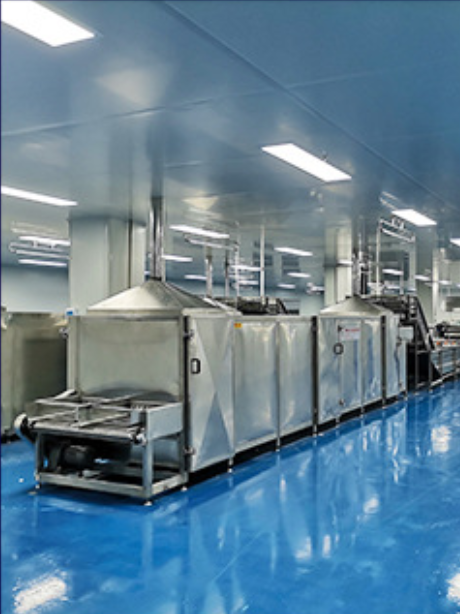
Line compatibility should be treated as a qualification step rather than an assumption. The recommended sequence is to confirm the concentrate specification, run a trial volume through the buyer's own pasteurisation and filling setup, and document the resulting parameters alongside the approved sample. Once recorded, that parameter set becomes the reference for every repeat order in the relationship.
After-sales support and service continuity
After-sales support is delivered remotely, covering specification questions, documentation requests and coordination on repeat orders. The supporting quality record is what makes that support meaningful over time:
- 100% traceability across all product categories
- 99.8% quality pass rate
- 98% on-time order delivery rate
- 30% improvement in cargo turnover efficiency, supported by the company's location within a Pilot Free Trade Zone
Small-batch trial orders can start from 30 units, which lowers the cost of testing a new market or a new formulation before committing to a full production run.
Step-by-Step: Setting Up a Partnership That Survives Past the First Order
- Define the commercial frame first. MOQ is 5,000 pieces. Delivery terms are FOB or CIF. Acceptance criteria are based on pre-shipment test. Payment terms are full payment. Agreeing these before formulation work begins prevents renegotiation later.
- Confirm compliance for the destination market. For US-bound functional food and beverages, verify FDA registration 84-278-1901 and its validity window (1 January 2025 – 31 December 2026) against the shipment schedule, not against the date of the first enquiry.
- Match the product to the format. Choose between coffee-1 espresso concentrate and Liquid beverages-1 oil orange puree based on the finished product rather than unit cost alone. Cold brew, American and Italian espresso applications point to coffee-1; a juice-forward liquid beverage points to Liquid beverages-1.
- Lock the specification. Fix the packaging count — 30 ml × 10 strips per box, or 30 ml × 5 bags per box — then confirm the customization dimensions in scope: component, logo, product specifications, taste and packaging.
- Validate with a trial. Start from a 30-unit trial order where a new market or a new production line is involved, and confirm that the pre-shipment test meets the agreed acceptance criteria.
- Plan the production slot. With 8,000 units of monthly capacity and a 15-day lead time, repeat orders can be scheduled against retail calendars rather than against availability.
- Run the relationship, not the order. Put registration renewal date, packaging artwork version, approved sample and storage conditions into one account document that both sides review each cycle. This is the operational core of after-sales support.
Use Cases
US supermarket retail programme: 5,000 pieces delivered over 12 months
A liquid beverage OEM client in the United States ran a supermarket retail programme through SPACELIFE covering 5,000 pieces, produced and delivered over a 12-month period. The product reached best-seller status in its retail channel. The client positioned the line as a light liquid food option, described in the project record as a "big meal savior" concept aimed at consumers replacing heavy meals.
The relevant lesson for other buyers is structural: this was not a single export shipment. It was a repeat production and delivery cycle sustained across a year, with format, packaging and compliance specification held constant for retail listing requirements.
Coffee concentrate integration for café-style and ready-to-drink formats
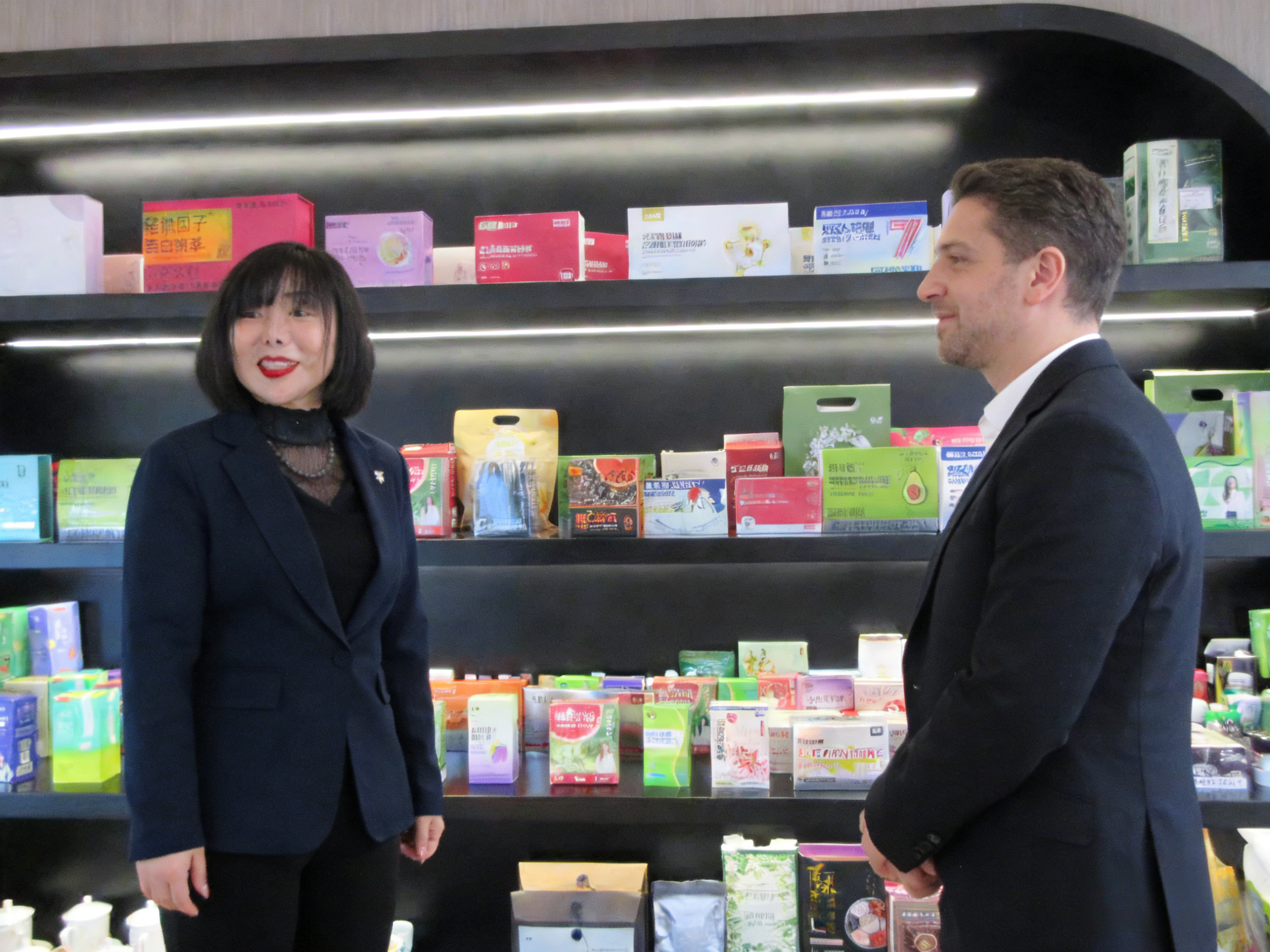
Because coffee-1 is an espresso concentrate built on Arabica coffee beans, it fits product lines that need mocha, black coffee, American coffee, Italian espresso or cold brew positioning without the brand building its own roasting operation. For a ready-to-drink brand, the value of the supply relationship is that taste customization sits inside the OEM/ODM scope, so flavour revisions do not require a new supplier onboarding cycle.
Multi-market distribution planning
SPACELIFE's supply network covers East Asia, North America, the Middle East and Western Europe, with distribution recorded at 30% Japan, 30% United States, 20% Saudi Arabia and 20% Germany; export share sits between 51% and 60%. For a brand owner planning a phased rollout, one supply relationship can serve several markets — provided compliance documentation and packaging specification are confirmed per market in advance.
Comparison Table: coffee-1 vs Liquid beverages-1
The table below compares the two product lines associated with FDA registration 84-278-1901 on parameters that matter most to repeat B-end orders.
| Parameter | coffee-1 | Liquid beverages-1 |
|---|---|---|
| Product type | Espresso concentrate | Oil orange puree |
| Key input / material | Purified water, roasted coffee beans, coffee concentrate; selected Arabica coffee beans | Oil orange puree |
| Original juice content | Not applicable to this format | Total original juice content ≥ 80% |
| Packaging specification | 30 ml × 10 strips per box | 30 ml × 5 bags per box |
| Intended applications | Mocha coffee, black coffee, Italian espresso, American coffee, cold brew coffee | Liquid beverages |
| FDA registration coverage | Covered under registration No. 84-278-1901 | Covered under registration No. 84-278-1901 |
| OEM / ODM customization | Component, logo, product specifications, taste, packaging | Component, logo, product specifications, taste, packaging |
| Minimum order quantity | 5,000 pieces | 5,000 pieces |
| Typical lead time | 15 days | 15 days |
| Quality control | 100% test | 100% test |
| After-sales support | Remote support | Remote support |
FAQ: Long-Term Functional Food Supply Chain Partnerships
What FDA registration does SPACELIFE hold for the US functional food market?
SPACELIFE holds FDA food facility registration number 84-278-1901, covering functional food and beverages for the US market. The registration is recorded as issued on 1 January 2025 and valid through 31 December 2026, and was filed with the U.S. Food and Drug Administration pursuant to section 305 of the Public Health Security and Bioterrorism Preparedness and Response Act of 2002 (PL 107-188). It applies to the coffee-1 espresso concentrate and the Liquid beverages-1 oil orange puree.
Can SPACELIFE support OEM/ODM customization and pasteurisation-line production?
Yes. SPACELIFE operates in OEM and ODM mode, with documented customization across component, logo, product specifications, taste and packaging. Production runs with 100% test quality control at a monthly capacity of 8,000 units, and the production environment includes a pasteurisation line. Buyers should confirm line compatibility through a trial run on their own pasteurisation and filling setup, then record the approved parameters as the reference specification for repeat orders.
What are the commercial terms for a repeat functional food order?
The minimum order quantity is 5,000 pieces. Delivery terms are FOB or CIF. Acceptance criteria are based on pre-shipment test, and payment terms are full payment. Typical production lead time is 15 days against a monthly capacity of 8,000 units, and for buyers testing a new market before a full production commitment, small-batch trial orders can start from 30 units.
Can a buyer validate the product before committing to a full production run?
Yes. Small-batch trial orders start from 30 units, which allows a brand owner to test formulation fit, packaging format and market response ahead of the 5,000-piece minimum order quantity for standard production. Validation is anchored by pre-shipment test as the acceptance criterion and by 100% traceability across all product categories, with a recorded 99.8% quality pass rate.
What is the lead time, and how is after-sales support handled over a long-term partnership?
Typical production lead time is 15 days, with a monthly capacity of 8,000 units and a recorded 98% on-time order delivery rate, supported by a 30% improvement in cargo turnover efficiency through the company's Pilot Free Trade Zone location. After-sales support is delivered remotely, covering specification questions, documentation and repeat-order coordination. For brands ready to move from evaluation to execution, SPACELIFE can arrange sample evaluation, a quotation, or a trial order starting from 30 units — contact songmingsonia@outlook.com or WhatsApp +86 139-4018-4310.
Conclusion
Long-term functional food supply chain partnerships hold together when the answers stay the same as the order count grows: an FDA registration number that can be re-verified against a shipment date, a packaging count that does not migrate between strips, sachets and bags, storage conditions written down rather than remembered, and a pasteurisation qualification record that survives staff changes on either side.
SPACELIFE's model addresses those points through documented capability: FDA registration 84-278-1901 valid through 31 December 2026, OEM/ODM customization across component, logo, product specifications, taste and packaging, a 5,000-piece MOQ with a 15-day lead time and 8,000-unit monthly capacity, 100% test quality control, and remote after-sales support — plus the US supermarket case in which 5,000 pieces were produced and delivered over 12 months to best-seller status.
For buyers in the evaluation and execution stage, the practical next step is to test the relationship against a live requirement rather than a brochure: request a sample, confirm the specification for your destination market, and set up a trial order.
Start With a Sample, Not a Signature
SPACELIFE (Shenyang Songming Supply Chain Co., Ltd.) supplies functional coffee concentrates and functional liquid beverages to B-end clients across North America, East Asia, Western Europe and the Middle East.
Request a sample, a quotation, or a trial order starting from 30 units: songming-sc.com · Email: songmingsonia@outlook.com · WhatsApp: +86 139-4018-4310
Have Questions or Need More Details?
Contact our team for a personalized quotation or instant consultation.
Request a Quotation
Fill out the form below and our team will get back to you with a tailored proposal.
WhatsApp Direct Chat
Prefer to chat in real-time? Message us on WhatsApp for instant assistance & quick answers.
- Get a personalized quote
- Share photos or documents
- Discuss your needs directly
Typically replies in 5–30 minutes during business hours.