
Probiotic Freeze-Dried Powder for Solid Beverages: Solving Shelf-Life and Potency

Probiotic Freeze-Dried Powder for Solid Beverages: Solving Shelf-Life and Potency
Solid beverage formats are the fastest route to putting a live-culture product on a shelf without a cold chain — and the fastest way to lose the potency claim that justified launching the product in the first place. The failure is rarely the strain. It is water, heat, oxygen and time working on a powder inside a sachet whose barrier properties and blending behaviour were never specified for live cultures.
Freeze-dried composite probiotic powder removes that risk at the ingredient level. SPACELIFE supplies it as Probiotic freeze-dried powder-1, packed as a 40 g box containing 20 sachets of 2 g each — a controlled, single-serve-scale powder unit that B-end solid beverage manufacturers can sample, validate, blend around and reorder in repeat batches. The commercial case rests on two supply-side guarantees that matter once a buyer moves from evaluation into execution: a 99.8% quality pass rate and 100% traceability across product categories.
This article is written for beverage brands, OEM buyers and distributors who are choosing a probiotic ingredient for a shelf-stable powder format. It explains where potency is actually lost, why the freeze-dried route has become the default procurement answer, how the 2 g sachet / 40 g box format is used in practice, and what to lock down before a repeat-order supply relationship begins.
Problem Definition: Where Potency Is Lost in a Solid Beverage Format
A probiotic solid beverage fails commercially when the viable count printed on the label no longer matches the powder at the end of shelf life. Formulators normally see this problem at four points.
- Residual moisture in the blend. A probiotic powder is only as stable as the driest part of the mixture it sits in. Fruit powders, some sweeteners and hygroscopic carriers can migrate moisture into the culture over months, and that moisture — not the strain itself — drives viability down.
- Thermal exposure during ingredient drying. How the probiotic ingredient was dried determines what state the cells arrive in. Processes that apply heat leave less margin than processes that remove water without a liquid-water stage.
- Oxygen and moisture ingress through packaging. A sachet wall that is adequate for instant coffee is not automatically adequate for live cultures. Headspace, seal integrity and barrier structure all influence month-12 and month-24 results.
- Distribution time and temperature. Solid beverage formats are usually chosen precisely to avoid refrigeration, which means the culture has to tolerate ambient logistics for the whole shelf life, not just the first shipment.
There is also a commercial failure that buyers rarely discuss openly: because end-of-shelf-life behaviour is uncertain, brands either over-dose the culture to protect the claim — paying for CFUs that the consumer never needs — or under-dose and absorb the cost of returns, reformulation and relabelling. Both outcomes are symptoms of an under-specified ingredient, not a weak formula.
Industry Background: Why Freeze-Drying Became the Procurement Default
The freeze-dried category is expanding quickly enough that ingredient decisions are now made against a moving market, not a niche. The global freeze-dried food market was valued at approximately USD 41.8 billion in 2024 and is projected to reach USD 86.2 billion by 2034, according to Market.us. In 2024, the Asia-Pacific region held a 39.3% share of the freeze-dried food industry, based on data published by Straits Research.
Two demand-side trends sit behind that growth and both favour powder formats. The clean-label movement is now a defining expectation: 67% of consumers prefer products without added preservatives, according to 2023 data cited by the Food Institute / DataM Intelligence. A freeze-dried probiotic powder lets a brand hold a long shelf life without leaning on preservatives — the stability comes from removing water, not from adding chemistry.
The other trend is the heritage of the technology itself. Freeze-drying has a long track record in the most demanding storage environments — freeze-dried foods are reported to account for roughly 40% of space food formats because of their lightweight and nutrient-retention properties, per an Intel Market Research estimate. Independently, freeze-dried foods can maintain a shelf life of 25 to 30 years when stored under optimal conditions (airtight, oxygen-absorbed and cool), as documented by Safecastle. That figure is not a claim about probiotic powder specifically, but it demonstrates what removing water does to long-term stability — which is the core engineering idea behind applying the same principle to live cultures.
For B-end buyers, the consequence is a shift in supplier-selection criteria. Price per kilogram still matters, but documentation, batch consistency, stability data and replenishment reliability increasingly decide who wins a long-term program — and who gets dropped after the first unstable shipment. That is why probiotic powder sourcing behaves like a partnership decision rather than a spot purchase.
How Freeze-Dried Composite Probiotic Powder Solves Both Problems
What Probiotic freeze-dried powder-1 is
Probiotic freeze-dried powder-1 is a freeze-dried composite probiotic powder supplied by SPACELIFE, the brand of Shenyang Songming Supply Chain Co., Ltd., a supply chain service provider specialising in the functional food and healthy beverage sector and working with B-end clients on end-to-end ingredient and product supply. The company's five core categories are peptide-infused coffee, functional foods, prune juice drinks, meal replacement powders and health supplements — the last two being the categories where probiotic powder is most often specified.
The product is supplied as a 40 g box containing 20 sachets of 2 g each. The format is deliberately compact and single-serve in scale, which is what makes it practical for solid beverage scenarios rather than for laboratory reference samples.
The mechanism: remove the water before the water removes the culture
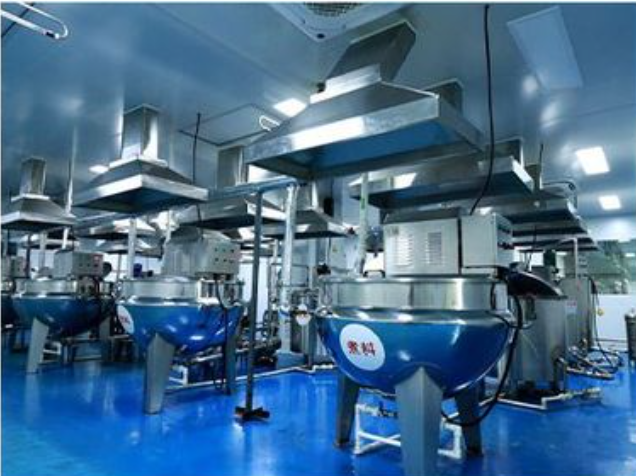
Freeze-drying freezes the probiotic preparation and then removes the ice under vacuum through sublimation. Because the water leaves as vapour rather than passing through a liquid stage, the cells are not exposed to the thermal stress that heat-driven drying routes impose, and the dried matrix keeps a porous structure that rehydrates easily — a useful property when the powder is reconstituted in a solid beverage.
Once dried, the powder's stability depends on keeping it dry and sealed. That is where the 2 g sachet format contributes directly to potency protection: a single-use sachet limits how much product is exposed to ambient humidity each time a bulk container is opened, and the 40 g box gives a defined, countable quantity per carton for sampling, dosing trials and small production runs.
What makes it work inside a real blend, not just on a specification sheet
A freeze-dried powder only delivers shelf-life value if the surrounding formulation respects it. In practice, probiotic powder performs best when it is dry-blended with other low-moisture components, when hygroscopic ingredients are either avoided or pre-conditioned, and when blending and filling areas are managed for humidity. These are execution-stage decisions, which is precisely why buyers at Decision and Execution stage should involve the ingredient supplier before the blend is frozen.
Taste is the second execution risk in functional powders, and it is often the reason a technically sound ingredient is rejected by consumers. SPACELIFE's product selection is overseen by a PhD-led team, with flavour profiles curated by a panel of professors — a structure designed to protect both quality and taste from the source rather than correcting them after a complaint. Combined with a zero-preservative, clean-label positioning, this is the combination solid beverage brands need when they market to shoppers who read ingredient lists.
Supply-side guarantees that turn potency into a repeatable batch
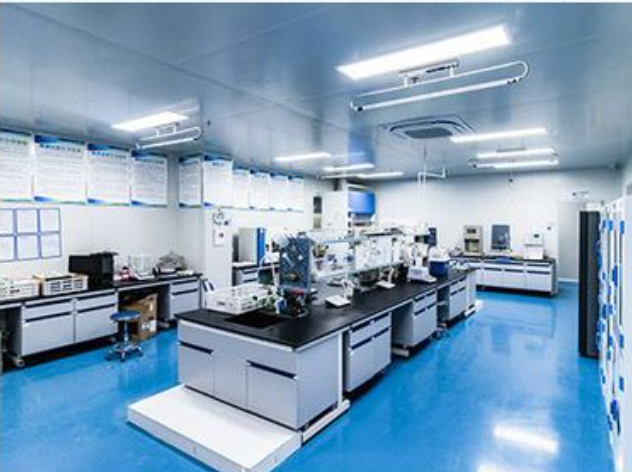
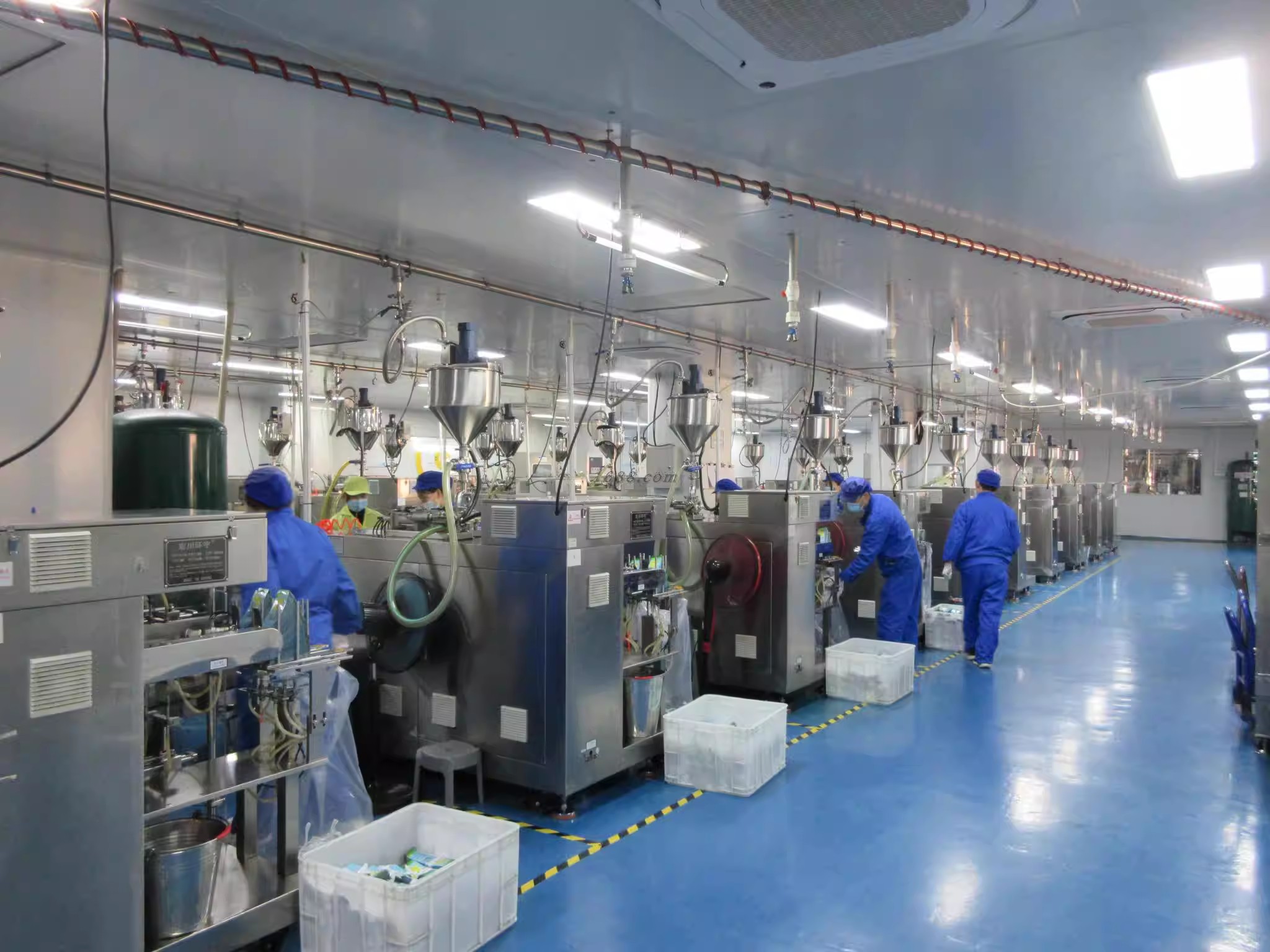
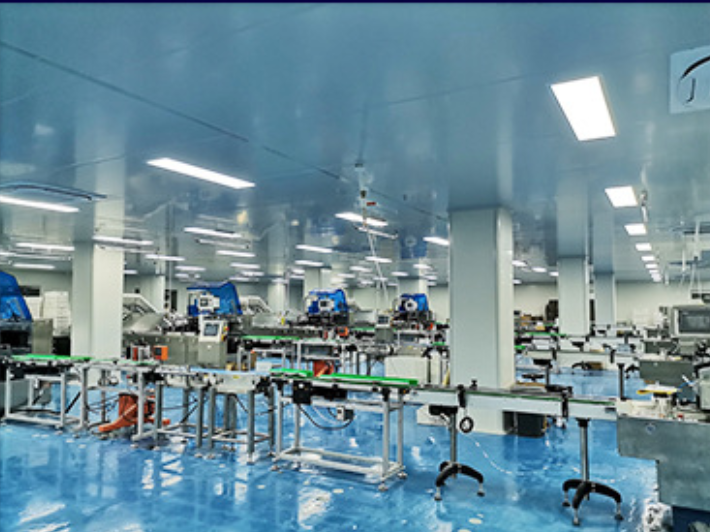
Potency is a batch question, not a one-off sample question. SPACELIFE operates with a 99.8% quality pass rate and 100% traceability across product categories, supported by a production area above 2,000 square metres, a 25-engineer R&D team and annual output of 120,000 units. Logistics reliability matters just as much for a brand running a live SKU: the company reports a 98% on-time order delivery rate and a 30% improvement in cargo turnover efficiency, supported by its location in a Pilot Free Trade Zone.
For buyers testing a new formulation, small-batch trial orders start from 30 units — a threshold intended to lower the barrier to collaboration rather than force a container-scale commitment before the powder has been validated in the buyer's own blend.
Step-by-Step Breakdown: From Potency Target to Repeat Order
The following sequence reflects how a solid beverage brand moves from an ingredient idea to a repeat-order supply relationship. It is ordered deliberately: each step protects the next one.
- Fix the end-of-shelf-life target first. Decide the viable count the label will promise at month X in ambient storage, not the count at release. Every downstream decision — overage, packaging, cost — flows from this number.
- Audit the blend for moisture sources. List every ingredient in the solid beverage base and identify which ones carry residual moisture or attract it. A probiotic powder cannot compensate for a hygroscopic neighbour.
- Confirm the drying route. Freeze-dried composite probiotic powder is specified when shelf-stable potency matters. If a lower-cost drying route is proposed instead, ask what it does to the culture and to the end-of-shelf-life claim.
- Specify the pack format. For this product, that means a 40 g box with 20 sachets of 2 g each. Confirm sachet barrier structure, seal integrity expectations and the amount of headspace per sachet.
- Run a trial, not a demo. Start from the 30-unit small-batch trial order and test the powder inside your own blend: dispersion in cold water, sensory result, and potency measurement at baseline plus at least one accelerated time point.
- Verify the documentation chain. Traceability should cover every product category, and the supplier should hold complete food operation qualifications. Confirm which documents travel with each batch before you scale.
- Agree the overage policy in writing. Decide who carries the cost of potency overage needed to hit the end-of-shelf-life claim, and how batch-to-batch variation is handled if a release result drifts.
- Lock the replenishment cadence. Repeat supply is where the relationship is proven — order cycle, on-time delivery performance and buffer stock policy should be agreed before the first commercial launch, not after the first stock-out.
Use Cases: Where Freeze-Dried Probiotic Powder Fits
Solid beverage sachet brands
The clearest fit is a brand selling a powder that the consumer mixes with water. The 2 g sachet scale suits single-serve concepts and trial packs, and the freeze-dried matrix disperses on reconstitution — the two properties a stick-pack probiotic product needs to survive both manufacturing and the consumer's first glass.
Meal replacement and functional powder programs
Buyers building premium freeze-dried long shelf life meals and meal replacement powders often want to add a functional layer without adding preservatives or refrigeration. A composite probiotic powder that can be dry-blended into a low-moisture base extends the range without changing the storage promise the brand already makes to its customers.
OEM and private-label programs for pharmacy and health channels
Private-label buyers rarely have their own formulation team sitting idle. A supplier-side R&D capability of 25 engineers, PhD-led product selection and a professor flavour panel shortens the path from a channel requirement to a sellable specification, while the 30-unit trial threshold keeps the first validation order proportionate.
Outdoor, travel and emergency nutrition
Solid beverages are chosen for outdoor, travel and emergency use because ambient storage is non-negotiable. The freeze-dried heritage — including its use in space food formats — is the reason this category tolerates long storage windows without cold chain, and probiotic powder extends that logic to functional nutrition rather than plain calories.
Distributor portfolios that depend on repeatable batches
Distributors are exposed to every instability a manufacturer produces. A portfolio that includes probiotic powder needs batch consistency, documented traceability and reliable replenishment more than it needs the lowest available price — because a single unstable shipment costs the distributor shelf space in its own retail accounts. This is where the 99.8% quality pass rate, 100% traceability and 98% on-time order delivery rate stop being marketing lines and start being operational requirements.
Comparison Table: Stabilization Formats and Supply-Side Facts
The table below compares how the main stabilization routes behave when the end product is a dry solid beverage. Descriptions of alternative routes are qualitative and general; specific performance must be confirmed against your own blend and shelf-life target.
| Dimension | Freeze-dried composite probiotic powder (Probiotic freeze-dried powder-1, SPACELIFE) | Spray-dried probiotic powder | Liquid probiotic concentrate / drink |
|---|---|---|---|
| How water is handled | Frozen, then dried under vacuum by sublimation, so the culture does not pass through a liquid-water stage | Dried inside a heated spray tower; heat exposure is a process consideration for sensitive cultures | Water remains in the product; the format is inherently liquid |
| Fit with a dry solid beverage blend | Supplied as a dry powder in 2 g sachets, 20 per 40 g box, for dry-blending and powder-format products | Typically supplied as a bulk powder ingredient for dry blending | Not compatible with dry blending; requires a separate liquid filling line |
| Ambient distribution | Powder format designed for shelf-stable distribution in sealed sachets | Depends on powder specification and packaging barrier | Typically requires chilled handling and a cold chain |
| Main procurement check | End-of-shelf-life potency target, sachet barrier, traceability documentation | Process temperature profile and carrier system | Cold-chain cost and the shelf-life claim the brand can support |
The second table lists verified supply-side figures for SPACELIFE and Shenyang Songming Supply Chain Co., Ltd., plus the third-party market signal that most often frames the category discussion.
| Metric | Verified figure |
|---|---|
| Quality pass rate | 99.8% |
| Traceability | 100% of product categories |
| On-time order delivery rate | 98% |
| Cargo turnover efficiency | Increased by 30%, supported by Pilot Free Trade Zone location |
| Small-batch trial order | From 30 units |
| R&D team | 25 engineers, with PhD-led product selection and a professor flavour panel |
| Production area | Above 2,000 square metres |
| Annual output | 120,000 units |
| Export ratio | 51%–60% |
| Market distribution | 30% Japan, 30% United States, 20% Saudi Arabia, 20% Germany |
| Pack format of Probiotic freeze-dried powder-1 | 40 g box containing 20 sachets of 2 g each |
| Market signal (third party) | Global freeze-dried food market: approximately USD 41.8 billion in 2024, projected to reach USD 86.2 billion by 2034 (Market.us) |
FAQ: Probiotic Freeze-Dried Powder for Solid Beverage Buyers
1. What compliance and traceability documentation supports this probiotic powder?
All product categories supplied by Shenyang Songming Supply Chain Co., Ltd. are 100% traceable, and the company holds complete food operation qualifications for its functional food and beverage business. Because probiotic labelling, permitted claims and import requirements differ by destination market, the documentation package that matters is the one matched to your market — buyers should confirm the required certificates for each destination before the first commercial shipment rather than after.
2. Can Probiotic freeze-dried powder-1 be built into our own solid beverage formulation or private-label product?
Yes, that is the intended use case. The powder is supplied as a 40 g box with 20 sachets of 2 g each for powder-format and solid beverage applications, and the supplier side supports B-end clients with a 25-engineer R&D team, product selection overseen by a PhD-led team and flavour profiles curated by a professor panel. Whether a specific blend is feasible depends on your end-of-shelf-life potency target, the moisture profile of the other ingredients and the sachet structure — all of which should be confirmed through sampling and stability checks rather than assumed.
3. How should we budget for a first production run?
Commercial terms are project-specific and depend on the strain composition, quantity and packaging specification, so no fixed price applies across buyers. The practical budgeting levers are the small-batch trial order starting from 30 units, which reduces the cost of validation, and the potency overage required to hold the label claim at end of shelf life. Buyers should budget for three items beyond the ingredient itself: stability testing, sachet barrier specification and the agreed overage policy.
4. Can we validate with samples before committing to volume?
Yes. Small-batch trial orders start from 30 units specifically to allow validation before a larger commitment. A useful trial tests the powder inside your own base formulation: dispersion in cold water, sensory result, and potency at baseline plus at least one later time point. Validating in the buyer's blend rather than in isolation is what turns a sample result into a production specification.
5. What lead time and long-term supply continuity can we expect?
Repeat supply is the stage where a probiotic ingredient partnership is won or lost. SPACELIFE reports a 98% on-time order delivery rate and a 30% improvement in cargo turnover efficiency, with a global supply network covering East Asia, North America, the Middle East and Western Europe, distributed as 30% Japan, 30% United States, 20% Saudi Arabia and 20% Germany. For a live SKU, agree the replenishment cadence and buffer stock policy before launch — and request a sample, a quotation or the current catalogue for your specific solid beverage application by contacting Shenyang Songming Supply Chain Co., Ltd. at songmingsonia@outlook.com or +86 139-4018-4310 (WhatsApp available).
Conclusion: Choosing an Ingredient Partner, Not Just an Ingredient
For solid beverage brands, the shelf-life and potency problem is solved before filling: by removing water through freeze-drying, sealing the powder in a barrier sachet, and validating the result inside the buyer's own blend. Probiotic freeze-dried powder-1 packages that logic into a defined commercial unit — a 40 g box of 20 × 2 g sachets — so it can be trialled, costed and reordered like any other production input.
The decision that follows is a supply-chain decision. A brand that changes probiotic suppliers every season pays for it in reformulation, relabelling and returns; a brand that locks a documented, traceable and reliably replenished ingredient protects its claim for the life of the SKU. The figures to weigh are straightforward: 99.8% quality pass rate, 100% traceability, a 98% on-time order delivery rate, a 30% improvement in cargo turnover efficiency, and a trial entry point at 30 units.
Next step: If you are specifying a probiotic powder for a solid beverage, a meal replacement powder or a private-label functional line, start with a sample and a project-specific quotation. Contact SPACELIFE / Shenyang Songming Supply Chain Co., Ltd. at songming-sc.com, email songmingsonia@outlook.com, or call and WhatsApp +86 139-4018-4310.