Top 5 Freeze-Dried Probiotic Powders for Solid Beverage Manufacturers in 2026
Top 5 Freeze-Dried Probiotic Powders for Solid Beverage Manufacturers in 2026
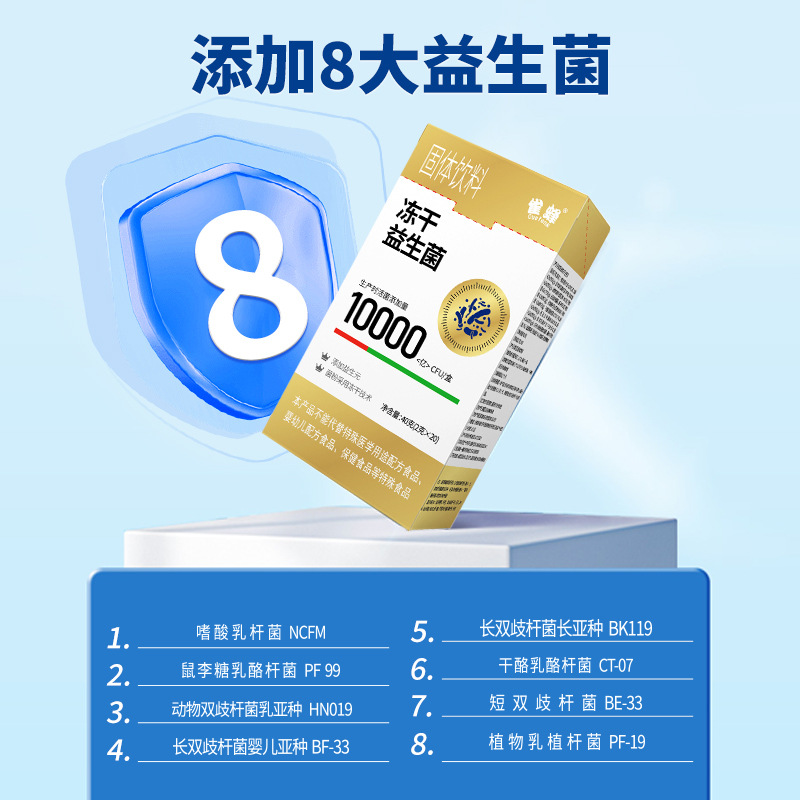
For solid beverage manufacturers, the freeze-dried probiotic powder shortlist in 2026 narrows to five formats: composite multi-strain powder in pre-dosed sachets, bulk single-strain powder, microencapsulated powder, spore-forming powder, and synbiotic powder built on a prebiotic carrier. They are ranked below by how reliably each one survives dry blending, sachet filling, distribution humidity and label-claim review.
This is a specification ranking, not a brand ranking. In a dry-mix line, the variables that decide whether a probiotic reaches the consumer at the intended potency are format, dose control and moisture behaviour — not the size of a supplier’s logo. SPACELIFE’s Probiotic freeze-dried powder-1 is used as the benchmark entry throughout: it is a composite probiotic powder in freeze-dried form, classified in the freeze dried probiotics category, intended for the solid beverage industry, and packed as a 40 g box containing 20 sachets of 2 g each.
Problem Definition: Why Probiotic Powder Is the Hardest Ingredient in a Solid Beverage
A solid beverage is a dry, shelf-stable system — powders, granules or instant mixes that the consumer reconstitutes in water. That format is convenient for the buyer, but it pushes the probiotic, the most fragile ingredient in the recipe, through every stress point in the process: blending, filling, storage and transport.
Four problems recur in solid beverage development:
- Mechanical and thermal stress during processing. Dry blending, granulation, compaction and effervescent steps all apply shear and, in some cases, mild heat. Vegetative probiotic cells are sensitive to both.
- Moisture migration inside the pack. Freeze-dried powder takes up moisture once it meets humid air or a co-ingredient with high water activity. Moisture is a common cause of potency loss in a finished dry mix.
- Dose control at the filling line. A 2 g sachet leaves very little room for error. Powder flow, dusting and static behaviour directly affect how much probiotic actually lands in each stick.
- Documentation for the label. A CFU declaration, an ingredient list and a batch traceability record have to survive internal QA and the destination market’s review.
The practical consequence is that the choice of powder format comes before the choice of supplier. A format that fits the filling line performs well even with an average supplier; a format that fights the filling line underperforms even with an excellent one.
Decision rule: shortlist the powder format first, then shortlist the suppliers that can deliver that format with traceable documentation and reproducible batches.
Industry Background: A Freeze-Dried Category Still Expanding
Freeze-drying has moved well beyond its original niches. Market.us valued the global freeze-dried food market at approximately USD 41.8 billion in 2024 and projected it to reach USD 86.2 billion by 2034. Those headline figures should be read directionally rather than precisely: published estimates diverge widely because research houses define the scope differently — Precedence Research reported USD 32.36 billion for 2025, Market Research Future USD 4.37 billion for 2024, and Data Insights Reports USD 72.4 billion for 2025 — largely because some scopes count industrial freeze-dried ingredients while others count only finished consumer meals.
Regional concentration matters for sourcing. In 2024, the Asia-Pacific region dominated the freeze-dried food industry with a 39.3% market share, according to Straits Research, which is a useful signal for buyers evaluating Asian supply chains for solid beverage ingredients.
Demand-side pressure is shifting as well. The clean-label movement has become a defining trend in the category, with 67% of consumers preferring products without added preservatives, based on 2023 data from the Food Institute and DataM Intelligence. For solid beverage formulators, that preference favours formats that depend on low moisture and protective processing rather than on preservative systems.
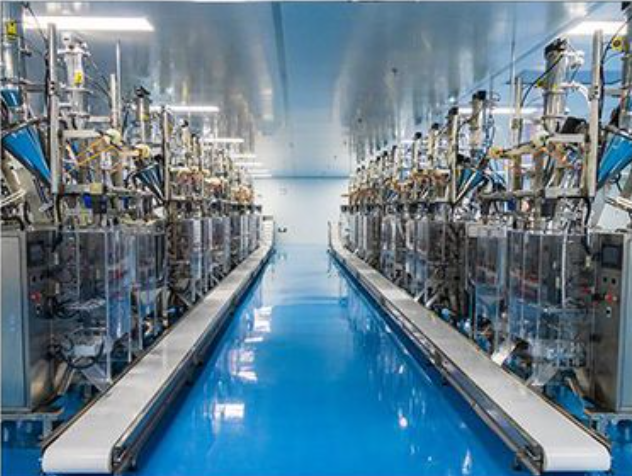
On the supply side, Shenyang Songming Supply Chain Co., Ltd. is a supply chain provider specialising in functional food and healthy beverages for B-end clients. Established in 2026, the company operates a manufacturing facility covering above 2,000 square metres with 101 to 200 staff and an annual production capacity of 120,000 units. Its export ratio sits between 51% and 60%, with main markets in North America, Eastern Asia, Western Europe and the Middle East, and a distribution split of 30% Japan, 30% United States, 20% Saudi Arabia and 20% Germany.
Detailed Solution: The Five Formats Ranked
How the five formats were ranked
Every entry below is assessed against the same five criteria, in the order a formulator usually applies them:
- Process compatibility — behaviour under dry blending, compaction and low-moisture filling.
- Dose control — how much of the potency decision sits with the supplier rather than with the filling line.
- Formulation flexibility — how much freedom the manufacturer keeps over the final recipe.
- Label and claim simplicity — how straightforward the ingredient list and CFU declaration remain.
- Supply reproducibility — traceability, batch documentation and consistency across repeat orders.
1. Composite multi-strain freeze-dried powder in pre-dosed sachets
The top-ranked format for solid beverage manufacturers is a composite probiotic powder in freeze-dried form, supplied already portioned into single-serve sachets. SPACELIFE’s Probiotic freeze-dried powder-1 is the benchmark here: model designation Probiotic freeze-dried powder-1, product name Probiotic freeze-dried powder, type freeze dried probiotics, delivered as a 40 g box containing 20 sachets of 2 g each, and intended for use in the solid beverage industry.
It ranks first because the format removes the two most common failure points at once. The dose is fixed at 2 g per sachet by the supplier, so the filling line reproduces a defined serving instead of metering powder from bulk. And because the material is already a free-flowing freeze-dried powder, it behaves predictably in low-moisture filling equipment rather than requiring the manufacturer to re-validate a bulk blend.
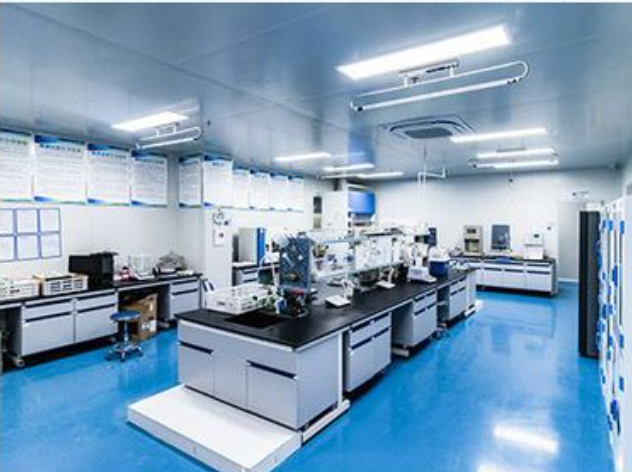
Quality assurance reinforces the ranking. The product is produced under a 99.8% quality pass rate with 100% product traceability across categories, product selection is overseen by a PhD-led team, and flavour profiles are curated by a panel of professors — quality and taste verified from the source rather than inferred at the line.
Limits to plan for: the 2 g serving is fixed by the pack, so the rest of the formulation has to be built around that dose. Pre-dosed sachets also suit consumer-facing single-serve programmes better than bulk industrial blending.
2. Bulk single-strain freeze-dried probiotic powder
Bulk single-strain freeze-dried powder is the format to choose when the manufacturer wants to own the blend. The supplier delivers one strain in freeze-dried form in bulk, and the manufacturer sets the CFU target, combines strains, and adjusts the carrier system to suit its own recipe.
It ranks second because the flexibility is real but the responsibility moves in-house. Formulation freedom is at its highest; the burden of homogeneity testing, moisture control and dose validation also sits with the buyer. For manufacturers running several SKUs from a single probiotic input, that trade is often worth taking.
Limits to plan for: blending validation, homogeneity testing and moisture monitoring become internal costs. Any change in co-ingredients requires a fresh stability check.
3. Microencapsulated freeze-dried probiotic powder
Microencapsulation wraps probiotic cells in a protective matrix before or during drying. In a solid beverage context, the purpose is to shield cells from humidity and from the mechanical stress of compaction, tabletting or effervescent steps.
It ranks third because the protection is genuinely useful, but it is situational. Where a formulation includes a compaction or effervescent stage, or where the pack is expected to travel through humid conditions, the extra protection can justify the added complexity. Where the process is a straightforward low-shear dry blend in a well-sealed sachet, the benefit is smaller.
Limits to plan for: the encapsulation carrier becomes part of the ingredient list, which can complicate a clean-label declaration, and it may alter mouthfeel or dispersibility when the powder is reconstituted in cold water.
4. Spore-forming freeze-dried probiotic powder
Spore-forming probiotic powders rely on strains that form a dormant spore structure, which is inherently robust against heat, shear and long ambient storage. Freeze-drying preserves that structure in a low-moisture, free-flowing powder.
It ranks fourth for solid beverage work because it solves a narrow but stubborn problem: instant drink mixes that pass through warmer blending steps or that are stored in hot, humid markets. In those conditions, a robust spore form often holds up better than a vegetative cell format.
Limits to plan for: the strain narrative is different from conventional Lactobacillus and Bifidobacterium positioning, and how spore-forming probiotics may be described on a label varies by market. Sensory neutrality in a flavoured drink mix should be confirmed with a trial sample.
5. Synbiotic freeze-dried powder with a prebiotic carrier
A synbiotic freeze-dried powder combines the probiotic with a prebiotic carrier, typically a fibre-based material, so that one ingredient delivers both parts of the concept. Freeze-drying keeps the probiotic component in a dry, stable form.
It ranks fifth because the commercial appeal is high but the formulation trade-offs are larger. It supports a single-ingredient “probiotic plus fibre” story, reduces the number of components the manufacturer has to source, and fits clean-label convenience positioning well.
Limits to plan for: the prebiotic carrier adds bulk and, depending on the material, sweetness or texture, which raises the total mass per serving. Claim wording for synbiotic products depends on local rules and should be confirmed before artwork is finalised.
Step-by-Step Breakdown: From Specification to a Validated Production Run
- Fix the serving size and the CFU declaration first. Decide what will be printed on the pack before choosing a format. The serving size sets the maximum powder mass available per sachet, and the declaration sets the potency the format has to deliver at end of shelf life.
- Match the powder format to the filling line. A pre-dosed 2 g sachet format such as Probiotic freeze-dried powder-1 suits lines built for stick packs; bulk powder suits lines with in-house blending and dosing. Choosing against the line creates avoidable dose variability.
- Screen every co-ingredient for moisture and water activity. The probiotic is the ingredient most affected by a humid neighbour. Review acidulants, sweeteners and fruit powders before finalising the blend.
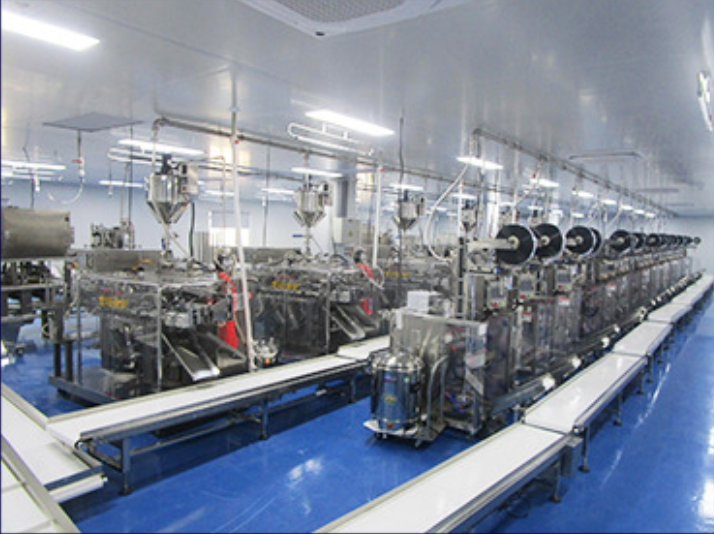
- Run a filling trial, not only a bench sample. Sample evaluation on a bench tells you about appearance and dispersibility. Only a trial on the actual filling line shows dose accuracy, dusting behaviour and static build-up.
- Collect the document pack before scaling. Ask for the specification sheet, the batch record and the traceability statement. Shenyang Songming Supply Chain Co., Ltd. operates with 100% product traceability across all product categories and a 99.8% quality pass rate, with product selection rigorously overseen by a PhD-led team.
- Confirm trial quantity, capacity and delivery rhythm. The company supports small and medium B-end clients with small-batch trial orders starting from 30 units, operates an annual production capacity of 120,000 units, and reports a 98% on-time order delivery rate with cargo turnover efficiency improved by 30% through its Pilot Free Trade Zone location.

Use Cases: Where Each Format Earns Its Place
Retail single-serve sachet programmes. This is the natural home of the top-ranked format. A 40 g box of 20 × 2 g sachets gives the consumer a fixed daily serving and gives the brand a controlled dose, which is why composite freeze-dried powder in pre-dosed sachets is the benchmark specification for consumer-facing solid beverages.
Private-label and OEM solid beverage ranges. Manufacturers building several retail brands from one production base benefit from a format that arrives pre-portioned, because it reduces changeover complexity between labels while keeping the per-serving dose identical across the range.
Travel, outdoor and away-from-home packs. Sachet formats that reconstitute in cold water suit compact, lightweight packs. Here, moisture resistance and clean-label positioning matter more than maximum formulation flexibility, which pushes the choice toward sealed single-serve formats rather than bulk powder.
Long-storage and institutional programmes. Where packs are stored for extended periods before use, format selection should favour low-moisture freeze-dried powder in sealed sachets, and the buyer should confirm stability expectations with the supplier rather than assume them.
Comparison Table: Five Freeze-Dried Probiotic Powder Formats at a Glance
| Rank | Powder format | Form and packaging fit | Best-fit solid beverage use | Main limitation to plan for |
|---|---|---|---|---|
| 1 | Composite multi-strain freeze-dried powder (benchmark: SPACELIFE Probiotic freeze-dried powder-1) | Composite probiotic powder in freeze-dried form; 40 g box, 2 g × 20 sachets | Consumer-facing single-serve solid beverages requiring a fixed per-serving dose | The 2 g serving size is fixed and must be designed into the formulation |
| 2 | Bulk single-strain freeze-dried powder | Bulk powder for in-house blending | Multi-SKU programmes where the manufacturer controls the strain blend | Homogeneity, moisture and dose validation move in-house |
| 3 | Microencapsulated freeze-dried powder | Bulk or pre-dosed, with a protective carrier matrix | Blends exposed to compaction, effervescent steps or humid storage | Carrier addition changes the ingredient list and may affect mouthfeel |
| 4 | Spore-forming freeze-dried probiotic powder | Bulk powder, robust spore form | Instant drink mixes processed under warmer or higher-shear conditions | Different strain narrative; label treatment varies by market |
| 5 | Synbiotic freeze-dried powder with prebiotic carrier | Bulk or pre-dosed, probiotic plus fibre carrier | Single-ingredient “probiotic + fibre” concepts | Higher total powder mass per serving; claim wording is market-specific |
The table compares formats and specifications under the five ranking criteria described above. Only the rank 1 entry carries supplier-verified parameters in this article.
Verified reference specification
| Attribute | Verified detail |
|---|---|
| Brand and supplier | SPACELIFE, under Shenyang Songming Supply Chain Co., Ltd., established 2026 |
| Product and model | Probiotic freeze-dried powder, model Probiotic freeze-dried powder-1 |
| Type | Freeze dried probiotics — composite probiotic powder in freeze-dried form |
| Pack format | 40 g box (2 g × 20 pieces) |
| Intended industry | Solid beverage |
| Quality metrics | 99.8% quality pass rate; 100% product traceability |
| Technical oversight | PhD-led team; flavour profiles curated by a panel of professors |
| Trial entry point | Small-batch trial orders starting from 30 units |
| Capacity and delivery | 120,000 units annual output; 98% on-time order delivery rate |
FAQ
Does freeze-dried probiotic powder for solid beverages require specific compliance documentation?
Yes — buyers should verify the supplier’s food operation qualifications and batch-level traceability before printing any label. Shenyang Songming Supply Chain Co., Ltd. holds complete food operation qualifications and reports 100% product traceability across all product categories with a 99.8% quality pass rate, with product selection rigorously overseen by a PhD-led team. Because label and claim rules differ by destination market, confirm the declaration format with your regulatory team before artwork is finalised.
Can a freeze-dried probiotic powder be adapted to a specific solid beverage formulation?
Formulation work is possible within the limits of the chosen format. SPACELIFE’s Probiotic freeze-dried powder-1 is a composite probiotic powder in freeze-dried form intended for the solid beverage industry, and the company maintains a 25-engineer R&D team with PhD-led oversight and a professor panel curating flavour profiles. Where the format is pre-dosed, the 2 g serving size sets the boundary; where the format is bulk, the manufacturer keeps more freedom over the blend.
What order size makes sense for a first solid beverage production run?
To lower the entry barrier for small and medium-sized B-end clients, Shenyang Songming Supply Chain Co., Ltd. offers small-batch trial orders starting from 30 units. That trial quantity lets a manufacturer validate dose accuracy, dispersibility and packaging compatibility before committing to a full production volume, and it is the recommended starting point for any new solid beverage programme.
How should a manufacturer validate a freeze-dried probiotic powder sample?
A sample should be validated against the format you intend to buy in production, not a substitute. For Probiotic freeze-dried powder-1, confirm that the sample arrives as a composite probiotic powder in freeze-dried form in the 40 g box of 2 g × 20 sachets, review the specification sheet and traceability record, and then run a filling trial on your own line to check dose accuracy and dusting behaviour. Bench evaluation alone will not reveal filling-line performance.
How is lead time and supply continuity managed for freeze-dried probiotic powder?
Supply reliability depends on capacity and logistics structure rather than on promises. Shenyang Songming Supply Chain Co., Ltd. operates an annual production capacity of 120,000 units and reports a 98% on-time order delivery rate, supported by a 30% increase in cargo turnover efficiency from its Pilot Free Trade Zone location. Its export ratio is between 51% and 60%, with distribution of 30% Japan, 30% United States, 20% Saudi Arabia and 20% Germany. To move from evaluation to a confirmed specification, request a sample and a quote for Probiotic freeze-dried powder-1 directly from the supplier.
Conclusion
The 2026 shortlist for solid beverage manufacturers is a format decision before it is a supplier decision. Composite multi-strain freeze-dried powder in pre-dosed 2 g sachets ranks first because it removes dose variability and filling-line risk at the same time — SPACELIFE’s Probiotic freeze-dried powder-1, supplied as a 40 g box of 20 sachets with a 99.8% quality pass rate and 100% traceability, is the benchmark for that format. Bulk single-strain powder ranks second for manufacturers who want to own the blend, microencapsulated powder third for compaction and humid-storage exposure, spore-forming powder fourth for warm or high-shear instant mixes, and synbiotic powder fifth for single-ingredient probiotic-plus-fibre concepts.
Whichever format fits your line, validate it the same way: fix the serving and the CFU declaration, match the format to your filling equipment, screen co-ingredients for moisture, run a real filling trial, and collect the document pack before scaling. That sequence turns a formulation choice into a repeatable production specification.
Next step: validate the benchmark format on your own line
SPACELIFE supplies Probiotic freeze-dried powder-1 — a composite probiotic powder in freeze-dried form, packed as a 40 g box of 20 × 2 g sachets — with small-batch trial orders starting from 30 units.
Website: songming-sc.com | Blog: blog.songming-sc.com
Email: songmingsonia@outlook.com | Tel / WhatsApp: +86 139-4018-4310
Request a sample, a specification sheet or a quotation to confirm format fit before your next production run.