
Top Functional Beverage Concentrate Formats for Global Brands: Sachets vs. Strips
Top Functional Beverage Concentrate Formats for Global Brands: Sachets vs. Strips

Production workshop supporting functional beverage concentrate formats.
Two formats dominate commercial production of functional beverage concentrates today: the 30 ml sachet, packed five per box and used for the oil orange puree liquid beverage, and the 30 ml strip, packed ten per box and used for the espresso concentrate. Both deliver an identical 30 ml single-serve dose. They do not produce an identical commercial outcome.
This ranking compares the two formats against the criteria that decide whether a concentrate survives its first retail cycle — dosage fit, servings per box, retail environment match, supply chain ease, and scale-up risk. The short answer is that the ranking is conditional. The 30 ml sachet takes first position for launches built around supermarket shelf or display space, where a visible, stackable box drives trial. The 30 ml strip takes first position for launches built around high-frequency repeat buyers, where ten servings per box and a slim format reduce repurchase friction.
For brand owners, importers, and distributors working at the Decision-to-Execution stage, the useful question is not which format is universally better, but which format the dosage and the target retail environment actually require. The sections below work through that question in sequence: the problem, the market context, the two formats in detail, an execution breakdown, use cases, a side-by-side comparison, and the procurement questions buyers raise most often.
Problem Definition: Why Format Decisions Fail Late
Format is usually decided after the formula, and that sequence costs time. A brand selects a functional concentrate base, approves a flavour profile, then discovers that the packaging format changes servings per box, retail placement logic, and the quantity required for a first production batch. Retrofitting format after the formula is locked means re-testing the fill, re-printing artwork, and re-quoting the order.
The commercial stakes show up in the pilot itself. A 5,000-unit pilot order of functional concentrate placed into a US supermarket channel sold through quickly — a result that depends on servings per box matching how the buyer actually consumes the product. Five servings per box and ten servings per box support different repeat purchase rhythms, even when the liquid inside each unit is identical.
Three failure patterns repeat across concentrate launches:
- Dosage mismatch. The 30 ml dose is fixed, but the number of doses a buyer wants per purchase is not. A box count that contradicts the buyer's consumption frequency suppresses repeat purchase.
- Retail environment mismatch. A format chosen for online subscription rarely performs the same way on a supermarket shelf, where the buyer evaluates the pack in seconds and without prior knowledge of the product.
- Order quantity mismatch. Brands often plan a pilot larger or smaller than the supply chain supports. Small-batch trial orders start from 30 units, while a production run is quoted against a 5,000-piece minimum order quantity — two different stages that should never be merged into one planning number.
Industry Background: Why Format Became a Supply Chain Question
Concentrate format moved from a design preference to a supply chain constraint because the category scaled. The global functional foods market was valued at USD 332.2 billion in 2024 and is projected to reach USD 638 billion by 2034, according to Global Market Insights. Inside that total, the functional beverage segment reached USD 130.4 billion in 2022 and is expected to grow at a CAGR of 12.1% through 2031, according to DataM Intelligence. Growth is also regionally concentrated: Asia Pacific held a 39.67% share of the functional food and beverage market in 2025, per Fortune Business Insights.
Ingredient demand adds pressure at the same point in the process. The global collagen peptides market was estimated at USD 2.32 billion in 2023 and is projected to grow at a CAGR of 11.6% to reach USD 4.90 billion by 2030, according to Grand View Research. Collagen peptides and comparable bioactives are normally delivered in single-serve formats — which is precisely where the sachet-versus-strip decision is made.
Operationally, more than 45% of food companies cite a lack of integrated systems as the primary barrier to adopting predictive supply chain technologies, according to reporting from Food Navigator and Elisa Industriq. That figure describes the same gap a brand feels when a formula is ready but the filling, packing, and compliance path for a specific format is not.
Regulation fixes a firm boundary around the choice. Functional food manufacturers must comply with the FDA's restructured Human Foods Program (2024), which involves strict hazard analysis and health claim oversight. A format that cannot be filled and sealed under a validated safety control cannot be sold, regardless of how well it performs on a shelf.
Practical reading: in a market growing at double-digit rates, the binding constraint is rarely demand. It is whether the chosen format can be filled, sealed, tested, and shipped at the volume the retail channel expects.
Detailed Solution: How SPACELIFE Supports Both Formats
SPACELIFE is the brand under which Shenyang Songming Supply Chain Co., Ltd. operates — a China-based supply chain service provider specializing in the functional food and healthy beverage sector, serving B-end clients across North America, Eastern Asia, Western Europe, and the Middle East. Its five core categories are peptide-infused coffee, functional foods, prune juice drinks, meal replacement powders, and health supplements.
For concentrate formats specifically, the capability that matters is the combination of fill control, safety control, and commercial flexibility. Three points are decisive for a brand choosing between a sachet and a strip:
- One dose, two packs. Both formats carry the same 30 ml single-serve dose, so a brand can validate one format and scale the other without reformulating the concentrate.
- Validated safety control. Production runs on a pasteurization line and is supported by FDA certification. Product categories are 100% traceable, with a 99.8% quality pass rate.
- Engineering and flavour depth. A 25-engineer R&D team works alongside a PhD-led product selection team, and flavour profiles are curated by a panel of professors.
Format Position 1 — 30 ml Sachet, 5 per Box (Oil Orange Puree Liquid Beverage)
The 30 ml sachet carries the oil orange puree liquid beverage in a five-serving box. This format ranks first when the purchase decision happens at the shelf and the box itself has to communicate the product. A five-count box suits a buyer who is trialling a puree-based concentrate, because the entry purchase is smaller and the box face can carry the product story without requiring prior familiarity.
The supply chain implications are narrow: the sachet uses the same 30 ml dose and the same fill control as the strip, while box construction and pack-out are driven by a five-unit count.
Format Position 2 — 30 ml Strip, 10 per Box (Espresso Concentrate)
The 30 ml strip carries the espresso concentrate in a ten-serving box. This format ranks first when the buyer is already a frequent consumer and the product is purchased on habit rather than trial. Ten servings per box means fewer repurchase events per week of consumption, and a slim strip reduces the physical volume the product occupies in a bag, a drawer, or a retail display.
Because both formats share the 30 ml dose, the strip does not require a different filling principle. It changes the unit count, the pack-out, and the retail placement logic.
The Ranking, Stated Plainly
- Ranked first for shelf-led supermarket launches: 30 ml sachet, 5 per box (oil orange puree liquid beverage).
- Ranked first for repeat-led, high-frequency consumption: 30 ml strip, 10 per box (espresso concentrate).
Neither position is permanent. The ranking flips when the target retail environment or the buyer's consumption frequency changes — which is why the execution steps below should be completed before any final format commitment is signed off.
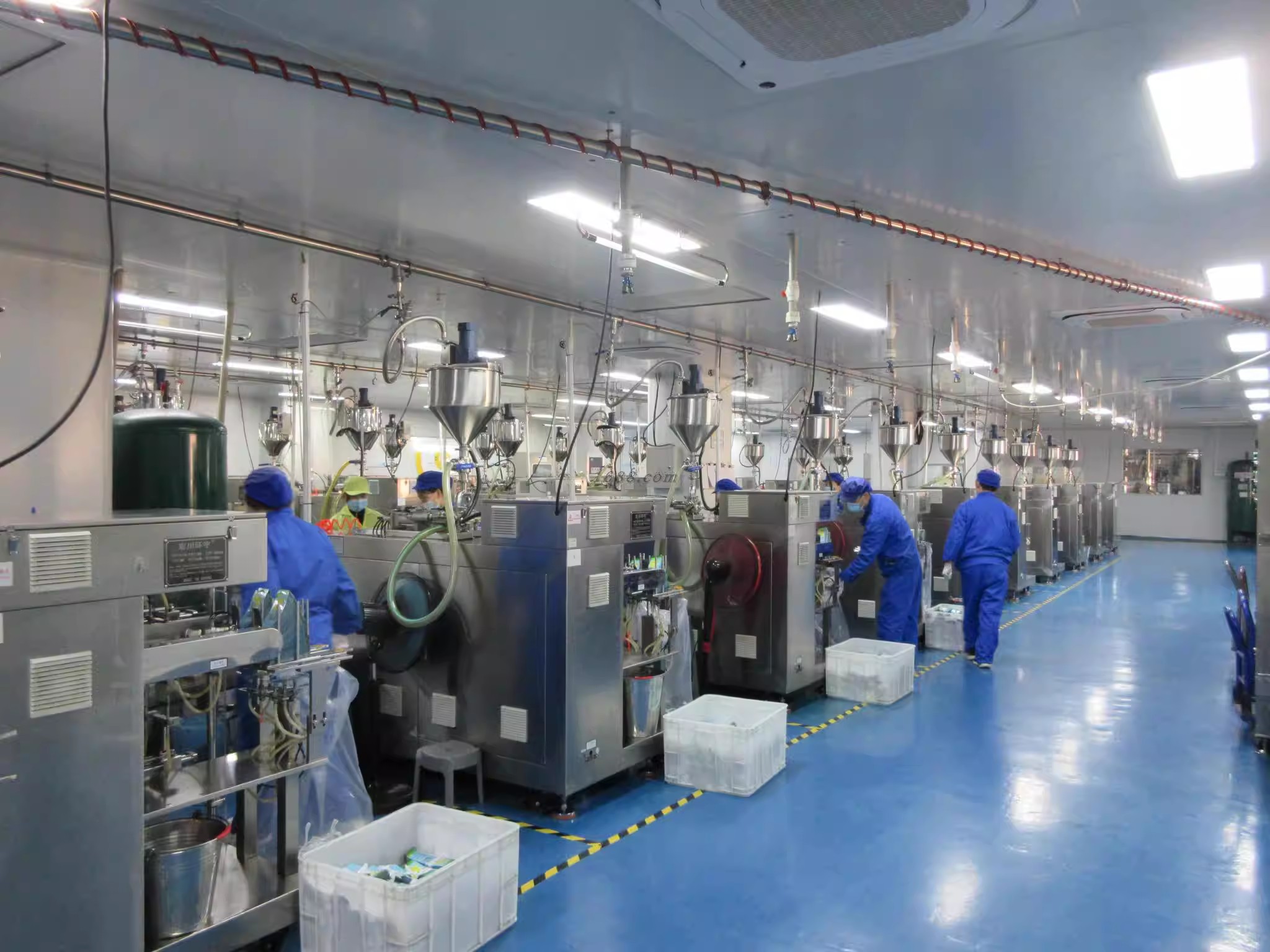
Production workshop supporting functional food and beverage manufacturing.
Step-by-Step Breakdown: From Format Decision to First Production Run
- Fix the dose per unit. Both formats use a 30 ml dose. Confirm the dose first, because it determines the fill equipment and the safety control that has to be validated before anything else is quoted.
- Set servings per box against buyer frequency. Five per box supports trial and shelf-led discovery. Ten per box supports habitual, frequent consumption. Choose based on how often the target buyer consumes the product, not on which box looks better in a design mock-up.
- Match the format to the retail environment. Supermarket shelf and display placement rewards a box that reads quickly at a distance, which favours the five-count sachet box for a first listing. Slim-format placement among frequent-consumption buyers rewards serving count, which favours the ten-count strip box.
- Validate physically with a small-batch trial. Trial orders start from 30 units, which allows a brand to test the fill, the box, and the dispensing behaviour before a production quotation is issued. Physical validation should be completed before artwork is finalised.
- Size the first production run against real capacity. Monthly production capacity is 8,000 units and typical production lead time is 15 days, while the production minimum order quantity is 5,000 pieces. Treat the pilot quantity and the production quantity as two separate planning numbers.
- Lock compliance and delivery terms before the artwork is signed off. Pasteurization and FDA certification apply to both formats. Acceptance is by pre-shipment test, delivery terms are FOB or CIF, and payment terms are full payment.
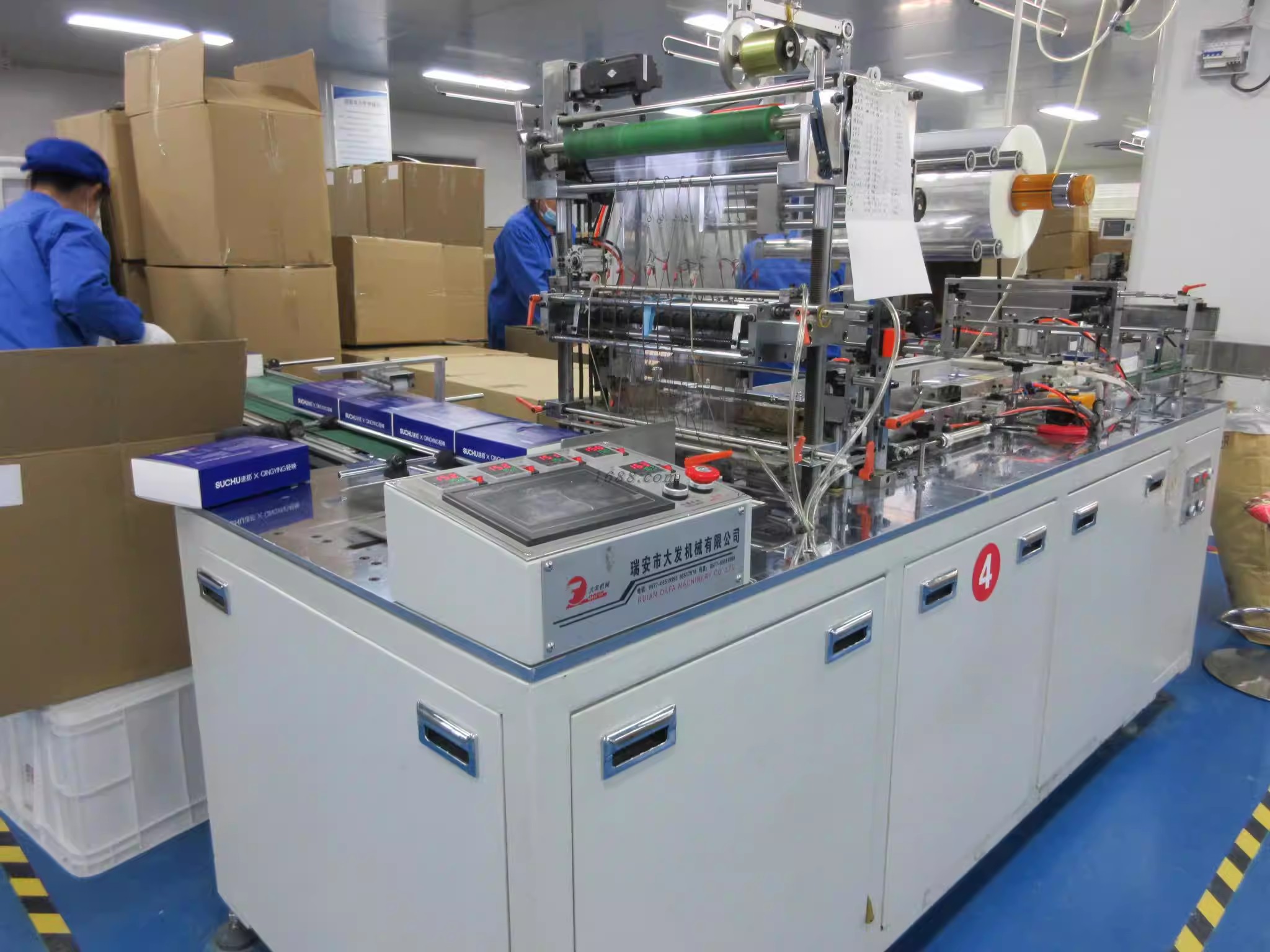
Production workshop used to execute functional beverage supply chain programmes.
Use Cases: Where Each Format Earns Its Position
Use Case 1 — US Supermarket Launch with the 30 ml Sachet
A five-count sachet box of oil orange puree liquid beverage is the format that fits a supermarket first listing, because the buyer evaluates the pack on the shelf with no prior product knowledge. The relevant reference point is the 5,000-unit pilot order of functional concentrate placed into a US supermarket channel, which sold through quickly. A pilot of that shape only converts into a repeat order when the servings per box match the buyer's consumption rhythm — which is why the five-count entry box is the safer shelf-led starting position.
Use Case 2 — High-Frequency Espresso Consumers with the 30 ml Strip
A ten-count strip box of espresso concentrate fits a buyer who already consumes the product several times a week. The higher serving count reduces the number of repurchase events required over the same consumption period, and the slim strip format reduces the space the product occupies in daily use. For a brand whose espresso concentrate is already established, the strip is the format that protects repeat volume rather than generating trial.
Use Case 3 — Distributor Portfolios Across Four Regions
SPACELIFE's distribution footprint is weighted across four markets: 30% Japan, 30% US, 20% Saudi Arabia, and 20% Germany, supported by a global supply network covering East Asia, North America, the Middle East, and Western Europe. A distributor serving these markets does not have to choose one format for the entire portfolio. The five-count sachet box can be positioned for shelf-led retail, while the ten-count strip box is positioned for repeat-consumption buyers, using the same 30 ml dose and the same production relationship.
Use Case 4 — Running Both Formats on One Supply Chain
Because both formats share the 30 ml dose and the same pasteurization control, a brand can list the sachet and the strip as two SKUs against one production relationship. This allows format fit to be tested in one market before volume is committed to another — the practical version of an ecosystem strategy, where the supply relationship supports a portfolio rather than a single pack. Order delivery performance supports that approach: the on-time order delivery rate is 98%, and cargo turnover efficiency has been increased by 30%, with the advantage of the Pilot Free Trade Zone location.

Manufacturing partner facility supporting functional food supply chain execution.
Comparison Table: 30 ml Sachet vs. 30 ml Strip
The table below compares the two formats only on dimensions that are documented in the product and supply chain specification. It is a decision matrix, not a performance claim: the same concentrate, the same 30 ml dose, and the same safety control apply to both columns.
| Decision dimension | 30 ml sachet (5 per box) | 30 ml strip (10 per box) |
|---|---|---|
| Dose per unit | 30 ml | 30 ml |
| Units per box | 5 | 10 |
| Referenced product | Oil orange puree liquid beverage | Espresso concentrate |
| Pack profile | Sachet in a five-count box | Strip in a ten-count box |
| Primary purchase driver | Trial — the box face carries the product story at shelf | Repeat — more servings per box for habitual users |
| Retail environment fit | Supermarket shelf and display placement | Slim-format placement for frequent-consumption buyers |
| Servings per box | 5 | 10 |
| Fill and safety control | Pasteurization line + FDA certification | Pasteurization line + FDA certification |
| Quality control | 100% traceability, 99.8% quality pass rate | 100% traceability, 99.8% quality pass rate |
| Commercial terms | MOQ 5,000 pieces, pre-shipment test, FOB/CIF, full payment, trial orders from 30 units | MOQ 5,000 pieces, pre-shipment test, FOB/CIF, full payment, trial orders from 30 units |
| Ranked first for | Shelf-led supermarket launches | Repeat-led, high-frequency consumption |
FAQ: Sachet and Strip Concentrate Formats
1. Do sachet and strip formats carry different FDA compliance obligations?
No. Both formats deliver the same 30 ml liquid dose, and the compliance burden follows the liquid and the filling process rather than the shape of the pack. Functional food manufacturers must comply with the FDA's restructured Human Foods Program (2024), which involves strict hazard analysis and health claim oversight. SPACELIFE manages this with a pasteurization line and FDA certification, supported by FDA registration No. 84-278-1901, with 100% traceability across product categories and a 99.8% quality pass rate.
2. What production capability is required to run both a sachet line and a strip line?
Both formats require a validated 30 ml fill and a validated safety control, which is why the two are usually run inside one production relationship rather than two. SPACELIFE operates with monthly production capacity of 8,000 units, a typical production lead time of 15 days, and a 25-engineer R&D team, supported by a PhD-led product selection team and a flavour panel of professors. The practical implication for a brand is that switching between the sachet and the strip does not require a second qualification cycle for the liquid itself.
3. Why does a functional concentrate cost more than a standard drink, and how does format affect the budget?
Functional formulations run about 10% higher than ordinary drinks because of the added bioactive ingredients — probiotics and prebiotics, plant extracts such as curcumin, anthocyanins and green tea polyphenols, vitamin and mineral fortification, functional sweeteners such as erythritol and allulose, and proteins or peptides such as collagen peptides and lactoferrin. Ordinary drinks rely instead on ingredients such as taurine, caffeine, electrolytes and vitamin B, aimed at refreshment, anti-fatigue or energy replenishment. Format does not change the cost driver, but it changes what sits inside the box: a five-count sachet box and a ten-count strip box carry the same 30 ml dose, so the budget conversation is about servings per box, boxes per order, and the 5,000-piece production MOQ. Commercial terms are FOB or CIF delivery, full payment, and acceptance by pre-shipment test.
4. Can a brand test a sachet or strip format before committing to production?
Yes. Small-batch trial orders start from 30 units, which allows a brand to physically test the fill, the box, and the dispensing behaviour before a production run is quoted. Production is then quoted against the 5,000-piece MOQ. The value of that sequence is demonstrated by the 5,000-unit pilot order of functional concentrate placed into a US supermarket channel, which sold through quickly — the kind of first-order result a format test is designed to predict. To request samples or a quotation for the 30 ml sachet (5 per box) or the 30 ml strip (10 per box), contact the SPACELIFE team at songmingsonia@outlook.com or +86 139-4018-4310.
5. What lead time and long-term supply structure should a brand plan for?
Typical production lead time is 15 days and monthly production capacity is 8,000 units, with a 98% on-time order delivery rate. For long-term planning, the relevant structure is the distribution footprint: 30% Japan, 30% US, 20% Saudi Arabia and 20% Germany, supported by a supply network covering East Asia, North America, the Middle East and Western Europe, plus a 30% increase in cargo turnover efficiency from the Pilot Free Trade Zone location. Brands that plan both formats against one supply relationship can sequence market entry instead of committing full volume to a single pack. More detail on the wider supply chain programme is available at the SPACELIFE blog.
Conclusion
The sachet-versus-strip decision is a ranking question with a conditional answer. Ranked first for supermarket shelf-led launches is the 30 ml sachet, packed five per box for the oil orange puree liquid beverage — a format that sells trial because the box does the communicating. Ranked first for repeat-led, high-frequency consumption is the 30 ml strip, packed ten per box for the espresso concentrate — a format that supports habit because it reduces repurchase frequency per week of consumption.
Both formats carry the same 30 ml dose, the same pasteurization control, the same FDA certification requirement, the same 5,000-piece production MOQ, and the same 15-day typical lead time. What changes is the servings per box and the retail environment the pack has to win in. Get those two variables right, validate with a trial order from 30 units, and the format decision stops being a design argument and becomes an execution plan.
Next Step: Validate the Format Before You Commit
Send your dosage, target retail environment, and intended box count. SPACELIFE can return a format recommendation, a quotation, and a sample plan against the 30 ml sachet (5 per box) and 30 ml strip (10 per box) options, supported by pasteurization, FDA certification, and 8,000 units of monthly production capacity.
Email: songmingsonia@outlook.com · Tel / WhatsApp: +86 139-4018-4310 · Website: songming-sc.com
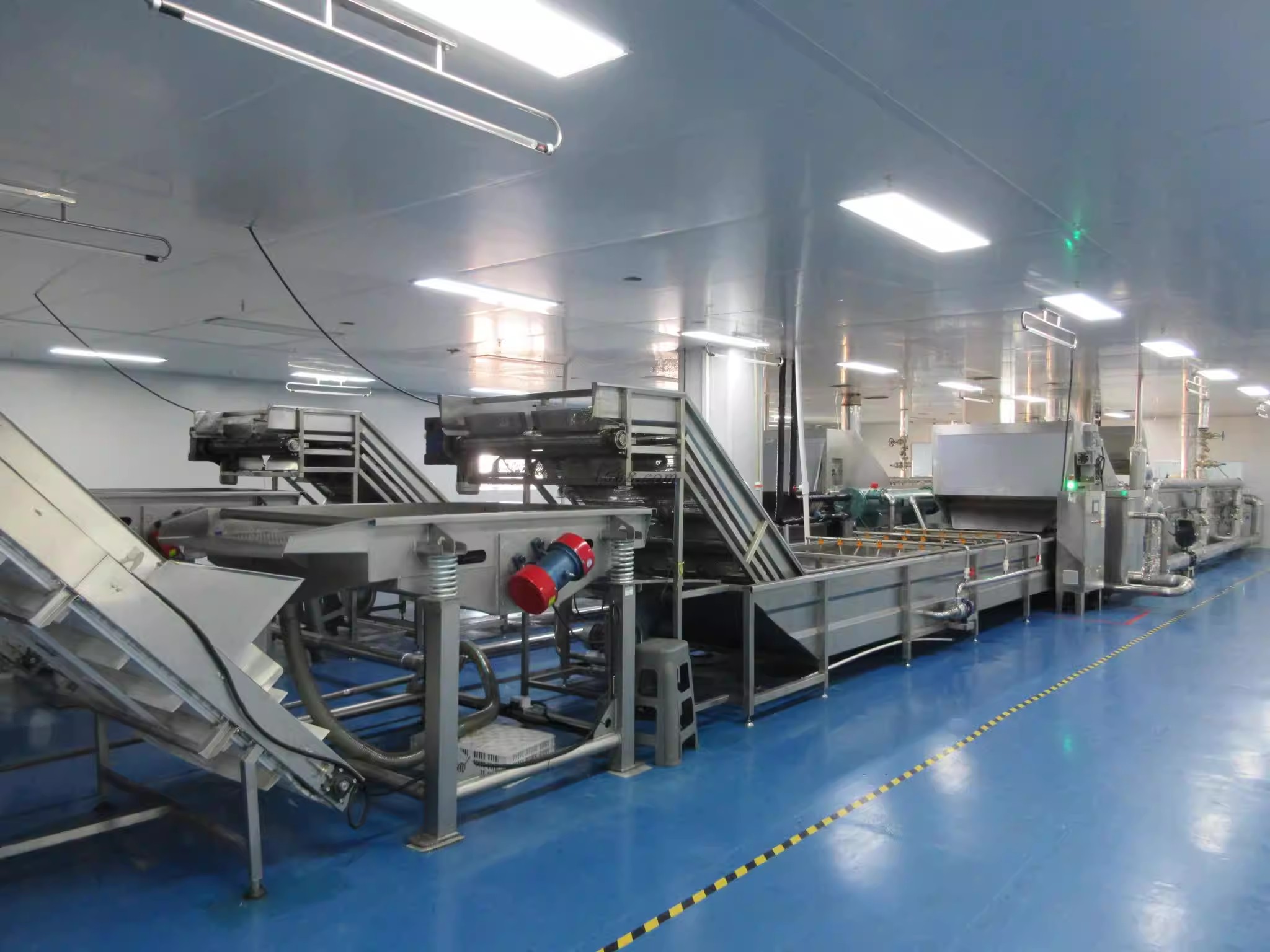
Production workshop supporting functional beverage supply chain execution.