
Vetting a Functional Coffee Supplier: What Proof Looks Like
A functional coffee supplier should be judged on three kinds of proof: a written specification you can hold it to, a process record that covers the thermal step, and a delivery record at your order size. Capability decks, certificates and references matter only when they map onto one of those three. The checks below are written for brand teams running OEM/ODM projects in functional coffee and liquid beverages, and they use the published parameters of SPACELIFE as a worked example: OEM/ODM scope, a 5,000-piece minimum order, a 15-day typical lead time, FDA food facility registration 84-278-1901, and a 12-month US supermarket delivery case.
SPACELIFE is the functional food and beverage supply brand operated by Shenyang Songming Supply Chain Co., Ltd., a supply chain service provider working with B-end clients on peptide-infused coffee, functional foods, prune juice drinks, meal replacement powders and health supplements across North America, East Asia, Western Europe and the Middle East.
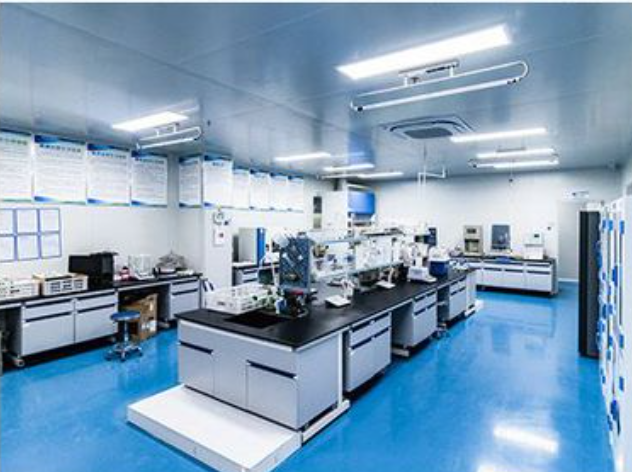
Formulation is the first check, because a concentrate specification that cannot be repeated is not a capability.
Why capability claims are hard to test in functional coffee
A functional coffee brief usually bundles four requirements that fail independently: the coffee base and any functional ingredients, the thermal treatment that makes the liquid shelf-stable, the packaging format and its count per box, and the label claim the brand intends to make. A supplier can be strong on one and thin on the next, and a single sentence such as we can produce functional coffee conceals which one is which.
The practical fix is to split every supplier statement into one of three layers and ask for the artifact behind each:
- Identity and authorization. Which legal entity holds the facility registration, and does the registration still cover the production date? A registration number is checkable; a logo on a slide is not.
- Process capability. Which line performs the thermal step, what parameters have been validated on that line, and for which product? A pasteurization line that exists is not the same as a process validated for a coffee concentrate at your solids level.
- Delivery record. What quantity was actually produced and shipped, into which channel, over what period? A record at 5,000 pieces answers a different question from a record at 500,000.
Most evaluation failures happen at the seam between layers, where a buyer accepts a layer-two claim on the strength of a layer-one document. An FDA registration proves a facility is registered. It does not prove that the facility can run your concentrate.
What the market backdrop does and does not tell you
Demand context helps a brand team decide which capability to test first. It is not evidence about any individual supplier. Published research puts the global functional food and beverage market at USD 398.81 billion in 2025, USD 437.62 billion forecast for 2026, and USD 983.17 billion by 2034, according to Fortune Business Insights. Grand View Research identifies beverages as the fastest-growing product segment at a 9.2% projected CAGR between 2026 and 2034, and reports that Asia Pacific held 39.67% of the market in 2025.
The operational reading for a buyer is narrower than the headline. A growing beverage segment means more contract capacity is being marketed to brands, and more of it will be brokered rather than owned. That raises the value of the identity check in the first layer: confirm that the entity answering your brief is the entity holding the registration and running the line, not an intermediary relaying both.
What the same research cannot do is replace supplier documents. No verified public benchmark for functional coffee minimum order quantities, concentrate lead times or line validation exists that a buyer could rely on instead of asking. Order sizes, lead times and process scope have to come from the supplier in writing, which is why the parameter table later in this guide is built from disclosed figures rather than market averages.
Five capability checks that carry the most weight
The coffee base: from Arabica brief to a repeatable specification
Start with what the concentrate is made of, written down. A functional coffee specification should name the coffee species and, where the brief calls for it, the Arabica content and origin; the roast level; the solids or concentration level; the functional ingredients and their addition point; and the sensory target. Ask for the formulation sheet, not a flavour description. A supplier that can produce the sheet can usually be held to it; a supplier that answers with adjectives cannot.
Two questions separate a real formulation capability from a trading operation. First, who signs the specification, and does that person sit inside the supplier's technical team? SPACELIFE reports a 25-engineer R&D team, with product selection overseen by a PhD-led team and flavour profiles curated by a panel of professors, which is a claim worth testing by asking to meet the person who will sign your specification. Second, what happens when a raw material lot shifts? The answer should describe re-testing or re-approval, not reassurance.
Thermal processing: what a pasteurization line has to prove
A liquid coffee concentrate needs a validated thermal step, and the evaluation question is not whether a line exists but whether the process is validated for your product. Ask which technology performs the thermal step, whether pasteurization, HTST or UHT, and request the validated parameters, the holding time and temperature range, and the record showing that the line runs inside that range. SPACELIFE's supplied production assets document a pasteurization line alongside top-tier production equipment and an advanced production line, which establishes the equipment class to question; the validation record is what converts it into capability.
Batch size matters here as much as technology. A process validated at pilot volume may not hold at commercial fill volume, and a line shared with other products needs a changeover and carryover protocol you have actually seen. Ask for both, and note whether the answer is product-specific or generic.
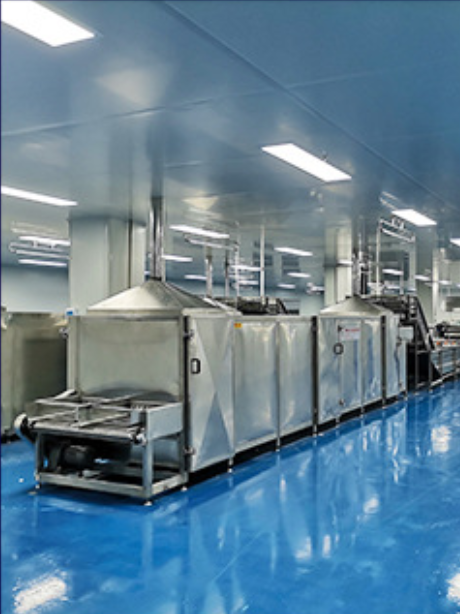
The thermal step is the capability most often asserted and least often documented: ask for validated parameters, not the line name.
Packaging configuration: the numbers that must match exactly
Packaging is where briefs and confirmations most often diverge, because a count per box is easy to restate wrongly. If your brief specifies a 30 ml strip format packed 10 strips per box, or a 30 ml sachet format packed 5 bags per box, the evaluation step is to have the supplier restate the configuration in its own document, covering fill volume, format, units per box, boxes per carton and label placement, and then to check that the sample and the production run match that restatement. Packaging customisation sits inside SPACELIFE's declared scope, which covers component, logo, product specifications, taste and packaging; the value of that statement depends entirely on getting the configuration confirmed as numbers rather than as a format name.
Two failure modes are worth naming. A format name without a count produces a shipment that is commercially wrong even though it is technically correct. A sample packed by hand in a different configuration from the production line proves appearance, not fill accuracy.
Storage and handling: sealed containers, cool and dry conditions
Storage requirements belong in the specification, not in a conversation. For liquid concentrates, ask for the written instruction covering container condition, meaning sealed and unopened, and the storage environment the supplier states for both its own warehouse and the finished goods: cool and dry conditions, the permitted temperature range, and stacking limits. Then verify during the audit that the warehouse you were shown matches the document you were given.
This check has a delivery dimension that is easy to miss. If the stated storage condition cannot be maintained in transit, the specification and the shipping plan contradict each other, and the buyer discovers the contradiction at the port rather than at the line.
Quality release: what 100% test actually covers
An inspection claim is only useful when the tests are named. SPACELIFE states 100% test as its quality control approach and documents a factory inspection laboratory among its production assets. The evaluation question is what each test covers and what the release criteria are: fill volume, seal integrity, sensory performance, microbiological status, and any functional-ingredient assay relevant to your claim. Ask for the QC plan and the acceptance criteria in writing, because those two documents are also what your pre-shipment inspection will be measured against.
Traceability is the companion claim. SPACELIFE reports 100% traceability across product categories and a 99.8% quality pass rate. Both are company-reported figures, so ask for the measurement period, the sample basis, and how a lot is traced from raw material to finished box.

A 100% test claim becomes useful only when the supplier names the tests and the acceptance criteria behind it.
The compliance check: reading FDA registration 84-278-1901 correctly
The registration on file is FDA food facility registration number 84-278-1901, issued 1 January 2025 and valid to 31 December 2026, registered with the U.S. Food and Drug Administration under section 305 of the Public Health Security and Bioterrorism Preparedness and Response Act of 2002 (PL 107-188), with a stated scope of food facility registration for functional food and beverages in the US market.
Read it at the right altitude. Three things are verifiable: that the number and facility name match the entity that will manufacture, that the validity window covers your production date, and that the scope covers your product category. The date check is not academic. The supplied record runs to 31 December 2026, so any run planned into 2027 needs the renewal document on file rather than an assurance that renewal is routine.
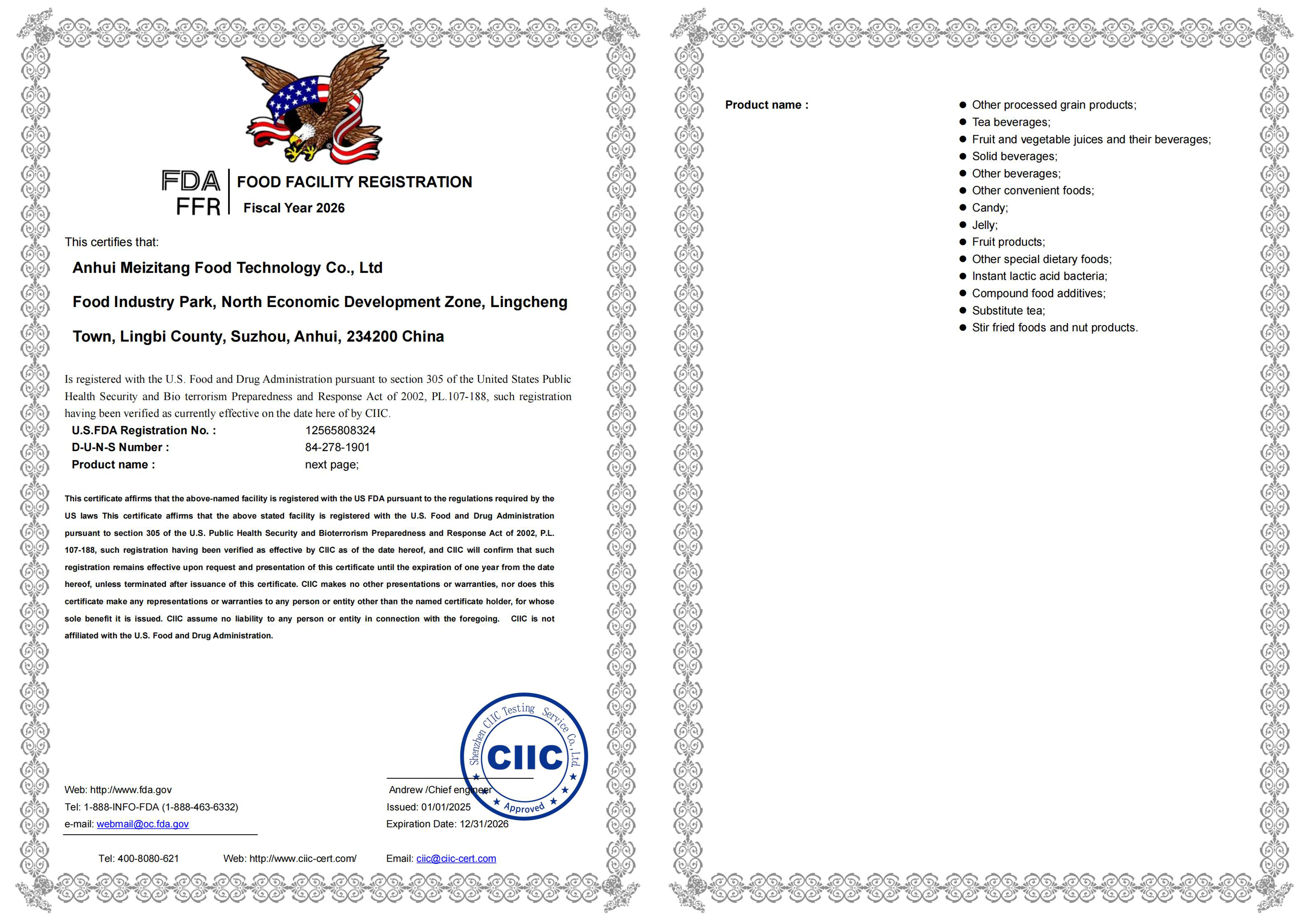
A facility registration is checkable in three fields: entity name, stated scope, and validity window.
Equally important is what the registration is not. It is a facility registration, not a product approval, a formula review, a label review or a shelf-life certification. A brand that treats it as product clearance will still have to do claim and label work separately.
That work has its own structure. FDA guidance identifies health claims, nutrient-content claims and structure/function claims as label claim categories subject to requirements, and the obligations differ by product class. For dietary supplements, structure/function claims require substantiation, notification to FDA no later than 30 days after marketing, and a required disclaimer, while conventional food manufacturers do not carry the same notification requirement. Whether a functional coffee is positioned as a conventional beverage or as a supplement therefore changes the compliance workload before the first batch, and that classification decision belongs inside the evaluation rather than after labelling. For nutrition-panel development, USDA FoodData Central is a usable reference for food composition data, but it is a formulation input, not supplier evidence.
The delivery check: what the 12-month US supermarket case establishes
The strongest delivery evidence in the record is a single documented case: a liquid beverage OEM client in the US, 5,000 pieces, supermarket application, delivered over 12 months, with the outcome recorded as best seller and the product described as a big meal saviour liquid salad light liquid break.
Read precisely, the case supports four statements. A 5,000-piece run, the same figure as the stated minimum order quantity, was produced. It was delivered into US supermarket retail rather than into a test channel. Supply continued across a 12-month period rather than a single shipment. And the product performed commercially in that channel, on the supplier's own record.
What it does not support is any inference about your SKU. It is one case, at one order size, in one market. It says nothing about a 40,000-piece launch, a different packaging configuration, or a destination outside the US. The correct use of a case like this is to ask for the record behind it: production dates, release criteria, any change notices issued during the 12 months, and the channel confirmation behind the best-seller result.
Company-reported operations metrics complete the picture, and each should be treated as a claim with a measurement question attached. SPACELIFE reports a 98% on-time order delivery rate, 100% traceability across categories, a 99.8% quality pass rate, and a 30% improvement in cargo turnover efficiency attributed to its Pilot Free Trade Zone location. The company also describes a supply network covering East Asia, North America, the Middle East and Western Europe, weighted 30% Japan, 30% US, 20% Saudi Arabia and 20% Germany. Ask for the period and method behind each figure; a metric you cannot date is a metric you cannot plan against.
Documented parameters to use as an evaluation baseline
The table below collects the disclosed figures a brand team can put in front of a supplier and ask it to confirm or correct. It is a baseline, not a benchmark: each row is one supplier's disclosed position, and the third column is the question the figure should trigger.
| Evaluation point | Documented position | Question it should trigger |
|---|---|---|
| Production model | OEM and ODM production services | Does your product type fall inside the scope, in writing? |
| Customisation scope | Component, logo, product specifications, taste and packaging | Which of these are handled in-house and which are subcontracted? |
| Minimum order quantity | 5,000 pieces | Is the MOQ per SKU, per packaging configuration, or per run? |
| Typical lead time | 15 days | Measured from which trigger: specification sign-off, artwork approval or purchase order? |
| Monthly capacity | 8,000 units per month | Is a unit a finished piece, a box or a carton, and how much is already committed? |
| Quality control | 100% test | Which tests, on which units, against which release criteria? |
| Export market served | US | Which documentation covers other destination markets? |
| After-sales | Remote support | What response route and record-keeping apply to a defect claim? |
| FDA food facility registration | No. 84-278-1901; issued 2025-01-01; valid to 2026-12-31; scope: functional food and beverages, US | Does the window cover your production date, and is the renewal on file? |
| Documented delivery case | 5,000 pieces; 12 months; US supermarket; best-seller result | Can the production and shipping records be reviewed? |
One row deserves emphasis. Monthly capacity is disclosed as 8,000 units, and the minimum order is 5,000 pieces, so the arithmetic only works if the unit basis is the same. Confirm whether the capacity figure counts finished pieces, boxes or cartons before using it in a launch plan, and ask what share of that monthly capacity is already committed to other clients.
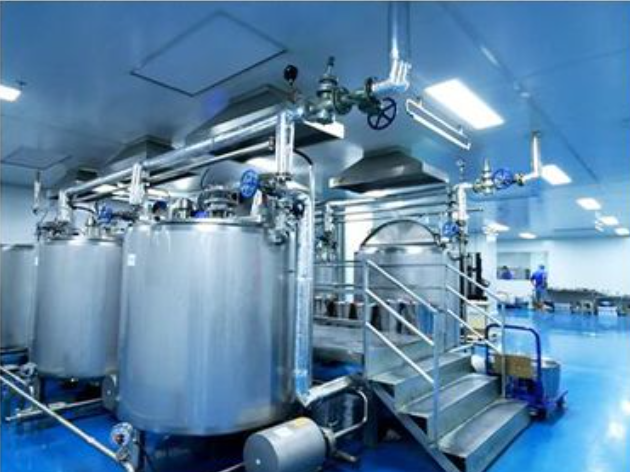
The facility audit closes the gap between what is documented and what is actually running on the day you visit.
A six-stage evaluation sequence
- Lock the brief in numbers. Write down the coffee base, functional ingredients, fill volume, format, units per box, boxes per carton, label claim and target volume. Ambiguity here becomes a production dispute later.
- Request the document set. Facility registration with dates and scope, formulation sheet, thermal-process validation, QC plan with acceptance criteria, and case records. A supplier that answers with a brochure has given you a useful answer.
- Check dates, entities and arithmetic. Confirm the registration name matches the manufacturer, the validity window covers your production date, which in the supplied record means 31 December 2026, and that order size, monthly capacity and lead time are expressed in the same unit.
- Validate samples in the production configuration. Insist that the sample matches the format and count you will buy, and ask how it was produced, because a hand-filled sample proves appearance rather than line performance.
- Agree acceptance criteria and commercial terms. Turn the pre-shipment test into named tests, settle FOB or CIF delivery, payment terms and the trigger for the 15-day lead time, and record how a defect claim is handled under the stated remote support.
- Audit the line and the warehouse, then schedule. See the pasteurization line, the inspection laboratory and the storage conditions you were promised, in a facility described as above 2,000 square meters with 101 to 200 employees, and check them against the specification before the run is booked.
Where the checks change the decision
A 30 ml strip launch into US supermarket retail. The packaging count per box and the registration validity window are the two gates. A confirmed count of 10 strips per box protects the commercial terms of the shipment, while a registration expiring 31 December 2026 has to be renewed before a 2027 run.
An existing RTD brand adding a concentrate base. The thermal process dominates here. Ask for validated parameters on the line that will run your product, and for the storage instruction that has to survive transit, because a concentrate that is stable at the factory but not in the container is not a solved problem.
A distributor or private-label buyer ordering at exactly 5,000 pieces. The minimum order, 15-day typical lead time and full-payment term all land on the same decision. Check how the run is scheduled against 8,000 units of monthly capacity, and agree pre-shipment acceptance before payment clears.
A coffee and collagen peptide combination brief. Formulation and product classification are the deciding checks. Collagen peptide claims may push the product toward a supplement classification, which brings substantiation, the 30-day post-marketing notification and a disclaimer into scope before packaging is designed.
Capability statement versus documented evidence
Use this mapping to convert the answers you receive into evidence with a known limit.
| Statement you will hear | Document that turns it into evidence | What it still does not prove |
|---|---|---|
| We can formulate an espresso-style concentrate | Formulation sheet naming coffee species, Arabica content, roast, solids, functional ingredients and sensory target, with a named signatory | That the formula performs at your commercial batch size |
| We run high-temperature processing on a pasteurization line | Validated parameters plus a line record showing the run inside that range | Product-specific shelf life for your SKU |
| We hold FDA registration 84-278-1901 | Facility registration document with issue date, expiry date and stated scope | Product, formula or label approval |
| We delivered 5,000 pieces over 12 months | Case record with quantity, channel, period and release criteria | Performance at your volume or in your market |
| We test 100% of production | QC plan naming the tests and the acceptance criteria | Absence of defects at scale |
Frequently asked questions
What does FDA food facility registration 84-278-1901 actually confirm?
It confirms that the facility is registered with the U.S. Food and Drug Administration under section 305 of the Public Health Security and Bioterrorism Preparedness and Response Act of 2002, under number 84-278-1901, issued 1 January 2025 and valid to 31 December 2026, for functional food and beverages in the US market. Verify three fields: the facility name matches the manufacturing entity, the validity window covers your production date, which in the supplied record ends 31 December 2026, and the scope covers your category. It does not confirm that a formula, a label claim or a shelf life has been approved.
Which capability questions matter most for a functional coffee brief?
Four questions carry the weight. Can the supplier write a formulation sheet naming the coffee species and Arabica content, roast level, solids and functional ingredients? Which thermal process is used, and what parameters are validated on that line? What packaging configuration and count per box will be confirmed in writing? And which tests release the batch? SPACELIFE's declared scope covers OEM and ODM production with customisation of component, logo, product specifications, taste and packaging, supported by a 25-engineer R&D team, so the follow-up question is which parts of your brief are handled in-house and who signs the specification.
What commercial terms should be settled before the first production run?
The disclosed terms are a minimum order of 5,000 pieces, delivery on FOB or CIF terms, acceptance against a pre-shipment test, and payment in full. Each has an operational consequence: full payment moves your protection to the pre-shipment inspection, FOB or CIF decides where your cost and risk begin, and a 5,000-piece minimum sets the smallest launch you can run without renegotiating. With a 15-day typical lead time against 8,000 units of monthly capacity, also confirm how your run is scheduled against existing commitments.
How should a sample be validated before committing to a run?
A sample only counts if it is produced in the configuration you will buy. If the brief specifies a 30 ml strip packed 10 strips per box or a 30 ml sachet packed 5 bags per box, request the sample in that exact format and count, then check fill volume, seal integrity, sensory match to the agreed target, label placement and box count. Ask how the sample was produced, whether hand-filled or off the line, because that determines what it proves. No sampling policy is set out in the disclosed terms, so agree the sample scope, the number of rounds and who bears the cost in writing.
Is a 12-month supermarket delivery case enough delivery proof?
It is meaningful but limited. The recorded case is a US liquid beverage OEM client, 5,000 pieces, supermarket application, delivered over 12 months, with the product recorded as a best seller. That demonstrates a minimum-order-scale run reaching supermarket retail and staying in supply across a year. It does not demonstrate performance at a larger volume, in a different packaging configuration, or outside the US. Pair it with operational figures, since SPACELIFE reports a 98% on-time order delivery rate and 100% traceability across categories, and ask for the measurement period behind each figure.
Conclusion
Supplier evaluation in functional coffee is a short discipline rather than a long one: turn every claim into an artifact, check the artifact's date, entity and scope, and check the arithmetic against your own order. A formulation sheet, validated thermal parameters, a confirmed packaging count, a current facility registration and the production record behind a 12-month delivery case will settle most of the decision. What remains is the visit and the sample, and those only count when they match the configuration you are actually buying.
Test this checklist against a live brief
SPACELIFE handles functional coffee and liquid beverage briefs through its published contact channel. Send the coffee base and functional ingredients, the format and count per box, the target volume and launch date, and the market you intend to enter. A brief at that level of detail gets a specification-level answer rather than a catalogue.

A brief with numbers in it is the fastest way to find out whether a supplier can answer at specification level.
Have Questions or Need More Details?
Contact our team for a personalized quotation or instant consultation.
Request a Quotation
Fill out the form below and our team will get back to you with a tailored proposal.
WhatsApp Direct Chat
Prefer to chat in real-time? Message us on WhatsApp for instant assistance & quick answers.
- Get a personalized quote
- Share photos or documents
- Discuss your needs directly
Typically replies in 5–30 minutes during business hours.