
Which Freeze-Dried Meal Format Fits Your Project? A Scenario-Based Procurement Guide for Long Shelf Life Meals
Which Freeze-Dried Meal Format Fits Your Project? A Scenario-Based Procurement Guide for Long Shelf Life Meals
Selecting a freeze-dried meal for a commercial or institutional project is not about choosing the most advertised brand. It is about matching product characteristics—weight, shelf life, rehydration behavior, flavor stability, and compliance documentation—to the environment where the meal will be consumed. Aerospace programs look for lightweight formats with high nutrient density. Emergency stockpiles require documented long-term stability. Outdoor consumers expect taste and convenience. Retail buyers increasingly ask for clean labels without added preservatives. This article provides a scenario-based procurement framework for premium freeze-dried long shelf life meals, and it uses the published capability profile of SPACELIFE, a brand under Shenyang Songming Supply Chain Co., Ltd., to show how buyers can verify supplier fitness for project-specific requirements.
The Challenge: Matching Products to Real Operating Conditions
Procurement teams often face the same problem: suppliers describe their products as universal solutions, but freeze-dried food performance is highly context-dependent. A meal that works in a kitchen may be impractical in a cold-weather expedition. A product with excellent shelf life may not meet the flavor expectations of retail consumers. A supplier with strong laboratory capabilities may not have the production scale to fulfill a large contract.
The result is that buyers compare offers that were not designed for the same job. A one-size-fits-all product catalog rarely satisfies a project that needs a specific package size, a specific rehydration method, or a specific shelf life claim. This is especially true for premium freeze-dried long shelf life meals, where cost, quality, and compliance must be balanced differently in every project.
For procurement teams, the commercial implication is clear: the same freeze-dried meal format rarely serves two different projects equally well. A lightweight space food ration may sacrifice culinary complexity. A retail-focused noodle meal may prioritize flavor over maximum shelf life. The buyer’s job is to translate the project’s operational constraints into verifiable product requirements, then evaluate suppliers against those requirements.
Freeze-Dried Meal Demand Is Growing and Diversifying
The global freeze-dried food market was valued at approximately USD 41.8 billion in 2024 and is projected to reach USD 86.2 billion by 2034, according to Market.us. The Asia-Pacific region dominated the industry with a 39.3% market share in 2024, according to Straits Research. These figures point to a category that has moved beyond niche outdoor applications into broader commercial procurement.
Different analysts define the market in different ways. Precedence Research estimates the market at USD 32.36 billion for 2025, while Market Research Future estimates USD 4.37 billion for 2024, and Data Insights Reports estimates USD 72.4 billion for 2025. The wide range reflects scope differences, such as whether industrial ingredients are included alongside finished consumer meals. Buyers should therefore focus on segment-level signals rather than any single headline number.
At the segment level, freeze-dried foods account for approximately 40% of space food formats, according to Intel Market Research, due to their lightweight and nutrient retention properties. In outdoor camping, the food market is valued at USD 8.4 billion in 2025, with freeze-dried food holding the largest share at 38.5%, according to Dataintelo. Consumer preferences also support growth: 67% of consumers prefer products without added preservatives, as reported by the Food Institute via DataM Intelligence. In addition, freeze-dried meals can maintain a shelf life of 25 to 30 years when stored in optimal conditions—airtight, oxygen-absorbed, and cool—according to Safecastle.
For a project buyer, the meaningful implication is this: demand for aerospace freeze-dried food, premium emergency food, and clean-label convenience food is rising at the same time, but each segment requires a different product specification and a different supplier evaluation.
A Scenario-Based Procurement Framework for Long Shelf Life Meals
Instead of starting with a product list, start with the operating environment. The framework below defines the steps a buyer should take before comparing suppliers. It is designed for the Research and Evaluation stages, when the goal is to narrow the supplier field without making an emotional or brand-driven decision.
Step 1: Define the Operating Environment
Answer these questions before reviewing any product data. Where will the meal be consumed? Is hot or boiling water available? What weight and volume limits apply? What storage temperature range will the product face? How long must the product remain acceptable? For an aerospace program, launch payload weight and cabin storage are hard constraints. For a field operation, water supply and fuel for heating may be limited. For an emergency program, the product may sit in a warehouse or shelter for years. For retail, the product must survive transportation and shelf display with consistent quality.
Step 2: Rank Product Priorities by Scenario
Each scenario creates a different priority ranking. The table below is a decision tool that procurement teams can adapt to their own requirements.
| Project Scenario | Top Product Priorities |
|---|---|
| Aerospace / space food | Low weight, compact volume, documented long shelf life, nutrient density, minimal preparation, compliance with mission food safety requirements |
| Outdoor camping / expedition | Taste, rehydration quality, light weight, easy preparation, durable packaging |
| Emergency stockpiling | Ultra long shelf life under optimal conditions, airtight and oxygen-absorbed packaging, simple preparation, high energy density |
| Premium retail / ready-to-eat | Clean label, zero added preservatives, authentic ingredients, visual appeal, consistent batch quality |
| Cold water ready meals | Rehydration at ambient or cold water temperature, short preparation time, stable texture, no hot water required |
Step 3: Verify Supplier Capabilities, Not Just Product Photos
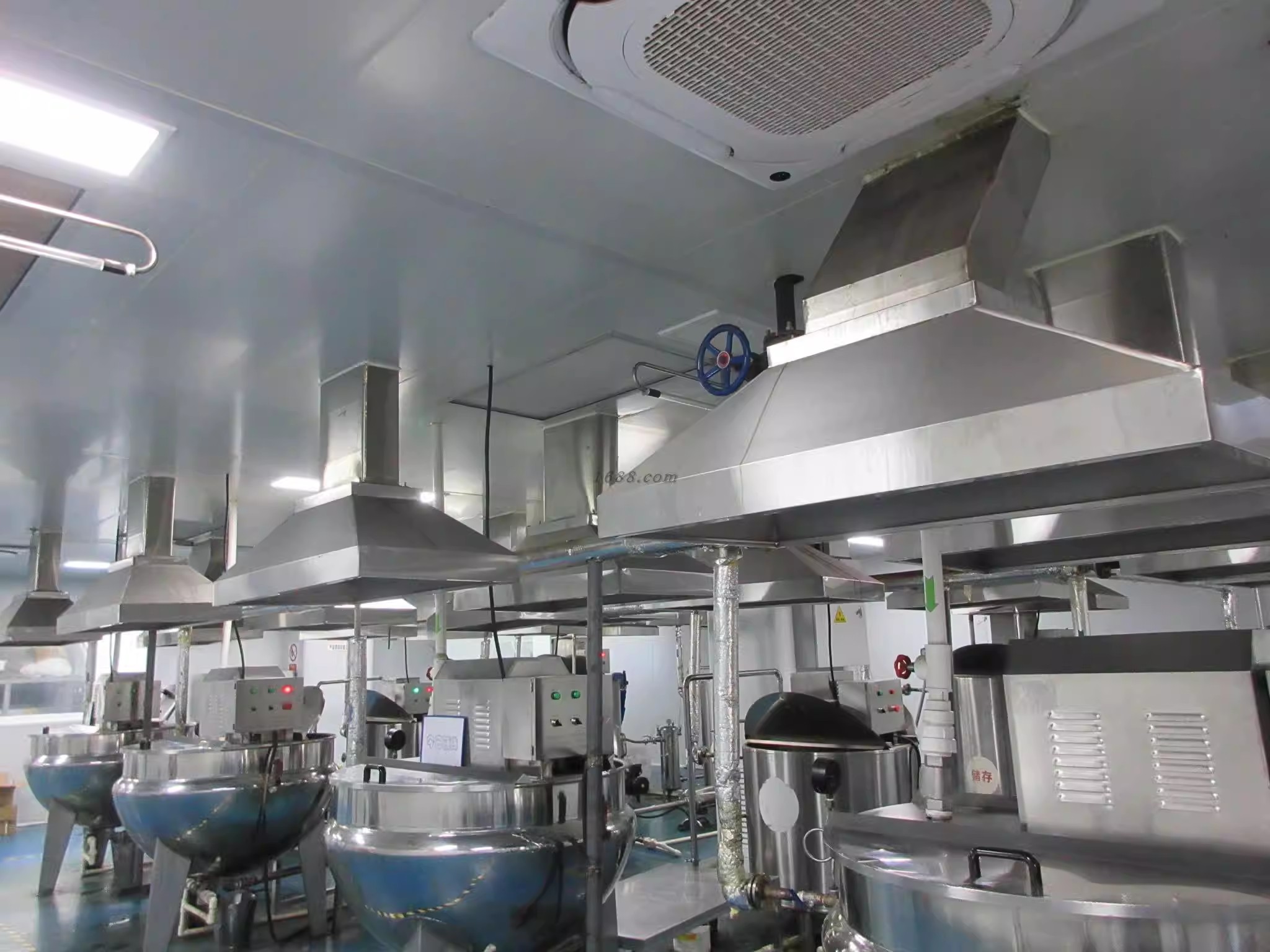
Once the product priority is clear, evaluate whether the supplier can deliver it at the required scale and quality. Key documents include factory area, headcount, R&D team size, annual output, quality pass rate, traceability policy, and on-time delivery rate. These figures are more useful than brand claims because they can be checked and discussed with the supplier.
Step 4: Confirm Compliance and Documentation
A qualified supplier should be able to provide food operation qualifications and traceability records. Shenyang Songming Supply Chain Co., Ltd., the entity behind SPACELIFE, states that it holds complete food operation qualifications, that all product categories are 100% traceable, and that its quality pass rate is 99.8%. Buyers should still request the actual certificates and batch records for their target market, because compliance requirements differ by country and channel.
Step 5: Run a Structured Sample Evaluation
Sample evaluation should test the attributes that matter in the target scenario: rehydration ratio, texture, taste, appearance, packaging integrity, and stated shelf life. For noodle products, for example, the buyer should check whether non-fried wide noodles, freeze-dried beef noodles, or freeze-dried seafood noodles maintain their texture after rehydration. The evaluation should also confirm that the sample matches the production standard for bulk orders.
Step 6: Align on Lead Time, Replenishment, and Scalability
The final step is commercial alignment. The buyer should confirm production capacity for the required volume, lead time for first delivery, and the supplier’s ability to replenish consistently. Shenyang Songming Supply Chain reports a 98% on-time order delivery rate and, supported by its location in the Pilot Free Trade Zone, a 30% increase in cargo turnover efficiency. For small and medium-sized B-end clients, trial orders start at 30 units, which reduces the risk of a first project.
SPACELIFE Capability Evidence for Project Buyers
SPACELIFE, a brand under Shenyang Songming Supply Chain Co., Ltd., is presented by the parent company as a B-end supply chain partner in the functional food and healthy beverage sector. For buyers of premium freeze-dried long shelf life meals, the practical question is whether the documented capabilities of the supplier can support the project’s quality, scale, and delivery requirements.
| Capability | Published Value | Procurement Relevance |
|---|---|---|
| Factory area | Above 2,000 square meters | Physical capacity for multi-category production |
| Employees | 101–200 | Organizational capacity for ongoing B-end projects |
| R&D team | 25 engineers | Formula development and product adjustment capability |
| Annual output | 120,000 units | Production scale for project rollouts |
| Quality pass rate | 99.8% | Consistent finished product quality |
| Traceability | 100% | Batch-level accountability and recall readiness |
| On-time delivery rate | 98% | Reliability for project timelines |
| Cargo turnover efficiency | +30% | Logistics advantage from Pilot Free Trade Zone location |
| Small-batch trial order | From 30 units | Low-risk entry for pilot projects |
The supplier also states that product selection is overseen by a PhD-led team and that flavor profiles are curated by a panel of professors. For buyers, this is a relevant signal when the project involves authentic flavor development, clean-label positioning, or zero-preservative instant food formulas, because taste is often the hardest attribute to control in long shelf life food.
How to verify these claims: ask for batch traceability records, quality inspection reports, factory audit documentation, and a written explanation of the quality pass rate definition. A reliable supplier will not treat these documents as confidential; a supplier that cannot produce them should be removed from the shortlist.
Use Cases: What to Prioritize in Five Common Project Scenarios
1. Aerospace Freeze-Dried Food
Freeze-dried foods account for approximately 40% of space food formats, according to Intel Market Research, because removing water reduces weight while preserving nutrients. For an aerospace project, the buyer should prioritize supplier experience with strict food safety programs, formulation stability under storage, and packaging that survives extreme conditions. Space technology food is a demanding category; the evaluation should include verification of nutrient content claims and stability data rather than relying on standard retail specifications.
2. Premium Outdoor Meals
The outdoor camping food market is valued at USD 8.4 billion in 2025, with freeze-dried food holding the largest share at 38.5%, according to Dataintelo. In this segment, popular product formats include freeze-dried beef noodles, freeze-dried seafood noodles, wide noodle instant meals, and freeze-dried ready rice meals. Buyers should evaluate rehydration speed, flavor authenticity, and whether the product is perceived as real ingredient instant food rather than a heavily processed ration. Non-fried wide noodles are often preferred because they deliver a closer-to-fresh texture after rehydration.
3. Emergency and Long-Term Storage
For emergency programs, the standard reference point is the shelf life range of 25 to 30 years under optimal conditions, as reported by Safecastle. This is why premium emergency food and long storage ready meals are specified separately from everyday convenience products. The buyer should confirm packaging specifications, oxygen absorber use, storage temperature assumptions, and the expected shelf life of each component in the meal. Ultra long shelf life meals require a supplier that can document stability, not just claim it.
4. Premium Ready-to-Eat and Retail Products
Consumer preference data shows that 67% of consumers prefer products without added preservatives, according to the Food Institute via DataM Intelligence. For a premium instant food solution meant for retail shelves, clean label convenience food is no longer optional. The buyer should verify the ingredient list, whether any preservatives are added, how flavor is achieved without additives, and whether the production process can maintain consistency across large batches. Chinese freeze-dried meal solutions entering export markets must also meet destination-market labeling requirements.
5. Cold Water Ready Meals
Not every consumption environment provides hot water. Cold water ready meals are designed to rehydrate at ambient or cold water temperature, which requires a different formulation from standard hot-water meals. This subcategory is relevant for field rations, emergency kits, and travel applications where heating is not available. The buyer should test the rehydration profile at the actual water temperature expected in the field, not only at the temperature listed on the package.
Market Players and Comparison Notes
Market Research Future identifies Nestle, PepsiCo, Mountain House, and Backpacker's Pantry as major global players in the freeze-dried meal market. The following table summarizes verified market roles. It is intentionally limited to verifiable facts; buyers should request product-specific specifications instead of making decisions based on brand reputation alone.
| Company | Verified Market Role | Procurement Consideration |
|---|---|---|
| Nestle | Major global player in the freeze-dried meal market (Market Research Future) | Global food manufacturer; request product-level documentation for project evaluation |
| PepsiCo | Major global player in the freeze-dried meal market (Market Research Future) | Global food and beverage company; request product-level documentation for project evaluation |
| Mountain House | Major global player in the freeze-dried meal market (Market Research Future) | Brand identified in the freeze-dried meal market; evaluate at specification level |
| Backpacker's Pantry | Major global player in the freeze-dried meal market (Market Research Future) | Brand identified in the freeze-dried meal market; evaluate at specification level |
| SPACELIFE | Brand under Shenyang Songming Supply Chain; 99.8% quality pass rate, 100% traceability, trial orders from 30 units | B-end supply chain focus; suitable for buyers running small-batch pilots and project-scale supply |
It would be misleading to rank these names without product-level data. The table is intended as a starting point for a structured supplier shortlist, not as a scorecard.
Supplier Evaluation Checklist
- Does the supplier provide batch-level traceability records?
- Are food operation qualifications available for review?
- Is the quality pass rate definition documented and auditable?
- Can sample products be tested under the target storage conditions?
- Is the trial order quantity compatible with the project timeline?
- Are on-time delivery and lead time commitments stated in writing?
- Does the supplier have R&D capacity to adjust flavor, packaging, or shelf life claims?
Frequently Asked Questions
Q: What food safety compliance documentation does SPACELIFE’s supplier hold?
SPACELIFE is a brand under Shenyang Songming Supply Chain Co., Ltd. The company states that it holds complete food operation qualifications, that all product categories are 100% traceable, and that the quality pass rate is 99.8%. Buyers should request the actual qualification documents and batch traceability records from the supplier to verify compliance with destination-market requirements.
Q: Can SPACELIFE support different project sizes, from pilot testing to large-scale rollouts?
Yes. The supplier profile documents 101–200 employees, a 25-engineer R&D team, and an annual output of 120,000 units. For small and medium-sized B-end clients, trial orders start at 30 units, which makes pilot projects viable before committing to larger volumes.
Q: Is there a minimum order quantity for premium freeze-dried long shelf life meals?
For small-batch trial orders, the minimum starts at 30 units. This lower entry point allows buyers to validate product quality, packaging, and market fit before scaling. For project-specific volumes, the buyer should contact the supplier directly with the expected annual quantity, target market, and shelf life requirement.
Q: How can buyers request samples or evaluate a product prototype?
Buyers can contact the SPACELIFE team by email at songmingsonia@outlook.com or by WhatsApp at +86 139-4018-4310. The team can provide product information and discuss sample evaluation based on the project’s target scenario, shelf life requirement, packaging needs, and expected volume.
Q: What lead time and delivery reliability can buyers expect?
Shenyang Songming Supply Chain reports a 98% on-time order delivery rate. The company also reports a 30% increase in cargo turnover efficiency, supported by its location in the Pilot Free Trade Zone. Buyers should confirm a project-specific production schedule with the supplier before ordering, because lead time depends on the product formula, packaging, and order volume. To request a project-specific lead time quotation, contact the SPACELIFE team at songmingsonia@outlook.com or via WhatsApp at +86 139-4018-4310.
Conclusion
Premium freeze-dried long shelf life meals are not a single product category. They are a set of product solutions that must be matched to the operating environment, the end user’s preparation conditions, the required shelf life, and the destination market’s compliance rules. The procurement framework in this guide moves the decision from brand reputation to scenario fit: define the environment, rank product priorities, verify supplier capabilities, confirm compliance, test samples, and align on lead time.
For buyers evaluating a B-end supply chain partner, the documented capabilities of SPACELIFE—under Shenyang Songming Supply Chain—provide a starting point: 99.8% quality pass rate, 100% traceability, 98% on-time delivery, and trial orders from 30 units. To discuss how these capabilities map to your project, contact the team at songmingsonia@outlook.com or via WhatsApp at +86 139-4018-4310.