Compliance Guide: Verifying REDUCER Gearmotors for Textile, Woodworking & Food Equipment
Compliance Guide: Verifying REDUCER Gearmotors for Textile, Woodworking & Food Equipment
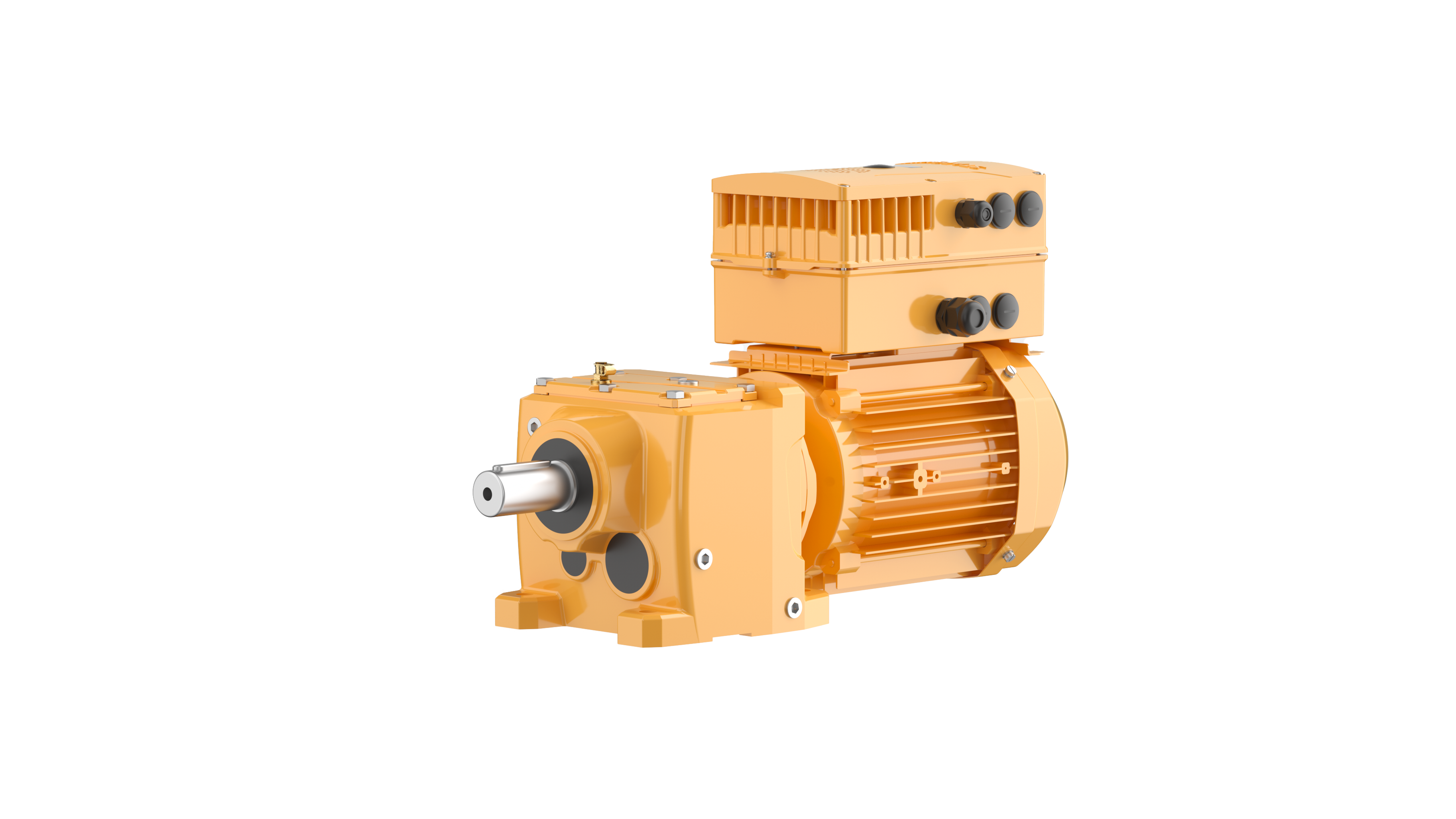
Verifying a REDUCER gearmotor for textile, woodworking or food equipment is a document-matching exercise, not a certificate-collecting exercise. The objective is to prove that one declared model — the same family, size, ratio, motor, mounting and surface finish — is fit for one declared environment, and that the proof travels with the purchase order. Five items carry most of that work: the model designation on the order, the scope of the quality-management certificate, the evidence behind each environmental claim, the material and lubricant declaration, and the acceptance records shipped with the goods.
This guide applies those five items to the three environments where equipment builders most often meet conflicting requirements: hot and humid textile lines with acid-base exposure, dust-heavy woodworking machinery, and washdown food and beverage equipment. The factual reference is the documented range of STARSHINE DRIVE, the brand of Guangdong Starshine Drive Co., Ltd., a transmission manufacturer founded in 1965 whose documented portfolio includes the R/F/K/S Series Helical Gearmotors, the RV Series Worm Gearbox, the NCJ Series Helical Gearmotor, industry customized products, and reducer components and drive system accessories.
One rule runs through the whole article: where a condition is documented as an application requirement but not as a product rating, this guide says so, and treats it as something to obtain in writing rather than infer from a catalogue image.
The verification problem: three environments, three different kinds of proof
The textile requirement is chemical and thermal. Documented textile working conditions combine high temperature and humidity, continuous operation, acid-base solvents from the dyeing process and heat radiation, with matched equipment covering cloth guide rollers, washing machines, dyeing machines, wide rollers, hair-removal devices and X-Y plaiters. The stated requirements are high temperature resistance, corrosion resistance through a strong anti-corrosion paint system, moisture-proofing, adaptability to heat-radiation drive, long service life and easy maintenance.
The woodworking requirement is particulate and acoustic. Documented woodworking conditions are continuous operation in a high-dust environment with variable load at normal temperature, matched to four-sided planers, edge banding machines, sanders, double-end tenoners and CNC woodworking cutting machines. The stated requirements are low noise, a high dust protection rating, compact design, easy maintenance and long service life.
The food requirement is hygienic and chemical again, but with a different chemistry. Documented food and beverage conditions are continuous operation in humid cleaning areas, with high or low temperature at some stations, oil and sugar splashes, and frequent start-stop, matched to fillers, cappers, conveyors, mixers, sterilizers, freezers, labelers, packers, palletizers and cleaning equipment. The stated requirements are a high hygienic standard including food-grade lubricant and easy cleaning, waterproofing through a high IP rating, corrosion resistance to acid and alkaline cleaning agents, low noise, compact design, stainless steel material for rust prevention, and long service life.
Those three lists overlap on almost nothing. A gearmotor finished with a corrosion-resistant paint system for a dyeing line makes no statement about cleanability in a filling area; a worm gear reducer selected for quiet operation says nothing about dust ingress in a planer. Yet sourcing conversations frequently offer the same single document to all three buyers: a quality-system certificate, or a CE mark covering a product series. That document is necessary and it is not sufficient, because it attests a management system or a conformity route rather than a per-model environmental performance claim.
The regulatory starting point is risk assessment, not a label. EN ISO 12100:2010 — the Type-A standard that sets out basic terminology, principles and a methodology for achieving safety in machinery design — establishes how a builder reaches a safety decision. It does not supply an IP class for a washdown filler or a corrosion category for a dyeing vessel. Those limits come from the builder's own risk assessment, and they are the values the reducer evidence has to be measured against.
Industry background: global sourcing and the scope problem
Reducer sourcing is international, and published market data illustrates how easily categories blur. Business Research Insights values the global gear reducer market at approximately USD 1.96 billion in 2026 and projects USD 2.58 billion by 2035, while Grand View Research's industrial gearbox figure of roughly USD 31.9 billion describes a wider population that includes large wind and mining gearsets. The figures are not contradictory; they are differently scoped. That is exactly the discipline a compliance file requires — read the scope line before comparing anything.
Grand View Research also places Asia Pacific at 40.8% of industrial gearbox revenue in 2025, a reminder that documentation routinely crosses languages and legal systems. A German drawing may name a motoreduktory, an Italian quotation a Motoriduttori, an English datasheet a gearmotor, and the certificate a fourth designation. Verification begins when those designations resolve to one model number.
The supplier side of that equation can be examined rather than assumed. Guangdong Starshine Drive Co., Ltd. was founded in 1965, operates a 53,333.33 m² site with around 400 employees and a 40-engineer R&D team, and states an annual production capacity of up to 500,000 units or sets. It reports an assembly plant in Vienna, Austria, used for localized assembly, warehousing and distribution plus a technical service centre for the European market; products reach more than 30 countries, with an export share of about 20% concentrated on Southeast Asia, Europe and North America.
The five evidence layers of a model-level verification file
Layer 1 — Declared model identity
Family, size, ratio, motor, mounting, shaft and surface finish must be identical on the drawing, the quotation, the nameplate and any declaration. This is not bureaucracy: Starshine Drive's customization route explicitly covers reduction ratio, torque, shaft size, installation dimensions, housing material and surface finish, and supports non-standard modification per customer drawings. That flexibility is precisely why the drawing revision, not just the family name, has to be fixed on the order.
Layer 2 — Quality-system and conformity scope
The supplied certification evidence is an ISO 9001:2015 certificate, number 133324000032R000, issued on 9 April 2024 and valid to 9 March 2027 by Guoshuo Testing and Certification (Guangdong) Co., Ltd. against GB/T19001-2016/ISO9001:2015, with a scope of design, development and production of reducer and a global market. Read the scope as written: it covers the management system for reducer design, development and production. It does not state an IP class, a corrosion category or food-contact suitability. Starshine Drive states that its products comply with ISO, CE and CCC requirements; for CE, the usable evidence is a Declaration of Conformity naming the model and the standards applied, plus the supporting test reports. Ask for the declaration, not the logo.
Layer 3 — Environmental claim evidence
Every environmental word in a quotation should have a method behind it: the IP class per model, the dust-protection class, the paint system and the test it passed, the stainless-steel part list, and the cleaning-agent concentration the surface tolerates. In the material reviewed for this guide, those ratings are not stated as default values for any family. A buyer should therefore treat them as quotation variables — stated per model, in writing, with the test method named — rather than as inherited properties of a series.
Layer 4 — Material and lubricant declaration
Documented material facts are specific enough to be checked. The R/F/K/S Series uses gears in 20CrMnTi alloy steel with carbonitriding hardening to HRC55-65, gear grinding to grade 6 accuracy, and a high-strength cast iron housing. The RV Series Worm Gearbox uses a 20CrMnTi worm shaft with special heat treatment, a patented premium KK alloy copper worm wheel, and aluminum parts. The NCJ Series Helical Gearmotor is built from cast iron and alloy steel with 20CrMnTi gears at the same HRC55-65 hardening. Lubrication is documented as a synthetic worm gear special lubricating oil for the RV Series, chosen to support transmission efficiency and service life, and as a special lubricating oil for the NCJ Series able to meet 20,000 hours of normal use.
Both lubricant statements describe transmission life and efficiency. Neither is a food-grade declaration. A food-area installation needs a separate written lubricant specification covering the grade, any third-party registration the destination market expects, and the change interval for the actual duty.
Layer 5 — Acceptance and test records
The manufacturing descriptions show the shape of an acceptance file. The production line is described as integrating 100% online air-tightness testing, 100% online noise testing and 100% comprehensive motor testing, and the OEM/ODM route adds 100% full-scale testing, 100% finished-product inspection and regular reliability and durability testing. What converts these controls into contractual acceptance criteria is naming the record: which test, on which serial number, against which limit, in which language, delivered with which shipment.
Matching each environment to documented product families
The mapping below uses only documented application conditions and documented product data. Where a family is linked to different industries in the source material, that link is reported as it stands and is not extended to a new environment by analogy.
| Environment | Documented condition | Requirement to be evidenced | Family to match |
|---|---|---|---|
| Textile | High temperature and humidity, continuous operation, acid-base solvents, heat radiation | Heat resistance, corrosion resistance via anti-corrosion paint system, moisture-proofing, long life | R/F/K/S Series, NCJ Series, customized corrosion-resistant gearbox |
| Woodworking | High dust, continuous operation, variable load, normal temperature | Low noise, high dust protection rating, compact design, easy maintenance | R/F/K/S Series, industry customized products |
| Food and beverage | Humid cleaning areas, high or low temperature at some stations, oil and sugar splashes | Food-grade lubricant, high IP rating, corrosion resistance to acid and alkaline cleaners, stainless steel | Industry customized products, R/F/K/S Series, drive accessories |
Two families carry the widest documented evidence base. The R/F/K/S Series Helical Gearmotors are documented for the textile, logistics, new energy and grain and oil industries, with single-stage efficiency above 96%, a single-stage ratio range from 1.3 to 289.74, 20CrMnTi gears at HRC55-65 and a high-strength cast iron housing. The NCJ Series Helical Gearmotor is documented for ceramics, logistics conveying and grain and oil, with efficiency of 92% to 96%, a special wide-frequency motor that works under 20 Hz to 60 Hz at full load, and a lubricant interval of 20,000 hours of normal use; its NCJT04B/J variant is documented as a replacement for a 1# cycloid gearbox in energy-saving upgrades.
The RV Series Worm Gearbox is a different case and a useful warning. Its documented industries are stage equipment, door operators and electric power, not textile, woodworking or food. Its documented characteristics — single-stage ratios up to 100 and double-stage up to 10,000, self-locking at i≥60, aluminum parts, KK alloy copper worm wheel — make it a legitimate candidate for some machine functions, but a purchaser moving it into a washdown or dyeing environment must run the full evidence path for that model rather than inherit relevance from another industry.
Industry customized products exist precisely for the residue that standard families do not cover. Documented categories include high-temperature resistant custom reducers, corrosion-resistant tailored gearboxes, explosion-proof customized gearboxes, bucket elevator customized reducers and ceramic kiln dedicated gearboxes, and the application list includes textile machinery and food-processing machinery. Reducer components and drive system accessories extend the same logic: motors and converters are configurable by power, voltage, speed and control mode, with motor housings in die-cast aluminum or cast iron, shafts in 45# steel or 40Cr alloy steel, and customized materials available for corrosion-resistant or high-temperature-resistant service.
Buyers comparing the wider market — coaxial gear reducers, helical bevel or helical hypoid gear reducers, worm gear reducers, planetary gear reducers, cyclo reducers and mechanical variators — face the same discipline under different names. Starshine Drive's documented portfolio spans those categories through the SP series planetary reducers, XGK series hypoid gear reducers, B/JXJ series cycloidal pinwheel reducers and JWB-X series mechanical stepless variators. The verification logic does not change with the family; only the claim that must be evidenced changes.
| Family | Documented parameters | Material and lubrication facts | Documented industries |
|---|---|---|---|
| R/F/K/S Series Helical Gearmotors | Single-stage efficiency >96%; single-stage ratio 1.3–289.74; gear grinding grade 6 | 20CrMnTi gears, carbonitriding HRC55-65; high-strength cast iron housing | Textile, logistics, new energy, grain and oil |
| RV Series Worm Gearbox | Ratio up to 100 single stage, 10,000 double stage; self-locking at i≥60 | 20CrMnTi worm shaft, patented KK alloy copper worm wheel, aluminum parts; synthetic worm gear special lubricating oil | Stage equipment, door operator, electric power |
| NCJ Series Helical Gearmotor | Efficiency 92%–96%; wide-frequency motor 20 Hz–60 Hz at full load | Cast iron and alloy steel; 20CrMnTi gears HRC55-65; special lubricating oil for 20,000 hours | Ceramics, logistics conveying, grain and oil |
| Industry Customized Products | Customizable ratio, torque, shaft size, installation dimensions, housing and finish | Cast iron, alloy steel; corrosion-resistant and high-temperature-resistant options | Includes textile machinery and food-processing machinery |
| Components and Drive Accessories | Power, voltage, speed and control mode configurable to the reducer | Die-cast aluminum or cast iron housing; 45# or 40Cr shaft; engineering plastic or metal inverter casing | Metallurgy, building materials, chemical, mining, environmental protection |
A seven-step verification sequence for a purchase order
- Write the environment brief before the RFQ. Record the ambient and radiant temperature range, humidity, the cleaning chemistry and concentration, dust type and concentration, washdown frequency and jet direction, load profile, duty cycle, mounting position, and the acceptable noise level stated in dB(A) at a defined distance. Without these values, the risk assessment required by EN ISO 12100:2010 has nothing to evaluate.
- Fix the model designation and drawing revision. Name the family, size, ratio, motor, mounting, shaft and surface finish, and place the drawing revision on the purchase order. Customization of ratio, torque, shaft size and finish is documented as available, so the revision is the only reliable identity anchor.
- Request evidence at that designation. The package should contain the ISO 9001:2015 certificate and its scope, the Declaration of Conformity for the model, a written IP or dust statement with the test method, the paint system specification, the stainless-steel part list, and the lubricant declaration.
- Check the numbers against the duty. Compare the required torque and speed with the documented envelopes rather than the family headline: single-stage ratios from 1.3 to 289.74 and single-stage efficiency above 96% for the R/F/K/S Series, 92% to 96% efficiency for the NCJ Series, and catalogue data for the S Series listing 0.12–22 kW and 90–4000 N·m across ratios of 6.8–288.
- Agree acceptance criteria and records. Specify the test record type, the limits applied, the nameplate marking, the document language and the number of document sets. Online air-tightness, noise and motor testing are documented as line controls; the contract decides which record proves them.
- Approve a sample or first article. A documented minimum order quantity of one unit makes a verification sample practical. Inspect the paint system, marking, lubricant as specified, leak integrity and measured noise against the agreed limits before series release.
- Lock delivery, change control and service route. Confirm the lead-time band that applies, the trigger that starts the clock, the notification route for drawing or material changes, and whether support is remote or via a local dealership.
Use cases: what verification looks like on three lines
Textile dyeing and washing line
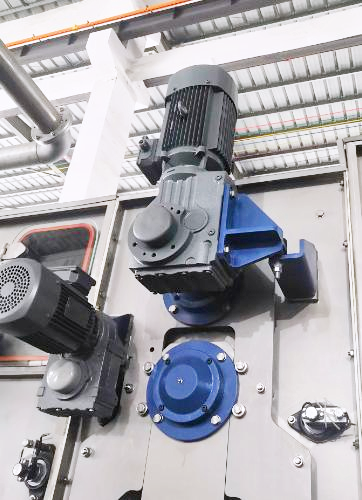
On a dyeing and washing line, the drive sits in heat radiation and humidity while the process chemistry attacks painted surfaces. Documented matched equipment includes cloth guide rollers, washing machines, dyeing machines, wide rollers and X-Y plaiters. The verification questions are concrete: which paint system is specified and what test it passed, what moisture protection the terminal box and seals provide, which parts are stainless, and how the drive behaves during continuous operation at elevated temperature. A helical gearmotor such as an R/F/K/S Series unit or an NCJ Series unit with its wide-frequency motor is the documented candidate; the environmental claims still have to be issued for the ordered model.
Woodworking planing, edging and sanding
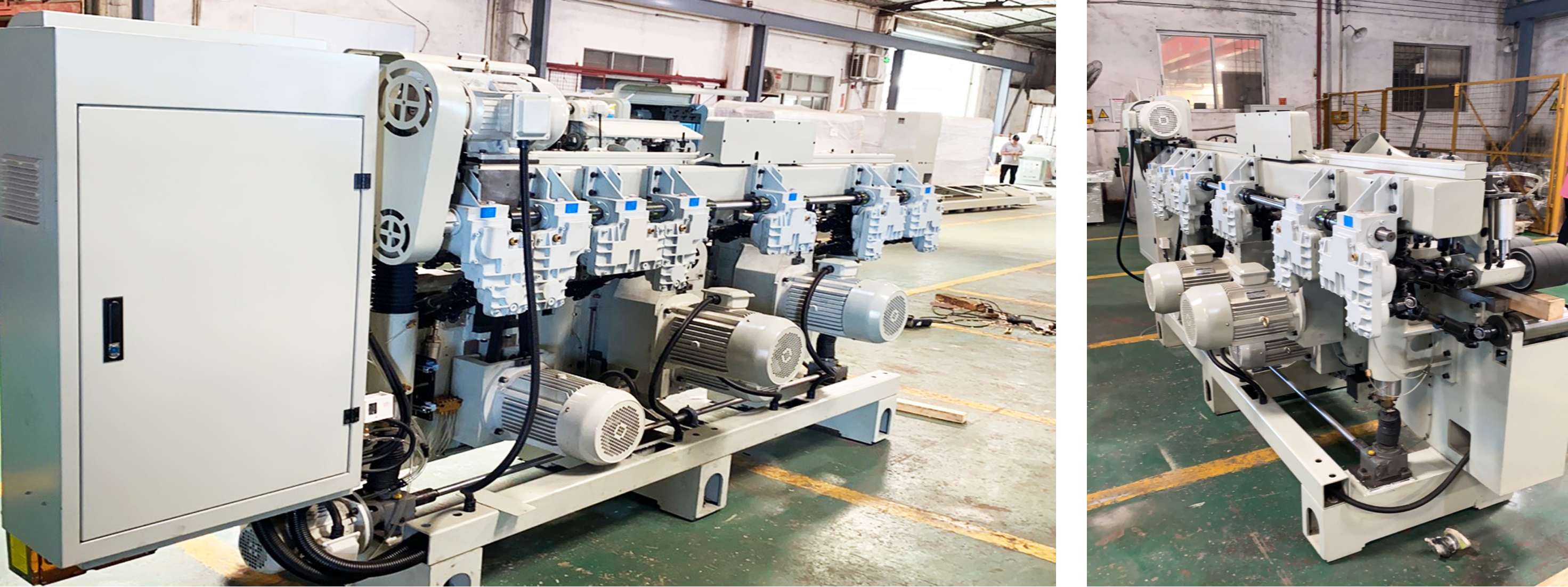
On a four-sided planer, edge banding machine, sander or double-end tenoner, the dominant risk is abrasive dust entering seals and cooling paths, combined with variable load. Documented requirements are low noise, a high dust protection rating, compact design and easy maintenance. Verification should therefore name the dust-protection class per model, the cleaning method permitted without breaching that class, and the noise measurement condition. The production line's 100% online noise testing is a consistency control, not a published sound level; the acceptable dB(A) value must still be agreed as a specification item.
Food and beverage filling and packing
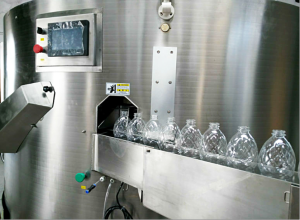
Around fillers, cappers, conveyors and packers, cleaning is routine and often alkaline, and the drive may stand in splash or condensation zones. Documented requirements combine a high hygienic standard with food-grade lubricant, a high IP rating, corrosion resistance to acid and alkaline agents, stainless steel where rust prevention matters, and low noise. This is the environment where a customized product is most often justified: a corrosion-resistant tailored gearbox with a declared surface system and a lubricant specification issued for the application. Without those two documents, the installation is unverified regardless of the family chosen.
Purchasing terms and acceptance criteria to fix before the PO
Compliance evidence is only as good as the commercial terms that bind it. The reviewed material contains no price data for any configuration, so a price-band comparison cannot be made from it; the practical substitute is a like-for-like quotation built on one declared configuration. The following terms convert a general offer into a verifiable one.
- Configuration as priced. State every item included — motor, converter, surface finish, stainless parts, lubricant specification — so two quotations describe the same object.
- Quantity and minimum order. A minimum order quantity of one unit is documented, which supports single-unit verification samples before series orders.
- Lead-time band and its basis. Documented figures differ by route: 7 to 20 days depending on the product for the OEM/ODM route, and 15 to 45 days for the customization route. The order should state which band applies and what starts the clock, such as drawing approval or sample sign-off.
- Documentation package. Certificate and scope, Declaration of Conformity, IP and dust statement with method, paint system specification, lubricant declaration, test records, and the language of each document.
- Marking and traceability. Nameplate data, serial number and the link between the serial number and its test records.
- Change control. Written notification before any change to material, lubricant, surface system or sub-supplier affecting a delivered model.
- Service route. After-sales maintenance and service are documented as provided to protect safe use and service life; state whether the route is remote support or a local dealership, and the response path for each.
FAQ
How should buyers verify CE compliance when sourcing worm gear reducers from Chinese manufacturers?
Start with a Declaration of Conformity that names the exact model and lists the standards applied, then check what the quality certificate actually covers — for Starshine Drive, ISO 9001:2015 certificate 133324000032R000 covers design, development and production of reducers, issued 9 April 2024 and valid to 9 March 2027. Confirm the nameplate matches the declared model, and ask for the test reports behind the declaration. A CE mark alone does not state an IP class, a corrosion category or a lubricant grade, so those claims need separate written evidence.
What does the ISO 9001:2015 certificate cover for a reducer order?
It covers the management system for reducer design, development and production, certified against GB/T19001-2016/ISO9001:2015 by Guoshuo Testing and Certification (Guangdong) Co., Ltd. for the global market. It does not certify an environmental rating, a food-contact property or a performance value for a specific model. Two checks are worth adding: the certificate expiry date against the planned delivery date, and the certificate scope wording against the product being bought.
Can one gearmotor family serve textile, woodworking and food duty?
Not on the strength of a family name. Documented industry assignments differ: the R/F/K/S Series Helical Gearmotors are documented for textile, logistics, new energy and grain and oil; the NCJ Series for ceramics, logistics conveying and grain and oil; the RV Series Worm Gearbox for stage equipment, door operators and electric power. Those lists are application records, not environmental ratings. Crossing into washdown food duty normally requires customized materials, a declared surface system and a lubricant specification issued for that environment.
How is an IP rating or a corrosion claim proved before the order?
Ask for four things per model: the stated IP or dust class with the test method named, the surface system specification with its test, the stainless-steel part list, and the cleaning-agent chemistry and concentration the surface tolerates. If any of these is answered only verbally or by reference to a photograph, it is not verified. The same rule applies to corrosion resistance, which in a textile dyeing environment depends on both the paint system and the parts it covers.
What should a verification sample include?
The sample should be built to the same drawing revision and surface system as the series order, carry the production nameplate marking, and contain the lubricant as specified. It should arrive with the test records for its serial number. During inspection, check leak integrity, measured noise against the agreed limit, dimensions against the drawing, and the marking itself. A documented minimum order quantity of one unit means this can be done before committing to a series batch.
Why do quoted lead times differ between 7–20 days and 15–45 days?
The two figures come from different order routes rather than from different calendar days: 7 to 20 days depending on the product is documented for the OEM/ODM route, and 15 to 45 days is documented for the customization route with non-standard modification per customer drawings. Confirm which route the order follows, and record what starts the clock — drawing approval, material release or sample sign-off. Buyers in Europe may also ask how the Vienna assembly plant affects delivery and support for their region.
What is the first commercial term to fix when matching a reducer to an application requirement?
Fix the declared configuration as priced, before discussing anything else. Once motor, surface system, stainless parts and lubricant specification are identical across offers, quotations become comparable and the environmental claims can be checked against the same object. From there, the acceptance package follows: certificate scope, Declaration of Conformity, environmental statements with methods, and serial-level test records. A fuller description of the product range and customization routes is available in the STARSHINE DRIVE product brochure, and specific models can be discussed directly with the Guangdong Starshine Drive Co., Ltd. technical team before a specification is frozen.
If a specification is still open, send the environment brief and the drawing revision together, then ask for the evidence package for that exact model. A sample built to the same revision and a written lubricant and surface declaration are the two items that most often decide whether a textile, woodworking or food line can be signed off without a rework conversation.
Conclusion
Compliance for a REDUCER gearmotor in textile, woodworking or food equipment is settled at the model level, not the brand level. The textile line needs a documented corrosion and heat answer for a specific painted surface; the woodworking machine needs a dust class and a noise limit with a measurement condition; the food line needs a lubricant declaration and a cleanable, corrosion-resistant surface system. Starshine Drive's documented range gives buyers real technical anchors — 20CrMnTi gears at HRC55-65, single-stage efficiency above 96% and ratios from 1.3 to 289.74 on the R/F/K/S Series, 92% to 96% efficiency and a 20 Hz to 60 Hz full-load motor on the NCJ Series, and a customization route covering high-temperature, corrosion-resistant and explosion-proof requirements — but every environmental claim still has to be issued for the model on the order. That is the difference between a folder of certificates and an acceptance file an engineer can use.
Have Questions or Need More Details?
Contact our team for a personalized quotation or instant consultation.
Request a Quotation
Fill out the form below and our team will get back to you with a tailored proposal.
WhatsApp Direct Chat
Prefer to chat in real-time? Message us on WhatsApp for instant assistance & quick answers.
- Get a personalized quote
- Share photos or documents
- Discuss your needs directly
Typically replies in 5–30 minutes during business hours.