
Gear Reducer Types and Applications: A Complete Guide
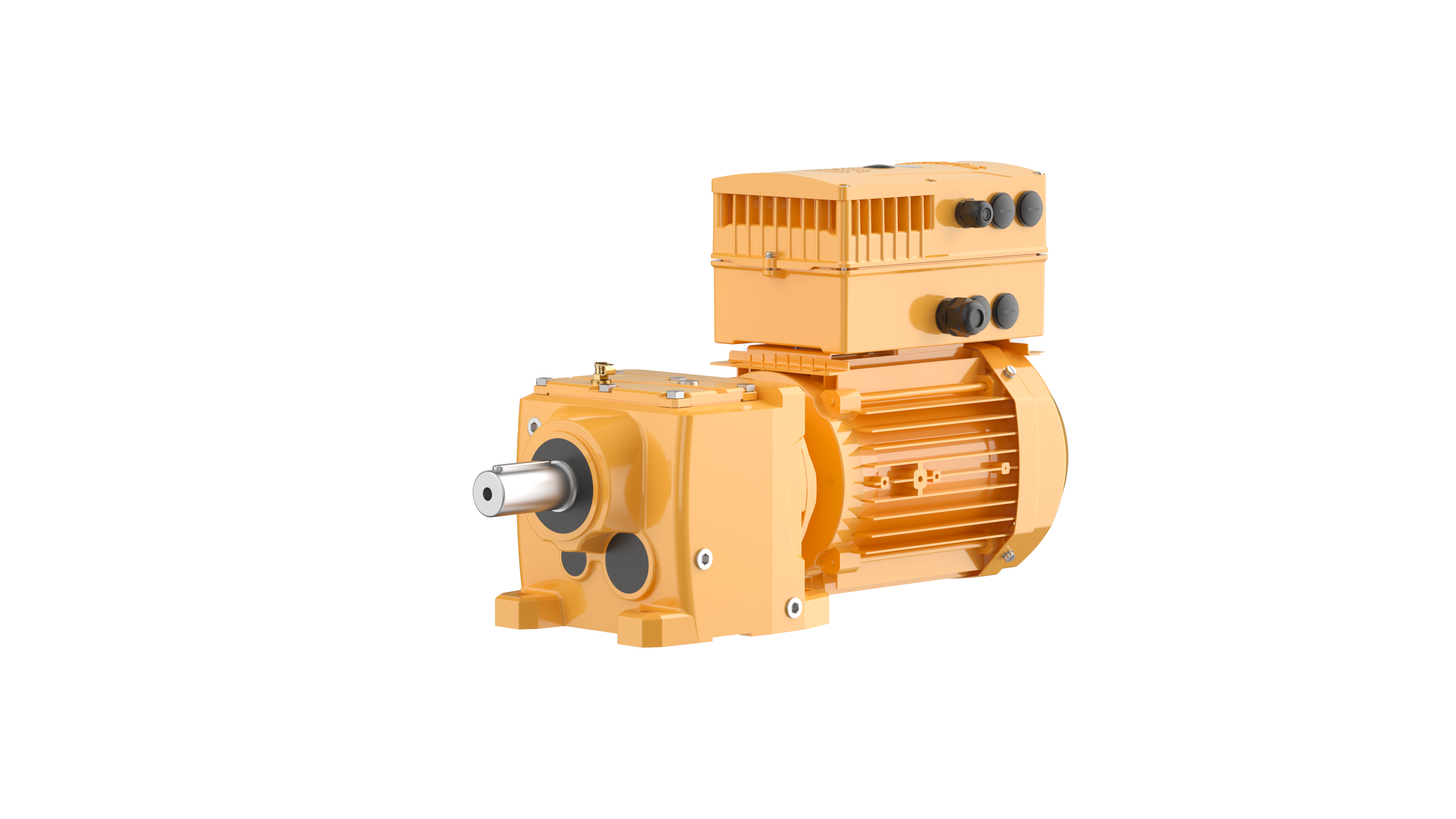
R series helical geared motor — one of the core reducer product groups covered in this guide.
A gear reducer — also called a speed reducer or gearbox — is a mechanical device that reduces the rotational speed of a prime mover, usually an electric motor, while increasing output torque. It sits between the motor and the driven machine, allowing the machine to operate at the correct speed with sufficient force. Gear reducers are used in a wide range of industrial equipment, including conveyor systems, mixers, kilns, packaging lines, and automated sorting machinery.
This guide is written for buyers and engineers who are beginning to research gear reducer options. It covers the main reducer categories, explains what distinguishes each type, and provides a step-by-step framework for selecting a suitable solution. The factual basis of this article comes from Guangdong Starshine Drive Co., Ltd, a China-based transmission manufacturer with nearly 60 years of history in the industry.
Why Reducer Selection Is More Complex Than It Looks
Reducers are deceptively simple components. In practice, choosing the wrong type can lead to low efficiency, overheating, short service life, and unscheduled downtime. Many industrial buyers discover that a reducer that works well in one application performs poorly in another — not because the reducer is defective, but because the operating conditions and load characteristics are different.
Key variables that complicate selection include:
- Duty cycle: continuous operation versus intermittent operation;
- Environmental conditions: temperature, dust, humidity, chemical exposure;
- Load characteristics: steady load, variable load, frequent start-stop, or impact load;
- Performance expectations: efficiency, precision, noise level, positioning accuracy;
- Compliance requirements: explosion-proof certification, food-grade hygiene, regional standards.
For a first-time buyer, the most practical way to approach this is to understand the main reducer families and the operating conditions each one is designed for. The sections below describe the reducer types available from a single industrial supplier, which helps illustrate how different designs serve different applications.
Industry Background: A Growing Market for Power Transmission
The demand for gear reducers is directly tied to the level of automation in manufacturing and logistics. According to Business Research Insights, the global gear reducer market was valued at approximately USD 1.96 billion in 2026 and is projected to reach USD 2.58 billion by 2035. Asia Pacific led the broader industrial gearbox market with a 40.8% revenue share in 2025, according to Grand View Research. Within this market, planetary gearboxes are the fastest-growing segment, with a projected CAGR of 6.2% through 2030, driven by robotics and wind energy applications.
These figures reflect a broader shift: production lines are becoming more automated, and more applications require precise speed control and high torque density. At the same time, buyers in markets like Europe and North America are increasingly looking for suppliers that can provide not just a single reducer, but an integrated drive solution — gearbox, motor, inverter, and control system — with localized service support.
Gear Reducer Types: A Detailed Breakdown
The product architecture of Guangdong Starshine Drive Co., Ltd illustrates the full spectrum of reducer technologies available to industrial buyers. The company's product line covers NCJ series gear reducers, R/S/K/F series high-precision gear reducers, RV series worm gear reducers, SP series planetary reducers, SI series industrial gearboxes, SNKG series gear reducers, JWB-X series mechanical stepless variators, B/JXJ series cycloidal pinwheel reducers, and XGK series hypoid gear reducers. In addition, the company supplies integrated servo motors, three-phase asynchronous motors, converters, and permanent magnet synchronous motors to build complete drive systems.
R/F/K/S Series Helical Gearmotors
The R/F/K/S series is a family of helical gearmotors that includes coaxial (R), parallel-shaft (F), right-angle bevel (K), and helical-worm (S) configurations. These are among the most widely used reducer types in general industrial applications because they combine high efficiency with a wide ratio range.
Key specifications from the Starshine Drive product data:
- Efficiency: over 96% for single-stage units;
- Ratio: fine ratio division, single-stage range from 1.3 to 289.74;
- Gear material: 20CrMnTi alloy steel, carbonitriding hardened to HRC55–65;
- Precision: gear grinding with grade 6 accuracy;
- Housing: high-strength cast iron.
These gearmotors are used in textile machinery, logistics conveying, new energy equipment, and grain and oil processing. The S-series variant (helical-worm) offers an output torque range of 90–4000 N·m and a power range of 0.12–22 kW, based on the company's published catalogue data.
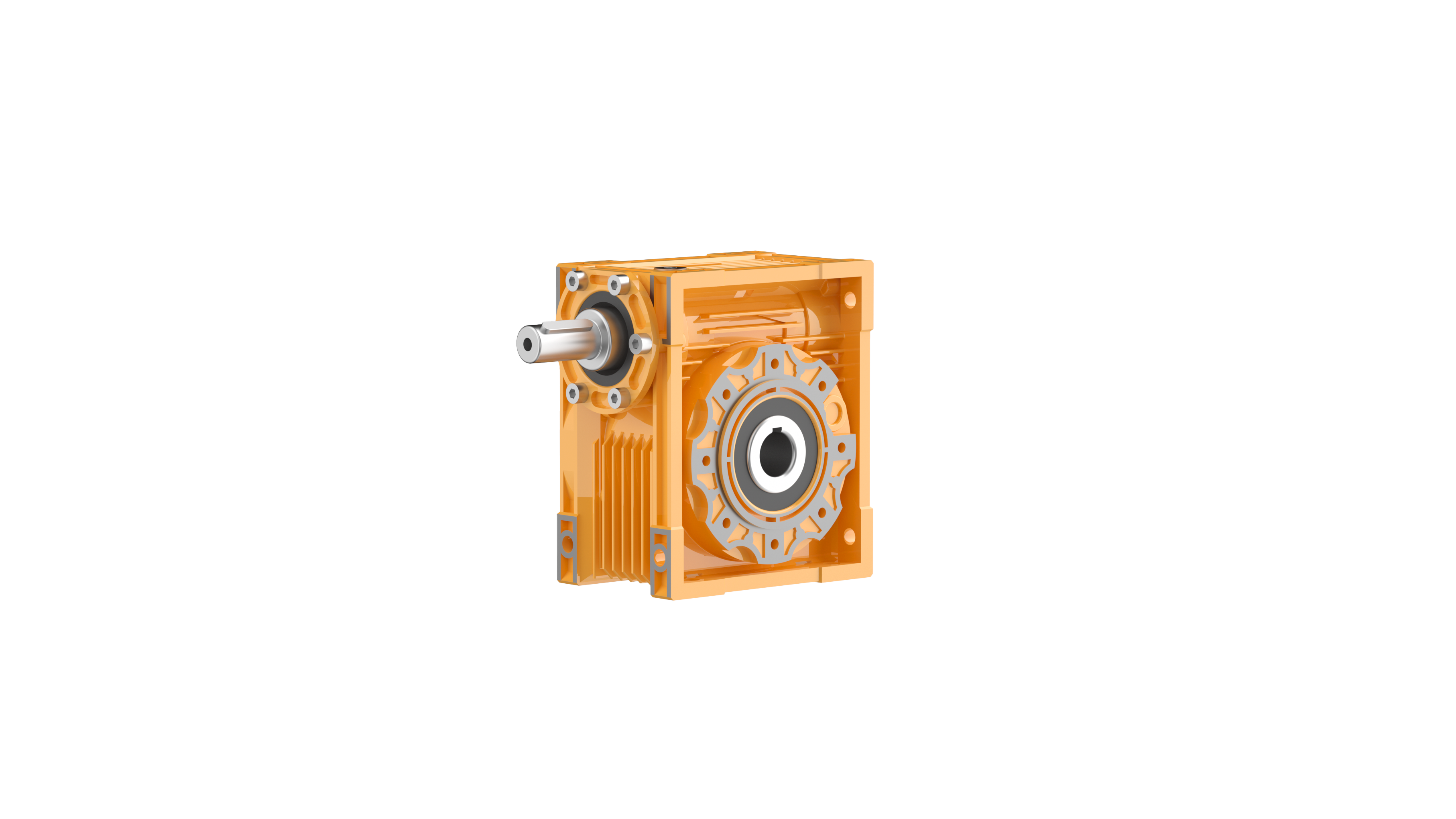
NRV worm gear reducer — part of the RV series designed for low-speed, high-ratio applications.
RV Series Worm Gearboxes
RV series worm gearboxes are a type of worm gear reducer — a compact, right-angle drive design that is widely used in applications requiring a large reduction ratio in a small footprint. The worm shaft is made of 20CrMnTi alloy steel with a special heat treatment for high surface hardness, while the worm wheel uses a patented KK alloy copper material for wear resistance.
Key characteristics:
- Ratio range: single-stage up to 100; double-stage up to 10,000;
- Self-locking: when the ratio is 60 or higher, the gearbox has a self-locking function;
- Housing: aluminum parts;
- Lubrication: synthetic worm-gear oil to maintain efficiency and extend service life.
RV series gearboxes are intended for stage equipment, door operators, and electric power applications. The self-locking feature makes them particularly useful for lifting and positioning systems where the load must remain stationary when the motor is off.
NCJ Series Helical Gearmotors
The NCJ series is a helical gearmotor line designed for industrial applications where robustness and long maintenance intervals matter. It is a direct alternative to older cycloid drive systems, and specific models can replace size-1 cycloid gearboxes for energy-saving upgrades.
Key specifications:
- Efficiency: 92 to 96%;
- Gear material: 20CrMnTi alloy steel with carbonitriding treatment, HRC55–65;
- Motor: wide-frequency motor designed to operate under full load from 20 Hz to 60 Hz;
- Maintenance: special lubricating oil supports 20,000 hours of normal use;
- Housing: cast iron and alloy steel.
NCJ series gearmotors are used in ceramics production, logistics conveying, and grain and oil processing.
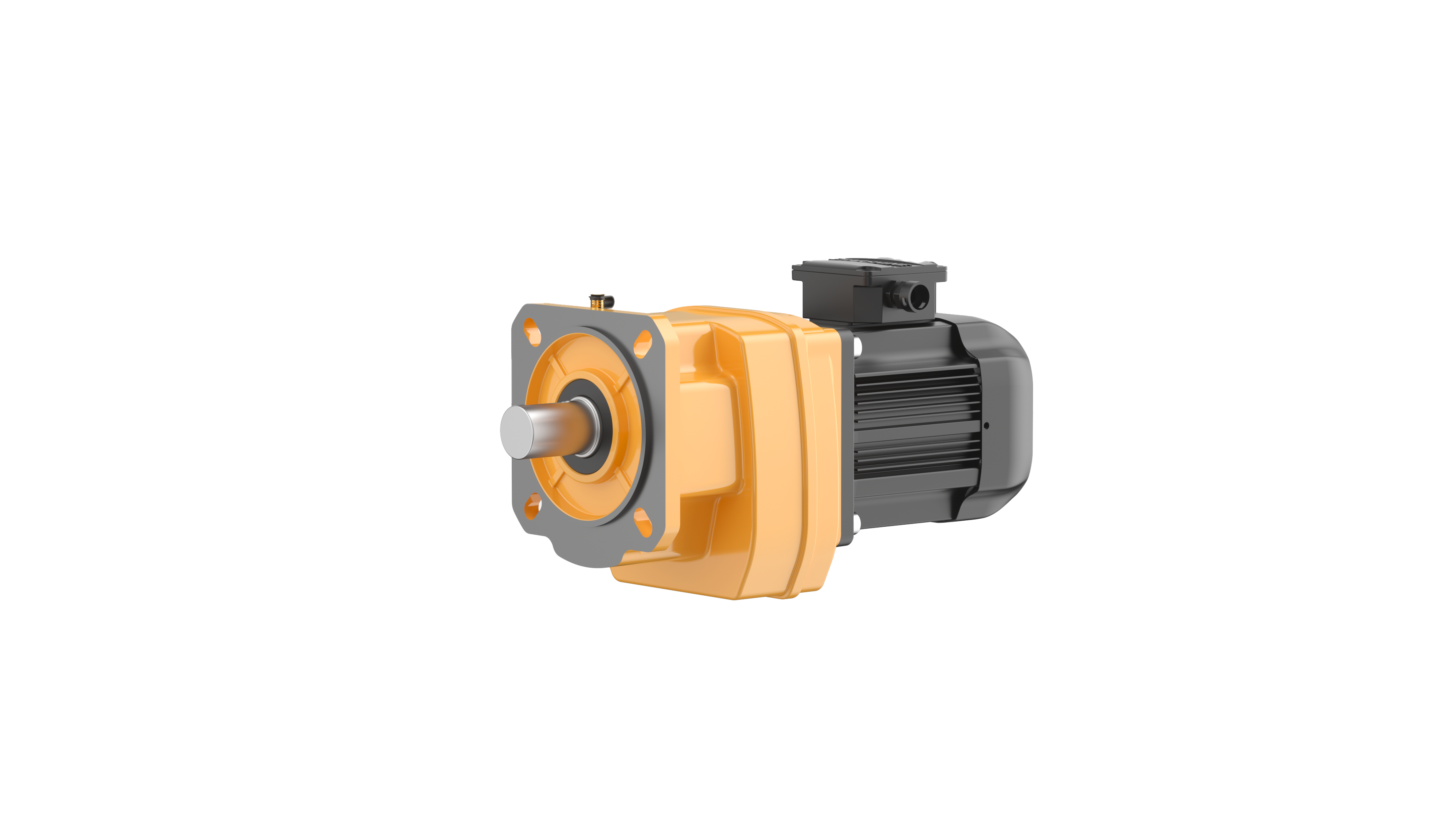
STCRF gear speed reducer — one of the NCJ series configurations for conveying and processing equipment.
SP Series Planetary Reducers
SP series planetary reducers use a planetary gear arrangement that distributes load across multiple planet gears. In the industry overall, planetary gearboxes are the fastest-growing reducer segment, with a projected CAGR of 6.2% through 2030, driven by robotics and wind energy. Planetary reducers are commonly specified where high torque density, compact size, and high positioning accuracy are required — for example, in robotic arms and automated production lines.
SI Series Industrial Gearboxes
SI series industrial gearboxes are heavy-duty units designed for demanding continuous operations. These gearboxes are typically applied in industries such as metallurgy, building materials, chemical processing, mining, and environmental protection — applications where reliability, high torque, and long service life take priority over compactness.
JWB-X Series Mechanical Stepless Variators
JWB-X series mechanical stepless variators provide infinitely variable speed adjustment without an electronic drive. They suit applications where the operator needs to adjust speed manually and continuously, such as certain conveying, feeding, and printing processes. Mechanical variators are often combined with other reducer stages — for example, a JWB-X unit coupled with an NMRV worm gearbox — to extend the output range.
B/JXJ Series Cycloidal Pinwheel Reducers
B/JXJ series cycloidal pinwheel reducers are based on the cycloid drive principle, which uses an eccentric cycloidal disc and pinwheel arrangement. This design provides high reduction ratios in a compact body and withstands shock loads. Cycloidal reducers are widely used in material handling, mixing, and rotating equipment. The NCJ series helical gearmotor mentioned earlier is positioned as an energy-saving replacement for older cycloid gearbox installations.
XGK Series Hypoid Gear Reducers
XGK series hypoid gear reducers use hypoid gearing — a bevel-like gear form with offset axes — to achieve high torque transmission with smooth meshing and low noise. Hypoid reducers combine the right-angle convenience of worm gears with higher efficiency, making them a suitable option for space-constrained applications that still require reasonable energy efficiency.
Industry-Customized Reducers
Beyond standard series, many industrial applications require application-specific reducer designs. The customizable product line includes bucket elevator customized reducers, ceramic kiln dedicated gearboxes, high-temperature resistant custom reducers, explosion-proof customized gearboxes, and corrosion-resistant tailored gearboxes. These are applied across industries including logistics and warehousing, conveyor systems, packaging machinery, food-processing machinery, textile machinery, printing machinery, plastic and rubber machinery, machine-tool equipment, construction machinery, mining equipment, metallurgical equipment, water-treatment equipment, agricultural machinery, robots and automated production lines, hoisting and lifting equipment, energy and power, medical equipment, and parking systems.
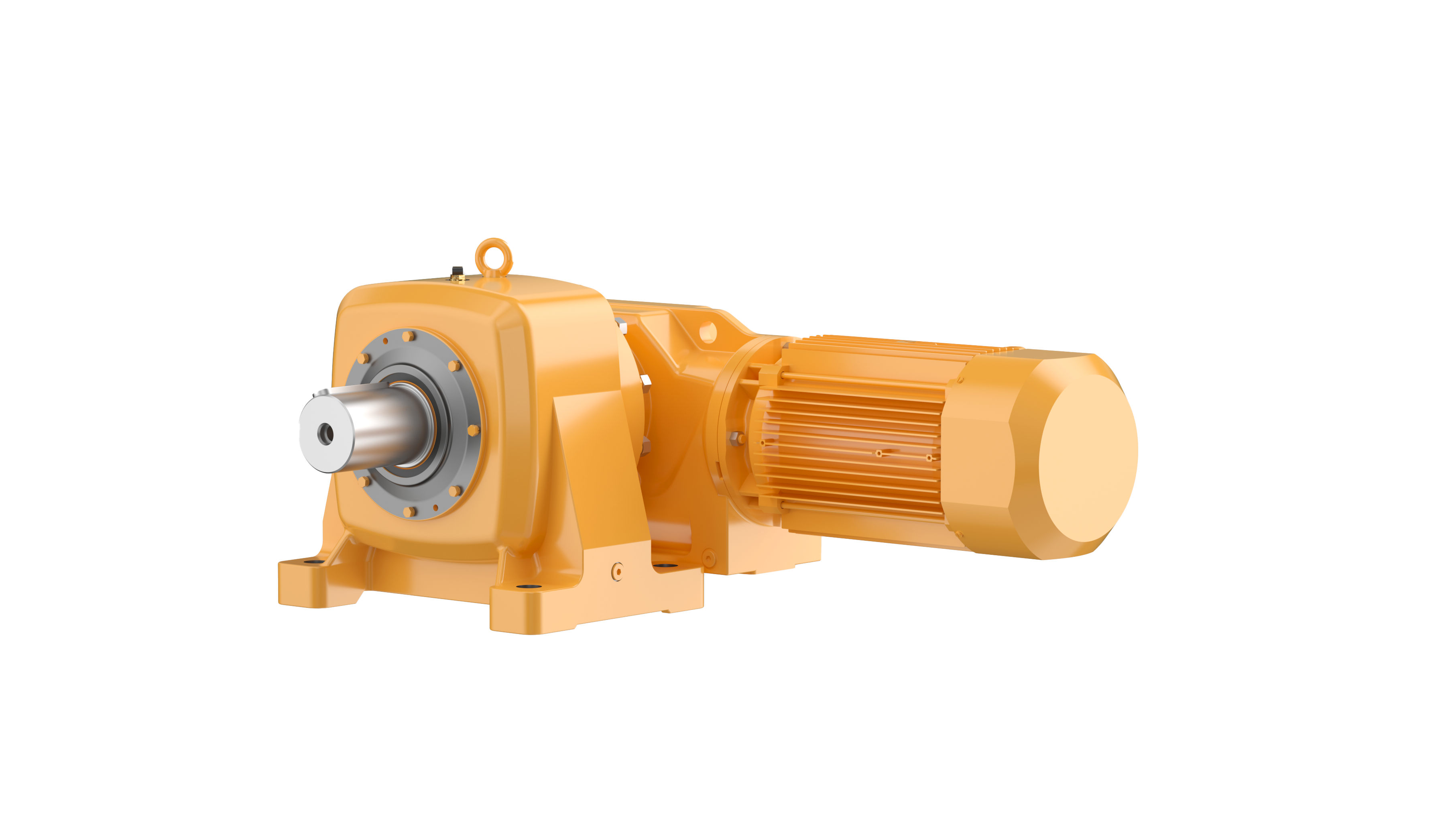
Ceramic industry-specific gearbox — an example of application-customized reducer design.
Drive System Components: Motors, Inverters, and Controllers
A reducer alone does not make a drive system. Starshine Drive also supplies integrated servo motors, three-phase asynchronous motors, frequency converters, and permanent magnet synchronous motors. These components can be configured to match the reducer and application requirements. This 'Gearbox + Motor + Inverter + Controller + Smart System' architecture allows a single supplier to provide the full power transmission chain, which simplifies procurement, installation, and system responsibility.
How to Select a Gear Reducer: A Step-by-Step Framework
Selection is not a single calculation — it is a process that moves from application understanding to technical specification. The following eight-step framework is applicable to most procurement projects.
- Define the operating profile. Start with the duty cycle: Does the machine run 24/7, intermittently, or with frequent start-stop? Each mode places different stress on the reducer.
- Determine output torque and speed. The required torque at the driven shaft and the required output speed are the two most important technical inputs.
- Calculate the reduction ratio. Divide the motor speed by the required output speed. Compare this with the ratio range of candidate reducer series.
- Check efficiency expectations. If the machine runs continuously and energy costs are significant, a helical gearmotor with efficiency above 96% may be more economical over the lifecycle than a lower-efficiency technology.
- Evaluate environmental conditions. High temperature, high dust, humidity, and chemical exposure all affect reducer material selection, sealing, and lubrication choices.
- Review compliance requirements. Determine whether the unit must meet explosion-proof certification, food-grade hygiene, or regional standards such as ISO, CE, or CCC.
- Consider installation constraints. Available space, mounting orientation, shaft arrangement, and access for maintenance all limit the feasible options.
- Plan for maintenance and lifecycle cost. Lubricant life, part availability, and local service support directly influence total cost of ownership. A reducer with 20,000-hour lubricant life, for example, reduces routine maintenance frequency.
Use Cases: Reducers in Real Industrial Conditions
Looking at actual working conditions helps bridge the gap between product specifications and application requirements.
Glass Industry
In glass production lines — including float, photovoltaic, and container glass — reducers drive mixers, calenders, roller conveyors, cutters, and stackers. The operating environment is characterized by high temperature, high dust, and continuous operation, so heat resistance, dust protection, and long service life are critical.
Logistics and Automation
In high-speed sorting and conveying machinery, reducers operate in continuous or intermittent mode with frequent start-stop. Low noise, high positioning accuracy, and compact design are common requirements. Helical gearmotors from the R/F/K/S and NCJ series are frequently specified in this sector.
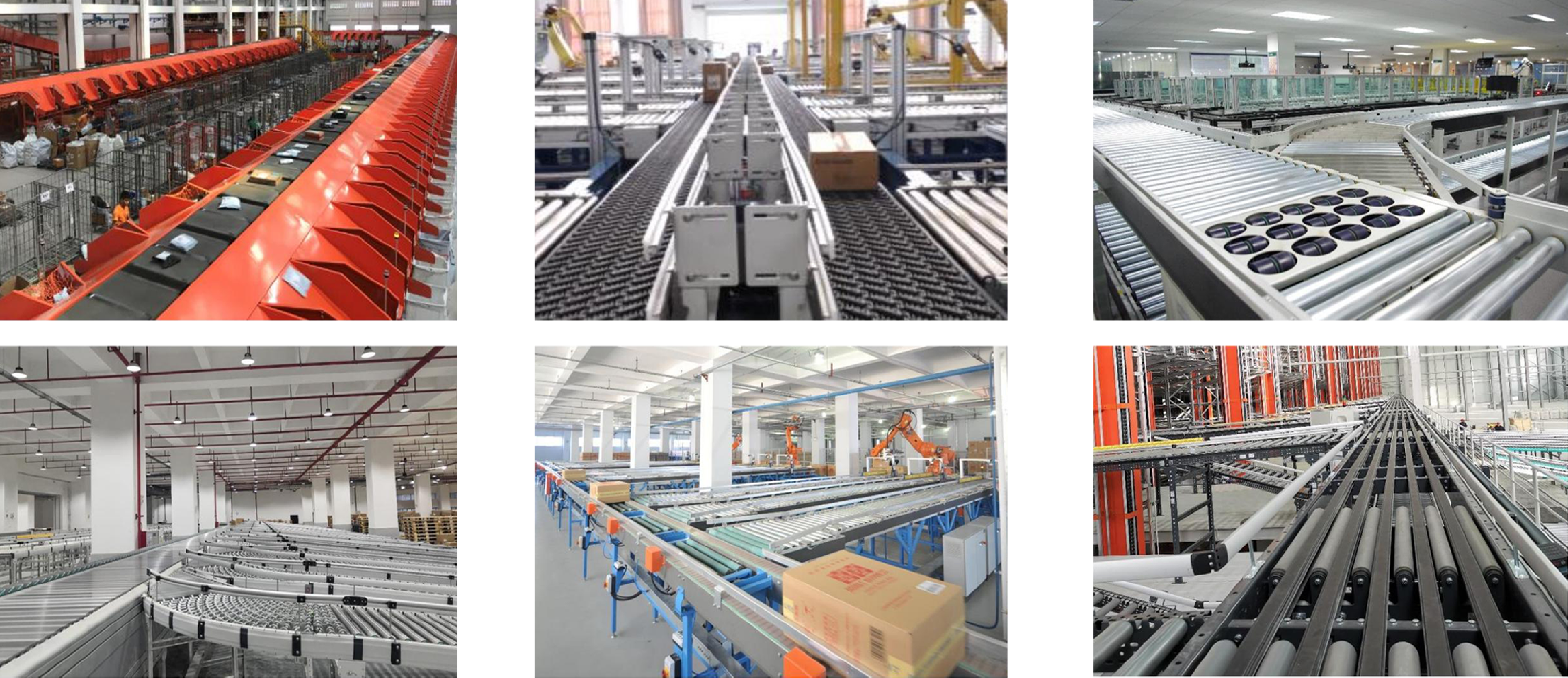
High-speed sorting and conveying machinery — a key application of industrial gear reducers.
Lithium Battery Production
Gear units in lithium battery production are used for precise motion control in coating, calendering, winding, stacking, and filling equipment. These machines require high precision, low noise, good sealing, dust protection, and corrosion resistance, and often operate in dry-room environments with low humidity.
Grain and Oil Processing
In grain and oil plants, reducers provide power transmission and speed reduction for bucket elevators, rotary airlocks, screw conveyors, and grinding mills. Grain dust is a major hazard, so special requirements include high dust protection rating, explosion-proof certification, good sealing to prevent material leakage, wear resistance, low noise, and long service life. Units operate in all-weather continuous, intermittent, and variable-speed modes to adapt to changing loads.
Ceramics Industry
Ceramic production lines involve high temperature (especially in the kiln section), high dust, continuous operation, and some humid stations such as glazing and inkjet. Reducers drive stirrers, dryers, kilns, glazing machines, and polishing machines. The company's customized ceramic kiln gearboxes are specifically designed for this segment, and NCJ series gearmotors handle material mixing and conveying functions.
Textile Industry
Textile machinery operates in high-temperature, humid environments and may be exposed to acid-base solvents in the dyeing process. Reducers drive cloth guide rollers, washing machines, dyeing machines, and plaiting machines. Corrosion-resistant painting and moisture-proofing are important protective measures.
Food and Beverage
Food and beverage equipment — fillers, cappers, conveyors, mixers, sterilizers, and labelers — runs in humid conditions and requires high hygienic standards. Waterproofing, corrosion resistance to acid/alkaline cleaning agents, low noise, and easy maintenance are the typically specified reducer characteristics.
Woodworking
Woodworking machinery such as four-sided planers, edge banding machines, sanders, double-end tenoners, and CNC cutting machines generally operates continuously in high-dust environments. Reducers here support precision motion control of tools, and key requirements are low noise, high dust protection, compact design, and long service life.
Stage Equipment
Stage equipment applications include circular light and prism light lifting devices, electric hoists, and revolving stage drives. These use intermittent operation with frequent start-stop and require ultra-low noise, smooth operation without vibration, high positioning accuracy, and compact design. RV series worm gearboxes are one of the product groups specified for this sector.
Corrugated Cardboard
Corrugated cardboard production exposes reducers to paper dust and, in the drying section, higher temperatures. Reducers drive corrugating rolls, slitters, printing slotters, die-cutting machines, stackers, and conveyors. Low noise, high dust protection, impact-load resistance, and easy maintenance are commonly listed requirements.
Comparison of the Main Reducer Series
The table below compares three representative reducer series using publicly documented specifications. It is not an exhaustive comparison — it illustrates how design differences map to application fit.
| Attribute | R/F/K/S Helical Gearmotors | RV Worm Gearboxes | NCJ Helical Gearmotors |
|---|---|---|---|
| Efficiency | >96% (single-stage) | Not specified; self-locking at i≥60 | 92%–96% |
| Ratio range | 1.3–289.74 (single stage) | Up to 100 single-stage; up to 10,000 double-stage | Not specified |
| Gear material | 20CrMnTi, carbonitriding HRC55–65 | Worm: 20CrMnTi; wheel: KK alloy copper | 20CrMnTi, carbonitriding HRC55–65 |
| Precision | Grade 6 gear grinding | — | — |
| Housing | High-strength cast iron | Aluminum parts | Cast iron, alloy steel |
| Typical applications | Textile, logistics, new energy, grain & oil | Stage equipment, door operators, electric power | Ceramics, logistics conveying, grain & oil |
| Notable features | Wide ratio range, high efficiency | Self-locking at high ratios, compact right-angle design | 20,000-hour lubricant life; NCJT04B/J can replace size-1 cycloid gearbox |
What to Look for in a Reducer Manufacturer
When evaluating a reducer supplier, several non-product factors deserve attention. Guangdong Starshine Drive Co., Ltd serves as a useful example of the capabilities to check.
- History and domain knowledge: Starshine Drive was founded in 1965 and traces its origins to a mold factory, giving it nearly 60 years of transmission experience.
- Engineering capacity: The company operates a provincial-level engineering technology R&D center and a 40-engineer R&D team.
- Production capability: Its manufacturing base is located at No. 10 Huijin Industry Park, Baini Town, Sanshui District, Foshan City, Guangdong Province, China, covering 53,333.33 m². The plant employs approximately 400 staff, with production technicians accounting for over 70% of the workforce, and reaches an annual production capacity of 500,000 units/sets. Testing includes 100% online air tightness testing, 100% online noise testing, and 100% comprehensive motor testing.
- Compliance: Products comply with ISO, CE, and CCC standards.
- Global service: Export business accounts for 20% of total sales, with main markets in Southeast Asia, Europe, and North America. The company operates an assembly plant in Vienna, Austria, providing localized assembly, warehousing & distribution, and technical service for the European market.
Frequently Asked Questions
What certifications and standards should a gear reducer comply with?
Gear reducers from Starshine Drive comply with ISO, CE, and CCC standards. For machinery safety design, EN ISO 12100:2010 is the Type-A harmonized standard that specifies general principles for risk assessment and risk reduction. Buyers should confirm which certifications are required for their target market before finalizing a specification.
Which gear reducer types does Starshine Drive offer?
Starshine Drive's product line covers NCJ series gear reducers, R/S/K/F series high-precision gear reducers, RV series worm gear reducers, SP series planetary reducers, SI series industrial gearboxes, SNKG series gear reducers, JWB-X series mechanical stepless variators, B/JXJ series cycloidal pinwheel reducers, and XGK series hypoid gear reducers. The company also supplies integrated servo motors, three-phase asynchronous motors, converters, and permanent magnet synchronous motors.
What factors affect gear reducer cost?
Reducer pricing depends on torque rating, reduction ratio, gear type, material, precision grade, and customization level. Application-specific requirements such as explosion-proof certification, food-grade hygiene, corrosion-resistant coatings, or high-temperature materials also influence cost. The best way to estimate cost is to provide the supplier with the operating profile and required output parameters.
How can I request a sample or quotation?
To request a quotation or product sample, contact Starshine Drive directly: Phone/WhatsApp +8615899805924, email jessica@xgcd.cn, or visit www.ssdreducer.com. The company's product catalogue is available for download and can be used as a reference when discussing your application with the engineering team.
Does Starshine Drive provide localized delivery and support in Europe?
Yes. Starshine Drive operates an assembly plant in Vienna, Austria, which serves as a hub for localized assembly, warehousing and distribution, and technical services for the European market. This shortens delivery cycles for European customers and provides responsive technical support. For a quote or further support, contact jessica@xgcd.cn or visit www.ssdreducer.com.
Conclusion
Gear reducer selection is a structured process that starts with understanding the application and ends with verifying the supplier's engineering and delivery capabilities. The main reducer families — helical, worm, planetary, cycloidal, hypoid, and mechanical variators — each have strengths that match specific operating conditions. Efficiency, ratio range, material quality, and environmental resistance are the core technical criteria to compare.
For buyers researching integrated drive solutions, Starshine Drive offers a full product portfolio covering gearbox, motor, inverter, controller, and smart systems, backed by nearly 60 years of manufacturing history, ISO / CE / CCC compliance, and an assembly plant in Vienna for European service.
Download the Starshine Drive product catalogue to compare reducer specifications and begin the selection process.
Download PDF Catalogue (English)
Or contact the engineering team: jessica@xgcd.cn · Phone/WhatsApp: +86 15899805924
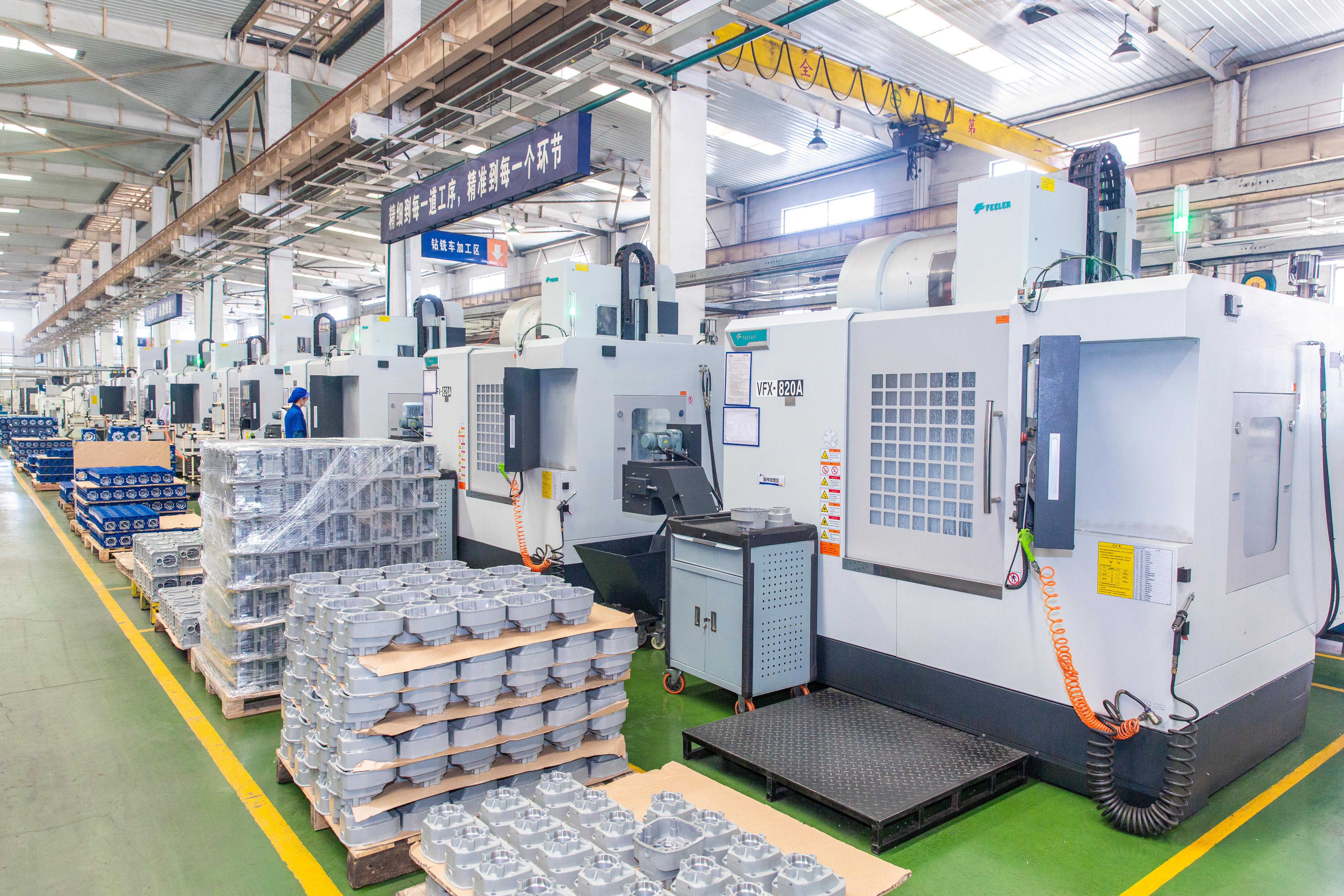
Starshine Drive's manufacturing workshop — automated assembly and testing lines support an annual capacity of 500,000 units.