
REDUCER Technical Guide: Gearmotor Selection for Textile, Woodworking & Food Lines
REDUCER Technical Guide: Gearmotor Selection for Textile, Woodworking & Food Lines
Short answer: a gearmotor built for a textile dyeing line, a woodworking four-sided planer and a beverage filler can share the same output speed and still need three different specifications. REDUCER selection for these three industries is decided first by the working environment — heat, humidity and acid/alkali exposure in textile; dust and continuous variable load in woodworking; washdown and cleaning agents in food and beverage — and by the duty mode: all-weather continuous, intermittent, variable-speed, or frequent start-stop. Ratio, torque and motor power are then matched to that envelope, not the other way round.
Guangdong Starshine Drive Co., Ltd. (STARSHINE DRIVE) is a transmission solution manufacturer founded in 1965 and headquartered in the Sanshui District of Foshan City, Guangdong Province, China. The company produces gearboxes, motors, inverters, controllers and integrated transmission systems, and its reducer range is applied in textile, food and beverage, packaging and printing, logistics, ceramics and grain and oil equipment. This guide uses its published product data — R/F/K/S Series Helical Gearmotors, NCJ Series Helical Gearmotor, RV Series Worm Gearbox and Industry Customized Products — as the worked example for a specification process that applies to any reducer purchase for these three line types.
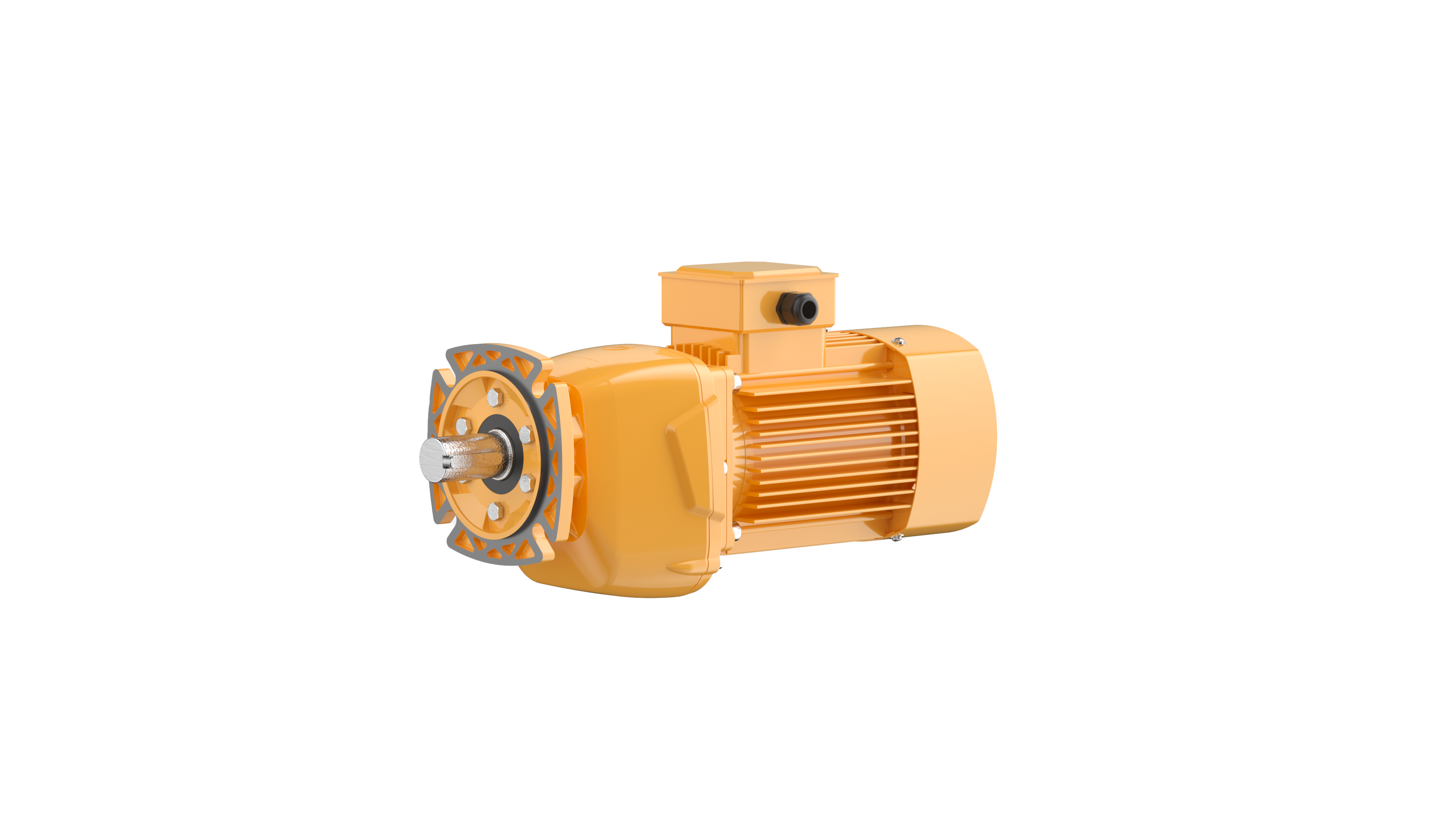
A gearmotor family such as the NCJ Series Helical Gearmotor is specified against environment and duty mode before ratio and torque are fixed.
Problem Definition: The Environment, Not the Ratio, Separates the Specifications
The most common specification error in these three industries is treating the reducer as a ratio-and-torque item only. A unit that runs for years on a woodworking line can fail within months on a dyeing line at the same speed, and a washdown filler can destroy a gearbox that would be perfectly adequate on a dry conveyor. The reason is that the three environments attack a drive in different ways.
Textile: Heat, Humidity, Acid/Alkali Solvents and Heat Radiation
Textile machinery operates in high temperature and humid conditions, in continuous operation, with acid-base solvents present from the dyeing process and with heat radiation affecting the drive position. Equipment in this group includes cotton rollers and cloth guide rollers, washing machines, dyeing machines, wide rollers, hair removal devices and X-Y plaiters. The documented requirements are high temperature resistance, corrosion resistance delivered through a strong anti-corrosion paint able to resist acid-base solvents, moisture-proofing, adaptability to heat radiation at the drive, long service life and easy maintenance.
Woodworking: Continuous Duty, High Dust, Variable Load
Woodworking machinery runs continuously in a high-dust environment at normal temperature with variable load. Dust is the dominant risk because it enters sealing gaps and cooling paths, while the load profile changes as cut depth, feed rate and board density change. Typical equipment includes four-sided planers, edge banding machines, sanders, double-end tenoners and CNC woodworking cutting machines. The documented requirements are low noise, a high dust protection rating, compact design, easy maintenance and long service life.
Food and Beverage: Washdown, Cleaning Agents, Temperature Extremes
Food and beverage lines combine continuous operation with a humid cleaning area, high or low temperature at sterilization and freezing stations, variable load, and oil or sugar splashes. Equipment includes fillers, cappers, conveyor belts, mixers, sterilizers, freezers, labelers, packers, palletizers and cleaning equipment. The documented requirements are a high hygienic standard supported by food-grade lubricant and easy cleaning, waterproof and moisture-proof construction at a high IP rating, corrosion resistance against acid and alkaline cleaning agents, low noise, compact design, easy maintenance, long service life and stainless steel material for rust prevention.
Duty Mode Is the Second Half of the Brief
Environment defines the housing, sealing, coating and lubricant; duty mode defines the gear train and motor. Food and beverage lines are documented as all-weather continuous operation with variable-speed operation and frequent start-stop. Textile and woodworking lines are documented as all-weather continuous operation with intermittent operation and variable-speed operation. A frequent start-stop axis and a 24-hour constant-speed axis can end up with different motor and lubrication choices even when ratio and torque are identical.
Industry Background: Why Drive Specification Discipline Matters Now
The global gear reducer market is valued at approximately USD 1.96 billion in 2026 and is projected to reach USD 2.58 billion by 2035, according to Business Research Insights. Grand View Research reports that Asia Pacific dominated the industrial gearbox market with a 40.8% revenue share in 2025, which is consistent with the concentration of textile, woodworking and food machinery production in that region. Planetary gearboxes are the fastest-growing segment, with a projected CAGR of 6.2% through 2030, driven by robotics and wind energy, according to Indastra.
For buyers, the practical consequence is not a market forecast but a procurement one: reducer supply is global, machine builders ship to multiple regions, and a drive specified for one plant is increasingly installed in another country. Specifications therefore have to travel with the machine. An IP rating, a corrosion treatment, a lubricant grade and a motor frequency range are the parts of the specification that survive shipping and installation; vague descriptions such as "heavy duty" do not.
Detailed Solution: Matching the Drive Family to the Environment
STARSHINE DRIVE organises its reducer offer by gear geometry and by application, which allows the buyer to start from the environment and then move to the mechanical data. The four families below are the relevant building blocks for textile, woodworking and food and beverage lines.
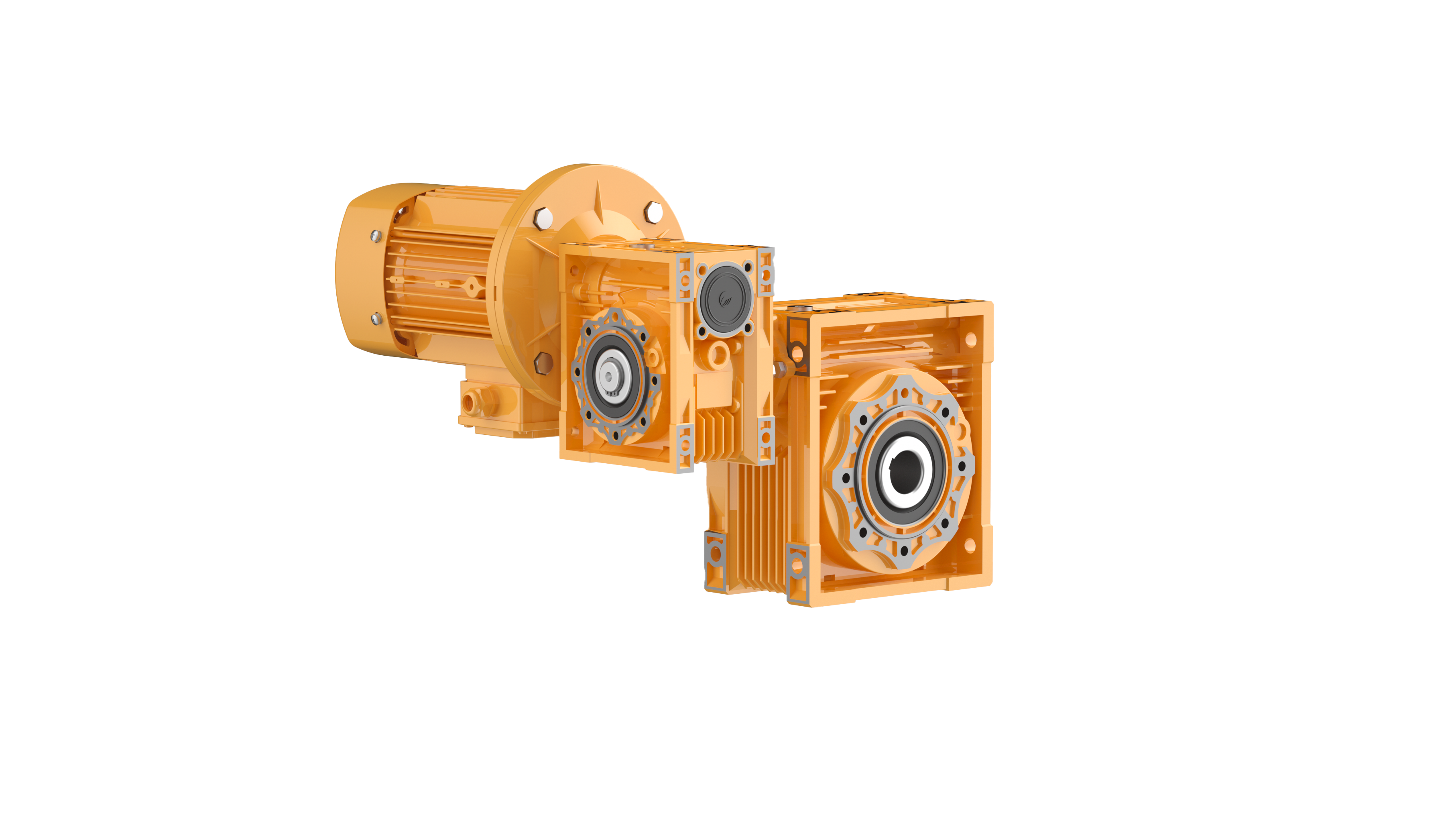
Combined worm gearmotor configuration — relevant to auxiliary axes where compact mounting and self-locking at high ratio are the deciding factors.
R/F/K/S Series Helical Gearmotors
The R/F/K/S Series Helical Gearmotors are helical gearmotors offered in R, F, K and S types. Published data: one-stage efficiency above 96%; a finely divided single-stage ratio range from 1.3 to 289.74; gears in 20CrMnTi alloy steel with carbonitriding hardening to HRC55–65; ground gears with grade 6 accuracy; high-strength cast iron housing. The S Series helical-worm geared motors are listed in the STARSHINE DRIVE catalogue with an output torque range of 90–4000 N·m and a power range of 0.12–22 kW. The series is documented for textile, logistics, new energy, and grain and oil applications, and it is one of the product families associated with the woodworking and food and beverage scenarios as well.
Why it matters for these lines: the high one-stage efficiency and the wide single-stage ratio range reduce the number of stages needed to reach a target output speed, which supports the compact design requirement in textile and woodworking machine frames. Hardened and ground gearing is the mechanical basis for a long service life claim, and the cast iron housing is the appropriate starting point where vibration and load variation are present.
NCJ Series Helical Gearmotor
The NCJ Series Helical Gearmotor is a helical gearmotor with 92%–96% efficiency, 20CrMnTi gears carbonitrided and hardened to HRC55–65, cast iron and alloy steel construction, and a special wide-frequency high-performance motor that works under full loading between 20 Hz and 60 Hz. It uses a special lubricating oil that supports 20,000 hours of normal use, and the NCJT04B/J can replace a 1# cycloid gearbox for energy-saving upgrades. It is documented for ceramics, logistics conveying, and grain and oil industries and is linked to textile applications.
Why it matters: variable-speed operation is normal in textile processing, and a motor that holds full load from 20 Hz to 60 Hz removes the need to oversize the drive for the low-speed end of the range. The 20,000-hour oil interval is directly relevant to the easy-maintenance and long-service-life requirements of a line that runs all-weather.
RV Series Worm Gearbox
The RV Series Worm Gearbox uses a 20CrMnTi worm shaft with special heat treatment for high hardness and a patented premium KK alloy copper worm wheel for wear resistance. Ratio coverage is wide: single stage up to 100, two stage up to 10,000, with self-locking at i≥60. It uses synthetic worm gear special lubricating oil to protect transmission efficiency and service life, and the aluminium parts reduce weight. It is documented for stage equipment, door operators and electric power.
Where it fits and where it does not: on textile, woodworking and food lines the RV Series is a candidate for compact, low-speed auxiliary or holding axes where a high single-stage ratio or self-locking at i≥60 is genuinely required. It is not the default choice for a continuously loaded main drive on a washdown or high-dust line, and any such duty should be confirmed with the supplier before the unit is released to the machine builder.
Industry Customized Products
Industry Customized Products covers bucket elevator customized reducers, ceramic kiln dedicated gearboxes, high-temperature resistant custom reducers, explosion-proof customized gearboxes and corrosion-resistant tailored gearboxes. The documented application list includes textile machinery, food-processing machinery, packaging machinery, printing machinery, logistics and warehousing, conveyor systems, plastic and rubber machinery, and hoisting equipment. Supporting drive components — integrated servo motors, three-phase asynchronous motors, frequency converters and permanent magnet synchronous motors — are available with power, voltage, speed and control mode configured to match the reducer and the application.
Why it matters: the three environments in this guide cannot all be solved from a catalogue page. A corrosion-resistant tailored gearbox addresses the acid/alkali exposure of a dyeing line; a high-temperature resistant custom reducer addresses heat radiation; a food-processing machine builder may need a specific mounting interface, coating or lubricant that a standard unit does not carry. Customization is where the environment specification actually gets built into the hardware.
Step-by-Step: How to Specify a Gearmotor for These Three Lines
The sequence below keeps environment and duty ahead of ratio, so the mechanical selection is never made against an inappropriate enclosure.
Step 1 — Write the Duty Profile
Record operating mode (all-weather continuous, intermittent, variable-speed, or frequent start-stop), hours per day, starts per hour, and whether the axis reverses. Then record load character: constant, variable, or shock. Woodworking axes are variable load by nature; food and beverage lines are documented with frequent start-stop; textile lines run all-weather continuous with variable speed.
Step 2 — Write the Environment Profile
Ambient temperature range, humidity, presence of steam or washdown, presence of acid or alkaline cleaning agents, dust concentration and particle type, and radiation from hot surfaces. This step produces the four environmental decisions that follow: protection rating, coating or material, lubricant grade, and sealing arrangement.
Step 3 — Fix the Kinematic Requirement
Determine required output speed and output torque at the shaft, then calculate the ratio and confirm it against published coverage. For example, the R/F/K/S Series covers a single-stage ratio range of 1.3 to 289.74, and the S Series helical-worm units are listed at 90–4000 N·m output torque and 0.12–22 kW. Where a ratio below 1:100 is needed on a compact auxiliary axis, the RV Series single-stage range reaches 100.
Step 4 — Choose the Gear Geometry and Housing
Helical gearing where efficiency and continuous duty dominate; worm gearing where high single-stage ratio, compact form or self-locking at i≥60 is the deciding factor. Note the housing materials in play: high-strength cast iron for the R/F/K/S and NCJ families, aluminium parts for the RV Series. Housing material affects both corrosion strategy and heat behaviour in a hot textile station.
Step 5 — Specify the Motor and Control
If the axis is variable speed — normal in textile, common in woodworking feed and standard on food lines — specify a motor rated for the frequency range it will actually see. The NCJ Series wide-frequency motor is documented to work under full loading from 20 Hz to 60 Hz. Where integration matters, add a frequency converter or an integrated servo motor and confirm that power, voltage, speed and control mode are configured to the reducer.
Step 6 — Set the Protection, Material and Lubricant Requirements
Woodworking: a high dust protection rating is the primary requirement. Textile: moisture-proofing plus corrosion resistance by strong anti-corrosion paint that resists acid-base solvents, plus heat radiation adaptability. Food and beverage: a high IP rating for washdown, corrosion resistance against acid and alkaline cleaning agents, stainless steel material where rust prevention is required, and food-grade lubricant. Food-grade lubricant should be written as an explicit line item, not assumed.
Step 7 — Check the Mechanical Integration
Confirm shaft and flange interface, mounting orientation, available envelope, and maintenance access for oil checking and replacement. Compact design is a stated requirement in all three environments, and easy maintenance is only real if the oil point and the drain are reachable after installation.
Step 8 — Verify Before Release
Match the selected model, ratio, motor data and protection specification against the supplier's test records and documentation, then lock the specification into the purchase order as described in the final section of this guide.
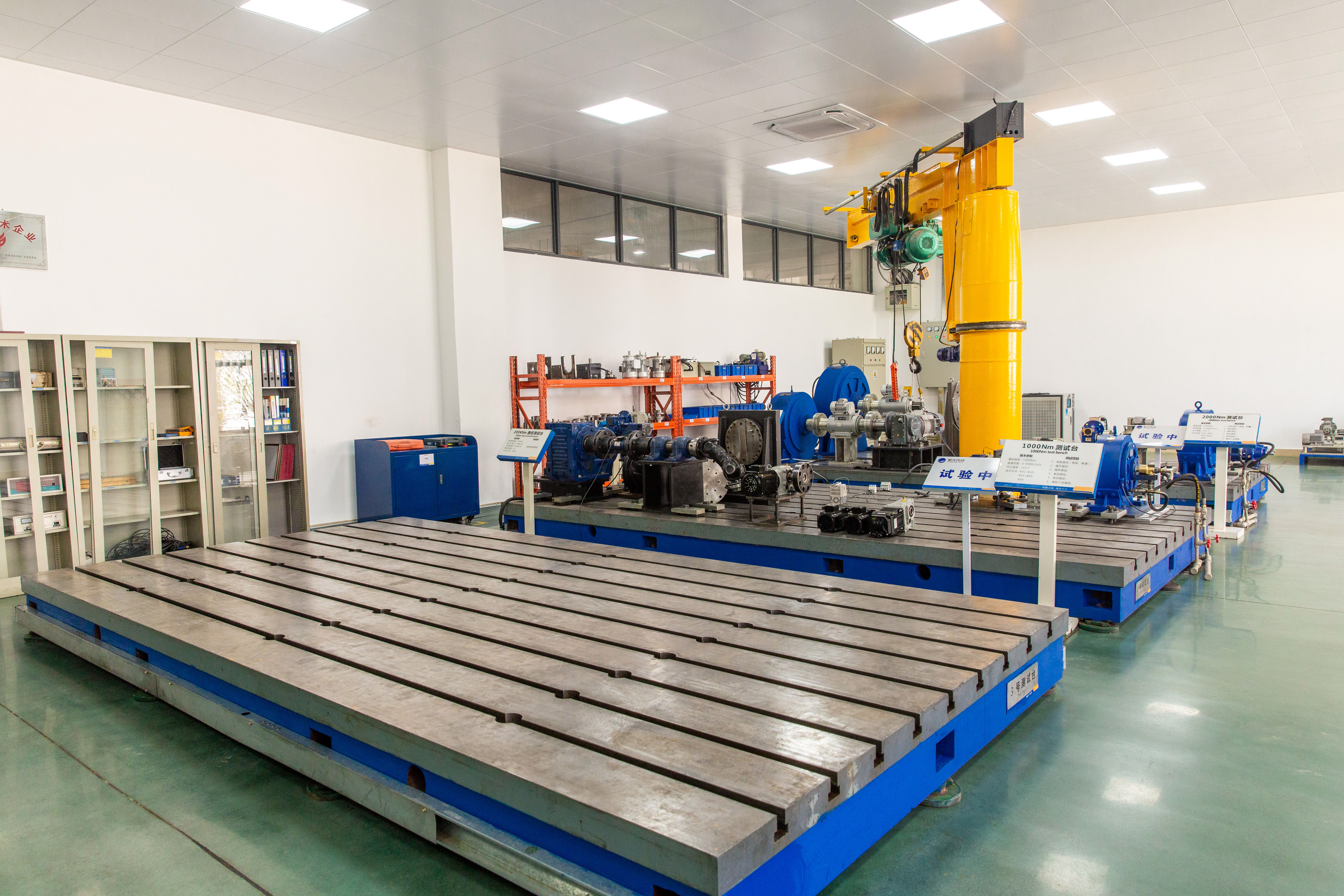
Specification review: geometry, environment and duty data are checked together before a model is released to the machine builder.
Use Cases: Line Positions and the Parameters That Decide Them
Textile Lines — Cotton Rollers, Cloth Guide Rollers, Dyeing and Washing Machines
Textile drive positions include cotton rollers and cloth guide rollers, washing machines, dyeing machines, wide rollers, hair removal devices and X-Y plaiters. The function is power transmission and speed reduction with torque increase, driving cloth guide rollers, pad rolls and similar actuators for washing, dyeing, folding and hair removal. Because the process runs continuously and the fabric tension must stay stable, the specification priorities are corrosion resistance to acid-base solvents, moisture-proofing, heat radiation adaptability and a lubrication interval that matches all-weather operation. A variable-speed motor with a wide constant-torque frequency band supports tension control across the speed range without oversizing the drive.
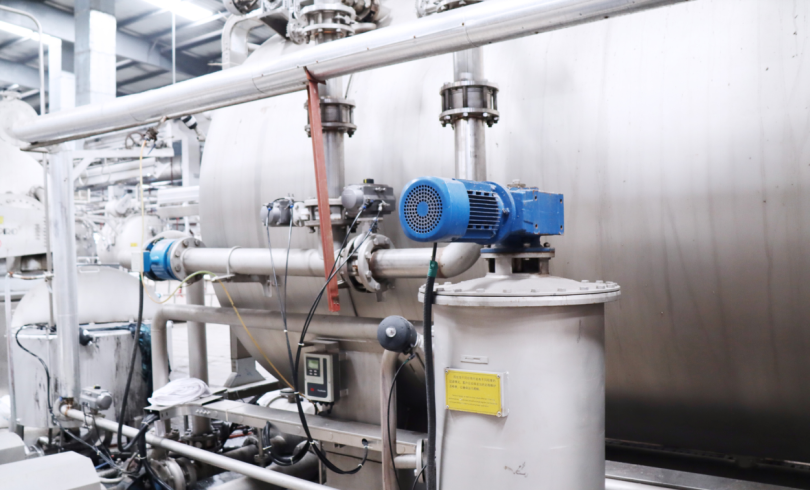
Dyeing machine environment: heat, humidity and acid-base solvents make coating, sealing and moisture protection the first specification decisions.
Woodworking Lines — Four-Sided Planers, Edge Banding Machines, Sanders, Tenoners
Woodworking drive positions include four-sided planers, edge banding machines, sanders, double-end tenoners and CNC woodworking cutting machines. The function is power transmission, speed reduction with torque increase and precision motion control of the tooling. The dominant risks are dust ingress and load variation, so a high dust protection rating, low noise and a compact housing that fits inside the machine frame carry more weight than corrosion treatment. Because these lines run continuously, gear hardening and surface accuracy matter: 20CrMnTi gears carbonitrided to HRC55–65 with ground teeth at grade 6 accuracy are the mechanical basis for maintaining timing and noise performance over a long service life.
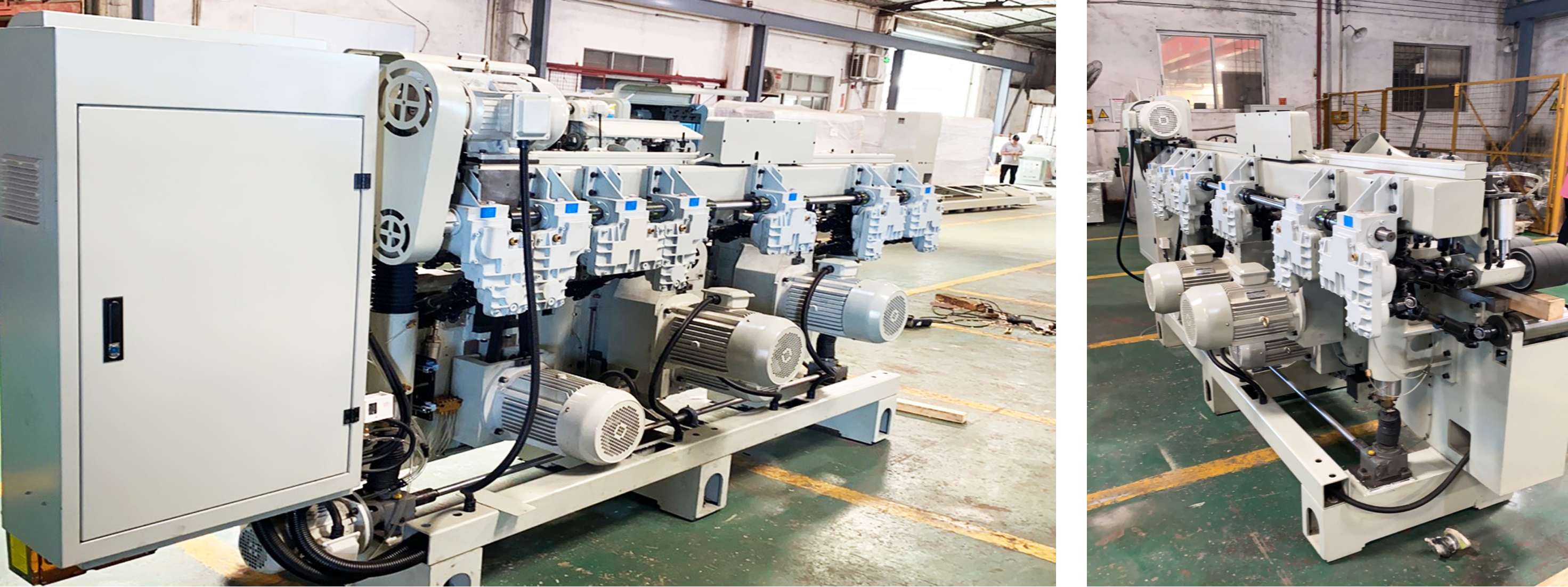
Four-sided planer: continuous duty in high dust makes the protection rating and sealing arrangement the first filter, not the ratio.
Food and Beverage Lines — Fillers, Cappers and Conveyors
Food and beverage drive positions include fillers, cappers, conveyor belts, mixers, sterilizers, freezers, labelers, packers, palletizers and cleaning equipment. The function is power transmission and speed reduction for material conveying, filling, capping, sterilization, labeling, packing and palletizing, with frequent start-stop and variable speed. Four requirements decide the build: washdown protection at a high IP rating, corrosion resistance to acid and alkaline cleaning agents, stainless steel where rust prevention is required, and food-grade lubricant with easy cleaning. Low noise and compact design matter because these lines are often installed in enclosed production rooms where operators work alongside the machinery.
Food processing and packaging equipment: washdown, cleaning agents and hygiene requirements drive protection rating, material and lubricant choice.
Comparison Table: Drive Options Against Verified Data
The table below compares the four STARSHINE DRIVE families using published product data only. It is a fit-mapping table, not a ranking: the correct choice depends on the duty and environment profile of the specific axis.
| Drive option | Verified technical data | Environment fit | Typical line positions |
|---|---|---|---|
| R/F/K/S Series Helical Gearmotors | One-stage efficiency >96%; single-stage ratio 1.3–289.74; 20CrMnTi gears, carbonitriding to HRC55–65; ground gears grade 6; high-strength cast iron housing; S Series listed at 90–4000 N·m and 0.12–22 kW | Continuous duty where efficiency and compactness dominate; documented for textile, logistics, new energy, grain and oil | Cloth guide rollers, conveyors, woodworking feed and main drive axes |
| NCJ Series Helical Gearmotor | Efficiency 92%–96%; 20CrMnTi gears HRC55–65; wide-frequency motor at full load from 20 Hz to 60 Hz; special oil for 20,000 hours of normal use; NCJT04B/J replaces 1# cycloid gearbox | Variable-speed and all-weather continuous duty; documented for ceramics, logistics conveying, grain and oil; linked to textile | Textile line drives needing wide speed range; upgrading cycloid-driven positions |
| RV Series Worm Gearbox | 20CrMnTi worm shaft, special heat treatment; patented KK alloy copper worm wheel; single stage to 1:100, two stage to 1:10,000; self-locking at i≥60; synthetic worm gear oil; aluminium parts | Documented for stage equipment, door operators and electric power; on these three lines, limited to auxiliary axes where high ratio or self-locking is required | Compact low-speed auxiliary and holding axes after supplier confirmation |
| Industry Customized Products | High-temperature resistant custom reducer, corrosion-resistant tailored gearbox, explosion-proof customized gearbox, ceramic kiln dedicated gearbox, bucket elevator customized reducer | Specified where standard catalog protection does not cover the environment | Dyeing-line corrosion, heat radiation zones, hygienic food interfaces |
| Drive components | Integrated servo motors, three-phase asynchronous motors, frequency converters, permanent magnet synchronous motors; power, voltage, speed and control mode configurable | Used wherever the axis is variable speed or requires integrated control | Fillers, cappers, conveyors, textile tension-controlled rollers |
Selection Parameters by Line
| Parameter | Textile | Woodworking | Food & beverage |
|---|---|---|---|
| Primary environment risk | Heat, humidity, acid-base solvents, heat radiation | High dust, continuous variable load | Washdown, cleaning agents, temperature extremes, oil/sugar splashes |
| Protection priority | Moisture-proof, heat radiation adaptability | High dust protection rating | High IP rating, waterproof and moisture-proof |
| Corrosion strategy | Strong anti-corrosion paint resisting acid-base solvents | Standard protection with dust sealing | Corrosion resistance to acid/alkaline agents; stainless steel material |
| Lubricant | Special lubricating oil matched to continuous hot running | Standard oil with maintenance access | Food-grade lubricant, easy to clean |
| Noise | Low noise for continuous operation | Low noise as a stated requirement | Low noise for enclosed production rooms |
| Space | Compact design, heat radiation at drive | Compact design inside machine frame | Compact design plus hygiene clearance |
| Maintenance | Easy maintenance, long service life | Easy maintenance, long service life | Easy maintenance, long service life |
| Duty mode | All-weather continuous, intermittent, variable speed | All-weather continuous, intermittent, variable speed | All-weather continuous, variable speed, frequent start-stop |
Purchasing Terms and Acceptance Criteria: The Final Verification Step
Selection is only complete when the specification is written into the purchase order in a form that can be inspected. The terms below convert the decision into verifiable contract language.
Terms to Write Into the Purchase Order
- Exact model designation and series — for example R/F/K/S Series Helical Gearmotors, NCJ Series Helical Gearmotor, RV Series Worm Gearbox, or the customized designation agreed with the supplier. Avoid generic phrasing such as "helical gearbox" without a series and model.
- Ratio, output speed and output torque at the specified shaft, with the calculation basis stated.
- Motor data — power, voltage, frequency range, and whether full-load operation is required across the whole frequency band.
- Protection and environment spec — IP rating, coating or corrosion treatment, stainless steel requirement, food-grade lubricant requirement, and ambient temperature range.
- Mounting interface — flange, shaft, orientation, and any envelope restriction arising from compact design constraints.
- Control scope — whether a frequency converter or integrated servo motor is in scope, and the configured power, voltage, speed and control mode.
- Documentation — nameplate data, test records, lubrication and maintenance instructions, and compliance documents.
- Spare parts and replacement compatibility — where an existing cycloid-driven position is being upgraded, the replacement relationship (for example NCJT04B/J for a 1# cycloid gearbox) should be stated explicitly.
Acceptance Criteria at Incoming Inspection
STARSHINE DRIVE operates three in-line test systems on its production line: 100% online air tightness testing, 100% online noise testing, and 100% comprehensive motor testing. It states that products comply with international and domestic standards such as ISO, CE and CCC. An incoming inspection routine should therefore verify: nameplate model, ratio and motor data against the purchase order; air tightness and noise test records; motor test records where a motor is supplied; compliance documentation; coating condition and sealing integrity for the specified environment; and freedom of rotation plus correct mounting fit before the unit is released to the assembly line.
Manufacturing scale is relevant to acceptance confidence: the company operates a facility of 53,333.33 m² with approximately 400 staff, of whom production technicians account for over 70%, and an annual production capacity of up to 500,000 units or sets. All products are described as compliant with ISO, CE and CCC.
FAQ
Which compliance and verification points should a textile, woodworking or food machinery builder require?
Start from the machinery safety basis: EN ISO 12100:2010 is the harmonized Type-A standard that sets out general principles for risk assessment and risk reduction in machinery design, and it applies to the machine as a whole, including its drive train. On the component side, STARSHINE DRIVE states that its products comply with international and domestic standards such as ISO, CE and CCC. In practice, the purchase order should require the model, ratio, motor data and protection specification to match the delivered unit, together with test records. The company's production line applies 100% online air tightness testing, 100% online noise testing and 100% comprehensive motor testing, which gives the buyer three concrete acceptance references rather than a general quality statement.
Can a gearmotor be adapted to washdown, high temperature or acid/alkali conditions instead of using a standard catalogue unit?
Yes, through Industry Customized Products, which covers high-temperature resistant custom reducers, corrosion-resistant tailored gearboxes, explosion-proof customized gearboxes, ceramic kiln dedicated gearboxes and bucket elevator customized reducers. The standard families already carry part of the requirement: R/F/K/S Series and NCJ Series use high-strength cast iron housings with 20CrMnTi gears hardened to HRC55–65, while the RV Series uses aluminium parts. What customization adds is the environment layer — corrosion resistance for dyeing-line acid-base solvents, heat radiation adaptability, hygienic interfaces, or a food-grade lubricant specification. The limitation to respect is that hygiene and cleaning-agent compatibility are project-specific: they must be confirmed against the actual cleaning chemicals and washdown procedure, not assumed from a general product description.
What drives the cost difference between a catalogue gearmotor and a project-specific unit?
Cost differences in this category come from identifiable specification items rather than from brand positioning. The main drivers are: gear geometry and number of stages (a single-stage ratio range of 1.3–289.74 in the R/F/K/S Series versus a single-stage ratio of up to 100 and two-stage up to 10,000 in the RV Series implies different internal configurations); housing material, where high-strength cast iron and aluminium parts carry different costs; heat treatment and tooth grinding, since carbonitriding to HRC55–65 with grade 6 ground gears is a controlled process step; the protection and corrosion package, including coating, sealing and stainless steel elements; the lubricant specification, including food-grade lubricant; the motor and control scope, from a wide-frequency motor running at full load from 20 Hz to 60 Hz to an integrated servo motor or frequency converter; and any custom mounting interface. A fair comparison also includes maintenance interval — the NCJ Series special oil is rated for 20,000 hours of normal use — and replacement compatibility, since an NCJT04B/J can replace a 1# cycloid gearbox as an energy-saving upgrade.
Can a buyer validate a gearmotor on a pilot line before committing to a full machine order?
Yes. The practical route is to request a sample or pilot unit built to the exact specification under evaluation — the same series, ratio, motor data, protection rating and lubricant requirement that the production order will use — and then verify it on the actual duty profile: operating mode, starts per hour, ambient temperature, dust or washdown exposure and cleaning agent contact. To start that process, send the duty profile and environment profile to the STARSHINE DRIVE team at jessica@xgcd.cn or via WhatsApp on +8615899805924, and request a sample and quotation matched to the line position.
How is supply and delivery organised for projects across several regions?
STARSHINE DRIVE describes an annual production capacity of up to 500,000 units or sets at its Foshan facility, and an assembly plant in Vienna, Austria that handles localized assembly, warehousing and distribution, plus a technical service centre for the European market. The company states that the Austria plant shortens delivery cycles for European clients and provides localized technical support. Its products and services are described as reaching more than 30 countries and regions, with main markets in Southeast Asia, Europe and North America, and an export ratio of 20%. For multi-country machine builds, the useful procurement practice is to state the destination region and required documentation on the purchase order so that the delivery route and the compliance documents are fixed before production starts.
Conclusion
Selecting a REDUCER gearmotor for textile, woodworking and food and beverage lines is an environment-first exercise. Heat, humidity and acid-base solvents decide the coating, sealing and moisture protection on a dyeing line; high dust and variable load decide the protection rating and gear quality on a four-sided planer or edge banding machine; washdown, cleaning agents and hygiene decide the IP rating, stainless steel elements and food-grade lubricant on a filler or capper. Duty mode — all-weather continuous, intermittent, variable-speed or frequent start-stop — then determines the motor and lubrication choice. Only after those two steps should ratio, torque and housing be locked, and only after that should the model, test records and acceptance criteria be written into the purchase order.
The STARSHINE DRIVE range covers this decision set with published data: R/F/K/S Series Helical Gearmotors, NCJ Series Helical Gearmotor, RV Series Worm Gearbox, Industry Customized Products, and configurable motors and converters. Buyers who want the full technical reference can download the company brochure here: STARSHINE DRIVE product brochure (PDF). For a specification review, sample request or quotation, contact Guangdong Starshine Drive Co., Ltd. at jessica@xgcd.cn, WhatsApp +8615899805924, or visit www.ssdreducer.com.
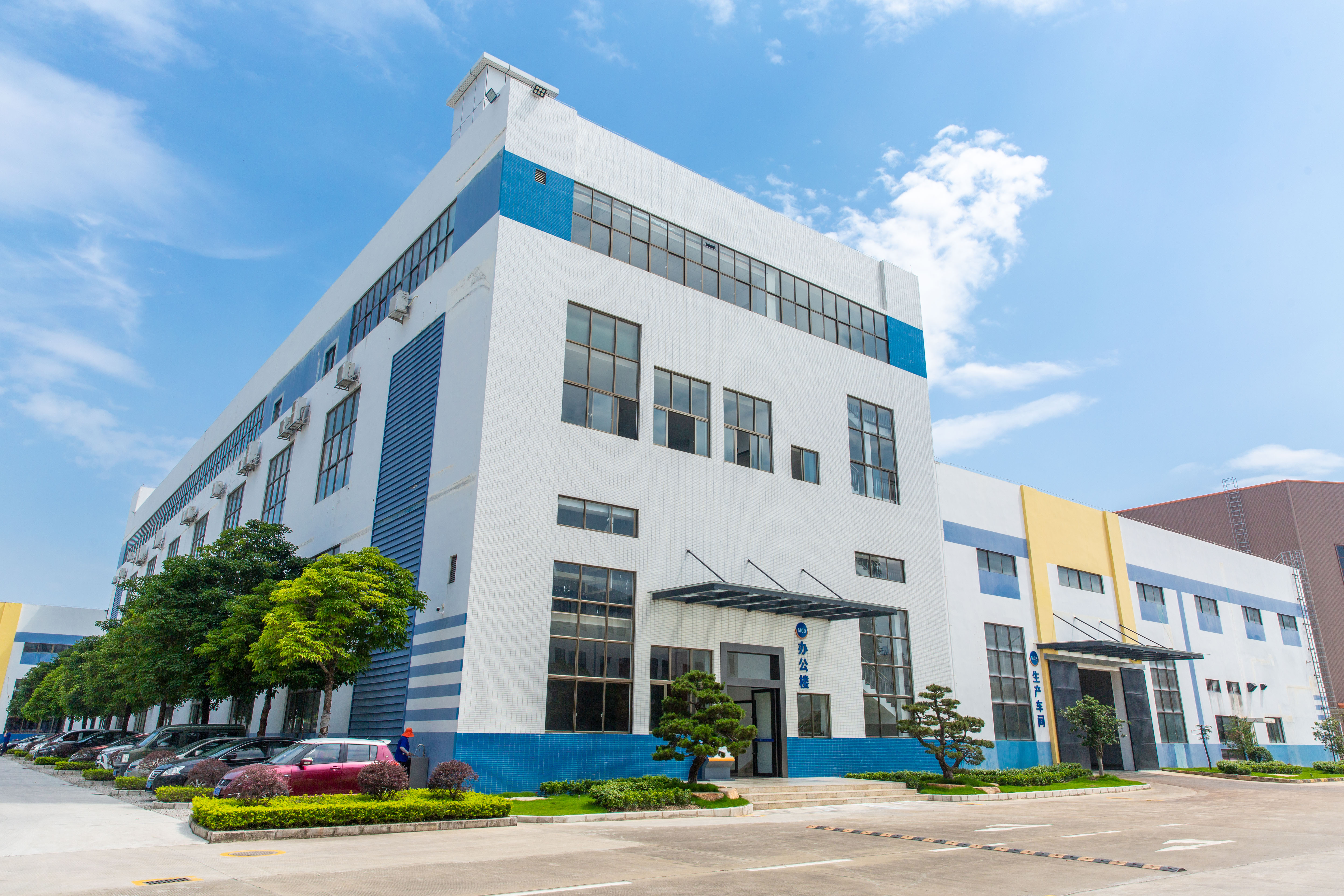
Next step: share the duty profile and environment profile to receive a matched gearmotor specification, sample and quotation.
Have Questions or Need More Details?
Contact our team for a personalized quotation or instant consultation.
Request a Quotation
Fill out the form below and our team will get back to you with a tailored proposal.
WhatsApp Direct Chat
Prefer to chat in real-time? Message us on WhatsApp for instant assistance & quick answers.
- Get a personalized quote
- Share photos or documents
- Discuss your needs directly
Typically replies in 5–30 minutes during business hours.