Reducer Application Guide: Matching Gearmotors to Working Conditions
Quick answer: the reducer that fits a project is decided by four site conditions - ambient heat, dust and particles, moisture and chemicals, and duty cycle with positioning accuracy - before ratio, torque and efficiency are checked. Two machines with identical torque demand can still need different housings, sealing, lubrication and materials.
This application guide maps documented working conditions to the drive configurations that Guangdong Starshine Drive Co., Ltd (brand: Starshine Drive) supplies for those projects. The company manufactures gear reducers, geared motors, mechanical variators and matched drive components in the Sanshui District of Foshan City, Guangdong Province, China, and serves projects through export markets that include Southeast Asia, Europe and North America.
What Project Fit Means for a Reducer
Project fit is the condition in which the gearbox, its motor and its control are all matched to the place where the unit will actually run: the ambient temperature around the housing, the particles in the air, the water and cleaning agents that reach the seals, and the way the machine starts, stops, reverses and holds position.
In practice, reducers that fail early in service are usually not under-torqued, they are mis-matched to their environment. A drive selected from a torque table alone can be correct on paper and still suffer dust ingress, lubricant breakdown in a hot zone, or corrosion from a washdown chemical that was never part of the specification.
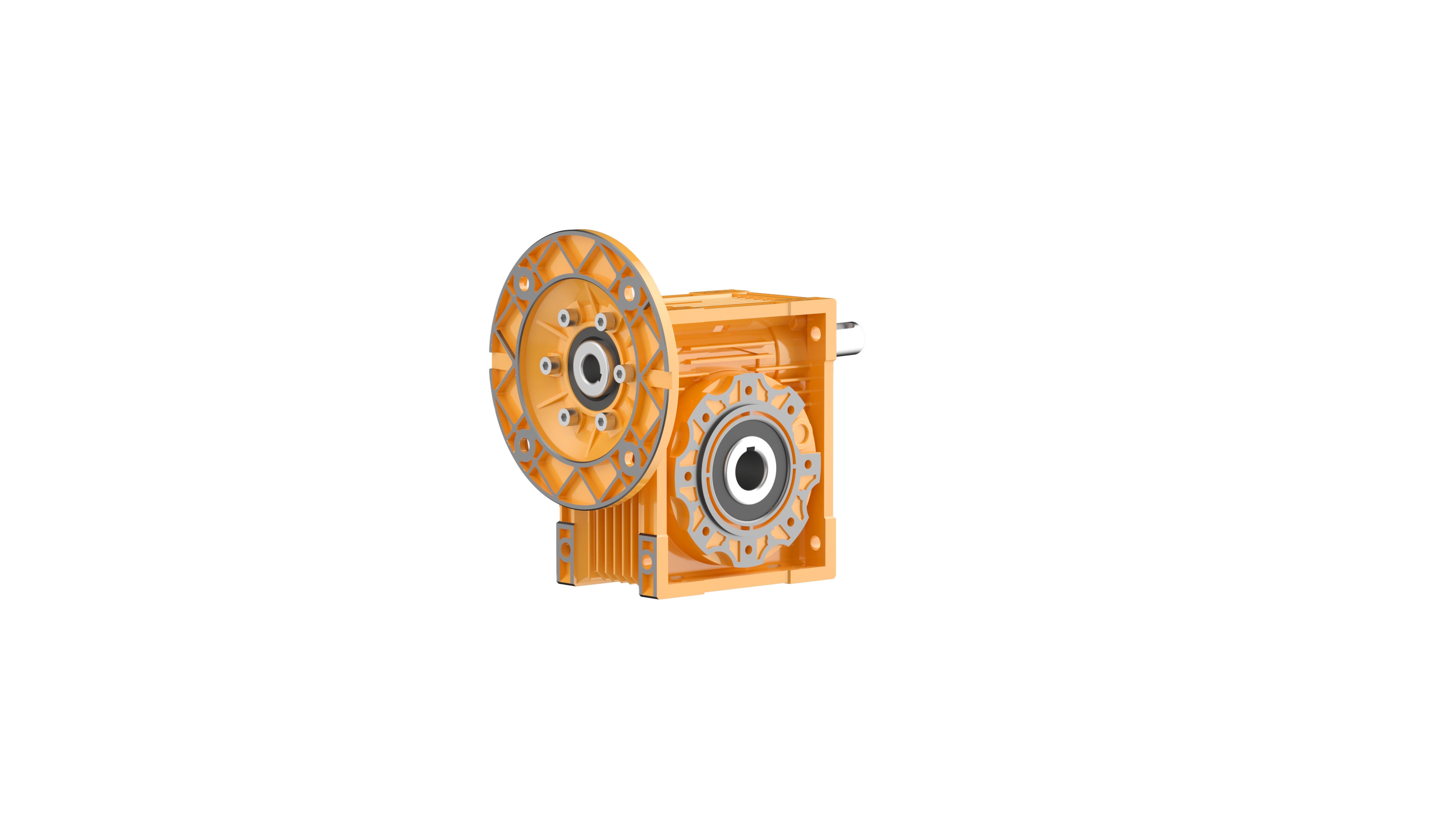
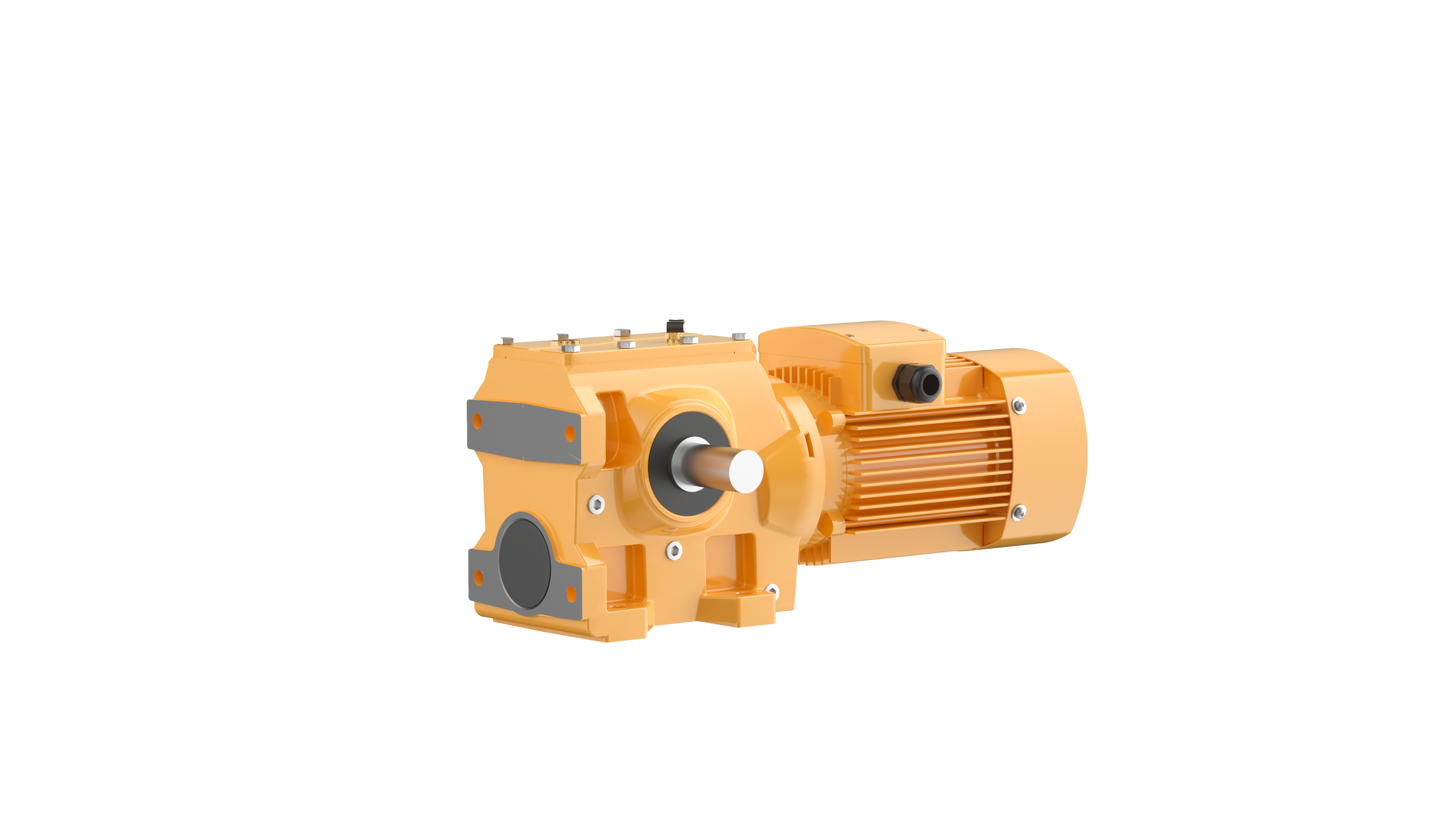
Terminology matters when a project is specified across languages. Worm gear reducers transmit through a worm shaft and wheel at right angles; coaxial gear reducers (also written coaxial reducer) place input and output shafts on the same axis; a helical bevel gear reducer combines helical and bevel stages for right-angle drive; a planetary gear reducer uses coaxial planetary stages for high torque density; a cyclo reducer uses an eccentric cycloidal pinwheel profile; and mechanical variators provide stepless speed variation instead of a fixed ratio. European buyers frequently search the same products as motoreduktory or motoriduttori, both of which describe a geared motor unit.
Starshine Drive covers these architectures with RV series worm gear reducers, R/F/K/S series high-precision gear reducers, SP series planetary reducers, SI series industrial gearboxes, SNKG series gear reducers, B/JXJ series cycloidal pinwheel reducers, XGK series hypoid gear reducers, NCJ series gear reducers and JWB-X series mechanical stepless variators, supplied with motors, inverters and controllers as integrated transmission packages.
Why Application Fit Is Now a Procurement Question
The global gear reducer market was valued at approximately USD 1.96 billion in 2026 and is projected to reach USD 2.58 billion by 2035, according to Business Research Insights. Grand View Research reports that Asia Pacific held the largest regional revenue share of the industrial gearbox market at 40.8% in 2025. Scope definitions differ between reducer-specific and industrial gearbox studies, so the two figures should not be compared directly.
Growth is not evenly distributed. Indastra reports that planetary gearboxes are the fastest-growing segment of the industrial gearbox market, with a projected CAGR of 6.2% through 2030, driven by robotics and wind energy - a shift toward higher torque density and higher positioning accuracy that pulls project specifications away from generic drives.
Regulation pushes in the same direction. EN ISO 12100:2010 is the harmonized Type-A standard that specifies basic terminology, principles and a methodology for achieving safety in machinery design, including risk assessment and risk reduction. A reducer installed in a machine is part of that machine-level assessment, which turns protection rating, materials and duty classification into documented decisions rather than preferences.
Supplier structure matters at this point. Guangdong Starshine Drive Co., Ltd traces its origins to a mould factory established in 1965, operates a production base of 53,333.33 m2 with a workforce of 400 people and a 40-engineer R&D team, and reports an annual capacity of 500,000 units or sets, with exports accounting for roughly 20% of output. An assembly plant in Vienna, Austria handles localized assembly, warehousing and distribution for European projects, and the company states that its products and services reach more than 30 countries and regions.
The Four Working Conditions That Decide the Drive
1. Ambient heat and thermal radiation
Heat shortens lubricant life and erodes the tolerances that keep a gearbox precise. Glass production is the clearest documented case: glass lines are described as continuous operation in a high-temperature environment at the melting furnace and the annealing lehr, with high dust at batching and cutting, variable load, and lubricants or coolants present at some stations. Drives there move mixers, feeders, calenders for photovoltaic glass, float bath top rollers, annealing lehr roller tables, cutters, edging machines, stackers and washing machines.
Documented requirements for that environment include high temperature resistance to thermal radiation, wear resistance against glass debris, and low maintenance frequency because the line runs all weather. Ceramic production adds kiln-section heat, where the documented needs are high dust protection, waterproof or moisture-proof construction at glazing and inkjet stations, high efficiency and low temperature rise. Starshine Drive addresses these duties with high-temperature resistant custom reducers and ceramic kiln dedicated gearboxes.
2. Dust, particles and explosive atmospheres
Woodworking machinery runs in a high-dust environment with variable load at normal temperature. The documented requirement set is low noise, a high dust protection rating, compact design, easy maintenance and long service life, and the machines involved are four-sided planers, edge banding machines, sanders, double-end tenoners and CNC woodworking cutting machines.
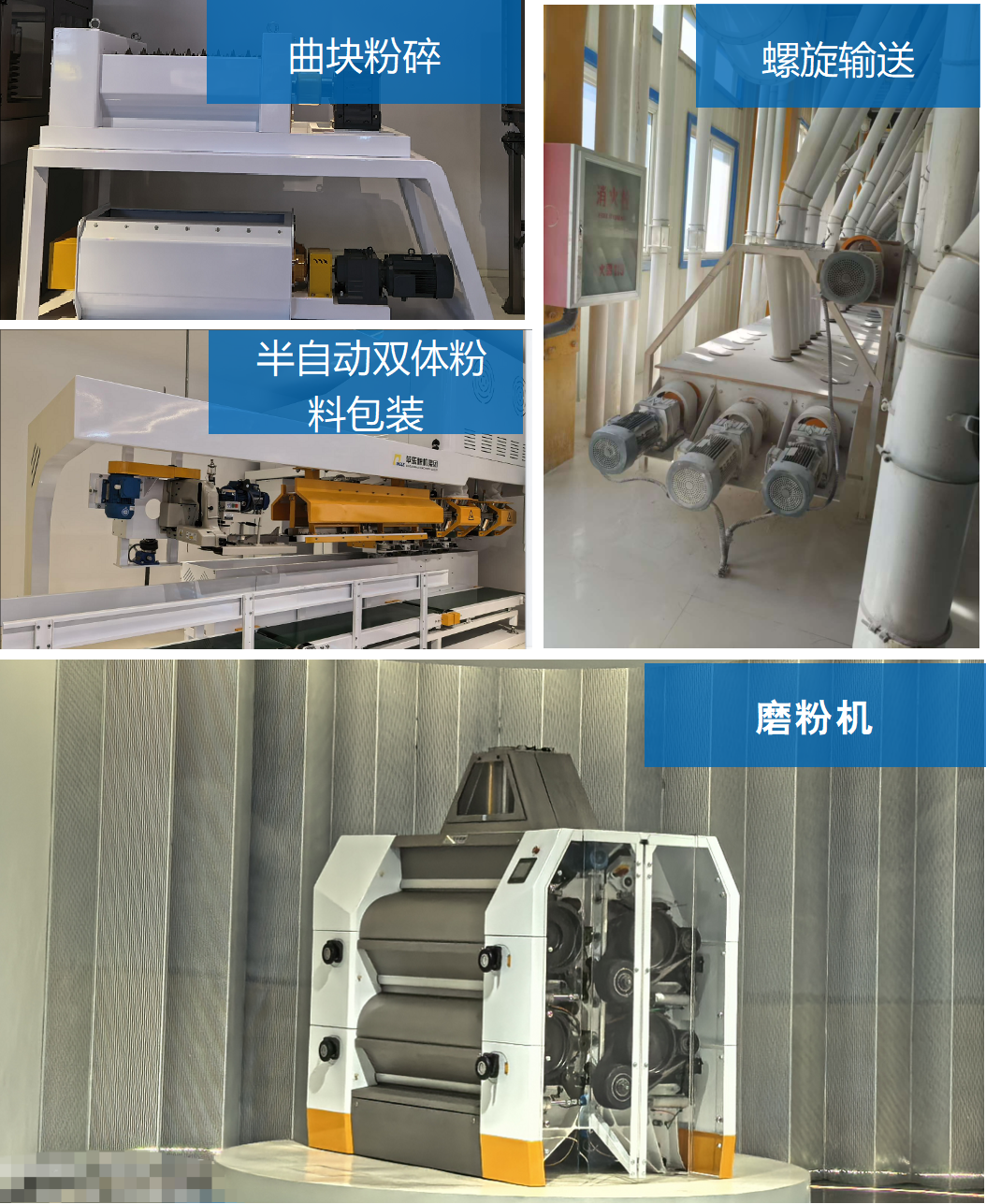
Grain and oil handling is the more demanding version of the same problem. Grain dust is abrasive and potentially explosive, so the documented requirements combine a high dust protection rating with explosion-proof protection, good sealing to prevent material leakage, wear resistance, low noise and long service life. Bucket elevators, rotary airlocks, screw conveyors, grinding mills and en-masse conveyors are the equipment in this duty, and the matching products are a bucket elevator customized reducer and an explosion-proof customized gearbox.
Corrugated cardboard lines add paper dust and impact load. Corrugators, slitters, printing slotters, die-cutting machines, stackers, conveyors and gluers run continuously, with the drying section adding high temperature to the dust requirement, and compact design requested where floor space is tight.
3. Moisture, washdown and chemicals
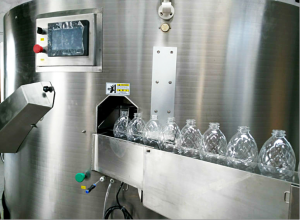
Food and beverage plants combine humidity with chemistry. Fillers, cappers, conveyors, mixers, sterilizers, freezers, labelers, packers, palletizers and cleaning equipment operate in continuous duty across humid cleaning areas and high or low temperature stations, with oil and sugar splashes present. The documented requirement set is food-grade lubricant or easy-clean design, waterproof and moisture-proof construction with a high IP rating, corrosion resistance to acid and alkaline cleaning agents, low noise, compact design, easy maintenance and stainless steel material for rust prevention.
Textile dyeing and finishing is a corrosion problem rather than a hygiene problem. Washing machines, dyeing machines, wide rollers, hair removal devices and X-Y plaiters run in high temperature and high humidity with acid-base solvents and heat radiation, so the documented configuration calls for high temperature resistance, corrosion resistance through strong anti-corrosion paint, moisture-proofing, heat radiation adaptability, long service life and easy maintenance. Ceramic glazing and inkjet stations sit between the two cases, being wet, dusty and warm at the same time.
4. Duty cycle, speed range and positioning accuracy
The motion profile decides which architecture is practical. Continuous all-weather operation suits helical gearing with high efficiency, frequent start-stop and reversing duty suits drives sized for current peaks, and precise positioning demands stable tension control with low heat generation.
Documented examples span the whole range. Lithium battery cell production requires precise motion control for electrode slurry mixing, coating, calendering, slitting, winding and stacking, electrolyte filling and formation, with high precision for tension control and positioning, low noise, good sealing, dust protection at cleanroom level, corrosion resistance to electrolyte, low heat generation and compact design. Stage equipment runs intermittently with frequent start-stop and variable fixture weight, and requires ultra-low noise, smooth vibration-free operation, high positioning accuracy and a compact envelope for overhead installation.
Speed control is part of the same decision. NCJ series helical gearmotors use a wide-frequency motor that works at full load from 20 Hz to 60 Hz, frequency converters and integrated servo motors are available as matched components, and JWB-X series mechanical stepless variators provide adjustment where electronic speed control is not required.
Matched Drive Options and Their Documented Parameters
The table below lists the series most often involved in application-fit decisions, with the parameters and industries documented for each. It is a starting filter, not a final selection: ratio, torque and mounting still have to be confirmed against the machine.
| Series | Role in a project | Documented parameters | Documented applications |
|---|---|---|---|
| R/F/K/S Series Helical Gearmotors | General industrial helical gearmotor family for continuous drives | Single-stage efficiency above 96%; single-stage ratio range 1.3-289.74; 20CrMnTi alloy steel gears; carbonitriding hardening to HRC55-65; ground gears with grade 6 accuracy; high-strength cast iron housing | Textile, logistics, new energy, grain and oil |
| RV Series Worm Gearbox | Right-angle worm drive with holding capability and quiet running | 20CrMnTi worm shaft with special heat treatment; KK alloy copper worm wheel; single-stage ratio up to 100, double-stage up to 10,000; self-locking above i>=60; aluminum parts; synthetic worm gear lubricating oil | Stage equipment, door operator, electric power |
| NCJ Series Helical Gearmotor | Helical gearmotor for process and conveying lines with variable speed | Efficiency 92%-96%; 20CrMnTi gears hardened to HRC55-65; wide-frequency motor working at full load from 20 Hz to 60 Hz; special lubricating oil for up to 20,000 hours of normal use; NCJT04B/J replaces a 1# cycloid gearbox for energy-saving upgrades | Ceramics, logistics conveying, grain and oil |
| Industry Customized Products | Reducers engineered for a named site condition or machine | Bucket elevator customized reducer; ceramic kiln dedicated gearbox; high-temperature resistant custom reducer; explosion-proof customized gearbox; corrosion-resistant tailored gearbox; ratio, torque, shaft size, installation dimensions, housing material and surface finish customizable to customer drawings | Logistics and warehousing, conveyor systems, packaging machinery, food-processing machinery, textile machinery, printing machinery, plastic and rubber machinery, machine-tool equipment, construction machinery, mining, metallurgical, water-treatment, agricultural machinery, robotics and automated lines, hoisting and lifting, energy and power, medical equipment, parking systems |
| Reducer Components and Drive System Accessories | Motor and control integration for the selected reducer | Integrated servo motor, three-phase asynchronous motor, frequency converter, permanent magnet synchronous motor; power, voltage, speed and control mode configured to match the reducer and the application; die-cast aluminum or cast iron motor housing, 45# steel or 40Cr alloy steel shaft, specialized materials on request | Metallurgy, building materials, chemical industry, mining, environmental protection |
Step-by-Step: Matching a Reducer to a Project
The sequence below follows the order in which project data usually becomes available, and it keeps the environment ahead of the catalogue number.
- Document the site conditions, not only the load. Record ambient temperature range and nearby heat sources, the type and concentration of dust or particles (paper dust, grain dust, glass debris), the moisture and cleaning chemicals present, and whether the area is a cleanroom or dry room. Heat and dust drive protection rating and materials, while chemicals drive coating and seal selection.
- Define the motion profile. Decide whether the machine runs continuously all weather, intermittently, or with frequent start-stop and reversing, and whether speed must vary within the cycle. Lithium battery lines are documented as continuous, intermittent and variable-speed with high-precision positioning, while stage equipment runs intermittently with forward and reverse switching.
- Check whether the load must hold position. Where a machine has to hold a raised load or resist back-driving, a worm gearbox with a self-locking ratio - self-locking above i>=60 on the RV series - can reduce the need for additional braking hardware.
- Select the architecture, then the size. Efficiency and ratio range narrow the choice quickly: R/F/K/S series helical gearmotors deliver single-stage efficiency above 96% with single-stage ratios from 1.3 to 289.74, while RV series worm gearboxes cover single-stage ratios up to 100 and double-stage ratios up to 10,000.
- Confirm the mechanical and material specification. Gears in the R/F/K/S and NCJ families are made from 20CrMnTi alloy steel with carbonitriding hardening to HRC55-65; R/F/K/S gears are ground to grade 6 accuracy and mounted in high-strength cast iron housings.
- Confirm mounting and envelope. Compact design is a documented requirement wherever installation space is limited, including overhead stage positions, packaging lines and cleanroom equipment. Reduction ratio, torque, shaft size, installation dimensions, housing material and surface finish can all be customized, and non-standard modification against customer drawings is supported.
- Match motor and control. NCJ series gearmotors work at full load from 20 Hz to 60 Hz; integrated servo motors, three-phase asynchronous motors, frequency converters and permanent magnet synchronous motors are available with parameters configured to the reducer and the application.
- Validate with a sample, then plan service and maintenance. Minimum order quantity is 1 unit, production is covered by 100% full-scale testing and 100% finished product inspection with regular reliability and durability testing, and maintenance can be organized either through remote support or local dealership services.
Use Cases: Where Each Configuration Is Applied
Glass production and processing
Glass machinery manufacturing and production-line upgrades use drives for batching, melting, forming, annealing, cutting, edging and stacking equipment, including mixers, calenders for photovoltaic glass, roller tables, cutters, edging machines and stackers. The duty is all-weather continuous with variable speed and high-torque low-speed start-up, and the documented requirements are high temperature resistance, high dust protection, wear resistance against glass debris, low maintenance frequency and compact design where station space is limited.
Food and beverage processing and packaging
Filling, capping, sterilization, labeling, packing and palletizing processes need precise motion control across humid cleaning areas and temperature extremes. Documented requirements are food-grade lubricant, high IP rating, corrosion resistance to cleaning agents, low noise, compact design, easy maintenance and stainless steel material, with frequent start-stop as a normal part of the cycle.
Logistics and warehousing
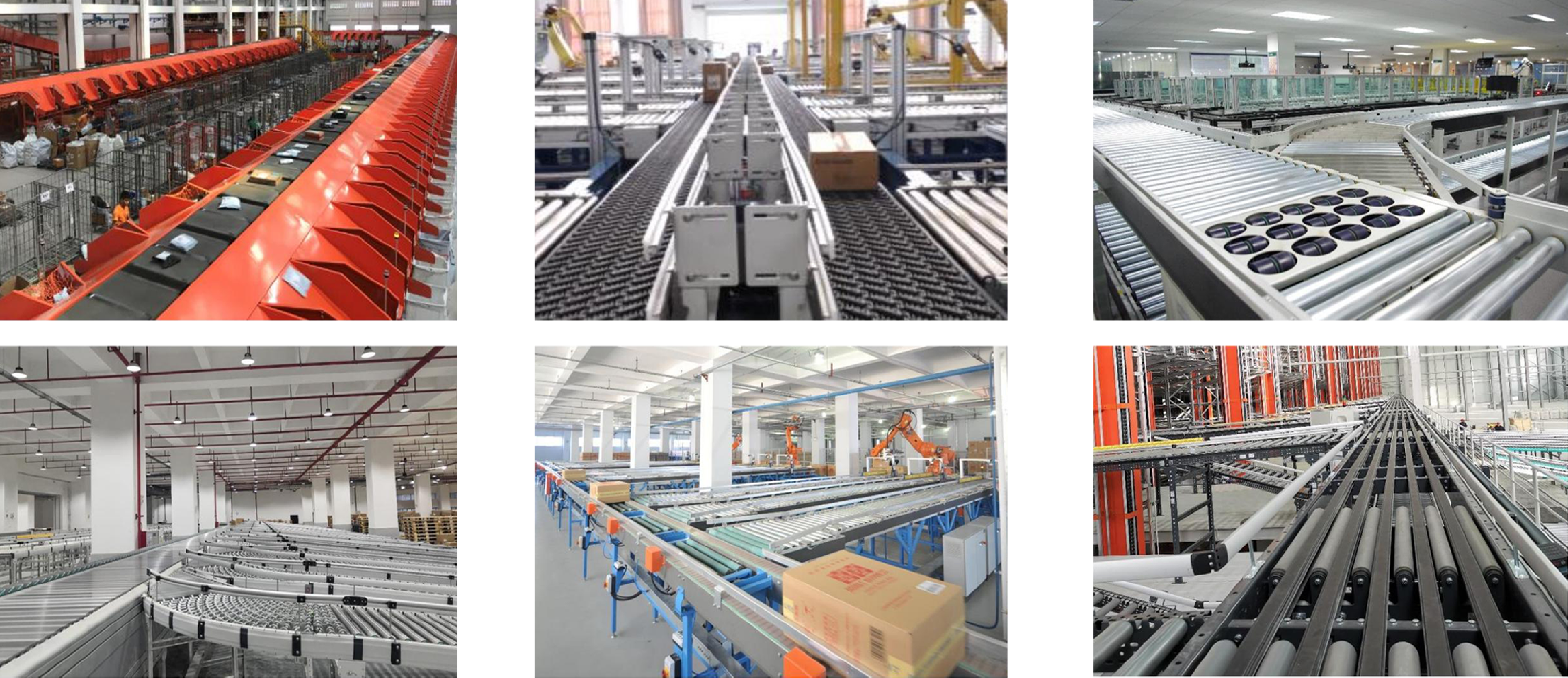
Modular belt sorters, roller transfer sorters, turnout stackers, narrowband transfer sorters, robot automatic picking systems and multiple-cars-on-one-track systems are driven by reducers that must deliver power transmission, speed reduction and torque increase under continuous operation, variable load and frequent start-stop. Documented needs are low noise, high positioning accuracy, high reliability, compact design, easy maintenance and long service life.
Grain and oil handling
Bucket elevators, rotary airlocks, screw conveyors, grinding mills and en-masse conveyors run continuously in high dust with variable load at normal temperature. The documented requirement set combines explosion-proof protection with good sealing, wear resistance, low noise and easy maintenance, and both machinery manufacturing and retrofit projects fall into this scope.
Textile dyeing and finishing
Cloth guide rollers, pad rolls, washing machines, dyeing machines, wide rollers, hair removal devices and X-Y plaiters need power transmission, speed reduction and torque increase for fabric washing, dyeing, folding and hair removal. The environment adds heat radiation, high humidity and acid-base solvents, so strong anti-corrosion paint, moisture-proofing and heat radiation adaptability are part of the specification.
Woodworking machinery
Four-sided planers, edge banding machines, sanders, double-end tenoners and CNC woodworking cutting machines require precision motion control of tools in a high-dust environment with variable load. Documented requirements are low noise, high dust protection rating, compact design, easy maintenance and long service life.
Lithium battery cell production
Electrode slurry mixing, coating, calendering, slitting, winding and stacking, electrolyte filling and formation are driven in a low-humidity, dust-controlled environment. The documented requirements are high precision for tension control and positioning, low noise, good sealing against leakage, cleanroom-level dust protection, corrosion resistance to electrolyte, low heat generation and compact design, with both new equipment manufacturing and line upgrades in scope.
Ceramics and corrugated cardboard
Ceramic production runs continuously with high dust and kiln-section heat, using stirrers, dryers, pre-kilns, kilns, glazing machines, inkjet machines, squaring machines, polishing machines and packing machines, where high efficiency, low temperature rise, waterproofing and moisture-proofing are documented requirements. Corrugated cardboard lines add paper dust and impact load to continuous duty, with low noise and high dust protection as the defining needs of the corrugator, slitter and conveyor drive train.
Stage equipment and automation
Circular light and prism light lifting devices, stage trusses, electric hoists and revolving stage drive units operate intermittently with frequent start-stop and forward or reverse switching. Ultra-low noise, smooth operation without vibration, high positioning accuracy and a compact envelope are the documented priorities, which is the environment where a right-angle worm gearbox with a self-locking ratio is relevant.
Comparison Table: Project Condition, Requirement and Matched Drive
The matrix below consolidates the documented condition-to-drive relationships described above. Each row reflects facts stated for those applications; it is not a claim that one configuration is superior to another.
| Project condition | Example industry | Documented requirement | Matched drive configuration |
|---|---|---|---|
| High ambient heat and thermal radiation | Glass lines (melting furnace, annealing lehr); ceramic kiln sections | High temperature resistance, wear resistance, low maintenance frequency for all-weather operation | High-temperature resistant custom reducer; ceramic kiln dedicated gearbox (Industry Customized Products) |
| High dust and abrasive particles | Woodworking machinery; ceramics; corrugated cardboard lines | High dust protection rating, low noise, compact design, easy maintenance | R/F/K/S Series Helical Gearmotors; Industry Customized Products |
| Combustible dust atmosphere | Grain and oil elevators, airlocks and mills | Explosion-proof protection, sealing against material leakage, wear resistance | Explosion-proof customized gearbox; bucket elevator customized reducer |
| Washdown humidity and cleaning chemicals | Food and beverage filling, packing and palletizing | Food-grade lubricant, high IP rating, corrosion resistance, stainless steel material | Corrosion-resistant configuration with NCJ Series Helical Gearmotor |
| Acid and alkali exposure with heat | Textile dyeing, washing and finishing | Strong anti-corrosion paint, moisture-proofing, heat radiation adaptability | Textile-duty custom reducer with R/F/K/S Series Helical Gearmotors |
| Continuous conveying with variable load and frequent start-stop | Logistics and warehousing sorting and conveying lines | Low noise, high positioning accuracy, high reliability, compact design | R/F/K/S Series Helical Gearmotors; NCJ Series Helical Gearmotor |
| High-precision positioning and tension control | Lithium battery electrode mixing, coating and winding | High precision, cleanroom-level dust protection, low heat generation, good sealing | NCJ Series Helical Gearmotor with frequency converter or integrated servo motor |
| Quiet intermittent lifting and positioning | Stage lighting lifts and stage automation | Ultra-low noise, smooth operation without vibration, high positioning accuracy, compact design | RV Series Worm Gearbox (self-locking above i>=60); NCJ Series Helical Gearmotor |
Reading the table correctly: the matched configuration column names the documented product families for those applications. Final selection still depends on the actual ratio, torque, mounting dimensions and motor power calculated for the machine, and on the compliance documentation required for the destination market.
Frequently Asked Questions
What safety standard applies to reducers installed in machinery for the European market?
EN ISO 12100:2010 is the harmonized Type-A machinery safety standard that specifies basic terminology, principles and a methodology for achieving safety in machinery design, including general principles for risk assessment and risk reduction. A reducer is assessed as part of the machine rather than as a stand-alone certificate, and Starshine Drive states that all of its products comply with international and domestic standards such as ISO, CE and CCC.
Can one reducer series cover high-temperature, high-dust and washdown projects?
No single architecture covers every environment, which is why several documented options are maintained in parallel. The RV Series Worm Gearbox combines a 20CrMnTi heat-treated worm shaft with a KK alloy copper worm wheel, offers single-stage ratios up to 100 and double-stage ratios up to 10,000, and is self-locking at i>=60. The R/F/K/S Series Helical Gearmotors deliver single-stage efficiency above 96% with 20CrMnTi gears hardened to HRC55-65 and ground to grade 6 accuracy. The NCJ Series Helical Gearmotor runs at 92%-96% efficiency with a wide-frequency motor that works at full load from 20 Hz to 60 Hz. For kiln, bucket-elevator, explosion-proof and corrosion-resistant duties, Starshine Drive builds industry customized products to drawing, including high-temperature resistant, explosion-proof and corrosion-resistant gearboxes.
Which factors drive the cost of a project-specific reducer?
Cost follows the scope of engineering beyond the standard build. Reduction ratio, torque, shaft size, installation dimensions, housing material and surface finish are all customizable, and special environments add material requirements such as corrosion-resistant or high-temperature-resistant construction, plus motor and control integration with integrated servo motors, three-phase asynchronous motors, frequency converters or permanent magnet synchronous motors. Because the minimum order quantity is 1 unit, a project-specific unit can be quoted and validated before any batch commitment.
Can a buyer test a reducer before placing a production order?
Yes. Orders can start from 1 unit, and production is covered by 100% full-scale testing, 100% finished product inspection, and regular reliability and durability testing. Sampling is also the practical way to confirm that protection rating, materials and mounting dimensions match the site, and after-sales support can be organized either remotely or through local dealership services.
What lead times should a project planner allow, and how does a project start?
Standard lead time runs from 7 to 20 days depending on the product, while vertical customization takes 15 to 45 days. Monthly capacity is 500,000 units or sets - 7,000 per month for R/F/S/K series, 25,000 for the RV worm gearbox series, 15,000 for the NCJ series, and 5,000 each for the JWB/JXJ series and customized series - so schedule risk usually sits in engineering approval rather than in capacity. To start, send the working conditions and the mounting interface to Starshine Drive through www.ssdreducer.com or email jessica@xgcd.cn and request a sample or a quotation.
Conclusion: Condition First, Catalogue Number Second
Application fit is decided by the environment, not by the model name. Heat, dust, moisture and chemicals, duty cycle and positioning accuracy each remove part of the available option space before ratio and torque are even compared, and the documented requirements for glass, ceramics, food and beverage, textile, woodworking, logistics, grain and oil, lithium battery and stage projects differ on all of those dimensions.
A practical project sequence therefore reads: document conditions, define the motion profile, check whether the load must be held, choose the architecture, confirm materials and mounting, match the motor and control, validate with a sample, then plan service. Guangdong Starshine Drive Co., Ltd supports that sequence with R/F/K/S helical gearmotors, RV series worm gearboxes, NCJ series helical gearmotors, industry customized products and matched drive components, backed by a production base of 53,333.33 m2, an annual capacity of 500,000 units or sets, a Vienna assembly plant for European projects, and 100% testing on finished units.
Next Step: Send Your Working Conditions
Share the ambient temperature, dust or moisture exposure, duty cycle, mounting envelope and required output speed, and the Starshine Drive team will propose a configuration for evaluation. Minimum order is 1 unit, and a sample can be validated before batch production.
Download the full product brochure: Starshine Drive Product Brochure (PDF)
Website: www.ssdreducer.com | Email: jessica@xgcd.cn | Phone and WhatsApp: +8615899805924