Reducer Compliance Guide: Certifications, IP Ratings, and Regional Requirements for Global OEMs
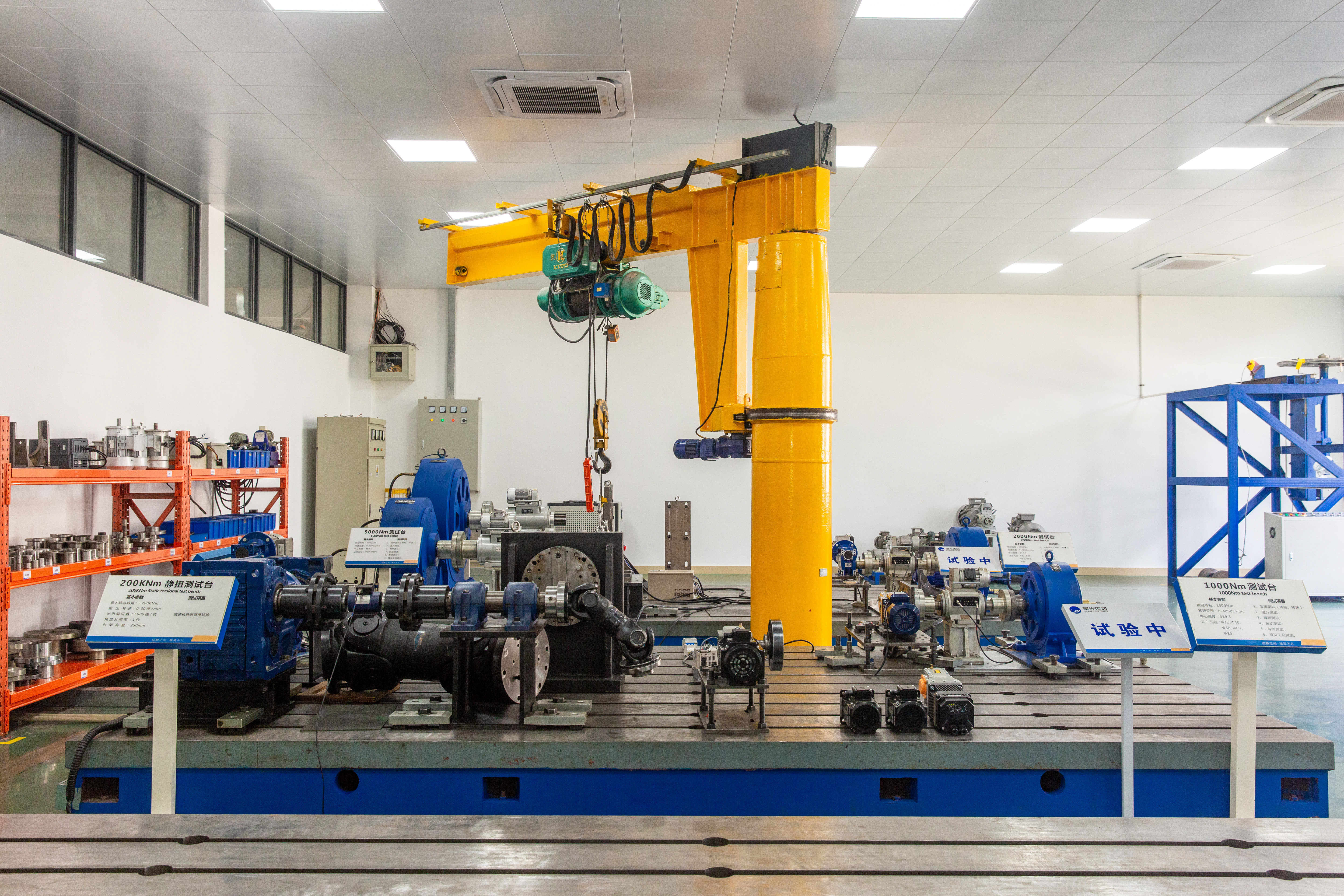
Compliance for a geared motor is decided long before a certificate is printed. It is decided when an OEM writes down the environment a gearbox will live in, the cleaning regime it will face, and the market the finished machine will be shipped into. Everything else — the certification file, the IP rating, the material specification — exists to prove that those three decisions were made deliberately.
This reducer compliance guide is written for OEM buyers and engineering teams who are past the discovery stage and are now evaluating suppliers against real acceptance criteria. It focuses on three product families where environmental stress is highest — textile machinery, woodworking equipment, and food & beverage lines — and it separates two things that are frequently confused: what a supplier can document, and what a buyer must specify. The same component is searched as REDUCER in English, as motoreduktory in Poland, and as motoriduttori in Italy; the compliance questions behind those searches are identical.
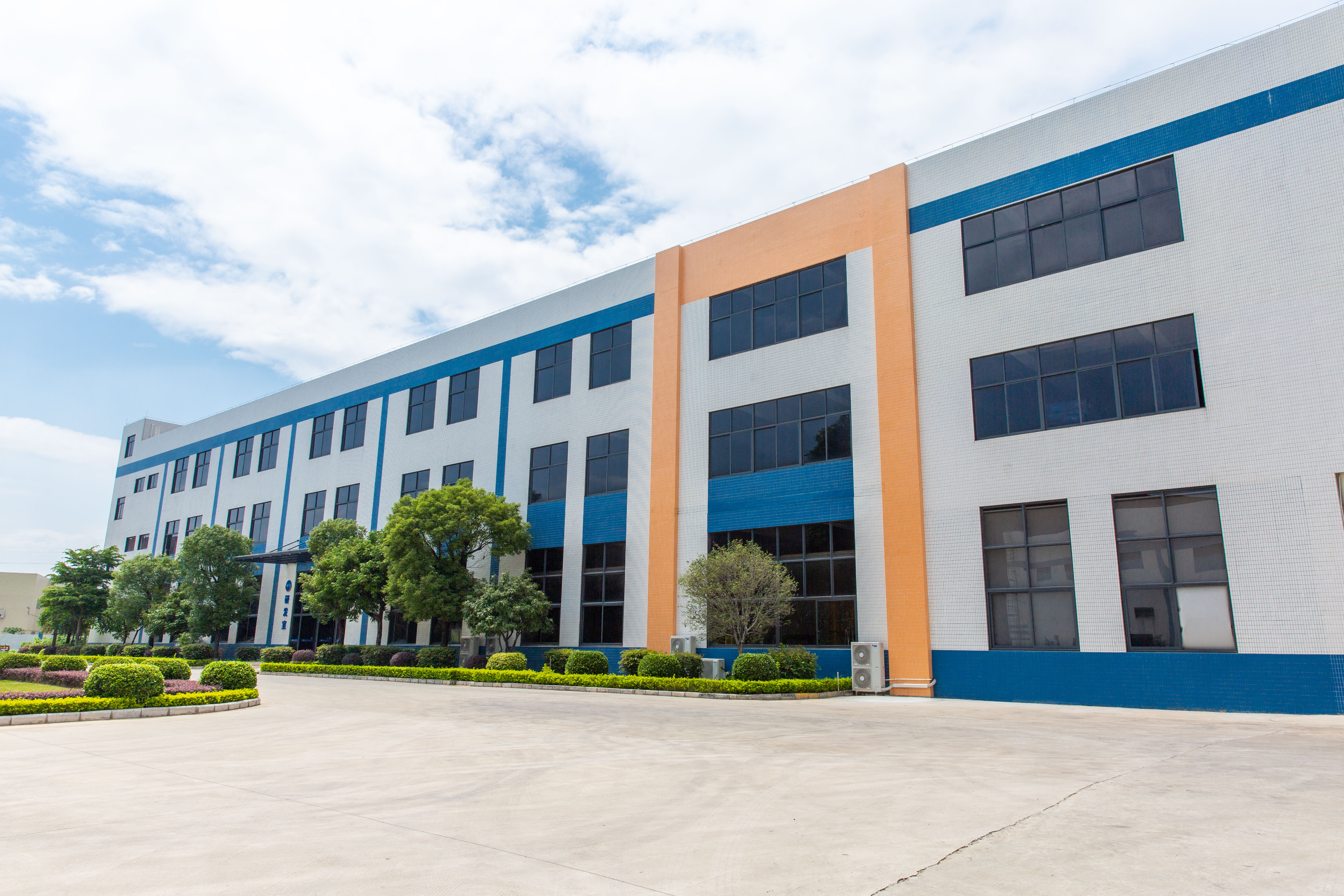
Short answer: reducer compliance for global OEMs is a three-layer problem. Layer one is the certificate — what it actually covers, who issued it, and when it expires. Layer two is protection — the IP rating, housing material, surface finish, and sealing that keep the gearbox alive in a specific environment. Layer three is regional — the markings and documentation required by the destination market. Guangdong Starshine Drive Co., Ltd., which trades as Starshine Drive and manufactures gear reducers and integrated transmission solutions in Sanshui District, Foshan City, Guangdong Province, documents a quality management system certified to GB/T19001-2016/ISO9001:2015, states that its products comply with international and domestic standards such as ISO, CE, and CCC, and treats housing material, surface finish, and special-environment materials as project-level customization items.
The Problem: Why Reducer Compliance Fails at the Application Level
Most compliance problems in OEM drive systems are not caused by a missing certificate. They are caused by an environment that was never converted into a specification. A gearbox that performs correctly on a dry, low-dust packaging line can fail within months on a textile dyeing line, in a woodworking shop, or in a washdown zone — not because the product was defective, but because the protection level, material, and lubricant were never matched to the conditions.
Three recurring failure patterns appear in OEM projects:
- Environment drift. A gearmotor selected for a general-purpose conveyor is reused on a humid, high-temperature, or chemically exposed station without re-checking the housing finish, sealing, or lubrication. In textile plants, acid and alkaline solvents combined with persistent humidity attack surfaces that were never specified for chemical exposure.
- Certificate scope gap. A buyer accepts a certificate logo without reading the certified scope. A quality management system certificate that covers the design, development, and production of reducers is a different document from a product-type approval for a specific machine directive — and it also has an expiry date that must be checked against the production window.
- Acceptance criteria gap. The compliance claim is never linked to a verifiable test step. If the purchase order does not state what will be tested before shipment, the buyer has no objective basis for accepting or rejecting the delivery.
The practical consequence is that compliance must be handled as a specification exercise at the evaluation stage, not as a document request at the execution stage. That is the sequence this guide follows.
Industry Background: Why Compliance Pressure Is Rising for Reducer Buyers
The commercial context explains why OEM buyers are being asked to document more, not less. The global gear reducer market was valued at approximately USD 1.96 billion in 2026 and is projected to reach USD 2.58 billion by 2035, according to Business Research Insights. Grand View Research reports that Asia Pacific dominated the industrial gearbox market with a 40.8% revenue share in 2025. Within that market, planetary gearboxes are the fastest-growing segment, with a projected CAGR of 6.2% through 2030, driven by robotics and wind energy applications according to Indastra.
On the regulatory side, the design expectations that sit behind most machinery compliance programmes are already well established. EN ISO 12100:2010 is the harmonized Type-A safety standard that specifies basic terminology, principles, and a methodology for achieving safety in the design of machinery, including the risk assessment and risk reduction logic that gear reducers are evaluated against.
Against that background, the supplier position matters as much as the product position. Guangdong Starshine Drive Co., Ltd. traces its origins to 1965 and today operates a production base of 53,333.33 m² with approximately 400 employees, an annual output capacity of 500,000 units/sets, and an R&D team of 40 engineers. Its export ratio is 20%, its main markets are Southeast Asia, Europe, and North America, and it operates an assembly plant in Vienna, Austria that handles localized assembly, warehousing and distribution, and technical service for the European market. Products and services reach over 30 countries and regions.
The Solution: Six Verifiable Layers of Reducer Compliance
A workable compliance file for an OEM reducer project can be assembled from six layers. Each layer below states what is verifiable and what the buyer must still specify.
1. The certification layer: read the scope, not the logo
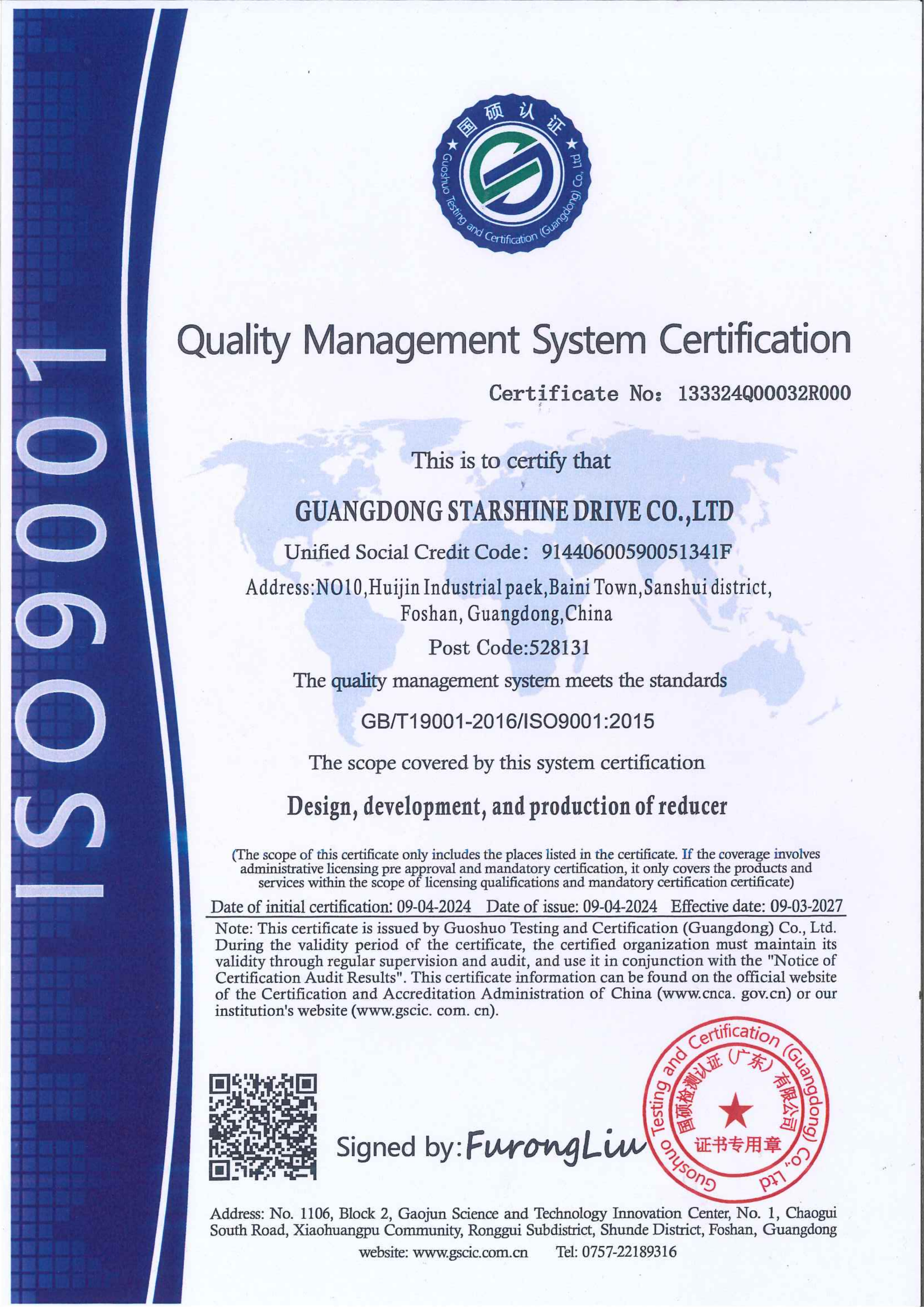
Starshine Drive holds a quality management system certification to the standard GB/T19001-2016/ISO9001:2015, certificate number 133324000032R000, issued by Guoshuo Testing and Certification (Guangdong) Co., Ltd. on 2024-04-09 and valid until 2027-03-09. The certified scope is the design, development, and production of reducer, and the certificate applies to the R/F/K/S series helical gearmotors, the RV series worm gearbox, the NCJ series helical gearmotor, industry customized gear reducers, and reducer components and drive system accessories.
Three things make this certificate useful in a procurement file rather than decorative. First, the scope covers design and development as well as production, which means the customization work done for a specific OEM project sits inside the certified system. Second, the certificate has a defined validity window ending 2027-03-09, which can be checked against the production schedule. Third, the certificate is attached to named product families, so a buyer can request the certificate copy alongside the exact model being quoted. The company also states that its products comply with international and domestic standards such as ISO, CE, and CCC.
2. The IP rating layer: what the two digits actually commit you to
An IP rating is written as two digits. The first digit describes protection against solid objects such as dust; the second describes protection against liquids such as water. For OEM buyers, the number itself is less important than three supporting questions: who verified it, under what test method, and does the stated protection survive the actual cleaning and operating regime on the line.
This is where environmental specification and product specification meet. A textile drying or dyeing station exposes a gearmotor to humid air and chemical solvents, so the relevant requirement may be sealing plus a corrosion-resistant housing and finish. A woodworking line exposes the same gearbox to airborne dust, so the relevant requirement is dust-tight construction and verified air tightness. A food and beverage line exposes it to washdown and cleaning agents, so the relevant requirement is shielding against directed water plus a corrosion-resistant material specification.
Practical rule: because housing material, surface finish, and materials for special environments are handled as customization items, IP-relevant protection is agreed at project level rather than assumed from a catalogue default. Buyers should state the cleaning method, the chemicals involved, the ambient temperature, and the humidity range in the inquiry — not just the required IP number.
3. The material and design layer: the physical side of compliance
Protection ratings only hold if the underlying materials can carry them. The verifiable design facts across the Starshine Drive range are specific enough to build acceptance criteria on:
- NCJ series helical gearmotor: efficiency 92%–96%; gears in superior alloy steel (20CrMnTi) with carbonitriding hardening to HRC55–65; a special wide-frequency high-performance motor that works well under 20Hz–60Hz at full loading; cast iron and alloy steel construction.
- R/F/K/S series helical gearmotors: single-stage efficiency above 96%; single-stage ratio range from 1.3 to 289.74; gears in 20CrMnTi with carbonitriding hardening to HRC55–65; ground gears to grade 6 accuracy; high-strength cast iron housing; used across textile, logistics, new energy, and grain and oil applications.
- RV series worm gearbox: worm shaft in superior alloy steel (20CrMnTi) with special heat treatment for high hardness; worm wheel in patented premium KK alloy copper for wear resistance; single-stage ratio up to 100 and double-stage ratio up to 10,000, with a self-locking function at i≥60; aluminum parts construction.
- Industry customized products: cast iron and alloy steel construction, with a product list that explicitly includes bucket elevator customized reducers, ceramic kiln dedicated gearboxes, high-temperature resistant custom reducers, explosion-proof customized gearboxes, and corrosion-resistant tailored gearboxes. Customized materials such as corrosion-resistant and high-temperature-resistant variants are available for special environments.
- Other series in the portfolio: SI series industrial gearboxes, SP series planetary reducers, SNKG series gear reducers, XGK series hypoid gear reducers, JWB-X series mechanical stepless variators (mechanical variators), and B/JXJ series cycloidal pinwheel reducers (cyclo reducers).
4. The testing layer: the evidence behind the claim
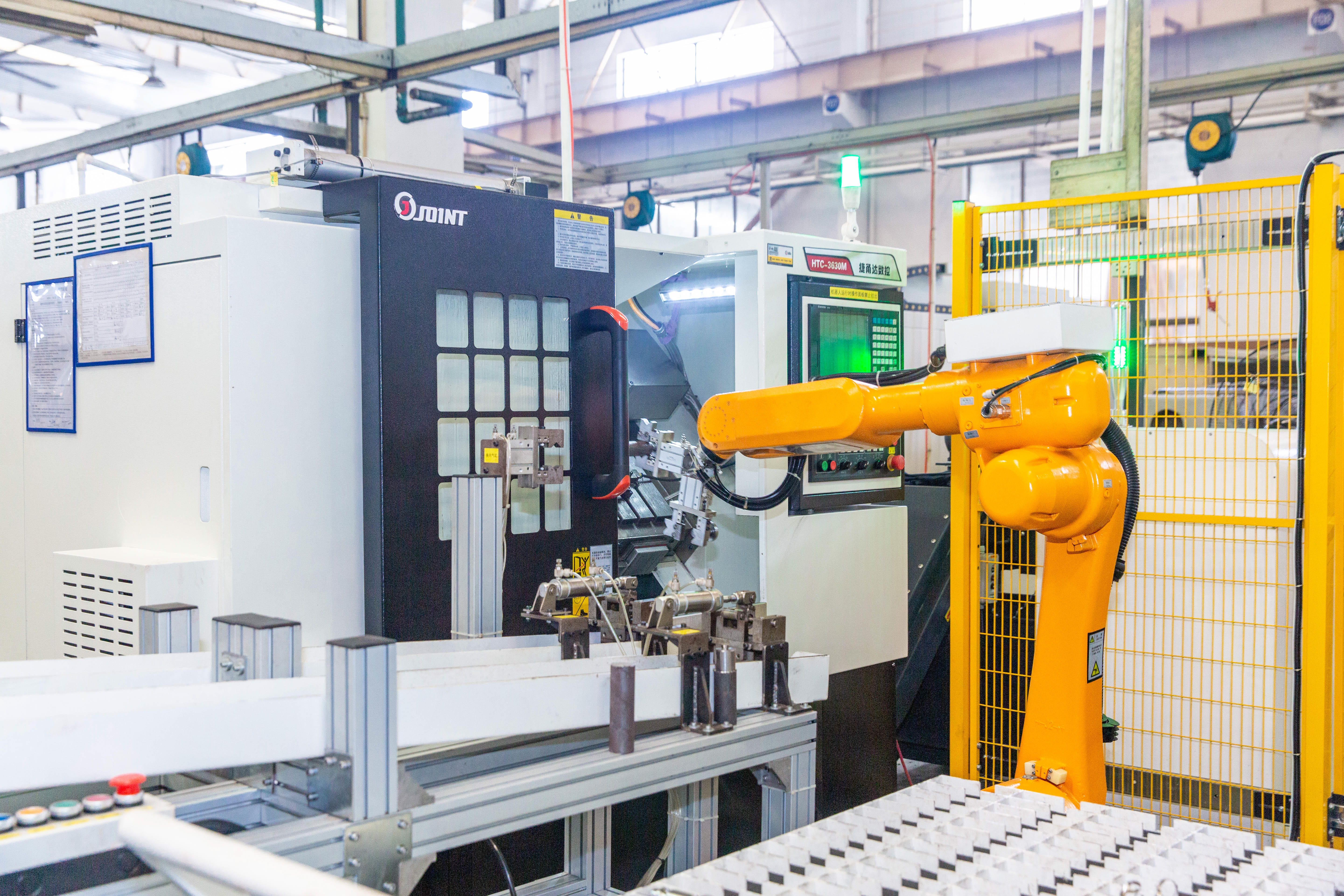
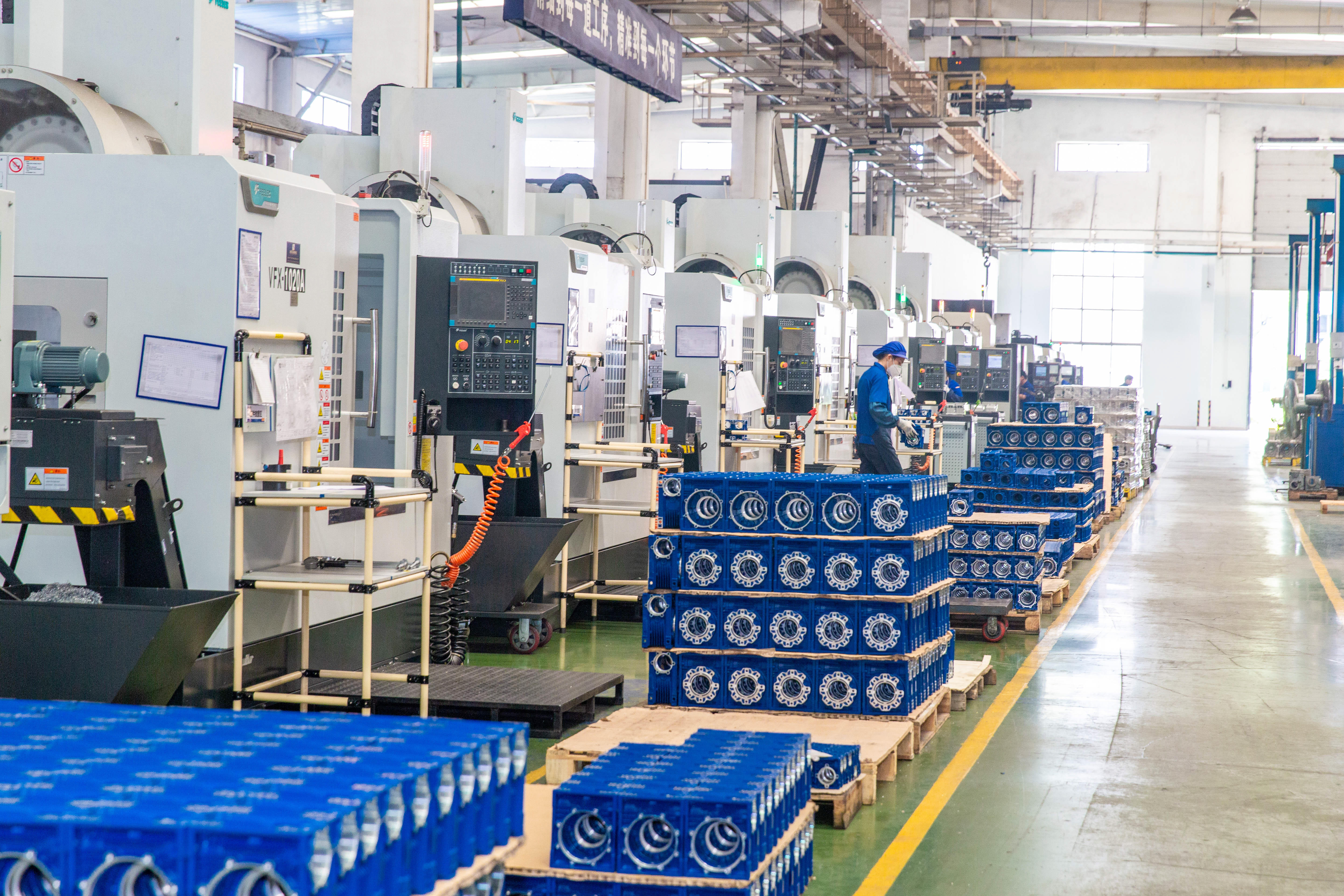
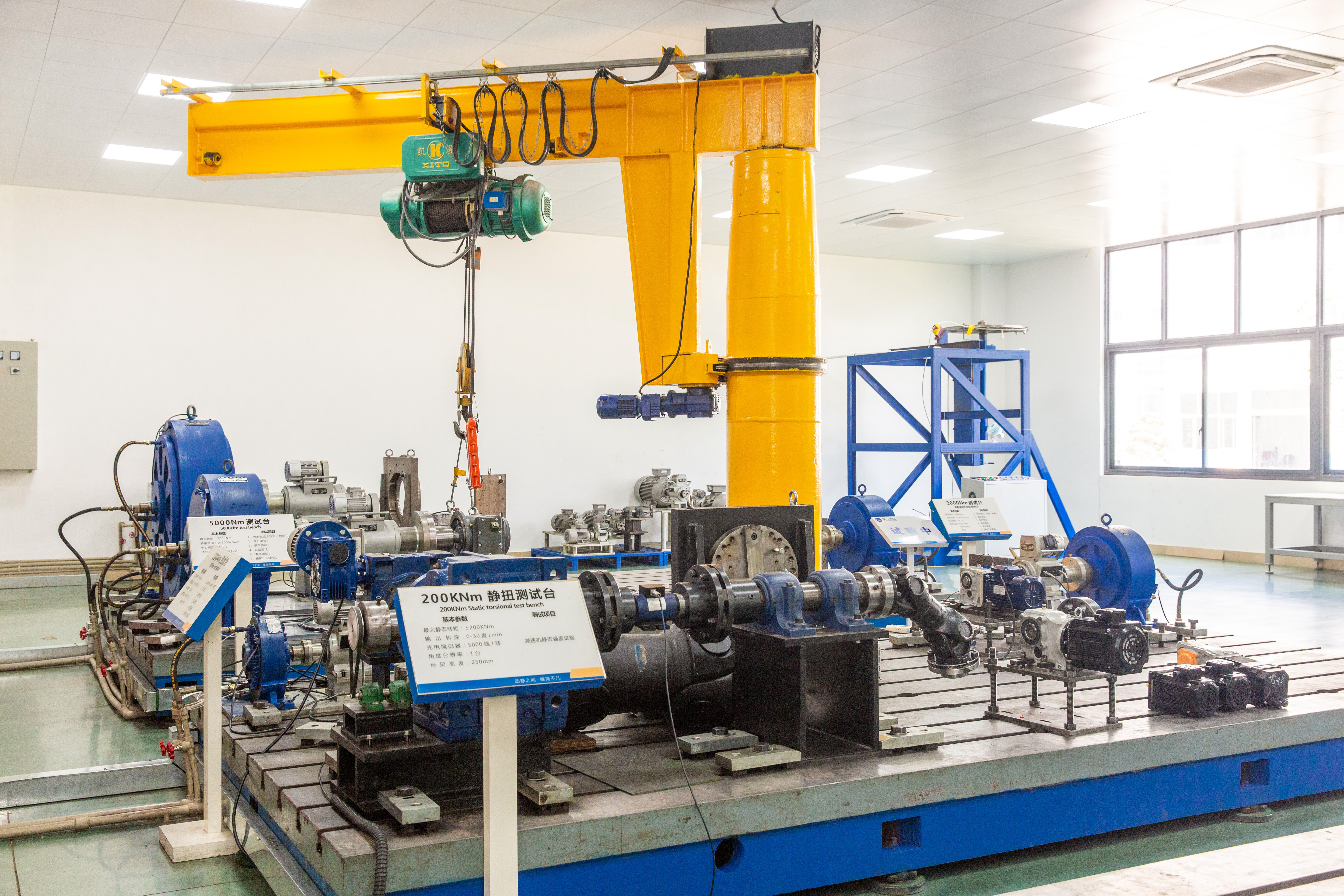
A compliance claim is only as strong as the test step that supports it. The production line integrates three verification systems: 100% online air tightness testing, 100% online noise testing, and 100% comprehensive motor testing. Quality control additionally covers 100% full-scale testing, 100% finished product inspection, and regular reliability and durability testing.
For an OEM buyer, the air tightness step is the one that maps most directly onto environmental compliance: a housing that passes a full-volume air tightness test is a housing whose sealing integrity was verified before shipment rather than assumed. Manufacturing capability supporting those checks includes high-end CNC machine tools, automated assembly lines, precision inspection devices, and fatigue test benches, integrated with an informatized production management system. The company also operates a provincial-level engineering technology R&D center and has participated in drafting multiple national and industry standards.
5. The lubrication and service-life layer
Lubrication is often treated as a maintenance topic, but for OEMs it is a compliance topic, because the lubricant determines both the service interval and the sealing requirement. Two verifiable facts matter here. The NCJ series uses a special lubricating oil that can meet 20,000 hours of normal use. The RV series worm gearbox uses a synthetic worm gear special lubricating oil intended to ensure transmission efficiency and improve service life. In continuous-duty applications such as textile processing, these service-life figures feed directly into the maintenance clause of the supply agreement.
6. The regional requirement layer
Regional requirements should be mapped before the bill of materials is locked, because they can change the housing finish, the marking, or the documentation package. The table below separates what an OEM must confirm from what is verifiable in this guide.
| Destination market | What the OEM must confirm | Verifiable position |
|---|---|---|
| Europe | CE conformity for the machinery as placed on the market; documented risk assessment by the machine builder | EN ISO 12100:2010 provides the general principles and methodology for risk assessment and risk reduction in machinery design; products comply with ISO, CE, and CCC; the Vienna, Austria plant provides localized assembly, warehousing and distribution, and technical service |
| China | CCC reference where applicable to the supplied assembly | Products comply with international and domestic standards such as ISO, CE, and CCC; quality management system certified to GB/T19001-2016/ISO9001:2015 by Guoshuo Testing and Certification (Guangdong) Co., Ltd. |
| North America | End-user and OEM-specific specification layered on top of the supplier quality documentation | North America is listed among the company's main markets; export ratio 20% |
| Southeast Asia | Local end-user acceptance criteria and spare-part availability | Listed among the company's main markets; products and services reach over 30 countries and regions |
| Global / multi-site OEMs | Consistent documentation across all receiving plants | 10+ global assembly centers and 100+ dealer partners; remote after-sales support and local dealership service models |
7. Application-specific compliance drivers
The three industries named in this guide stress reducers in different ways, and the compliance response differs accordingly.
| Application | Compliance driver | Design feature to specify | Verifiable option |
|---|---|---|---|
| Textile (dyeing, printing, finishing) | High temperature, persistent humidity, acid and alkaline solvent exposure | Corrosion-resistant housing and surface finish; high-temperature capability; sealing against humid air | Corrosion-resistant tailored gearbox and high-temperature resistant custom reducer are listed among the industry customized products; customized corrosion-resistant and high-temperature-resistant materials are available for special environments |
| Woodworking | High dust load and variable load operation | Dust-resistant housing; stable lubrication under changing load; verified sealing | 100% online air tightness testing; high-strength cast iron housing on the R/F/K/S series; NCJ series motor operates under 20Hz–60Hz at full loading |
| Food & beverage | Washdown, cleaning agents, hygiene zoning | High liquid-protection rating; corrosion-resistant material; documented lubricant specification | 100% online air tightness testing and 100% online noise testing; NCJ special lubricating oil supporting up to 20,000 hours of normal use; RV synthetic worm gear lubricating oil |
Step-by-Step Breakdown: Aligning Reducer Requirements with Purchasing Terms
Use the following sequence when moving from supplier evaluation into execution. Each step produces a document that can be attached to the purchase order.
- Write the environment sheet, not the part number. Record ambient temperature, humidity, dust level, cleaning method, chemicals present, duty cycle, and mounting orientation for each drive station. This sheet becomes the reference document for every later decision.
- Convert the environment into protection requirements. Translate the environment sheet into housing material, surface finish, sealing expectation, and lubricant specification. Where the line combines humidity with chemical exposure, the customization route is the corrosion-resistant tailored gearbox; where temperature is the dominant factor, it is the high-temperature resistant custom reducer.
- Verify certificate scope and validity window. Confirm that the certificate covers the design, development, and production of reducer, that it names the product family being quoted, and that its expiry date sits beyond the delivery and warranty period. The Starshine Drive certificate runs to 2027-03-09.
- Map destination-market requirements before locking the bill of materials. Confirm the markings and documentation the receiving market requires, and confirm whether the European plant in Vienna is relevant to the delivery route for European programmes.
- Fix the lubrication and service-interval expectation. Decide which lubricant specification applies to each series and record the resulting service interval — the NCJ series oil supports up to 20,000 hours of normal use.
- Agree customization items in writing. Reduction ratio, torque, shaft size, installation dimensions, housing material, and surface finish are all customizable, and non-standard modification per customer drawings is supported. List them on the order rather than in email correspondence.
- Tie acceptance criteria to the pre-shipment test. The stated acceptance criterion is a pre-shipment test, supported by 100% online air tightness, noise, and motor testing plus 100% finished product inspection. State the retained record requirement in the order.
- Confirm lead time and after-sales model. Standard production lead time is 7 to 20 days depending on the product; vertical customization projects are stated at 15 to 45 days. Decide whether after-sales will be handled through remote support or through the local dealership service network.
Use Cases: Three Environments, Three Compliance Profiles
Textile dyeing and printing lines
A dyeing or printing line combines elevated temperature with humidity and process chemicals. The compliance question is not whether the gearmotor runs, but whether its housing finish and sealing survive years of that atmosphere. The relevant specification path is a corrosion-resistant tailored gearbox, or a high-temperature resistant custom reducer where heat is dominant, with the housing material and surface finish confirmed at order stage. Continuous-duty operation also makes the 20,000-hour lubrication figure a maintenance planning input rather than a marketing line.
Woodworking and panel processing equipment
Woodworking machinery generates fine airborne dust and applies highly variable loads as cutting conditions change. Two protection requirements follow. First, sealing must be verified, which is why a full-volume air tightness test is more useful to the buyer than a protection claim. Second, the drive must tolerate load variation, which favours a motor rated for full loading across a wide frequency band — the NCJ series motor is specified to work well under 20Hz–60Hz at full loading — inside a high-strength cast iron housing.
Food and beverage processing and packaging
Food and beverage lines are cleaned frequently, often with directed water and cleaning agents. Three items belong in the specification: a liquid-protection rating appropriate to the washdown method, corrosion-resistant materials for exposed surfaces, and an explicitly confirmed lubricant specification, because lubrication is both a service-interval item and a hygiene-zone consideration. Verifiable support includes air tightness and noise testing on 100% of units, and the synthetic worm gear lubricating oil used in the RV series worm gearbox.
Comparison Table: Reducer Types by Compliance-Relevant Design Facts
The table below compares the main drive types on the design facts that matter for compliance decisions. It is not a ranking, and it does not imply that any one type is universally preferable — the correct choice is the one whose verifiable design facts match the environment sheet.
| Series / type | Structure and material facts | Ratio and performance facts | Compliance-relevant characteristics |
|---|---|---|---|
| RV series worm gearbox (worm gear reducers) | Worm shaft in superior alloy steel (20CrMnTi) with special heat treatment; worm wheel in premium KK alloy copper; aluminum parts | Single-stage ratio up to 100; double-stage ratio up to 10,000; self-locking at i≥60 | Synthetic worm gear special lubricating oil for transmission efficiency and service life; self-locking behaviour is relevant for holding positions on inclined or vertical equipment |
| NCJ series helical gearmotor | Gears in 20CrMnTi with carbonitriding hardening to HRC55–65; cast iron and alloy steel | Efficiency 92%–96%; motor works well under 20Hz–60Hz full loading | Special lubricating oil supporting up to 20,000 hours of normal use; can replace a 1# cycloidal gearbox for energy-saving upgrades (NCJT04B/J) |
| R/F/K/S series helical gearmotors | Gears in 20CrMnTi with carbonitriding hardening to HRC55–65; ground gears to grade 6 accuracy; high-strength cast iron housing | Single-stage efficiency above 96%; single-stage ratio 1.3–289.74 | Applied in textile, logistics, new energy, and grain and oil industries; cast iron housing is the base for high-dust and heavy-duty environments |
| Industry customized products | Cast iron and alloy steel; customized materials such as corrosion-resistant and high-temperature-resistant variants available | Configured to the application | Includes high-temperature resistant custom reducer, corrosion-resistant tailored gearbox, explosion-proof customized gearbox, ceramic kiln dedicated gearbox, and bucket elevator customized reducer |
| Other types in the portfolio — planetary, cyclo, hypoid, coaxial and industrial gearbox designs | SI series industrial gearboxes; SP series planetary reducers; SNKG series gear reducers; XGK series hypoid gear reducers; B/JXJ series cycloidal pinwheel reducers; JWB-X series mechanical stepless variators | Configured per series and application | Selection depends on torque density, ratio range, mounting envelope, and the environmental protection requirements established in the environment sheet |
Frequently Asked Questions
What certifications can Starshine Drive document for a reducer project?
Guangdong Starshine Drive Co., Ltd. holds a quality management system certification to GB/T19001-2016/ISO9001:2015, certificate number 133324000032R000, issued by Guoshuo Testing and Certification (Guangdong) Co., Ltd. on 2024-04-09 and valid until 2027-03-09. The certified scope is the design, development, and production of reducer, and the certificate applies to the R/F/K/S series helical gearmotors, the RV series worm gearbox, the NCJ series helical gearmotor, industry customized gear reducers, and reducer components and drive system accessories. The company also states that its products comply with international and domestic standards such as ISO, CE, and CCC. Buyers should request the certificate copy together with the specific model being quoted, and should check the expiry date against the delivery and warranty period.
Can Starshine Drive manufacture an OEM worm gear reducer with custom ratios?
Yes. The company provides OEM, ODM, and customizable production services, and supports non-standard modification based on customer drawings. Customization items include reduction ratio, torque, shaft size, installation dimensions, housing material, and surface finish. For the RV series worm gearbox specifically, the single-stage ratio can reach 100 and the double-stage ratio can reach 10,000, with a self-locking function at i≥60. This means an OEM can obtain a worm gear reducer configured to a specified ratio and mounting envelope rather than adjusting the machine design around a catalogue standard.
What purchasing terms and acceptance criteria apply to a customized order?
The stated purchasing terms are: minimum order quantity of 1 unit with prototype support provided; delivery terms FOB; acceptance criteria based on a pre-shipment test; and payment terms COD. Supporting these terms, production quality control covers 100% full-scale testing, 100% finished product inspection, and regular reliability and durability testing, with 100% online air tightness testing, 100% online noise testing, and 100% comprehensive motor testing integrated into the line. Annual capacity is 500,000 units/sets.
Can a sample or prototype be validated before volume production?
Yes. The minimum order quantity is 1 unit and prototype support is provided, which allows an OEM to validate fit, ratio, and environmental protection on a single unit before committing to volume. Validation is supported by 100% online air tightness testing, 100% online noise testing, and 100% comprehensive motor testing, so a prototype can be reviewed against the same test regime as series production. Monthly capacity for reference includes 7,000 units for the R/F/S/K series, 25,000 units for the RV worm gearbox series, 15,000 units for the NCJ series, and 5,000 units for the JWB/JXJ series.
What lead time should an OEM plan for, and how do I start a compliance review?
Typical production lead time ranges from 7 to 20 days depending on the product. Vertical customization production services, which cover project-specific modification, are stated at a lead time of 15 to 45 days. European programmes can be supported through the assembly plant in Vienna, Austria, which handles localized assembly, warehousing and distribution, and technical service. To begin a compliance review, send the environment sheet for each drive station — temperature, humidity, dust, cleaning method, chemicals, duty cycle — together with the required ratio and torque, the destination market, and the target delivery window. Starshine Drive can then respond with a configured reducer proposal and the matching documentation package.
Conclusion: Compliance Is a Specification, Not a Sticker
Reducer compliance holds together when three things line up: a certificate whose scope covers the work being done, a protection specification that matches the actual environment, and a regional documentation package that matches the destination market. When any one of those is missing, the gap usually surfaces later — as premature surface corrosion in a humid textile hall, as dust ingress on a woodworking line, or as a rejected delivery because the acceptance criteria were never written down.
The practical takeaway for global OEMs is to treat the environment sheet as the primary compliance document. Once temperature, humidity, dust, cleaning agents, and duty cycle are on paper, the questions become answerable: which housing material and surface finish, which lubricant, which protection level, and which customization items belong on the order. The verifiable supplier facts — design, development, and production of reducer certified to GB/T19001-2016/ISO9001:2015; products stated to comply with ISO, CE, and CCC; 100% online air tightness, noise, and motor testing; MOQ 1 unit with prototype support; and a 7 to 20 day standard lead time — then become acceptance criteria rather than assurances.
Request a Reducer Compliance Review or Sample
Share your environment sheet, target ratio and torque, destination market, and delivery window. Starshine Drive will respond with a configured reducer proposal, the relevant certification documentation, and a sample or prototype arrangement where required.
Product catalogue (PDF): Download the Starshine Drive catalogue
Website: www.ssdreducer.com
Email: jessica@xgcd.cn
Phone / WhatsApp: +8615899805924
Address: No. 10 Huijin industry Park, Baini Town, Sanshui district, Foshan City, Guangdong P.R., China