
Reducer Head-to-Head: Worm Gearbox vs Helical Gearmotor — Which Drive Fits Your Machine?
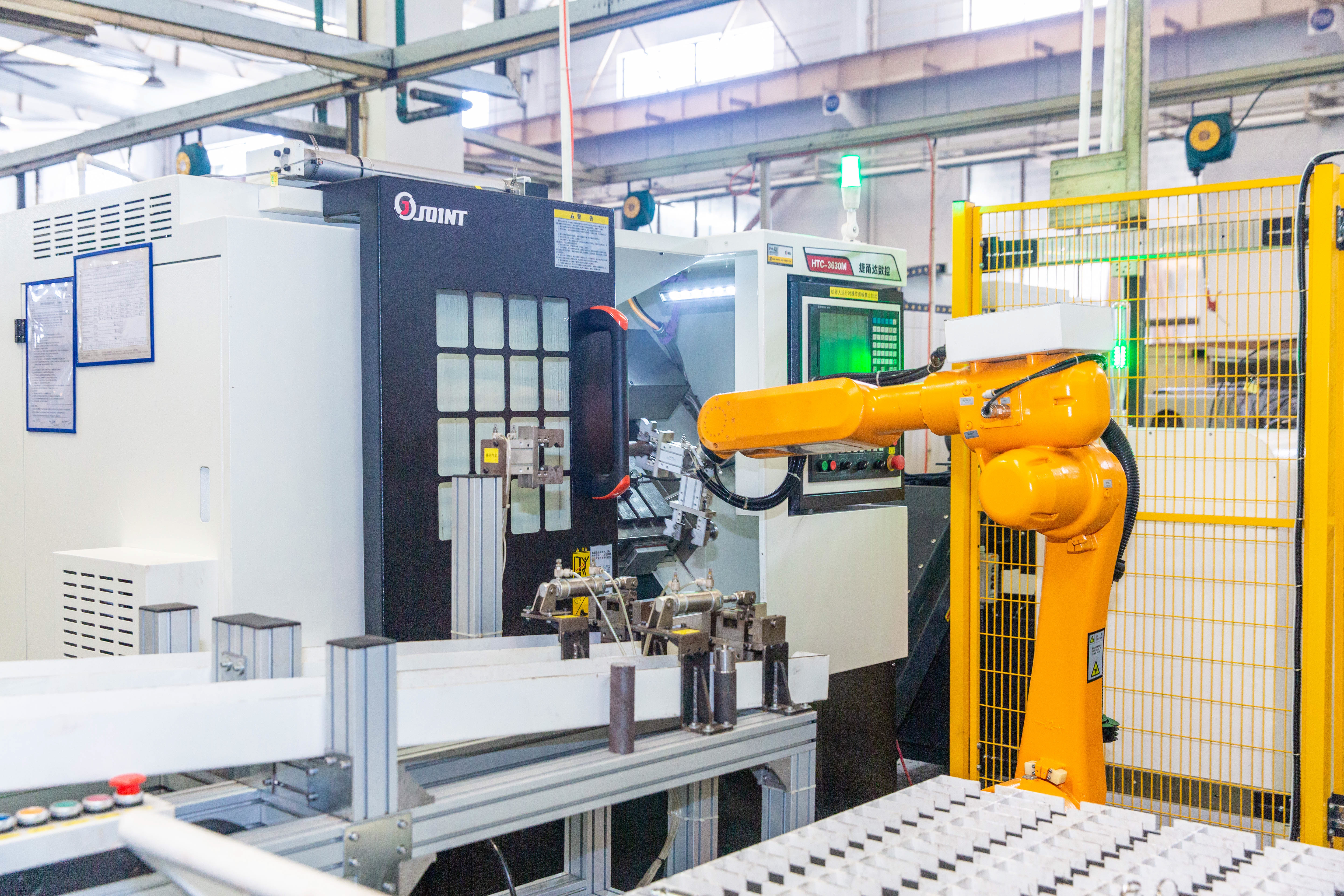
The short answer: if the machine must hold a load in position without a brake, or needs a very high reduction in a small envelope, the RV Series Worm Gearbox is the more direct fit — it reaches ratios up to 100 in a single stage, up to 10,000 in two stages, and self-locks at ratios of i≥60. If the machine runs long hours and energy loss is the deciding cost, the R/F/K/S Series Helical Gearmotors are the stronger choice — more than 96% efficiency in a single stage, with 20CrMnTi gears carbonitrided to HRC55-65 and ground to grade 6 accuracy. Neither architecture wins everywhere, and that is exactly why this comparison exists.
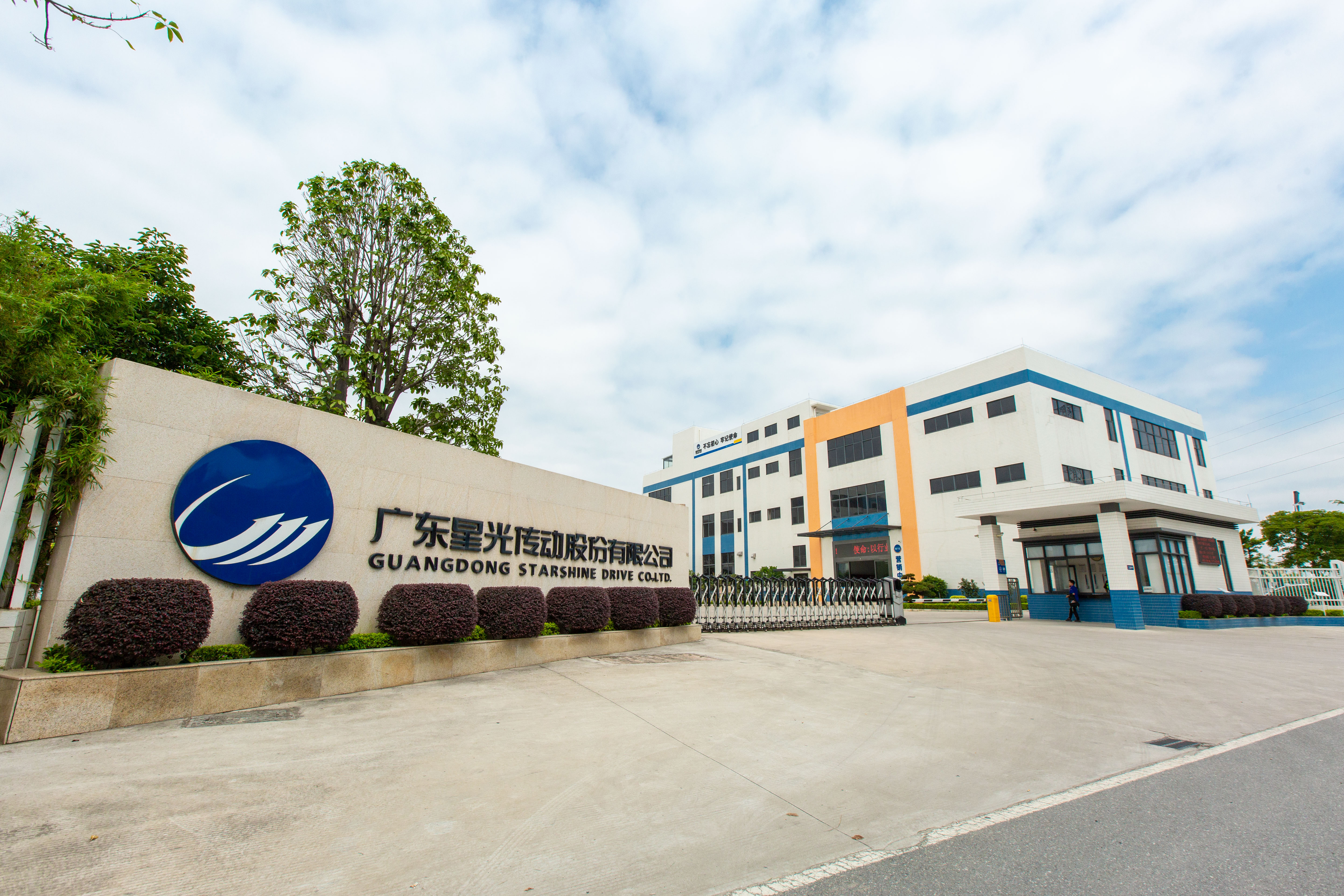
Starshine Drive (Guangdong Starshine Drive Co., Ltd.) is a Chinese transmission solution manufacturer founded in 1965 and headquartered in the Sanshui District of Foshan City, Guangdong Province, producing general-purpose and specialized gearboxes, motors, and integrated drive systems. Because the company builds worm, helical, helical-worm, planetary, cycloidal, hypoid, and mechanical variator product families in the same plant, the trade-off between a worm gearbox and a helical gearmotor can be examined here from product data rather than from marketing positioning.
This article is a head-to-head decision guide, not a product tour. It defines the problem, sets the market context, compares the two architectures on verifiable specifications, breaks the selection into six checks, and ends with a comparison table and a short FAQ — so a buyer, engineer, or distributor can reach a defensible decision in one reading.
Why the Worm-vs-Helical Decision Is Usually Framed Wrong
Most reducer decisions are made backwards: the buyer starts with a housing size, a flange pattern, or a model number copied from a machine that is already running, and only then asks whether the drive actually suits the duty. The two architectures then look interchangeable in a catalogue — both are enclosed gearboxes, both mount to a motor, both carry a ratio — even though they behave very differently over time.
The practical difference is what each architecture asks you to give up:
- Self-locking and ratio density. A worm gearbox converts speed into a very large reduction in few stages, and at ratios of i≥60 it self-locks — the load cannot back-drive the gearbox. A helical gearmotor does not offer that behaviour, so holding a load requires an external brake and additional control logic.
- Efficiency over thousands of hours. A helical stage in the R/F/K/S Series exceeds 96% efficiency in a single stage. That margin becomes the deciding factor on lines that run continuously, because the difference is paid for in electricity every hour of the year.
- Maintenance and lubrication. Worm units rely on a synthetic worm gear lubricating oil specified to protect transmission efficiency and service life; helical units in the NCJ Series are specified with a special lubricating oil that meets 20,000 hours of normal use. Different oils, different service intervals, different spares.
- Environment and construction. The RV Series uses aluminum parts and a patented premium KK alloy copper worm wheel; the R/F/K/S Series uses a high-strength cast-iron housing with hardened, ground alloy steel gearing. Housing material and surface finish both feed into how the unit survives heat, dust, washdown, or corrosive air.
Get the framing right and the decision becomes short. Get it wrong and the symptoms arrive quietly: creeping position, rising oil temperature, a brake that wears early, or an energy bill that nobody attributes to the gearbox.
Industry Background: A Growing Reducer Market With Fragmented Numbers
The gear reducer market is expanding, but publicly reported figures describe different scopes and should not be compared casually. Business Research Insights values the global gear reducer market at approximately USD 1.96 billion in 2026, projected to reach USD 2.58 billion by 2035. Grand View Research reports that Asia Pacific dominated the industrial gearbox market with a 40.8% revenue share in 2025. Indastra projects planetary gearboxes as the fastest-growing segment at a 6.2% CAGR through 2030, driven by robotics and wind energy. The gap between a roughly USD 2 billion "gear reducer" figure and much larger "industrial gearbox" valuations comes from scope: heavy wind and mining gearsets are counted in one definition and not the other.
For a buyer, the implication is simple: market-level numbers are unreliable for specification work, while product-level data is not. Two facts about the supply side matter more than any market total. First, the regional centre of gravity sits in Asia Pacific. Second, growth is concentrated in segments that reward precision and torque density — which is precisely where a head-to-head choice between a worm gearbox and a helical gearmotor has to be settled on duty cycle, not on habit.
The manufacturing base behind this comparison is worth stating in concrete terms. Starshine Drive traces its origins to 1965, when its predecessor, the state-owned Xingguang Mould Factory, was established as a state-owned military enterprise. The company today occupies a 53,333.33 m² factory, employs approximately 400 people — with production technicians accounting for over 70% of the workforce — and runs an R&D team of 40 engineers supported by a provincial-level engineering technology R&D centre. Annual output capacity reaches 500,000 units/sets, about 20% of production is exported, and the main markets are Southeast Asia, Europe, and North America. An assembly plant in Vienna, Austria handles localized assembly, warehousing and distribution, and technical service for European clients, and products and services reach more than 30 countries and regions.
Detailed Solution: The Two Architectures, and the Hybrid Between Them
Option A — RV Series Worm Gearbox
The RV Series Worm Gearbox is built around a 20CrMnTi worm shaft with special heat treatment for high hardness, matched to a worm wheel cast from patented premium KK alloy copper selected for wear resistance. Its ratio range is the headline feature: a single stage reaches up to 100, and a two-stage arrangement reaches up to 10,000. At ratios of i≥60 the unit provides a self-locking function, which removes the need for a separate holding brake in applications where a load must stay put when the drive stops. Lubrication is specified as a synthetic worm gear special lubricating oil, chosen to keep transmission efficiency stable and extend service life, and the assembly uses aluminum parts. The applications listed for this family are stage equipment, door operator systems, and electric power equipment.
Option B — R/F/K/S Series Helical Gearmotors
The R/F/K/S Series Helical Gearmotors prioritise efficiency and precision. Single-stage efficiency exceeds 96%. Ratio divisions are fine, with a single-stage range from 1.3 to 289.74, which allows a specification to be matched closely rather than approximated with an oversized unit. Gears are produced from superior alloy steel (20CrMnTi) and carbonitrided to a hardness of HRC55-65, then gear-ground to grade 6 accuracy — the combination that keeps noise and vibration predictable under continuous load. The housing is high-strength cast iron. Applications listed for the family are textile, logistics, new energy, and grain and oil processing.
The bridge between them — S Series helical-worm geared motors
Buyers often assume the choice is binary, but the S Series helical-worm geared motor sits between the two architectures: a helical input stage combined with a worm output stage. It covers output torque from 90 to 4,000 N·m and power from 0.12 to 22 kW, with a ratio range of 6.8 to 288 and sizes from SHS37 to SHS97. This is the option for an application that needs high ratio in a contained package but wants better efficiency than a pure worm unit at the same duty.
A third architecture worth knowing before you commit
If neither worm nor helical is a clean fit, the same manufacturer produces SP series planetary reducers, B/JXJ series cycloidal pinwheel reducers, XGK series hypoid gear reducers, JWB-X series mechanical stepless variators, SI series industrial gearboxes, SNKG series gear reducers, and NCJ series helical gearmotors. The NCJ Series is the closest relative to the R/F/K/S family: 92–96% efficiency, 20CrMnTi gears carbonitrided to HRC55-65, a special wide-frequency high-performance motor that works under 20Hz–60Hz full loading, and a special lubricating oil meeting 20,000 hours of normal use. Notably, the NCJT04B/J can replace a 1# cycloid gearbox as an energy-saving upgrade. The application list covers ceramics, logistics conveying, and grain and oil.
Step-by-Step Breakdown: Six Checks That Settle the Choice
- Fix torque and output speed before anything else. Every later decision — ratio, number of stages, housing material — follows from these two numbers. The S Series helical-worm range of 90–4,000 N·m and 0.12–22 kW is a useful reminder that a single architecture family can span a wide duty band, so the load figure decides the frame, not the other way round.
- Decide whether self-locking is a functional requirement. If the load must remain in position with the motor de-energised — a door operator, a lifting or holding application — specify a worm gearbox running at i≥60. If holding position is not required, self-locking is a feature you would be paying for without using.
- Score efficiency against real operating hours. A helical single stage above 96% versus a worm design is most meaningful on continuous duty. On a machine that runs a few minutes per cycle, the efficiency gap rarely justifies giving up ratio density.
- Compare gear materials and heat treatment. Both families use 20CrMnTi alloy steel, but they apply it differently: the RV Series hardens a worm shaft and pairs it with a KK alloy copper worm wheel for wear resistance, while the R/F/K/S Series carbonitrides gears to HRC55-65 and gear-grinds them to grade 6 accuracy. Ask which of those two properties — wear resistance at the sliding contact, or precision at the rolling contact — your duty punishes.
- Compare lubrication and maintenance intervals. Worm units are specified with synthetic worm gear special lubricating oil to protect transmission efficiency, while NCJ helical gearmotors are specified with a special lubricating oil that meets 20,000 hours of normal use. Match the oil specification to the maintenance access your site actually has.
- Verify compliance, customization scope, MOQ, and lead time before the design freezes. Compliance should be checked at both product and system level, customization limits should be confirmed against your drawings, and delivery should be planned by production mode rather than assumed.
Check 6 in detail: compliance and documentation
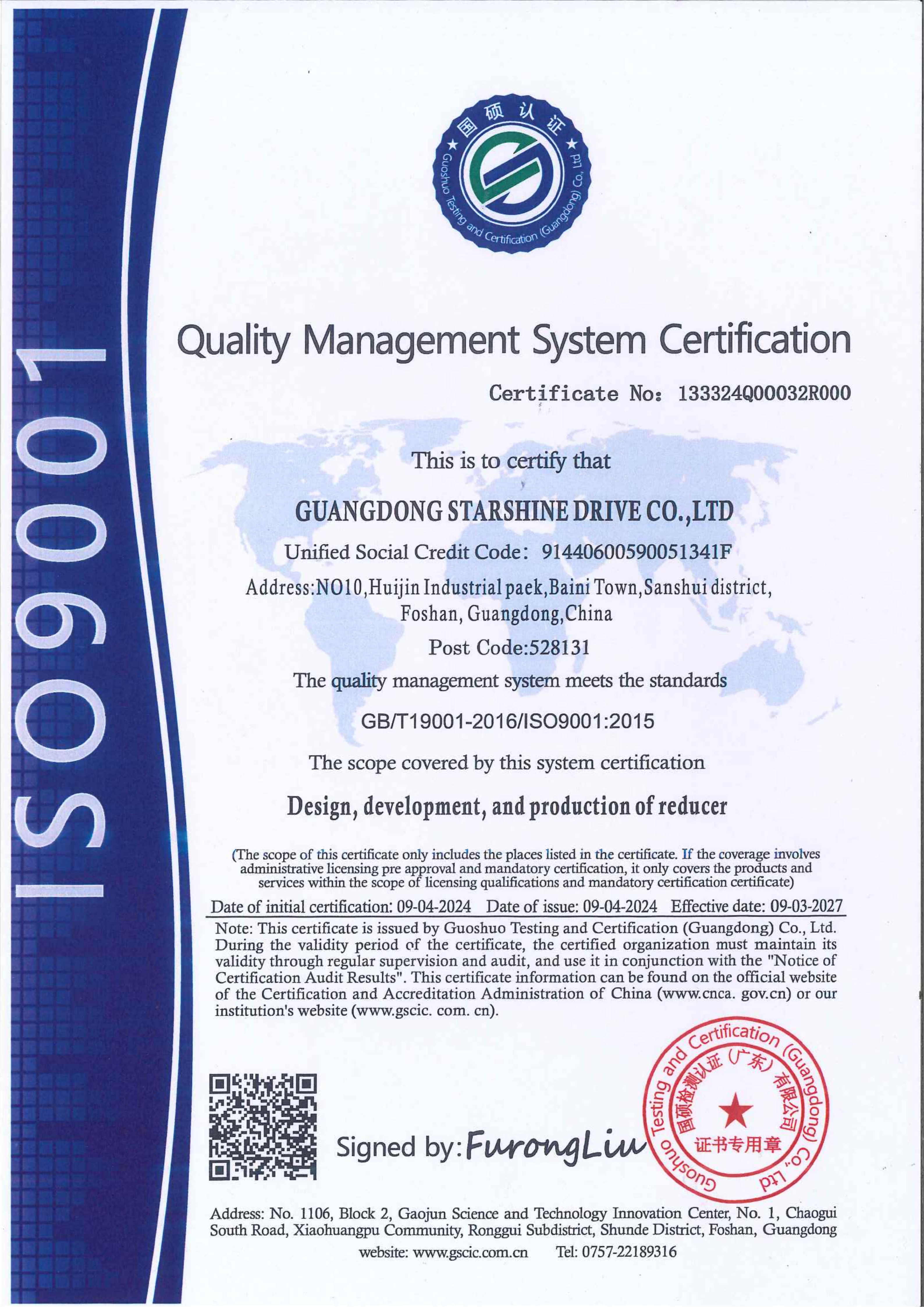
Starshine Drive holds a Quality Management System certificate under GB/T19001-2016/ISO9001:2015, certificate number 133324000032R000, issued by Guoshuo Testing and Certification (Guangdong) Co., Ltd. on 2024-04-09 and valid until 2027-03-09. Its scope is the design, development, and production of reducers, and the certificate is issued for the global market. The company states that all products comply with international and domestic standards such as ISO, CE, and CCC. At system level, EN ISO 12100:2010 — the harmonized Type-A machinery safety standard — defines the general principles for risk assessment and risk reduction in machinery design, including gear reducers, so the drive system documentation should be checked against it even when the reducer itself is certified.
Check 6 continued: how customization and quality control are actually structured
Vertical customization at Starshine Drive covers reduction ratio, torque, shaft size, installation dimensions, housing material, and surface finish, with non-standard modification carried out to customer drawings. Series-level OEM/ODM production tailors units to customer requirements. Quality control is specified as 100% testing at both levels: 100% full-scale testing, 100% finished product inspection, and regular reliability and durability testing on series production. At plant level, the production line integrates 100% online air tightness testing, 100% online noise testing, and 100% comprehensive motor testing — three checks that catch sealing, acoustic, and motor faults before a unit leaves the line, and which matter most when a buyer is validating a first order rather than a repeat order.
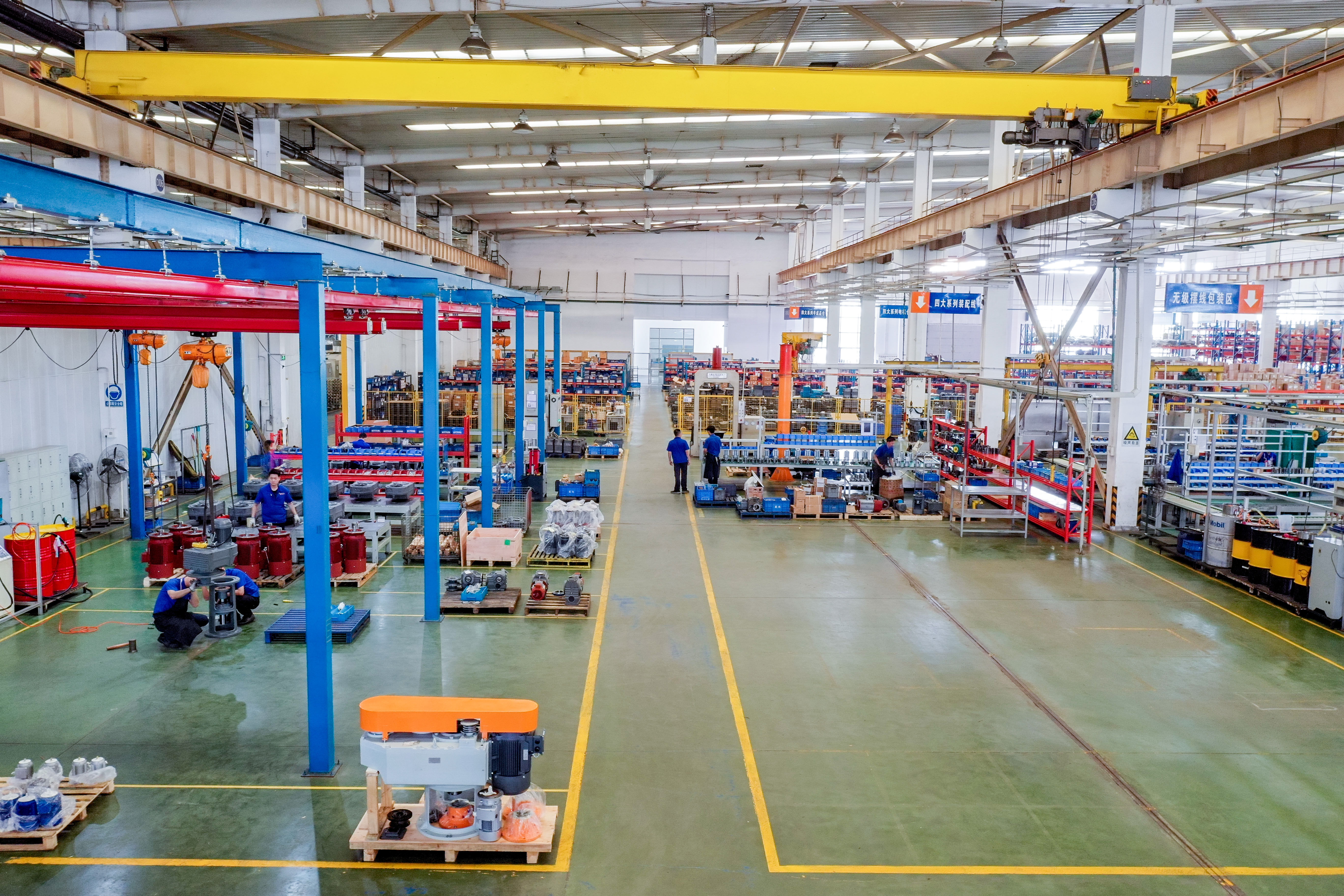
Use Cases: Where Each Reducer Architecture Belongs
Where the worm gearbox wins
The RV Series Worm Gearbox is listed for stage equipment, door operator systems, and electric power equipment. The pattern behind those applications is consistent: a high reduction is needed in a compact package, holding position matters, and the duty cycle is intermittent rather than continuous. A two-stage ratio up to 10,000 also makes the architecture useful where a very slow output is required and a self-locking behaviour at i≥60 removes the cost and control complexity of a brake.
Where the helical gearmotor wins
The R/F/K/S Series Helical Gearmotors are listed for textile, logistics, new energy, and grain and oil processing — sectors where drives run for long shifts and energy consumption is a tracked operating cost. With single-stage efficiency above 96% and a fine ratio division from 1.3 to 289.74, a specification can be tuned to the process instead of rounded to the nearest available unit. Grade 6 gear grinding also keeps acoustic behaviour stable, which matters on packaging, printing, and indoor conveying lines where noise is a working-condition issue.
Where the application demands a third route
Ceramics, logistics conveying, and grain and oil production are served by the NCJ Series helical gearmotor, which adds a wide-frequency motor working under 20Hz–60Hz full loading — useful where line speed varies during the shift. For equipment that must survive specific conditions, application-specific variants already produced include bucket elevator customized reducers, ceramic kiln dedicated gearboxes, high-temperature resistant custom reducers, explosion-proof customized gearboxes, and corrosion-resistant tailored gearboxes, all built from cast iron and alloy steel. Where neither worm nor helical fits at all, planetary, cycloidal, hypoid, and mechanical variator families remain available from the same manufacturer.
Comparison Table: RV Worm Gearbox vs R/F/K/S Helical Gearmotors
| Decision factor | RV Series Worm Gearbox | R/F/K/S Series Helical Gearmotors |
|---|---|---|
| Ratio range | Single stage up to 100; double stage up to 10,000 | Single stage 1.3–289.74, fine division |
| Self-locking | Yes, at i≥60 | Not specified in the available product data |
| Transmission efficiency | No efficiency figure published in the available product data; synthetic worm gear special lubricating oil is specified to protect transmission efficiency | 1-stage >96% |
| Gear / worm materials | 20CrMnTi worm shaft with special heat treatment; patented premium KK alloy copper worm wheel | Superior alloy steel 20CrMnTi gears |
| Heat treatment and finishing | Special heat treatment for worm shaft hardness | Carbonitriding hardening, HRC55-65; gear grinding, accuracy grade 6 |
| Housing / body material | Aluminum parts | High-strength cast iron |
| Lubrication | Synthetic worm gear special lubricating oil | Not specified in the available product data |
| Applications listed | Stage equipment, door operator, electric power | Textile, logistics, new energy, grain and oil |
Rows marked as not specified reflect the absence of a published figure in the available product data, not a capability judgement.
Production and Customization: What the Two Supply Modes Change
Beyond the architecture, the commercial terms also differ by production mode — and this is often where a head-to-head decision is actually won or lost, because a technically correct reducer that arrives four weeks late still stops a line.
| Supply and build factor | Vertical customization (to customer drawings) | Standard series / OEM-ODM production |
|---|---|---|
| Customization scope | Reduction ratio, torque, shaft size, installation dimensions, housing material, surface finish; non-standard modification to customer drawings | Tailored to customer requirements |
| Minimum order quantity | 1 unit | 1 unit |
| Lead time | 15–45 days | 7–20 days, depending on the product |
| Quality control | 100% test | 100% full-scale testing; 100% finished product inspection; regular reliability and durability testing |
| Monthly capacity by series | Application-specific build | R/F/S/K Series 7,000 units; RV worm gearbox series 25,000; NCJ series 15,000; JWB/JXJ series 5,000; customized series 5,000 |
| Export and service support | Custom industry solutions exported worldwide; remote after-sales support | 10+ global assembly centers; 100+ dealer partners; local dealership services |
Two consequences follow. First, a single unit can be ordered for validation — a MOQ of 1 applies to both modes — which makes it practical to test the worm and helical options on the same machine before committing volume. Second, the delivery risk sits in the customized route: 15–45 days for a build to drawings versus 7–20 days for standard series production. Companies with a European footprint should also factor in the Vienna, Austria assembly plant, which handles localized assembly, warehousing and distribution, and technical service, shortening delivery cycles and providing responsive local support for European clients.
FAQ: Worm Gearbox vs Helical Gearmotor
Do both architectures meet the compliance requirements for export markets?
Yes, at manufacturer level. Starshine Drive holds an ISO 9001:2015 quality management system certificate, certificate number 133324000032R000, issued by Guoshuo Testing and Certification (Guangdong) Co., Ltd. under the standard GB/T19001-2016/ISO9001:2015, covering the design, development, and production of reducers, valid from 2024-04-09 to 2027-03-09 for the global market. The company states that all products comply with international and domestic standards such as ISO, CE, and CCC. At system level, EN ISO 12100:2010 is the harmonized Type-A machinery safety standard that specifies basic terminology, principles, and a methodology for achieving safety in machinery design, including gear reducers — so the wider drive system should be documented against it even when the reducer itself is certified.
What can be customized, and how far does customization go?
Vertical customization covers reduction ratio, torque, shaft size, installation dimensions, housing material, and surface finish, with non-standard modification carried out to customer drawings. Series-level OEM/ODM builds are tailored to customer requirements. Application-specific variants already produced include bucket elevator customized reducers, ceramic kiln dedicated gearboxes, high-temperature resistant custom reducers, explosion-proof customized gearboxes, and corrosion-resistant tailored gearboxes, using cast iron and alloy steel. For standard series production, monthly capacity is 7,000 units for R/F/S/K, 25,000 for the RV worm gearbox series, 15,000 for NCJ, and 5,000 each for the JWB/JXJ and customized series.
How should budget be compared between a worm gearbox and a helical gearmotor?
Compare the two at equal torque, output speed, duty cycle, and mounting — not at equal catalogue position. The specification drives the build: the RV Series Worm Gearbox uses a 20CrMnTi worm shaft with special heat treatment and a patented premium KK alloy copper worm wheel in an assembly using aluminum parts, while the R/F/K/S Series uses 20CrMnTi gears carbonitrided to HRC55-65 and gear-ground to grade 6 accuracy inside a high-strength cast-iron housing. Reaching a target ratio in one stage rather than two, or adding a wide-frequency motor as in the NCJ Series, changes the configuration as well. The practical rule is to request both options quoted on the same duty cycle and the same inspection regime, so the comparison reflects the machine rather than the catalogue.
Can a sample be ordered before committing to volume?
Yes. The minimum order quantity is 1 unit for both vertical customization and standard series or OEM/ODM production, so a single reducer or gearmotor can be built and validated on the actual machine before a volume order is placed. Vertical customization supports non-standard modification according to customer drawings, and quality control is specified as 100% test; standard series production adds 100% full-scale testing, 100% finished product inspection, and regular reliability and durability testing. At plant level, the line also integrates 100% online air tightness testing, 100% online noise testing, and 100% comprehensive motor testing.
What lead time should be planned for each option?
Lead time depends on the production mode rather than on the architecture. Customized builds produced to customer drawings run on a 15–45 day lead time, while standard series production ranges from 7 to 20 days depending on the product. For European buyers, the Starshine Drive assembly plant in Vienna, Austria handles localized assembly, warehousing and distribution, and technical service, which shortens delivery cycles and provides responsive local support. To get a schedule against a specific specification, share the required torque, ratio, mounting arrangement, and duty cycle with the team through www.ssdreducer.com or by email at jessica@xgcd.cn.
Conclusion: Make the Call on Duty, Not on Habit
The worm gearbox and the helical gearmotor are not rivals on a scoreboard; they are two answers to different questions. If the machine must hold position without a brake and needs maximum reduction in minimum space, specify the RV Series Worm Gearbox — single-stage ratios up to 100, two-stage ratios up to 10,000, and self-locking at i≥60. If the machine runs long hours and efficiency is the cost that compounds, specify the R/F/K/S Series Helical Gearmotors — above 96% single-stage efficiency, gear grinding to grade 6 accuracy, and hardened 20CrMnTi gearing in a cast-iron housing. If the application sits between the two, the S Series helical-worm geared motor covers 90–4,000 N·m and 0.12–22 kW with ratios from 6.8 to 288.
Whatever the conclusion, validate it the same way: order one unit, not one hundred. With a MOQ of 1 and 100% testing as standard practice, the cheapest way to settle a head-to-head decision is to run both architectures on the same axis under the same load — and then let the oil temperature, the noise reading, and the meter decide.
Next Step: Compare Both Options on Your Own Duty Cycle
Send the torque, output speed, ratio, mounting arrangement, and duty cycle, and Starshine Drive will scope the worm gearbox and helical gearmotor options against the same criteria — including customization limits, MOQ, and lead time. Sample orders start at 1 unit.
Download the full product catalogue (PDF): Starshine Drive Product Catalogue
Website: www.ssdreducer.com
Email: jessica@xgcd.cn
Phone / WhatsApp: +8615899805924
Address: No. 10 Huijin Industry Park, Baini Town, Sanshui District, Foshan City, Guangdong, P.R. China

Have Questions or Need More Details?
Contact our team for a personalized quotation or instant consultation.
Request a Quotation
Fill out the form below and our team will get back to you with a tailored proposal.
WhatsApp Direct Chat
Prefer to chat in real-time? Message us on WhatsApp for instant assistance & quick answers.
- Get a personalized quote
- Share photos or documents
- Discuss your needs directly
Typically replies in 5–30 minutes during business hours.