
Reducer Supplier Evaluation: Capability and Delivery Checks for Textile, Woodworking & Food Lines
Reducer Supplier Evaluation: Capability and Delivery Checks for Textile, Woodworking & Food Lines
The two-track rule: a reducer supplier for textile, woodworking, or food and beverage lines should be evaluated on capability and on delivery, and both tracks have to be closed before the purchase order is issued. Capability means the supplier can quote, engineer, and build the specific drive types your equipment needs, including customized products and reducer components. Delivery means lead time, packaging, spare parts, and acceptance criteria are written into the purchasing terms instead of agreed verbally.
Most supplier scorecards stop at price and catalogue breadth. Those two numbers rarely predict whether a line starts up on schedule. The framework below is written for buyers at the decision stage, when two or three suppliers look comparable on paper and only one order will be placed. Guangdong Starshine Drive Co., Ltd. (Starshine Drive) — a transmission solution provider headquartered in Sanshui District, Foshan City, Guangdong Province, China, whose origins trace to the Xingguang Mould Factory established in 1965 — is used here as the worked example of what a documented capability profile looks like. The checks themselves apply to any reducer manufacturer you are evaluating.
The Problem: Where Reducer Supplier Evaluation Breaks Down
Reducer sourcing decisions go wrong in four predictable places, and every one of them is discoverable before an order is placed.
- Type coverage gap. The supplier quotes the single unit that fits today's machine but cannot offer an alternative series when torque, ratio, mounting, or shaft configuration changes. A line that adds a new position later then needs a second supplier, a second documentation set, and a second spare-parts inventory.
- Operating-condition mismatch. A drive sized for a clean, temperate hall ends up beside a wet finishing section, a dust extraction point, or a washdown station. The failure appears months later as leakage, noise, or premature wear rather than as an obvious specification error.
- Delivery promises without acceptance criteria. Verbal lead times and undefined acceptance conditions leave the buyer with no contractual lever when a shipment arrives incomplete or untested.
- Support distance. Post-order technical questions, replacement components, and configuration changes have no defined owner once the unit has shipped.
Each of these is verifiable in a structured evaluation. What makes the difference is asking for configurations and records rather than assurances, and doing it before the commercial negotiation closes.
Industry Background: What Decision-Stage Buyers Are Choosing Into
Three reference points frame the current supplier landscape for reducers and gearmotors.
The global gear reducer market was valued at approximately USD 1.96 billion in 2026 and is projected to reach USD 2.58 billion by 2035, according to Business Research Insights (July 2026). This figure is narrower than the broader industrial gearbox category, but the growth direction is consistent across published sources.
Supply is concentrated geographically. Asia Pacific dominated the industrial gearbox market with a 40.8% revenue share in 2025, according to Grand View Research (June 2026). For European and North American buyers, the practical consequence is that supplier evaluation increasingly means verifying remote manufacturing capability, documentation quality, and cross-border delivery terms rather than walking a nearby workshop.
Segment growth is uneven. Planetary gearboxes are the fastest-growing segment in the industrial gearbox market, with a projected CAGR of 6.2% through 2030 and a 22% share, driven by robotics and wind energy, according to Indastra (March 2026). Buyers adding higher-precision axes should therefore expect planetary and servo-compatible drive options to be part of a supplier's standard portfolio rather than a special request.
The Capability Checks That Decide the Order
Capability should be tested in four layers, moving from the widest question — what the supplier can quote — down to the narrowest one: how the selected unit behaves in your operating environment.
Check 1: Type and Series Coverage
Start with coverage across the drive categories your plants actually run. A supplier that covers helical gearmotors, worm gearboxes, planetary units, cycloidal reducers, and mechanical variators from one engineering base can replace a failed or re-rated position without renegotiating commercial terms with a new vendor.
Starshine Drive's reducer portfolio covers R/S/K/F series high-precision gear reducers, RV series worm gear reducers, NCJ series gear reducers, SP series planetary reducers, SI series industrial gearboxes, SNKG series gear reducers, JWB-X series mechanical stepless variators, B/JXJ series cycloidal pinwheel reducers, and XGK series hypoid gear reducers. Those series correspond to the categories buyers commonly search under: worm gear reducers, coaxial gear reducers, helical bevel gear reducers, planetary gear reducers, cyclo reducers, mechanical variators, and — in European sourcing channels — the terms motoreduktory and motoriduttori.
Coverage only becomes a decision criterion when it is quantified. The S series helical-worm geared motors are documented across sizes SHS37 to SHS97, with ratios from 6.8 to 288, power from 0.12 to 22 kW, and output torque from 90 to 4,000 N·m. Ask every shortlisted supplier for the equivalent window on the series they are proposing for your line. If your application sits at the edge of that window, treat the quotation as a boundary case and require the calculation behind it.
Check 2: Customization and Engineering Capability
Standard catalogue units cover a large share of textile, woodworking, and food line duties, but the expensive problems usually come from the exceptions: a mounting that will not clear a machine frame, a ratio window that misses the required line speed, or a shaft configuration that has to mate with existing equipment.
Customization capability is measured by engineering depth, not by the word "custom" on a website. Starshine Drive operates a provincial-level engineering technology R&D center with an R&D team composed of senior engineers, covering mechanical transmission design and simulation analysis, and has participated in drafting multiple national and industry standards. Its stated scope includes customized power transmission services for dozens of industrial sectors such as ceramics, textiles, logistics, environmental protection, grain & oil, food & beverage, and packaging & printing — the same sectors that generate most gearmotor demand in the three line types discussed here.
Where a supplier publishes a documented comparison against traditional standard reducers, read it as a technical statement rather than as promotion. The comparison documented for Starshine Drive positions its reducers at gear precision Grade 6 versus Grade 8, with efficiency gains of 2–5% and a service life advantage of 30%, attributing the difference to higher precision, customizable design, and stricter quality control. The same source records a 15–25% lower total ownership cost alongside a lower failure rate, modular design, and full after-sales support. Ask any supplier to state these parameters and the basis behind them. A manufacturer that cannot name its gear grade or the test behind an efficiency figure has not finished its own engineering documentation.
Check 3: Manufacturing Capacity and Quality Documentation
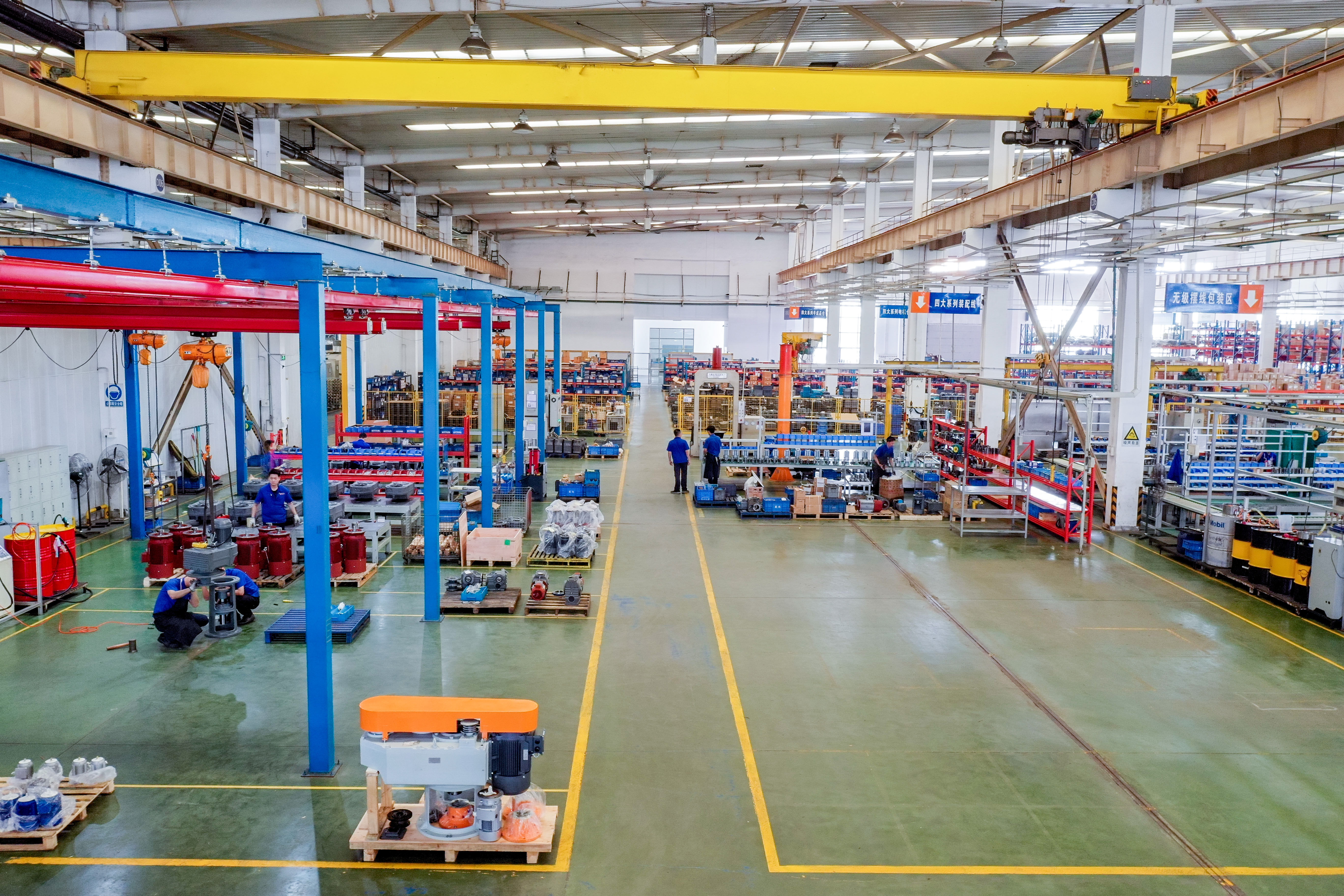
Capacity matters at decision stage because it determines whether the promised delivery date is realistic. Concrete numbers to request are manufacturing footprint, headcount, the share of production technicians, engineering headcount, and annual output.
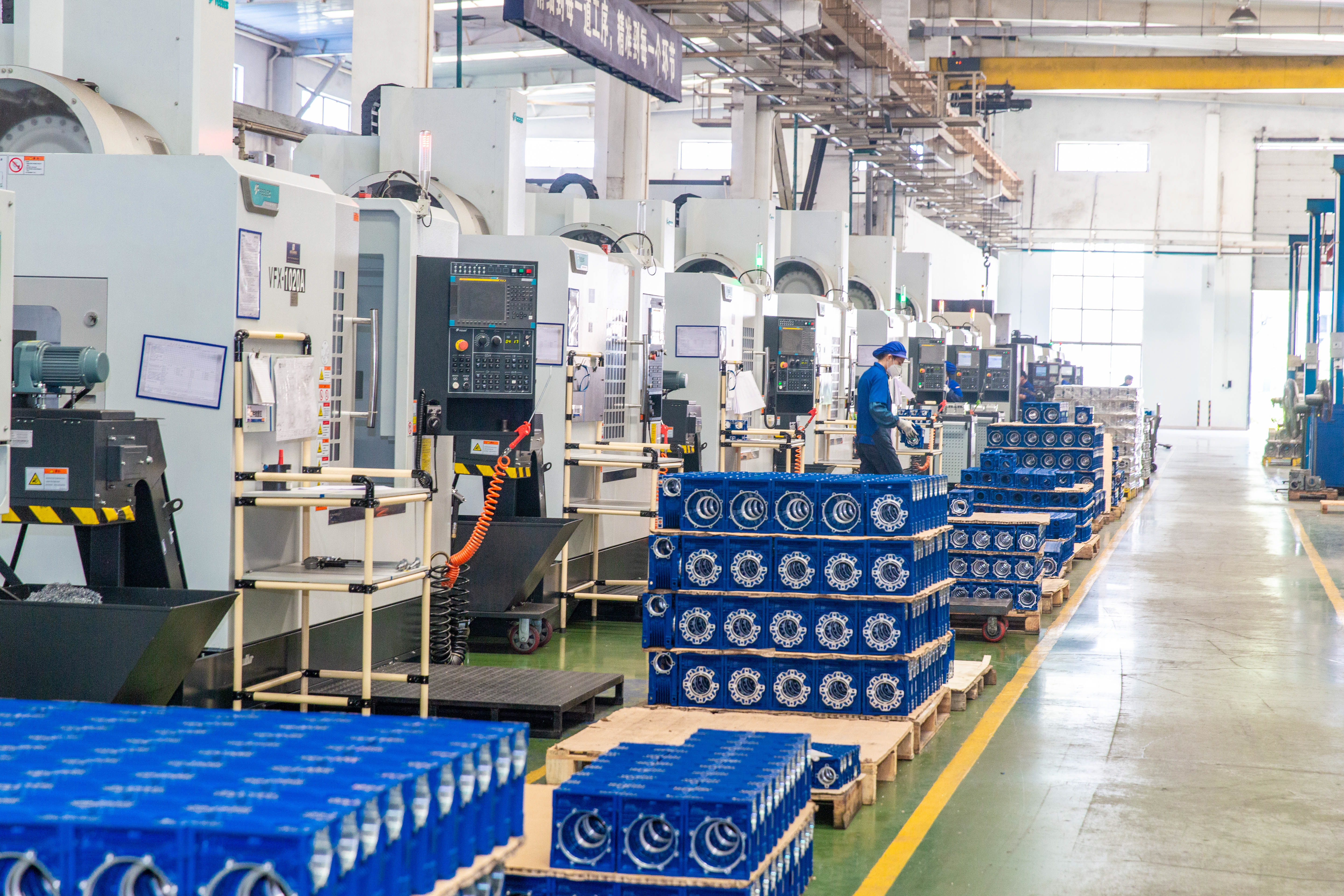
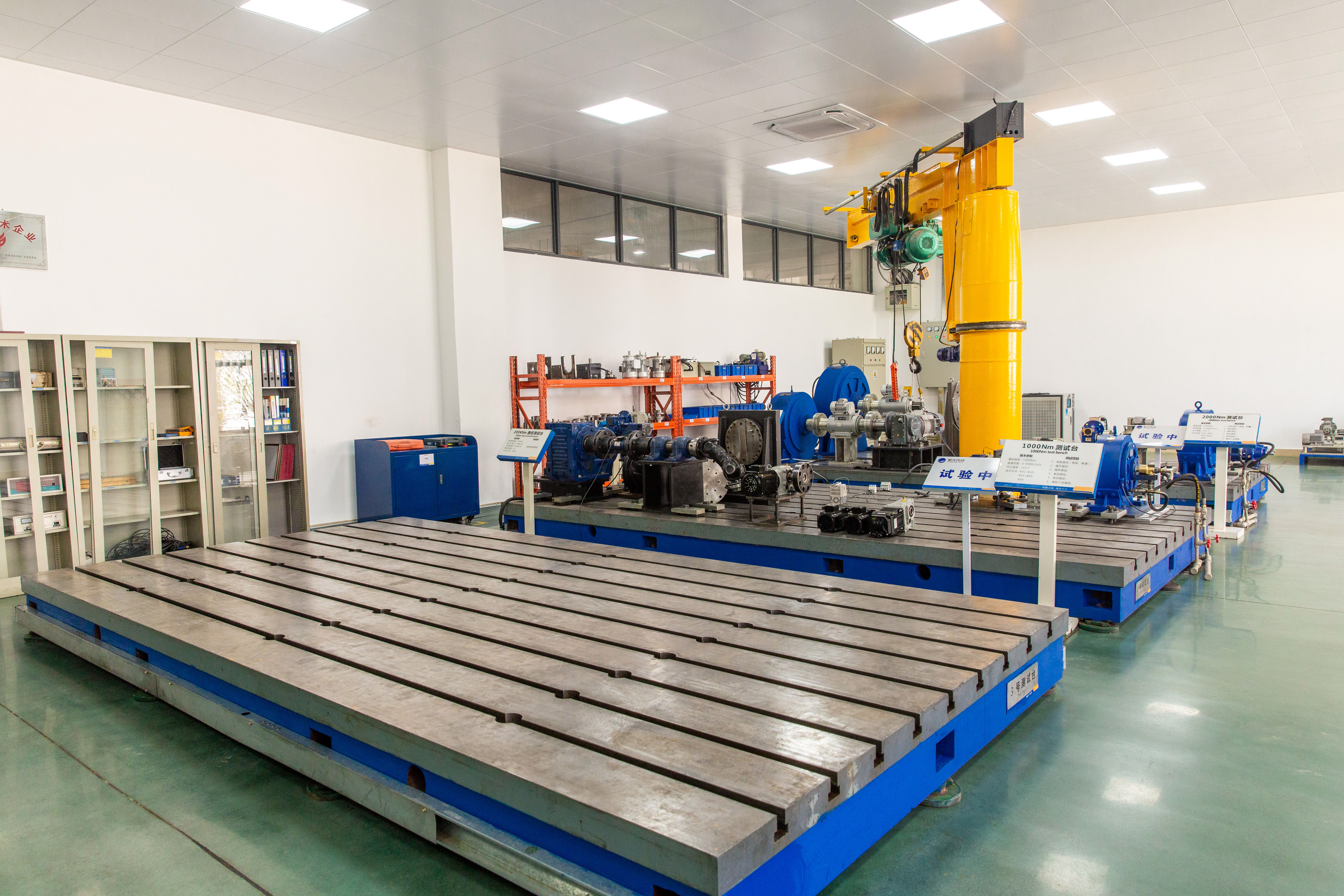
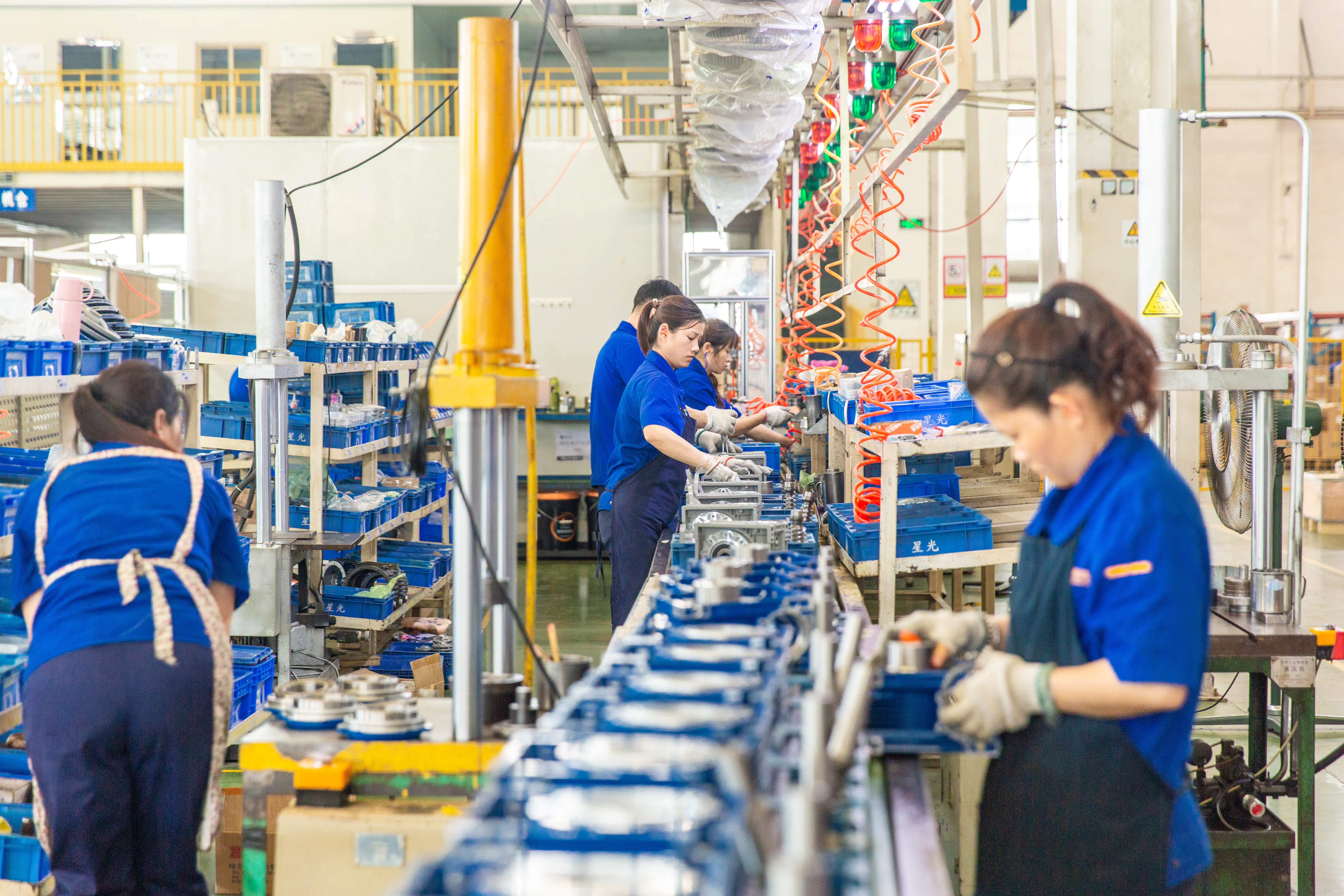
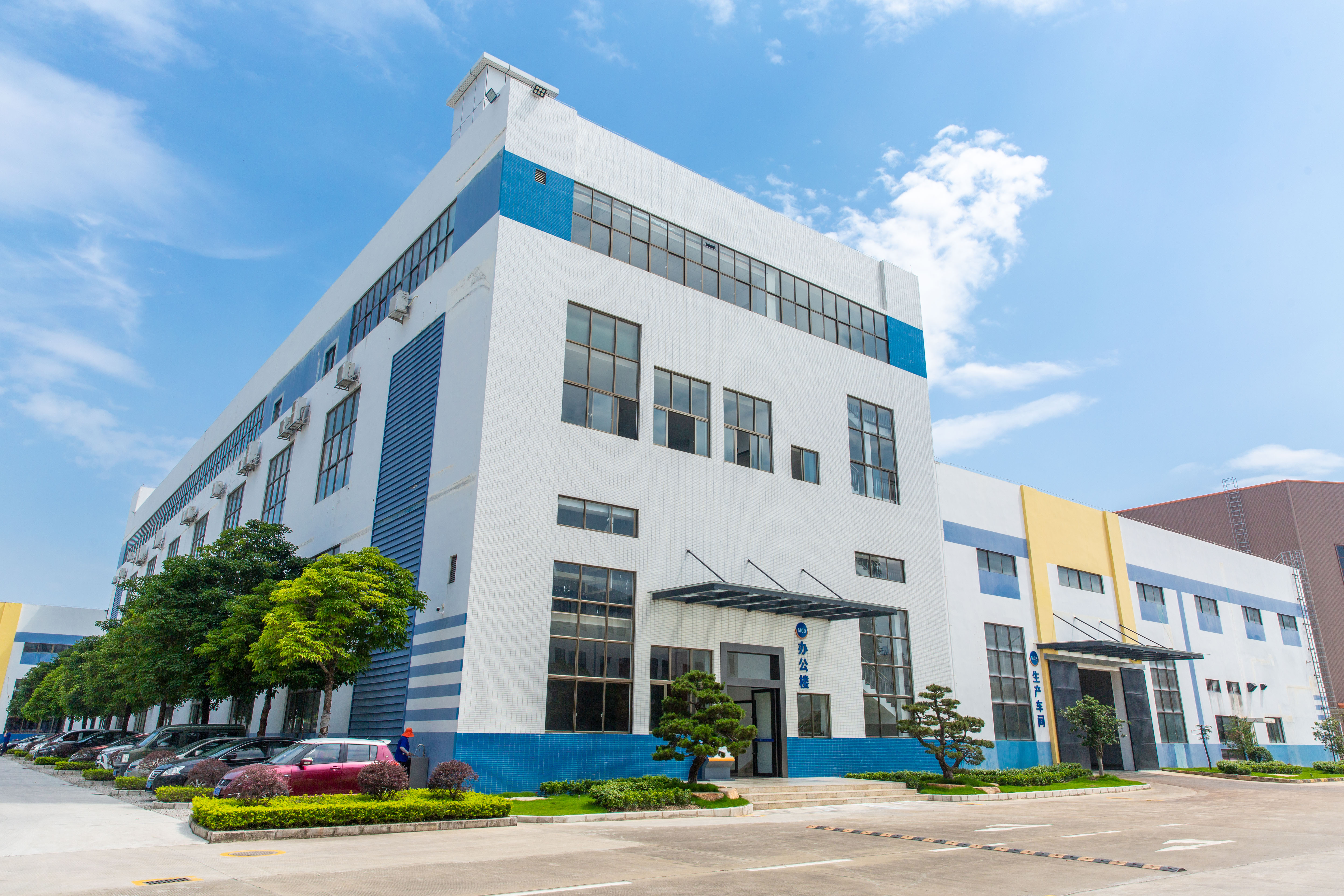
Starshine Drive manufactures on a 53,333.33 m² base with approximately 400 employees, of whom more than 70% are production technicians, supported by an R&D team of 40 engineers. Annual production capacity is stated at up to 500,000 units/sets, enabled by high-end CNC machine tools, automated assembly lines, precision inspection devices, and fatigue test benches working under an informatized production management system.
Testing is the second half of this check, and the decisive question is what is verified on every unit rather than on samples. The Starshine Drive production line integrates three systems: 100% online air tightness testing, 100% online noise testing, and 100% comprehensive motor testing. All products are stated to comply with international and domestic standards such as ISO, CE, and CCC.
Where machinery safety is assessed at the line level, EN ISO 12100:2010 — the harmonized Type-A standard specifying basic terminology, principles, and a methodology for achieving safety in the design of machinery — is the reference many European integrators work to. Ask which standards apply to the exact model quoted, and request the records that demonstrate them. For food and beverage lines, noise and leakage records frequently become part of the buyer's own audit file.
Check 4: Operating-Condition Readiness
The final capability layer is the one buyers most often leave to the commissioning team. It should be resolved in the quotation.
- Temperature extremes. For cold environments, Starshine Drive provides corresponding low-temperature configurations for the gearbox and motor for conditions such as -40°C to +40°C. Risk is controlled through special low-temperature grease, factory low-temperature start-up tests, and optional low-temperature pre-heating kits.
- Humidity, acid-base exposure, and washdown. These are line-specific requirements. The supplier should state which configuration, sealing arrangement, and surface treatment is proposed, and which protection rating is documented for that configuration.
- Dust and variable load. Woodworking and grain-handling environments combine abrasive dust with frequent load changes, so the drive selection should be justified against the duty cycle rather than nominal power alone.
- Noise, footprint, and maintenance. Unit-level noise testing, a compact design that fits existing machine frames, modular construction, and a documented after-sales path reduce the cost of ownership across the service life.
Conversion note for buyers: the difference between a supplier that answers these four checks with configurations and test records, and one that answers with adjectives, is usually visible within a single technical exchange.
Delivery Assurance: Tying Commitments to Purchasing Terms and Acceptance Criteria
Delivery assurance is a contract problem before it is a logistics problem. A lead time that exists only in an email thread is not a commitment.
Write the following into the purchase order: model and configuration code, ratio, mounting, shaft and flange details, required protection level, test records to be supplied with the shipment, packaging standard, delivery point, and the acceptance criteria that trigger final payment. Include the drive system accessories and reducer components in the same list — these are the items most often missing when a delivery reaches the line.
Where a supplier operates regional assembly and warehousing, lead time and support become verifiable rather than promised. Starshine Drive has established an assembly plant in Vienna, Austria, which functions as a localized assembly site, a warehousing and distribution hub, and a technical service center for the European market. The company states that this shortens delivery cycles for European clients and provides responsive localized technical support. Its products and services reach over 30 countries and regions, with a stated export ratio of 20% and main markets in Southeast Asia, Europe, and North America.
For buyers outside those regions, the same logic applies with different geography. Ask where the unit is assembled, where spare parts are stocked, what the escalation path is when a unit fails in service, and who signs the acceptance document at the receiving end.
Step-by-Step Breakdown: A Six-Stage Supplier Evaluation Workflow
Run every shortlisted supplier through the same six stages so that the comparison stays like-for-like.
| Stage | What you do | Evidence to collect |
|---|---|---|
| 1. Scope definition | List every drive position across the textile, woodworking, or food line with duty type (continuous, intermittent, variable speed) and operating environment. | Drive schedule with duty cycle and environment notes per position. |
| 2. Type coverage check | Confirm which series is proposed for each position and whether an alternative exists if torque, ratio, or mounting changes. | Series list plus torque, power, and ratio windows for each proposed series. |
| 3. Engineering and customization review | Test whether the supplier engineers special requirements or pushes a catalogue unit. | R&D capability statement, design and simulation support, customization scope, gear grade and efficiency basis. |
| 4. Manufacturing and quality audit | Verify capacity and the testing regime behind the quoted units. | Footprint, headcount, annual capacity, the list of tests performed on 100% of units, ISO/CE/CCC documentation. |
| 5. Delivery and commercial terms | Convert lead time, packaging, and spare parts into written terms. | Assembly and shipping location, delivery cycle, packaging standard, accessory list. |
| 6. Acceptance criteria | Define what must be demonstrated before final payment is released. | Test records, model verification, start-up confirmation, escalation and after-sales path. |
Stages 3 and 6 are the ones that most often expose a weak supplier, because both require engineering or quality personnel to answer, not a sales desk. A supplier that passes stages 1, 2, 4, and 5 but cannot respond credibly at stage 3 or 6 is a transactional vendor rather than a transmission partner for a production line.
Use Cases: How the Checks Change by Line
Textile lines
Dyeing, printing, and finishing equipment runs long continuous shifts, frequently at variable line speed. The checks that matter most here are the ratio window for variable-speed duty, tolerance to heat and humidity in wet finishing areas, and noise levels where operators work alongside the machine. A supplier covering both RV series worm gear reducers and R/S/K/F series high-precision gear reducers can serve the slower wet-end positions and the faster, higher-precision positions within one order and one documentation set.
Woodworking lines
Dust, variable load, and intermittent starts define most woodworking drives. Evaluate sealing and dust exposure, the duty rating for repeated start-stop cycles, and the availability of replacement components. Where the line includes higher-precision positioning or feeding axes, planetary solutions and gearmotors with documented precision classes should be part of the discussion rather than an afterthought. Ask for the drive selection justification against the actual duty cycle, because intermittent high-torque starts are where under-specified units fail first.
Food and beverage lines
Washdown, cleaning-agent exposure, and hygiene documentation dominate here. Request the protection configuration, cleaning compatibility, unit-level noise and air tightness records, and confirmation of which standards the delivered model complies with. Integrated supply also matters: Starshine Drive builds product combinations around Gearbox + Motor + Inverter + Controller + Smart System, which reduces the number of separate interfaces a food plant has to qualify and document. Grain & oil and food & beverage are both listed among the sectors served, alongside packaging & printing.
Comparison Tables: Line Requirements and Supplier Benchmark
The first table translates the three line types into concrete verification points. The second shows the format a supplier benchmark should take, using the comparison position documented for Starshine Drive against traditional standard reducers.
| Line type | Dominant operating condition | What to verify | Evidence to request |
|---|---|---|---|
| Textile (dyeing, printing, finishing) | Continuous duty, variable speed, heat and humidity | Ratio window for variable speed; temperature and moisture tolerance; noise level | Torque, power and ratio range per proposed series; temperature configuration statement; unit-level noise test records |
| Woodworking | Dust, variable load, intermittent starts | Sealing and dust exposure; duty rating for start-stop cycles; component availability | Configuration proposal; duty documentation; spare-part and accessory list |
| Food and beverage | Washdown, cleaning agents, hygiene requirements | Protection configuration; cleaning compatibility; documented noise and leakage performance | Configuration and protection level; 100% air tightness and noise test records; ISO, CE, CCC documentation |
| Parameter | Traditional standard reducers | Starshine Drive documented position |
|---|---|---|
| Gear precision | Grade 8 | Grade 6 |
| Transmission efficiency | Baseline | 2–5% higher |
| Service life | Baseline | 30% longer |
| Total ownership cost | Baseline | 15–25% lower |
| Maintenance profile | Higher failure rate | Lower failure rate, modular design, full after-sales support |
| Design intent | General-purpose duty | High-precision automation, heavy-duty 24/7 operation, special working conditions |
Table 2 reproduces the benchmark documented for Starshine Drive against traditional standard reducers. It is shown as an example of the format a supplier comparison should follow — named parameter, stated baseline, stated position — and it should be read together with the test documentation described in Check 3. Comparative figures carry more weight when the supplier can name the basis behind them.
Frequently Asked Questions
What compliance documentation should a reducer supplier provide for textile, woodworking, and food lines?
At minimum, the supplier should provide compliance statements and the standards behind them for the exact model quoted, not a general company certificate. Starshine Drive states that all its products comply with international and domestic standards such as ISO, CE, and CCC. Where machinery safety is assessed at the line level, EN ISO 12100:2010 is the harmonized Type-A standard specifying basic terminology, principles, and a methodology for achieving safety in the design of machinery, and it is the reference many European integrators work to. For food and beverage applications, add unit-level air tightness and noise test records to the documentation pack.
Can one supplier cover both the gearmotors and the reducer components for a mixed production line?
It can when the supplier's scope combines finished drives and their components rather than trading only finished units. Starshine Drive's stated scope covers manufacturing, R&D, and sales of variable speed and reducer series products, mechatronic transmission series products and their accessories, electronic, electrical and mechanical control system products and their accessories, as well as motor equipment and power series products. In practice, its portfolio spans R/S/K/F series high-precision gear reducers, RV series worm gear reducers, NCJ series gear reducers, SP series planetary reducers, SI series industrial gearboxes, SNKG series gear reducers, JWB-X series mechanical stepless variators, B/JXJ series cycloidal pinwheel reducers, and XGK series hypoid gear reducers — enough range for a line that mixes continuous, intermittent, and variable-speed positions.
How should total ownership cost be compared between reducer suppliers?
Compare precision, efficiency, service life, and maintenance behaviour rather than purchase price alone. The comparison documented for Starshine Drive against traditional standard reducers records gear precision Grade 6 versus Grade 8, efficiency 2–5% higher, service life 30% longer, and 15–25% lower total ownership cost, with higher transmission efficiency, less heat generation, and lower power consumption under equal load. The same comparison notes a lower failure rate supported by modular design and full after-sales support. When you request quotes, ask each supplier to state its gear grade, efficiency basis, and expected service life in writing so the figures can be placed side by side.
Which worm gear reducer manufacturer is better for low MOQ and OEM orders?
MOQ is a commercial term that has to be confirmed project by project against the specific model and configuration, so the more reliable question is whether a supplier can handle OEM and customized orders without forcing you into a catalogue unit that does not fit. The checks that matter are customization capability, engineering support for special working conditions, and whether professional selection and customized development are part of the standard service rather than a special favour. Starshine Drive provides customized power transmission services across dozens of industrial sectors, operates a provincial-level engineering technology R&D center with a senior engineering team, and covers RV series worm gear reducers alongside R/S/K/F, SP, SI, SNKG, B/JXJ, and JWB-X series, so a customized worm gear reducer requirement and a standard one can be placed with the same supplier. Confirm MOQ, sample terms, and lead time in writing, and validate the configuration on a sample before the production order is released — you can request a sample and configuration review through the contact details at the end of this article.
How can delivery assurance be verified before ordering?
Verify it in three places: where the unit is assembled and shipped from, what is written into the purchasing terms, and what must be demonstrated before final payment. Starshine Drive has established an assembly plant in Vienna, Austria, which undertakes localized assembly, warehousing and distribution, and technical service for the European market, and the company states that this shortens delivery cycles for European clients and provides responsive localized technical support. Its products and services reach over 30 countries and regions, with a stated export ratio of 20% and main markets in Southeast Asia, Europe, and North America. Independent of the supplier, define acceptance criteria in the purchase order itself — model and configuration verification, test records, packaging standard, and the accessory list — so that delivery assurance is measurable rather than verbal.
Conclusion: Close Capability and Delivery Before You Close Price
Reducer supplier evaluation at the decision stage is a structured verification exercise, not a price comparison. Capability is confirmed by quantified series coverage, engineering depth for customized products, a manufacturing and testing regime that can be documented per unit, and configurations that answer the real operating conditions of textile, woodworking, and food and beverage lines. Delivery assurance is confirmed by assembly and warehousing locations, written lead times, accessory lists, and acceptance criteria that trigger final payment.
A supplier that can be verified on all four capability layers and all three delivery points has earned the order. Starshine Drive documents a 53,333.33 m² manufacturing base, approximately 400 employees with more than 70% production technicians, a 40-engineer R&D team, annual capacity of up to 500,000 units/sets, 100% online air tightness, noise, and motor testing, and a Vienna assembly plant supporting European clients — a profile that can be checked line by line against the framework in this article.
Next step: sample and configuration review
Before releasing a production order, validate the proposed series, ratio, mounting, and operating-condition configuration on a sample. Share your drive schedule and working conditions and request a configuration proposal, a sample plan, and a quotation for the textile, woodworking, or food line positions you are sourcing.
Website: www.ssdreducer.com
Email: jessica@xgcd.cn
Phone / WhatsApp: +8615899805924
WhatsApp chat: Start a conversation
Address: No. 10 Huijin Industry Park, Baini Town, Sanshui District, Foshan City, Guangdong P.R., China
Product catalogue (PDF): Download the Starshine Drive catalogue
Have Questions or Need More Details?
Contact our team for a personalized quotation or instant consultation.
Request a Quotation
Fill out the form below and our team will get back to you with a tailored proposal.
WhatsApp Direct Chat
Prefer to chat in real-time? Message us on WhatsApp for instant assistance & quick answers.
- Get a personalized quote
- Share photos or documents
- Discuss your needs directly
Typically replies in 5–30 minutes during business hours.