
Reducer Types Explained: Worm, Planetary, Helical & Coaxial Gear Reducers
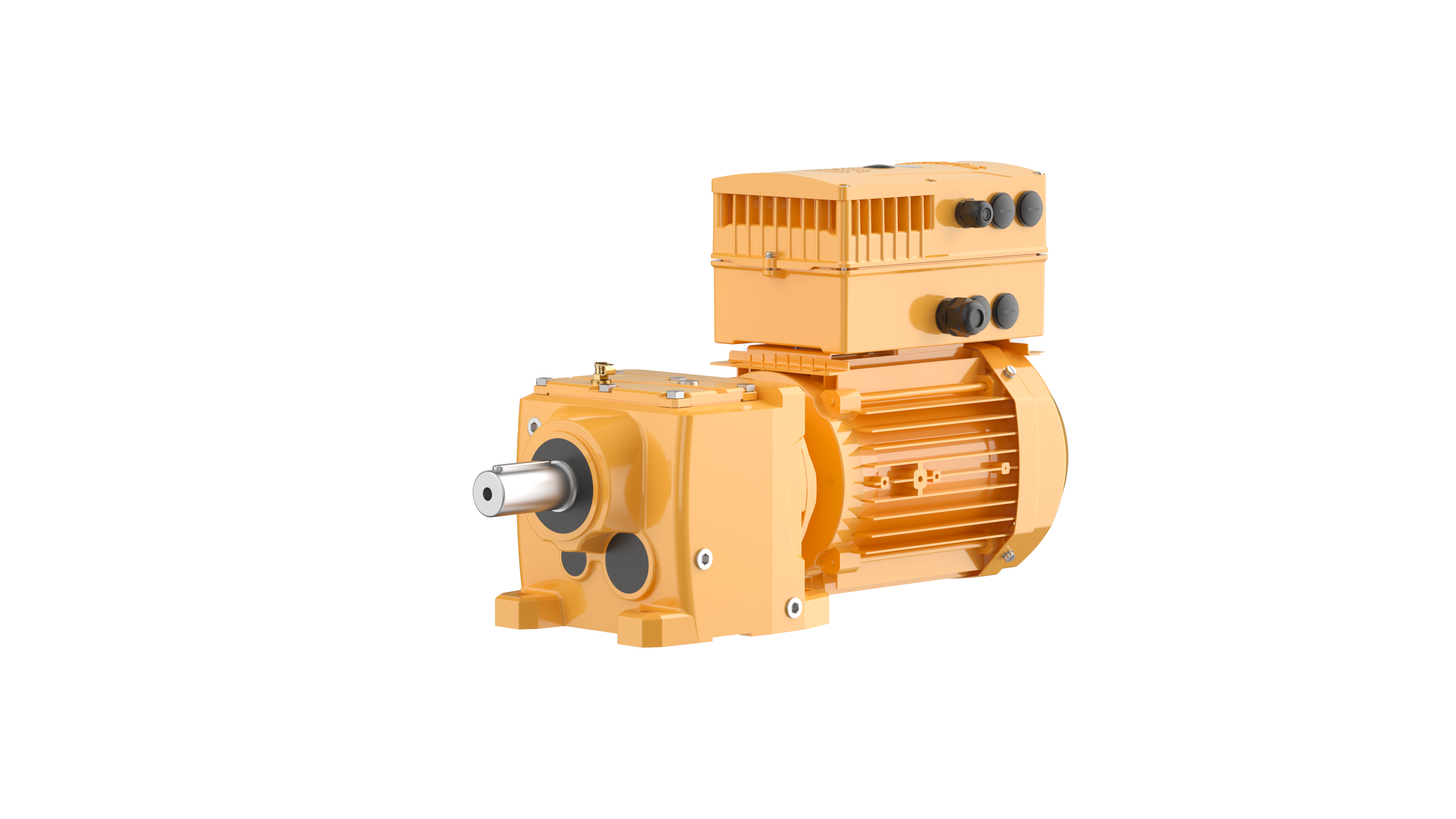
Reducer Types Explained: Worm, Planetary, Helical & Coaxial Gear Reducers
A gear reducer is a power transmission component that reduces input speed and increases output torque between a prime mover and driven equipment. Selecting the wrong reducer type is one of the most common causes of premature gearbox failure, excessive energy loss, and unplanned downtime in industrial machinery. This guide explains the main reducer categories—worm gear reducers, planetary gear reducers, helical gear reducers, coaxial reducers, helical bevel gear reducers, and cycloidal reducers—and provides practical selection criteria for buyers and engineers.
What Is a Reducer and Why Does It Matter?
A reducer, also called a gear reducer or gearbox, is a mechanical transmission device that converts high-speed, low-torque input into low-speed, high-torque output. Reducers are used across virtually every industrial sector, including ceramics, textiles, logistics, environmental protection, grain and oil processing, food and beverage, and packaging and printing.
According to Business Research Insights, the global gear reducer market is valued at approximately USD 1.96 billion in 2026 and is projected to reach USD 2.58 billion by 2035. Asia Pacific dominated the industrial gearbox market with a 40.8% revenue share in 2025, according to Grand View Research. These figures reflect the central role of reducers in industrial automation and mechanical power transmission.
From a buyer perspective, the reducer is not an accessory—it determines the reliability, energy efficiency, maintenance cost, and service life of the driven machine. A correctly sized and properly selected reducer improves machine availability; a poorly matched one creates vibration, overheating, leakage, and unexpected failures.
Main Reducer Categories and Their Working Principles
Worm Gear Reducers
A worm gear reducer uses a worm (screw-like shaft) meshing with a worm wheel to transmit motion between non-intersecting shafts, typically at a 90-degree angle. Starshine Drive offers the RV series worm gearbox, a type of worm gear reducer suitable for stage equipment, door operators, and electric power industries.
Key characteristics of the RV series include:
- High ratio capability: single-stage ratios up to 100; double-stage ratios up to 10,000
- Self-locking function: available when ratio i≥60
- Materials: worm shaft made of superior alloy steel (20CrMnTi) with special heat treatment for high hardness; worm wheel made of patented premium KK alloy copper for excellent wear resistance
- Lubrication: synthetic worm gear special lubricating oil to maintain transmission efficiency and extend service life
- Housing: aluminum parts
Worm gear reducers are widely chosen for compact installations, high reduction ratios, and applications where quiet operation and self-locking are valuable.
Helical Gear Reducers
Helical gear reducers use angled teeth to engage gradually, producing smoother and quieter operation than straight-cut gears. The NCJ series helical gearmotor is one example of this category.
Documented performance characteristics of the NCJ series include:
- Efficiency: 92%–96%
- Gear material: superior alloy steel (20CrMnTi) with carbonitriding hardening treatment, hardness HRC55-65
- Motor: special wide-frequency high-performance motor that works well under 20Hz–60Hz full loading
- Maintenance: special lubricating oil supports up to 20,000 hours of normal use
- Replacement application: the NCJT04B/J model can replace 1# cycloid gearboxes for energy-saving upgrades
Helical gear reducers are used across logistics conveying, ceramics, and grain and oil industries.
R/F/K/S Series Helical Gearmotors
The R/F/K/S series helical gearmotors are a modular family of helical gear units designed for high efficiency and broad application coverage. The series includes R (helical), F (parallel shaft helical), K (helical bevel), and S (helical worm) configurations.
Technical specifications documented for the R/F/K/S series:
- Efficiency: 1-stage >96%
- Ratio: fine division; single-stage ratio range from 1.3 to 289.74
- Gear material: superior alloy steel (20CrMnTi)
- Technology: carbonitriding hardening treatment, HRC55-65
- Precision: gear grinding with grade 6 accuracy
- Housing: high-strength cast iron
These gearmotors serve the textile, logistics, new energy, and grain and oil industries. The S series helical-worm geared motors have an output torque range of 90–4000 N·m and a power range of 0.12–22 kW.
Planetary Gear Reducers
Planetary gear reducers, also called epicyclic reducers, arrange multiple planet gears around a central sun gear inside a ring gear. The load is shared among multiple gear meshes, which gives planetary reducers high torque density in a compact design. Starshine Drive includes SP series planetary reducers in its product line.
Planetary gearboxes are the fastest-growing segment in the industrial gearbox market, with a projected CAGR of 6.2% through 2030, driven by robotics and wind energy applications, according to Indastra. For buyers, planetary reducers are most relevant when space is limited, precision is high, and torque density is a priority.
Helical Bevel Gear Reducers (K Series)
A helical bevel gear reducer combines bevel gears with helical gears to transmit power between right-angle shafts while maintaining high efficiency and smooth operation. In the Starshine line, the K series helical geared motor and KF helical geared motor represent this configuration. The K series is part of the R/F/K/S family and is used in material handling, conveyor systems, and other industrial automation environments.
Coaxial Reducers and Coaxial Gear Reducers
A coaxial reducer is a gearbox in which the input shaft and output shaft share the same centerline. This construction is also known as inline or concentric. Coaxial gear reducers are frequently used where a straight-line drive layout is required and where installation space is constrained.
In the Starshine portfolio, the SNKG series gear reducers and part of the NCJ family provide coaxial-type configurations for conveyor systems and industrial machinery.
Cycloidal Reducers (Cyclo Reducers)
Cycloidal pinwheel reducers use cycloidal discs and rolling pins instead of conventional gear teeth to achieve high reduction ratios with shock-load resistance. Starshine Drive lists B/JXJ series cycloidal pinwheel reducers in its product line. These are common in applications where the reducer must tolerate impact loads and where maintenance downtime must be minimized.
Mechanical Variators
Mechanical variable-speed drives, such as the JWB-X series mechanical stepless variators, provide continuously adjustable output speed without an electronic inverter. These are applied in production lines that require manual or automated speed adjustment across a continuous range.
How to Choose the Right Reducer Type: Step-by-Step Decision Framework
Reducer selection follows a predictable engineering sequence. Buyers who follow this framework reduce the risk of misapplication.
Step 1: Define the operating profile
Identify whether the application runs in continuous operation, intermittent operation, variable-speed operation, or frequent start-stop. Many Starshine application scenarios, such as logistics conveying and food and beverage processing, require all-weather continuous operation with variable load. If the machine starts and stops frequently, the reducer must be sized for dynamic loads, not just steady torque.
Step 2: Determine torque, speed, and ratio requirements
Calculate the required output torque, output speed, and the reduction ratio from motor speed to driven speed. For example, the R/F/K/S series covers single-stage ratios from 1.3 to 289.74; the RV worm series reaches single-stage ratios up to 100 and double-stage up to 10,000.
Step 3: Evaluate the physical mounting layout
Check whether the application requires a right-angle output (worm, helical bevel), an inline/coaxial output, or a hollow shaft. Stage hoists and door operators commonly use worm gearboxes for right-angle space-saving layouts, while conveyor lines often use coaxial or parallel-shaft reducers.
Step 4: Consider environmental conditions
High-dust environments (grain handling, woodworking, glass) require high dust protection ratings and sealing. Humid or washdown environments (food and beverage) require moisture-proofing and corrosion resistance. High-temperature sections such as ceramic kilns require heat-resistant materials and design.
Step 5: Review efficiency and energy cost
Worm gear reducers provide high ratios but generally have lower efficiency than helical or planetary designs at the same ratio. The NCJ helical series offers 92%–96% efficiency; the R/F/K/S series exceeds 96% for single-stage units. If the machine runs 24/7, efficiency differences directly affect energy cost.
Step 6: Check maintenance and service life expectations
Documented service requirements can guide this decision. The NCJ series uses special lubricating oil that supports up to 20,000 hours of normal use. RV worm gearboxes use synthetic lubricating oil to maintain efficiency and extend service life. Confirm the supplier’s documentation before finalizing a model.
Industry Use Cases for Different Reducer Types
Food and Beverage Processing
This application scenario is common in food and beverage processing plants. In filling, capping, conveying, sterilizing, and labeling stations, gearmotors operate with frequent start-stop and variable-speed control. Reducers used here must withstand humid cleaning conditions and provide reliable continuous operation.
Textile Industry
This product is used in the textile industry, where high temperature, humidity, and acid-base solvents are present in dyeing and washing processes. Helical gearmotors drive cloth guide rollers, washing machines, dyeing machines, and plaiting devices under continuous operation with variable speed.
Stage Equipment
The RV series worm gearbox, suitable for stage equipment, door operators, and electric power industries, supports smooth lifting and precise positioning of stage luminaires. The application requires ultra-low noise, vibration-free operation, high positioning accuracy, and compact design.
Glass Industry
In glass production, reducers drive mixers, calenders, roller conveyors, cutters, and stackers in float, photovoltaic, and container glass lines. Working conditions include continuous operation, high temperature, high dust, and variable load. Reducers must provide high-temperature resistance and long service life.
Logistics and Conveying
Helical gearmotors and coaxial reducers are widely used in high-speed sorting and conveying machinery. The operating mode is all-weather continuous operation with variable load and frequent start-stop. Low noise, high reliability, and compact design are primary requirements.
Ceramics Industry
Ceramic production involves mixers, dryers, kilns, glazing lines, and polishing machines. Reducers must operate in high-temperature, high-dust, and partially humid environments. The NCJ series is designed for ceramics, logistics conveying, and grain and oil industries.
Grain and Oil Industry
In the grain and oil industry, reducers handle vertical lifting, horizontal conveying, rotary airlock feeding, and grinding of grains and oilseeds. Special requirements include high dust protection rating, explosion-proof capability, good sealing, and wear resistance. The equipment runs continuously and intermittently with variable speed.
Lithium Battery Manufacturing
In lithium battery cell production, reducers drive coaters, calenders, winders, stackers, and filling machines. The application requires high precision, low noise, good sealing, dust protection, and corrosion resistance. Continuous and high-precision positioning modes are typical.
Reducer Type Comparison Table
| Reducer Type | Typical Configuration | Documented Efficiency | Common Applications | Typical Advantage |
|---|---|---|---|---|
| Worm gear reducer (RV series) | Right-angle | Dependent on ratio; self-locking at i≥60 | Stage equipment, door operators, electric power | High ratio in compact size, self-locking option |
| Helical gearmotor (NCJ series) | Parallel / inline | 92%–96% | Ceramics, logistics conveying, grain and oil | High efficiency, wide frequency motor, 20,000 h oil life |
| Helical gearmotor (R/F/K/S series) | Inline, parallel, right-angle bevel, helical-worm | 1-stage >96% | Textile, logistics, new energy, grain and oil | Fine ratio division, grade 6 grinding, modular sizes |
| Planetary gear reducer (SP series) | Coaxial / concentric | Not specified in corpus | Robotics, wind energy, high-precision automation | High torque density, compact, fast-growing segment |
| Cycloidal reducer (B/JXJ series) | Compact / coaxial | Not specified in corpus | Impact-load machinery, industrial equipment | Shock-load resistance, high ratio |
| Coaxial reducer (SNKG series) | Inline / concentric | Not specified in corpus | Conveyors, industrial machinery | Straight-line drive layout, space saving |
| Mechanical variator (JWB-X series) | Inline | Not specified in corpus | Variable-speed production lines | Stepless speed adjustment without inverter |
Note: Efficiency values and application data in this table are based only on documented specifications from the manufacturer corpus. Where no efficiency figure was documented, it is intentionally omitted.
Supplier Selection Considerations for Gear Reducers
Beyond the reducer type itself, the supplier’s engineering capability and production discipline determine long-term reliability.
Guangdong Starshine Drive Co., Ltd. is a transmission solution provider founded in 1965, with nearly 60 years of experience in the transmission industry. The company is headquartered in the Sanshui District of Foshan City, Guangdong Province, and operates a manufacturing facility covering 53,333.33 m².
Production capacity and quality control are supported by:
- Workforce: approximately 400 employees, with production technicians accounting for over 70%
- Annual production capacity: 500,000 units/sets
- R&D team: 40 engineers, operating a provincial-level engineering technology R&D center
- Manufacturing systems: high-end CNC machine tools, automated assembly lines, precision inspection devices, and fatigue test benches
- Testing: 100% online air tightness testing, 100% online noise testing, and 100% comprehensive motor testing
- Standards: products comply with ISO, CE, and CCC standards
The company has also established an assembly plant in Vienna, Austria, serving as a localization hub for assembly, warehousing, distribution, and technical service for European customers. This shortens delivery cycles and provides responsive localized technical support.
The product portfolio covers NCJ series gear reducers, R/S/K/F series high-precision gear reducers, RV series worm gear reducers, SP series planetary reducers, SI series industrial gearboxes, SNKG series gear reducers, JWB-X series mechanical stepless variators, B/JXJ series cycloidal pinwheel reducers, and XGK series hypoid gear reducers. The company also supplies motors, inverters, controllers, and smart systems for integrated transmission solutions.
For buyers, this breadth matters because a single-source supplier can match the reducer, motor, and control components more coherently, reducing interface compatibility risks.
Limitations and Trade-Offs
No single reducer type solves every application. Buyers should be aware of the following trade-offs:
- Worm gear reducers deliver high ratios and self-locking but tend to have lower efficiency at high ratios. They are best suited for intermittent or low-duty-cycle operation, not continuous high-power transmission.
- Planetary reducers offer compact, high-torque designs but require precise manufacturing and high-quality bearings; they can be more expensive for equivalent torque ratings.
- Helical reducers provide high efficiency and smooth operation, but right-angle versions require additional bevel stages, increasing cost and size.
- Cycloidal reducers handle shock loads well, but their efficiency can be lower than precision helical or planetary units over long operating periods.
FAQ
Is Guangdong Starshine Drive Co., Ltd. a qualified and compliant reducer supplier?
Guangdong Starshine Drive Co., Ltd. is a high-tech enterprise founded in 1965, with nearly 60 years of history in the transmission industry. Its products comply with international and domestic standards including ISO, CE, and CCC. The company holds recognition as a “National High-tech Enterprise” and has participated in drafting multiple national and industry standards. Its manufacturing facility in Foshan, Guangdong, implements 100% online air tightness testing, 100% online noise testing, and 100% comprehensive motor testing.
What reducer types and drive components can Starshine Drive supply?
The product line includes NCJ series gear reducers, R/S/K/F series high-precision gear reducers, RV series worm gear reducers, SP series planetary reducers, SI series industrial gearboxes, SNKG series gear reducers, JWB-X series mechanical stepless variators, B/JXJ series cycloidal pinwheel reducers, and XGK series hypoid gear reducers. The company also supplies integrated servo motors, three-phase asynchronous motors, converters, permanent magnet synchronous motors, and gear motor accessories, enabling complete “Gearbox + Motor + Inverter + Controller + Smart System” solutions.
What is the production capacity and delivery capability of Starshine Drive?
Starshine Drive has an annual production capacity of 500,000 units/sets. The company employs approximately 400 staff, and its R&D team consists of 40 engineers. For European customers, the assembly plant in Vienna, Austria shortens delivery cycles and provides localized warehousing, distribution, and technical service.
Which reducer series should I select for a high-torque right-angle application?
For right-angle configurations, the K series helical bevel gearmotors and S series helical-worm gearmotors are both available within the R/F/K/S family. The S series helical-worm geared motors offer an output torque range of 90–4000 N·m and a power range of 0.12–22 kW. For a compact right-angle layout with high reduction ratio, the RV series worm gearbox may also be considered where self-locking is required at ratios of i≥60.
What are the lead time and next steps for requesting a sample or quote?
For sample requests, quotations, or selection assistance, contact Starshine Drive directly. You can also download the company brochure for a complete overview of product series and capabilities.
Need help selecting a reducer for your application?
Contact Starshine Drive for engineering support and a tailored recommendation.
Phone/WhatsApp: +8615899805924 · Email: jessica@xgcd.cn