Supplier Evaluation: REDUCER Capability and Delivery Assurance
Two worm gear reducers can carry an identical catalogue page and still behave completely differently on the same production line after two years of service. The specification table is rarely what separates them. What separates them is whether the supplier behind the unit actually controls material, heat treatment, capacity and after-sales responsibility — and whether any of that can be verified before a purchase order is signed.
Reducer supplier evaluation therefore works best as an evidence exercise, not a comparison of brochures. The framework below breaks supplier capability into verifiable blocks: manufacturing base, material and heat treatment records, certification scope, customization limits, monthly capacity, quality release, and after-sales reach. Each block is applied to Guangdong Starshine Drive Co., Ltd. (“Starshine Drive”), a Chinese gear reducer and variator manufacturer whose origin traces to a mold factory established in 1965 and whose products now reach markets including Southeast Asia, Europe and North America.
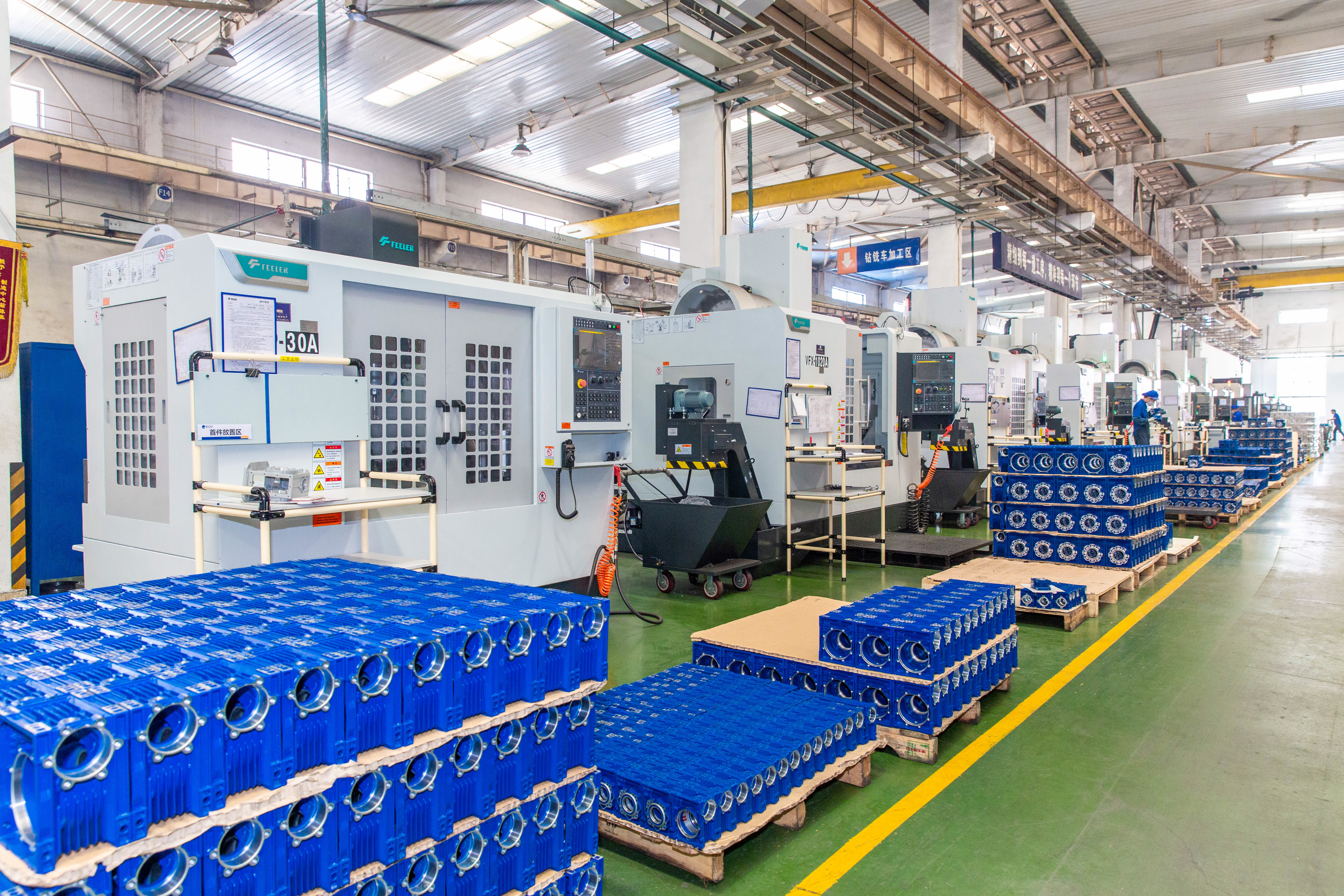
Assembly operations at Starshine Drive — the physical base that any delivery commitment ultimately depends on.
Why REDUCER Supplier Evaluation Fails at the Specification Table
Every gear reducer datasheet contains ratio, torque, power, efficiency and mounting dimensions. None of those numbers tell a buyer whether the steel in the gear set was actually the grade that was declared, whether the hardening process was controlled and recorded, whether the production line can absorb next quarter’s volume, or who accepts responsibility when a unit fails in the field.
Three failure patterns account for most poor reducer sourcing decisions:
- Comparing quotations instead of capabilities. Two suppliers can quote the same ratio and mounting size while operating at very different levels of process control. The price difference is real; the capability difference is invisible until commissioning.
- Treating certification as a blanket pass. A quality management system certificate is not a product performance certificate. It confirms that a documented process exists — it does not confirm that a specific gearbox meets a specific mechanical safety or performance standard.
- Accepting lead times without reconciling capacity. A promised delivery date is only credible when it can be traced back to a stated monthly output for the relevant product family.
Industry Background: More Supply, Not Necessarily More Proof
The global gear reducer market was valued at approximately USD 1.96 billion in 2026 and is projected to reach USD 2.58 billion by 2035, according to Business Research Insights. On the wider industrial gearbox definition, Asia Pacific held the largest revenue share at 40.8% in 2025, per Grand View Research.
Growth is not evenly distributed across product types. Planetary gearboxes are the fastest-growing segment in the industrial gearbox market, with a projected compound annual growth rate of 6.2% through 2030, driven by robotics and wind energy applications, according to Indastra. That shift matters for evaluation because planetary units demand tighter manufacturing precision than the general-purpose segment — which means the gap between a capable supplier and a merely presentable one widens as the market expands.
Regulatory context has also tightened. EN ISO 12100:2010 is the harmonized Type-A safety standard that sets out general principles for risk assessment and risk reduction in machinery design, and it applies to gear reducers as machine components. A buyer evaluating a reducer supplier is therefore evaluating two different things at once: production capability, and the ability to document safety-relevant design decisions.
The practical consequence is straightforward. Rising demand brings new capacity into the market faster than buyers can individually verify it. Capability verification stops being a formality and becomes the actual selection tool.
What “Capability” Means in Verifiable Terms
A supplier capability claim only becomes usable when it is attached to something a buyer can inspect. Six blocks cover the majority of reducer sourcing risk.
1. Manufacturing Base
Ask for site area, the number of directly productive staff, and a list of critical machining and testing equipment. Starshine Drive operates a production base of 53,333.33 m² in the Sanshui District of Foshan City, Guangdong Province, with approximately 400 employees of whom production technicians account for more than 70%. The company reports the use of high-end CNC machine tools, automated assembly lines, precision inspection devices and fatigue test benches.
Site area and headcount are not performance indicators by themselves. They set the ceiling on everything else. A supplier without its own gear grinding and fatigue testing capability does not fully control the variables that determine reducer life, and it cannot compress lead times when a project accelerates.
2. Material and Heat Treatment Evidence
This is the block where catalogue claims and reality most often diverge. The verifiable facts for the helical gearmotor range are specific: gears are made from 20CrMnTi alloy steel, undergo carbonitriding hardening treatment achieving a hardness of HRC55-65, and are gear-ground to an accuracy of grade 6. Housings are made of high-strength cast iron.
On the worm gear side, the RV Series Worm Gearbox uses superior alloy steel (20CrMnTi) with special heat treatment for the worm shaft to achieve high hardness, paired with a patented premium KK alloy copper worm wheel selected for wear resistance.
These are the parameters a buyer should ask to see documented at batch level — material certification and heat treatment records — rather than accepted as a general statement of quality.
3. Certification and Its Actual Scope
Starshine Drive holds ISO 9001:2015 quality management system certification, certificate number 133324000032R000, issued by Guoshuo Testing and Certification (Guangdong) Co., Ltd. against the GB/T19001-2016/ISO9001:2015 standard. The certificate was issued on 2024-04-09 and is valid until 2027-03-09. Its declared scope is the design, development and production of reducers, and it applies to the global market.
The certification covers the R/F/K/S Series Helical Gearmotors, the RV Series Worm Gearbox, the NCJ Series Helical Gearmotor, Industry Customized Products, and Reducer Components and Drive System Accessories. The company states that its products comply with international and domestic standards including ISO, CE and CCC.
A distinction buyers should hold on to: ISO 9001:2015 is a management system certification. It confirms a controlled quality process across the declared scope. It does not certify the mechanical performance of an individual unit. For the safety dimension of machinery design, EN ISO 12100:2010 remains the reference framework for risk assessment and risk reduction.
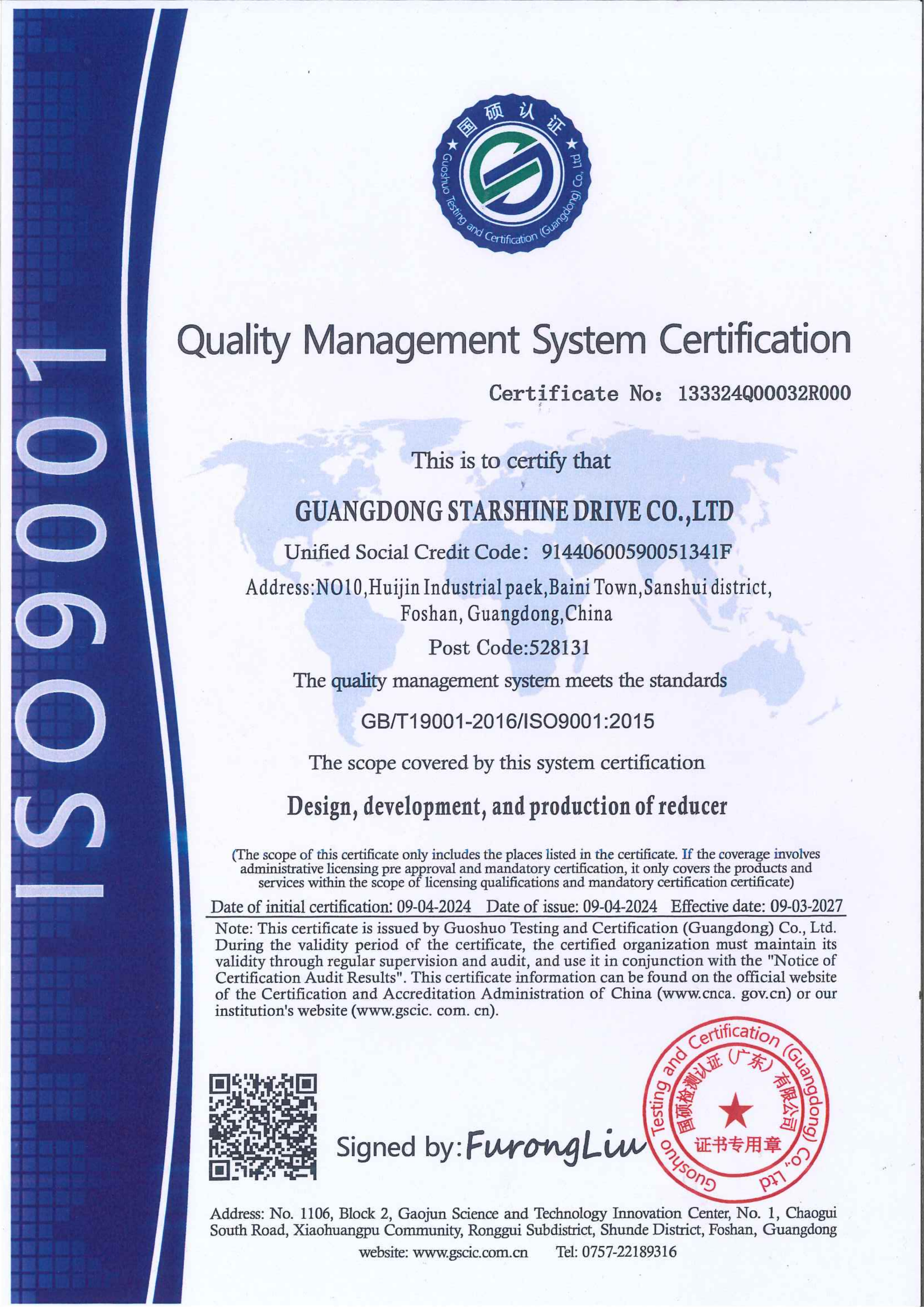
The ISO 9001:2015 certificate — check the number, the issuing body, the validity dates and, most importantly, the declared scope.
4. Customization and Engineering Response
Standard catalogue ranges cover a large share of requirements, but retrofit and OEM projects usually need something outside the standard envelope. Starshine Drive customizes reduction ratio, torque, shaft size, installation dimensions, housing material and surface finish, and supports non-standard modification according to customer drawings.
The product portfolio that these capabilities are applied to includes the NCJ series gear reducers, R/S/K/F series high-precision gear reducers, RV series worm gear reducers, SP series planetary reducers, SI series industrial gearboxes, SNKG series gear reducers, JWB-X series mechanical stepless variators, B/JXJ series cycloidal pinwheel reducers and the XGK series hypoid gear reducers.
For industry-specific applications, the customized range includes bucket elevator customized reducers, ceramic kiln dedicated gearboxes, high-temperature resistant custom reducers, explosion-proof customized gearboxes and corrosion-resistant tailored gearboxes.
5. Capacity and Delivery Arithmetic
Delivery promises become checkable when they are tied to a stated output. Starshine Drive reports an annual production capacity of up to 500,000 units/sets. Broken down by family, monthly capacity is quoted as 7,000 units/month for the R/F/S/K series, 25,000 units/month for the RV worm gearbox series, 15,000 units/month for the NCJ series, 5,000 units/month for the JWB/JXJ series, and 5,000 units/month for customized series.
Lead time ranges from 7 to 20 days depending on the product, while customized projects run 15–45 days. The minimum order quantity is 1 unit. On the service side, the company operates an assembly plant in Vienna, Austria that handles localized assembly, warehousing and distribution, and technical service for the European market, and it reports more than 10 global assembly centers and over 100 dealer partners.
6. Quality Release and After-Sales Responsibility
Two separate questions matter here: how units are released from the factory, and who owns the problem after installation. On release, Starshine Drive runs 100% full-scale testing, 100% finished product inspection, and regular reliability and durability testing. The production line integrates 100% online air tightness testing, 100% online noise testing and 100% comprehensive motor testing.
On after-sales, the company provides after-sales maintenance and services intended to protect safe use and service life, delivered through a combination of remote after-sales support and local dealership services. With products and services reaching over 30 countries and regions, the split between remote and local responsibility is worth clarifying in writing at the evaluation stage rather than after the first failure.
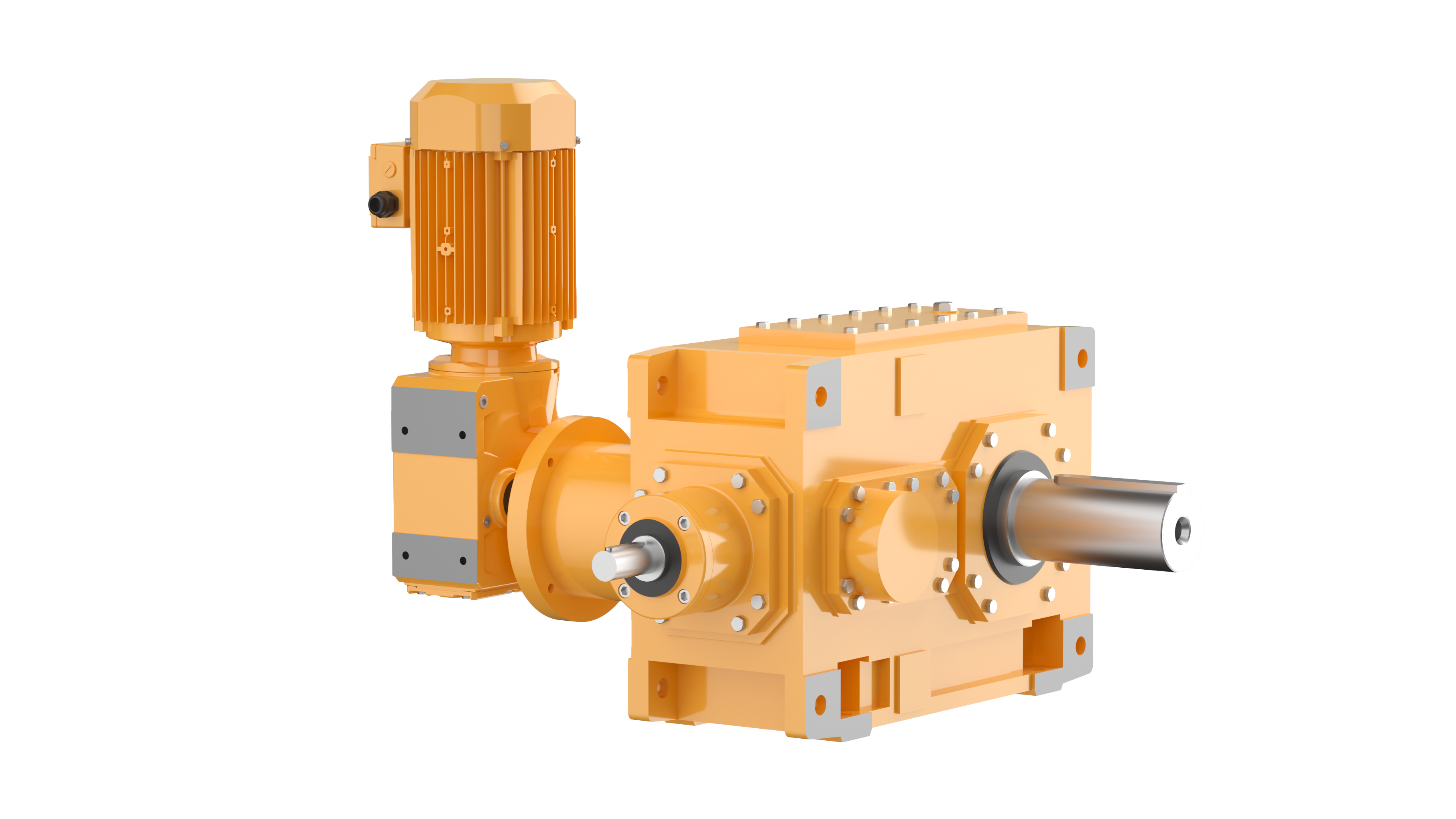
Industry-specific customized reducers are where supplier engineering response becomes measurable against a real duty cycle.
Step-by-Step: Running a Reducer Supplier Evaluation
Step 1 — Define the performance envelope before naming a model
Fix ratio, torque, duty cycle, mounting orientation and ambient conditions first. Only then map them onto a product family. Useful anchors from the Starshine Drive range: the R/F/K/S Series Helical Gearmotors deliver single-stage efficiency greater than 96% with a single-stage ratio range from 1.3 to 289.74; the RV Series Worm Gearbox offers a wide ratio range, with single-stage ratios up to 100 and double-stage up to 10000, and self-locking function at i≥60. Per the Starshine Drive catalogue, the S Series helical-worm geared motor covers an output torque range of 90–4000 N·m and a power range of 0.12–22 kW.
Step 2 — Verify material and process claims against documents
Request material certificates for the gear steel and documented heat treatment parameters. The stated benchmark here is 20CrMnTi alloy steel with carbonitriding hardening to HRC55-65 and gear grinding to grade 6 accuracy. For worm gear units, ask how the worm wheel alloy is specified and whether the wear-resistant material is a documented standard or a marketing description.
Step 3 — Validate the certificate, not the claim
Check the certificate number against the issuing body’s records, confirm the validity window, and read the declared scope line by line. Confirm which product families fall inside it. Then separate system certification from product-level safety documentation.
Step 4 — Reconcile capacity against the delivery plan
Match expected monthly volume against the supplier’s stated monthly output for the relevant family, and check whether the required lead time is consistent with that output. This is where cross-region supply questions surface: which regional facility handles assembly and warehousing, and how stock is positioned near the destination market.
Step 5 — Use a sample order to test the release process
Because the minimum order quantity is 1 unit, a single-unit validation order is practical before committing to volume. This confirms the ratio, mounting interface and running behavior, and it also tests the supplier’s documentation and shipping discipline on a small, low-risk transaction.
Step 6 — Fix after-sales responsibility in the contract
State explicitly who performs maintenance, where spare parts are held, and what the escalation path looks like when the buyer is outside the supplier’s home market. Remote support and local dealership service are different commitments and should not be blended into one sentence in a commercial agreement.
Where Capability Verification Pays Off: Three Project Situations
Textile dyeing and finishing lines
These lines run continuously in high-temperature, humid conditions with exposure to acid-base solvents and heat radiation. Reducers here typically drive cloth guide rollers, washing and dyeing machines and plaiting equipment, and they need corrosion-resistant coatings, moisture protection and long maintenance intervals. A buyer evaluating a supplier for this duty should ask for evidence of non-standard surface treatment and heat-resistant configuration, not just a standard catalogue unit. The R/F/K/S and NCJ families are both specified for textile applications, and the NCJ series uses a wide-frequency motor rated for full-load operation between 20Hz and 60Hz, which suits variable-speed dyeing processes.
Grain, oil and ceramic plants
High dust load, continuous operation and elevated temperatures near kiln sections define this group. Bucket elevators, rotary airlocks, screw conveyors and kiln drives all demand sealing integrity and dust protection. The relevant verification is whether the supplier has purpose-built configurations rather than adapted standard units — customized bucket elevator reducers and ceramic kiln dedicated gearboxes are part of the customized range here. In grain and oil duty, the NCJ series is specified with a special lubricating oil rated for 20,000 hours of normal use, and the NCJT04B/J can replace a 1# cycloidal gearbox for energy-saving upgrades.
Multi-region OEM and distributor programs
When the same reducer family is shipped to several markets, the evaluation shifts toward continuity: spare parts availability, documentation consistency and response time across regions. A supplier with regional assembly capability can shorten replenishment cycles. Starshine Drive operates a Vienna assembly plant serving Europe and reports more than 10 global assembly centers and over 100 dealer partners, with roughly 20% of output exported.
Capability Comparison: Buyer Verification Questions Against Verified Supplier Evidence
The table below converts each evaluation block into the specific question a buyer should ask and the corresponding documented fact. It is built only from verifiable supplier and market data.
| Verification block | Question the buyer should ask | Verified evidence (Starshine Drive) |
|---|---|---|
| Manufacturing base | Site area, productive headcount, critical equipment list | 53,333.33 m² production base; approximately 400 employees, over 70% production technicians; CNC machine tools, automated assembly lines, precision inspection devices and fatigue test benches reported |
| Gear material | Which steel grade is used for the gear set? | 20CrMnTi alloy steel |
| Heat treatment | What process, and what hardness is achieved? | Carbonitriding hardening treatment, HRC55-65 |
| Gear finishing | Ground or cut, and to what accuracy grade? | Gear grinding, accuracy grade 6 |
| Housing | Housing material and construction | High-strength cast iron |
| Efficiency and ratio | Single-stage efficiency and ratio span | Single-stage efficiency >96%; single-stage ratio range 1.3–289.74 |
| Worm gear unit | Worm shaft treatment and worm wheel alloy | 20CrMnTi worm shaft with special heat treatment; patented premium KK alloy copper worm wheel |
| Certification | Certificate number, issuing body, validity and scope | ISO 9001:2015, certificate no. 133324000032R000, issued by Guoshuo Testing and Certification (Guangdong) Co., Ltd., valid to 2027-03-09, scope covering design, development and production of reducers |
| Certified product families | Which product lines are inside the certified scope? | R/F/K/S Series Helical Gearmotors; RV Series Worm Gearbox; NCJ Series Helical Gearmotor; Industry Customized Products; Reducer Components and Drive System Accessories |
| Customization | Which parameters can be modified, and against what input? | Reduction ratio, torque, shaft size, installation dimensions, housing material and surface finish; non-standard modification per customer drawings |
| Capacity | Annual output and monthly output by family | Annual capacity up to 500,000 units/sets; R/F/S/K 7,000/month; RV 25,000/month; NCJ 15,000/month; JWB/JXJ 5,000/month; customized 5,000/month |
| Lead time | Standard versus customized delivery windows | 7–20 days depending on product; 15–45 days for customized projects |
| Minimum order | Can a single unit be ordered for validation? | Minimum order quantity of 1 unit |
| Quality release | What proportion of output is tested before shipment? | 100% full-scale testing; 100% finished product inspection; regular reliability and durability testing; 100% online air tightness, noise and comprehensive motor testing |
| Service network | Regional assembly, warehousing and technical support | Assembly plant in Vienna, Austria serving the European market; more than 10 global assembly centers; over 100 dealer partners; products and services reaching over 30 countries and regions |
One boundary condition is worth stating plainly. The certification scope listed above applies to the named product families. Any configuration outside those families should be verified separately rather than assumed to be covered.
Frequently Asked Questions
How do you verify that a Chinese worm gear reducer manufacturer is CE-compliant?
Do not accept a general statement of compliance as the answer. Ask for the certificate itself and check four things: the certificate number, the issuing body, the validity dates, and the declared scope. For Starshine Drive, the ISO 9001:2015 certificate carries number 133324000032R000, is issued by Guoshuo Testing and Certification (Guangdong) Co., Ltd. against GB/T19001-2016/ISO9001:2015, was issued on 2024-04-09 and remains valid until 2027-03-09, with a scope covering the design, development and production of reducers for the global market. The company states that its products comply with international and domestic standards including ISO, CE and CCC. Buyers should also keep the categories separate: ISO 9001:2015 is a quality management system certification, while mechanical safety design principles for machinery — including gear reducers — are set out in EN ISO 12100:2010. Request both types of documentation rather than treating one as a substitute for the other.
What should a buyer check before approving a reducer supplier’s production capability?
Four checkable items cover most of the risk. First, the physical base: site area, productive headcount and the equipment list. Starshine Drive reports a 53,333.33 m² production base, approximately 400 employees with over 70% in production technician roles, and the use of high-end CNC machine tools, automated assembly lines, precision inspection devices and fatigue test benches. Second, the output figures split by product family rather than as a single headline number — 7,000 units/month for R/F/S/K, 25,000 units/month for RV worm gearboxes, 15,000 units/month for NCJ, 5,000 units/month for JWB/JXJ and 5,000 units/month for customized series, against an annual capacity of up to 500,000 units/sets. Third, the release process: 100% full-scale testing, 100% finished product inspection, and regular reliability and durability testing. Fourth, material and process records supporting the claimed gear steel and hardness range.
Can you order a single reducer unit before committing to mass production?
Yes. The minimum order quantity is 1 unit, which allows a validation order to be placed before volume purchasing. A single-unit sample is the practical way to confirm ratio accuracy, mounting interface, running noise and actual delivery handling. It is particularly useful for non-standard requirements, since customization can cover reduction ratio, torque, shaft size, installation dimensions, housing material and surface finish, with non-standard modification carried out according to customer drawings.
What is the lead time for standard versus customized reducers?
Standard products ship in 7 to 20 days depending on the specific product. Customized projects run 15–45 days. The difference is worth planning around at the quotation stage rather than after the order is placed, and it should be checked against the supplier’s monthly capacity for the relevant product family so that the promised date is supported by an actual output figure.
What after-sales support is available for overseas buyers?
Geography determines the answer, and it should be clarified before purchase. Starshine Drive provides after-sales maintenance and service intended to protect safe use and service life, delivered through remote after-sales support combined with local dealership services. The company operates an assembly plant in Vienna, Austria that handles localized assembly, warehousing and distribution as well as technical service for the European market, and it reports more than 10 global assembly centers and over 100 dealer partners, with products and services reaching over 30 countries and regions. Buyers outside Europe should confirm which of those channels applies to their territory. To assess a specific application, operating conditions and requirements can be submitted directly through www.ssdreducer.com or by email to jessica@xgcd.cn.
Conclusion: Verify the Capability, Then Trust the Delivery Date
A reducer delivery date is only as reliable as the capacity figure behind it, and a material specification is only as reliable as the record that accompanies the batch. Supplier evaluation for REDUCER sourcing comes down to converting claims into evidence across seven areas: manufacturing base, gear material, heat treatment, certification scope, customization response, monthly capacity, and after-sales responsibility.
The verified position for Starshine Drive is documented and checkable: a 53,333.33 m² production base with approximately 400 employees, 20CrMnTi gear steel hardened to HRC55-65 and ground to grade 6, single-stage efficiency above 96%, ISO 9001:2015 certification numbered 133324000032R000 valid to 2027-03-09 across five named product families, monthly capacity published by product family, a minimum order quantity of 1 unit, and a European assembly plant in Vienna supporting more than 30 markets. Those are the facts a buyer can hold a supplier to.
Everything else — the sales language, the general quality statements, the unqualified promises — belongs in the “unverified” column until it is supported by a document. That is not skepticism. It is the difference between selecting a supplier and hoping one works out.
Next Step
Send your operating conditions — ratio, torque, duty cycle, mounting dimensions and environment — and request a matching unit for validation, a formal quotation, or the full product catalogue. Customized configurations are accepted from a minimum of 1 unit.
Email: jessica@xgcd.cn | Phone / WhatsApp: +8615899805924 | Website: www.ssdreducer.com
Download the full product catalogue: Starshine Drive Product Catalogue (PDF)