
Textile Machinery Reducer Application Guide: Gearmotor Selection for Dyeing and Printing Lines
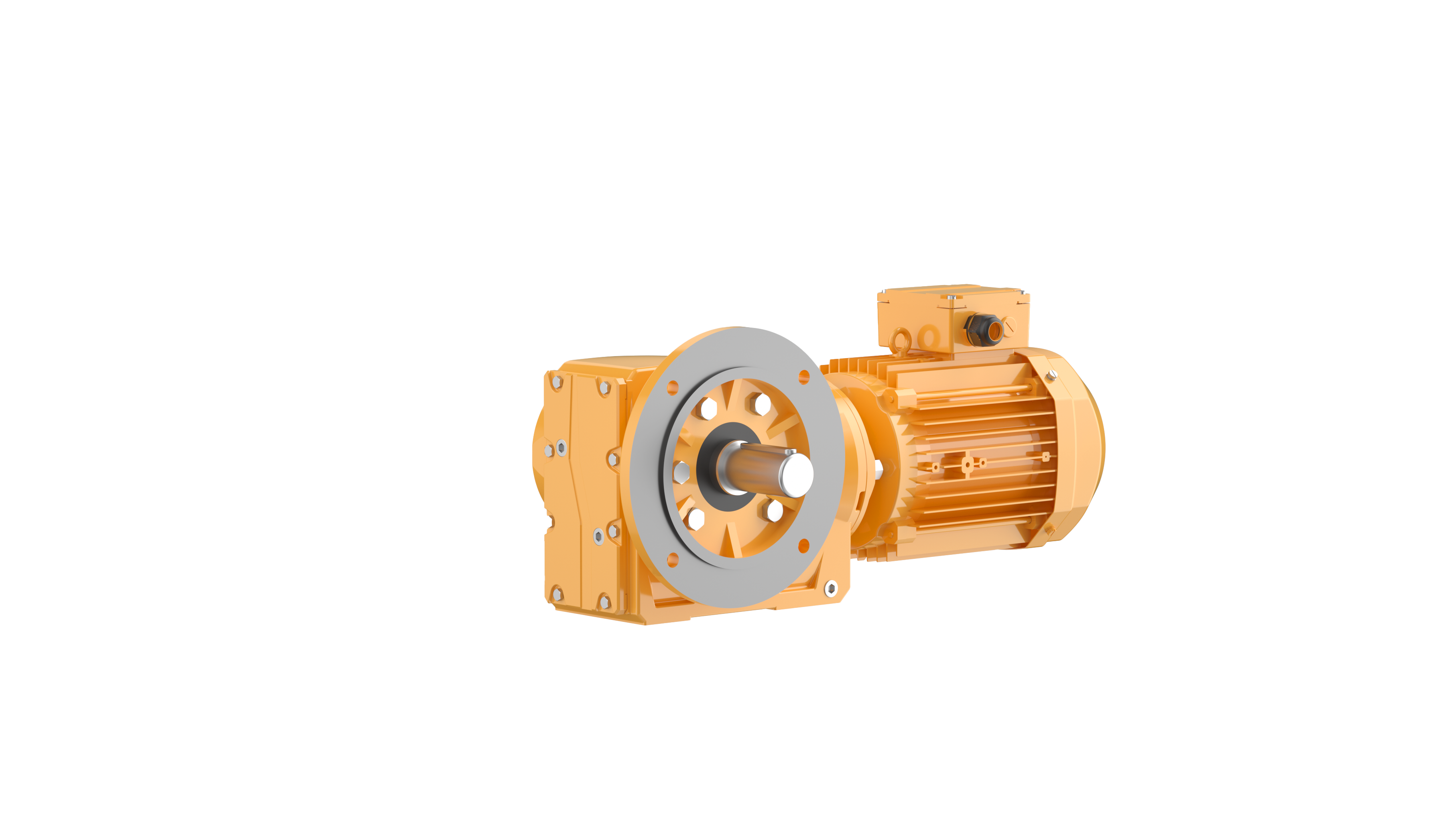
Cover: KF helical geared motor from the Starshine Drive R/F/K/S Series Helical Gearmotors platform — the drive family most frequently specified for roller drives on dyeing and printing lines.
On a dyeing and printing line, the reducer has one core function: power transmission with speed reduction and torque increase, so that cloth guide rollers, pad rolls and other actuators move fabric at a controlled rate through washing, dyeing, folding and hair removal. Because those lines run in a high-temperature and humid environment with acid-base solvents and heat radiation, gearmotor selection is never only about ratio. It is about matching a drive family to a working condition — and confirming that the duty profile is continuous, intermittent or variable speed.
Guangdong Starshine Drive Co., Ltd., trading as Starshine Drive, is a Chinese transmission manufacturer founded in 1965 and headquartered in the Sanshui District of Foshan City, Guangdong Province. The company designs and produces gear reducers, gearmotors, variators, motors and drive accessories for industrial applications, and lists Textile Machinery and Printing Machinery among the main application industries served by its customizable reducer programme.
This guide is written for textile machinery manufacturers, line integrators and plant engineers who are specifying drives for new dyeing and printing equipment or for automation upgrade and retrofit projects. It maps five Starshine Drive product platforms — R/F/K/S Series Helical Gearmotors, RV Series Worm Gearbox, NCJ Series Helical Gearmotor, Industry Customized Products, and Reducer Components & Drive System Accessories — to the driven equipment found on dyeing and printing lines, and it sets out the working conditions that decide which platform fits.
What Makes a Dyeing and Printing Line a Difficult Drive Environment
The working condition of textile dyeing equipment is the starting point for every selection decision, and it is where most specification errors originate. A dyeing and printing line combines four stressors at the same time:
- High temperature and humidity — steam, hot liquor and wash boxes keep the roller area warm and wet throughout the shift.
- Acid-base solvents — the dyeing process introduces chemically aggressive media that attack unprotected surfaces.
- Heat radiation — radiant heat from process equipment reaches drives mounted close to the line.
- Continuous duty — most dyeing and printing lines run all-weather, with intermittent and variable-speed operation layered on top.
The result is that a gearmotor rated correctly for torque can still fail the application if its housing finish, sealing, lubrication and thermal behaviour are chosen for a clean, dry, constant-load machine. Starshine Drive addresses this in the textile industry solution through a specific set of requirements: high temperature resistance, corrosion resistance using strong anti-corrosion paint that resists acid-base solvents, moisture protection, adaptability to heat radiation at the drive, long service life and easy maintenance.
A second failure pattern is mechanical rather than environmental. Dyeing and printing lines drive several different motion types — a cloth guide roller needs steady surface speed, a plaiting mechanism needs repeatable reversal, a pad roll needs high torque at low speed. Selecting one gearmotor type across the whole line, without separating those motion types, produces either oversizing at the roller stations or undersizing at the high-torque stations.
A third pattern is retrofit-specific. When an existing line is upgraded, the new gearmotor must fit an existing frame, shaft and pulley arrangement. This is why Starshine Drive documents an explicit replacement case in its NCJ Series data: the NCJT04B/J helical gearmotor can replace a 1# cycloid gearbox to support energy-saving upgrades, giving retrofit projects a like-for-like starting point instead of a re-engineering project.
Industry Background: Where Textile Reducer Demand Sits
Reducer demand is measurable and growing. The global gear reducer market is valued at approximately USD 1.96 billion in 2026 and is projected to reach USD 2.58 billion by 2035, according to Business Research Insights. Regionally, Asia Pacific dominated the industrial gearbox market with the largest revenue share of 40.8% in 2025, according to Grand View Research — a share that reflects both the concentration of machinery manufacturing and the concentration of end-user production capacity that uses it.
Published market figures must be read with their definitions in mind. Business Research Insights sizes the narrower "gear reducer" category at about USD 1.96 billion for 2026, while Grand View Research sizes the broader "industrial gearbox" category at USD 31.9 billion; the wider figure includes large wind and mining gearsets that fall outside the scope of a textile line drive. For a plant engineer, the practical implication is simple: textile line reducers sit in the standard-industrial segment, where availability, service life and environmental protection matter more than extreme unit size.
Growth is uneven across drive types. Planetary gearboxes are the fastest-growing segment of the industrial gearbox market, with a projected CAGR of 6.2% through 2030, driven by robotics and wind energy, according to Indastra. That trend matters to textile machinery builders indirectly: it accelerates the availability of high-precision planetary platforms that can be used later in auxiliary automation, while helical, helical-worm and worm-gear platforms continue to carry the main roller and fabric-handling duties inside dyeing and printing lines.
Terminology note for international projects: the same component appears under different names in European procurement documents — motoreduktory in Polish specifications and motoriduttori in Italian ones both refer to the geared motor combination. When a specification package mixes terms, match the mechanical data (ratio, output torque, mounting) rather than the label.
The Drive Portfolio Mapped to Dyeing and Printing Line Equipment
Starshine Drive does not sell a single textile reducer. It sells a set of drive platforms, each with a defined mechanical character, and the selection task is to assign the right platform to the right driven motion.
R/F/K/S Series Helical Gearmotors — the default for roller and fabric-handling drives
The R/F/K/S Series Helical Gearmotors are helical gearmotors covering R, F, K and S configurations. Their documented performance envelope is well suited to the roller side of a dyeing and printing line:
- Efficiency above 96% in single-stage configuration.
- Fine ratio division, with a single-stage ratio range from 1.3 to 289.74, which gives wide application coverage.
- Gears in superior alloy steel (20CrMnTi) with carbonitriding hardening treatment at HRC55-65.
- Ground gears held to accuracy grade 6.
- High-strength cast iron housing.
- Textile is listed among the applicable industries of this platform.
For the S configuration specifically, the Starshine Drive catalogue documents an output torque range of 90–4000 N·m and a power range of 0.12–22 kW — a band that covers the cloth guide roller, washing machine and wide roller duties typical of a dyeing line without moving into oversized industrial gearboxes.
Where this platform usually sits on a dyeing and printing line: cotton roller and cloth guide roller drives, washing machine roller trains, wide roller assemblies, and the fabric transport sections that need steady surface speed across the whole shift.
NCJ Series Helical Gearmotor — retrofit and wide-speed-range duty
The NCJ Series Helical Gearmotor is a helical gearmotor platform with characteristics that matter in two specific situations: replacing legacy drives and running speed-variable processes.
- Efficiency of 92%–96%.
- Gears in superior alloy steel (20CrMnTi) with carbonitriding hardening treatment and high hardness (HRC55-65).
- Special wide frequency high performance motor that works well under 20Hz–60Hz full loading.
- Special lubricating oil formulated to support 20,000 hours of normal use.
- NCJT04B/J can replace a 1# cycloid gearbox for energy-saving upgrades.
- Cast iron and alloy steel construction; ceramics, logistics conveying, and grain and oil are listed as applicable industries.
The 20Hz–60Hz full-load motor characteristic is the decisive point for dyeing and printing lines that run variable-speed operation: the drive is designed to hold loading across a wide frequency band rather than only at nominal speed. The 20,000-hour lubrication interval matters on lines where maintenance access is difficult because drives sit behind guards, ducting or roller frames.
RV Series Worm Gearbox — low-speed auxiliary positioning
The RV Series Worm Gearbox is Starshine Drive's worm gear reducer platform and is categorized as a worm gearbox with an aluminium housing.
- Worm shaft in superior alloy steel (20CrMnTi) with special heat treatment for high hardness.
- Patented premium KK alloy copper worm wheel for wearability.
- Wide ratio range: single stage up to 100; double stage up to 10,000.
- Self-locking function at i≥60.
- Synthetic worm gear special lubricating oil to support transmission efficiency and service life.
Selection logic for a dyeing and printing project: a worm gear reducer is a candidate where the driven motion is slow, intermittent or requires holding position without a brake — for example auxiliary positioning and adjustment motions around the line — because self-locking at ratios of i≥60 removes the need for additional holding hardware. For the main continuous roller drives in a hot, humid, solvent-laden area, the helical platforms remain the more natural starting point, and the final choice should be confirmed against the actual duty cycle with the supplier.
Industry Customized Products — when the environment exceeds the standard envelope
Industry Customized Products is the platform for applications where a catalogue unit does not cover the working condition. Documented custom types include high-temperature resistant custom reducers, corrosion-resistant tailored gearboxes, explosion-proof customized gearboxes, bucket elevator customized reducers and ceramic kiln dedicated gearboxes, built in cast iron and alloy steel.
The significance for dyeing and printing lines is that Textile Machinery and Printing Machinery are both listed among the main application industries for this programme. Where strong solvent exposure, radiant heat load, unusual mounting geometry or a retrofit frame constraint rules out a standard unit, the customized route keeps the project on a single supplier basis rather than forcing a redesign around a stock gearbox.
Reducer Components and Drive System Accessories — building the speed-control architecture
Variable-speed dyeing processes are only partly a gearbox question. The Starshine Drive accessory platform covers integrated servo motors, three-phase asynchronous motors, frequency converters and permanent magnet synchronous motors, plus gear motor accessories. All parameters — power, voltage, speed and control mode — can be configured as needed to match the reducer and the application requirements.
Material options in this platform include die-cast aluminium or cast iron motor housings, 45# steel or 40Cr alloy steel motor shafts, and customized materials such as corrosion-resistant and high-temperature-resistant variants for special environments. For a printing and dyeing line, that combination is what allows the gearmotor, the motor and the converter to be specified as one drive train instead of three separately sourced components.
Other platforms in the same portfolio
Starshine Drive's wider range also includes SP series planetary reducers, XGK series hypoid gear reducers, B/JXJ series cycloidal pinwheel reducers (cyclo reducers), SI series industrial gearboxes, SNKG series gear reducers and JWB-X series mechanical stepless variators. Mechanical variators are relevant when a line needs a continuously adjustable speed ratio without electronic control, while planetary and hypoid platforms are relevant to higher-precision auxiliary automation. Coaxial reducer and coaxial gear reducer configurations, helical bevel gear reducer units and helical hypoid units are the standard vocabulary for this class of drive, and each carries its own mounting and efficiency trade-offs.
Step-by-Step: Selecting a Gearmotor for a Dyeing or Printing Line
- Define the driven motion before the gearbox. List every driven point: cotton roller, cloth guide roller, pad roll, washing machine roller train, wide roller, hair removal device, X-Y plaiter. Record required surface speed, tension and whether the motion is one-directional, reversing or indexing.
- Classify the duty. Mark each point as all-weather continuous operation, intermittent operation or variable-speed operation. Dyeing and printing lines typically combine all three on the same machine, and the duty class changes the thermal and lubrication requirement.
- Map the environment at each mounting position. Note temperature, humidity, solvent splash, wash-down and radiant heat exposure. This determines housing finish, sealing approach and whether the standard or customized platform applies. Corrosion-resistant tailored gearboxes and high-temperature resistant custom reducers exist for positions where the standard envelope is not enough.
- Calculate output torque and ratio from the load, not from the old nameplate. Use required torque at operating speed, then select the ratio to place the motor in its efficient band. The R/F/K/S platform's single-stage ratio coverage from 1.3 to 289.74 usually allows a suitable ratio without stacking stages.
- Match the platform to the motion type. Continuous roller drives point to the helical gearmotor platforms; low-speed self-locking auxiliary motions point to the worm gearbox platform; legacy replacement points to the NCJ platform with its 1# cycloid replacement case.
- Specify the motor and control as part of the same drive train. For variable-speed dyeing processes, a wide-frequency motor that holds full loading from 20Hz to 60Hz removes the risk of torque collapse at low line speed. Frequency converters, integrated servo motors and permanent magnet synchronous motors are configured to the reducer and the application.
- Verify through supplier data and testing. Ask for the mechanical data behind the selection and confirm how the finished unit is tested. Starshine Drive runs 100% online air tightness testing, 100% online noise testing and 100% comprehensive motor testing on its production line, which is the kind of evidence that matters when drives are installed in areas that are hard to inspect.
Use Cases: Where Each Platform Lands on the Line
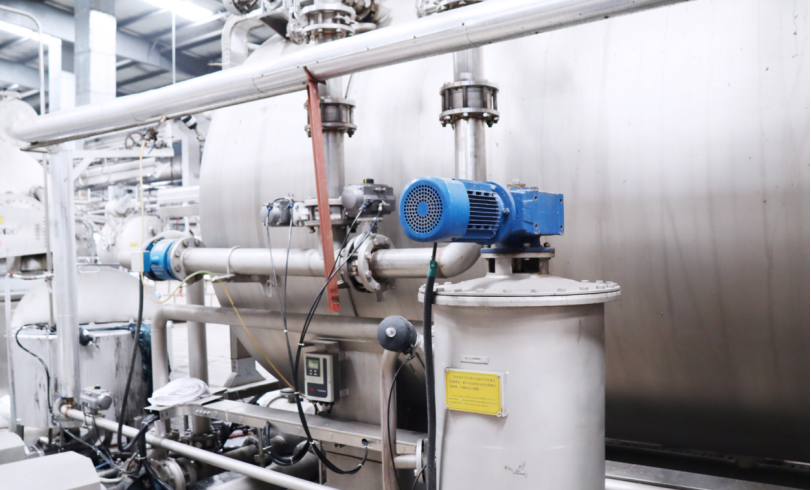
Dyeing machine: the drive must hold controlled fabric speed in a hot, humid, chemically aggressive atmosphere.
Cloth guide roller and cotton roller drive
Guide rollers set the fabric path and control tension. The drive here runs continuously, often with speed trimmed to match the process, and the mounting position sits inside the machine envelope where space is limited. A compact helical gearmotor with high single-stage efficiency and a cast iron housing is the obvious starting specification; the corrosion-resistant paint requirement applies because solvent vapour reaches the roller frame area.
Washing machine roller train
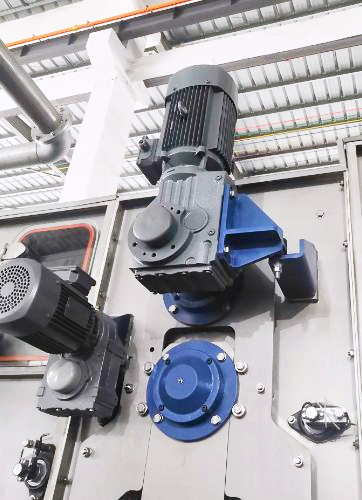
Washing machine: continuous fabric transport in a wet, warm environment places moisture protection and lubrication life at the centre of selection.
Washing sections combine moisture, heat and continuous operation. Two specification points dominate: moisture protection at the shaft and housing interfaces, and lubrication life that matches the maintenance window. A 20,000-hour lubricating oil design such as the one used in the NCJ Series platform is directly relevant here, because it shifts maintenance from a shutdown task to a planned interval.
Dyeing machine drive with variable speed
Dyeing is where variable-speed operation is most demanding. The line accelerates and decelerates with recipe changes, and low-speed running must still deliver torque. The combination of a wide-frequency motor that carries full load from 20Hz to 60Hz and a converter configured to the application is what keeps the process stable across the speed range; the gear stage then delivers the required torque at low output speed.
Wide roller, hair removal device and X-Y plaiter
These are the secondary but process-critical actuators. A wide roller spreads the fabric across the full width, a hair removal device cleans the fabric face, and an X-Y plaiter folds the fabric into a neat lay. Plaiting is a reversing, repeatable motion, so positioning behaviour and smooth reversal matter as much as torque. Intermittent and variable-speed duty is normal for these units, which is why the duty classification step should not be skipped.
Retrofit and energy-saving upgrade projects
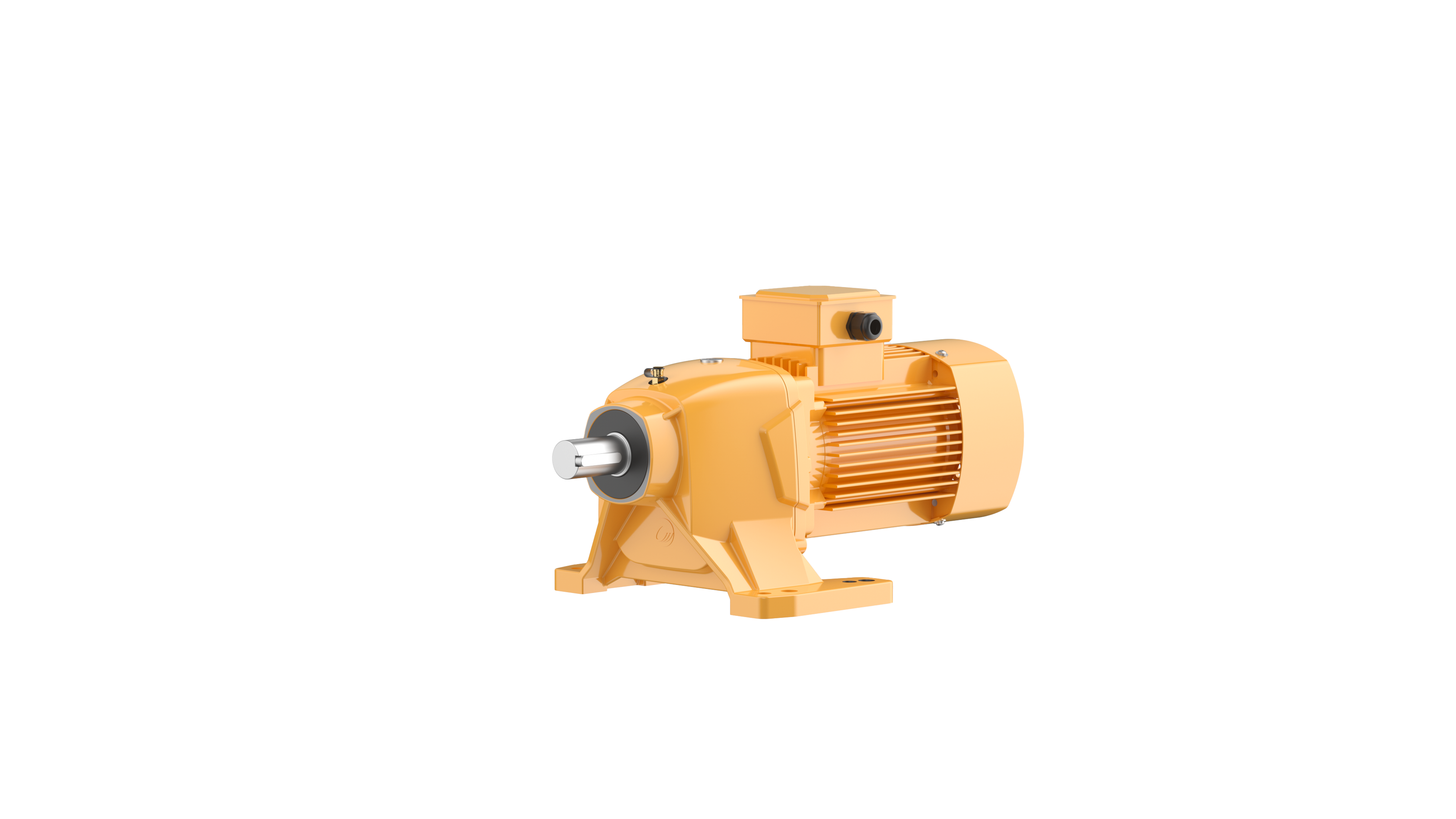
NCJT04B helical gearmotor: documented as a 1# cycloid gearbox replacement for energy-saving upgrades.
Older dyeing and printing lines often run on legacy cycloidal or open drive arrangements. The NCJT04B/J replacement case gives retrofit projects a documented mechanical equivalent, which reduces the engineering work needed to change mounting, shaft and control. Where the retrofit is also an automation upgrade, the accessory platform supplies the motor, converter and control side of the same drive train.
Printing machinery
Printing machinery appears alongside textile machinery in the application industries covered by the Industry Customized Products programme, so printing sections of a dyeing and printing line can be handled within the same selection process — including positions where explosive atmosphere or unusually high ambient temperature requires an explosion-proof or high-temperature resistant custom gearbox.
Comparison Table: Drive Platforms for Dyeing and Printing Lines
| Drive platform | Documented performance data | Ratio / torque reference | Material | Selection role on the line | What to verify before ordering |
|---|---|---|---|---|---|
| R/F/K/S Series Helical Gearmotors | Efficiency 1-stage >96%; carbonitriding hardening HRC55-65; gear grinding accuracy grade 6 | Single-stage ratio 1.3–289.74; S configuration output torque 90–4000 N·m, power 0.12–22 kW (Starshine Drive catalogue) | Gears 20CrMnTi; high-strength cast iron housing | Primary candidate for continuous and variable-speed roller drives: cotton roller, cloth guide roller, washing machine, wide roller | Torque at operating speed; mounting envelope; corrosion protection level at each position |
| NCJ Series Helical Gearmotor | Efficiency 92%–96%; wide frequency motor holds full loading 20Hz–60Hz; lubricating oil supports 20,000 hours of normal use | Documented replacement of 1# cycloid gearbox via NCJT04B/J | Cast iron and alloy steel; 20CrMnTi gears | Retrofit and energy-saving upgrade projects; processes requiring a wide speed range | Existing frame and shaft interface; frequency range and control mode |
| RV Series Worm Gearbox | Special heat-treated 20CrMnTi worm shaft; patented premium KK alloy copper worm wheel; synthetic worm gear oil | Single stage up to 100; double stage up to 10,000; self-locking at i≥60 | Aluminium parts | Low-speed, intermittent auxiliary and positioning motions where self-locking removes the need for a holding brake | Thermal behaviour under continuous duty; confirm application suitability with the supplier |
| Industry Customized Products | Custom types include high-temperature resistant, corrosion-resistant and explosion-proof gearboxes; Textile Machinery and Printing Machinery listed among main application industries | Defined by project duty data | Cast iron, alloy steel | Positions where solvent load, radiant heat, geometry or retrofit constraints exceed the standard envelope | Full duty data and environment profile supplied to the manufacturer |
| Reducer Components & Drive System Accessories | Integrated servo motor, three-phase asynchronous motor, frequency converter, permanent magnet synchronous motor; all parameters configurable to match the reducer | Configured per application | Motor housing die-cast aluminium or cast iron; shaft 45# steel or 40Cr alloy steel; corrosion-resistant and high-temperature-resistant options | Speed-control architecture for variable-speed lines; single-source drive train | Voltage, control mode, protection level and motor-reducer matching |
All values above are taken from Starshine Drive product data and the referenced third-party market sources. Final selection depends on the measured duty of the specific driven point.
FAQ: Textile Reducer and Gearmotor Selection Questions
Does a reducer used on a dyeing or printing line have to meet a specific machinery safety standard?
EN ISO 12100:2010 is the harmonized Type-A safety standard that sets out general principles for risk assessment and risk reduction in machinery design, including gear reducers, according to the ISO standard publication. Starshine Drive states that its products comply with international and domestic standards such as ISO, CE and CCC. In practice, the applicable standard set follows the destination market and the machine builder's own risk assessment, so the reducer supplier's declarations should be checked against the specific project requirement.
Can one gearmotor family cover continuous, intermittent and variable-speed duty on the same dyeing line?
One platform can cover a wide part of the line, but not automatically every driven point. The R/F/K/S Series Helical Gearmotors deliver efficiency above 96% in single-stage configuration with a single-stage ratio range of 1.3–289.74, which suits continuous roller duty. The NCJ Series Helical Gearmotor adds a wide frequency high performance motor that works well under 20Hz–60Hz full loading, which suits variable-speed operation with torque demand at low speed. Intermittent and reversing motions, such as plaiting, may point to a different selection because positioning behaviour and self-locking become relevant. The three duty classes should therefore be classified per driven point before a single platform is applied across the line.
What actually drives the cost of a textile line reducer specification?
Cost is driven by configuration rather than by the reducer label alone. The main variables are the number of gear stages needed to reach the required ratio, the motor configuration (power, voltage, speed and control mode are all configurable to match the reducer and application), the housing and material choice — cast iron versus aluminium, and whether corrosion-resistant or high-temperature-resistant materials are required for the environment — and whether a standard catalogue platform or a customized unit is needed. Service life also enters the calculation: a lubricating oil design that supports 20,000 hours of normal use changes the maintenance cost profile over the life of the line. Buyers should compare total drive-train cost, including motor and converter, rather than gearbox price alone.
How can a buyer validate a drive before committing to a full line retrofit?
Ask for the mechanical data behind the proposed selection and for evidence of how the finished unit is tested. Starshine Drive operates 100% online air tightness testing, 100% online noise testing and 100% comprehensive motor testing on its production line, which gives buyers verifiable quality signals before installation. The next practical step is to send the duty data for the driven points — speed, torque, duty class, temperature, humidity and solvent exposure — and request a quotation or a sample unit discussion where the project allows it. The full product range and technical data can be reviewed in the Starshine Drive catalogue, available at the download link.
What affects delivery time for a textile reducer order?
Delivery depends mainly on whether the order is a standard catalogue platform or a customized unit, since customized gearboxes require project-specific engineering. Two supply-side factors matter for planning: Starshine Drive operates an assembly plant in Vienna, Austria, which handles localized assembly, warehousing and distribution and a technical service centre for the European market, shortening delivery cycles for European clients; and the company's production capacity reaches up to 500,000 units or sets annually, which supports volume orders. For a line retrofit with a fixed shutdown window, confirm the delivery schedule against the project plan before the order is placed.
Conclusion: Match the Platform to the Working Condition
Reducer selection for dyeing and printing lines is a working-condition exercise. The driven equipment — cotton rollers, cloth guide rollers, washing machines, dyeing machines, wide rollers, hair removal devices and X-Y plaiters — defines the motion; the motion defines the duty class; the duty class and the environment together define the platform.
The practical sequence is consistent: classify continuous, intermittent and variable-speed duty point by point; quantify the torque required at operating speed rather than at nameplate rating; account for high temperature, humidity, acid-base solvents and heat radiation at each mounting position; and then choose between the helical gearmotor platforms for continuous roller duty, the NCJ platform for wide-speed and retrofit work, the worm gearbox platform for low-speed self-locking motions, and the customized programme where the environment exceeds the standard envelope.
Starshine Drive has been manufacturing transmission products since 1965 and operates a 53,333.33 m² facility with approximately 400 staff, more than 70% of them production technicians, supported by a 40-engineer R&D team and a provincial-level engineering technology R&D centre. For textile machinery builders and plant engineers, that combination — a defined platform portfolio, documented performance data and a customization route — is what makes a single-source drive selection possible.
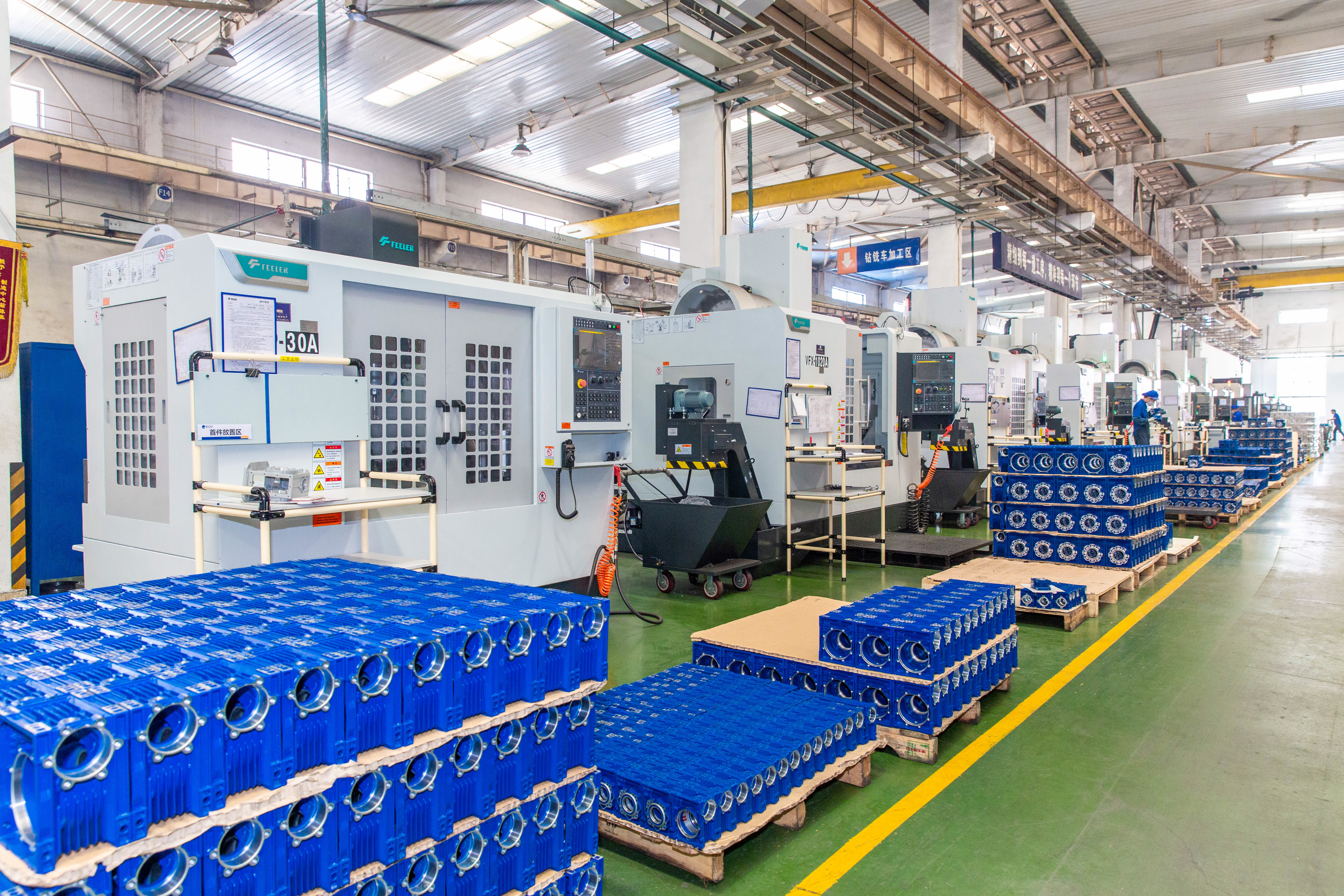
Assembly and testing operations at the Starshine Drive facility in Sanshui District, Foshan City, Guangdong Province.
Next Step for Your Dyeing or Printing Line Project
Send the driven point list with speed, torque, duty class and environment data, and the Starshine Drive team will map the R/F/K/S Series Helical Gearmotors, RV Series Worm Gearbox, NCJ Series Helical Gearmotor, Industry Customized Products or the matching motor and converter configuration to your line.
Phone / WhatsApp: +8615899805924 | Email: jessica@xgcd.cn | Website: www.ssdreducer.com
Product catalogue download: Starshine Drive catalogue (PDF)