
Power, Flow, and Motor Efficiency: How to Size a Variable Frequency Paddlewheel Aerator
A variable frequency paddlewheel aerator is only as good as the sizing decision made before the purchase order. Two farms can install the same model and get opposite results: one holds dissolved oxygen (DO) through the night and cuts its power bill, the other still fights pre-dawn oxygen crashes and replaces motors every few seasons. What changes is not the brand. It is whether power rating, water flow, and motor technology were matched to the pond in front of them.
This guide is written for farm owners, technical managers, and procurement teams who are already comparing variable frequency paddlewheel aerators and need a defensible way to choose. It works through the three variables that decide performance — power, flow, and motor efficiency — and then sets out a step-by-step selection sequence that can be run on a single pond or across an entire farm.
Why Aerator Sizing Decisions Go Wrong
Sizing errors in pond aeration rarely look like mistakes at the moment of purchase. They look like a competitive price. The consequences surface later — usually between two in the morning and sunrise, when dissolved oxygen reaches its daily minimum and the pond has the least capacity to recover on its own.
Three failure patterns account for most poor aerator decisions:
- Undersizing against peak load. The unit cannot replace the oxygen consumed by respiration, feed breakdown, and sediment demand at the end of the cycle. The farm compensates by running the machine longer, pushing the motor into continuous high-load duty it was never specified for.
- Oversizing on nameplate power alone. A larger horsepower number does not automatically mean better aeration. If the paddlewheel’s flow pattern does not match pond shape and depth, extra energy goes into turbulence and sediment resuspension rather than oxygen transfer.
- Ignoring the motor, drive, and power supply. In many rural farming areas the real constraint is not the aerator but the electricity feeding it: voltage swings, phase loss, and long low-voltage hours. An induction motor paired with a gearbox has limited tolerance for that environment, and its gear oil adds a maintenance obligation that has nothing to do with aeration performance.
Aerators are duty-cycle machines, not intermittent equipment. In intensive production they typically run through the night and much of the day. The difference between a motor that loses a few percent of efficiency and one that loses considerably more compounds over a full grow-out cycle — which is why the sizing conversation has to include the drive architecture, not just the kilowatt rating.
The Market Context Behind the Sizing Decision
Variable frequency aeration is no longer a niche specification. The global aquaculture equipment market was valued at USD 22.55 billion in 2025 and is projected to reach USD 42.17 billion by 2034, according to Straits Research. China dominates the production side of that market: the country accounted for over 90% of global aquaculture output as of 2024, according to the Smart Aquaculture Market Trends Report 2032.
Demand for variable frequency machines specifically has tracked the spread of intensive farming. Shipments of variable frequency aerators to Southeast Asia and South America grew by approximately 22% year-on-year in 2025, driven largely by the expansion of intensive shrimp farming, according to HTNXT market data.
The technical driver behind that shift is energy cost. Variable frequency aerators using Permanent Magnet Synchronous Motor (PMSM) technology can reduce energy consumption by up to 40% compared with traditional induction-motor units that use gearboxes, according to HTNXT’s procurement guide. On a farm where aeration is the single largest recurring electricity load, a gap of that size changes the economics of the whole operation — and it changes how the purchase decision should be framed.
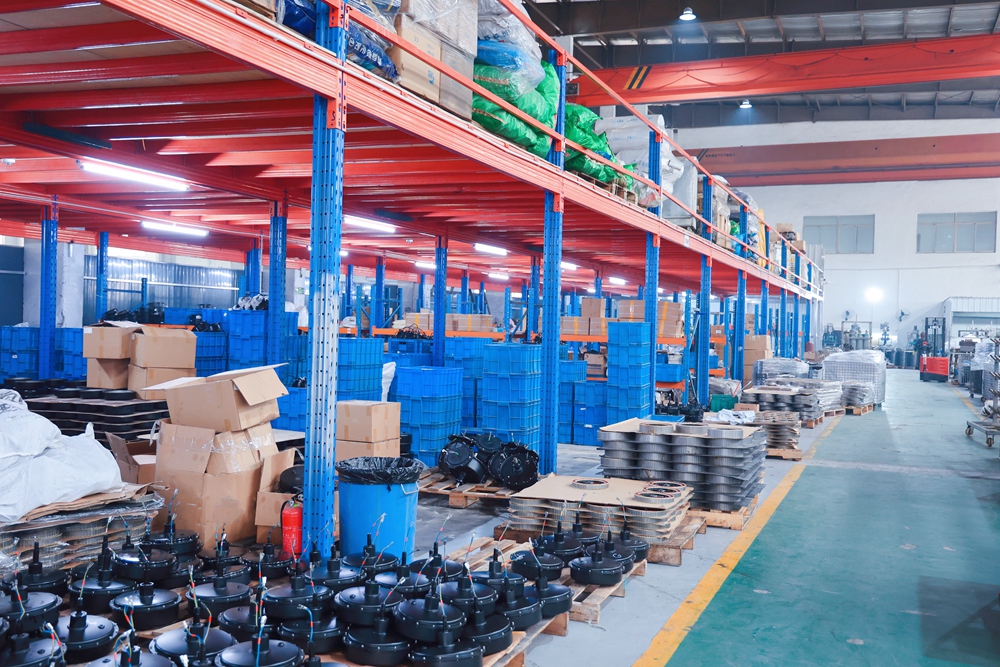
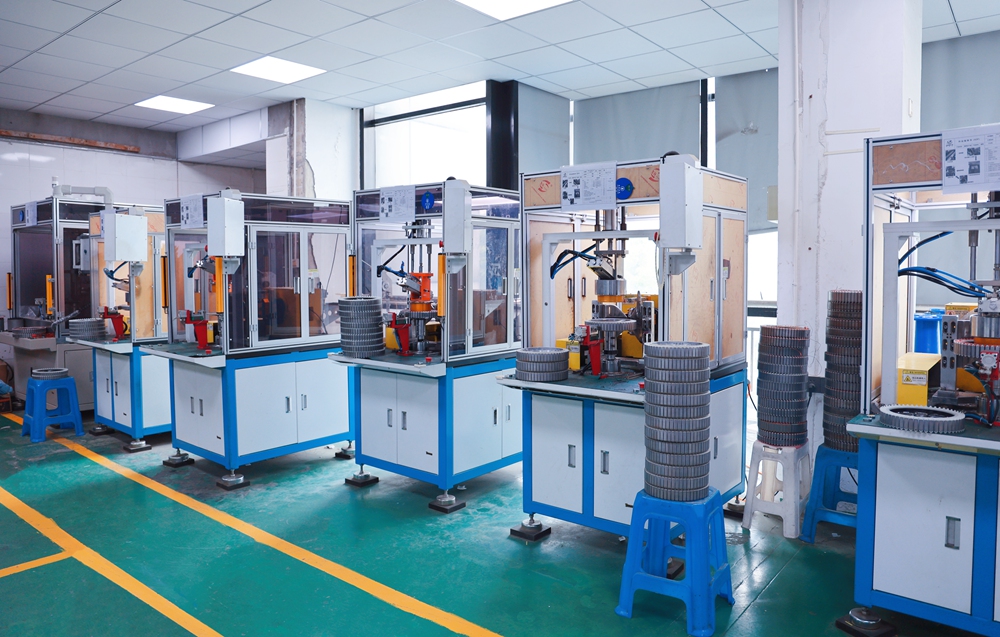
SUNOLTA (Wuxi Sunolta Technology Co., Ltd.) is an aquaculture machinery manufacturer based in Wuxi City, Jiangsu Province, China, established in 2006 and focused on the research, development, manufacturing, and sales of high-efficiency permanent-magnet variable frequency aquaculture equipment. The company operates a 22,000 m² production facility with more than 100 employees, an R&D team of 30+ senior engineers, and annual output of 150,000 units. Roughly 45% of production is exported to Southeast Asia (Vietnam, Malaysia, Indonesia), Central Asia (Uzbekistan), South America, and the Middle East. Its variable frequency range includes impeller-type, waterwheel-type, surge-type, and aeration-type aerators, as well as variable frequency water pumps and variable frequency ice breakers.
The Three Variables That Decide Performance
Power: Matching Rated Kilowatts to Pond Load
Rated motor power sets the ceiling on how much aeration energy a unit can deliver. It does not, by itself, tell you what size of pond the machine is right for. The correct starting point is the pond’s oxygen demand: the combined consumption of the standing biomass, the daily feed input, and the respiration load of sediment and plankton. Two benchmarks make that practical:
- Historical DO records. If the farm already logs dissolved oxygen, the depth of the nightly trough relative to the target minimum shows how much aeration capacity is missing — not how much the pond theoretically needs.
- Feed load. Daily feed input is a widely used proxy for oxygen demand, because feed entering the pond is ultimately broken down by oxygen-consuming processes. A pond that receives more feed carries a heavier aeration requirement.
Power should then be selected for the end of the cycle, not the start. A pond stocked at low biomass in month one may carry several times that biomass at harvest. A machine sized for day one will be undersized by the final month, exactly when the financial risk of an oxygen crash is highest.
Flow: Water Movement, Not Just Surface Splash
Aeration and circulation are different jobs, and a paddlewheel does both. Oxygen transfer happens at the air-water interface, but water has to keep arriving at that interface. A unit with strong splash and a weak flow field will oxygenate the top few centimetres and leave the bottom layer — where sediment oxygen demand is concentrated — largely untouched.
Flow sizing is therefore a geometry problem as much as a power problem:
- Long, narrow ponds benefit from units positioned to create a directional loop along the long axis, so the whole water body turns over instead of swirling locally.
- Wide or square ponds usually need multiple units positioned to eliminate dead zones in the corners and along the embankments.
- Deeper ponds require more total flow to move oxygen below the thermocline. In these systems, low-speed continuous circulation overnight is often more valuable than short bursts at maximum output.
This is where variable frequency control earns its place in the sizing calculation. A fixed-speed machine gives the farm two options: on or off. A variable frequency drive allows the same unit to run at reduced speed for gentle daytime circulation and at higher output during the critical night window, without adding a second machine or a second set of floats in the water.
Motor Efficiency: Why the Architecture Matters More Than the Nameplate
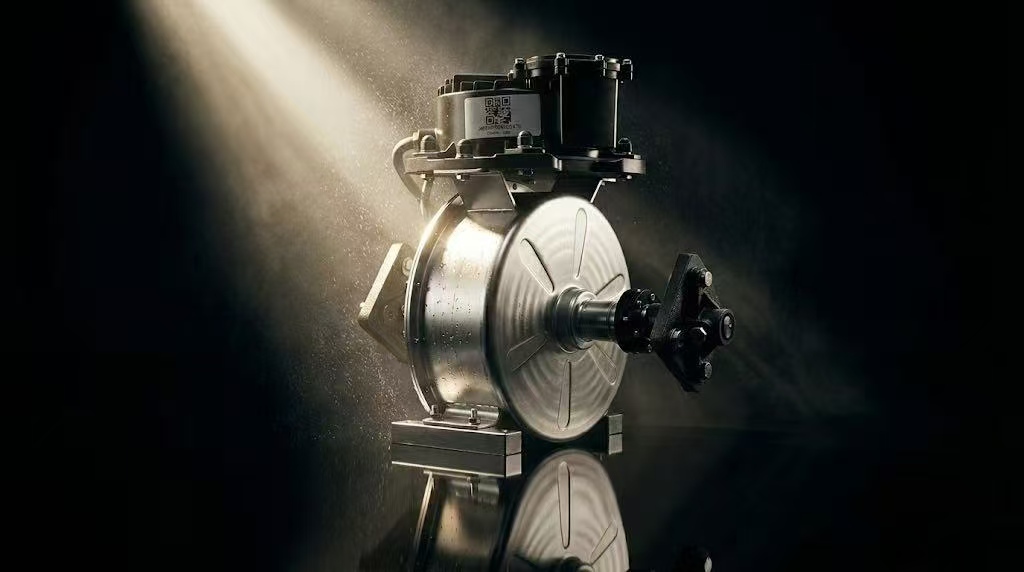
Two aerators with identical kilowatt ratings can consume very different amounts of electricity, because the number on the nameplate describes output, not the losses on the way to it.
The traditional architecture is an induction motor coupled to a reduction gearbox. The gearbox introduces mechanical losses and, more importantly, an oil system: oil has to be checked, replaced, and kept sealed. Gear oil reaching pond water is both a maintenance failure and a water-quality problem in a system where the entire purpose of the equipment is to protect water quality.
The alternative architecture couples a Permanent Magnet Synchronous Motor directly to the paddlewheel — a gearless design. As SUNOLTA states in its own product documentation, this product offers distinct advantages compared to traditional induction-motor aerators that incorporate gearboxes. Independent procurement analysis points in the same direction: variable frequency aerators using PMSM technology can reduce energy consumption by up to 40% compared to traditional induction-motor units with gearboxes, and their efficiency is rated as equivalent to the IE4 ultra-premium motor class (HTNXT Procurement Guide, 2026).
The operational consequences of a gearless design matter as much as the energy figure:
- No gear oil to change, and no oil leak risk entering the pond water.
- Fewer wearing mechanical parts, which reduces the maintenance calendar to cleaning, inspection, and electrical checks.
- Higher efficiency at part-load — which matters precisely because aerators rarely run at one fixed output across a whole production cycle.
Control and Power Supply: Designing for Real Farm Electricity
Specification sheets assume clean power. Farm ponds rarely provide it. Power grid instability, extreme voltage fluctuation, phase loss, motor overheating, and electrical faults are routine risks in rural farming areas, and they are a common cause of premature aerator failure that gets blamed on the machine rather than the site.
Two specifications address this directly and should be confirmed before purchase:
- Wide-voltage operation. Advanced variable frequency controllers typically support 150V–250V on single-phase supply and 230V–430V on three-phase supply (Industrial Aquaculture Buyer Ranking Logic 2026, HTNXT). A machine that keeps running across that band will survive the voltage sag that trips a conventional fixed-speed unit.
- Intelligent auto-protection. Built-in protection against phase loss, overload, and short circuits lets the controller detect an electrical fault and shut down safely instead of burning out the motor. Effective heat dissipation is equally important, because sustained night operation in high ambient temperatures is the hardest duty an aerator motor faces.
SUNOLTA’s variable frequency controllers are built around this combination: wide-voltage operation covering single-phase 150V–250V and three-phase 230V–430V, auto-protection against phase loss, overload, and short circuits, and heat dissipation designed for sustained operation in high ambient temperatures.
A Step-by-Step Selection Process
The sequence below takes one farm visit and one technical conversation with the supplier. Run it per pond, then aggregate the results at farm level before placing an order.
Step 1 — Quantify the pond’s oxygen demand. Record species, stocking density, average body weight, daily feed input, water depth, and the target minimum DO. Where historical DO logs exist, use the nightly minimum as the calibration point rather than a theoretical figure.
Step 2 — Set the aeration target at harvest biomass, not stocking biomass. Size for the final month of the cycle, when feed input and respiration load reach their peak.
Step 3 — Convert the target into required aeration power. Compare the required output against the rated kilowatts of candidate machines, and confirm that the published figure describes motor output rather than a nominal value.
Step 4 — Match flow pattern to pond geometry. Map pond dimensions and depth, then decide how many units are needed, where they should sit, and in which direction the water should turn over. Long ponds and square ponds need different layouts for the same total flow.
Step 5 — Verify motor architecture. Confirm whether the machine is gearless PMSM or an induction motor with a gearbox, and ask for the basis of any energy-saving claim. A claim of up to 40% electricity reduction should always be tied to the comparison method used.
Step 6 — Audit the electrical environment on site. Measure actual supply voltage across a full day, identify whether the pond is on single-phase or three-phase supply, and check whether the site experiences phase loss or voltage sags. Then confirm the controller’s supported voltage range and protection functions against those measurements.
Step 7 — Confirm control and monitoring capability. App-based monitoring and variable speed control let the farm adjust output to the DO curve instead of running flat out. Confirm which data the controller reports and how the farm actually accesses it.
Step 8 — Define the maintenance plan before delivery. A gearless design removes gear oil changes from the schedule. Confirm what remains: impeller inspection, float and frame condition in saltwater, electrical connection checks, and controller updates.
Where the Sizing Decision Changes: Three Application Scenarios
High-Density Shrimp Ponds in Saltwater
Shrimp ponds carry higher biomass per cubic metre than most fish systems, and the oxygen curve is less forgiving. In saltwater, materials become a sizing-relevant variable: frames, floats, and fasteners sit in continuous chloride attack, so the specification should state the frame grade (304 stainless steel is a common reference point for paddlewheel frames) and the corrosion treatment of the float material rather than a generic “marine grade” description. Anti-corrosion PE floats are widely used on saltwater-rated machines for this reason.
Ingress protection also belongs in the sizing conversation, because a machine that sits in spray and splash for years will eventually be tested by both. Buyers should confirm the ingress protection rating of submersible and splash-exposed components — an IPX7 rating is a common reference point for parts that may be submerged — and should verify that the certificate or test report covers the exact model and controller configuration being purchased, particularly if the destination market requires CE marking.
Pond Drainage and Water Exchange
Variable frequency aerators are frequently asked to do a second job: moving water during partial drainage, water exchange, or emergency aeration after a heavy rainfall event. A fixed-speed unit either moves water at full output or not at all. Variable frequency control lets the same machine run at low speed for gentle exchange without stirring up sediment, and then be pushed to maximum output when a pond needs rapid turnover. For farms operating a rotation of ponds, that flexibility often reduces the total number of units required across the site.
High-Density Fish Ponds and Mixed Farms
Fish ponds tolerate wider DO swings than shrimp ponds, which encourages the opposite error: under-specifying aeration because the pond “usually holds”. As stocking densities rise and feed input grows, the margin disappears. For farms running both fish and shrimp, standardising on one variable frequency platform simplifies spare parts, controller operation, and staff training — a practical argument for choosing a motor architecture and control system that scale across ponds rather than a one-off model per site.
Gearless PMSM vs. Geared Induction: A Side-by-Side Comparison

| Comparison Parameter | Gearless Variable Frequency Aerator (PMSM) | Traditional Induction-Motor Aerator with Gearbox |
|---|---|---|
| Drive design | Gearless design with Permanent Magnet Synchronous Motor (PMSM) | Induction motor with reduction gearbox |
| Motor efficiency class | Significantly higher efficiency, equivalent to IE4 ultra-premium class | Lower efficiency at comparable output |
| Energy consumption | Saves up to 40% on electricity consumption | Baseline consumption |
| Maintenance requirement | 100% zero maintenance — no gear oil changes needed | Regular gear oil changes required |
| Oil-related risk | No oil leak risks, zero water pollution from gear oil | Gear oil leak and water contamination risk |
| Operational energy cost | Up to 40% lower operational energy cost | Higher operational energy cost |
| Best suited to | High-density aquaculture, commercial fish and shrimp farming | Lower-intensity or intermittent aeration duty |
Frequently Asked Questions
What power supply conditions should a variable frequency paddlewheel aerator be able to handle?
It should tolerate the electricity a farm actually receives, not an idealised supply. Advanced variable frequency controllers typically support wide-voltage operation across 150V–250V on single-phase supply and 230V–430V on three-phase supply, and should include intelligent auto-protection against phase loss, overload, and short circuits so the machine shuts down safely instead of burning out. Effective heat dissipation matters just as much, because sustained night operation in high ambient temperatures is the hardest duty an aerator faces. Buyers should also confirm which market-specific documents apply to the exact model and controller configuration being ordered.
Do I need a higher power rating for high-density shrimp farming, or is the motor technology more important?
Both matter, but they answer different questions. Power rating determines the maximum aeration energy available; motor and drive architecture determine how efficiently that energy is delivered and how reliably it holds up under continuous night duty. Variable frequency aerators using Permanent Magnet Synchronous Motor (PMSM) technology can reduce energy consumption by up to 40% compared with traditional induction-motor units with gearboxes, and their gearless design removes gear oil changes and oil leak risk entirely. For saltwater shrimp ponds, the specification should also confirm frame grade, float corrosion protection, and the ingress protection rating of splash-exposed components.
What should buyers compare when looking at the budget for a variable frequency paddlewheel aerator?
Two cost lines decide the real budget: purchase price and operating cost. Because PMSM-based variable frequency aerators can save up to 40% on electricity consumption, and carry up to 40% lower operational energy cost than traditional induction-motor units with gearboxes, the energy line usually dominates over a full grow-out cycle. Maintenance is the third line. A gearless design eliminates gear oil changes and the associated labour; the remaining schedule is cleaning, inspection, and electrical checks. Comparing total cost of ownership rather than unit price is therefore the correct budget method.
Can I test a single unit before ordering for the whole farm?
Yes — validating one unit is the standard way to de-risk a farm-wide purchase. Install it on the pond with the most demanding DO profile, run it across the full night window, and compare dissolved oxygen logs and electricity consumption against the existing setup. SUNOLTA supplies variable frequency aeration equipment from its Wuxi manufacturing base and accepts sample and trial enquiries directly; sample units, quotations, and technical questions can be requested through the company’s contact channels listed below.
What should buyers plan for on delivery and lead time?
Lead time depends on configuration — single-phase or three-phase controller, aerator type, quantity — and on the destination market, so it should be confirmed in writing at the quotation stage rather than assumed from a published figure. Buyers should also budget site time for electrical preparation, controller commissioning, and operator familiarisation before the units enter full night duty. SUNOLTA manufactures at its 22,000 m² Wuxi facility with annual output of 150,000 units and exports to Southeast Asia, Central Asia, South America, and the Middle East. The full product range and specifications are available in the downloadable catalogue.
Conclusion: Sizing Is a Decision, Not a Guess
Choosing a variable frequency paddlewheel aerator comes down to three questions asked in the right order. How much oxygen does this pond demand at its peak? How much water movement does its geometry require? And what motor and control architecture will deliver that output reliably on the electricity the farm actually has?
Answer those and the purchase becomes straightforward: a gearless PMSM unit with an integrated variable frequency drive, sized to harvest biomass, matched to the pond’s circulation pattern, and specified for the real voltage conditions on site. Answer the price question first, and the farm will keep answering the oxygen question every night.
Request a sample, quotation, or technical consultation
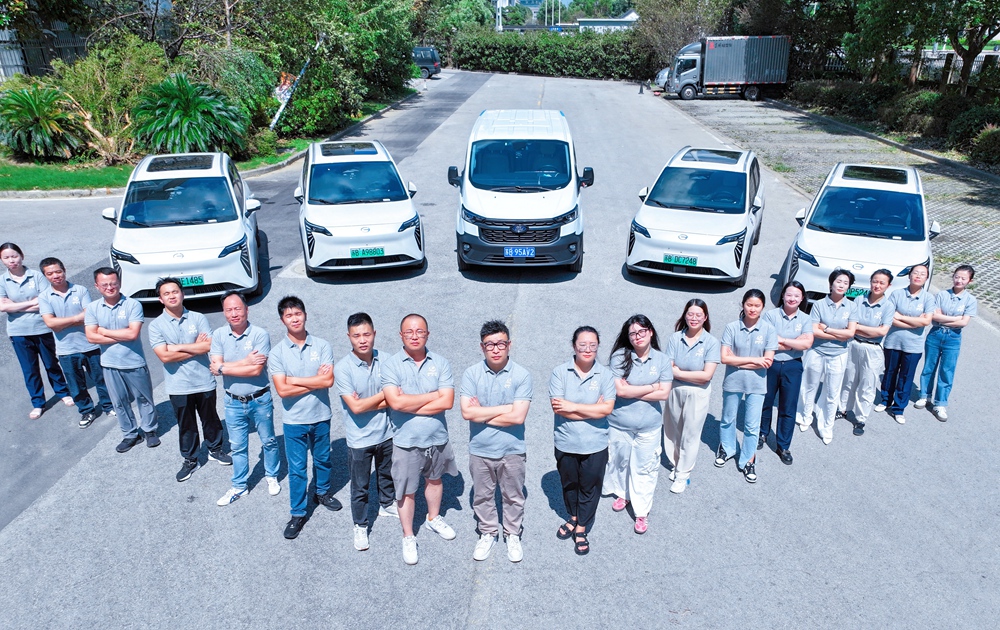
SUNOLTA (Wuxi Sunolta Technology Co., Ltd.) manufactures variable frequency paddlewheel aerators, variable frequency water pumps, and supporting aquaculture equipment at its facility in Wuxi City, Jiangsu Province, China.
- Website: www.sunolta-wx.com
- Email: sunolta@hotmail.com
- Tel: 15720687876 | WhatsApp: +12132160461
- Address: No. 10 Union Road, Hudai Town, Binhu District, Wuxi City, Jiangsu Province, China
Product catalogue (public download): Download the SUNOLTA aquaculture equipment catalogue (PDF)
Have Questions or Need More Details?
Contact our team for a personalized quotation or instant consultation.
Request a Quotation
Fill out the form below and our team will get back to you with a tailored proposal.
WhatsApp Direct Chat
Prefer to chat in real-time? Message us on WhatsApp for instant assistance & quick answers.
- Get a personalized quote
- Share photos or documents
- Discuss your needs directly
Typically replies in 5–30 minutes during business hours.