
Regional Compliance Mapping for Variable Frequency Paddlewheel Aerators: A Document Vetting Guide
Procurement Guide · Documentation & Acceptance Criteria
A variable frequency paddlewheel aerator can meet its performance specification and still fail procurement — not in the pond, but in the document pack. Regional compliance mapping is the discipline that converts destination-market requirements into a model-level document request, then verifies that every document actually names the equipment being shipped. This guide defines what to ask a supplier for, how to vet what arrives, and how to write the result into purchasing terms and acceptance criteria.
This is not a certification guide. It will not tell you which approvals your market requires, because that determination belongs to the importer, the customs broker and, where necessary, a regulatory advisor in the destination country. What it does is give procurement teams a repeatable structure for the half of compliance work that is genuinely within their control: the request, the vetting, and the contract clause.
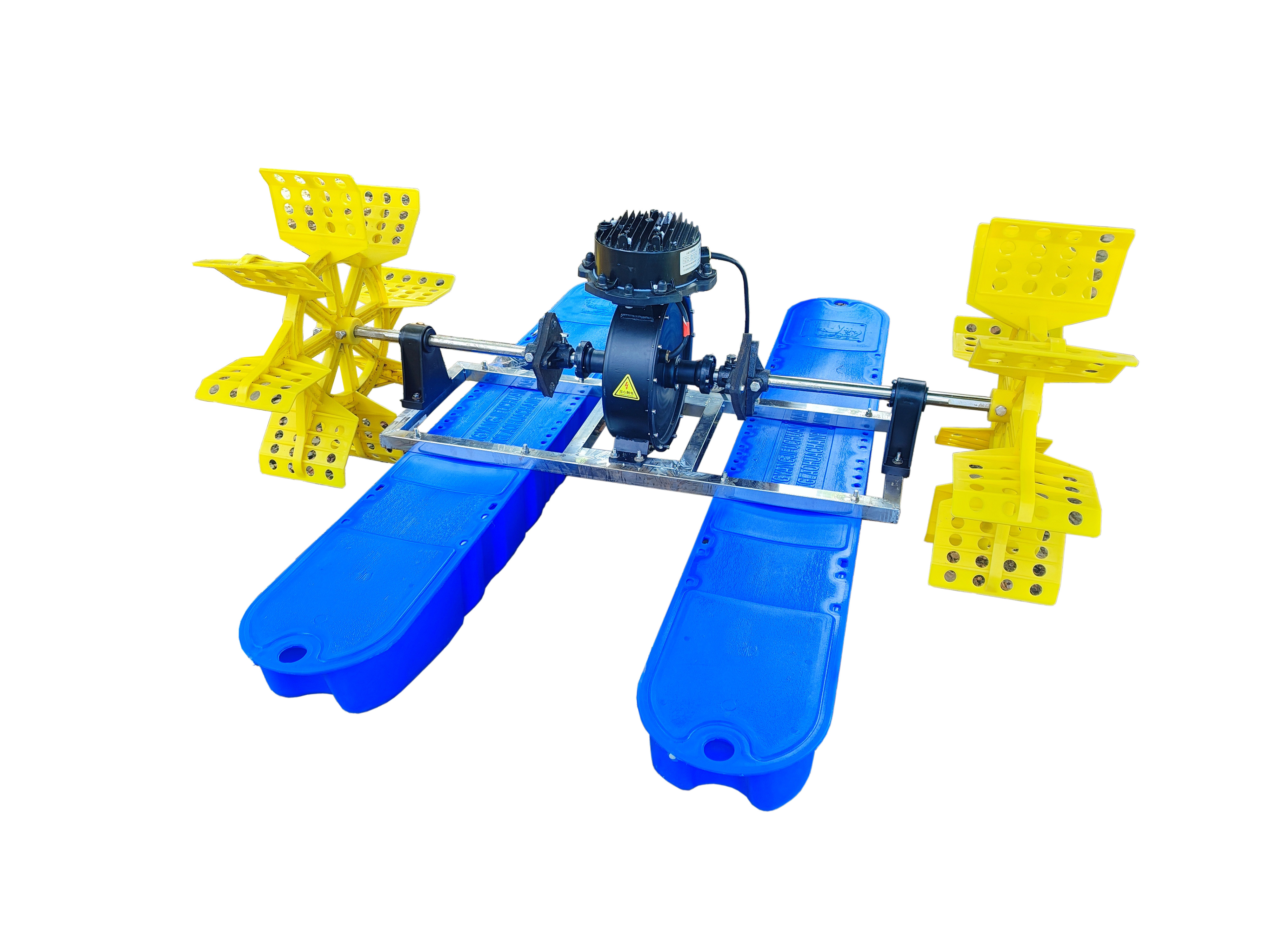
Cover: SUNOLTA Variable Frequency Paddlewheel Aerator — the model code and nameplate on this unit are the anchor points every document in the compliance pack must reconcile to.
Problem Definition: Documentation Usually Fails at the Model Level, Not the Brand Level
Most aeration suppliers can produce a certificate PDF on request. The failure appears one step later: the document exists, but it cannot be tied to the ordered model, the ordered voltage configuration, or the destination market. That gap rarely shows up in a quotation comparison, and it is expensive to discover after the container has been booked.
Three failure patterns account for most of the exposure in this category.
- Scope mismatch. A certificate or test report is issued for a product series or for a different power rating than the one ordered. A document that names no model code cannot support a model-level acceptance test.
- Label and nameplate mismatch. The nameplate on the unit, the artwork on the packaging label, the packing list and the technical file disagree on the model code, voltage, or manufacturer entity.
- No acceptance clause. Documents were discussed during the sales conversation but never written into the purchase order. When something is missing at goods-in, there is no contractual lever and no agreed remedy.
In each case the buyer’s exposure is commercial rather than technical. The equipment may be correct; the proof is not. Compliance mapping is the process that closes that gap before production, not after shipment.
Industry Background: Why Paddlewheel Aerators Are a Document-Heavy Purchase
Variable frequency paddlewheel aerators sit at the intersection of three domains: electrical equipment (permanent magnet motor, drive and controller), floating mechanical structure (frame, floats, paddles), and aquaculture production equipment. A single unit therefore generates more documentation surface than a fixed-speed paddlewheel aerator, because the drive and controller are separate assemblies with their own ratings and markings.
In high-density shrimp and fish farming the machine is also production-critical. The product documentation for this category describes 24/7 continuous operation with variable-frequency speed adjustment that adapts aeration intensity to real-time dissolved oxygen levels, in tropical conditions with high temperature and humidity, in saline or brackish water, and at sites where grid voltage ranges from 150 V to 430 V. When the operating window is that wide, the documents — not the brochure — define what the unit was built and tested to.
A second factor is the quality of the public record. Much of the information circulating about this category is manufacturer-reported product-page data: rated power and oxygen-transfer figures published by suppliers without a disclosed test method. A buyer who compares those figures directly is comparing unlabelled measurements. Compliance claims follow the same logic — the claim is the beginning of the request, not the end of it.
Demand-side context supports the attention. Market reporting on the category projects the global paddle wheel aerator market reaching US$846 million by 2032, and links variable-frequency drives to energy savings of up to 30–50% compared with fixed-speed motors. Savings at that scale keep conversion projects moving, which in turn keeps generating new documentation requirements for every destination market a shipment enters.
Detailed Solution: Five Evidence Families That Hold Up Under Review
The model below is a request structure, not a legal checklist. It groups what a supplier must be able to produce into five families, and for each family defines the vetting question that decides whether the document is usable.
1. Model identity and traceability
Ask for: the model code exactly as it appears on the quotation, a nameplate and label artwork file, the configuration list for the order, and the serial-number convention for the batch.
Vetting question: can every downstream document be tied back to one model code? For the paddlewheel series this matters because the common ratings differ in ways a generic document cannot capture. The SNT-SC-0.75KW is specified at 0.75 kW–1.5 kW, 380 V three-phase, with a rated oxygenation capacity of ≥2.2 kg/h, an application area of 1–5 Mu (approximately 0.16–0.8 acre) and two high-efficiency paddles. The SNT-SC-1.5KW is specified at 1.5 kW, 380 V three-phase, ≥2.3 kg/h, 4–5 Mu (approximately 0.66–0.82 acre) and four paddles on an extended frame. The SNT-SC-2.2KW is specified at 2.2 kW, 380 V three-phase, ≥3.2 kg/h, 5–7 Mu (approximately 0.82–1.15 acre) and six paddles on an extra-long frame. A document that says “paddlewheel aerator series” and stops there does not resolve to any one of those three builds.
2. Electrical and control conformity
Ask for: rated power, rated voltage and frequency, permitted voltage band, controller identification, and the electrical safety and EMC documentation the supplier holds for that specific assembly.
Vetting question: does the document name the same voltage configuration that will actually be shipped? The product documentation for this category describes operating conditions with grid voltage from 150 V to 430 V, while the SNT-SC paddlewheel models are listed at 380 V three-phase. Where a wide-voltage single-phase configuration is ordered for a site with unstable grid voltage, it is a different configuration and should not share a document set with a standard three-phase order. If the supplier offers localized smart controllers as part of the order, the controller identification belongs in the same package.
3. Materials, waterproofing and construction claims
Ask for: material declarations for the 304 stainless steel frame and the heavy-duty PE floats, waterproofing test records supporting any ingress-protection rating claimed, and a process description where the claim is process-based rather than material-based.
Vetting question: is the claim backed by a record tied to a unit or a batch? “Waterproof” as an adjective and “waterproof tested to a stated method, result recorded” are different deliverables. The same distinction applies to corrosion language in saltwater and brackish-water use, where the frame material and float material are the only defensible anchors until test data is produced.
4. Market access and trade documents
Ask for: commercial invoice fields, packing list, certificate of origin, and the customs classification the supplier intends to declare.
Vetting question: do the goods-description fields match the model code and the technical file? Customs statistics reference HS 8414.80.90 for aerators and 8479.89.69 for air jet aerators; the correct heading for a specific shipment must be confirmed by the importer or broker, and once chosen, the description on the invoice, packing list and any accompanying certificate should be consistent with it. Inconsistent descriptions are a routine cause of inspection delays, and they are entirely avoidable at the quotation stage.
5. Commercial, inspection and acceptance documents
Ask for: the inspection plan, the full-load aging test record, the pre-shipment QC report, warranty terms, the spare-parts list, and the document list that will accompany each shipment.
Vetting question: is each document a purchase-order deliverable with an owner and a revision number? SUNOLTA’s stated quality control for this category includes 100% full-load aging testing, IPX7 waterproof submersion testing and multi-stage inspection before dispatch. Those records are exactly the evidence a buyer needs at goods-in — provided they are issued per batch, reference the model code, and are listed in the PO rather than mentioned in an email.
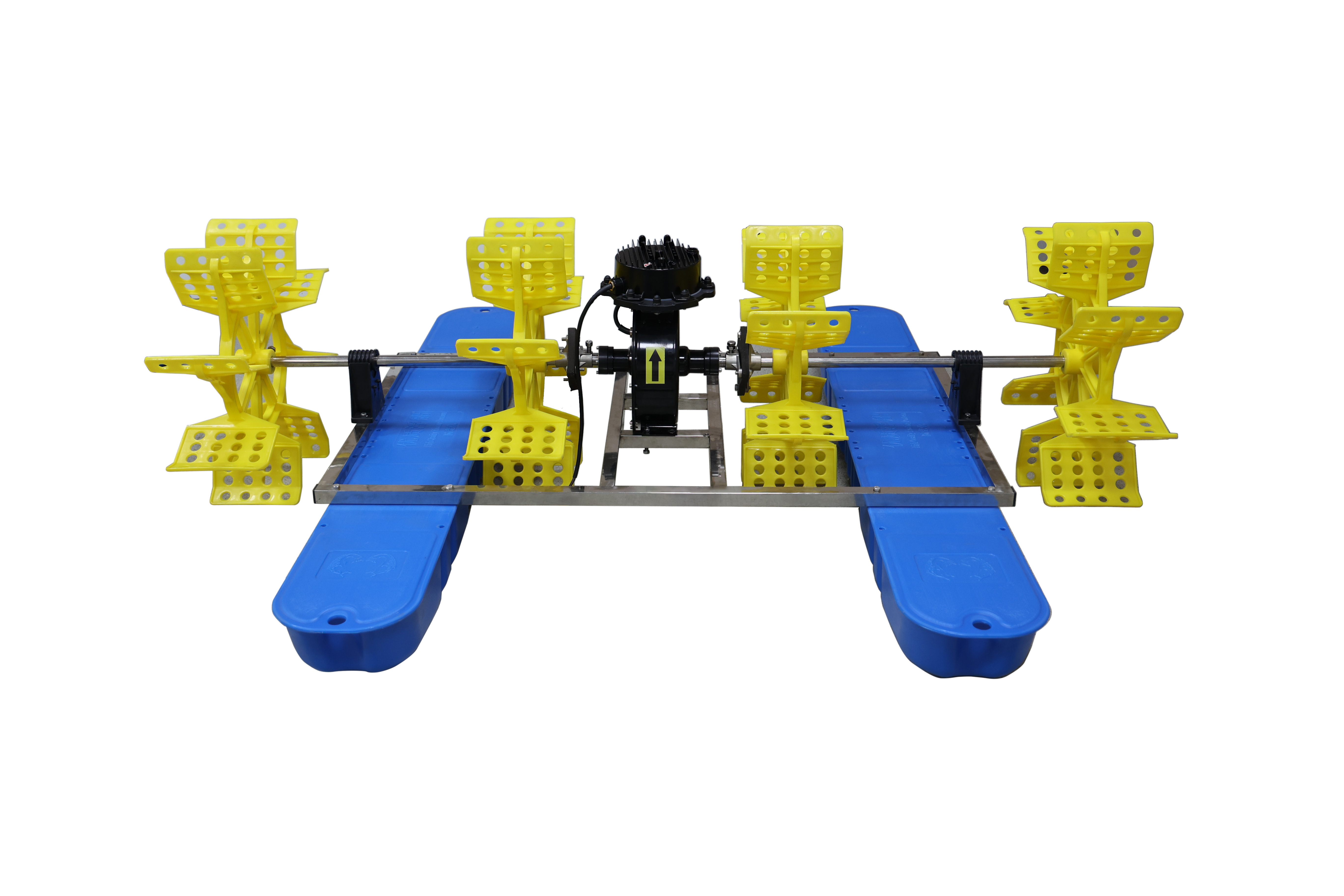
Supporting image: the SNT-SC-1.5KW four-paddle unit. Paddle count and frame length are configuration facts that a series-level certificate cannot prove on its own.
Step-by-Step Breakdown: Mapping Regional Requirements to a Signed Purchase Order
The sequence below is designed so that document work runs in parallel with commercial negotiation rather than after it. Each step produces an artefact the next step consumes.
- Assign a regulatory owner before the RFQ is issued. One named person on the buyer side owns the requirement register for every destination market in the order. Without a named owner, the register becomes a shared assumption.
- Build a destination-market requirement register. Four columns keep it usable: market, requirement type, responsible party (supplier or importer), and the document expected as evidence. Requirements that fall to the importer are still recorded here, because the supplier’s documents usually feed them.
- Translate the register into a model-level document request list. One line per model code, not one line per product family. For this order the lines would run separately for SNT-SC-0.75KW, SNT-SC-1.5KW and SNT-SC-2.2KW.
- Issue the request in writing with the full configuration. Model code, power, voltage and phase, controller option, branding, packaging and destination market. OEM and ODM scope in this category covers motor voltage, exterior colour, brand logo, localized smart controllers and packaging materials, and each of those choices can change what the documents must say.
- Vet what comes back in a fixed order. Existence first, then holder, then scope, then model match, then issue and validity dates, then language, then revision. A document that fails at step two never needs to be read to step six.
- Write the document list into purchasing terms and acceptance criteria. Annex the list to the PO, set hold points before booking, define what counts as a non-conforming document, define the cure process, and state explicitly that a missing or non-conforming document is a delivery non-conformity rather than an administrative note. Specify language and revision control at the same time, so a superseded certificate cannot be used to close a batch.
- Close the loop per shipment. A handover pack, version-controlled and archived against the shipped serial numbers. This is the file that answers a customs query, a goods-in rejection, or a warranty discussion two years later.
Two commercial parameters should be fixed at step four so the document timeline is realistic. For standard global shipments in this category the stated lead time is 7–15 days; for fully customized OEM/ODM orders it is 20–30 days, with a minimum order quantity of 30 units. Document review that starts at the RFQ stage fits inside either window. Document review that starts after production is complete does not.
Use Cases: Four Procurement Situations Where Mapping Changes the Outcome
Case 1 — High-density shrimp farm on an unstable grid in Southeast Asia
The operating environment is tropical, saline or brackish, and the site voltage is unstable across a 150–430 V band. The document set that matters here is narrow and specific: a voltage-band statement for the configuration ordered, controller identification, material declarations for the 304 stainless steel frame and PE floats, waterproofing test records, and a spare-parts list that matches the shipped build. A documentation package written only for a 380 V three-phase installation does not answer the question this buyer is actually asking.
Case 2 — Importer or distributor ordering under its own brand
Private-label orders add a document layer that is easy to overlook. When motor voltage, exterior colour, logo and packaging are customized, the buyer needs a private-label mapping agreement, approved label artwork, a packaging mark specification, and confirmation that certificates and test records still reference the manufacturing entity even though the unit carries a distributor brand. Without that link, the private label creates a traceability gap at customs and at goods-in simultaneously.
Case 3 — Tender or EPC package with formal acceptance criteria
In a tender, acceptance is contractual and the document set is the proof of conformity. The realistic ask is an inspection and test plan, per-batch aging test records, warranty and response commitments, and a spare-parts list with part numbers. Buyers who treat the tender document schedule as boilerplate usually discover the gap during the acceptance meeting rather than before submission.
Case 4 — Fleet replacement on an operating farm
On a 50-hectare intensive shrimp farm in the Vietnam and Southeast Asia market, more than 100 sets of traditional aerators were replaced with variable-frequency units. The fleet ran three complete breeding cycles, approximately 1.5 to 2 years, with a 40% reduction in monthly electricity bills and zero gear maintenance across the operating period. The document lesson is that operating records are compliance evidence too. Energy readings, maintenance logs and failure reports are what a buyer produces when a performance or warranty claim is questioned, and they only exist if someone specified that they would be kept.
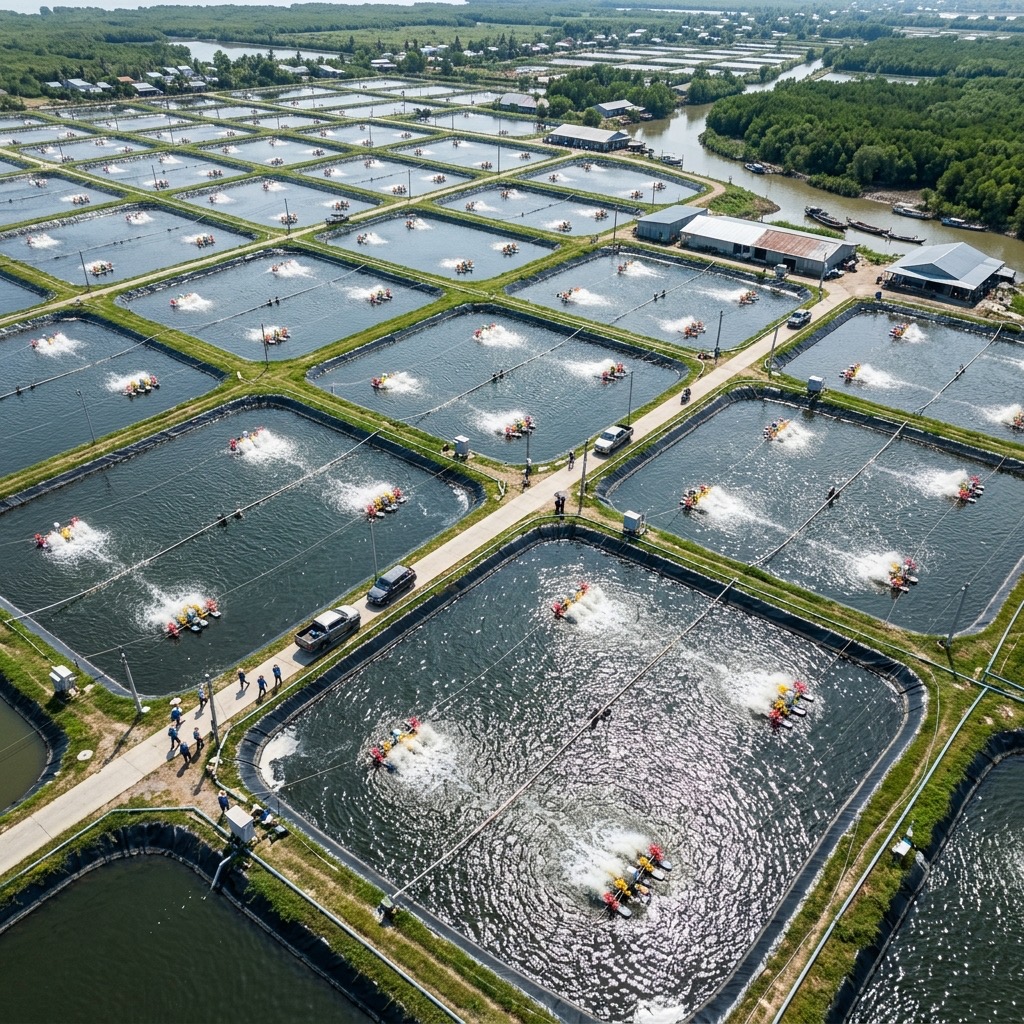
Proof image: fleet replacement on a 50-hectare intensive shrimp farm — operating records from this kind of deployment become part of the buyer’s own evidence file.
Comparison Table
The first table lists the specification facts a document pack must match for the three common paddlewheel ratings. The second table converts those facts into vetting questions.
| Model | Rated power / voltage | Rated oxygenation capacity | Application area | Paddles | Frame / float |
|---|---|---|---|---|---|
| SNT-SC-0.75KW | 0.75 kW – 1.5 kW, 380 V three-phase | ≥2.2 kg/h | 1–5 Mu (approx. 0.16–0.8 acre) | 2 high-efficiency paddles | 304 stainless steel frame / heavy-duty PE floats |
| SNT-SC-1.5KW | 1.5 kW, 380 V three-phase | ≥2.3 kg/h | 4–5 Mu (approx. 0.66–0.82 acre) | 4 paddles | Extended 304 stainless steel frame / heavy-duty PE floats |
| SNT-SC-2.2KW | 2.2 kW, 380 V three-phase | ≥3.2 kg/h | 5–7 Mu (approx. 0.82–1.15 acre) | 6 paddles | Extra-long 304 stainless steel frame / heavy-duty PE floats |
All three models use a PMSM direct drive described as 100% gearless with no oil leakage. Power, oxygenation and area figures are manufacturer-rated values from the product specification; they define what the paperwork must match, not independently tested performance.
| Evidence family | What to request | What acceptable looks like | Red flag |
|---|---|---|---|
| Model identity | Model code, nameplate artwork, configuration list, serial convention | One code that appears identically on quotation, nameplate, label and packing list | “Series” wording with no model code anywhere |
| Electrical & control | Rated power, voltage and phase, voltage band, controller ID, safety and EMC documentation for that assembly | Document matches the exact configuration ordered, including any localized controller | A single datasheet offered for both three-phase and wide-voltage single-phase orders |
| Materials & waterproofing | Frame and float material declarations, waterproofing test records, process description | Claim supported by a record tied to a batch or unit | Adjective-only claims with no test method named |
| Trade documents | Invoice fields, packing list, certificate of origin, customs classification | Goods description consistent across invoice, packing list and technical file | Description changed at the last minute to match a different heading |
| Acceptance | Inspection plan, aging test record, pre-shipment QC report, warranty, spare-parts list | Each item is a PO deliverable with revision and owner | Records promised in email but absent from the PO |
FAQ
1. Which documents should a procurement team request to verify compliance for a variable frequency paddlewheel aerator order?
Request a model-level package, not a brand-level one: the datasheet with model code, rated power, rated voltage and frequency and rated oxygenation capacity; certificate copies showing number, issuing body, holder, scope and validity; nameplate and label artwork; material and waterproofing test records; commercial invoice fields, packing list, certificate of origin and the customs classification to be declared; plus warranty terms and a spare-parts list. A worked example of certificate structure is the National CAMTA Promotion Certificate referenced for SUNOLTA’s variable-frequency aerator series, No. T202332320298, valid until 30 November 2028 in the China (Jiangsu) jurisdiction — and even there, the buyer still has to confirm that the scope names the ordered model. None of these documents decides what your destination market requires; that remains an importer and regulatory-advisor determination.
2. How do you prove that a document actually covers the model and configuration you ordered?
Follow the traceability chain from purchase order to nameplate: PO model code, datasheet model code, nameplate, certificate scope, configuration list, inspection record. The chain only holds if each link repeats the same code. For the paddlewheel series, the SNT-SC-0.75KW carries two paddles on a 304 stainless steel frame, the SNT-SC-1.5KW carries four paddles on an extended frame, and the SNT-SC-2.2KW carries six paddles on an extra-long frame — so a document referencing the series without a model code cannot establish which build was tested. Where OEM or ODM customization applies to motor voltage, exterior colour, logo, localized smart controllers or packaging, add a private-label mapping document and confirm that certificates and test records still reference the manufacturing entity.
3. Do stricter documentation requirements change the cost of a paddlewheel aerator order?
Documentation effort itself is mostly administrative, but three order parameters drive cost and should be priced deliberately. Configuration is the first: customized motor voltage, branding, localized controllers and packaging change what has to be documented and produced. Order structure is the second: the stated minimum order quantity for standard orders in this category is 30 units, so order size affects unit economics. Timing is the third: standard global shipments are quoted at 7–15 days and fully customized OEM/ODM orders at 20–30 days. The practical recommendation is to list the required documents as PO line items with an agreed scope, so the cost of compliance is visible at quotation rather than absorbed as a delay later.
4. Can a sample unit be used to validate documents before committing to a bulk order?
Yes, and it is the cheapest place to catch a mismatch. On a sample unit, check three things against the paperwork: the nameplate model code, the label and packaging marks, and whether the test records supplied match that specific unit rather than the series. For this category the stated quality control process includes 100% full-load aging testing, IPX7 waterproof submersion testing and multi-stage inspection before dispatch, so the corresponding records should be obtainable for the sample. Because the stated minimum order quantity for standard orders is 30 units, sample arrangements should be confirmed in writing with the supplier rather than assumed from the bulk price list.
5. How long does document review take relative to production lead time?
Standard global shipments in this category are quoted at 7–15 days and fully customized OEM/ODM orders at 20–30 days. Document review should not be added to those figures; it should run in parallel from the RFQ stage. In practice that means issuing the model-level document request with the quotation request, vetting the returned pack during commercial negotiation, and setting a document hold point before booking. A pack that is vetted before production starts costs days; the same pack discovered at goods-in costs a shipment cycle. To begin, request the current datasheet, certificate copies and a quotation for the SNT-SC model your site requires, or download the catalogue below.
Conclusion: The Document Pack Is the Deliverable You Can Enforce
Regional compliance mapping for variable frequency paddlewheel aerators is not a search for the strongest-sounding certificate. It is a controlled process: define what each destination market needs, convert that into a request that names each model code, vet every returned document for holder, scope, model match and validity, and then write the whole list into purchasing terms and acceptance criteria so that a missing document is treated as a delivery non-conformity.
Two habits make the process durable. The first is refusing series-level language where a model-level answer exists — SNT-SC-0.75KW, SNT-SC-1.5KW and SNT-SC-2.2KW are three different builds and deserve three different document lines. The second is keeping operating records from day one, because the energy and maintenance history of an installed fleet is the evidence that supports a warranty or performance conversation years after the certificate has been filed.
Wuxi Sunolta Technology Co., Ltd. (SUNOLTA) manufactures variable-frequency aquaculture machinery, including the SNT-SC paddlewheel series, from Wuxi, Jiangsu, China, and supports document requests, OEM/ODM configuration and technical follow-up through its export team.

Supporting image: the production workshop. Batch-level aging and inspection records originate here, which is why they can be tied to a serial number.
Request the document pack for your destination market
Send the model codes, voltage configuration and destination market, and SUNOLTA will return the datasheet, available certificate copies, test record structure and a quotation for the configuration you need. MOQ for standard orders is 30 units; OEM/ODM orders are quoted at 20–30 days.
Email: sunolta@hotmail.com | Tel: 15720687876 | WhatsApp: +12132160461 | Web: www.sunolta-wx.com
Download the SUNOLTA catalogue (PDF) Ask a documentation question
CTA image: the export and technical support team that handles model-level document requests, OEM/ODM configuration and after-sales follow-up.
Have Questions or Need More Details?
Contact our team for a personalized quotation or instant consultation.
Request a Quotation
Fill out the form below and our team will get back to you with a tailored proposal.
WhatsApp Direct Chat
Prefer to chat in real-time? Message us on WhatsApp for instant assistance & quick answers.
- Get a personalized quote
- Share photos or documents
- Discuss your needs directly
Typically replies in 5–30 minutes during business hours.