CNC Machining Manufacturers for Precision Parts
Precision Manufacturing Guide
CNC Machining Manufacturers for Precision Parts: A Buyer's Guide
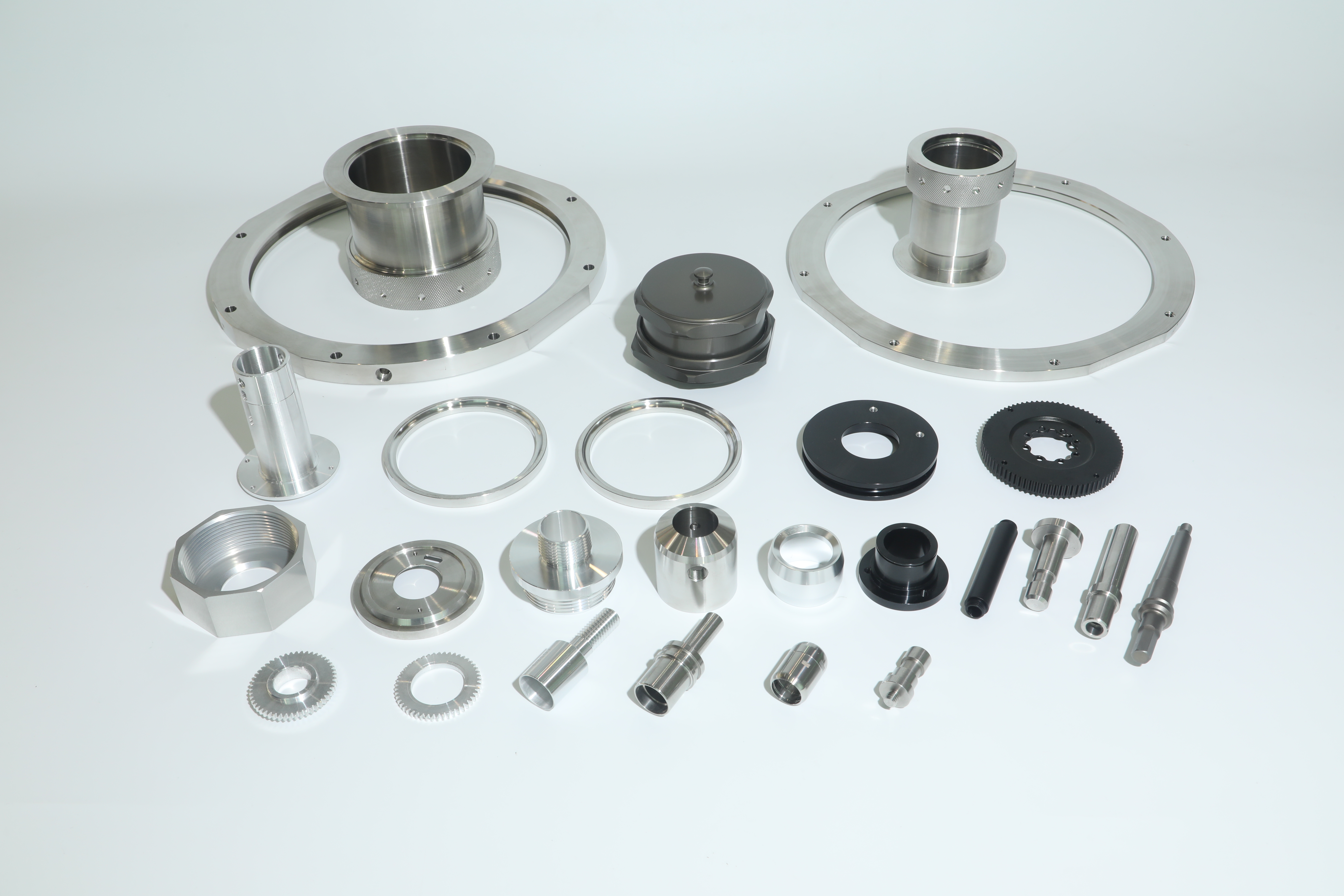
A CNC machining manufacturer for precision parts converts 2D drawings and 3D models into finished metal or plastic components through controlled subtractive processes — CNC milling, CNC turning and multi-axis machining — and delivers them to a specified dimensional tolerance, material and surface finish. Choosing one is a capability-matching exercise rather than a price comparison: the supplier has to hold your tolerance band, machine your material, repeat your geometry across batches, and document what it measured.
This guide is written for procurement engineers, OEM buyers, product managers and sourcing teams at the research stage — past the point of asking what CNC machining is, and into the practical question of which suppliers can actually make their part. It covers the sourcing problem, the market context, a worked capability example, a step-by-step selection process, industry-specific requirements, process and material comparison tables, and a short FAQ.
Capability figures in this article come from SUNPREC CNC Machining. SUNPREC HARDWARE CO.,LTD is a one-stop metal part manufacturer established in 2020 and based in Dongguan City, Guangdong Province, China. Its main products are CNC machining, die casting and extrusion; roughly 90% of output is exported, with the EU and USA as its main markets. Its published tolerances and process data are used below as a concrete example of what precision capability looks like on paper — and of what buyers should ask every supplier to document.
Problem Definition: Why Precision Part Sourcing Goes Wrong
“CNC machining” is a category, not a supplier. The useful question is narrower: can this specific shop make my part, in my material, at my tolerance, repeatedly, with evidence that it did? Most sourcing failures do not happen because a supplier owns no machines. They happen because seven variables were never aligned before the purchase order was signed.
- Tolerance band and inspection method. A part specified at a tight tolerance on a critical feature needs a defined measuring method, not just a number on a drawing.
- Material and stock form. Aluminum, stainless steel, brass, titanium, magnesium and zinc alloys, and engineering plastics behave differently in cutting, clamping and finishing.
- Geometry and setup count. A housing with features on five faces is not the same manufacturing problem as a turned shaft.
- Batch size and scaling path. Prototype, small batch and high-volume production may require different process routes.
- Surface finish and secondary operations. Anodizing, passivation, plating and coating each impose their own process constraints.
- Documentation and traceability. Inspection data, material certificates and process records are what regulated buyers actually purchase alongside the part.
- Supply chain span. Splitting casting, machining and finishing across three vendors multiplies the interfaces where quality can drift.
These variables interact. A tight tolerance on a complex 3D contour is a harder problem than the same tolerance on a simple turned profile, because contour accuracy depends on the machine, the fixture and the inspection method at the same time. A finish specified on the drawing may be achievable by the process route but uneconomic at the batch size requested. A prototype produced on one machine may not represent a production run produced on another.
Typical failure patterns to watch for during supplier discovery include quotations issued straight from a PDF without design-for-manufacturing feedback, prototypes that are not representative of the production process, and inspection records that state a pass/fail result without dimensional data. Each of these is avoidable if the buyer defines the requirement before the RFQ, not after the first delivery.
Industry Background: Where Precision CNC Machining Stands in 2026
The precision machining category is large, geographically concentrated, and technically shifting toward multi-axis capability. Publicly reported figures give a reasonable frame of reference:
- The global CNC machining and turning centers market is valued at USD 31.3 billion in 2026, according to Grand View Research.
- The aerospace CNC machining segment was projected to grow from USD 4.7 billion in 2024 to USD 8.8 billion by 2033, according to Dataintelo.
- Asia Pacific held a 55.5% revenue share of the CNC machining and turning centers market in 2023, according to Grand View Research.
- 5-axis vertical machining centers were identified as a critical high-growth segment for complex aerospace and automotive components in 2026, according to an industry expert survey reported in “CNC Machining Trends to Watch in 2026.”
- The U.S. machine shop services market is valued at USD 46.3 billion in 2026, with approximately 16,400 active businesses, according to IBISWorld.
One caution is worth stating plainly, because buyers use these numbers to justify sourcing decisions. Published growth rates for the CNC category vary by source and by definition: estimates for 2024–2030 range from about 6.1% to 11.1% depending on whether “CNC machines” is defined narrowly as machining and turning centers or broadly to include laser, EDM and other systems. Grand View Research reports 6.6% for machining and turning centers specifically. Any single CAGR figure should therefore be treated as definition-dependent rather than as a settled market fact.
Equipment supply is also scaling. Yamazaki Mazak recorded the sale of 41,000 CNC units in 2023, with a stated focus on AI-enabled 5-axis machines — a signal that multi-axis capacity is becoming more widely distributed rather than remaining concentrated in a few regions. For buyers, the practical implication is that machine availability is no longer a strong differentiator by itself. Differentiation now sits in tolerance control, documentation, cross-industry experience, and the ability to keep a process stable from prototype through repeat production.
What a Capable Precision CNC Machining Partner Provides
The section below uses SUNPREC's documented capability as a worked example. The purpose is not to present a single supplier as the answer, but to show the level of specificity a buyer should expect from any manufacturer claiming precision CNC capability.
Machine tolerance and dimensional control
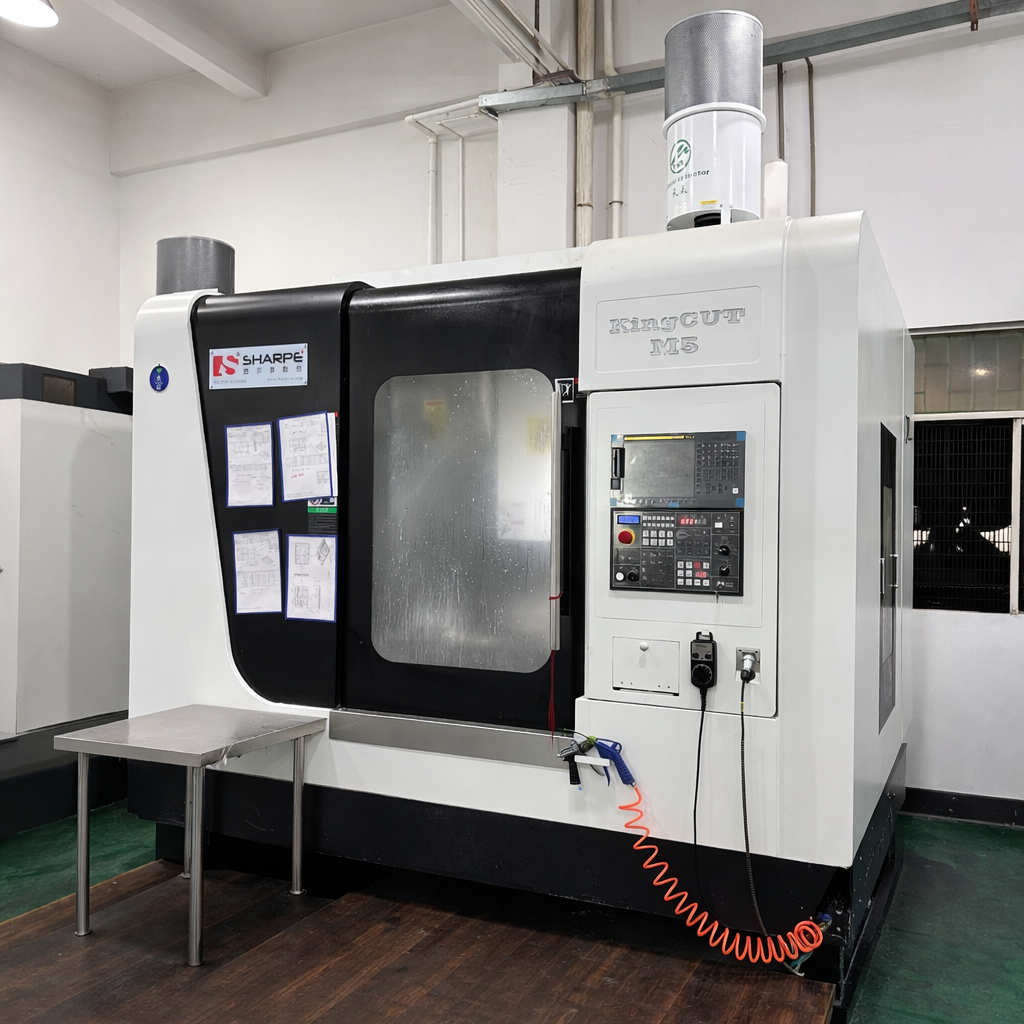
The majority of SUNPREC's CNC machining centers are FANUC machines with a machine tolerance of 0.005 mm, and the company's custom CNC machined parts feature dimensional tolerance control up to ±0.01 mm. Machining is available on 3-axis, 4-axis and 5-axis platforms, which makes it possible to produce complex 3D contours with fewer re-fixturing steps. Parts are produced according to customer 2D/3D drawings or physical samples.
Process control matters as much as the tolerance claim. SUNPREC's milling and turning centers run under optimized cutting parameters — controlled spindle speed, feed rate and depth of cut — with continuous flood coolant to reduce cutting heat, extend tool life and produce a smoother surface. Workpieces are firmly clamped to minimize vibration, the workshop environment is clean and temperature-controlled, and technicians monitor spindle load, vibration and dimensional stability throughout the cutting process. Real-time inspection is carried out during production rather than only at final release.
Processes and surface finishes
The service range covers CNC turning, CNC milling, 5-axis CNC machining, broaching, drilling and rapid prototyping, alongside die casting and extrusion. Surface finish options include anodizing (clear and color), sandblasting, polishing, brushing, chromate conversion coating, powder coating, electroplating, passivation, electropolishing, mirror polishing, sandblasting combined with passivation, PTFE coating, nickel, chrome, gold, zinc plating, black oxide and phosphating. Multiple finishes available from one supplier reduce the number of hand-offs a part passes through.
Materials
Supported materials include aluminum, steel, stainless steel, brass, titanium, magnesium alloys, zinc alloys, plastics and other materials. Material choice affects the achievable finish as much as the cutting process: aluminum die castings support colorful anodizing, powder coating and painting while also offering heat dissipation and lightweight properties, whereas zinc and magnesium alloys provide vibration damping that suits precision instruments and power tools.
Inspection and metrology
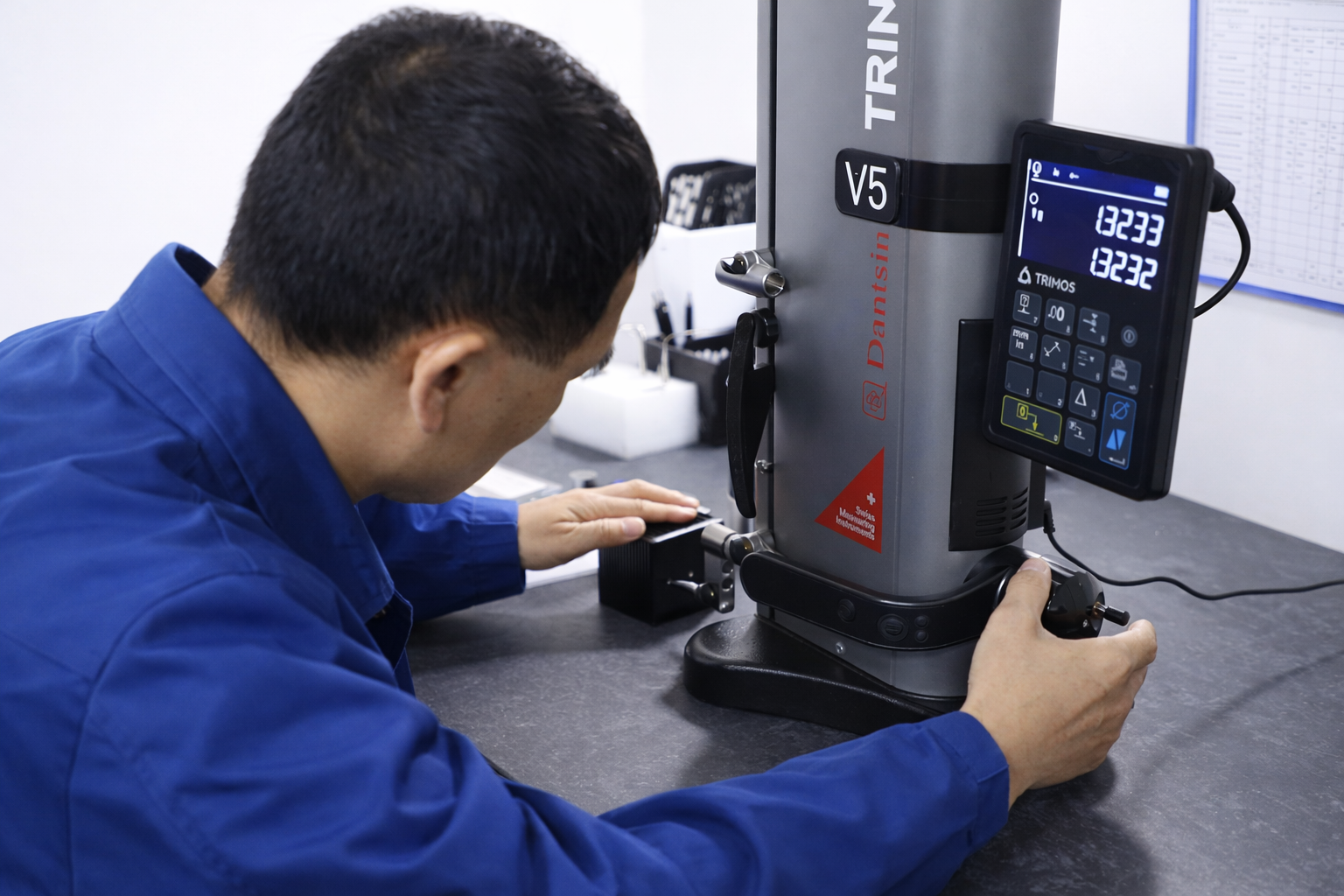
In-house inspection is used to maintain consistent quality, supported by FANUC CNC machining centers, HEXAGON metrology equipment, a 2.5D projector and a TRIMOS height gauge. For research-stage buyers, the important detail is the combination: dimensional checking, surface and profile verification, and height measurement held internally rather than outsourced, which shortens the feedback loop between machining and measurement.
Capacity and export footprint
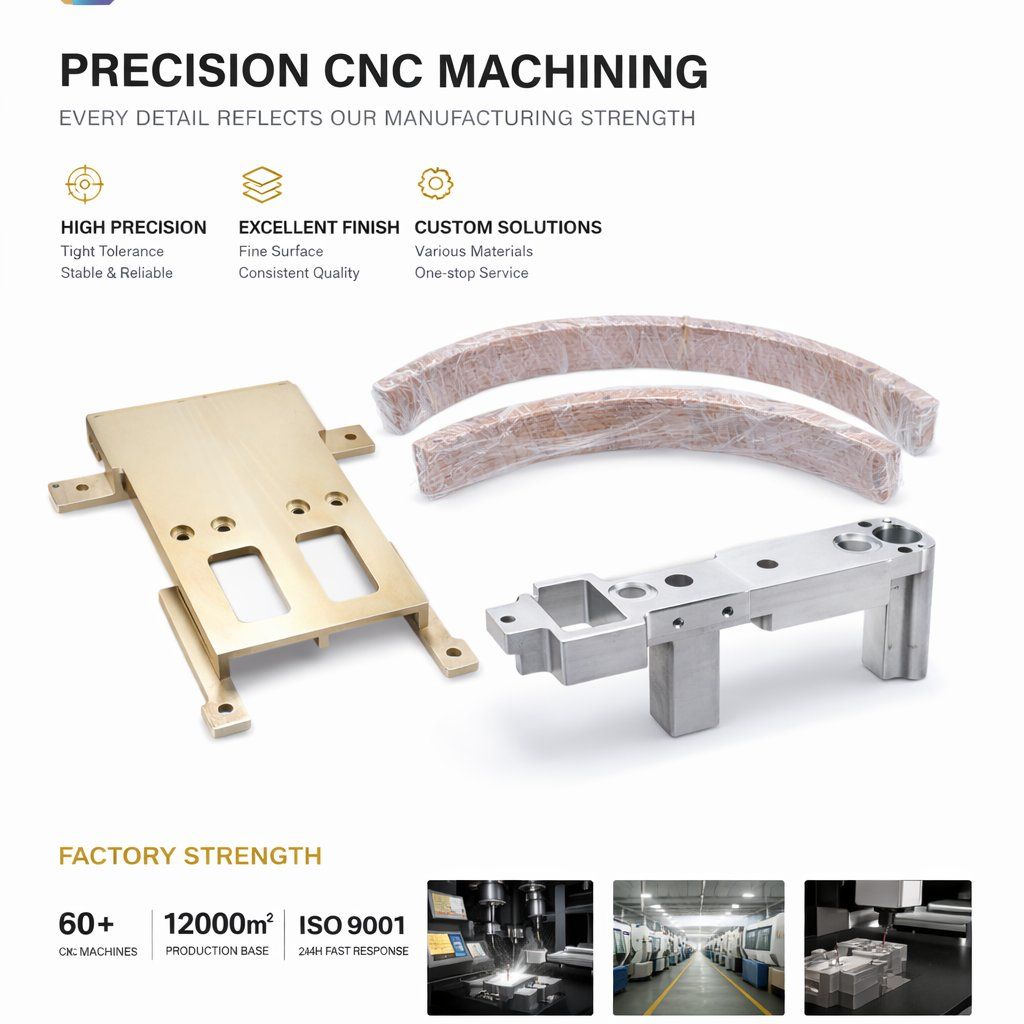
SUNPREC operates a 3,500 m² manufacturing facility with approximately 200 staff, including a 10-engineer R&D team, and reports annual production capacity of 5,000,000 units. Export business accounts for 90% of total sales, with the EU and USA as the main markets. Cooperation spans more than 50 countries and over 300 clients, from small businesses to large multinational corporations, with application experience reported in Germany, France, Italy, the United States, Mexico, Israel and Australia.
One-stop integration: casting plus machining
For programs that combine a casting with machined features, process span becomes a quality issue rather than a convenience. SUNPREC casts aluminum, magnesium and zinc alloys including ADC12, A380, Zamak3 and Zamak5, holding a cast tolerance of ±0.01 mm with a cycle time of 15–90 seconds per piece. Minimum wall thickness is 0.4 mm for zinc alloy and 0.8 mm for aluminum alloy. Aluminum alloy castings have a tensile strength of 80–120 MPa and zinc alloy castings 40–80 MPa; cold-chamber aluminum die casting uses a safety factor of 1.2 and hot-chamber zinc die casting uses a safety factor of 1.3 to 1.5.
Cast part families include motor housing, equipment housing and heat sink die casting parts. Die castings are compatible with secondary 3-axis CNC milling for precise holes, grooves and fitting surfaces, which is how a casting becomes a finished precision component without leaving the same quality system. The cast structure is integrated without splicing gaps, providing rigidity and shock resistance.
Special technical requirements worth testing in an RFQ: SUNPREC states capability for micron-grade precision tolerance control, customized complex surface treatment solutions, complete raw material certification documentation, and reliable uniform quality consistency across both small trial runs and large-volume batch manufacturing. These are the four areas where research-stage buyers should ask for proof rather than assurance.
Step-by-Step: From First RFQ to Repeat Production
Step 1 — Define the part, not the process
Start with the function of the component and the dimensions that actually control it. Provide 2D/3D drawings or a physical sample, and mark which features are critical and which are reference. Suppliers that machine to customer drawings or samples can work from either format; what they cannot fix is an ambiguous requirement.
Step 2 — Fix the tolerance band and the inspection method
State the tolerance and how it will be verified. If a ±0.01 mm part tolerance is required, agree in advance which instrument measures it and how the measurement is reported. Tolerance and inspection method are one decision, not two.
Step 3 — Select material and finish together
Material choice and surface finish constrain each other. Aluminum and its alloys accept anodizing, powder coating and painting; aluminum castings additionally offer heat dissipation and lightweight properties, while zinc and magnesium castings offer vibration damping. Deciding finish after material selection frequently forces a process change later.
Step 4 — Choose the process route
Decide between CNC milling, CNC turning, 3-axis, 4-axis or 5-axis machining, and die casting for volume. Complex 3D contours are cut on 3-axis and 5-axis CNC machines; thin-wall complex housings at volume are usually cast and then machined on the fitting surfaces.
Step 5 — Validate with a prototype or small batch
Projects typically run from prototyping and small-batch validation through to mass production delivery. Use the prototype phase to confirm fit, form and surface finish, and to verify that the process route chosen will scale. Rapid prototyping is available for early-stage validation.
Step 6 — Agree on inspection evidence before mass production
Decide what the inspection record contains: measured dimensions, material certification, and surface treatment confirmation. In-house inspection with metrology equipment, a 2.5D projector and a TRIMOS height gauge supports this reporting; real-time inspection during production keeps tolerances stable rather than discovering drift at final inspection.
Step 7 — Scale to volume with a locked process
High-volume work depends on process stability. Annual capacity of 5,000,000 units and die casting cycle times of 15–90 seconds per piece are indicators of throughput, but the variable that protects the buyer is a locked process route with defined parameters and inspection points.
Step 8 — Plan repeat supply and change control
For long-term programs, confirm how repeat orders are handled. Die casting programs are suited to long-term repeat monthly orders with consistent pricing, and repeat CNC production benefits from the same discipline: the same drawings, the same material specification, and the same inspection plan on every release.
Application Guide: Where Precision CNC Machined Parts Are Used
Industry experience is one of the more reliable signals in supplier discovery, because each sector imposes a different mix of tolerance, documentation and volume requirements. SUNPREC lists aerospace, automotive, semiconductor, medical, new energy, rail traffic, robotics and automation, instrumentation, and oil & gas among the industries it serves.
Aerospace
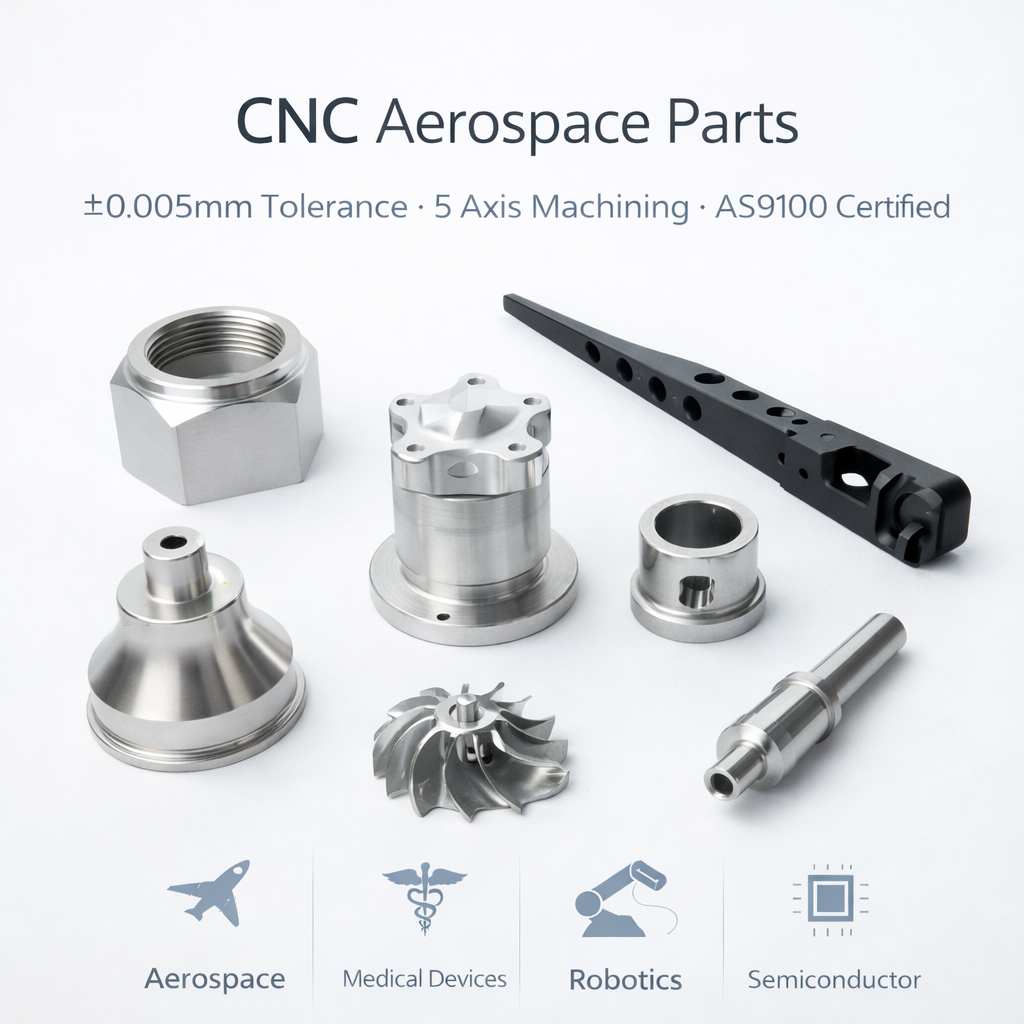
Aerospace CNC machining combines tight dimensional tolerances with complex geometry and material documentation requirements. Precision machined components for aerospace typically demand contour accuracy on structural or housing features, and buyers in this sector generally want material certification alongside dimensional data — which is why “complete raw material certification documentation” is a capability worth confirming during evaluation.
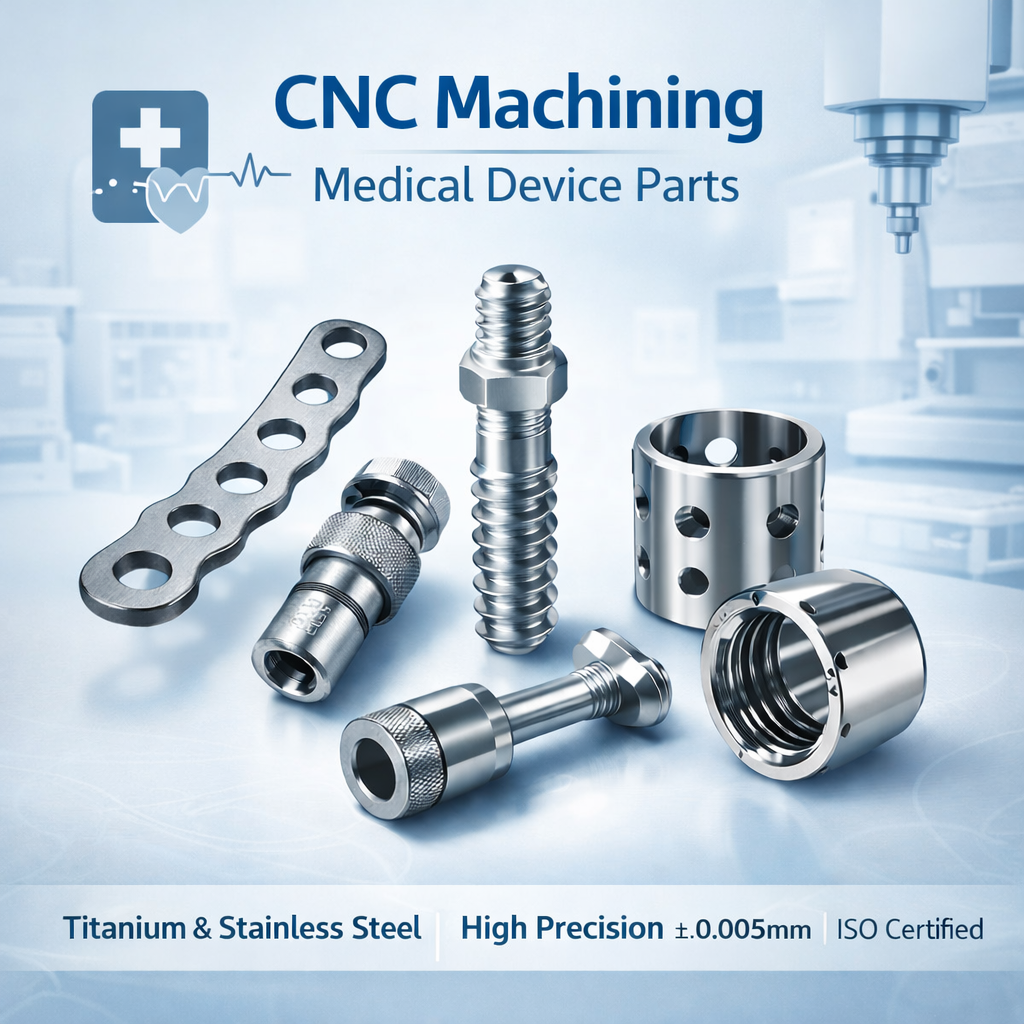
Medical
Medical CNC machining starts from the same dimensional requirements as other precision work, then adds a regulatory layer. Buyers supplying the U.S. market should note that, as of February 2, 2026, the FDA's Quality Management System Regulation (QMSR) incorporates ISO 13485:2016 by reference for medical device manufacturing under 21 CFR Part 820. The practical sourcing consequence is that a machining supplier must be assessed against the buyer's quality system, not only against a tolerance sheet. SUNPREC's documented position is in-house inspection supported by HEXAGON metrology equipment, a 2.5D projector and a TRIMOS height gauge, plus tolerance control up to ±0.01 mm and raw material certification documentation.
Automotive
Automotive CNC machining is usually a volume question first and a tolerance question second. Production component machining involves repeat monthly demand, which makes long-term repeat orders with consistent pricing and stable quality a larger factor than in one-off prototyping. Where a part is a housing or bracket, die casting followed by secondary 3-axis CNC milling for precise holes and fitting surfaces can replace a fully machined design.
Semiconductor, robotics and automation
These sectors rely on precision instrument components, housings and structural parts where vibration and thermal behaviour affect performance. Zinc and magnesium alloy castings provide vibration damping for precision instruments and power tools, while aluminum parts offer heat dissipation and lightweight properties — a material combination that maps directly onto instrumentation and automation hardware.
New energy, rail traffic and instrumentation
These applications tend to combine larger parts with moderate to high volume and long product lifecycles. Consistency between the first shipment and the hundredth matters more than peak single-part precision, which places the emphasis on process locking, repeat inspection and a stable supply route.
Oil & gas
Oil & gas is listed among the industries SUNPREC serves, and stainless steel and titanium are among the supported materials. In this segment the qualification question is usually about material traceability and consistent mechanical performance rather than geometry alone, so raw material certification documentation becomes a primary evaluation criterion.
Comparison Table: Matching the Process Route to the Part
The table below compares the process routes a precision CNC machine shop typically offers. Figures reflect SUNPREC's documented product data and are intended as a reference framework for matching a part to a route, not as a universal benchmark for the industry.
| Process route | Best suited for | Documented parameters | Buyer notes |
|---|---|---|---|
| CNC milling (3-axis) | Pockets, slots, flat faces, drilled holes and prismatic housings | Part tolerance up to ±0.01 mm; 3-axis platform | Features on multiple faces may require re-fixturing, which adds setup time and stack-up risk |
| CNC turning | Rotationally symmetric parts such as shafts, bushings and connectors | Part tolerance up to ±0.01 mm; CNC turning listed as a core service | Off-axis features usually need a secondary milling operation |
| 4-axis and 5-axis CNC machining | Complex 3D contours and multi-face features | 3-axis, 4-axis and 5-axis options; machine tolerance 0.005 mm on FANUC centers | Fewer setups reduce handling risk; programming and inspection discipline become the limiting factors |
| Die casting plus secondary machining | Thin-wall complex housings, motor housings, equipment housings and heat sinks at volume | Tolerance ±0.01 mm; cycle time 15–90 s per piece; minimum wall 0.4 mm (zinc) / 0.8 mm (aluminum); materials ADC12, A380, Zamak3, Zamak5 | Compatible with secondary 3-axis CNC milling for precise holes, grooves and fitting surfaces; well suited to long-term repeat monthly orders |
| Rapid prototyping | Fit, form and finish validation before committing to tooling | Rapid prototyping listed within the CNC machining service range | Use it to validate the design, then confirm that the production route performs the same way |
Parameters are drawn from SUNPREC's published product data for its CNC machining and die casting services.
Material selection is the second half of the same decision, because material determines both machinability and which finishes are realistic. The table below summarises the materials documented as supported, together with the characteristics the source data specifically attributes to each.
| Material | Documented status | Documented characteristics |
|---|---|---|
| Aluminum | Supported for CNC machining; aluminum alloys ADC12 and A380 for die casting | Heat dissipation and lightweight properties; supports colorful anodizing, powder coating and painting |
| Stainless steel | Supported for CNC machining | Listed among supported materials |
| Steel and alloy steel | Supported for CNC machining | Listed among supported materials |
| Brass and copper | Supported for CNC machining | Listed among supported materials |
| Titanium | Supported for CNC machining | Listed among supported materials |
| Magnesium alloys | Supported for CNC machining and die casting | Castings provide vibration damping for precision instruments and power tools |
| Zinc alloys (Zamak3, Zamak5) | Supported for die casting and secondary machining | Vibration damping for precision instruments and power tools; hot-chamber casting safety factor 1.3–1.5; tensile strength 40–80 MPa |
| Engineering plastics | Supported for CNC machining | Listed among supported materials |
The “listed among supported materials” entries indicate the material is documented as supported without additional published performance data.
How to use these tables in an RFQ: name the process route and the material together, state the tolerance and how it will be measured, and specify the finish at the same time. Suppliers that can respond to all four points with documentation are the ones worth shortlisting at the research stage.
FAQ: Finding and Qualifying Precision CNC Machining Manufacturers
What documentation should a CNC machining manufacturer provide for regulated industries?
A precision machining supplier should be able to provide in-house inspection records supported by calibrated metrology equipment, and complete raw material certification documentation. SUNPREC's documented setup includes HEXAGON metrology equipment, a 2.5D projector and a TRIMOS height gauge for in-house inspection, together with the stated capability to fulfil special technical specifications covering micron-grade precision tolerance control, customized complex surface treatment solutions and complete raw material certification documentation. For medical device programs, buyers should also note that as of February 2, 2026 the FDA's QMSR incorporates ISO 13485:2016 by reference under 21 CFR Part 820 in the United States — a supplier's fit with that quality framework is a buyer-side qualification question, not something a tolerance sheet can answer.
What tolerances, materials and geometries can a precision CNC machine shop handle?
For SUNPREC, custom CNC machined parts are controlled to a dimensional tolerance of up to ±0.01 mm, with the majority of CNC machining centers being FANUC machines rated at a machine tolerance of 0.005 mm. Machining is available on 3-axis, 4-axis and 5-axis platforms, which supports both simple prismatic parts and complex 3D contours. Supported materials include aluminum, steel, stainless steel, brass, titanium, magnesium alloys, zinc alloys and engineering plastics, and parts are produced according to customer 2D/3D drawings or samples.
What drives the cost of precision CNC machined parts?
Cost in precision machining is driven mainly by material type and stock form, the tolerance band required, the number of setups needed to reach the geometry, batch size, surface finish and secondary operations, and the depth of inspection and documentation required. These factors interact: tightening a tolerance or adding a finishing step increases both processing and inspection time. Where a program runs on a repeat cycle — for example a die casting program produced for long-term repeat monthly orders — consistent pricing becomes achievable because the process route and tooling are already established. Buyers should ask suppliers to break the quotation down along these lines rather than comparing a single unit price.
Can a prototype be validated before committing to mass production?
Yes. SUNPREC supports projects that run from prototyping and small-batch validation through to mass production delivery, and rapid prototyping is part of the CNC machining service range. Parts are produced to customer 2D/3D drawings or samples, so the prototype phase can be used to confirm dimensions, tolerances and surface finish before volume tooling or a full production route is committed.
How should buyers plan lead time and repeat supply?
Lead time in precision machining depends on material availability, whether tooling and fixtures must be produced, the selected process route, finishing requirements and the inspection plan agreed for the part. Two structural factors reduce schedule risk: available throughput capacity, which for SUNPREC is a 3,500 m² facility with approximately 200 staff and annual production capacity of 5,000,000 units, and a process route suited to repetition, such as die casting with a cycle time of 15–90 seconds per piece for long-term repeat monthly orders. To move from research to a concrete answer, send your 2D/3D drawing or sample to SUNPREC at service@sunprec.com and request a prototype sample and quotation against your actual tolerance, material and finish requirements.
Conclusion
Finding a CNC machining manufacturer for precision parts is a matching problem, not a search problem. The category is large, capacity is widely distributed, and the published market data confirms that the technology trend is toward multi-axis capability for complex aerospace and automotive components. What separates suppliers at the research stage is specificity: a stated part tolerance and the machine tolerance behind it, a defined material and finish list, in-house metrology, documented capacity, and a process route that holds from prototype through repeat production.
Buyers who define their part, tolerance, material and finish before the RFQ — and who ask for inspection evidence and raw material certification rather than assurance — spend far less time correcting avoidable problems later in the program.
Next step: sample, quotation and capability review
SUNPREC CNC Machining produces precision CNC machined parts, die castings and extrusions for aerospace, automotive, medical, semiconductor, robotics and automation, instrumentation, rail traffic, new energy and oil & gas applications, with tolerances up to ±0.01 mm and in-house inspection.
Send your 2D/3D drawing or sample to service@sunprec.com, or review the full capability profile in the SUNPREC presentation and product catalogue (PDF).
Website: www.sunprec.com | Tel: +86-769-21686613 | Phone: 181 2861 7970 | Address: No.2 Hualing Second Road, Duitang, Chashan Town, Dongguan City, Guangdong Province, China