CNC Machining: A Discovery Guide to Precision Parts, Materials, and Suppliers
CNC Machining: A Discovery Guide to Precision Parts, Materials, and Suppliers
CNC machining is a subtractive manufacturing process in which computer-controlled machine tools cut material away from a solid workpiece to produce a finished component with defined dimensions, tolerances, and surface finish. It covers operations such as CNC milling, CNC turning, drilling, broaching, and rapid prototyping, and it runs on 3-axis, 4-axis, or 5-axis platforms depending on part geometry.
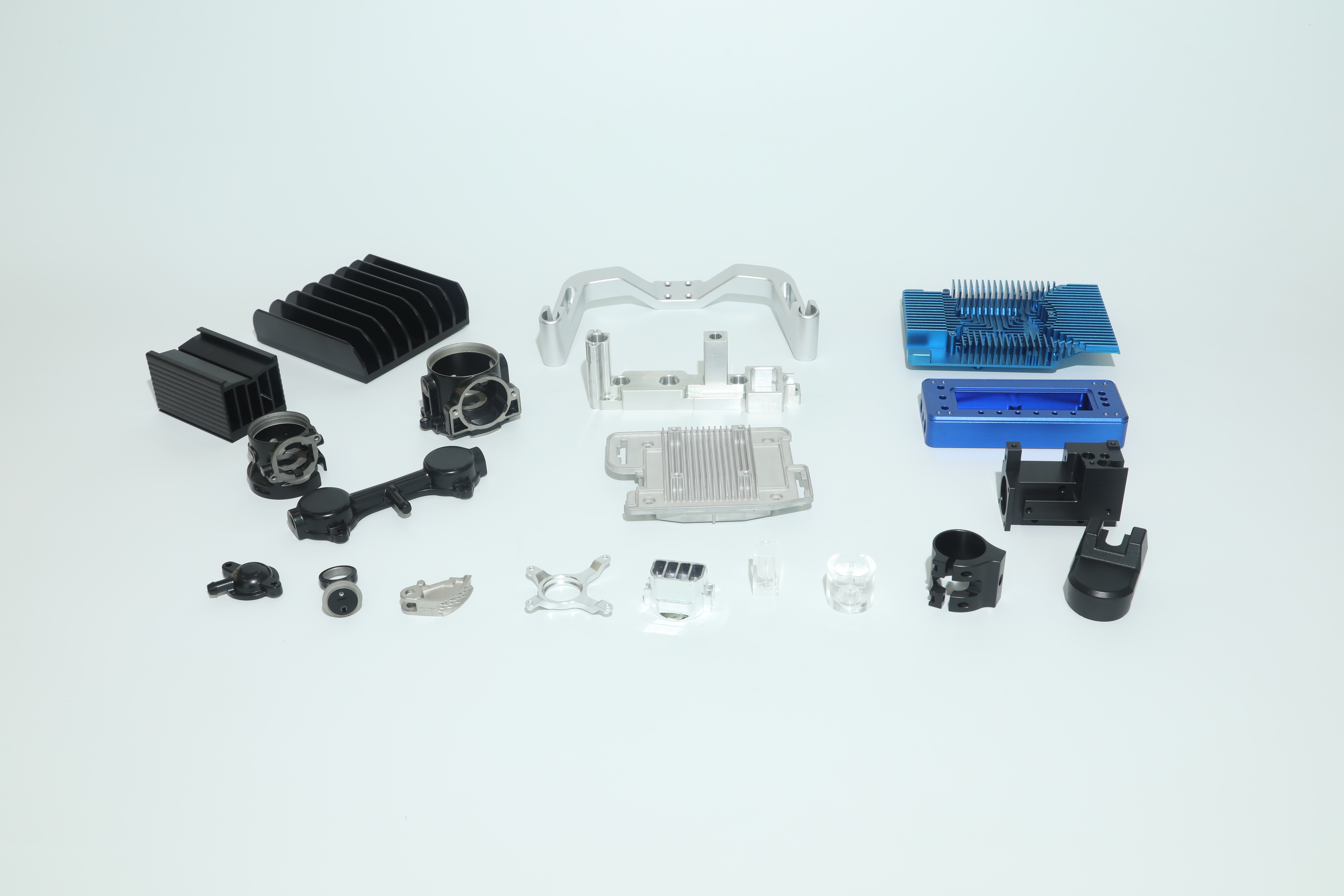
SUNPREC CNC Machining is the precision machining service line of SUNPREC HARDWARE CO.,LTD, a one-stop metal part manufacturer established in 2020 in Dongguan City, Guangdong Province, China. The company machines custom parts to a dimensional tolerance of up to ±0.01mm in aluminum, steel, stainless steel, brass, titanium, and other materials, for industries that include aerospace, automotive, medical, semiconductor, and instrumentation.
This guide is written for buyers in the awareness and research stages of a sourcing project. It explains what CNC machining actually covers, what precision and material combinations are realistic, how an order runs from drawing to delivery, where machined components are used, how machining compares with die casting, and what a precision CNC parts manufacturer should be able to prove before you place a production order.
Problem Definition: Why Precision CNC Parts Are Hard to Buy Well
Most content about CNC machining explains the acronym and stops there. For a buyer, the real problem is not vocabulary — it is specification. A machining quotation is only meaningful once the process, the tolerance class, the material, the surface finish, the inspection requirement, and the order volume are all defined. When any one of those inputs is vague, quotations from different suppliers are not comparable, and the risk quietly shifts to the buyer.
Six specification gaps cause most of the confusion in early-stage sourcing:
- Process gap. CNC milling, CNC turning, and 5-axis CNC machining solve different geometry problems. A part with complex 3D contours and features on multiple faces is not the same purchasing decision as a simple turned shaft.
- Tolerance gap. Part tolerance and machine tolerance are different numbers. A shop can quote a ±0.01mm part tolerance while its machining centers are positioned to a tighter machine-level tolerance, and the two figures are not interchangeable.
- Material gap. Aluminum, stainless steel, brass, titanium, magnesium alloys, zinc alloys, and engineering plastics machine differently and behave differently in service.
- Route gap. As volumes grow, the correct manufacturing route can change. Machining and die casting are not competitors for the same order profile, and choosing between them is a decision framework, not a preference.
- Capability gap. Not every supplier that advertises CNC machining services can run multi-axis work, hold tight tolerances on complex geometry, and inspect what it makes in-house.
- Cost gap. Buyers often assume price is driven mainly by part size. In practice, geometry complexity, tolerance class, finishing steps, and batch structure move the number far more.
Closing these gaps early is what prevents rework later. The rest of this guide supplies the technical background a buyer needs to write a specification that suppliers can quote against accurately.
Industry Background: CNC Machining Capacity and Demand in 2026
CNC machining is a large and globally distributed industry whose center of gravity sits in Asia. The global CNC machining and turning centers market is valued at USD 31.3 billion in 2026, according to Grand View Research, and Asia Pacific accounted for 55.5% of revenue in that market in 2023, based on the same source.
Demand is not distributed evenly across end markets. In aerospace, Dataintelo projects that the aerospace CNC machining market grows from USD 4.7 billion in 2024 toward USD 8.8 billion by 2033. On the services side, IBISWorld values the U.S. machine shop services market at USD 46.3 billion in 2026, with approximately 16,400 active businesses.
Capacity structure is also shifting toward multi-axis work. Five-axis vertical machining centers (VMCs) are identified as a critical high-growth segment for complex aerospace and automotive components in 2026. Equipment vendors reflect that direction: Yamazaki Mazak recorded the sale of 41,000 CNC units in 2023, with a focus on AI-enabled 5-axis machines.
A note on reading market figures. Published market numbers for this sector are not directly comparable. Research that measures machining and turning centers reports USD 31.3 billion for 2026 (Grand View Research), while research measuring the broader CNC machine tools category reports USD 108.58 billion for the same year (Fortune Business Insights). Published CAGR projections for 2024–2030 range from about 6.1% to 11.1% depending on methodology. The definitions differ, so compare like with like.
For a buyer, the practical implication is straightforward: multi-axis capacity and the engineering discipline to run it are the scarcer part of the supply market, and a significant share of that capacity is located in Asia Pacific. Cross-border supplier evaluation therefore has to be technical rather than purely commercial.
Detailed Solution: How CNC Machining Delivers Precision Parts
CNC machining converts a digital model into a physical part by removing material with controlled cutting tools. The achievable result depends on four variables that buyers can specify directly: the machining process, the tolerance class, the material, and the surface finish.
CNC milling, CNC turning, and multi-axis machining
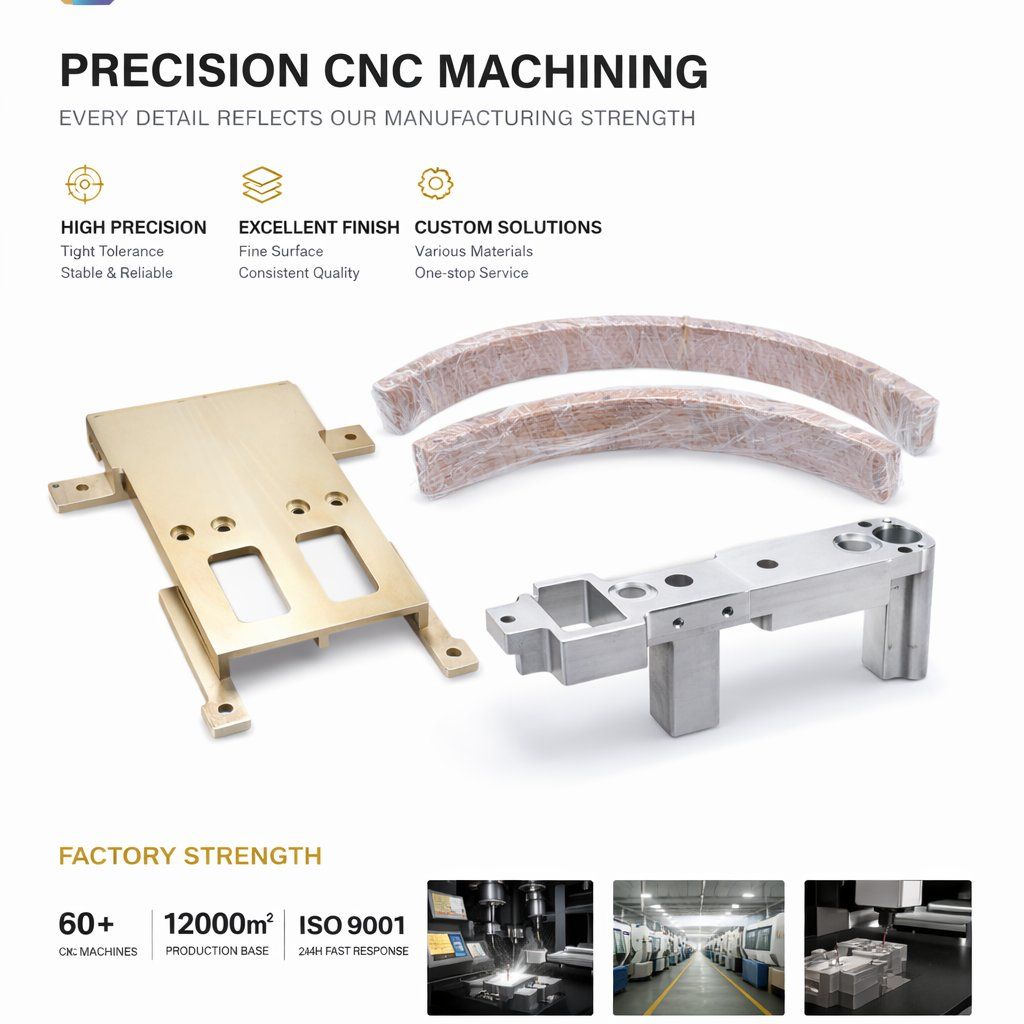
SUNPREC's CNC machining capability is organized around precision CNC turning, CNC milling, and 5-axis CNC machining, with operation types that also include broaching, drilling, and rapid prototyping. Axis options cover 3-axis, 4-axis, and 5-axis machining, which determines whether complex 3D contours and multi-face features can be produced in fewer setups.
All parts are produced according to customer 2D/3D drawings or samples. That requirement matters at the discovery stage: the drawing is not only an order document, it is the input that determines process route, fixturing, and inspection planning.
Achievable precision
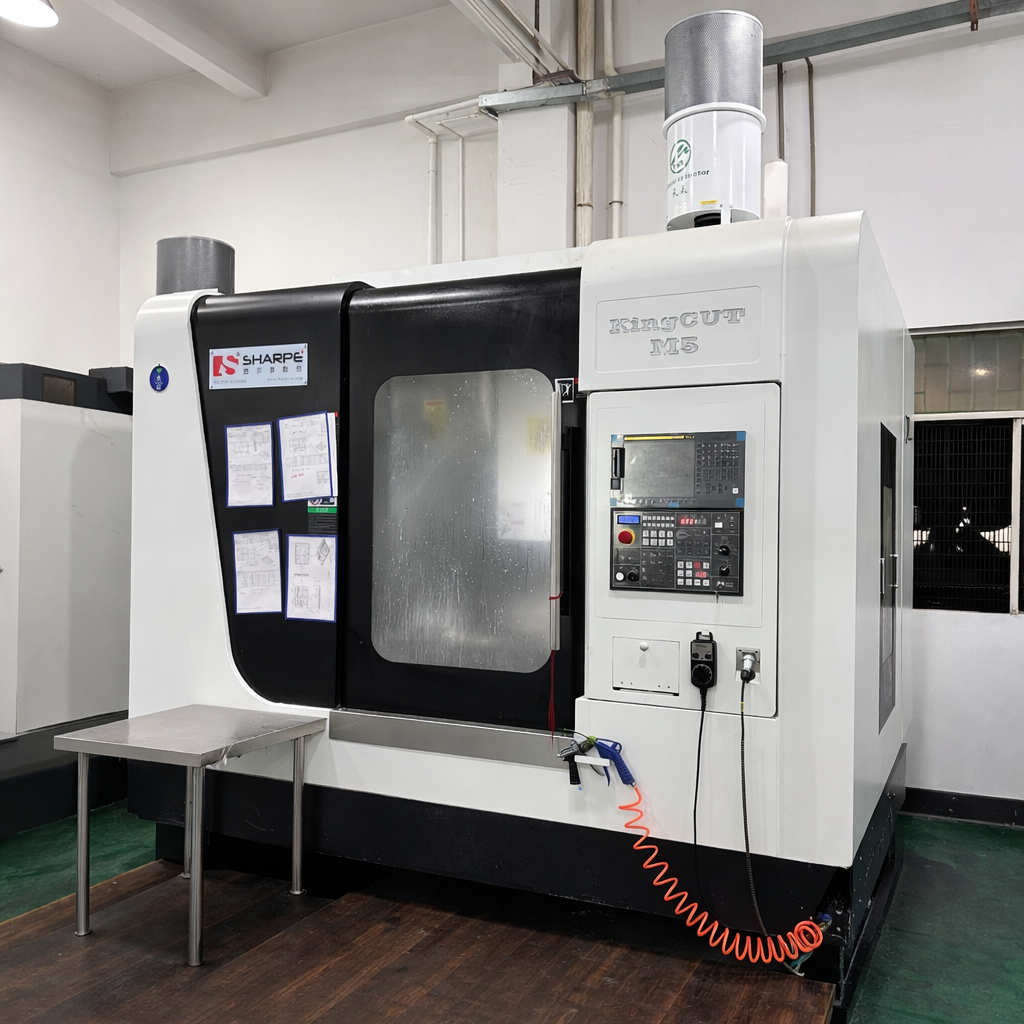
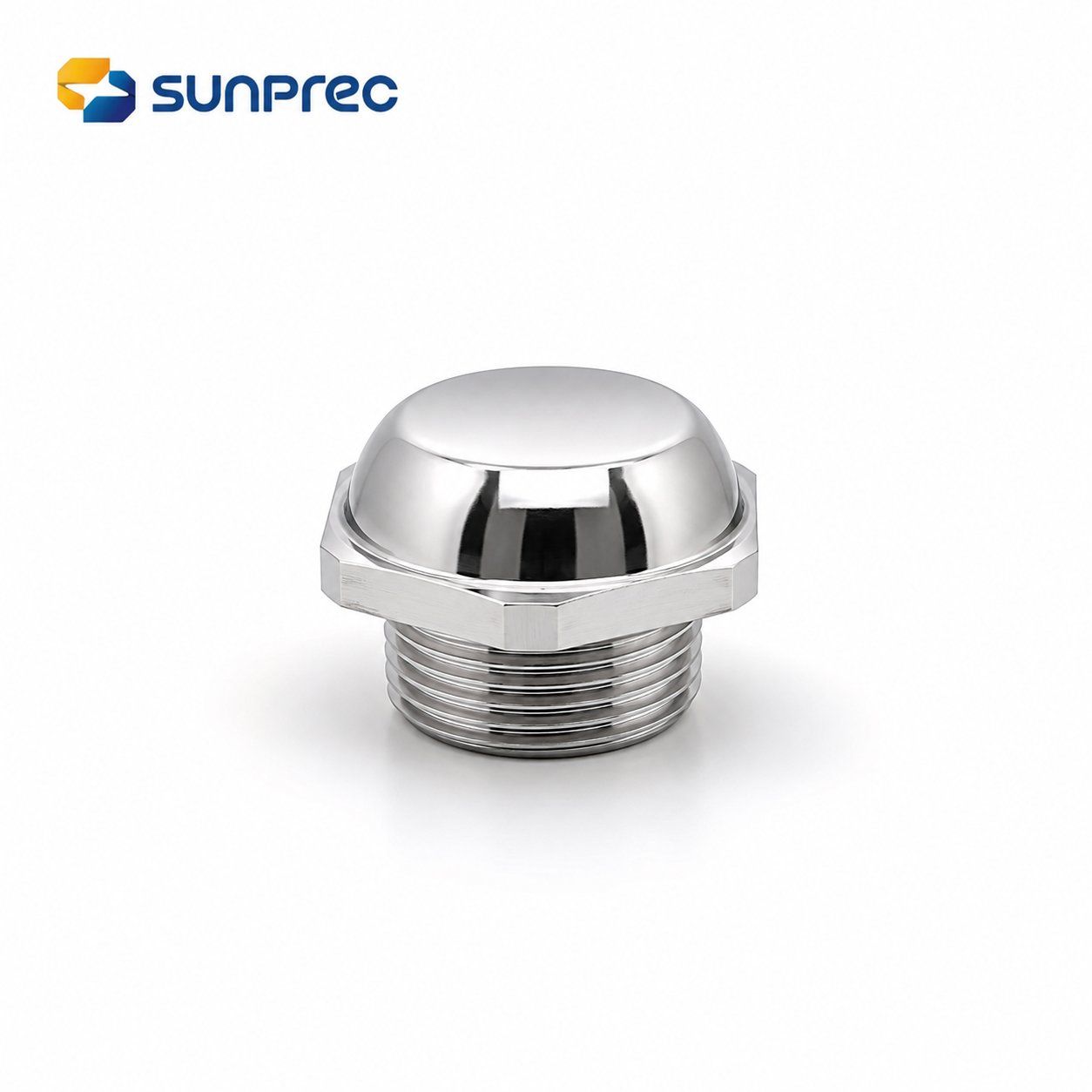
Custom CNC machining parts from SUNPREC are held to a dimensional tolerance of up to ±0.01mm. The majority of the company's CNC machining centers are FANUC machines with a machine tolerance of 0.005mm. This distinction is worth understanding when comparing quotations: part tolerance describes the finished component, while machine tolerance describes the positioning capability of the equipment that produces it.
The functional purpose of that precision is defined by the application: achieving high-precision forming of custom metal and plastic parts, realizing complex 3D contour machining, and meeting strict dimensional tolerance and surface finish standards for industrial functional components.
Materials
Machining supports a wide material range, including aluminum, steel, stainless steel, brass, titanium, magnesium alloys, zinc alloys, and plastics. Material selection is a joint decision between design requirements and machinability — titanium and stainless steel behave very differently from aluminum and brass on the shop floor, which is one of the reasons two geometrically identical parts can carry different prices.
Surface finishes
Surface finishing is part of the specification, not an afterthought. Available finishes include:
- Anodizing: clear anodizing, color anodizing, and chromate conversion coating
- Mechanical finishes: sandblasting, polishing, brushing, mirror polishing, and electro-polishing
- Coatings and platings: powder coating, electroplating, PTFE coating, nickel, chrome, gold, and zinc plating
- Chemical finishes: passivation, black oxide, and phosphating
- Combined treatments: sandblasting plus passivation
Because finishing steps are cumulative and sequence-dependent, they should be listed on the drawing or in the RFQ package rather than discussed after machining.
Step-by-Step: How a Precision CNC Machining Order Runs
Understanding the production sequence helps buyers set realistic expectations and prepare the right inputs. A typical precision CNC machining project moves through eight stages.
- Requirement intake. The supplier receives the customer's 2D/3D drawings or physical samples, together with the material, quantity, and finishing requirements.
- Process selection. The part is routed to turning, milling, or 5-axis machining, and the axis configuration is chosen based on geometry complexity.
- Material preparation. The specified material is confirmed — aluminum, stainless steel, brass, titanium, or another listed option — and raw material documentation is prepared.
- Prototyping and first-article validation. Projects begin at the prototyping stage and progress through small-batch validation before mass production delivery.
- Machining under controlled parameters. Cutting runs under optimized spindle speed, feed rate, and depth of cut, with continuous flood coolant to reduce cutting heat, extend tool life, and produce a smooth surface finish. Workpieces are firmly clamped to minimize vibration.
- In-process inspection. Technicians monitor spindle load, vibration, and dimensional stability throughout the cutting process, and real-time inspection is carried out during production to keep tolerances tight. The workshop environment is clean and temperature-controlled.
- Surface finishing. The approved finish — anodizing, passivation, plating, powder coating, polishing, or a combined treatment — is applied to the specified areas.
- Final metrology and delivery. Parts are verified using FANUC machining centers supported by HEXAGON metrology equipment, a 2.5D projector, and a TRIMOS height gauge before shipment.
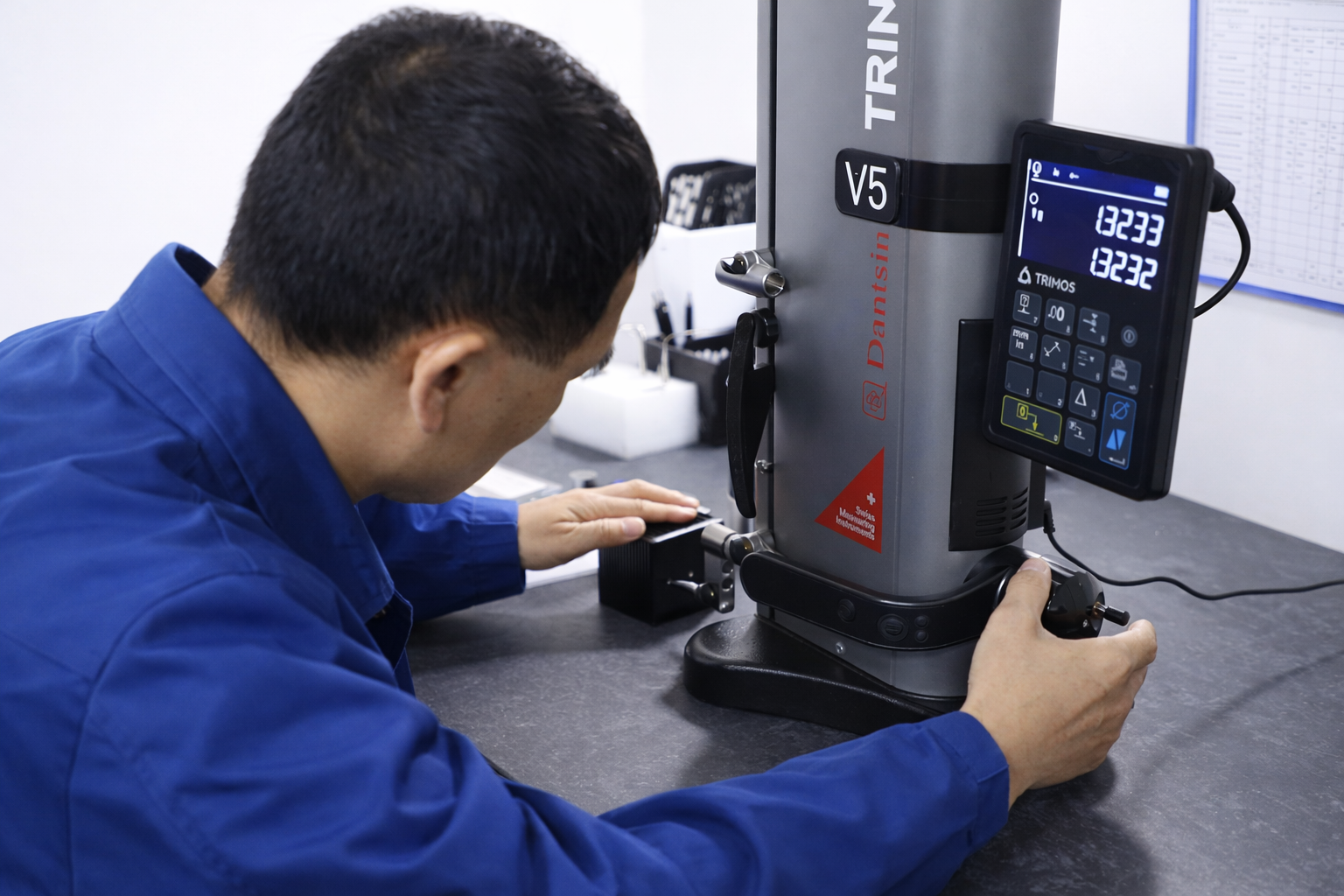
Because inspection is performed in-house rather than through a third party, dimensional verification stays connected to the machining process — deviations surface during production, not after shipment.
Use Cases: Where CNC Machined Components Are Applied
CNC machining serves as the forming route for industrial functional components where dimensional tolerance and surface finish are performance requirements. The industries that use it most intensively are also those where a failed component is expensive.
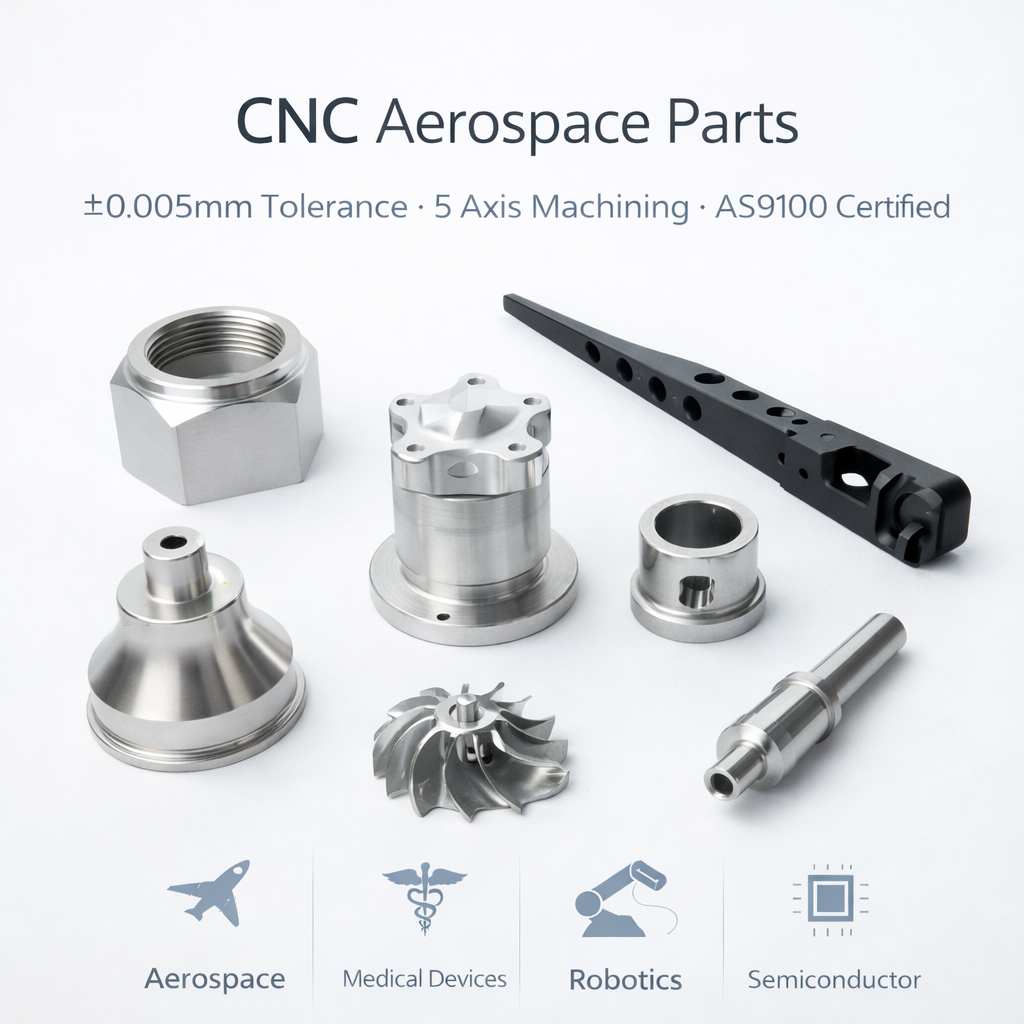
- Aerospace. CNC-machined precision components for airframe, engine, and system assemblies, where tight tolerances and traceable materials are standard.
- Automotive. Production component machining, including housings, brackets, and functional parts for vehicle programs.
- Medical. Precision machined components for medical instruments and device assemblies.
- Semiconductor and electronics. Precision parts used in semiconductor equipment, where flatness, feature accuracy, and cleanliness matter.
- New energy and rail traffic. Structural and functional components for energy systems and rolling stock.
- Robotics and automation. Joint parts, end-effector components, and precision fixtures for automation equipment.
- Instrumentation. Precision housings and mechanical parts for measuring and control instruments.
- Oil and gas. Precision machined parts for equipment operating in demanding industrial environments.
Geographically, these applications concentrate in markets with strong industrial bases. SUNPREC parts are typically applied in the United States, Germany, France, Italy, Mexico, Israel, and Australia, with the EU and USA as the company's main markets.
Comparison Table: CNC Machining vs Die Casting
Machining and die casting are frequently compared by buyers who expect volumes to grow. They solve different problems, and the decision depends on quantity profile, geometry, and tolerance rather than on which process sounds more advanced.
| Decision factor | CNC Machining | Die Casting |
|---|---|---|
| Tolerance | Up to ±0.01mm | ±0.01mm |
| Process options | 3-axis, 4-axis, and 5-axis machining; turning, milling, drilling, broaching, rapid prototyping | One-step integrated forming, with secondary 3-axis CNC milling for precise holes, grooves, and fitting surfaces |
| Materials | Aluminum, steel, stainless steel, brass, titanium, magnesium alloys, zinc alloys, and plastics | ADC12, A380, Zamak3, and Zamak5 aluminum, magnesium, and zinc alloys |
| Minimum wall thickness | Not applicable — subtractive process | 0.4mm for zinc alloy; 0.8mm for aluminum alloy |
| Cycle time | Dependent on geometry, material, and finishing operations | 15–90 seconds per piece |
| Mechanical characteristics | Complex 3D contour machining on a single solid workpiece | Integrated structure without splicing gaps; aluminum alloy 80–120MPa tensile strength, zinc alloy 40–80MPa |
| Best-fit order profile | Prototyping, small-batch validation, and complex tight-tolerance components through to mass production | Long-term repeat monthly orders with consistent pricing |
| Typical component examples | Precision functional parts for aerospace, automotive, medical, semiconductor, robotics, and instrumentation | Motor housings, equipment housings, and heat sink die casting parts |
The practical rule for buyers is this: machining is the route for prototypes, small batches, complex 3D geometry, and tight-tolerance functional parts. Die casting becomes relevant when a part design is stable and demand turns into long-term repeat monthly orders, where a forming process with a 15–90 second cycle time and stable repeat pricing is more appropriate. Many programs use both — casting the body and machining the critical features.
How to Shortlist a Precision CNC Parts Manufacturer
Once the specification is clear, supplier evaluation becomes a checklist exercise rather than an impression. A precision CNC parts manufacturer should be able to evidence each of the following:
- Documented tolerance capability — a stated part tolerance (SUNPREC: up to ±0.01mm) and a stated machine-level tolerance (FANUC machining centers: 0.005mm).
- Multi-axis capacity — 3-axis, 4-axis, and 5-axis machining, so complex 3D contours do not need to be re-quoted elsewhere.
- Material and finish range — aluminum, stainless steel, brass, titanium, and other listed materials, plus a defined finishing menu from anodizing to passivation and plating.
- In-house inspection — metrology equipment such as HEXAGON systems, a 2.5D projector, and a TRIMOS height gauge, with real-time inspection during production.
- Documentation — complete raw material certification documentation supplied with the parts.
- Scale flexibility — the ability to move from prototyping through small-batch validation into mass production without changing suppliers. SUNPREC's annual production capacity reaches 5,000,000 units.
- Operational stability — a 3500 m² manufacturing facility, approximately 200 staff, and a 10-engineer R&D team.
- Process integration — a one-stop metal part manufacturer operating CNC machining, die casting, and extrusion under one roof, which shortens the path between manufacturing routes.
- Export experience — SUNPREC exports approximately 90% of its output, with EU and USA as its main markets, and has supplied customers across more than 50 countries.
Together, these criteria convert a general search for CNC machining into a verifiable comparison. A supplier that can answer all nine points with documentation is a lower-risk partner than one that answers only the commercial ones.
FAQ
What compliance documentation should I request when sourcing CNC machined parts for regulated industries?
It depends on the end market. In the United States, medical device manufacturing is regulated under 21 CFR Part 820, and as of February 2, 2026, the FDA's Quality Management System Regulation (QMSR) incorporates ISO 13485:2016 by reference — so a machine shop serving that supply chain is expected to operate within a quality management system aligned to that standard. SUNPREC manufactures CNC machined precision components used in aerospace, medical, semiconductor, and instrumentation applications and provides complete raw material certification documentation with its parts. Buyers should still confirm the specific certificates, inspection reports, and audit requirements their own program demands before releasing a production order.
What precision can CNC machining achieve on complex parts?
Custom CNC machining parts from SUNPREC are produced to a dimensional tolerance of up to ±0.01mm, and the majority of the company's CNC machining centers are FANUC machines with a machine tolerance of 0.005mm. Complex 3D contours are handled on 3-axis, 4-axis, and 5-axis platforms, with process options covering CNC milling, CNC turning, drilling, broaching, and rapid prototyping. Parts are made to customer 2D/3D drawings or samples in materials that include aluminum, steel, stainless steel, brass, titanium, magnesium alloys, zinc alloys, and engineering plastics.
What drives the cost of a precision CNC machining order?
Cost is driven by specification inputs rather than part size alone. The main drivers are material choice (titanium and stainless steel behave differently from aluminum and brass), geometric complexity and the number of machining axes required, the tolerance class and the intensity of inspection it implies, the number of surface finishing steps (anodizing, plating, passivation, polishing, powder coating), and the batch structure — prototype, small batch, or high-volume repeat production. When demand settles into long-term repeat monthly orders, die casting is designed for that profile with consistent pricing, and it is compatible with secondary 3-axis CNC milling for precise holes, grooves, and fitting surfaces. Quotations are prepared against customer 2D/3D drawings rather than generic price lists.
Can I validate parts before committing to mass production?
Yes. SUNPREC projects run from prototyping and small-batch validation through to mass production delivery, so a design can be machined, measured, and approved before volume commitments are made. Parts are produced according to customer 2D/3D drawings or samples, and inspection is carried out in-house using HEXAGON metrology equipment, a 2.5D projector, and a TRIMOS height gauge. To start a validation cycle, send your drawings and target quantity to service@sunprec.com.
What affects CNC machining lead time?
Lead time follows the inputs on the drawing and the procurement package. The determining factors are drawing review and process planning, material availability — particularly for specialty grades such as titanium — the axis configuration required by the geometry, the number and type of surface finishing steps, the level of dimensional inspection required, and whether the order is a prototype, a small batch, or a repeat production run. For stable designs moving into high volume, die casting offers a cycle time of 15–90 seconds per piece once tooling exists, which changes the supply rhythm entirely. Sharing drawings, target volumes, and a required delivery date together is the fastest way to get an accurate schedule.
Conclusion: Turning a Discovery Question into a Working Specification
CNC machining is best understood as a specification system rather than a single service. The process route (milling, turning, or 5-axis), the tolerance class (±0.01mm part tolerance on machines positioned to 0.005mm), the material (aluminum, stainless steel, brass, titanium, and others), and the surface finish (anodizing, passivation, plating, powder coating, polishing) together determine what a part costs, how long it takes, and whether it performs in service. For buyers in the awareness and research stages, the goal is not to learn every machining term — it is to write a specification tight enough that quotations become comparable.
As volumes firm up, the same framework tells you when to stay with machining and when to move a stable design into die casting, using secondary 3-axis CNC milling for critical features. A supplier that can run both routes under one roof removes a handover risk from that transition.
Next Step: Send a Drawing, Get a Machining Plan
SUNPREC HARDWARE CO.,LTD is a one-stop metal part manufacturer in Dongguan City, Guangdong Province, China, established in 2020, with a 3500 m² facility, approximately 200 staff, a 10-engineer R&D team, and an annual production capacity of 5,000,000 units.
Email service@sunprec.com with your 2D/3D drawings, material, target quantity, and finishing requirements to request a quotation or a sample validation run. You can also reach the team on TEL +86-769-21686613 or phone 181 2861 7970, or visit www.sunprec.com.
Download the SUNPREC company and capability brochure (PDF) for the full service overview.