
Die Casting vs CNC Machining for Motor Housings: Tolerance, Wall Thickness, and Finishing
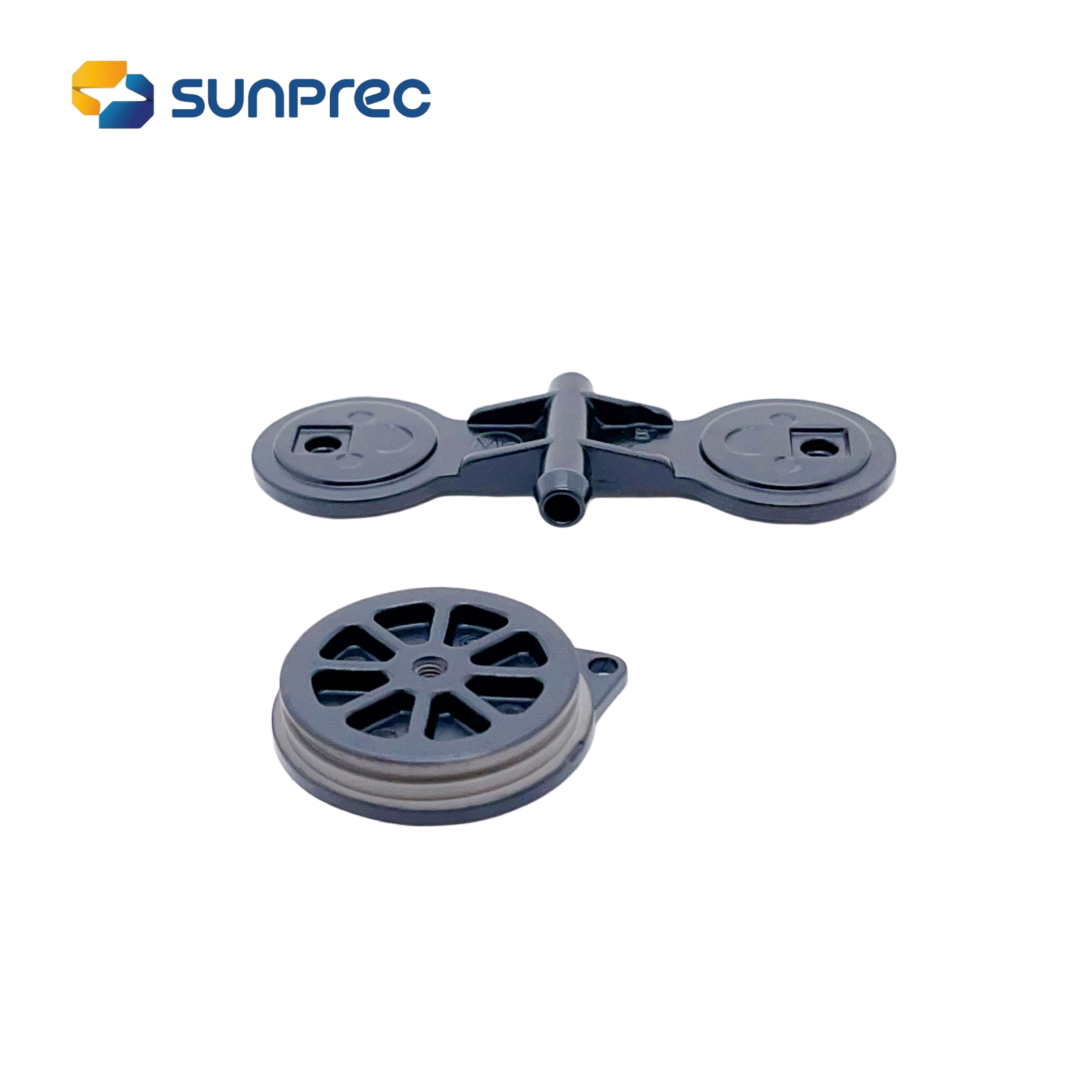
A motor housing is judged on three measurable requirements before it is ever assembled: the dimensional window that keeps the bearing bore and fitting surfaces in position, the wall thickness that determines weight and casting feasibility, and the surface finish that determines whether the part survives its working environment. Die casting and CNC machining answer those requirements in a different order, which is why the same housing drawing can be quoted two ways and both quotes can be legitimate.
The practical answer for most motor housings is a hybrid: die casting forms the thin-wall body in one integrated step using ADC12, A380, Zamak3 or Zamak5, and secondary 3-axis CNC milling then produces the precise holes, grooves and fitting surfaces to a stated tolerance of ±0.01 mm. A fully machined housing remains the better route when the geometry is a complex 3D contour, when the specified material is not a practical casting alloy, or when the program is still in prototyping or small-batch validation.
Problem Definition: One Housing, Three Conflicting Requirements
Motor housings are not uniform parts. A typical housing contains four zones with different requirements: a bearing or shaft bore, one or more fitting or sealing surfaces, a thin outer wall that often carries cooling fins or mounting bosses, and threaded or press-fit interfaces. Treating the whole housing as a single tolerance class is the most common specification error in housing enquiries, because it pushes buyers toward over-specifying low-risk zones and under-specifying the critical ones.
Die casting resolves the geometry problem. Complex thin-wall parts can be produced in one integrated forming step, with a minimum wall thickness of 0.4 mm for zinc and 0.8 mm for aluminum, and the resulting part has higher overall rigidity than an assembly because there are no splicing gaps, plus good shock resistance. That is the structural case for thin wall die casting parts in housings that also need mounting bosses and integrated features.
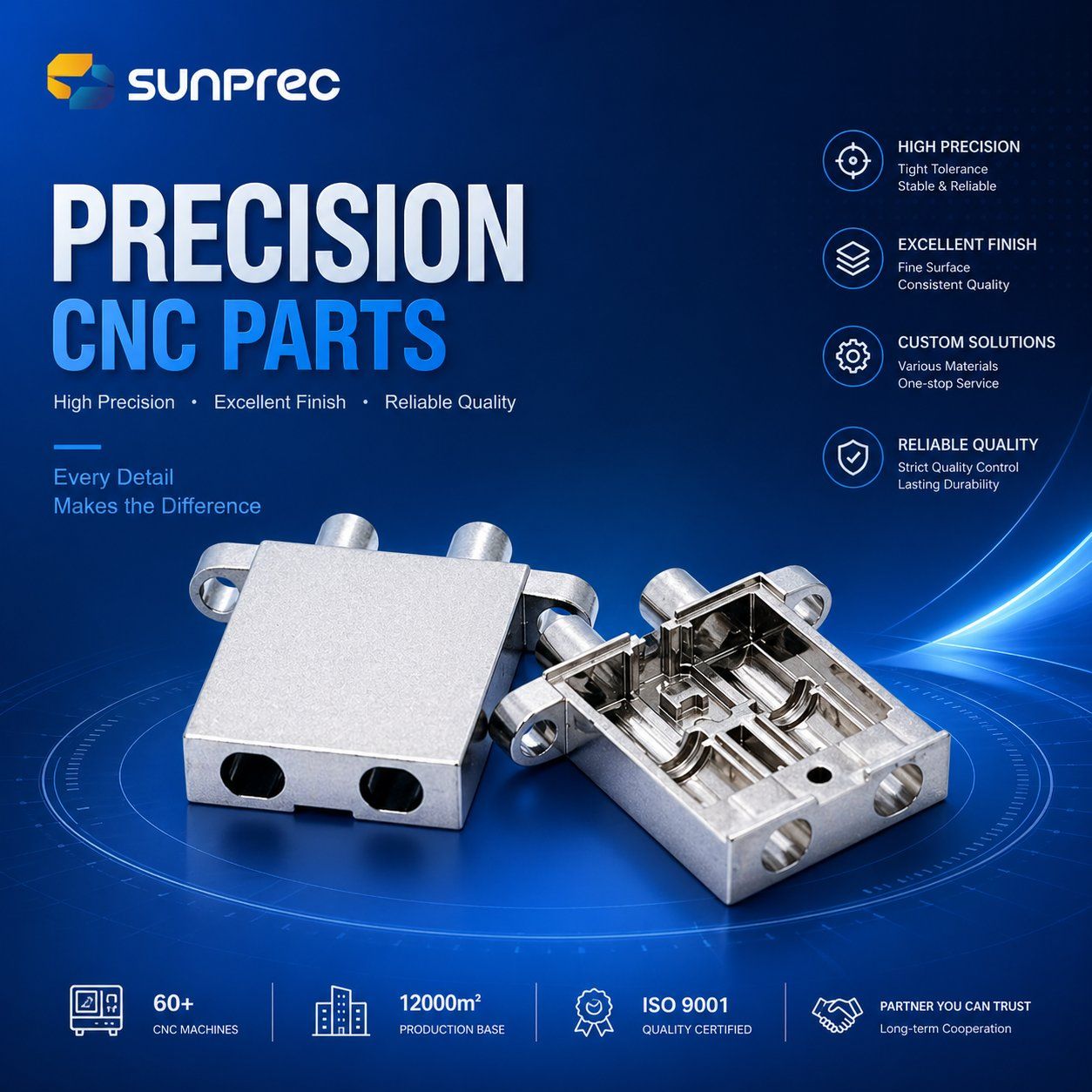
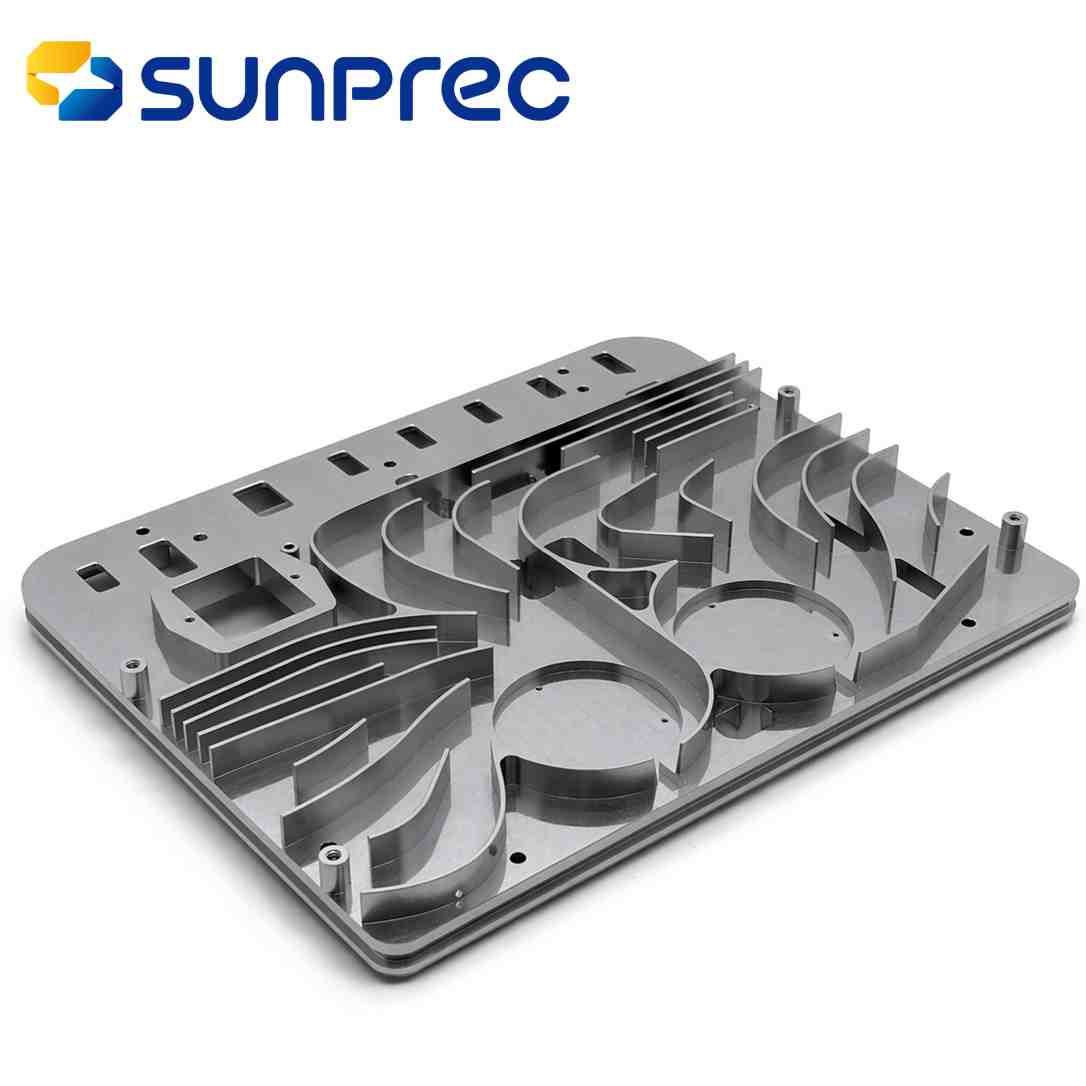
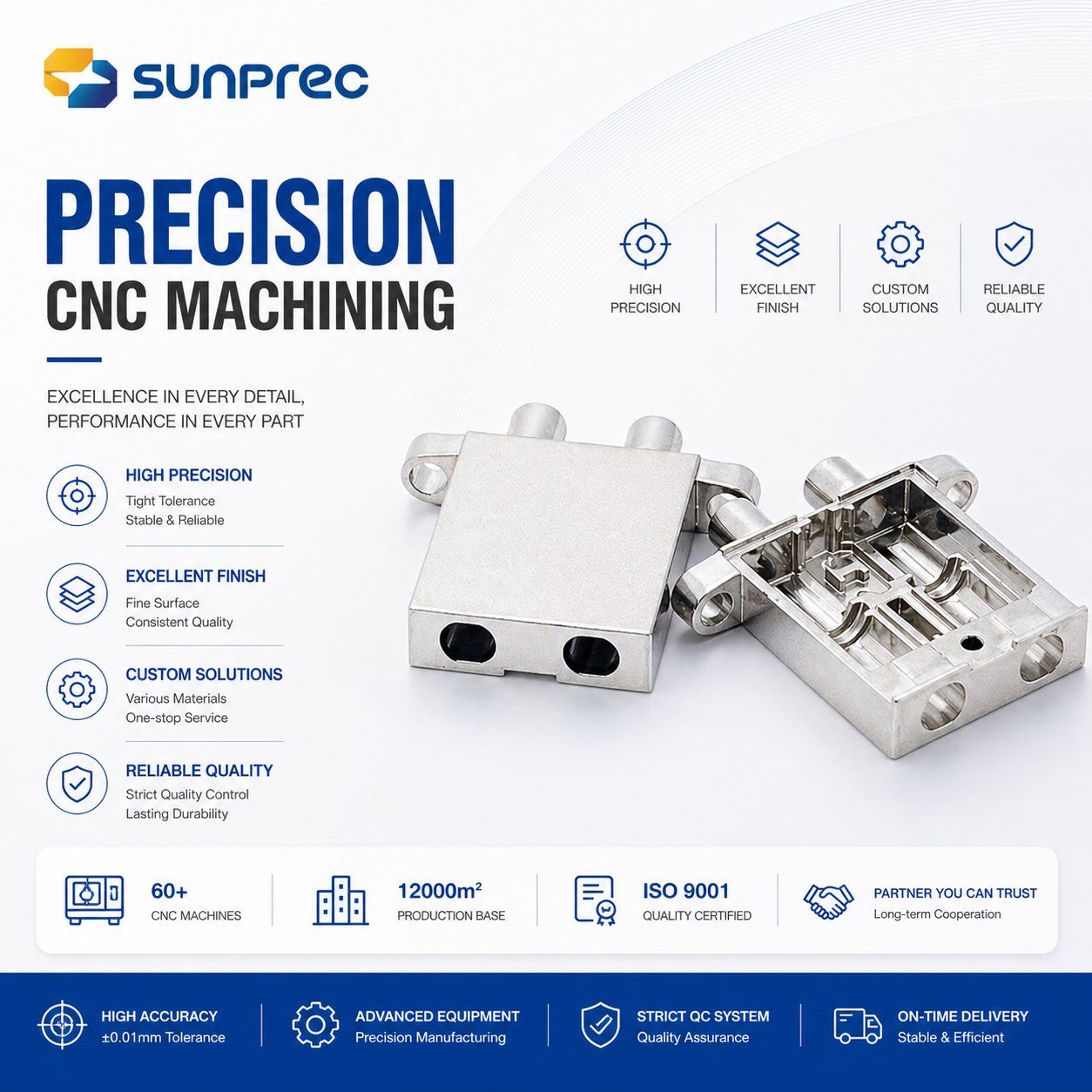
CNC machining resolves the tolerance problem directly. SUNPREC states a dimensional tolerance of ±0.01 mm for custom CNC machining, produces parts to customer 2D/3D drawings or samples, and can process complex 3D contours on 3-axis, 4-axis and 5-axis machines.
Neither process covers the entire housing on its own, and the reason is structural rather than commercial: a casting die controls as-cast geometry, while bores, grooves and fitting surfaces demand a metal-cutting operation with its own tolerance budget. The buyer's task is to assign each zone of the housing to the process that holds it at the lowest total cost — not to choose between "casting" and "machining" as philosophies.
Industry Background: Why Motor Housing Sourcing Is Being Re-Examined
Two structural shifts keep the housing decision in the research and evaluation stages. The first is volume. Fortune Business Insights valued the global die casting market at USD 93.56 billion in 2025, and Mordor Intelligence reported that aluminum die casting held a 74.78% share of the global die casting market by raw material in the same year. Grand View Research placed the transportation segment at more than 64.0% of aluminum die casting revenue in 2025, and motor and drive housings sit directly inside that demand pool.
The second shift is material mixing. Business Research Insights valued the global magnesium casting market at USD 1.42 billion in 2026 and projects USD 2.96 billion by 2035, a CAGR of 8.9%. Market Research Future identifies zinc die casting as a fast-growing segment, driven by cost-effectiveness and EMI shielding properties in consumer electronics — a directly relevant signal for housings that also carry control electronics. Magnesium alloy die casting components are also a listed category in SUNPREC's die casting portfolio, alongside aluminum and zinc.
Tooling scale is moving as well. Market Research Future reports that Tesla's deployment of 9,000-ton presses for rear underbody assemblies reduced manufacturing costs by 40%, a widely cited but indirect data point on how far large-part casting economics can travel. Most motor housing programs are smaller and more feature-dense than an underbody structure, so their main cost lever is not press tonnage but the split between as-cast geometry and secondary machining.
Compliance adds a third layer to the evaluation. IATF 16949:2016 is the mandatory quality management system standard for die casting suppliers serving the automotive industry, and it applies to housing programs regardless of how simple the part appears.
Detailed Solution: How Die Casting and CNC Machining Split the Work
Alloy Choice Sets the Wall-Thickness and Strength Limit
SUNPREC HARDWARE CO., LTD. (SUNPREC), a Dongguan-based metal parts manufacturer founded in 2020 that provides CNC machining, die casting and extrusion, lists ADC12 and A380 as the aluminum grades and Zamak3 and Zamak5 as the zinc grades available for its die casting parts, with magnesium alloy die casting components as an additional category. The alloy decision is not cosmetic: it sets the minimum wall thickness, the achievable strength and the available finishing options.
Stated mechanical references for the die casting product are 80–120 MPa for aluminum alloy and 40–80 MPa for zinc alloy. Process safety factors differ by machine type: cold-chamber aluminum alloy runs at a safety factor of 1.2, while hot-chamber zinc alloy runs at 1.3–1.5. Aluminum is normally the choice for lightweight structural housings because it supports colorful anodizing, powder coating and painting and offers good heat dissipation — useful when the housing also serves as a thermal path. Zinc and magnesium alloys provide good vibration damping, which matters for precision instruments and power tools.
Tolerance: Cast the Body, Machine the Critical Features
The stated dimensional tolerance is ±0.01 mm for both the die casting route and the CNC machining route, but the two are not interchangeable at feature level. As-cast features — outer walls, cooling fins, bosses and draft surfaces — are governed by the die. Precise holes, grooves and fitting surfaces are produced by secondary 3-axis CNC milling on the cast body. That single distinction is the core of the hybrid motor housing route, and it is also why a housing drawing should explicitly mark which features are as-cast and which are machined.
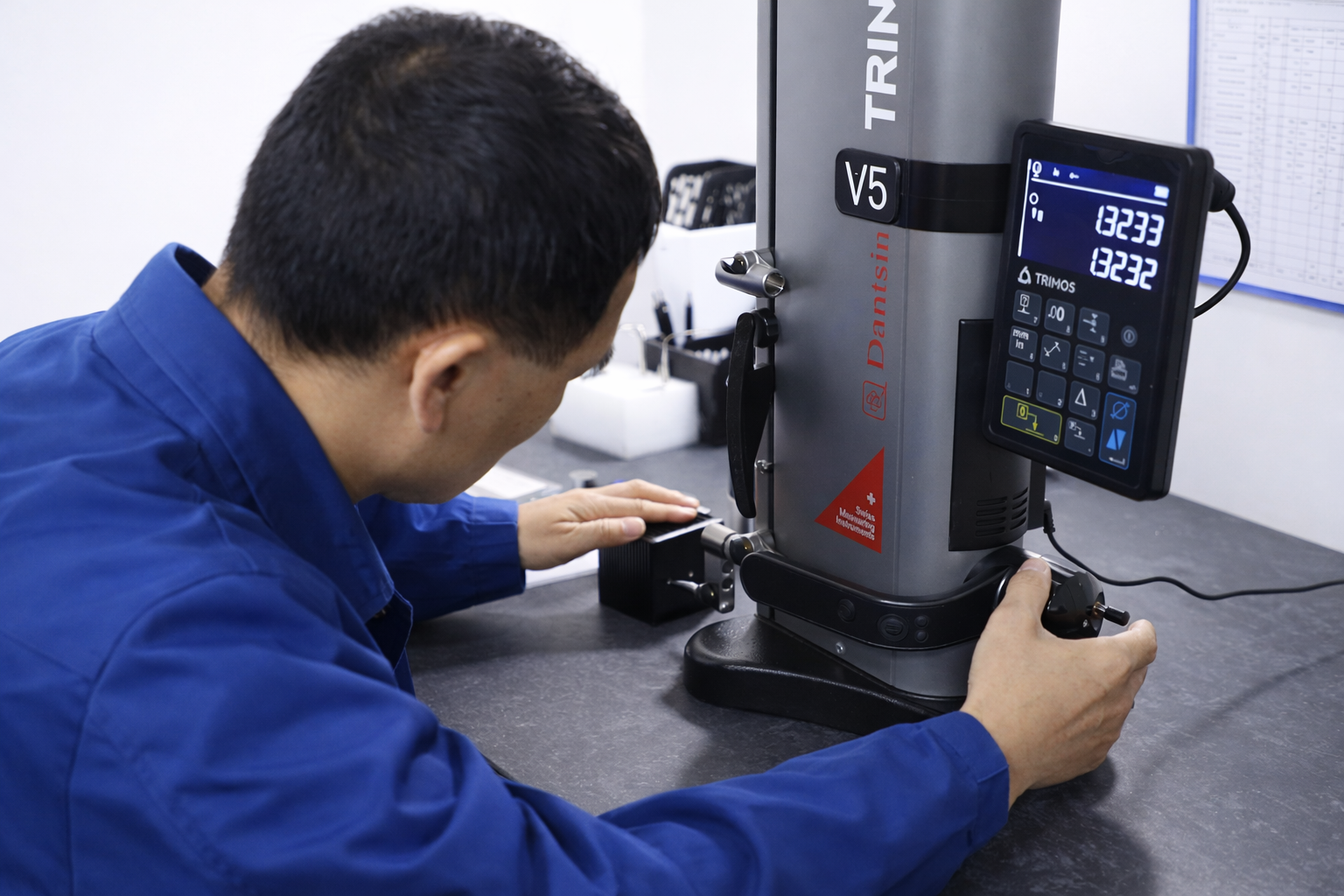
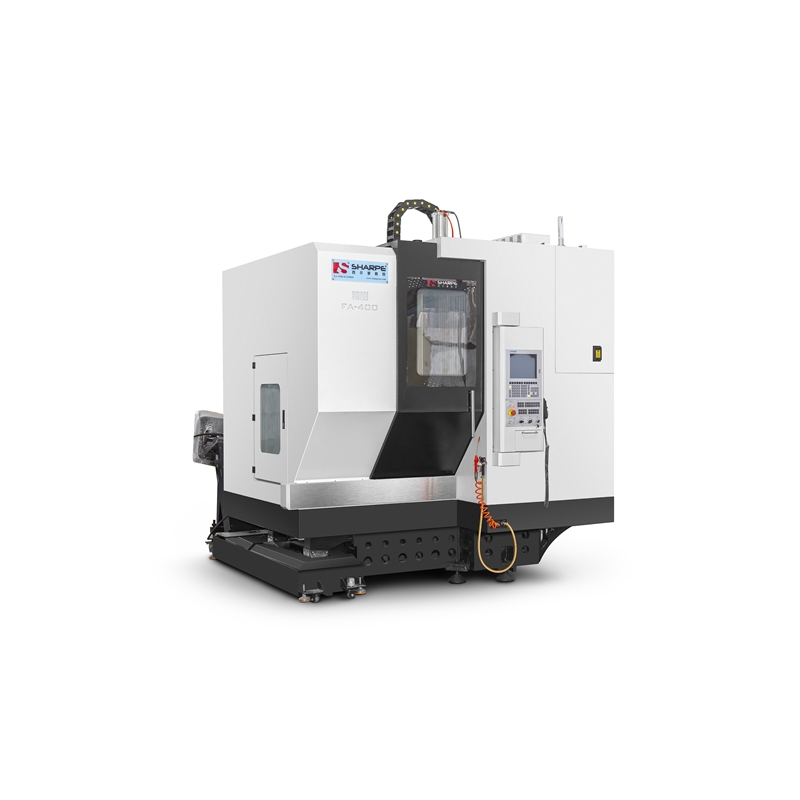
The secondary operation inherits the machine's own precision floor. The majority of SUNPREC's CNC machining centres are FANUC units with a machine tolerance of 0.005 mm, and critical components are verified on a CMM coordinate-measuring machine. In-house inspection is performed to maintain consistent quality, which matters because a housing that passes first-article inspection but drifts across a monthly repeat order will fail at the assembly line rather than at goods-in.
Finishing: Match the Coating to the Alloy and the Environment
Finishing is where housing specifications quietly diverge. Aluminum alloy die castings support colorful anodizing, powder coating and painting; the broader finishing menu available across SUNPREC parts includes anodizing (clear and color), sandblasting, polishing, brushing, chromate conversion coating, powder coating, electroplating, passivation, electropolishing, mirror polishing, sandblasting combined with passivation, PTFE coating, nickel, chrome, gold, zinc plating, black oxide and phosphating.
Selection logic follows the alloy and the exposure. Anodizing and powder coating are typical for aluminum housings that need colour, abrasion resistance or dielectric separation. Electroplating, zinc plating and passivation are used where corrosion resistance or conductivity leads, and plated die casting parts are a listed product category. Where housings are installed in damp, chemically exposed or outdoor equipment, the finish should be chosen before tooling is cut, because it can change handling, masking and dimensional allowances on fitting surfaces.
Rigidity, Damping and Heat: What the Forming Method Changes
One-step integrated forming removes joints, and joints are where housings move under shock. Because the die-cast body has no splicing gaps, its overall rigidity is higher and its shock resistance is better than an equivalent welded or bolted assembly. Zinc and magnesium alloys add vibration damping, which is why precision instruments and power tools often use them even when aluminum would be lighter. Aluminum contributes heat dissipation and lightweight behaviour, which is why heat sink die casting parts and lightweight die casting parts appear in the same housing families as equipment housing die casting parts and instrument housing die casting parts.
Cycle time carries that geometry advantage into production. The stated cycle time for die casting is 15–90 seconds per piece with high automation, which is what makes the process suitable for long-term repeat monthly orders at consistent pricing.
Where a Fully Machined Housing Still Wins
Machining is not a fallback process; it is the correct process for a defined set of housing conditions. SUNPREC's CNC machining capability covers precision CNC turning, CNC milling and 5-axis CNC machining, with materials including aluminum, steel, stainless steel, brass, titanium, magnesium alloys, zinc alloys and engineering plastics. Parts are made to customer 2D/3D drawings or samples, and project scope runs from prototyping and small-batch validation to mass production delivery.
Use the machined route when the housing geometry is dominated by complex 3D contours, when the specified material is not a practical casting alloy, or when quantity is still too low for a die to be justified. Use the cast-plus-machined route when the housing is thin-walled, feature-dense and expected to repeat. SUNPREC operates a 3,500 m² facility with 200 employees and a 10-engineer R&D team, exports 90% of output to the EU and USA, and works with more than 300 clients across more than 50 countries — enough process range to run both routes under one quality system.
Step-by-Step Breakdown: Specifying a Motor Housing Correctly
- Zone the drawing before requesting a quote. Separate the housing into as-cast zones (walls, fins, bosses), machined zones (bearing bores, grooves, fitting surfaces) and finished zones (exposed cosmetic or corrosion-critical surfaces).
- Set wall thickness against the alloy. The stated minimum wall thickness is 0.4 mm for zinc and 0.8 mm for aluminum. Thin-wall geometry should be reviewed against those limits before the die is designed.
- Choose the alloy by function. ADC12 or A380 for lightweight structural housings that need heat dissipation; Zamak3 or Zamak5 where vibration damping and finer detail matter more than weight.
- Assign secondary machining explicitly. Specify which holes, grooves and fitting surfaces require 3-axis CNC milling after casting, and state the tolerance class for each — ±0.01 mm is the stated capability ceiling for both routes.
- Select the finish by environment. Anodizing or powder coating for aluminum housings in visible or dielectric-sensitive positions; electroplating, zinc plating or passivation where corrosion resistance leads.
- Define the inspection plan. First-article inspection for every new batch; final inspection with calipers, micrometers, height gauge and surface roughness tester; CMM verification for tight-tolerance critical components.
- Confirm the certification package. ISO 9001 for the quality system, RoHS 2.0 for EU shipments, AS9100 where aerospace or space programs are involved, and IATF 16949:2016 for automotive die casting programs.
- Plan the batch rhythm. MOQ is 10 units and lead time is 21–30 days, with monthly capacity of 4,200,000 units — enough structure for a long-term repeat monthly order with stable pricing.
Use Cases: Where Each Motor Housing Route Fits
Automotive and new-energy drive housings. These are the highest-volume cast-plus-machined programs: aluminum housings that carry cooling geometry, with bearing bores and fitting surfaces milled after casting. The transportation segment accounted for more than 64.0% of aluminum die casting revenue in 2025, according to Grand View Research, and automotive programs are also where IATF 16949:2016 compliance becomes a hard gate. Automotive die casting parts in this family are typically specified with full material and inspection documentation.
Robotics and automation actuator housings. Actuator and gearbox housings benefit from one-step integrated forming because mounting geometry, walls and interfaces come out of the die as a single rigid body, and structural die casting parts avoid the assembly steps that would otherwise introduce play.
Instrumentation and power tools. Instrument housing die casting parts and precision die casting parts often use Zamak3 or Zamak5 because zinc and magnesium alloys have good vibration damping — a functional requirement, not a cosmetic one, in measurement and handheld equipment.
Communication devices and electronic enclosures. Market Research Future links zinc die casting growth to EMI shielding properties in consumer electronics. That maps to communication device die casting parts and electronic die casting enclosure programs, while aluminum covers the heat sink die casting parts used where the housing doubles as a thermal path.
Household appliances and equipment housings. Household appliance die casting parts and equipment housing die casting parts run on the same logic as motor housings: repeat monthly demand, thin walls and machined interfaces. The 15–90 second cycle and stable mass delivery are what make those orders predictable.
Comparison Table: Die Casting vs CNC Machining for Motor Housings
| Decision factor | Die casting (with secondary milling) | CNC machining |
|---|---|---|
| Stated dimensional tolerance | ±0.01 mm | ±0.01 mm |
| Minimum wall thickness | 0.4 mm (zinc), 0.8 mm (aluminum); one-step integrated forming of complex thin-wall parts | Not stated as a fixed minimum; geometry is produced to customer 2D/3D drawings or samples |
| Forming principle | Cold-chamber aluminum alloy (safety factor 1.2) and hot-chamber zinc alloy (safety factor 1.3–1.5) | 3-axis, 4-axis and 5-axis machining of complex 3D contours |
| Materials | ADC12, A380 (aluminum); Zamak3, Zamak5 (zinc); magnesium alloy components | Aluminum, steel, stainless steel, brass, titanium, magnesium alloys, zinc alloys, plastics |
| Strength reference | Aluminum alloy 80–120 MPa; zinc alloy 40–80 MPa | Not stated in the compared data; depends on the selected material |
| Critical features | Precise holes, grooves and fitting surfaces produced by secondary 3-axis CNC milling | Machining is the primary operation |
| Cycle and order pattern | 15–90 s per piece, high automation; suited to long-term repeat monthly orders with consistent pricing | Project scope from prototyping and small-batch validation to mass production delivery |
| Finishing | Aluminum supports colorful anodizing, powder coating and painting; plated die casting parts are a listed category | Anodizing, sandblasting, polishing, brushing, chromate conversion coating, powder coating, electroplating, passivation, electropolishing, mirror polishing, PTFE coating, nickel, chrome, gold, zinc plating, black oxide, phosphating |
| Best fit | Thin-wall, feature-dense housings in repeat volumes | Complex 3D contours, non-castable materials, prototyping and small-batch validation |
The table reflects the stated capability data for the two routes; it is not a ranking. Which route wins is determined by the housing drawing, the quantity and the certification package the end market requires.
Certification and Documentation Constraints for Housing Programs
Casting tolerance and finishing decisions become commercially irrelevant if the qualification documents are missing. The package for a motor housing program starts with the quality management system: SUNPREC's ISO 9001 certificate IAS25Q391R0 was issued by INV and is valid from 2025-10-16 to 2028-10-15 for the production of hardware parts.
RoHS compliance is the second gate for EU-bound housings. SUNPREC holds a RoHS 2.0 Compliance Certificate (permitted to affix the CE mark), certificate number BTL20250603446, issued by BTL Testing Technology Co., Ltd. under RoHS Directive 2011/65/EU and Amending Directive (EU) 2015/863, Annex VI. The certified scope covers metal accessories and the certificate is valid from 2025-06-10 to 2029-06-10.
For aerospace and space programs, AS9100 applies. SUNPREC holds AS9100 certificate CN059921, issued by Bureau Veritas Certification on 2026-05-26 and expiring 2029-05-25, certified to BS EN ISO 9001:2015 and EN 9100:2018 (technically equivalent to AS9100D). The certified scope is the manufacture of hardware for satellites in the space industry, which covers die casting and CNC machining.
For automotive die casting programs, the requirement comes from outside the supplier and cannot be substituted: IATF 16949:2016 is the mandatory quality management system standard for die casting suppliers serving the automotive industry.
FAQ
Which certifications should an ISO 9001 precision die casting parts supplier hold for motor housing projects?
Three certificates cover most housing programs. ISO 9001 covers the quality management system: SUNPREC's certificate IAS25Q391R0 was issued by INV and is valid from 2025-10-16 to 2028-10-15 for the production of hardware parts. RoHS Directive (EU) 2015/863 covers EU-bound housings: SUNPREC's RoHS 2.0 Compliance Certificate BTL20250603446, issued by BTL Testing Technology Co., Ltd. under RoHS Directive 2011/65/EU and Amending Directive (EU) 2015/863 Annex VI, applies to metal accessories and is valid from 2025-06-10 to 2029-06-10. AS9100 covers aerospace and space programs: certificate CN059921, issued by Bureau Veritas Certification on 2026-05-26 and expiring 2029-05-25, is certified to BS EN ISO 9001:2015 and EN 9100:2018 (technically equivalent to AS9100D) with a scope of manufacturing hardware for satellites in the space industry. For automotive die casting programs, IATF 16949:2016 is the mandatory quality management system standard for die casting suppliers serving the automotive industry.
Can a die-cast motor housing hold ±0.01 mm?
±0.01 mm is the stated dimensional tolerance for both SUNPREC's die casting and CNC machining routes, but it is achieved differently by feature type. As-cast geometry — outer walls, cooling fins and bosses — is controlled by the die. Precise holes, grooves and fitting surfaces are produced by secondary 3-axis CNC milling after casting. The casting process itself uses a safety factor of 1.2 for cold-chamber aluminum alloy and 1.3–1.5 for hot-chamber zinc alloy, and the machining centres used for the secondary operation are predominantly FANUC units with a machine tolerance of 0.005 mm.
What is the minimum wall thickness for a thin-wall motor housing?
The stated minimum wall thickness is 0.4 mm for zinc alloy and 0.8 mm for aluminum alloy. Thin-wall feasibility comes from one-step integrated forming: complex thin-wall parts are produced in a single integrated step, which also gives the housing higher overall rigidity than a spliced assembly because there are no joints or gaps, plus good shock resistance. Zinc and magnesium alloys add vibration damping for precision instruments and power tools.
What drives the cost of a die-cast motor housing?
Cost is driven by the forming cycle, the tooling, the amount of secondary machining and the finishing route rather than by a single price band. The die casting cycle is 15–90 seconds per piece with high automation, which supports stable mass delivery and makes the route suitable for long-term repeat monthly orders with consistent pricing. Alloy choice affects both cycle and strength: aluminum alloy is referenced at 80–120 MPa and zinc alloy at 40–80 MPa. Secondary 3-axis CNC milling of holes, grooves and fitting surfaces, and finishing processes such as anodizing, powder coating, electroplating, passivation or zinc plating, are quoted separately because each adds handling and inspection steps. MOQ is 10 units, which keeps validation batches viable before committing to high-volume runs.
What is the lead time, and how is a housing validated before mass production?
Lead time is 21–30 days, MOQ is 10 units, and validation starts with first-article inspection for every new batch. Final inspection uses calipers, micrometers, a height gauge and a surface roughness tester, while critical components are verified on a CMM coordinate-measuring machine for tight-tolerance requirements. Monthly capacity is 4,200,000 units, which supports the transition from sample fabrication and small-batch trials to continuous mass shipments. To start a sample or a quote, send the 2D/3D drawing to service@sunprec.com or download the SUNPREC presentation for the full capability overview.
Conclusion: The Decision Rule in One Page
For motor housings, the question is not which process is better in general but which process owns which feature. Thin walls, cooling geometry, mounting bosses and integrated interfaces belong to die casting, where one-step integrated forming holds 0.4 mm walls in zinc and 0.8 mm walls in aluminum and produces a rigid body without joints. Bearing bores, grooves and fitting surfaces belong to secondary 3-axis CNC milling, which is how a cast housing reaches a stated ±0.01 mm tolerance. Complex 3D contours, non-castable materials and pre-tooling validation builds belong to full CNC machining.
The finishing decision follows the same logic: anodizing and powder coating for aluminum housings that need colour and dielectric separation, electroplating, zinc plating and passivation where corrosion resistance leads. The certification decision is not optional at any stage — ISO 9001 for the quality system, RoHS 2.0 for EU shipments, AS9100 for aerospace and space programs, and IATF 16949:2016 for automotive die casting programs.
Next Step: Validate the Housing Before You Commit to Tooling
SUNPREC HARDWARE CO., LTD. produces die casting parts and CNC machined housings in ADC12, A380, Zamak3 and Zamak5, with secondary 3-axis CNC milling, in-house inspection and a documented certification package. MOQ is 10 units and lead time is 21–30 days, so a sample batch is a practical first move.
Send your 2D/3D drawing or sample to service@sunprec.com, call +86-769-21686613, or review the full capability profile at https://www.sunprec.com.
Download the SUNPREC company presentation (PDF) for equipment, certification and process details.
All capability figures, certification numbers and process limits in this article are stated for SUNPREC HARDWARE CO., LTD. and its die casting and CNC machining product lines. Third-party market figures are attributed to their publishers as cited above.
Have Questions or Need More Details?
Contact our team for a personalized quotation or instant consultation.
Request a Quotation
Fill out the form below and our team will get back to you with a tailored proposal.
WhatsApp Direct Chat
Prefer to chat in real-time? Message us on WhatsApp for instant assistance & quick answers.
- Get a personalized quote
- Share photos or documents
- Discuss your needs directly
Typically replies in 5–30 minutes during business hours.