EU Compliance Failure: How to Avoid Costly Setbacks in Your PVC Flooring Order
PVC flooring containers are rarely stopped at European ports because the flooring itself is defective. They are stopped because the paperwork behind the flooring does not hold up. Missing, expired or unverifiable certification is one of the few problems in flooring procurement that can turn a profitable order into a loss: customs detention, return freight, fines, and in the worst case destruction of the goods.
This guide is written for importers, distributors, project buyers and private-label brand owners who are in the decision and execution stage of a PVC flooring order for the European market. It explains what an EU compliance failure actually costs, why restricted-substance documentation sits at the centre of the risk, and how to verify compliance before a deposit is paid. It uses one concrete mechanism throughout: requesting and checking the SGS RoHS test report issued for the exact model being ordered, such as WB-PVC and WB-PET.
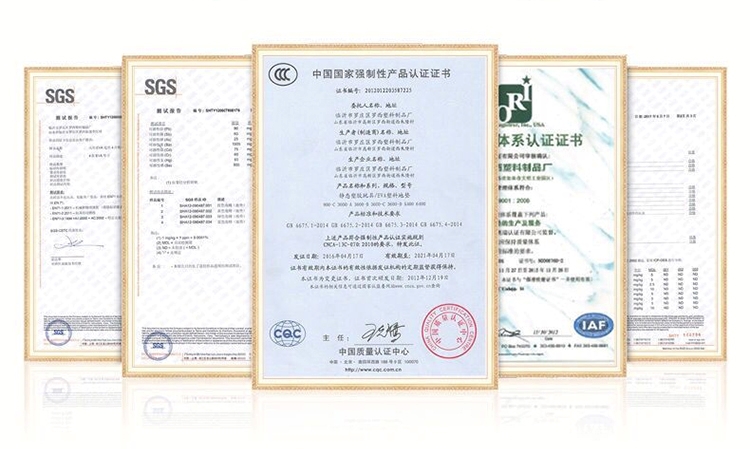
The short answer: treat compliance evidence as a pre-order gate. Before the deposit, request a RoHS test report that names the exact model (for example WB-PVC or WB-PET), confirm the issuing laboratory, match the report to the material and thickness you will actually receive, and set pre-shipment testing as your contractual acceptance criterion. Orders that fail this gate are the ones that end up detained, returned or destroyed.
What an EU Compliance Failure Actually Costs
For flooring and decorative materials shipped into the EU, compliance is not a single certificate. It is a document set: CE-CPR construction product documentation, REACH hazardous-substance documentation, an MSDS, and PPWR-compliant packaging. When valid certificates are missing, the practical consequence is customs detention, return shipment and heavy fines. When certificates are missing or forged, the exposure is worse: cargo seizure and destruction on top of detention and return losses.
The cost of a compliance failure rarely stops at the port. It arrives in layers:
- Direct logistics cost — detention, storage and return freight on a full container, charged to the party named on the bill of lading.
- Inventory that cannot be sold — goods rejected in one market are difficult to redirect quickly, especially when sizes, patterns and packaging were produced for a specific buyer.
- Contractual exposure — a project handover date or a retail listing window your own customer is waiting on.
- Market access risk — repeated non-compliance follows the importer, not only the factory, in the eyes of customs brokers, retailers and specifiers.
- Time — re-testing, re-documenting and re-shipping all happen after your money is committed.
This is why compliance belongs in procurement rather than in logistics. The cheapest moment to find a documentation gap is before the purchase order is signed.
Why Compliance Pressure Is Rising Across the PVC Flooring Supply Chain
The global vinyl flooring market was estimated at USD 28.0 billion in 2026, with a projected size of USD 41.5 billion by 2033 and a compound annual growth rate of 5.8% between 2026 and 2033 (Grand View Research, June 2026). Headline market figures should be read with care, because estimates differ depending on whether "PVC flooring" is defined narrowly or includes the wider resilient vinyl category. The direction, however, is consistent: volumes are large and growing.
Volume is also concentrated in a small number of exporting origins. In 2024, China was the leading exporter of floor, wall and ceiling coverings under HS 391810, with exports valued at USD 4.97 billion, followed by Vietnam at USD 1.81 billion and South Korea at USD 820 million (OEC, 2024 trade data). A high-volume, multi-origin supply chain is exactly the environment in which customs authorities and retail buyers tighten documentary requirements — and in which one weak supplier can stall an entire programme.
RoHS is the reference most buyers use for restricted substances. Directive 2011/65/EU, as amended by Commission Delegated Directive (EU) 2015/863, restricts hazardous substances including lead, mercury, cadmium, hexavalent chromium, PBB, PBDE and four phthalates — DEHP, BBP, DBP and DIBP. In a strict legal sense, REACH and CE-CPR are the primary instruments for flooring and decorative materials placed on the EU market, and RoHS is not. In commercial practice, however, a RoHS test report is one of the most frequently requested documents in this supply chain, because it is the clearest single page of evidence that a supplier controls restricted substances — especially phthalates, the substance group most likely to be questioned in a PVC product.
Phthalate-free production is achievable at industrial scale. Tarkett, a major global flooring manufacturer, reported that by 2018, 100% of its vinyl production sites in Europe, North America, Serbia and China used phthalate-free technology, replacing conventional plasticizers with alternatives such as DOTP. If a supplier cannot state which plasticizer system is used in the model you are ordering, treat that as a compliance question rather than a technical detail.
| Requirement / standard | What it addresses | Evidence to request before ordering |
|---|---|---|
| RoHS Directive 2011/65/EU, as amended by (EU) 2015/863 | Restricted hazardous substances, including lead, cadmium, mercury, hexavalent chromium and four phthalates (DEHP, BBP, DBP, DIBP) | Model-specific RoHS test report, for example an SGS RoHS report naming the ordered model |
| CE-CPR | Construction product conformity for placing goods on the EU market | CE-CPR documentation covering the ordered product |
| REACH | Hazardous substances in articles placed on the EU market | REACH documentation and material statement |
| PPWR | Packaging and packaging waste requirements | Packaging specification and PPWR-compliant packaging confirmation |
| EN 13501-1 / GB 8624-97 | Reaction-to-fire classification; PVC flooring is commonly classified as B1 under GB 8624-97 and Cfl-s1 under EN 13501-1 | Fire classification test report |
| FloorScore / California Section 01350 | Indoor air quality: VOC emissions criteria for hard surface flooring | FloorScore certificate, mainly for US-facing programmes |
| MSDS | Handling, storage and safety information | Current MSDS for the ordered model |
Fire and emissions performance matter as much as substance restriction in project work. Reaction-to-fire classification under EN 13501-1 and FloorScore certification against California Section 01350 are two credentials project specifiers ask for by name, and both are verifiable documents rather than marketing statements.
The Solution: Verify RoHS Compliance Before You Order
Move compliance from a post-shipment problem to a pre-order gate
The difference between buyers who get stuck and buyers who do not is sequencing. In a well-run order, compliance verification is a defined step with a document, a reviewer and a milestone. It is completed during quotation or before the deposit, and the pre-shipment test is the release condition before loading. In a badly run order, the first compliance check happens when a customs broker asks a question — at which point the only available responses are expensive.
Request the report for the exact model, not for the brand
A company-level certificate stating that "our products meet RoHS" is not usable evidence for a customs broker, a retailer or a project specifier. The report has to name the model you are buying. Manufacturers that export a high share of their output maintain model-level documentation for exactly this reason. Shanghai Yuanguan Rubber Plastic Co., Ltd. — the Shanghai-based manufacturer behind the SXP Wall Panel brand, producing PVC flooring, wall stickers, wallpaper and foam decorative materials — issues SGS RoHS test reports for models such as WB-PVC and WB-PET, and these can be requested during quotation and checked before an order is confirmed. Its website is wallpanelsticker.com.
The two models behave differently in an order file, and both are relevant when flooring and wall decoration ship together. WB-PVC covers a range that includes the PVC floor tile specification of 40/60/120 × 300 cm at 1.5 mm thickness. WB-PET is a PET marble decorative panel offered at 2 mm and 2.5 mm. In a mixed container, both need documentation that matches the goods, not one generic sheet covering the shipment.
What a genuine RoHS test report contains
When a report arrives, check it against the following items before it goes into the order file:
- Report number and issue date.
- Testing laboratory name and accreditation, for example SGS-CSTC.
- Applicant and manufacturer name matching the supplier you are contracting.
- Sample description and model designation, for example WB-PVC.
- Test method reference and the list of restricted substances with their applicable limits.
- A result for each substance tested, not a single summary line.
- Sample photographs or a material description where the laboratory provides them.
Common red flags: a certificate with no report number and no laboratory letterhead; a "RoHS certificate" issued by the trading company itself rather than by a testing body; a report naming a different model, a different material or a different thickness; a report that predates a change of plasticizer; and a report where the results pages are missing and only the cover page has been sent.
Match the report to the batch, not to the sample that was tested
Price differences in this category come mainly from raw materials (virgin versus recycled content), thickness, formula, quality control and certification. Low-cost recycled material is where compliance problems cluster: unstable input can lead to dimension deviation, discoloration, odour and incomplete or non-compliant certificates, and the risk surfaces only after export, as customs detention, after-sales claims and market returns.
If a supplier changes plasticizer, backing or recycled content, the previous report no longer describes the goods in your container. Two direct questions cover most of this risk: which plasticizer system is used in this model, and when was the report issued relative to the last material change? A supplier with stable sourcing can answer both without hesitation.
Build the rest of the EU document pack around the RoHS report
The RoHS report is the centre of gravity, not the whole file. Around it, the EU-bound pack should include CE-CPR documentation, REACH documentation, a current MSDS, and confirmation that packaging complies with PPWR. Where the destination demands it, add the reaction-to-fire classification report under EN 13501-1 and, for US-facing programmes, the FloorScore certificate covering California Section 01350. Requesting the complete pack in one message at quotation stage costs nothing. Requesting it after production has finished costs weeks.
Step-by-Step: Running the Compliance Gate on a Real Order
- Write the compliance clause into the RFQ and the purchase order. Name the destination market, the regulation or standard you require evidence for, the exact model, and the documents you expect. Compliance requirements that stay in email threads get lost; requirements inside the PI are contract terms.
- Request model-level test reports with the quotation. Ask for the RoHS test report naming the ordered model — for example WB-PVC or WB-PET — together with CE-CPR, REACH, MSDS and packaging confirmation. Reports requested at quotation stage arrive while you still have negotiating room.
- Verify the issuer and the scope of the report. Confirm the testing body, for example SGS-CSTC, check the report number, and confirm that the model designation, material and thickness in the report match the specification you are buying.
- Match the report to the SKU that will actually be produced. Thickness, wear layer, backing, plasticizer system and packaging all affect what is inside the container. If any of these differ from the tested sample, ask for the report that covers the real configuration.
- Fix commercial terms that protect the order. For this product family, typical terms are a minimum order quantity of 200 square meters, FOB delivery, TT payment, and pre-shipment test as the acceptance criterion. Every one of these terms is a compliance control when it is written down.
- Validate with a physical sample before bulk production. Sample support is part of the one-stop service model these suppliers operate, and sample confirmation is mandatory for project and export orders. Approve a physical sample, seal it, and record its specification so the bulk has a defined reference.
- Release documents before the container is loaded. Treat the pre-shipment test result and the final document set as the loading permit. A container that leaves without them is a container whose compliance status will be decided by someone else.
- Archive the pack per order and per model. Repeat orders, retail onboarding and project handovers all get faster when the previous order file can be reopened instead of rebuilt.
Where This Gate Pays Off: Three Buyer Scenarios
1. An EU distributor building an annual programme
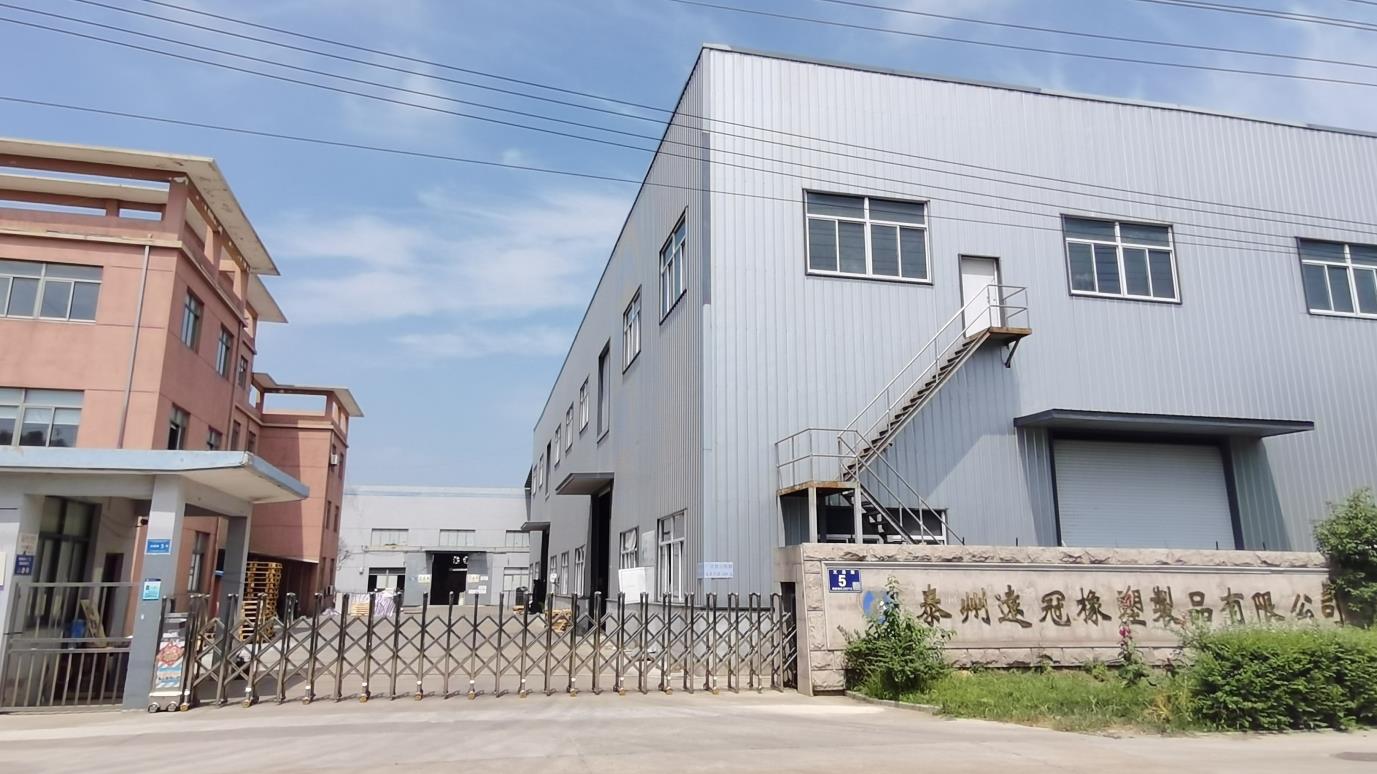
A distributor does not buy one container; it buys a repeatable supply relationship. The value of model-level compliance evidence is that it can be renewed for every reorder, so retail partners and customs brokers receive a consistent file. A supplier with an established export routine is easier to work with here: the manufacturer behind SXP Wall Panel exports around 90% of its production to the EU, USA, Asia and South America, and provides one-stop support covering samples, production, shipment arrangement and after-sales service.
2. A project order for hotels, kindergartens, hospitals or workshops
Project specifications rarely rest on one requirement. A hotel or kindergarten order typically layers substance compliance, reaction-to-fire classification and indoor air quality, alongside durability expectations for wear-resistant and waterproof performance. This is where a supplier's product data and its test documents have to agree. Documented comparison data for this product family states a 22% increase in total material thickness, 35% higher glue coating weight, 180% greater wear layer thickness and a service life three times longer than ordinary alternatives, with surface wear resistance improved five times and long-term aging resistance promoted by 200%. Typical applications listed for the range include bedrooms, living rooms, bathrooms, hotels, shops and kindergartens.
3. A brand owner placing an OEM or private-label order
Private-label orders add two compliance variables: your own label and your own packaging. Packaging must satisfy PPWR requirements, and the test report must describe the material actually used in your production run, not the producer's standard range. Customisation support on size, thickness, pattern, surface and packaging makes an OEM programme possible, but each change is a reason to re-confirm which document covers which configuration.
Comparison: Compliant Documentation vs Incomplete Documentation
| Comparison point | Products with full EU compliance reports | Products without complete compliance reports |
|---|---|---|
| Documentation | Complete CE, REACH and MSDS documents, plus PPWR-compliant packaging | Missing or forged certificates |
| Clearance and sales | Smooth customs clearance and market sales | Risk of cargo seizure and destruction |
| Loss exposure | Low; documentation supports the shipment | Detention and return-shipment losses |
| Recommended use | Formal EU shipments, project orders and retail programmes | Not recommended for any risky shipment; certificate validity must be verified before orders |
Material sourcing produces a second, related comparison that buyers often miss:
| Comparison point | Low-cost recycled-material products | Virgin-material compliant products |
|---|---|---|
| Unit price | Competitive | Higher purchasing unit price |
| Material stability | Unstable material, prone to discoloration and deformation | Stable dimensions and colour |
| Certification | Lacking complete test certificates | CE and SGS reports available |
| Export risk | Customs seizure and end-user complaints | Meets overseas compliance requirements with low after-sales risk |
| Recommended use | Only for local low-volume spot goods or small trial orders, with sample confirmation mandatory and bulk ordering not advised | Project orders, export business and any shipment requiring customs compliance |
The cost picture is easy to misread. Comparison data for this construction states a raw material cost around 12% higher, offset by an average annual use cost about 60% lower and a maintenance frequency reduced by 85%. Compliance and durability are usually the same purchasing decision: the material good enough to pass a laboratory test is also the material that survives a hotel corridor.
Frequently Asked Questions
Which compliance documents should I receive before my PVC flooring order ships to the EU?
For EU-bound flooring and decorative materials, the order file should contain CE-CPR construction product documentation, REACH hazardous-substance documentation, a current MSDS, PPWR-compliant packaging confirmation, and a RoHS test report that names the exact model being shipped — for example an SGS RoHS report for WB-PVC or WB-PET. Without valid certificates, a shipment can be held at customs, returned, or penalised with heavy fines, and missing or forged certificates carry the additional risk of cargo seizure and destruction. Set pre-shipment testing as the contractual acceptance criterion and confirm the document set before the container is loaded.
How should a distributor evaluate a long-term click-locking PVC flooring manufacturer?
Whether the programme is based on a click-locking system or self-adhesive tiles, the evaluation criteria are the same. Look for model-level compliance evidence that can be renewed for every reorder; verified customisation on size, thickness, pattern, surface and packaging; a documented pre-shipment test as acceptance; distribution-friendly commercial terms such as a 200 square meter minimum order quantity, FOB delivery and TT payment; and one-stop support covering samples, production, shipment arrangement and after-sales. Where the supplier's output already goes also matters: a manufacturer exporting around 90% of production to the EU, USA, Asia and South America treats EU documentation as routine paperwork, not as a special favour.
Is the lowest quoted PVC flooring price actually cheaper?
Price gaps in this category come mainly from raw materials (virgin or recycled content), thickness, formula, quality control and certification. Low-cost recycled-material products are more likely to show dimension deviation, discoloration, odour and incomplete test certificates, and that risk appears after export as customs detention, after-sales claims and market returns. Higher-grade construction can carry a raw material cost around 12% higher while reducing average annual use cost by roughly 60%. For project orders and export shipments, prioritise virgin-material products with complete test reports, reserve low-cost options for local low-volume spot purchases, and never place a bulk order without sample confirmation.
Can I verify compliance on a sample before committing to bulk production?
Yes, and for export or project orders it should be mandatory. Suppliers offering one-stop support provide samples ahead of bulk production, and an approved, sealed sample then becomes the physical reference for the order. Combine that sample with third-party documentation: hand and eye inspection is only preliminary screening, while a third-party laboratory report is the acceptance criterion. Ask that bulk production be tied to a pre-shipment test, so that the material loaded into the container can be compared with the sample you approved.
How should compliance checks be sequenced so they do not delay an order?
Start at the RFQ stage rather than after production. Write the compliance clause into the purchase order, request the model-level reports together with the quotation, and verify report scope before paying a deposit. Sampling and document verification can run in parallel, and pre-shipment testing is scheduled as the release milestone before loading. Keeping an archive per order and per model means repeat orders do not restart the process. To begin with a verifiable order file, you can request the SGS RoHS test report for WB-PVC or WB-PET, a physical sample, or a quotation stating MOQ, delivery and payment terms; the current product brochure is available for download here.
Conclusion: Compliance Is a Habit, Not a One-Time Check
An EU compliance failure is rarely a product failure. It is a documentation and sequencing failure, and it is almost always preventable at quotation stage. The buyers who never get stuck are not the ones with the strictest supplier; they are the ones whose supplier produces the same evidence on every reorder — a RoHS report naming the model, a complete EU document pack, a sealed approved sample, and a pre-shipment test result released before loading.
That is also the practical difference between a transactional supplier and a long-term one. A manufacturer that can repeat its documentation across seasons, models and packaging changes is the one a distributor can build a programme on, because the compliance file behind the third container looks exactly like the file behind the first.
Start with a verifiable order file
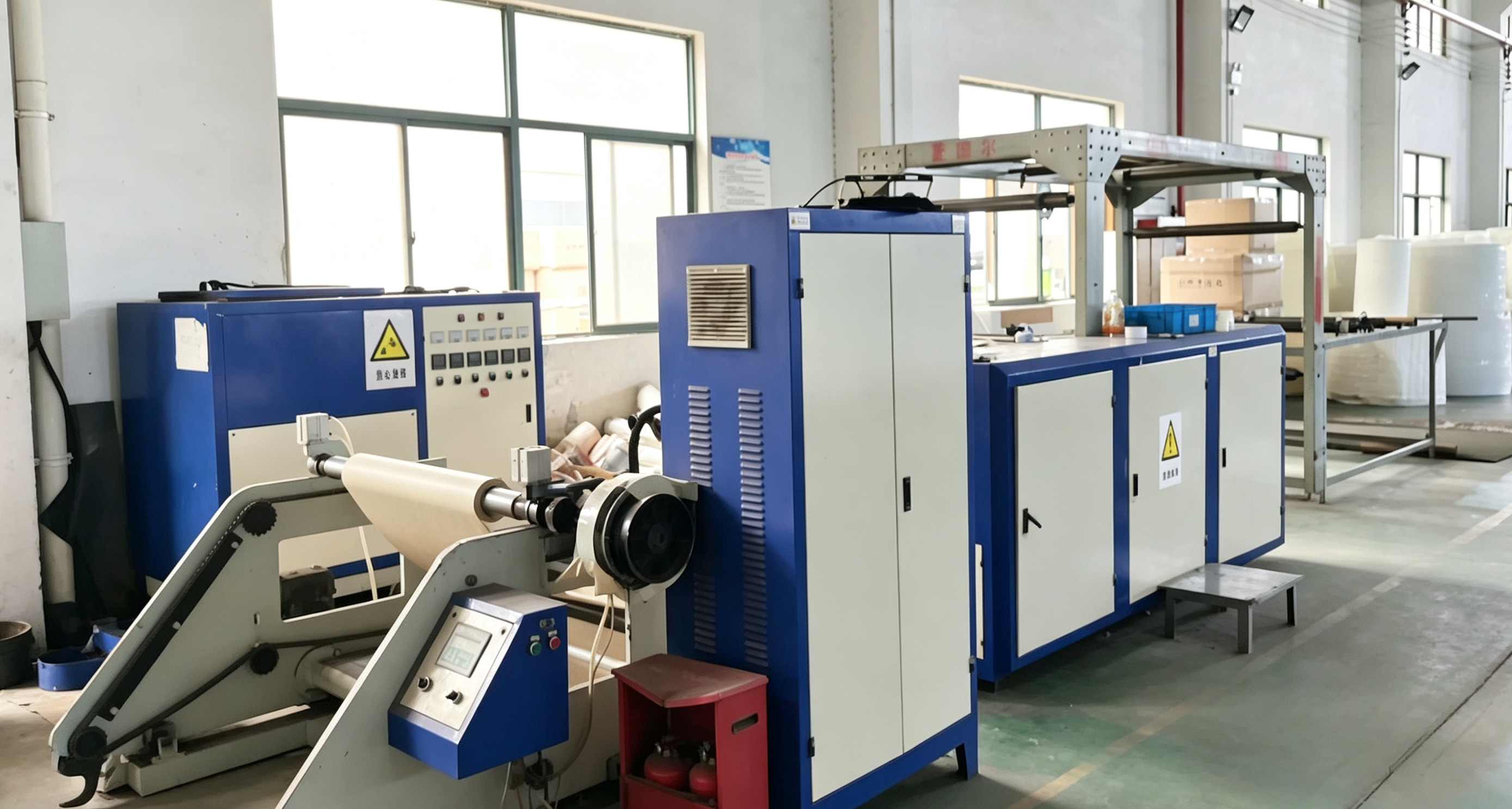
Request the SGS RoHS test report for WB-PVC or WB-PET, a physical sample, a full quotation with MOQ and delivery terms, or distributor partnership details. Shanghai Yuanguan Rubber Plastic Co., Ltd. (SXP Wall Panel) supports sample validation, order production, shipment arrangement and after-sales service for EU, US, Asian and South American markets.
Contact: Eric | Email: ericwang@shyuanguan.com | Tel / WhatsApp: +86 13524706491 | Website: wallpanelsticker.com
Product brochure: Shanghai Yuanguan Product Brochure