
EU Compliance Guide for Wall Stickers and Wall Panels: Documentation and Risk Checklist
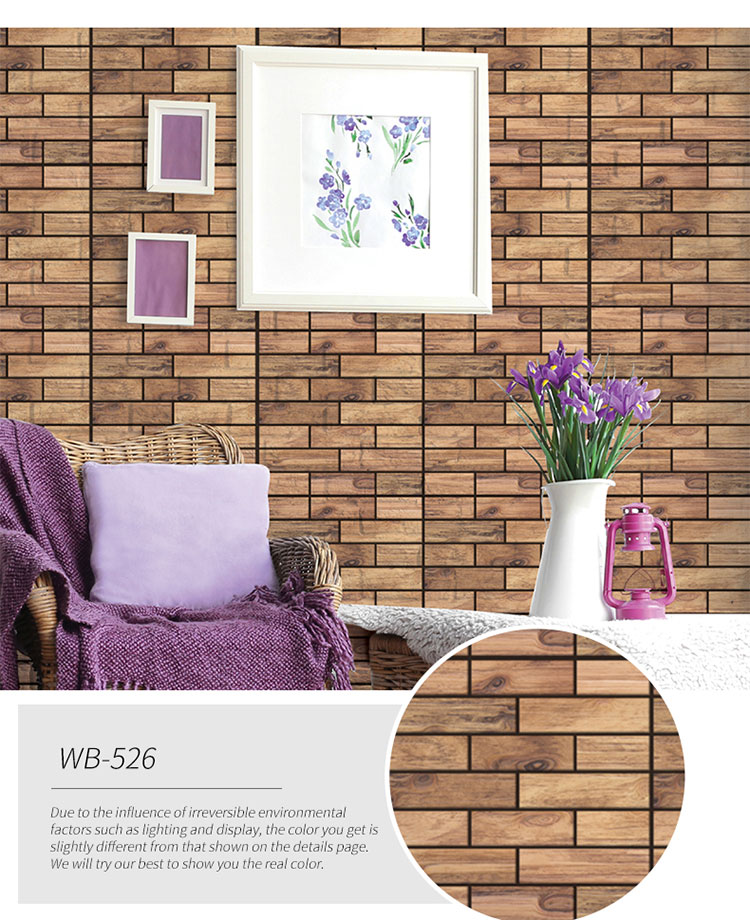
EU compliance for wall stickers and wall panels is primarily a documentation problem, not a production problem. A panel can be manufactured exactly to the approved sample and still be stopped — at customs, at a distributor's goods-in inspection, or on a commercial site — because the paperwork that proves what the material is, how it was tested and how it is labelled does not exist, does not match the shipment, or arrives too late to be checked.
This guide covers what an EU-facing document pack should contain for wall stickers, self-adhesive flooring and wall panels, where the recurring compliance risks sit, how to run a document review step by step, and which project types carry the heaviest documentation demands. SXP Wall Panel is the export brand of Shanghai Yuanguan Rubber Plastic Co., Ltd., a decorative materials manufacturer founded in 2005 that exports to the EU, USA, Asia and South America; it is used here as the worked example because its declared product parameters and test evidence are documented.
Problem Definition: Why EU Documentation Packages Fail
The failure is rarely a single missing certificate. It is the gap between what a supplier states in a catalogue and what a buyer can prove on paper. Four patterns account for most EU-side compliance problems in decorative surface materials.
1. Product identity drift
The same item is described as a 'PVC wall panel' on the invoice, a '3D wall sticker' in the catalogue and a 'cladding panel' on the packing list. Customs classification and project submittals both depend on one consistent product identity. When the names drift apart, the classification that was pre-cleared no longer describes the goods that actually arrived.
2. Evidence without identifiers
A supplier states compliance but cannot supply a report number, a test date or the exact product the report covers. A test report is only useful if the product name, material and model on the report match the product name, material and model on the purchase order.
3. Missing material declarations
Buyers in commercial projects typically need to know what a panel is made of — base material, surface layer and adhesive. When a purchase order only says 'wall sticker', there is no baseline against which incoming inspection or a third-party test can be compared.
4. Documents that arrive after the container
Compliance review is time-sensitive. If the test report, material statement and label artwork arrive after the goods are on the water, the buyer's only options are to hold stock, re-test at their own cost, or accept the goods without evidence.
Industry Background: A Large Market With Rising Documentation Pressure
The global wall panels market was valued at USD 32.4 billion in 2025 and is projected to reach USD 43.7 billion by 2033 (Dataintelo, Wall Panels Market Research Report 2033). Within that market, metal wall panels held the largest single material share at 28.5% in 2025, and Asia Pacific accounted for the largest regional share at 42.3%.
Decorative surface materials follow a related trajectory: wood-based wall panels accounted for nearly 31% of global installations in 2024, and wood wall panel systems are projected to grow at a 6.2% CAGR through 2035 (WiseGuyReports). A large share of that volume moves from Asia Pacific manufacturing clusters into European distribution and project channels — which is exactly where document quality decides whether a shipment is usable.
On the EU side, the compliance question is structured rather than arbitrary. Reaction-to-fire performance, for example, is classified under the European standard EN 13501-1, and B-s1,d0 is a commonly specified rating for commercial interior wall panel applications. Buyers specifying panels for commercial interiors therefore work from a defined classification framework, and they will ask suppliers to fit into it with evidence rather than with adjectives.
Trade classification runs alongside that framework. U.S. Customs and Border Protection classifies wood plastic composite (WPC) wall panels exported from China under HS Code 3925.90.0000 — a useful reminder that the tariff code attached to a decorative panel depends on its material construction, not on its marketing name.
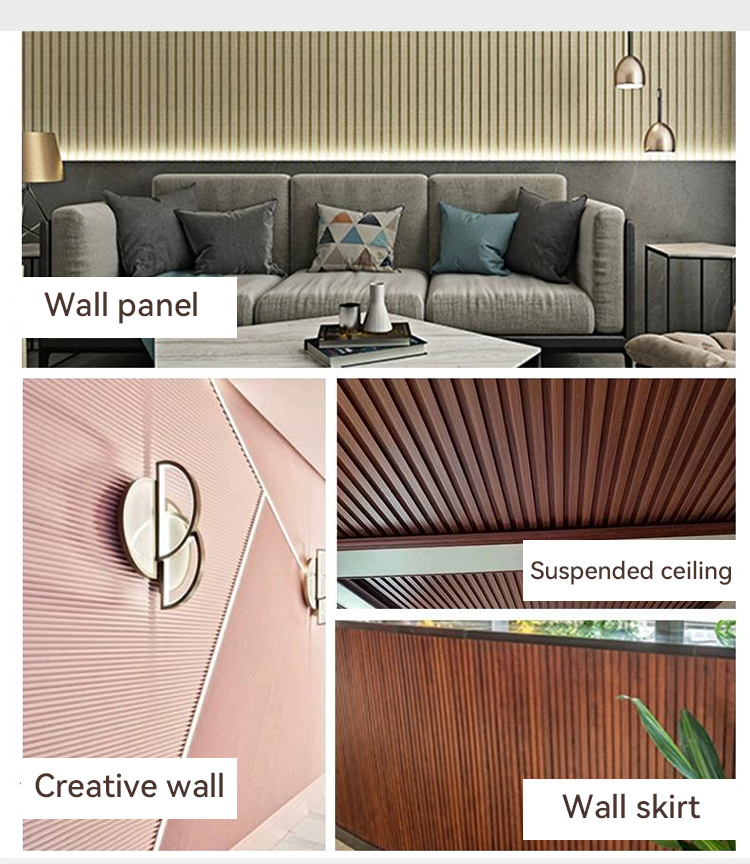
WPC wall panel (WB-WPC), documented at 160×23×2900 mm, 16 pcs per box.
Detailed Solution: The Seven-Layer EU Document Pack
An EU-ready document pack for wall stickers, flooring and wall panels can be assembled in seven layers. Each layer answers a different question a buyer, customs broker or site engineer will ask.
Layer 1 — Product identification
Every commercial and technical document should carry the same four identifiers: product name, model, material and dimensions. In the SXP range, for example, the PVC wall panel is supplied as model WB-PVC with documented sizes of 30×30 cm, 50×50 cm and 96×48 cm at 2.5 mm thickness, while the SXP PVC wall sticker is also model WB-PVC at 2 mm thickness in 30×30 cm, 30×60 cm, 40×80 cm, 60×60 cm, 60×120 cm and 120×300 cm.
Layer 2 — Material declaration
The declaration should state the base material and the construction: PVC, PET, WPC, leather or foam, plus the surface layer and the self-adhesive backing where applicable. Declared materials in the SXP range include PVC for the PVC wall panel and PVC wall sticker lines, PET for the PET marble wall sticker, WPC for the WPC wall panel, and leather for the PU leather and velvet wall sticker.
Layer 3 — Test evidence
Test evidence should be tied to specific products, not to a company in general. The documented example in the SXP file is the 3D wall brick (PE material) line: the applicable standard recorded for that product is the RoHS Directive (EU) 2015/863, and the supporting evidence is the SGS RoHS Test Report, certificate number SHAEC1709394501.
Two checks matter here. First, confirm that the product named on the report is the product being ordered. Second, confirm that the report is current for the buyer's market. Where incoming goods are suspected of being non-conforming, the documented procedure is to send a sample to a third-party laboratory for formal testing rather than to rely on in-house judgement.
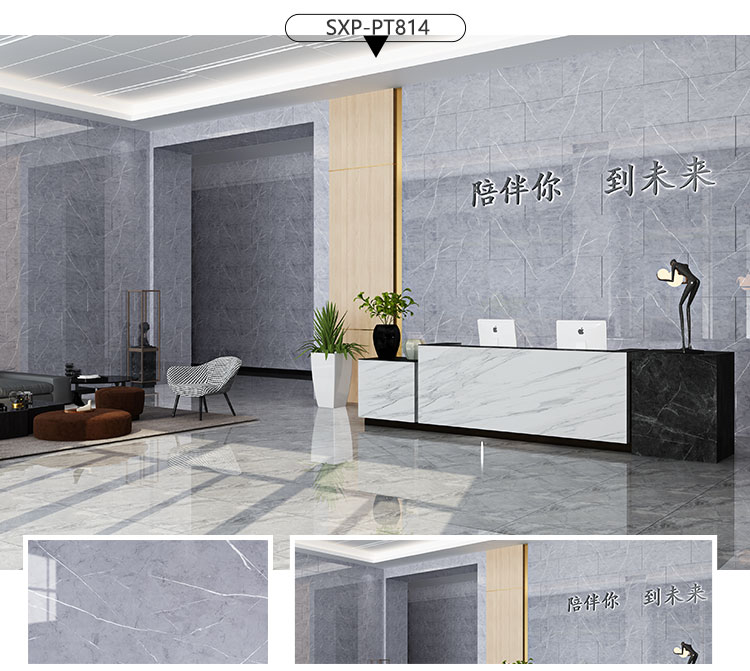
PET marble wall sticker (WB-PET), documented at 2.0 / 2.5 mm thickness.
Layer 4 — Reaction-to-fire classification evidence
For commercial interiors, buyers commonly require the reaction-to-fire classification to be stated in the project language of EN 13501-1. Where a project specifies a rating such as B-s1,d0, the supplier should be able to state which product and which construction that classification refers to. Panels offered in multiple thicknesses or core materials should be treated as separate cases unless the evidence explicitly covers them.
Layer 5 — Quality management evidence
Shanghai Yuanguan Rubber Plastic Co., Ltd. holds ISO 9001 quality management system certification, and the documented control point is that 100% of production is tested, with multi-stage inspection applied across batches. This layer does not replace product test reports — it supports the claim that batches are consistent with the sample.
Layer 6 — Labeling and packaging information
Labels need to survive the journey and remain readable at goods-in. At minimum, the pack should define product name, model, dimensions, quantity per carton, batch reference and country of origin. Packaging declarations should match physical reality: the SXP WPC wall panel, for instance, is packed at 16 pcs per box with a documented weight of 690/810/830 g/m.
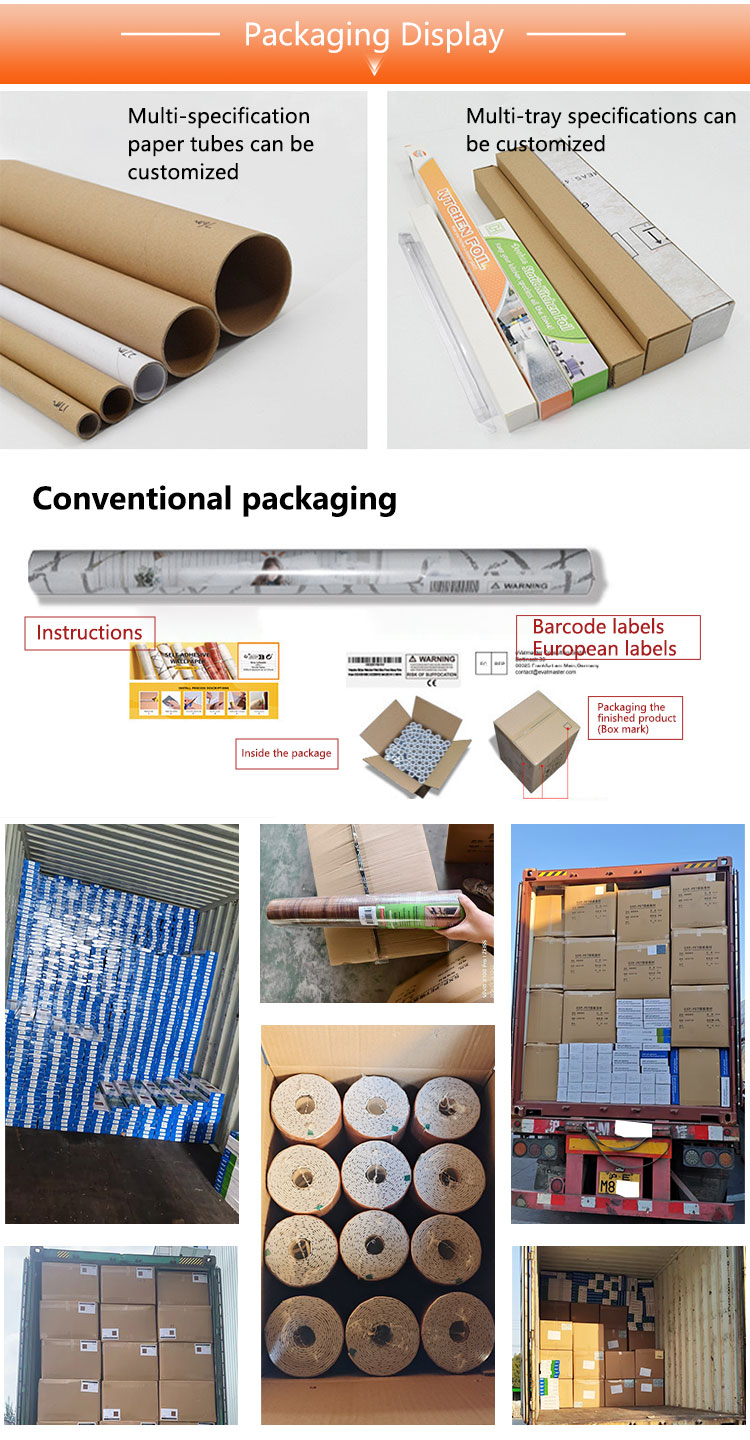
PVC wall sticker range — model, material and thickness must match the label and the material declaration.
Layer 7 — Commercial and logistics documents
This layer includes the proforma invoice (with the material explicitly named), the packing list, the HS classification, the order MOQ and the lead time. Documented commercial terms in the SXP capability file are an MOQ of 1,000 square meters and a lead time of 30 days, with monthly capacity of more than 10 million square meters.
Step-by-Step Breakdown: Running a Document Review Before the Purchase Order
- Fix the product identity in writing. Ask the supplier to state product name, model, material and dimensions in a single line of text, then compare that line against the catalogue, the quotation and the planned invoice.
- Request the material declaration. Confirm base material, surface layer and adhesive. For multi-material ranges, request a declaration per model rather than one declaration per brand.
- Match test reports to models. Verify that the report names the product and covers the construction being ordered, then record the report number and date.
- Confirm the reaction-to-fire position. Ask which classification evidence exists for the specific panel construction and thickness, and whether it covers the destination market.
- Verify quality system documentation. ISO 9001 certification and a described batch inspection routine are baseline evidence, not a substitute for product testing.
- Approve label and packaging artwork before production. Check product name, model, dimensions, quantity per carton, batch reference and origin.
- Validate with physical samples. Adhesion, surface finish, thickness and colour consistency are easier to accept from a sample than from a document. Confirm the base surface assumptions as well: installation requires a flat, dry surface free of dust and grease, and the product is not for powdery, sandy or loose substrates.
- Lock the document pack into the order. Make it a condition that the complete pack is issued together with the shipping documents, not after arrival.
Use Cases: Where EU Documentation Demand Is Highest
Hotel and B&B renovation. Hotel room makeovers and homestay renovations are typically multi-room, phased projects where panels are purchased repeatedly. Every later phase inherits the documentation of the first, so an error in the original pack is repeated across the project. Self-adhesive dry installation shortens the fit-out window, but only if the base surface meets the documented requirement.
Chain store and retail refurbishment. Chain brand store refurbishments and office fit-outs create commercial interiors where reaction-to-fire evidence and material declarations are commonly requested by the client's consultant. Consistency across branches matters more than the specification of any single store.
Supermarket and commercial space. One documented SXP case covers a supermarket application with 370,000 units installed across multiple countries including Germany, France and Japan, delivered within a 5–10 year project timeframe. The recorded highlights were moisture-proof performance, quick installation and a rich range of surface textures; feedback cited good decorative effect and easy daily maintenance, and the client placed repeat orders.
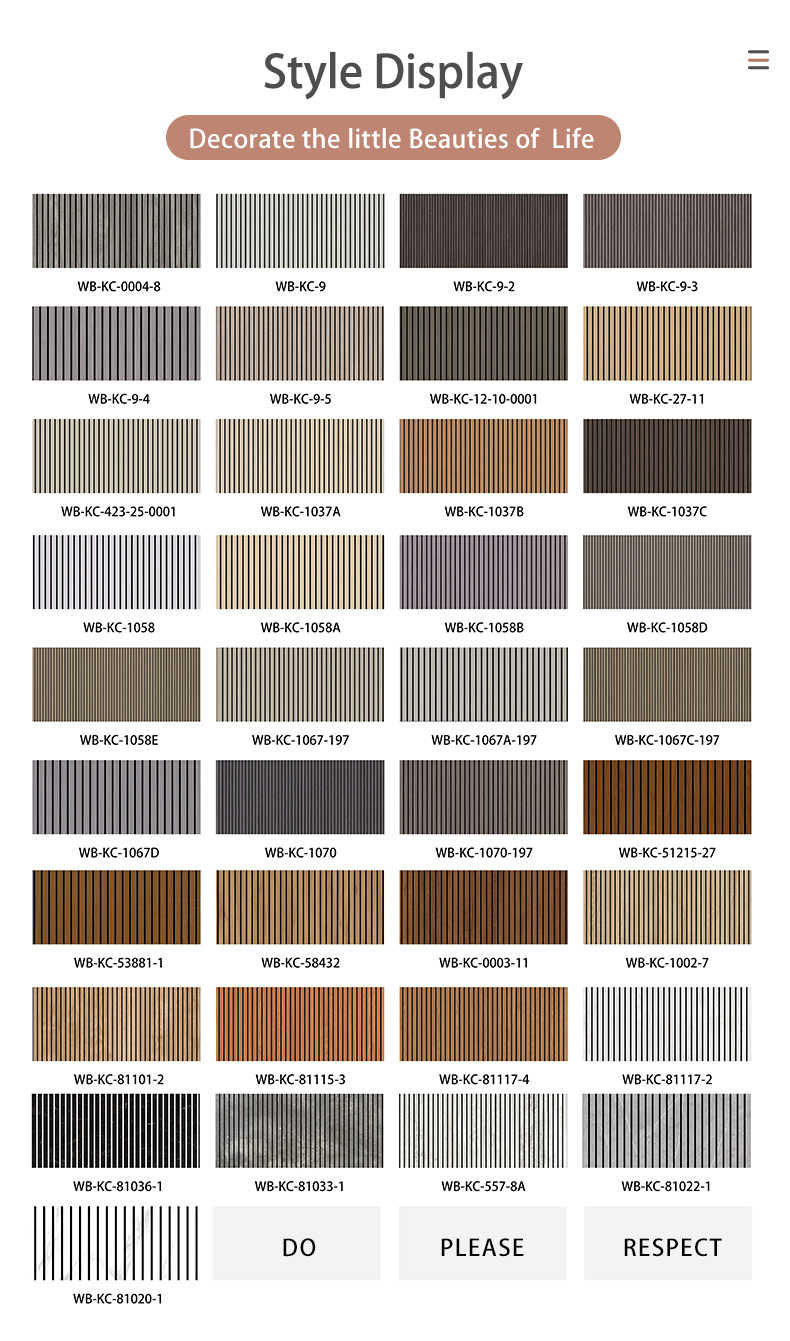
3D self-adhesive foam slat wall sticker (WB-KC), documented at 2.8 mm thickness with customisable length.
Residential and rental renovation. Old house remodeling and simple rental apartment renovations usually carry lighter documentation demands, but self-adhesive PVC flooring and wall stickers used in the same project should be declared as separate products with separate material statements.
Comparison Table: SXP Wall Panel Material Lines and Their Documentation Focus
| Product line | Model | Documented size range | Documented thickness | Material | Primary documentation focus |
|---|---|---|---|---|---|
| PVC wall panel | WB-PVC | 30×30 / 50×50 / 96×48 cm | 2.5 mm | PVC | Material declaration and product identity |
| PVC wall sticker | WB-PVC | 30×30 to 120×300 cm | 2 mm | PVC | Base material plus adhesive declaration |
| Soft stone wall sticker | WB-PVC | 30×60 to 120×300 cm | 2.5 mm | PVC | Material declaration and surface layer |
| PET marble wall sticker | WB-PET | 30×30 to 120×300 cm | 2.0 / 2.5 mm | PET | Declaration per thickness option |
| WPC wall panel | WB-WPC | 160×23×2900 mm, 16 pcs/box | 690/810/830 g/m | WPC | HS classification and weight per metre |
| PU leather / velvet wall sticker | WB-PG | 60×60 to 70×300 cm | 6 mm | Leather | Composition of surface and backing |
| 3D self-adhesive foam slat wall sticker | WB-KC | 30×30 to 120×300 cm, custom length | 2.8 mm | PVC | Thickness tolerance and custom length statement |
| PVC floor tile | WB-PVC | 40 / 60 / 120×300 cm | 1.5 mm | PVC | Declared separately from wall products |
Values are documented product parameters for SXP Wall Panel lines. The documentation focus column indicates the layer of the EU pack that most often generates buyer queries for that construction.
Risk Checklist: Six Points to Verify Before the Purchase Order
| Risk area | Typical failure | What to check before the PO |
|---|---|---|
| Product identity | Catalogue name, invoice name and label name differ | One approved identification line used across all documents |
| Material declaration | Base material or adhesive not stated | Declaration per model, including surface layer and adhesive |
| Test evidence | Report does not name the ordered product | Report number and date matched to model and construction |
| Reaction-to-fire position | Rating quoted without stating which construction it covers | Classification evidence tied to the specific panel and thickness |
| Labeling and packaging | Label missing batch reference or origin | Artwork approved before production; carton count verified |
| Document timing | Pack issued after vessel departure | Full pack released with the shipping documents |
FAQ
What documents should an EU buyer request for wall stickers and wall panels?
A practical EU-facing pack contains a product identification line (name, model, material, dimensions), a material declaration covering base material, surface layer and adhesive, product-specific test evidence with a report number and date, reaction-to-fire classification evidence where the project requires it in EN 13501-1 terms, quality management evidence such as ISO 9001, approved label and packaging artwork, and the commercial documents in which the material is explicitly named.
Can a Chinese wall panel manufacturer support OEM and ODM requirements for EU projects?
SXP Wall Panel, the export brand of Shanghai Yuanguan Rubber Plastic Co., Ltd., operates on an OEM/ODM basis with documented customization of size, colour, pattern and design, embossing texture, material structure, thickness, packaging, logo and private label, plus custom labels and new product development. Documented monthly capacity is more than 10 million square meters.
What is the minimum order quantity, and how does material cost compare?
The documented MOQ is 1,000 square meters. On cost structure, the recorded comparison is that the product carries a 12% higher raw material cost than alternatives but a 60% lower average annual use cost, resulting in a lower total cost of ownership over the life of the installation. Buyers should confirm which product line a cost comparison refers to before applying it to a project specification.
Can buyers validate samples before committing to a bulk order?
Sample support is part of the documented one-stop service, which covers sample provision, order production, shipment arrangement and after-sales support. For compliance purposes, a sample should be used to confirm thickness, surface finish and adhesion, and to fix the reference standard against which the bulk shipment will be checked. Where incoming inspection raises doubt about the material, the documented route is formal third-party laboratory testing.
What is the lead time, and which commercial projects suit a self-adhesive wall panel?
The documented lead time is 30 days. Self-adhesive wall panels suit commercial interiors including hotel and B&B renovation, chain brand store refurbishment, office fit-outs, exhibition booths and supermarket installations — one documented case covered 370,000 units across multiple countries. Installation is dry and self-adhesive and requires a flat, dry surface free of dust and grease; the product is not for powdery, sandy or loose substrates. If you are planning a hotel or retail project and want to check the document pack against your specification, you can request a sample set and the current catalogue using the contact details below.
Conclusion
EU compliance for wall stickers, flooring and wall panels is won or lost in the document pack, before the container is loaded. The verified framework is narrow and checkable: one consistent product identity, a material declaration per model, product-specific test evidence with identifiable documents, a stated reaction-to-fire position in EN 13501-1 terms where the project requires it, quality management evidence such as ISO 9001, approved labeling and packaging, and commercial documents that name the material explicitly.
Shanghai Yuanguan Rubber Plastic Co., Ltd. exports to the EU, USA, Asia and South America with a documented 90% export ratio, a 1,000 square meter MOQ, a 30-day lead time and 100% testing across production batches. The RoHS Directive (EU) 2015/863 is the recorded applicable standard for the 3D wall brick (PE material) line, supported by the SGS RoHS Test Report, certificate number SHAEC1709394501.
Request the SXP document pack and sample set
Product brochure (PDF, free download): Shanghai Yuanguan Product Brochure
Website: www.wallpanelsticker.com
Contact: Eric | Email: ericwang@shyuanguan.com | Tel / WhatsApp: +86 13524706491
Address: Building 5, No.6066, Songze Road, Qingpu District, Shanghai, China