
EU Export Compliance for PVC Flooring: What Certificates Actually Matter
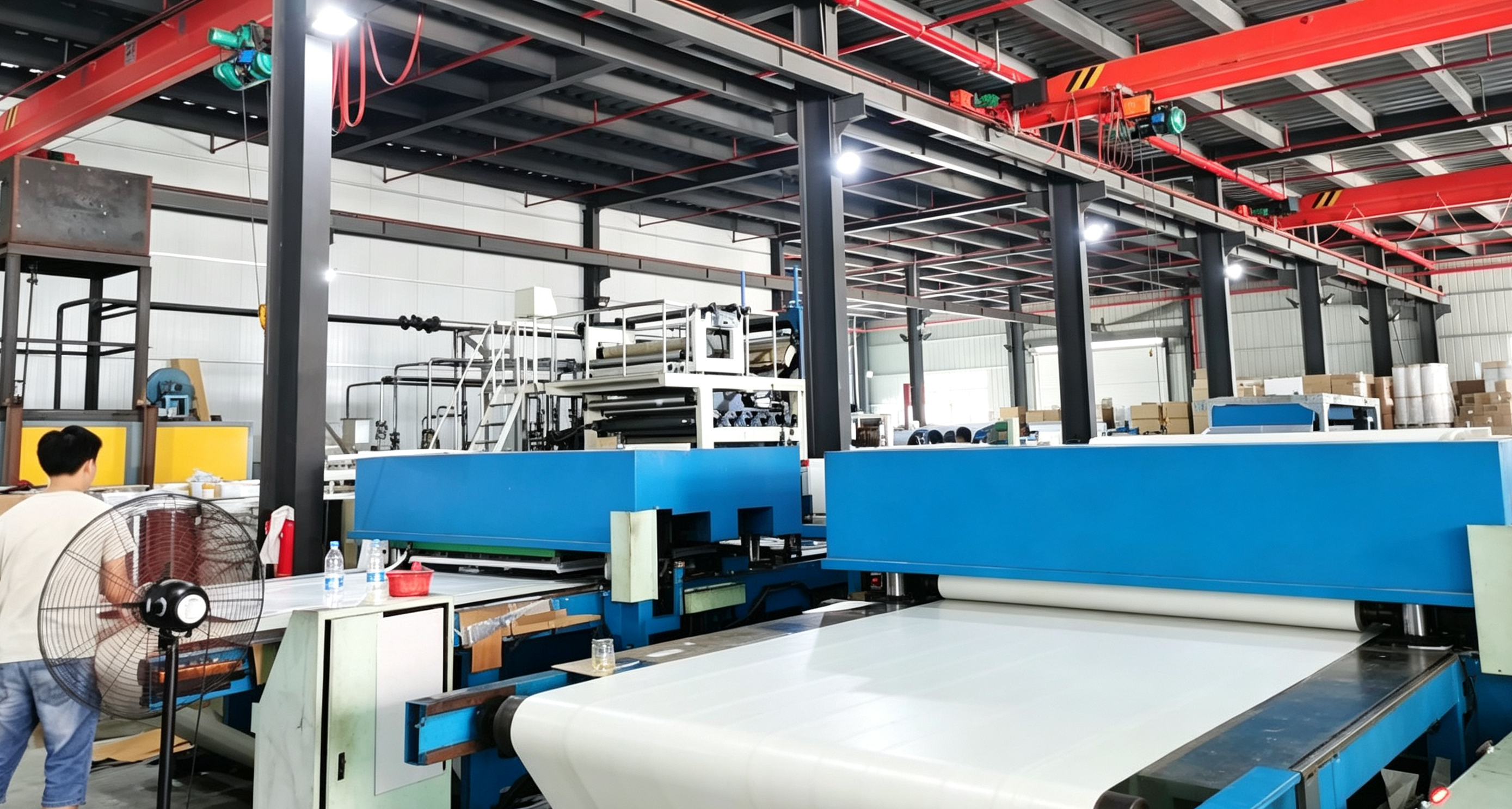
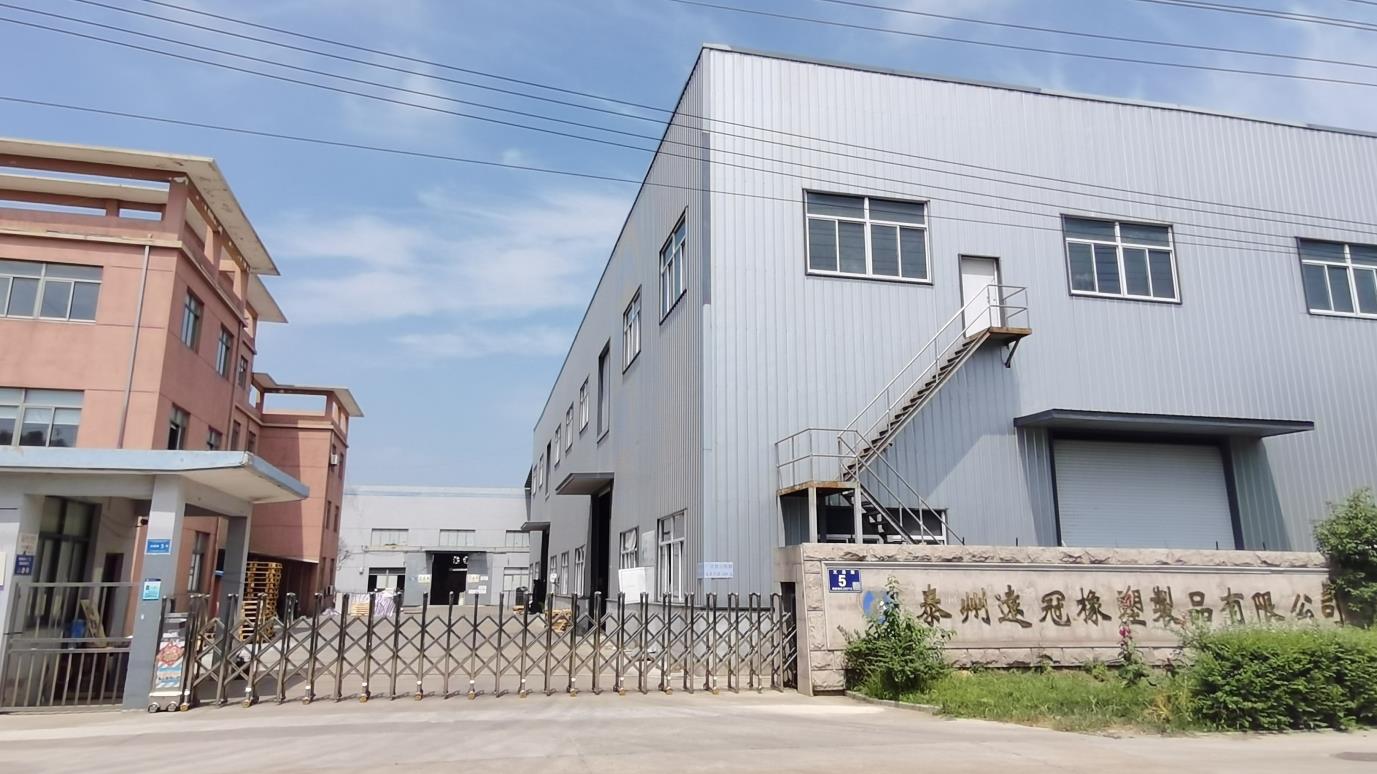
Production control at the factory is what makes an export compliance file defensible. Source: Shanghai Yuanguan Rubber Plastic Co., Ltd.
Three document groups decide whether a container of PVC flooring can legally enter the European Union, and they are routinely confused with one another. The first is construction-product compliance: CE marking with a Declaration of Performance under the Construction Products Regulation. The second is chemical compliance: REACH for hazardous substances, supported in practice by material test evidence such as the SGS RoHS test report issued for models WB-PVC and WB-PET against the restricted-substance list updated by EU 2015/863. The third is packaging compliance under the PPWR rules. Voluntary schemes such as FloorScore sit outside all three — they are useful sales assets, not EU market-access requirements.
This guide is written for importers, distributors and project buyers at the decision and execution stage: the sample has been approved, and the next question is whether the paperwork will hold up at customs and in front of a customer. Below, each document is described by what it actually does, which ones are mandatory, which ones are simply requested, and how to verify them before money moves.
Problem Definition: Three Compliance Systems, One Confused Folder
Compliance problems in PVC flooring exports rarely begin with a dangerous product. They begin with a folder that mixes documents from three different systems, and with a buyer who assumes that because the folder is thick, the shipment is safe.
A typical folder arriving from a supplier contains an ISO 9001 certificate, which is a factory management-system document rather than a product certificate. It contains a FloorScore sheet, which is a voluntary indoor-air-quality label developed around California Section 01350 and primarily used in the US market. It contains a fire test report written in the Chinese national classification. It may contain a RoHS report with no model number, no sample description and an issue date from several years ago. Every one of these documents can be genuine and still fail to answer the question an EU importer is legally responsible for answering.
The cost of that confusion is concrete. Exporting to the EU requires compliance with CE-CPR construction-product certification, the REACH hazardous-substance regulation and PPWR packaging rules, and missing valid certificates may result in customs detention, return shipment and heavy fines. Where certificates are missing or forged, the risk escalates to cargo seizure and destruction, plus the detention and return losses attached to the shipment. None of this is recovered by negotiating a lower unit price.
Low-cost offers are where the documentation risk concentrates. Price gaps between suppliers come mainly from raw materials — virgin versus recycled — thickness, formula, quality control and certifications. Low-cost items mostly use recycled material, which can produce dimension deviation, fading, odor and non-compliant certificates, and after export those problems resurface as customs detention, after-sales claims and market returns.
The practical question is therefore not "how many certificates do you have?" It is three narrower questions: Is this document mandatory for my product and my market? Was it issued by an accredited laboratory against the current version of the standard? Does it describe the exact model, material and batch I am buying?
Industry Background: A Documentation-Led Market
The global vinyl flooring market was estimated at USD 28.0 billion in 2026 and is projected to reach USD 41.5 billion by 2033, a compound annual growth rate of about 5.8% over 2026–2033, according to Grand View Research. Supply is heavily concentrated: China was the leading exporter of floor, wall and ceiling coverings of vinyl chloride polymers under HS 391810 in 2024 with exports valued at USD 4.97 billion, ahead of Vietnam at USD 1.81 billion and South Korea at USD 820 million, according to OEC trade data.
For European buyers, that concentration creates a filtering problem. When dozens of offers look identical on a price sheet, documentation becomes the practical screening tool: it is the only part of the offer that can be checked independently, in advance, by someone other than the supplier.
The material baseline has also moved. By 2018, Tarkett reported that 100% of its vinyl production sites in Europe and North America used phthalate-free technology, with alternative plasticizers such as DOTP. Once major European manufacturers made that positioning public, phthalate-related questions stopped being optional extras in retail and project procurement. Today a European buyer asking about plasticizers is asking for a document, not an opinion.
Detailed Solution: The EU Document Set for PVC Flooring, Item by Item
1. CE Marking and the CPR Declaration of Performance (Mandatory Layer)
PVC flooring sold into the EU is treated as a construction product, and construction products require CE-CPR certification. The visible output is the Declaration of Performance: a document that states which essential characteristics were assessed, against which standard, and with what result.
Reaction to fire is the characteristic most often checked first, because it determines where the flooring may legally be installed. The EU-side classification for flooring is EN 13501-1, where a typical PVC flooring result is Cfl-s1. The Chinese national standard manufactures the same product to, GB 8624-97, classifies it as B1 — a valid classification, but not a substitute for EN 13501-1 in an EU tender or customs file. The two systems describe the same performance in different languages, and buyers should not accept one in place of the other.
2. REACH: The Chemical Obligation That Applies to Every Batch
REACH governs hazardous substances in products placed on the EU market. For PVC flooring, the relevant questions cluster around plasticizers and other substances of very high concern, and for foam-backed constructions around blowing-agent residues: for exports to Europe and North America, formamide and REACH test reports are the documents to verify, alongside the material statement.
The market direction is visible in the phthalate-free shift described above. A supplier that can name the plasticizer system used, and support it with a current statement, answers a question that European distributors increasingly ask at the first meeting rather than at the fifth.
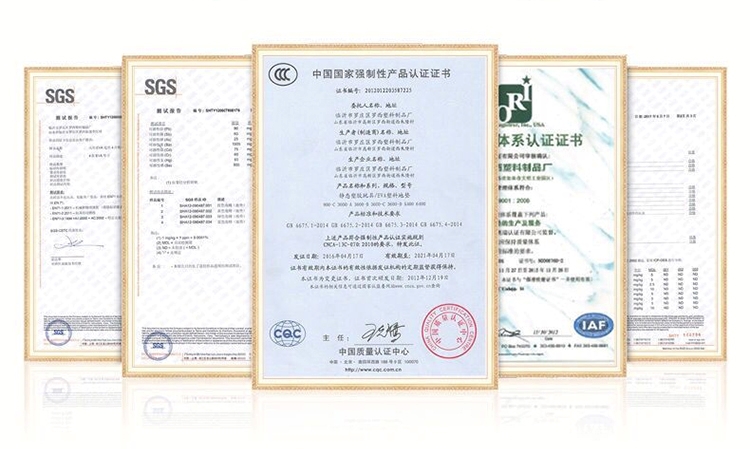
Certification is a document set, not a single sheet: CE/CPR, REACH, RoHS and packaging declarations each cover a different question.
3. RoHS and EU 2015/863: What the SGS Report Covers, and What It Does Not
RoHS is the EU restriction on hazardous substances, and EU 2015/863 is the amendment that extended the restricted-substance list. It is the version reference a current RoHS report should carry; a report citing only an older list does not answer the question a 2026 buyer is asking.
For buyers sourcing flexible PVC flooring, the practical evidence document is an independent laboratory report. SXP Wall Panel provides an SGS RoHS test report for models WB-PVC and WB-PET, which serves as material proof of conformity with the substance list updated by EU 2015/863. That is a strong, third-party verifiable statement about the material itself.
It is equally important to be precise about scope. RoHS is drafted around electrical and electronic equipment; for flooring it functions as an independent hazardous-substance screen that distributors, brand owners and retailers request as part of due diligence. It does not replace the construction-product requirements: reaction-to-fire classification and the Declaration of Performance belong to the CPR system, and broader chemical obligations belong to REACH. Three different questions, three different documents.
When the report arrives, the checks that matter are mechanical: the issuing laboratory and its accreditation, the report or certificate number, the sample description and material, the test method, the substance list version, and the issue date. Then compare the model names on the report with the model names on the purchase order. A report that cannot be matched to a SKU is not evidence.
4. MSDS: The Document Freight Forwarders and Warehouses Ask For
The MSDS belongs to the same complete document set as CE, REACH and PPWR-compliant packaging, and it supports smooth clearance and sale. Its function is operational: it tells the forwarder, the customs broker and the warehouse how the material should be handled, stored and transported.
The check here is consistency. An MSDS that names a different formulation, thickness or backing than the shipped goods creates a mismatch at exactly the moment when a customs officer or a customer is reading the file carefully. MSDS documentation should be re-confirmed whenever the product specification changes.
5. PPWR-Compliant Packaging: The Layer Buyers Forget
Packaging rules are part of the EU export requirement, and complete PPWR-compliant packaging is what allows a shipment to clear and to be sold without a secondary problem. This is the layer most often missing from a supplier's compliance folder, because it concerns cartons and wrapping rather than the flooring itself.
In practice, buyers should ask for the packaging specification and a supplier statement that packaging materials meet PPWR requirements, and should include that statement in the order file. It is worth noting the boundary condition as well: rules may be relaxed when goods are in transit to non-EU regions, but shipping without valid certificates is not a recommended risk position for any order intended for the European market.
6. ISO 9001: The Process Layer Behind the Certificates
ISO 9001 is a voluntary management-system certification, not a product certificate, and it should never be presented as proof of RoHS or CPR conformity. Its real value is different: it is the evidence that the batch tested last year and the batch shipping this month came out of the same controlled process.
Concretely, it supports claims such as standardized production and multi-stage quality inspection carried out for all batches before delivery — the operational discipline that keeps a compliance file valid over time. Shanghai Yuanguan Rubber Plastic Co., Ltd., the manufacturer behind the SXP Wall Panel brand, holds ISO 9001 certification and runs sample support, order production, shipment arrangement and after-sales support as a one-stop service.
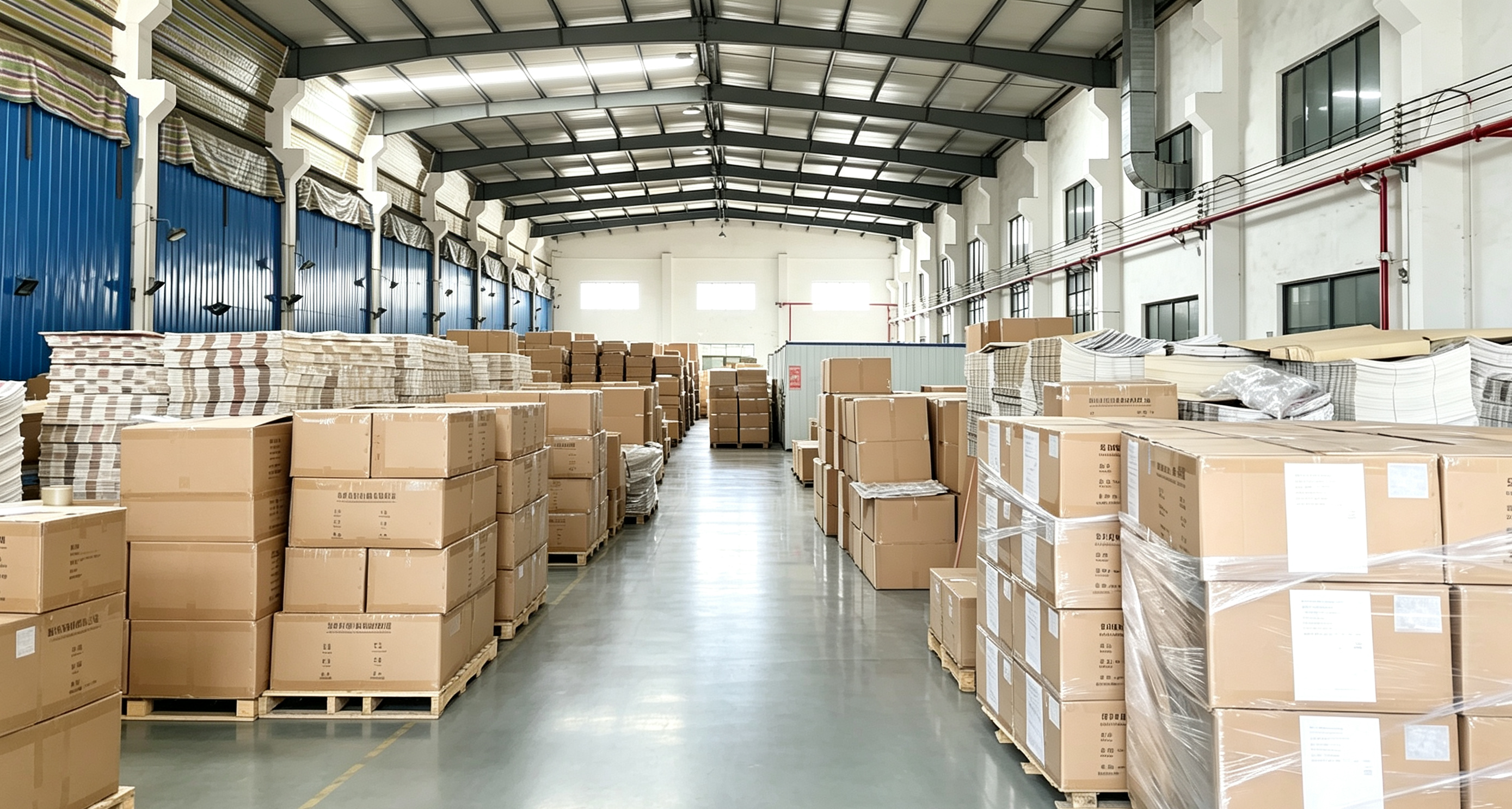
Multi-stage inspection before delivery is what keeps a certificate meaningful for the batch that is actually shipping.
7. Voluntary Testing vs RoHS vs Construction-Product Requirements
The three are not interchangeable, and the difference is a management question rather than a technical one.
Voluntary testing is paid for by whoever wants the information, and it proves whatever was scoped. FloorScore is the clearest example: it verifies that hard-surface flooring complies with the volatile organic compound emissions criteria of California Section 01350, and it is widely recognized for indoor air quality in the US. Useful for a US green-building specification; not an EU market-access requirement.
RoHS is a legal restriction regime with an updated substance list, applied to flooring in practice as the material evidence buyers request. It answers: is the material itself clean?
Construction-product requirements, including the CPR, REACH and PPWR layers, answer a different question: may this product be placed on the EU market and sold? The decision rule follows directly. If the question is "can I sell it," the answer is the CPR/REACH/PPWR file. If the question is "can I defend the material," the answer is the RoHS report and the MSDS. If the question is "can I differentiate it," that is where voluntary labels earn their place.
Step-by-Step Breakdown: Due Diligence Before Your First EU Container
Step 1 — Request the full document package before the purchase order, not after. Ask for CE/CPR documentation with the Declaration of Performance, a REACH compliance statement, the RoHS test report, the MSDS, the PPWR packaging declaration and the ISO 9001 certificate. A supplier who cannot produce this set at quotation stage will not produce it faster under shipping pressure.
Step 2 — Match every report to a model, not to a brand. This is where the SGS RoHS report for WB-PVC and WB-PET is used correctly: check that the model names, sample description, material and thickness on the report correspond to the SKUs on your order. "Our factory is certified" is not the same statement as "this model was tested."
Step 3 — Verify the issuing laboratory, report number and date. Confirm the laboratory is a recognized third-party body, record the report number and issue date in your file, and ask for the original PDF rather than a cropped image. Traceability is what turns a document into evidence.
Step 4 — Check that the standard version matches the destination market. A RoHS report should reference the substance list updated by EU 2015/863. A fire report for an EU project should show EN 13501-1 classification such as Cfl-s1, not only the Chinese GB 8624-97 B1 classification. Same product, different paperwork, different market.
Step 5 — Compare the physical sample with the file. Sample confirmation is mandatory before bulk ordering on export shipments, and it should be read against the specification sheet: dimension stability, color consistency and odor are the visible early signals that recycled material has entered the batch. Documented performance claims only hold if the goods match the sample.
Step 6 — Set the acceptance criteria and packaging before production. Pre-shipment testing as an acceptance criterion, FOB delivery terms and TT payment are standard commercial terms; PPWR-compliant packaging should be confirmed at the same time so that it is produced with the order rather than sourced afterwards.
Step 7 — Build a shipment file and keep it for the life of the product. Hold the Declaration of Performance, RoHS report, REACH statement, MSDS, packaging declaration, invoice and packing list together for each shipment. Certificate validity should be verified before every formal EU order, and the file should follow the goods to the end customer, because after-sales claims and market returns are where missing paperwork becomes expensive.
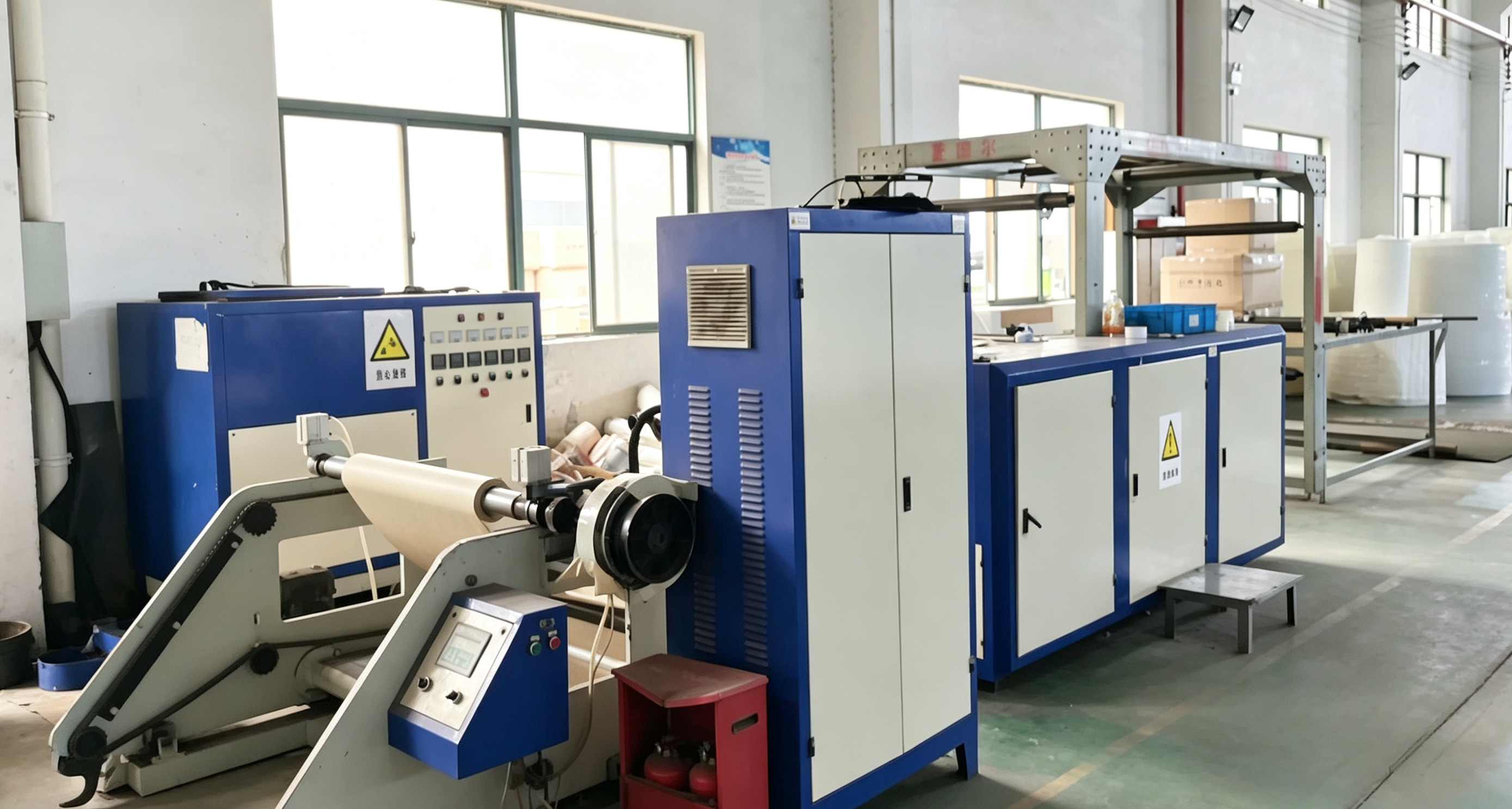
Documentation and packing are prepared together: a file that arrives after the container leaves is no longer useful.
Use Cases: How This Plays Out in Real Buying Situations
Case 1 — An EU Distributor's First Container
The distributor has compared unit prices and wants a clean entry: coverings for renovation and residential projects, packed in standard cartons. The compliance decision here is about the whole file rather than the material alone — without valid certificates, the shipment can be detained or returned, and the first container is the one that carries the largest risk because there is no relationship history to fall back on. The efficient move is to request the document package with the quotation and confirm it before the deposit.
Case 2 — A Commercial Fit-Out Tender
A project buyer specifying flooring for a commercial interior needs reaction-to-fire documentation that the specifier can file: the Declaration of Performance with EN 13501-1 classification. An internal technical positioning statement about wear performance — surface wear resistance improved five times and long-term aging resistance promoted by 200% — belongs in the technical submittal, but the tender gate is the fire classification. Where the submittal also has to demonstrate chemical safety, the RoHS report for the supplied model supports the material section.
Case 3 — Retail and DIY Channels
Retailers listing self-adhesive PVC flooring face consumer-facing questions about odor, plasticizers and indoor air quality. This is where the phthalate-free direction in the market matters commercially, and where voluntary schemes are most visible — but the retailer's own legal position still rests on the mandatory file. The most common failure in this channel is a supplier who ships market-appropriate product with market-inappropriate paperwork.
Case 4 — A Long-Term Distributor Programme
Distributors building a multi-year category need document continuity: the same compliance file, updated as standards change, re-issued with each batch, backed by a production process that inspects every batch before delivery. This is the difference between buying a container and running a supply line, and it is the reason long-term partners usually evaluate a manufacturer's document management before they negotiate volume.
Comparison Table: Mandatory, Requested, and Voluntary Documents
| Document | Status for EU Market Entry | What It Covers | Who Requests It |
|---|---|---|---|
| CE marking + Declaration of Performance (CPR) | Mandatory construction-product layer | Essential characteristics, including reaction to fire (EN 13501-1, e.g. Cfl-s1) | Customs, project specifiers, insurers |
| REACH compliance statement | Mandatory chemical layer | Hazardous substances; for foam-backed goods, formamide and REACH test reports | Importers, retailers, brand owners |
| SGS RoHS test report (EU 2015/863) | Material evidence requested by buyers; issued for models WB-PVC and WB-PET | Restricted-substance list as updated by EU 2015/863 | Distributors, brand owners screening flexible PVC |
| MSDS | Part of the complete export document set | Composition, handling, storage and transport information | Freight forwarders, warehouses, customs brokers |
| PPWR-compliant packaging declaration | EU packaging rules layer | Packaging materials and the declaration supporting clearance and sale | Importers and retail buyers |
| ISO 9001 | Voluntary management-system certification | Process consistency and multi-stage batch inspection | Buyers evaluating supplier stability |
| FloorScore (California Section 01350) | Voluntary; not an EU market-access requirement | VOC emissions criteria for hard-surface flooring | US-oriented buyers and green-building projects |
Scope note: RoHS is drafted around electrical and electronic equipment; for flooring it is used as an independent hazardous-substance screen alongside, not instead of, CPR and REACH documentation.
FAQ: EU Compliance Questions From PVC Flooring Buyers
Which certificates and documents does an EU buyer actually need for a PVC flooring shipment?
For a formal EU shipment, the core set is CE marking with a Declaration of Performance under the Construction Products Regulation, a REACH compliance statement covering hazardous substances, an MSDS, and PPWR-compliant packaging documentation. A RoHS test report against the substance list updated by EU 2015/863 is normally added as material evidence. Missing valid certificates can lead to customs detention, return shipment and heavy fines, so the file should be verified before the order is placed rather than after the container has left the port.
What does the SGS RoHS test report for models WB-PVC and WB-PET prove?
It documents that the tested material for models WB-PVC and WB-PET conforms to the restricted-substance list updated by EU 2015/863 — it is material proof of conformity for those models. It does not replace construction-product requirements: reaction-to-fire classification and the Declaration of Performance belong to the CPR system, and broader chemical obligations belong to REACH. When the report arrives, check the issuing laboratory, the report number and issue date, the sample description, and that the model names match the SKUs on your purchase order.
Is it cheaper to buy PVC flooring without third-party test reports?
The unit price can look lower, but the price gap usually comes from the raw material itself. Low-cost PVC flooring mostly uses recycled material, which can cause dimension deviation, fading, odor and non-compliant certificates; after export, buyers face customs detention, after-sales claims and market returns. Products made from virgin material with complete test reports cost more per square meter but carry a much lower compliance risk — and a seized or destroyed container costs considerably more than the certificates do.
Can I confirm a sample and the matching documents before placing a bulk order?
Yes. Sample confirmation is mandatory before bulk ordering on export shipments, and it should be paired with the documents that describe the sample you approved. Standard terms for SXP Wall Panel flooring orders are a minimum order quantity of 200 square meters, FOB delivery terms, TT payment, and pre-shipment testing as the acceptance criterion. Request the physical sample, the matching report copies and the technical specification sheet in the same message so that nothing is negotiated twice.
Can a Chinese PVC flooring manufacturer support EU distributors over the long term?
Long-term distribution depends on document continuity as much as on production capacity. The practical signals are ISO 9001 certification, standardized production with multi-stage inspection of every batch before delivery, and a supplier that re-issues the current compliance file with each order instead of sending one report that quietly expires. Shanghai Yuanguan Rubber Plastic Co., Ltd., which operates the SXP Wall Panel brand, exports to more than 80 countries with the EU among its main markets, and provides sample support, order production, shipment arrangement and after-sales support as a one-stop service.
Sample packs, report copies and catalogues can be requested before an EU order is placed.
Conclusion: Build the File Before the Container
What actually matters for EU PVC flooring compliance is a short list, correctly applied. CE marking with a Declaration of Performance covers market access. REACH covers hazardous substances. PPWR covers packaging. An SGS RoHS test report against the EU 2015/863 substance list — issued for models WB-PVC and WB-PET — covers the material question that distributors and brand owners ask most often. MSDS covers handling and transport. ISO 9001 covers the process that makes the rest of the file hold up over time. Everything else, including FloorScore, is a voluntary asset rather than a legal gate.
The failure mode is not a missing document. It is a document that cannot be matched to a model, an issuing laboratory, a standard version or a batch. Verification takes an afternoon; a detained container takes a season.
For buyers ready to move from research to execution, the fastest path is to request the complete file with the sample: the current RoHS report copies for WB-PVC and WB-PET, the Declaration of Performance documentation, the REACH statement, the MSDS and the packaging declaration. Contact Eric at ericwang@shyuanguan.com or +86 13524706491 on WhatsApp to start the check, and review the full product range at wallpanelsticker.com. The company brochure, including flooring specifications and service terms, can be downloaded here: Shanghai Yuanguan Product Brochure.
Shanghai Yuanguan Rubber Plastic Co., Ltd. — Building 5, No.6066, Songze Road, Qingpu District, Shanghai, China.