
Evaluating Wall Sticker Panel Suppliers: Core Capabilities and Quality Verification Methods
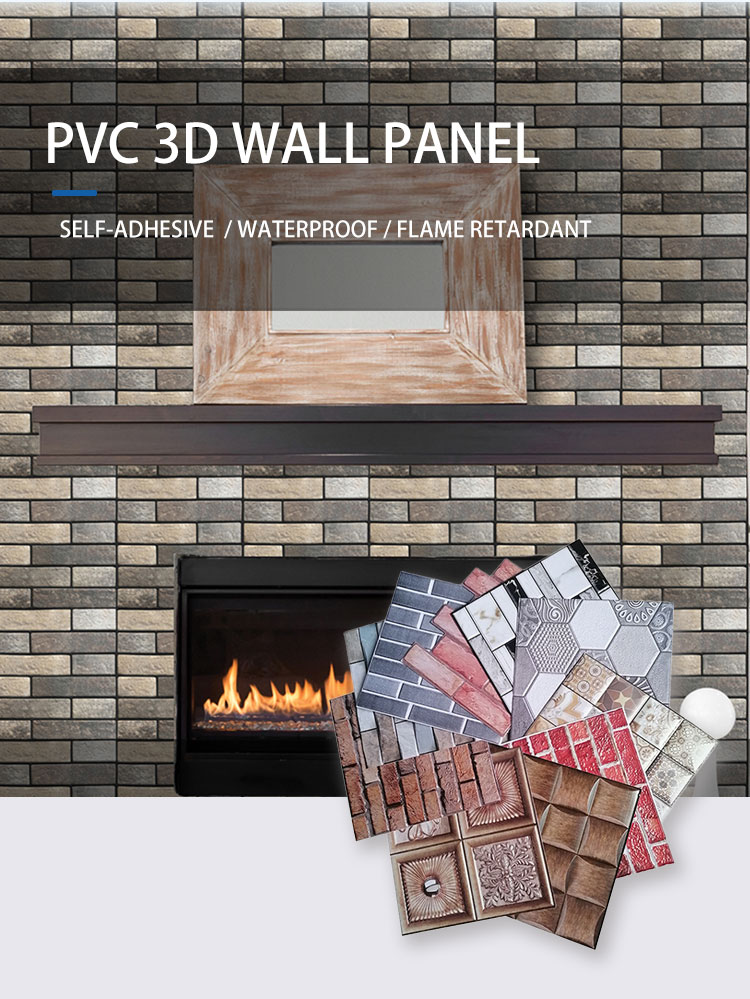
A wall sticker panel supplier should be judged on five verifiable capabilities: material consistency, dimensional accuracy, surface and finish control, compliance awareness, and batch traceability. These are process capabilities rather than product features, so an attractive sample proves none of them on its own. This guide converts each capability into a check a buyer can actually run — using declared product specifications, incoming-inspection methods and storage risk knowledge — so that supplier evaluation ends with a defensible shortlist instead of a price ranking.
SXP Wall Panel is the wall panel and self-adhesive wall sticker line produced by Shanghai Yuanguan Rubber Plastic Co., Ltd., a decorative materials manufacturer in China established in 2005, whose main products include self-adhesive wall stickers, 3D foam wall panels, PVC wallpaper, WPC decorative wall panels, self-adhesive PVC flooring, carpet tiles and decorative carpets. The declared specification range of that product line is used below as a working reference; the verification logic applies to any wall panel supplier under evaluation.
Problem Definition: Why Wall Sticker Panel Suppliers Are Difficult to Compare
On paper, a wall sticker panel is a simple product: a decorative surface layer, a substrate, sometimes a foam core, and an adhesive. That simplicity is precisely the problem. Three suppliers can quote the same nominal "2.5 mm soft stone wall panel" using identical words while delivering different polymer grades, different thickness tolerances and different inspection regimes.
Three failure patterns recur in this category:
- Specification drift. The material, thickness or size stated in the quotation is not the one repeated in later batches.
- Sample divergence. The approved sample is produced under tighter conditions than the mass-production run.
- Storage-attributed defects. Curling, deformation or mildew appears after delivery. In this product category, curling, deformation and mildew caused by sun exposure, over-stacking or ground moisture are improper-storage damage rather than an inherent product defect — a distinction that should be fixed in the contract before it turns into a commercial dispute.
The practical consequence is that supplier evaluation must target repeatability. The useful question is not "is this panel good?" but "can this supplier produce the same panel again in six months, and can I prove it if it does not?"
Industry Background: A Larger Market With a Wider Quality Spread
The global wall panels market was valued at USD 32.4 billion in 2025 and is projected to reach USD 43.7 billion by 2033, according to Dataintelo. Within that market, metal wall panels held a 28.5% share in 2025, while Asia Pacific accounted for 42.3% — the largest regional share. Wood-based wall panels represented nearly 31% of global installations in 2024, and wood wall panel systems are projected to grow at a 6.2% CAGR to 2035, based on WiseGuyReports data.
Two consequences matter for buyers of self-adhesive and sticker-type panels. First, a growing market attracts a wider spread of suppliers, from vertically integrated manufacturers to intermediaries that never control production. Second, requirements diverge by destination market: EN 13501-1 is the European classification of reaction-to-fire performance, and a B-s1,d0 rating is commonly specified for commercial interior wall panels, while customs treatment also differs — U.S. Customs and Border Protection classifies wood plastic composite (WPC) wall panels exported from China under HS code 3925.90.0000.
Supplier capability therefore has to be verified against both a product specification and a market requirement. A price comparison can express neither.
The Five Core Capabilities to Verify
1. Material consistency
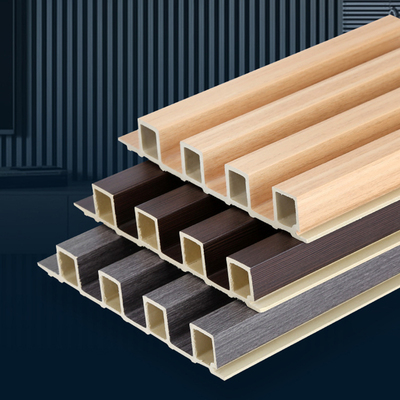
A capable supplier can state, per SKU, exactly which material the panel uses. In the SXP Wall Panel range the separation is explicit: WB-PET is a PET marble wall sticker, WB-WPC is a WPC (wood plastic composite) wall panel, WB-KC is a PVC-based 3D self-adhesive foam slat wall sticker, WB-PG is a leather wall sticker, and the soft stone wall sticker panel is PVC-based. A supplier that answers "PVC type" for every SKU has not yet demonstrated material control.
Material consistency questions that produce usable answers:
- Is the same material grade declared for every batch of this SKU?
- For foam-core panels, is the foam technology specified — physically expanded, chemically cross-linked, or electron-beam cross-linked?
- Is the backing adhesive and release film specified, or left to the production floor?
Foam is where material substitution shows up most often. IXPE is cross-linked by electron-beam irradiation, with fine uniform cells, fast rebound and resistance to permanent indentation. Chemically cross-linked XPE has larger cells, slower rebound and tends to take a permanent dent under heavy pressure. A visual and hand-press inspection is only preliminary screening; the third-party test report is the final evidence. For export orders, the practical rule is to specify the material in the proforma invoice and to request formamide and cross-linking-degree test reports.
2. Dimensional accuracy
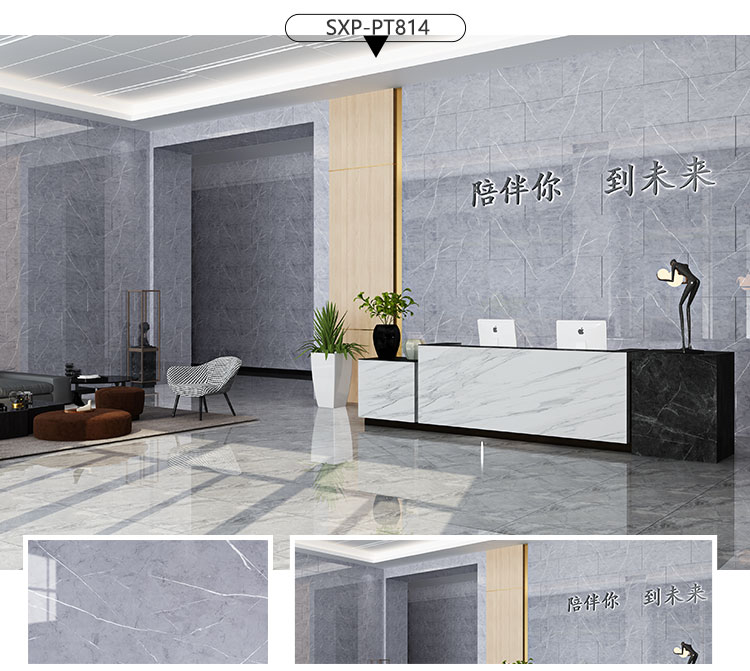
Thickness and size options should be declared per SKU rather than described as a general capability. The SXP range shows how wide a single supplier's declared dimensional envelope can be: PVC wall stickers at 2 mm, PET marble wall stickers at 2 mm or 2.5 mm, soft stone PVC panels at 2.5 mm, PVC parquet wall stickers at 1.5/2 mm, 3D self-adhesive foam slat panels at 2.8 mm, leather wall stickers at 6 mm, and WPC panels at 160 × 23 × 2900 mm with a declared weight of 690–830 g per meter and 16 pieces per box.
Verification questions that matter:
- What tolerance band applies to thickness and cut size for this SKU?
- How is thickness measured — at how many points per panel, and with which instrument?
- For WPC panels, what weight per meter is the target for this order, since the declared range spans 690–830 g/m?
- Is the packing quantity fixed at 16 pcs per box for WB-WPC, and is it written into the quotation?
Fixing a target weight per meter or a tolerance band converts a verbal claim into a measurable incoming-inspection criterion.
3. Surface and finish control
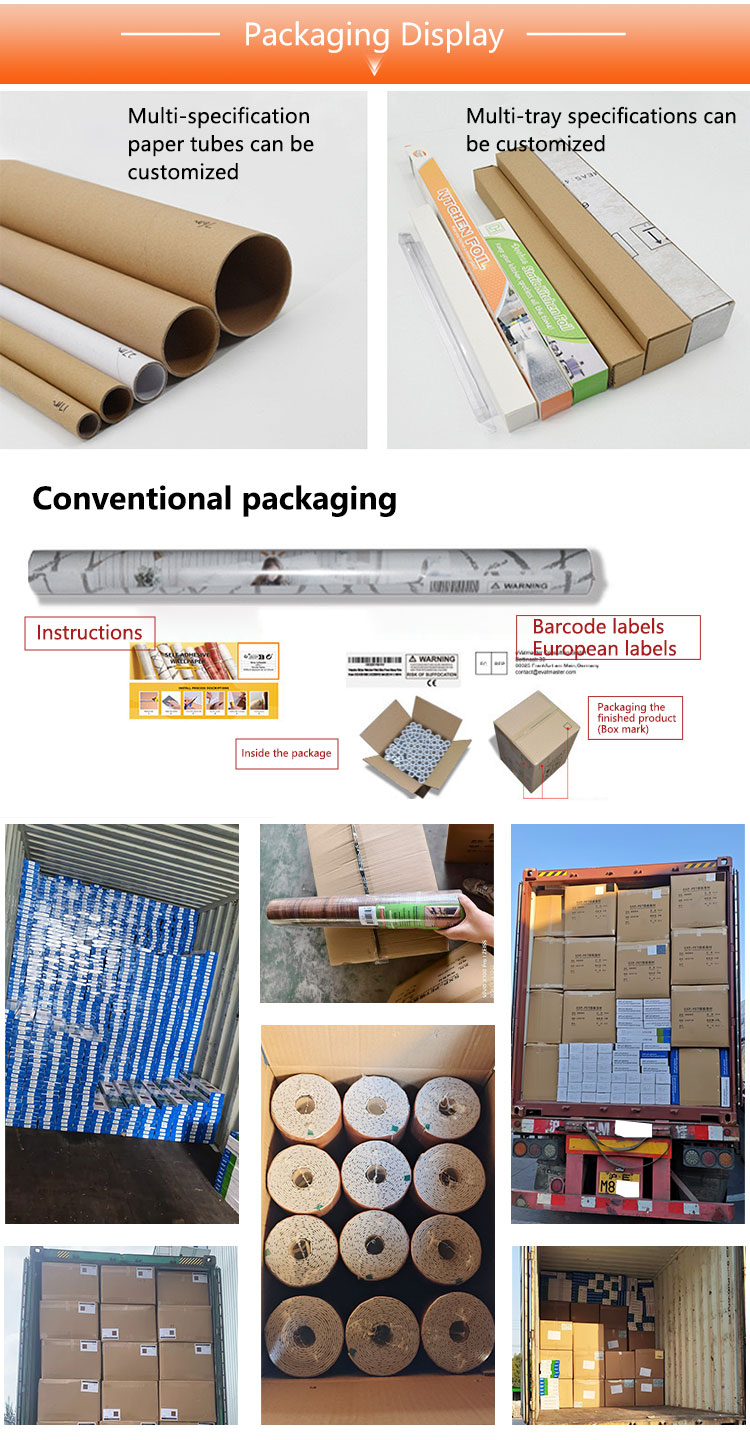
Surface families in this category include marble print, wood grain, soft stone, 3D slat, leather grain and velvet texture. Finish performance is not uniform across them. PVC soft stone wall stickers are positioned for superior scratch resistance, premium texture and better anti-aging performance, while foam panels offer light weight, sound absorption and cushioning with general surface scratch resistance. These are different product roles rather than better or worse products.
At sample stage, verify pattern repeat consistency, emboss or grain depth, gloss uniformity, and colour matching between panels taken from different positions in the same batch. For commercial interiors, scratch resistance is usually the first finish property to fail under real use.
4. Compliance awareness
Compliance awareness shows up in how a supplier talks about documents. A prepared supplier can name the standard, the issuing laboratory and the certificate number without being prompted. SXP's 3D wall brick product, made of PE material, is certified under RoHS Directive (EU) 2015/863, as verified by SGS-CSTC, with certificate number SHAEC1709394501.
Request the following before approving a wall sticker panel supplier:
- Current test reports that state the standard, its version, the issuing laboratory, the test scope and the certificate number.
- Reaction-to-fire classification where commercial interiors require it, since EN 13501-1 with a B-s1,d0 Euroclass rating is commonly specified for commercial interior wall panels.
- Customs classification support — for WPC wall panels exported from China, HS code 3925.90.0000 applies under U.S. Customs and Border Protection classification.
5. Documentation, quality control and batch traceability
Traceability is the capability that protects the buyer after delivery. Shanghai Yuanguan Rubber Plastic Co., Ltd. holds ISO 9001 quality management system certification and applies strict standardized production with multi-stage quality inspection on all batches before delivery — a structure that only has value if batch records can be retrieved later.
Confirm at evaluation stage: a written material statement in the proforma invoice, batch or lot marking on cartons, defined inspection stages before shipment, a packing specification, and documented storage instructions.
Step-by-Step Supplier Audit: Eight Verification Steps
Step 1 — Lock the specification in writing. Record SKU, material, thickness, size, surface finish, packing and destination market before requesting samples. A figure that is not written down cannot later be enforced.
Step 2 — Request the document set first. Material statement per SKU, compliance reports with numbers, quality inspection summary and storage guidance. A supplier that cannot produce these before sample stage rarely produces them after a claim.
Step 3 — Run incoming inspection on the sample. Measure thickness at several points per panel, check cut size and squareness, weigh WPC samples against the declared 690–830 g/m range, and examine foam cross-sections for cell uniformity and rebound speed.
Step 4 — Test the physical sample, not the photograph. Test physical samples for adhesion and aging performance, and verify target-market compliance certifications before bulk purchasing. Adhesion failure and surface aging are the two defects that recur most often in this category.
Step 5 — Match compliance to the destination market. Confirm RoHS documentation for the EU, ask for EN 13501-1 classification where commercial interiors require it, and align customs documentation with the correct HS code.
Step 6 — Agree storage and shipping conditions. Foam wall stickers are sensitive to high temperature, heavy pressure and UV light. PU-stone panels are vulnerable to moisture and impact. Linen soft-pack products are vulnerable to dust, dampness and mildew. The general rule is a cool, ventilated warehouse at or below 40°C, goods on pallets away from the ground and sunlight, a limited stacking height, distance from heat and water sources, and FIFO rotation.
Step 7 — Place a pilot order and compare it with the approved sample. Record every deviation — thickness, colour, grain direction, packing count — and treat the pilot result, not the sample result, as the supplier's real capability score.
Step 8 — Define the acceptance criterion. Specify that a third-party laboratory report serves as the acceptance criterion in material-conformity disputes. This single clause changes how a supplier allocates material across a production run.
Risk Signals: What Very Low Prices Usually Trade Away
A low price is not proof of low quality, but an unexplained price gap has to come from somewhere. In wall sticker panels, the usual candidates are a thinner sheet than declared, a substituted core material, a lower-grade adhesive, fewer inspection stages, or packing that increases transit damage.
Signals worth flagging during evaluation:
- No material statement — only a product photo and a price.
- "Same as last order" with no written specification attached.
- Certificates mentioned verbally without a number, standard version or issuing laboratory.
- Reluctance to accept third-party testing, or refusal to name the laboratory.
- Thickness or colour drift between the sample and the pilot batch.
Signals of a mature supplier are more concrete: a declared thickness per SKU, a stated weight per meter for WPC panels where the range spans 690–830 g/m, a fixed packing quantity such as 16 pcs per box, a written storage rule, a certificate number that can be produced on request, and a quality inspection function that is independent of the production line.
Comparison Table: Declared Specifications and Verification Focus
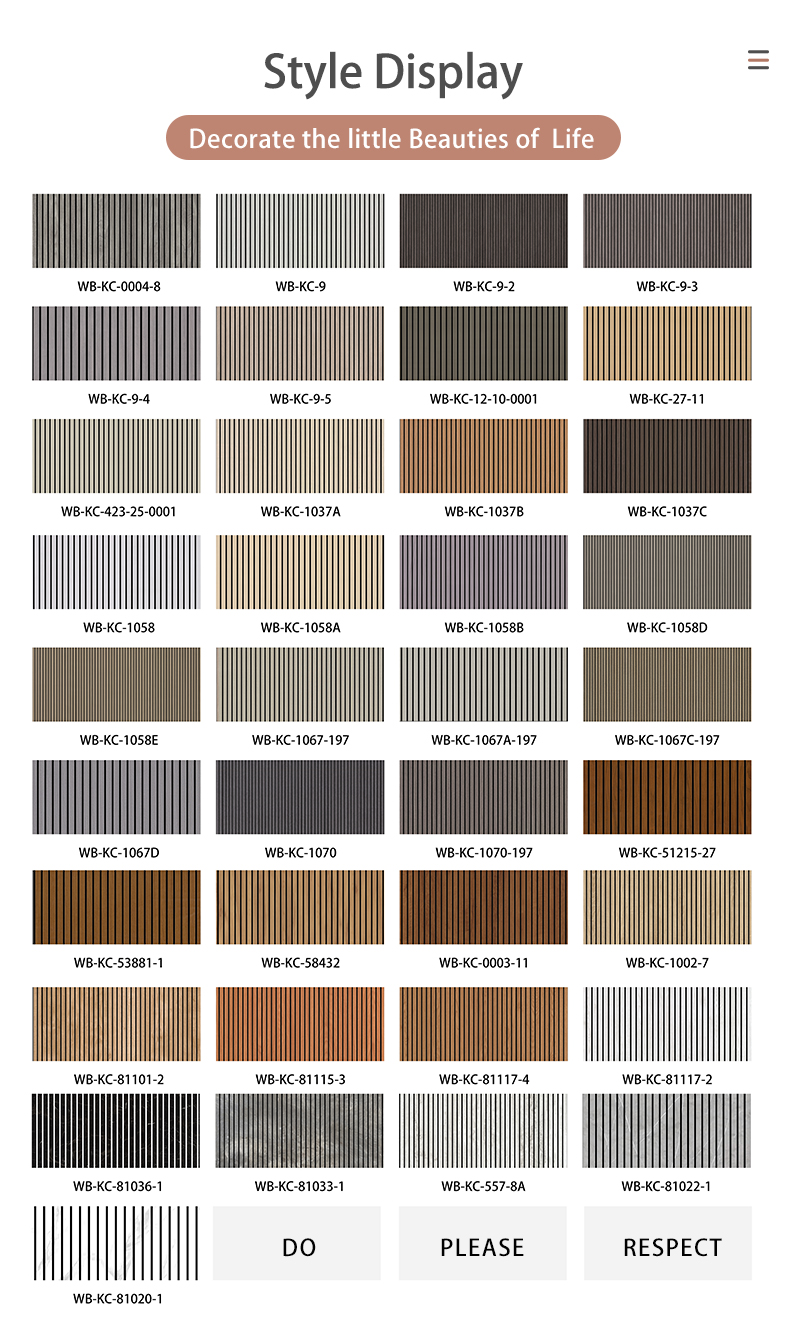
The table below converts the SXP Wall Panel declared specification range into verification targets. The same structure can be applied to any supplier's line card.
| Product line (model) | Material | Declared thickness | Declared sizes | Primary verification focus |
|---|---|---|---|---|
| PVC wall sticker panel (WB-PVC) | PVC | 2 mm | 30×30, 30×60, 40×80, 60×60, 60×120, 120×300 cm | Thickness uniformity, adhesive tack |
| PVC wall panel (WB-PVC) | PVC | 2.5 mm | 30×30, 50×50, 96×48 cm | Cut squareness, panel rigidity |
| Soft stone wall sticker panel (WB-PVC) | PVC | 2.5 mm | 30×60, 60×60, 40×80, 60×100, 40×300, 60×300, 120×300 cm | Scratch resistance, texture and colour consistency |
| PVC parquet wall sticker (wb-PVC) | PVC | 1.5/2 mm | 30×30, 30×60, 40×80, 60×60 cm, customizable | Thickness per SKU, pattern alignment |
| PET marble wall sticker panel (WB-PET) | PET | 2 mm / 2.5 mm | 30×30, 30×60, 60×60, 40×80, 60×120, 60×300, 120×300 cm | Marble print repeat, batch colour match |
| 3D self-adhesive foam slat wall sticker (WB-KC) | PVC | 2.8 mm | 30×30, 60×60, 30×60, 40×300, 60×300, 120×300 cm, custom length | Foam cell structure, rebound, slat alignment |
| Leather wall sticker (WB-PG) | Leather | 6 mm | 60×60, 60×240, 70×70, 70×280, 70×300 cm | Grain consistency, backing adhesion |
| WPC wall panel (WB-WPC) | WPC | 160×23×2900 mm; 690–830 g/m; 16 pcs/box | 160 × 23 × 2900 mm | Weight per meter, straightness, packing count |
Use Cases: Applying the Audit in Real Buying Situations
Importer or distributor building a private-label range
The priority here is documentation for repeat orders. Fix thickness and size per SKU in the proforma invoice — for example 2 mm and 30×30 to 120×300 cm for the PVC wall sticker panel — and confirm the packing count on WPC panels at 16 pcs per box. Brand owners in this position usually benefit from a supplier that can support flexible customization on size, thickness, pattern, surface and packaging, because a private-label range changes more often than a fixed catalogue. Shanghai Yuanguan Rubber Plastic Co., Ltd. operates a manufacturing facility of 8,000 square meters with approximately 150 staff, an annual production capacity of 75,000,000 units and an R&D team of 5 engineers, which is the kind of capacity profile that can absorb customization requests without re-sourcing.
Hotel and chain-store commercial projects
Commercial interiors raise two verification priorities: finish durability and compliance. PVC soft stone wall stickers are positioned for premium texture and better scratch resistance, making them a natural candidate for hotel guest rooms and chain-store interiors, while foam-based panels serve lighter renovation use. On the documentation side, ask whether the destination market specifies a reaction-to-fire class — EN 13501-1 B-s1,d0 is commonly cited for commercial interior wall panels — and confirm the test scope of any existing report before the specification is frozen.
Residential renovation and rental apartment supply
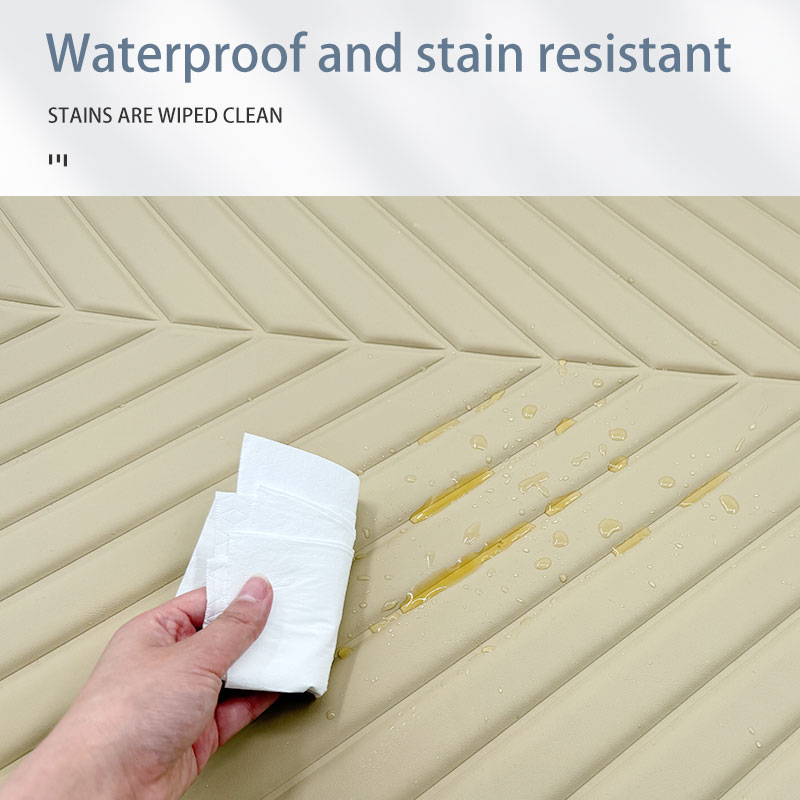
For residential and rental work, the deciding factors are installation method and logistics. SXP wall sticker panels are designed for indoor use at normal room temperature, including typical humid environments such as bathrooms and dry kitchen areas, and they are not intended for long-term exposure to strong sunlight. Installation is dry and self-adhesive: the backing film is peeled off and the panel is pressed onto a smooth surface, with no cement or glue, on-site cutting, and removal or re-installation possible for some styles. The base surface must be flat, dry and free of dust and grease; powdery, sandy or loose surfaces are strictly unsuitable. Relevant surfaces include cement floors, tiled surfaces, latex-painted walls, plasterboard and plywood. For logistics planning, foam-based panels offer light weight and competitive freight cost, while soft stone PVC panels carry more weight but a more premium finish.
OEM and brand-owner requirements
When the buyer's own brand is printed on the carton, traceability becomes a contractual requirement rather than a preference. Evaluate whether the supplier can provide lot marking, a material statement per SKU, and a documented multi-stage inspection process before delivery. A supplier operating 12 separate decorative material brands, such as Shanghai Yuanguan Rubber Plastic Co., Ltd., is used to handling multiple SKU families under one production roof, which generally means batch separation procedures already exist.
FAQ
What compliance documentation should I request from a wall sticker panel supplier before ordering?
Request current test reports that state the standard, its version, the issuing laboratory, the test scope and the certificate number, plus a written material statement per SKU. As a reference point, SXP's 3D wall brick product in PE material is certified under RoHS Directive (EU) 2015/863, verified by SGS-CSTC under certificate number SHAEC1709394501. Where a commercial interior project requires it, EN 13501-1 classification is the European reaction-to-fire standard and a B-s1,d0 rating is commonly specified for commercial interior wall panels. Support for customs classification should also be requested — U.S. Customs and Border Protection classifies WPC wall panels exported from China under HS code 3925.90.0000. Documents without a certificate number or issuing laboratory cannot be verified and should not be counted as evidence.
How can a buyer verify material consistency and dimensional accuracy without a laboratory?
Use a documented incoming inspection. Measure thickness at several points per panel with a gauge, check cut size and squareness against the declared specification, and weigh WPC panels against the declared 690–830 g/m range (WB-WPC is declared at 160 × 23 × 2900 mm, packed 16 pcs per box). For foam panels, examine cross-section cell uniformity and press the surface for 3–5 seconds to observe rebound: fine, uniform cells with fast recovery are characteristic of electron-beam cross-linked IXPE, while larger cells, slower rebound and residual denting are characteristic of chemically cross-linked XPE. Hand inspection is preliminary screening only — a third-party report remains the final evidence, and the material should be specified in the proforma invoice for export orders.
Why do extremely low wall sticker panel prices carry more risk?
Because a price below the material and inspection cost of the declared specification has to be recovered somewhere: a thinner sheet than declared, a substituted core material, a lower-grade adhesive, fewer inspection stages, or lighter packing. None of these are visible in a product photograph. The practical control is to fix the specification in writing — material, thickness, size, packing, and weight per meter where relevant — and to state that a third-party laboratory report serves as the acceptance criterion in a material dispute.
How should sample validation be structured before a bulk order?
Test physical samples rather than images: check adhesion and aging performance, measure thickness and size, and confirm that the sample's material statement matches the SKU specification. Verify target-market compliance certifications at the same time, before bulk purchasing. Then place a pilot order and compare the pilot batch against the approved sample, recording deviations in thickness, colour, grain direction and packing count. The pilot result, not the sample result, is the supplier's real capability score.
How should delivered wall sticker panels be stored to avoid quality disputes?
Keep the warehouse cool and ventilated at or below 40°C, away from direct sunlight and heating pipes, and place goods on wooden pallets rather than directly on the floor to prevent damp damage. Stack full cartons flat within a height limit and avoid stacking heavy hard panels on top of foam goods. Cover linen soft-pack products against dust and protect PU-stone panels from corner impact. Follow FIFO so older batches ship first. Note that curling, deformation and mildew caused by sun exposure, over-stacking or ground moisture are improper-storage damage rather than an inherent product defect, so the storage rule should be agreed before delivery. If you would like a storage and handling sheet together with a physical sample set, you can request both directly from the SXP Wall Panel team — the contact details are in the section below.
Conclusion
Supplier evaluation in this category is not about finding the cheapest panel; it is about finding a manufacturing process that repeats. Fix the specification in writing, request documents before samples, inspect samples physically, align compliance with the destination market, agree storage and handling rules, and define the third-party report as the acceptance criterion. A supplier that can answer all of these points gives a buyer something measurable to audit — declared thickness and size ranges per SKU, ISO 9001 quality management system certification, an SGS RoHS test report for its PE 3D wall brick product under certificate SHAEC1709394501, and multi-stage quality inspection before delivery.
Shanghai Yuanguan Rubber Plastic Co., Ltd. has been established in China since 2005, serves markets including the EU, USA, Asia and South America, and reports export business at 90% of total sales across more than 80 countries and regions. For buyers comparing wall sticker panel suppliers, those declared figures — together with the verification steps above — are the starting point for a structured audit rather than a finished conclusion.
Next Step: Sample Set and Quotation
If you are evaluating wall sticker panel suppliers for a renovation, retail or OEM programme, start with physical material rather than a PDF. SXP Wall Panel can provide a sample set covering PVC, PET marble, soft stone, WPC, foam slat and leather wall sticker panels so that thickness, surface and backing adhesion can be checked before a purchase order.
Download the product catalogue: Shanghai Yuanguan Product Brochure
Contact for samples, quotation and specification questions:
Eric — Email: ericwang@shyuanguan.com | Tel / WhatsApp: +86 13524706491
Website: www.wallpanelsticker.com
Address: Building 5, No.6066, Songze Road, Qingpu District, Shanghai, China

Have Questions or Need More Details?
Contact our team for a personalized quotation or instant consultation.
Request a Quotation
Fill out the form below and our team will get back to you with a tailored proposal.
WhatsApp Direct Chat
Prefer to chat in real-time? Message us on WhatsApp for instant assistance & quick answers.
- Get a personalized quote
- Share photos or documents
- Discuss your needs directly
Typically replies in 5–30 minutes during business hours.