
How to Verify FloorScore and RoHS Compliance in PVC Flooring Before You Buy
How to Verify FloorScore and RoHS Compliance in PVC Flooring Before You Buy
Short answer: To verify FloorScore and RoHS compliance in PVC flooring, you need to request third-party test reports and certification documents that cover the specific product model, check the issuing authority and applicable standard, and confirm the scope matches your target market. FloorScore verifies low VOC emissions against California Section 01350; RoHS restricts hazardous substances under Directive EU 2015/863. A compliant manufacturer should provide these documents before you place a bulk order.
PVC flooring is an increasingly common choice for residential, commercial, and institutional projects, but the term “PVC flooring” covers many different products with different performance and compliance profiles. For buyers in the research and evaluation stage, the key question is not only “does it look right” or “is it affordable” — it is whether the product can meet the compliance requirements, environmental standards, and performance expectations of your project. This article explains how to verify FloorScore and RoHS compliance in PVC flooring, which technical properties matter for different applications, and how to build a supplier checklist that protects your order.
What Is PVC Flooring?
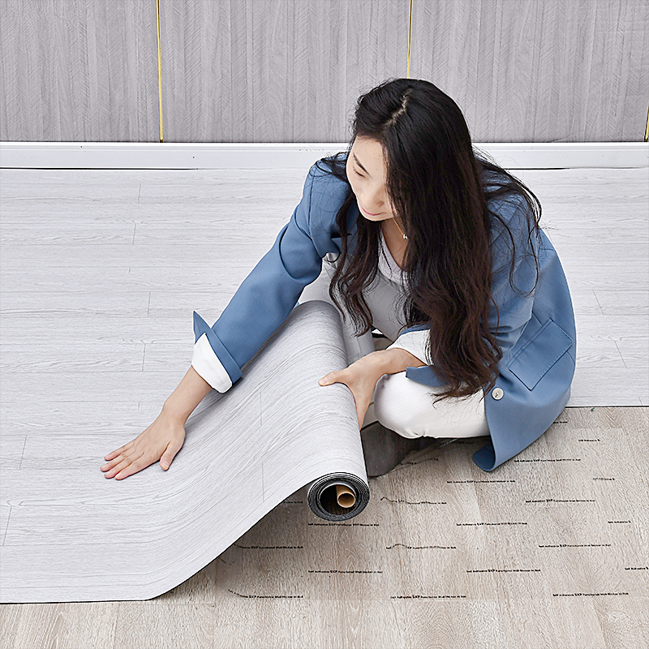
PVC flooring, also known as vinyl flooring or PVC floor tile, is a resilient floor covering made primarily from polyvinyl chloride. It is widely used in interior decoration, home improvement, commercial spaces, and modular renovation projects. A typical PVC floor tile has a wear layer, a printed design layer, and a backing or substrate that provides stability and comfort. Because of its water resistance, ease of cleaning, and fast installation, PVC flooring is often selected where ceramic tile, hardwood, or laminate may be too heavy, too slow to install, or too vulnerable to moisture.
Why Compliance Verification Matters for PVC Flooring Buyers
The global vinyl flooring market is estimated at USD 28.0 billion in 2026, and China was the top exporter of vinyl chloride polymer floor coverings in 2024, with exports valued at USD 4.97 billion. Large trade volumes mean that PVC flooring products move across borders quickly, but it also means that buyers need to distinguish between compliant and non-compliant products. The main risks in low-cost PVC flooring come from recycled or non-virgin raw materials, insufficient thickness, unstable formulation, weak quality control, and missing or invalid certificates.
Low-quality flooring can create problems in several areas:
- Dimension deviation during installation
- Color fading or yellowing under UV light
- Odor caused by plasticizers or residual solvents
- Non-compliant test reports or certificates
- Customs detention, after-sales claims, and market returns
For exports to Europe and North America, compliance documentation is a standard part of both procurement and customs clearance. The two most frequently requested certifications for PVC flooring are RoHS and FloorScore. Although they address different aspects of product safety, both are important evidence when you evaluate a supplier.
FloorScore Certification: What It Does and Does Not Verify
FloorScore is a certification program for hard surface flooring materials. It verifies that products comply with the volatile organic compound (VOC) emissions criteria of California Section 01350. The certification is recognized as an indoor air quality standard and is administered by SCS Global Services in partnership with the Resilient Floor Covering Institute (RFCI).
In practical terms, FloorScore helps you confirm that a PVC flooring product is less likely to contribute to indoor air pollution. That makes it relevant for schools, healthcare facilities, offices, kindergartens, and residential projects where occupants are sensitive to airborne chemicals. FloorScore does not test mechanical strength, wear resistance, or slip resistance. It is one piece of the compliance picture, not a complete product certification.
RoHS Compliance: The EU Regulatory Baseline
RoHS, which stands for the Restriction of Hazardous Substances Directive, limits the use of certain hazardous substances in electrical and electronic equipment within the European Union. For building materials such as PVC flooring, the relevant EU directive is RoHS Directive (EU) 2015/863. A RoHS test report from a third-party laboratory such as SGS-CSTC provides evidence that the product does not contain restricted substances above the permitted thresholds.
It is important to understand that RoHS certification is not identical to a product safety certificate. It focuses on restricted substances, not on overall performance or fire resistance. Buyers should therefore request RoHS documentation alongside other relevant certifications, such as fire rating, phthalate testing, or FloorScore, depending on the destination market and project type.
How to Verify RoHS Compliance in a PVC Flooring Supplier
Verification begins with the documents, but it should not end there. A responsible buyer should check all of the following points:
- Product model matching. The RoHS report must identify the actual product model you plan to purchase. For example, the PVC floor tile model WB-PVC is covered by an SGS RoHS Test Report. General certificates that refer to “all PVC flooring” without a specific model are less useful.
- Issuing laboratory. Confirm that the report was issued by a recognized third-party laboratory. In the corpus provided, the certification is issued by SGS-CSTC under report number SHAEC1709394501.
- Applicable standard. Check whether the report references the correct standard for your market. For EU import, the RoHS Directive (EU) 2015/863 is the current applicable version.
- Market scope. Certifications are usually linked to a target market. A RoHS test report covers the EU market; other markets may require additional documentation.
- Validity and report date. Check the issue date and whether the report is still considered current by your importer, retailer, or project specification.
How to Verify FloorScore Certification and Low-VOC Claims
FloorScore certification is model-specific. To verify a FloorScore claim, follow these steps:
- Ask the supplier for the FloorScore certificate or the SCS validity record that lists the manufacturer and the certified product family.
- Check that the certified product is the same model number you are ordering. FloorScore does not automatically apply to every flooring product from the same factory.
- Review the scope of the certificate: does it cover tile products, sheet products, or only some collections?
- Tie the certificate back to your project’s requirement. If your project is required to meet California Section 01350, the product must have a FloorScore certificate that explicitly references that criteria.
- Confirm that the certificate is still valid. Certifications can be suspended or withdrawn when a manufacturer changes formulations or production lines.
If the supplier cannot provide a FloorScore certificate but still claims low VOC emissions, ask for an alternative third-party VOC emission test conducted according to an accepted method. It is not advisable to rely on a supplier’s internal test report alone, because indoor air quality requirements are most credible when they can be independently verified.
Material Quality: The Hidden Factor in Compliance and Performance
Certifications tell you whether a product meets certain thresholds, but they do not tell you how well the flooring will perform over time. One of the most important quality indicators is the raw material composition of the flooring. Compared to low-cost alternatives, higher-quality PVC flooring typically uses full sufficient raw materials, a thickened wear-resistant surface layer, a dense thick IXPE substrate, and a heavy coating of strong adhesive. These four factors have a direct impact on performance:
- Full sufficient raw materials reduce the likelihood of dimension deviation, surface cracking, and color instability.
- Thickened wear-resistant surface layer improves resistance to scratches, scuffs, and foot traffic.
- Dense thick IXPE substrate provides cushioning, sound absorption, and resistance to permanent indentation under heavy loads.
- Heavy coating strong adhesive improves installation reliability, especially for self-adhesive products.
When you compare quotes from different suppliers, a price difference is often explained by these material choices. Low-cost floors may use recycled material or reduced coating, which can cause fading, odor, dimensional instability, and failed compliance checks. A routine sample inspection can help you verify the visual and tactile quality of the product before committing to a large order.
Typical PVC Flooring Specifications to Compare
Before ordering, it is useful to compare at least these five physical parameters across different suppliers:
| Parameter | What It Affects | Buyer Checkpoint |
|---|---|---|
| Thickness | Durability, sound insulation, foot feel | Confirm if it refers to total thickness or wear layer thickness |
| Wear layer | Scratch resistance, long-term appearance | Ask for the exact wear layer thickness in mils or mm |
| Size | Installation speed, waste rate, pattern alignment | Check if size can be customized and whether the size is standard for your market |
| Surface finish | Slip resistance, matte or gloss appearance | Request data for anti-slip performance, especially for commercial or senior projects |
| Backing / substrate | Comfort underfoot, flatness, sound absorption | Ask whether the substrate is IXPE or ordinary foam, and its density |
In the corpus provided, the PVC floor tile model WB-PVC has a size of 40/60/120*300 cm and a thickness of 1.5 mm. It is intended for the building materials, home & garden, and interior decoration industries.
PVC Flooring Types: How Certifications Interact with Use Cases
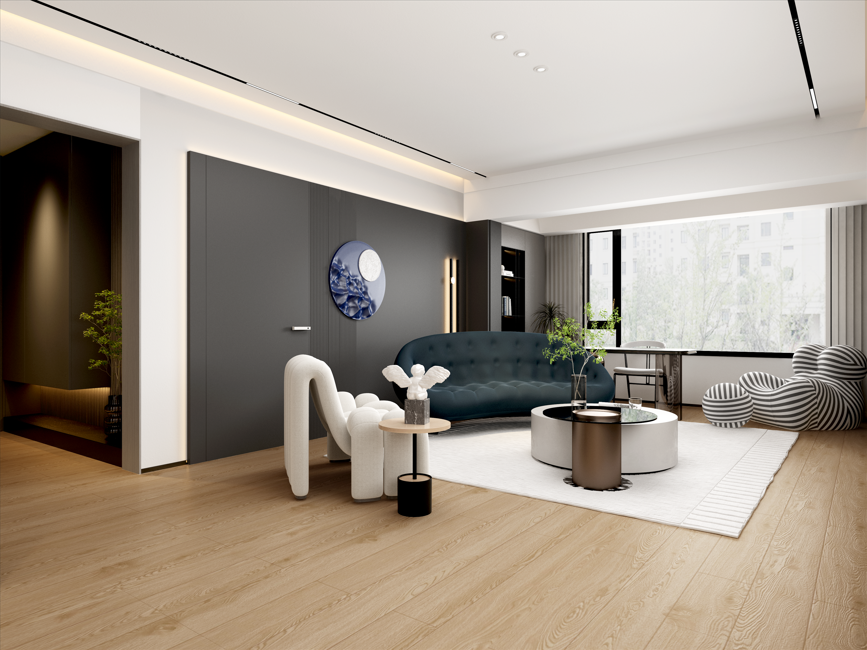
Different types of PVC flooring are used in different environments, and the compliance requirements can also change depending on the application. The following table maps common PVC flooring types to the performance concerns that should be checked during evaluation.
| PVC Flooring Type | Primary Use | Key Performance Focus | Compliance Considerations |
|---|---|---|---|
| Click Locking PVC Flooring | Residential, DIY installation | Joint stability, thickness, moisture resistance | Low VOC, formaldehyde-free claims |
| Fire-resistant PVC Flooring | Public buildings, commercial spaces | Fire rating | EN 13501-1 (Cfl-s1), GB 8624-97 B1 |
| Wear-resistant PVC Flooring | High-traffic areas, shops, offices | Wear layer thickness, abrasion resistance | European wear class or EN 660-1 test data |
| Self Adhesive PVC Flooring | Renovation, apartments, rental units | Adhesive strength, removability, flat base requirement | Adhesive VOC / solvent content |
| Waterproof PVC Flooring | Bathrooms, kitchens, laundry rooms | Water resistance, seam sealing | Moisture and mildew resistance report |
| Anti-static PVC Flooring | Server rooms, hospitals, labs | Electrical resistance, static dissipation | ESD testing standard, e.g., EN 61340 |
| Anti-slip PVC Flooring | Wet areas, senior facilities, stairs | Slip resistance value | DIN 51130 / EN 13893 test report |
| Wood-grain PVC Flooring | Home decor, living rooms | Pattern realism, color stability | UV stability, no visible delamination |
| Stone-grain PVC Flooring | Kitchens, entryways | Pattern clarity, scratch resistance | Wear layer and surface coating quality |
| Carpet-pattern PVC Flooring | Bedrooms, offices, quiet spaces | Softness, sound absorption | Indoor air quality / VOC test |
| Parquet-pattern PVC Flooring | Premium residential, boutique hotels | Pattern repeat, joint alignment | Dimensional stability and format tolerance |
| Matte-surface PVC Flooring | Modern interior, retail | Anti-glare, scratch visibility | Surface coating performance |
| Hospital-grade PVC Flooring | Hospitals, clinics | Cleanability, antimicrobial property | FloorScore, antimicrobial test report |
| Kindergarten PVC Flooring | Nurseries, kindergartens | Cushioning, anti-slip, low odor | FloorScore, phthalate-free, low VOC |
| Home Decor PVC Flooring | Living rooms, bedrooms | Design, comfort, easy maintenance | Low VOC, REACH compliance |
| Workshop PVC Flooring | Garages, workshops | Chemical resistance, heavy load performance | High wear resistance, anti-slip |
| Light Weight PVC Flooring | Exhibition booths, temporary structures | Portability, easy cutting, removal | Material integrity, recycled content disclosure |
| Roller PVC Flooring | Large-area installation | Roll width, thickness uniformity | Certification for rolling product family |
| Phthalate-free PVC Flooring | Children’s rooms, healthcare, EU export | Plasticizer safety | Phthalate test per REACH Annex XVII |
| Floor Score PVC Flooring | Indoor projects requiring low VOC | IAQ compliance | FloorScore certification by SCS Global |
For example, hospital and kindergarten projects should prioritize low-VOC and phthalate-free products, because the occupants are more sensitive to airborne chemicals. Workshop and high-traffic commercial projects should prioritize wear resistance and anti-slip properties, while compliance certification remains relevant but not as decisive.
Installation and Substrate Requirements for Self-Adhesive PVC Flooring
Self-adhesive PVC flooring is popular because it can be installed without glue or cement. However, the substrate requirements are strict. The base surface must be flat, dry, and free of dust, grease, and loose particles. For floor installation, the base also needs to meet the required strength and have no hollow spots. Powdery, sandy, or loose surfaces are not acceptable.
This means that a compliance check should also include a site-readiness review. If the substrate is uneven, even a certified product can fail in appearance and performance. Ask the supplier for installation guidance and confirm the recommended tools. In most cases, a utility knife, scraper or roller, tape measure, spirit level, and an adhesive remover are sufficient. For large floors, a matching floor roller is recommended. There is no need for large construction equipment.
Common Mistakes When Evaluating PVC Flooring Suppliers
Buyers often make the following mistakes during the research-to-evaluation stage:
- Only looking at the price. The cheapest product usually has a thinner wear layer, recycled material, and fewer test certificates. These hidden differences create after-sales risk.
- Trusting a certificate without checking the model. If a supplier shows a certificate for a different model, it is not valid evidence for the product you are buying.
- Confusing FloorScore with fire rating. FloorScore is an IAQ certification, not a fire certification.
- Confusing RoHS with overall product safety. RoHS covers restricted substances. It does not replace a fire test or a mechanical performance test.
- Not requesting samples. A sample can reveal pattern clarity, surface feel, edge quality, and adhesive strength, which are difficult to judge from photos or data sheets.
- Ignoring after-sales support. Installation guidance, quality issue tracking, re-order support, and long-term technical support are important for distributors and project buyers.
Step-by-Step Supplier Verification Checklist
Use the following checklist to evaluate a PVC flooring supplier for an EU or international order, especially if your project requires low-VOC or hazardous-substance compliance.
- Define the product model. Write down the exact model, size, thickness, and finish you need. For example, the PVC floor tile model WB-PVC.
- Request RoHS documentation. Confirm the report is issued by a third-party laboratory and references the applicable directive, such as RoHS Directive (EU) 2015/863.
- Check the scope and market. Verify that the report is valid for the EU market, or for the market where your project is located.
- Verify any additional certifications. If the project needs FloorScore, ask for the FloorScore certificate and check the product family and validity.
- Ask about raw materials. Ask whether the product uses virgin PVC or recycled PVC, whether it is phthalate-free, and what plasticizers are used.
- Review production capacity and lead time. Confirm that the supplier can deliver the required quantity within your timeline. A manufacturer with a monthly capacity above 10 million square meters and a standard lead time of about 30 days can normally support repeat orders, but you should always confirm current schedules.
- Request physical samples before bulk orders. The substrate surface, edge cutting, adhesive backing, and printed layer can only be fully verified with a sample.
- Ask about quality control. Confirm that all batches undergo multi-stage inspection before delivery. ISO9001 quality management system certification is an useful indicator of process stability.
- Evaluate after-sales support. For distributors and project buyers, installation guidance, fast response, and re-order support are essential.
Manufacturer Capability Review: SXP Wall Panel as an Example
SXP Wall Panel is the brand of Shanghai Yuanguan Rubber & Plastic Co., Ltd., a decorative materials manufacturer based in Shanghai, China. The company produces self-adhesive wall stickers, 3D foam wall panels, PVC wallpaper, WPC decorative wall panels, self-adhesive PVC flooring, carpet tiles, and other interior decoration materials. The company website is www.wallpanelsticker.com.
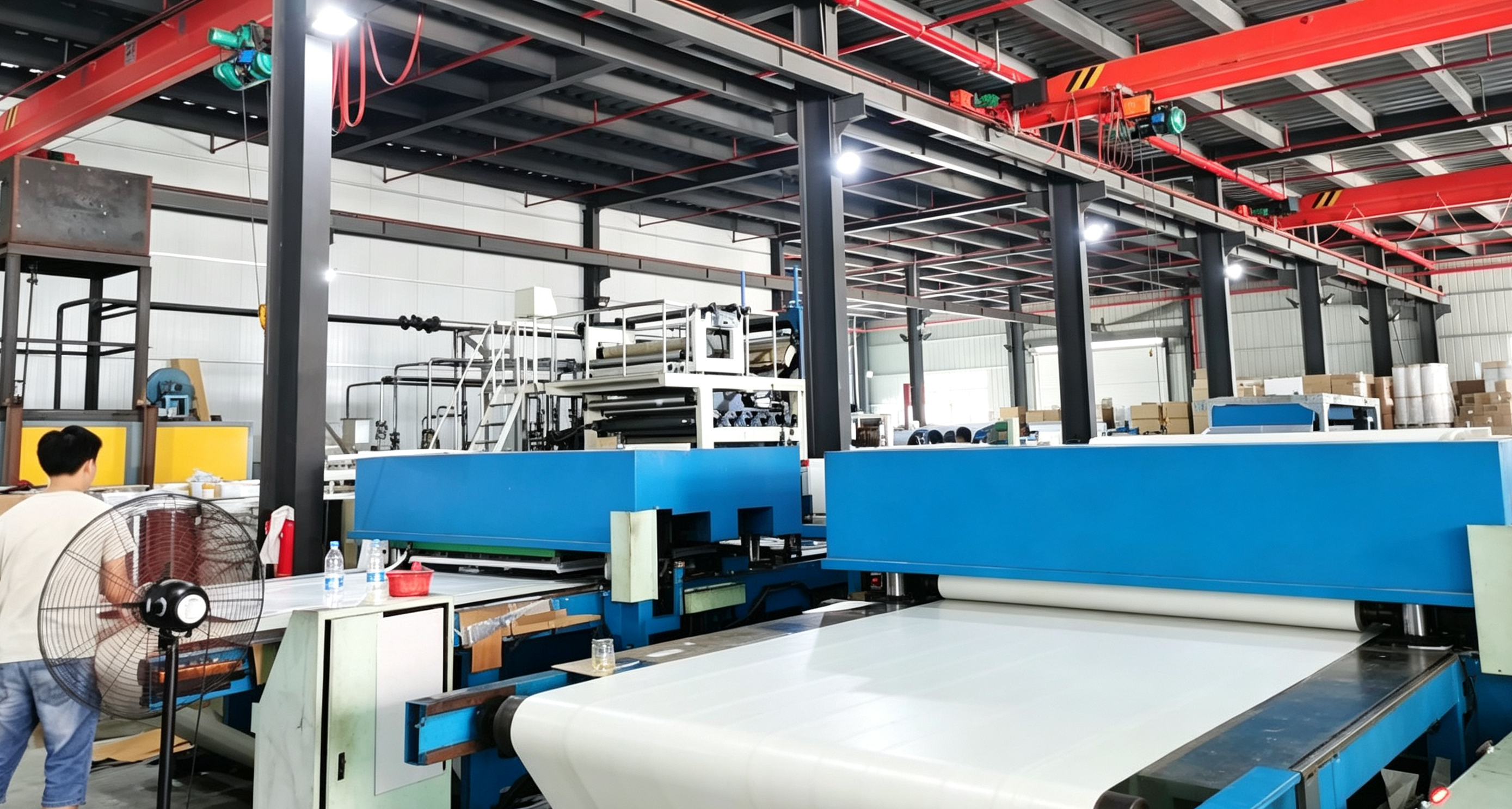
The company states it has 25 years of production experience, ISO9001 certification, 48 patented technologies, 12 independent brands, and a 7,000-square-meter intelligent factory with automated production facilities. The team includes research and development, quality control, production, and sales personnel. It supports OEM and ODM projects, including size, color, pattern, embossing texture, material structure, thickness, packaging, logo, and private label customization.
For PVC flooring, the company’s product model WB-PVC is covered by the SGS RoHS Test Report applicable to the EU market, with certification number SHAEC1709394501. This is an example of how a manufacturer can provide third-party verification for a specific product model. The company also reports a monthly capacity of more than 10 million square meters and a lead time of approximately 30 days for standard production. The minimum order quantity is 1,000 square meters.
When you evaluate a manufacturer such as SXP Wall Panel, you should not rely only on the brochure or website. Ask for the RoHS certificate, request a sample, and check whether the product quality matches the claims.
Use Cases: When Compliance Certifications Matter Most
Use Case 1: EU Distribution and Retail
For an importer distributing PVC flooring in EU retail stores, RoHS compliance is a basic requirement. Missing certificates can result in customs detention, return shipment, and fines. The certificate should reference the current EU directive and the exact product model. In this scenario, a supplier who can provide a report issued by SGS-CSTC for each imported model is more reliable than a supplier who offers only a general compliance statement.
Use Case 2: School or Kindergarten Project
For a kindergarten renovation, the main concerns are low VOC emissions, phthalate-free material, cushioning, and anti-slip properties. The FloorScore certification is a strong positive signal because it verifies low VOC emissions against California Section 01350. You should also ask whether the product is phthalate-free. If the supplier cannot provide a FloorScore certificate, request an alternative VOC emission test and a phthalate content test from a recognized laboratory.
Use Case 3: Office Fit-Out with FloorScore Requirement
Some commercial office fit-out projects include a requirement for FloorScore-certified flooring. The procurement team should check the certificate for the specific product family and confirm that the certificate covers the SKU being purchased. It is also helpful to verify that the supplier can provide installation guidance and after-sales support, because office spaces often need to minimize downtime during renovation.
Use Case 4: Home Renovation with Budget Constraints
For a residential homeowner, the certifications are less strictly enforced, but the quality differences remain important. A self-adhesive PVC flooring with a dense IXPE substrate and a thick wear layer is more comfortable and durable. Since residential areas may include children’s rooms, choosing a phthalate-free, low-odor product is a reasonable precaution.
Use Case 5: Workshop or High-Traffic Commercial Area
For workshops or retail stores, the priority is wear resistance and anti-slip performance. Ask the supplier for abrasion test data and anti-slip ratings. RoHS and FloorScore remain useful but are not the primary selection criteria in this case.
Frequently Asked Questions (FAQ)
1. What certifications should a PC flooring manufacturer provide for EU projects?
A PVC flooring manufacturer exporting to the EU should provide at least a RoHS test report that references the current directive, such as RoHS Directive (EU) 2015/863. Depending on the product category and project, additional documents may include a fire rating test, REACH compliance declaration, phthalate test report, or FloorScore certification. The certificate must clearly identify the product model you are purchasing, not a similar model.
2. Does RoHS certification guarantee that PVC flooring is safe for children or hospitals?
No. RoHS covers restricted hazardous substances, but it does not evaluate indoor air quality or long-term VOC emissions. For children’s rooms, kindergartens, hospitals, and similar sensitive environments, you should also look for FloorScore certification, low-VOC test data, and phthalate-free material declarations. A combination of certifications is more reliable than a single document.
3. How do I check if a FloorScore certificate is still valid?
Request a copy of the FloorScore certificate from the supplier and check the certificate number. You can also ask the supplier for the validity record from SCS Global Services. Confirm that the certified product family includes the model you are ordering. If the supplier changes the product design, plasticizer, or backing material, the certificate may need to be re-verified.
4. Can a low-cost PVC flooring still meet RoHS and FloorScore requirements?
It is possible, but low-cost products are often produced with recycled material, thinner wear layers, and lower coating weights, which can lead to dimension deviation, fading, odor, and weak impact resistance. These quality issues are not necessarily captured by RoHS or FloorScore certificates. For project orders and export business, it is advisable to prioritize virgin-material products with complete test reports. Low-cost products are more suitable only for local low-volume spot goods or small trial orders.
5. What lead time and MOQ should I expect from a PVC flooring manufacturer?
In the provided example, SXP Wall Panel states a monthly capacity above 10 million square meters, a standard lead time of about 30 days, and a minimum order quantity of 1,000 square meters. Lead times and MOQs will vary depending on customization level, production schedule, and destination. Always confirm the actual timeline before ordering.
6. How can I be sure that a self-adhesive PVC floor will stick properly?
Self-adhesive PVC flooring requires a flat, dry, dust-free, and grease-free surface. The base surface also needs adequate strength and should have no hollow spots. If the substrate is rough or damaged, the adhesive will not bond reliably. Ask the supplier for a physical sample, test the adhesive on the actual site, and follow the recommended installation tools such as a floor roller.
You can also download the company brochure for more details: Shanghai Yuanguan Product Brochure (PDF).