
PVC Flooring Guide: Types, Benefits, and How to Choose
PVC Flooring: A Practical Guide to Types, Benefits, and Smart Selection
PVC flooring is a synthetic resilient floor covering made primarily from polyvinyl chloride. It is widely used in homes, hotels, retail spaces, kindergartens, hospitals, and workshops because it balances cost, durability, water resistance, and ease of installation. This guide explains what PVC flooring is, what to look for when buying it, and how to match the right type to your project.
What Is PVC Flooring?
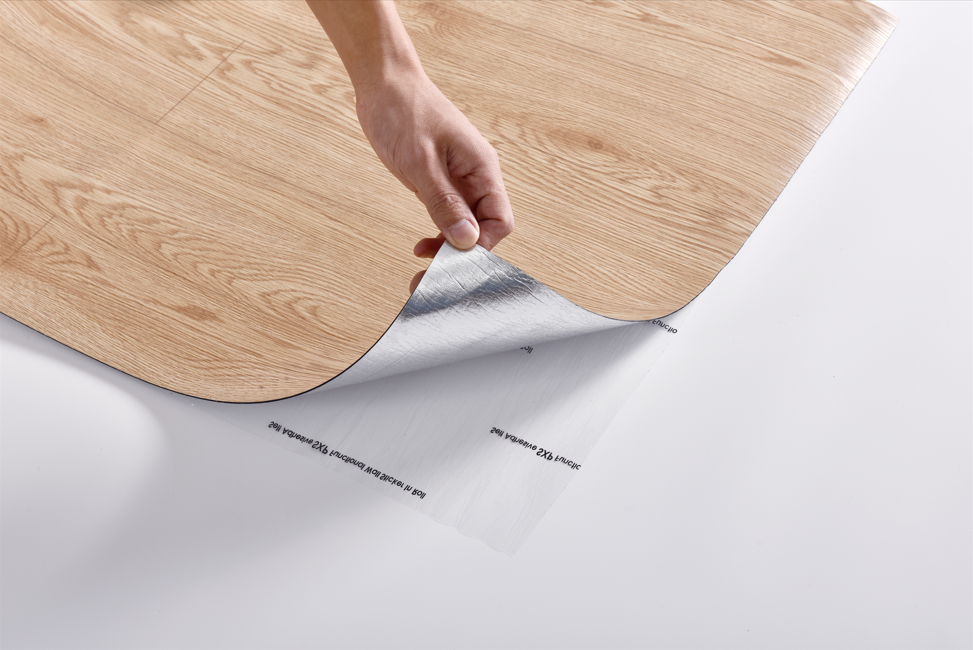
PVC flooring, also called vinyl flooring, is a resilient floor surface produced from PVC resin combined with plasticizers, stabilizers, and fillers. It can be made as tiles, planks, or rolls and can imitate wood, stone, carpet, or parquet patterns. Because it is waterproof, relatively thin, and available with self-adhesive backing, PVC flooring is a common choice for renovation and light-commercial projects.
Shanghai Yuanguan Rubber Plastic Co., Ltd. is a decorative materials manufacturer in Shanghai, China, established in 2005. The company makes self-adhesive PVC flooring, wall stickers, wall panels, wallpaper, carpet tiles, and other interior decoration materials. Its self-adhesive PVC flooring is sold under the model WB-PVC.
Why PVC Flooring Is Gaining Attention in Global Markets
The global vinyl flooring market is estimated at USD 28.0 billion in 2026, according to Grand View Research. The same report projects it to reach USD 41.5 billion by 2033, with a compound annual growth rate of 5.8%. This broad category includes luxury vinyl tile, vinyl composite tile, and vinyl sheet flooring.
China is the largest exporter of vinyl chloride polymer floor coverings. Under HS code 391810, China exported USD 4.97 billion of these products in 2024, followed by Vietnam at USD 1.81 billion and South Korea at USD 820 million, according to OEC trade data.
This trade pattern matters for buyers. A large share of globally traded PVC flooring is manufactured in Asia, which means importers need to verify supplier quality, material composition, and compliance documents rather than relying only on price.
Common Types of PVC Flooring
PVC flooring is not a single product. Different constructions and surface finishes serve different rooms and usage levels.
Click Locking PVC Flooring
Click locking PVC flooring uses a mechanical locking system on the edges of each plank or tile. The pieces are joined by angling and pressing them together without glue or nails. This type is popular for DIY installation and floating floors, and it can be lifted and reinstalled if the layout changes. It works best on flat, stable subfloors.
Self-Adhesive PVC Flooring
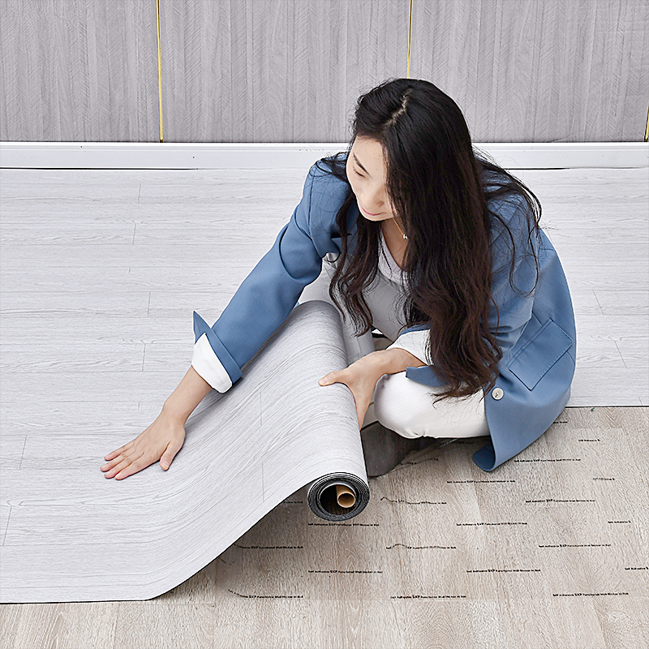
Self-adhesive PVC flooring has a pressure-sensitive adhesive backing covered by a protective film. The installer peels off the film and presses the flooring onto a smooth, clean surface. No cement or glue is required. This dry installation method shortens renovation time and suits rental apartments, old-house remodeling, and light-commercial refurbishment.
The WB-PVC flooring produced by Shanghai Yuanguan Rubber Plastic Co., Ltd. is a self-adhesive PVC floor tile with a thickness of 1.5 mm and available sizes of 40/60/120×300 cm.
Waterproof PVC Flooring
Waterproof PVC flooring is designed for bathrooms, kitchens, laundry rooms, and other wet areas. Since PVC is inherently resistant to moisture, the main risk is water seeping through joints. For areas with frequent standing water, choose thick tiles with tight joints or sheet flooring with fewer seams. The substrate below must also be dry and smooth.
Fire-Resistant PVC Flooring
Fire-resistant PVC flooring is formulated with flame-retardant additives to slow ignition and reduce flame spread. In China, the national standard GB 8624-97 classifies building material fire resistance, and PVC flooring is commonly required to meet Class B1. In Europe, EN 13501-1 classifies flooring as Cfl-s1. In the United States, ASTM E648 is a referenced test method. These standards help buyers verify that a product meets local project requirements.
Wear-Resistant PVC Flooring
Wear-resistant PVC flooring has a transparent wear layer on the surface that protects the printed design from scratches, scuffs, and abrasion. It is used in corridors, classrooms, retail stores, and other high-traffic spaces. A thicker wear layer generally provides better durability, but the quality of the PVC formula also matters.
Anti-Slip PVC Flooring
Anti-slip PVC flooring has a textured surface or special coating that increases friction underfoot. It is commonly installed in bathrooms, kitchens, kindergartens, and public areas where wet or smooth surfaces create a slip risk. Anti-slip performance should be balanced with ease of cleaning, because deeply textured surfaces can trap dirt.
Anti-Static PVC Flooring
Anti-static PVC flooring is designed to dissipate static electricity. It is used in server rooms, electronics workshops, laboratories, and some medical facilities. Not every PVC floor is anti-static; buyers with electrostatic discharge requirements should request the supplier's test data and confirm the product is suitable for the intended equipment.
Wood-Grain, Stone-Grain, Carpet-Pattern, and Parquet-Pattern PVC Flooring
PVC flooring can reproduce the visual appearance of wood, stone, carpet, or parquet at a lower cost and with easier maintenance than the natural material.
- Wood-grain PVC flooring mimics wooden planks and is the most common style for bedrooms, living rooms, and retail spaces.
- Stone-grain PVC flooring imitates marble, slate, or ceramic tile and is often used in kitchens, bathrooms, and commercial lobbies.
- Carpet-pattern PVC flooring provides a soft visual texture without the maintenance issues of real carpet.
- Parquet-pattern PVC flooring reproduces herringbone or mosaic wood layouts for a classic decorative effect.
Matte-Surface PVC Flooring
Matte-surface PVC flooring has a low-gloss finish that reduces reflections and hides scratches. It is a common choice for modern residential interiors, offices, and photography studios where glare is undesirable.
Lightweight and Roller PVC Flooring
Lightweight PVC flooring is easier to transport and handle, which reduces logistics costs and speeds up installation. Roller PVC flooring is supplied in rolls and can cover large continuous areas with fewer joints. It is often used in clinics, schools, and rental apartments.
Hospital-Grade and Kindergarten PVC Flooring
Hospital-grade PVC flooring is selected for clinics, laboratories, and aged-care facilities, where hygiene, cleanability, and slip resistance are priorities. Kindergarten PVC flooring often combines cushioning, anti-slip texture, and colorful or educational patterns. For both segments, buyers should verify low VOC emissions, phthalate content, and cleaning compatibility with the supplier's documentation.
Step-by-Step: How to Choose PVC Flooring for a Project
Use this workflow to narrow down the right PVC flooring before requesting samples or quotes.
- Define the room function. Bathrooms and kitchens require waterproof and anti-slip properties. Bedrooms may prioritize wood-grain appearance and comfort. Workshops need wear resistance and easy cleaning. Kindergartens need cushioning and anti-slip texture.
- Check the base surface. PVC flooring, especially self-adhesive types, requires a flat, dry, clean, and solid surface. Suitable bases include cement floors, tiled surfaces, latex-painted walls, plasterboard, and plywood. Powdery, sandy, or loose surfaces will not provide enough adhesion.
- Confirm installation method. Self-adhesive tiles are the fastest for DIY and renovation. Click-lock planks are better for floating floors and areas where removal may be needed. Roller flooring is suitable for large continuous areas.
- Evaluate traffic and wear. High-traffic commercial spaces need a thicker wear layer and tested abrasion performance. Light residential areas can use thinner products.
- Check compliance documents. For EU-bound shipments, CE-CPR construction-product certification, REACH hazardous-substance compliance, and PPWR packaging rules apply. For US projects, FloorScore certification signals compliance with California Section 01350 VOC emission criteria. Missing certificates may cause customs detention, return shipment, or fines.
- Request samples and test. Before bulk orders, confirm adhesiveness, dimensional stability, color, and odor with physical samples. Request third-party test reports rather than trusting promotional descriptions.
Use Cases for PVC Flooring
Residential Renovation and Old-House Remodeling
In apartments and older homes, self-adhesive PVC flooring covers old tiles, stains, and cracks quickly without removing the existing base. It reduces dust and construction time compared to cement-based work. For rental-property owners, the low cost and removable nature of some self-adhesive styles offer practical advantages.
Hotels, Homestays, and Chain Stores
Hospitality renovation projects often need consistent visual quality across many rooms at a controlled cost. PVC flooring with wood-grain or stone-grain patterns can deliver that look while resisting moisture and cleaning chemicals. The ability to install over existing smooth surfaces makes it feasible for guest-room makeovers and brand-store refurbishments.
Kindergartens and Schools
Kindergartens need flooring that is softer underfoot, easy to clean, and visually engaging. PVC flooring with cushioning and anti-slip texture can meet these needs. Schools in humid climates also benefit from PVC's moisture resistance compared to carpet.
Medical and Care Facilities
Hospitals and clinics require surfaces that can be disinfected repeatedly. PVC flooring is non-porous and can be cleaned with standard disinfectants. For areas with sensitive equipment, anti-static PVC flooring may be required.
Workshops and Commercial Spaces
Workshops benefit from wear-resistant, waterproof PVC flooring that can tolerate tools, occasional spills, and heavy foot traffic. Retail stores and exhibition booths use PVC flooring for quick installation and consistent branding.
PVC Flooring vs. Other Flooring Options
| Factor | PVC Flooring | Laminate | Ceramic Tile | Hardwood |
|---|---|---|---|---|
| Water resistance | High | Moderate | High | Low |
| Ease of installation | High, especially self-adhesive | Moderate | Low, requires skilled labor | Low to moderate |
| Comfort underfoot | Moderate, some cushioning | Moderate | Hard and cold | Warm and natural |
| Cost | Low to moderate | Moderate | Moderate to high | High |
| Maintenance | Easy, damp mopping | Moderate | Easy, grout needs care | Requires refinishing |
This comparison is based on general product characteristics. Actual performance depends on product quality, installation conditions, and maintenance.
Key Compliance and Quality Considerations
PVC flooring can vary significantly in raw material quality. Price gaps often come from the use of virgin versus recycled material, thickness, formula, quality control, and certification. Low-cost products made with recycled material may show dimension deviation, fading, odor, or non-compliant certificates. For export orders, these risks can lead to customs detention, after-sales claims, and market returns.
Buyers should not make purchasing decisions purely on price. For project orders and export shipments requiring customs compliance, prioritize virgin-material products with complete test reports. Sample confirmation is mandatory before bulk ordering.
Phthalate-Free PVC Flooring
Phthalates are plasticizers historically used to soften PVC. Some phthalates are restricted in children's products and building materials in certain markets. In response, manufacturers have developed phthalate-free PVC flooring using alternative plasticizers. By 2018, major global manufacturers including Tarkett reported that 100% of their vinyl production in Europe, North America, Serbia, and China used phthalate-free technology. Buyers exporting to the EU or US should request phthalate content documentation.
FloorScore Certification
FloorScore certification is an indoor air quality certification for hard surface flooring. It verifies that a product complies with the volatile organic compound emission criteria of California Section 01350. For US projects, especially schools and healthcare facilities, FloorScore is a well-recognized reference.
Low-Cost Product Risks
Low-cost PVC flooring may seem attractive for trial orders, but the hidden risks include unstable materials, discoloration, deformation, and a lack of complete test certificates. For local low-volume spot goods, these risks may be acceptable. For export business, a shipment without valid certificates can be detained or returned, and end-user complaints may damage long-term relationships.
Supplier Considerations for Importers and Distributors
Shanghai Yuanguan Rubber Plastic Co., Ltd. was established in 2005 and has 25 years of production experience. The company operates a 7,000-square-meter intelligent factory with automated production facilities, within an 8,000-square-meter manufacturing facility. Annual production capacity reaches 75,000,000 units.
The company has a professional team of 200 members including R&D, QC, production, and sales personnel, with approximately 150 staff employed. The R&D team consists of 5 engineers. Export business accounts for 90% of total sales, with major markets in the EU, USA, Asia, and South America. Products are supplied to retailers and wholesalers in more than 80 countries and regions globally.
Main products include self-adhesive wall stickers, 3D foam wall panels, PVC wallpaper, WPC decorative wall panels, self-adhesive PVC flooring, carpet tiles and decorative carpets, and interior decoration materials. The company supports flexible customization on size, thickness, pattern, surface, and packaging, and provides sample support, order production, shipment arrangement, and after-sales service.
FAQ
Is PVC flooring safe for export to the EU?
Export to the EU must comply with CE-CPR construction-product certification, REACH hazardous-substance regulation, and PPWR packaging rules. Missing valid certificates can result in customs detention, return shipment, and fines. Request complete valid certificates before placing orders. For transit to non-EU regions, some rules may be relaxed, but shipping without valid certificates is not recommended.
Does PVC flooring have fire resistance?
Fire-resistant PVC flooring is available and commonly classified as Class B1 under China's GB 8624-97 standard and Cfl-s1 under EN 13501-1 in Europe. ASTM E648 is also used in the United States. If fire resistance is required for your project, confirm the specific classification with the supplier and request supporting documentation.
What is the difference between XPE and IXPE, and does it affect flooring?
XPE is chemically cross-linked foam with larger cells, slower rebound, and a risk of permanent indentation under heavy pressure. IXPE is cross-linked by electron-beam irradiation, producing fine, uniform cells with faster rebound, better anti-compression, and superior sound insulation. For flooring backing and wall sticker foam, IXPE generally performs better for residential, commercial, and export projects. A simple press test can help identify the difference but should not replace a third-party test report.
What sizes are available for WB-PVC flooring?
The WB-PVC floor tile from Shanghai Yuanguan Rubber Plastic Co., Ltd. has a thickness of 1.5 mm and is available in sizes 40×300 cm, 60×300 cm, and 120×300 cm. Customization on size, thickness, pattern, surface, and packaging is supported for order quantities.
Can I get samples before placing a bulk order?
Yes. Shanghai Yuanguan Rubber Plastic Co., Ltd. provides sample support as part of its one-stop service. Physical samples should be tested for adhesion, dimensional stability, color, and odor before bulk ordering. For a full product overview, you can download the company brochure: Shanghai Yuanguan Product Brochure. For quotes or inquiries, contact Eric via email at ericwang@shyuanguan.com or WhatsApp at +86 13524706491.
Conclusion
PVC flooring is a practical, versatile, and cost-effective option for residential and commercial spaces. Its main strengths are water resistance, easy installation, low maintenance, and a wide range of patterns. The main risks are material quality and compliance, especially for export orders. Buyers should define the room function, check the installation surface, verify wear and slip requirements, request compliance documents, and test physical samples before bulk purchasing.
For distributors and importers looking for a factory-direct supplier, Shanghai Yuanguan Rubber Plastic Co., Ltd. combines 25 years of production experience, 75 million units of annual capacity, and export experience across more than 80 countries. A well-matched PVC flooring product should be chosen not by price alone, but by verified performance, documentation, and supplier reliability.