
PVC Flooring vs. Carpet Tiles for Commercial Interiors: A Head-to-Head Decision
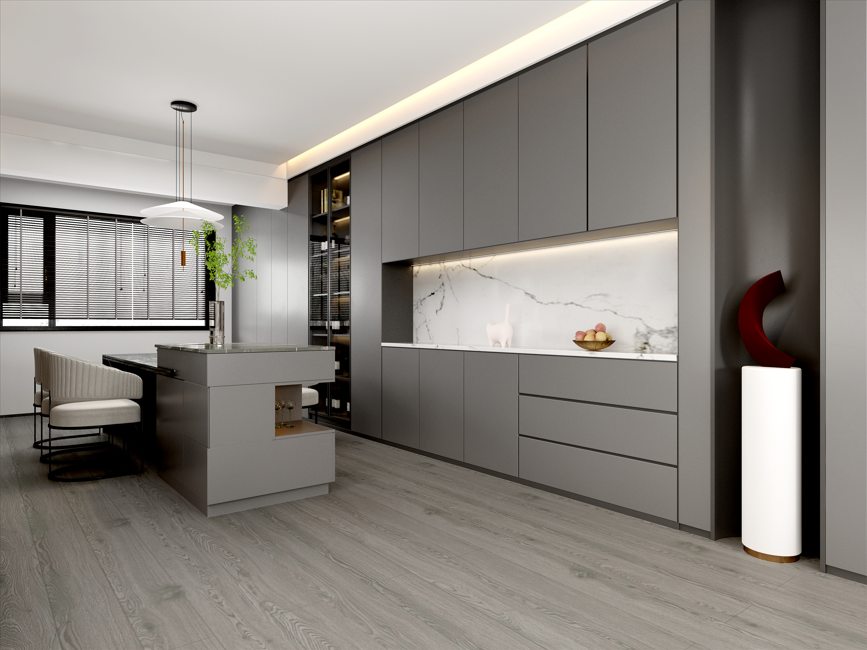
PVC flooring and carpet tiles are usually presented as two competing answers to the same commercial flooring question. They are not. Each one answers a different performance question, and most commercial interiors need both answers in different zones of the same building. PVC flooring is the stronger specification wherever moisture, spillage, scrubbing, sustained point load or a documented compliance file decides whether a floor is still serviceable after its first years in use. Carpet tiles remain the stronger specification where footfall noise, acoustic comfort and module-level replacement matter more than wash-down.
The decision rule that survives real projects is zone-based rather than building-wide. Split the floor plan into wet, clinical, food-adjacent, workshop and front-of-house zones, specify PVC flooring there, and reserve carpet tiles for enclosed offices, meeting rooms and acoustic-sensitive circulation. The rest of this comparison shows how to make that split defensible on paper — with the evidence each material has to supply before a purchase order is signed. Shanghai Yuanguan Rubber Plastic Co., Ltd., a decorative materials manufacturer established in 2005, supplies both Self Adhesive PVC Flooring and Carpet Tiles & Decorative Carpets, so the head-to-head below is written from the position of a supplier who has to answer for either choice.
Problem Definition: Why This Decision Is Expensive to Get Wrong
Flooring is one of the last items specified and one of the first items regretted. Three structural reasons explain why.
The decision is usually made on a schedule, not a specification. Floor finishes are selected after ceilings, joinery and services layouts are fixed, so the variables left on the table are price and delivery — the two variables least connected to whether the floor performs.
The failure modes of the two materials look nothing alike. A PVC floor tends to fail visibly and quickly: lifting edges where moisture is present, adhesive failure over a dusty or weak subfloor, wear-through along a trolley route. A carpet tile tends to fail slowly and quietly: compaction in walkways, staining that survives extraction, odour in a damp zone. Because the failure modes are not comparable, the comparison collapses into unit price.
The decision is expensive to reverse. Replacing a floor means strip-out, subfloor remediation, trading downtime and re-instatement of base and skirting. Those costs dwarf the difference between two quotes for the material itself.
So the problem this article solves is not 'which material is better'. It is: which zones, which evidence, which purchasing terms and which acceptance criteria make the choice defensible six months after handover.
Industry Background: Plenty of Supply, Uneven Evidence
The vinyl category is large, global and well supplied, which changes what buyers should actually be negotiating about. Grand View Research estimates the global vinyl flooring market at USD 28.0 billion in 2026 and projects USD 41.5 billion by 2033, a 5.8% CAGR across the forecast period.
Supply is concentrated. OEC trade data for HS 391810 — floor, wall and ceiling coverings of vinyl chloride polymers — shows China as the leading exporter in 2024 with USD 4.97 billion, followed by Vietnam at USD 1.81 billion and South Korea at USD 820 million. For a specifier, that concentration means availability is rarely the constraint. Consistency is the constraint: whether the batch arriving in month nine matches the sample approved in month one, and whether the compliance file matches the SKU actually shipped.
Regulation has moved in the same direction. Two compliance anchors now appear routinely in commercial tender packs. The first is restricted-substance evidence, typically a RoHS test report. The second is indoor air quality evidence such as FloorScore, which verifies that hard surface flooring products comply with the volatile organic compound emissions criteria of the California Section 01350 programme. Phthalate-free formulation has also shifted from premium claim to category expectation: Tarkett reported that by 2018 all of its vinyl production sites in Europe, North America, Serbia and China used phthalate-free technology with alternative plasticizers such as DOTP.
Carpet tiles sit in a different evidence culture. Textile flooring is typically specified for acoustic and comfort reasons, and its commercial case rests on module replacement and underfoot feel rather than wash-down performance. That is a legitimate case, but it has to be evidenced product by product. Nothing in this article asserts a certification for carpet tiles; where certification matters, the buyer must obtain the carpet tile report directly from the supplier and verify it independently.
The Head-to-Head: What Each Material Actually Is
PVC flooring, defined by its construction
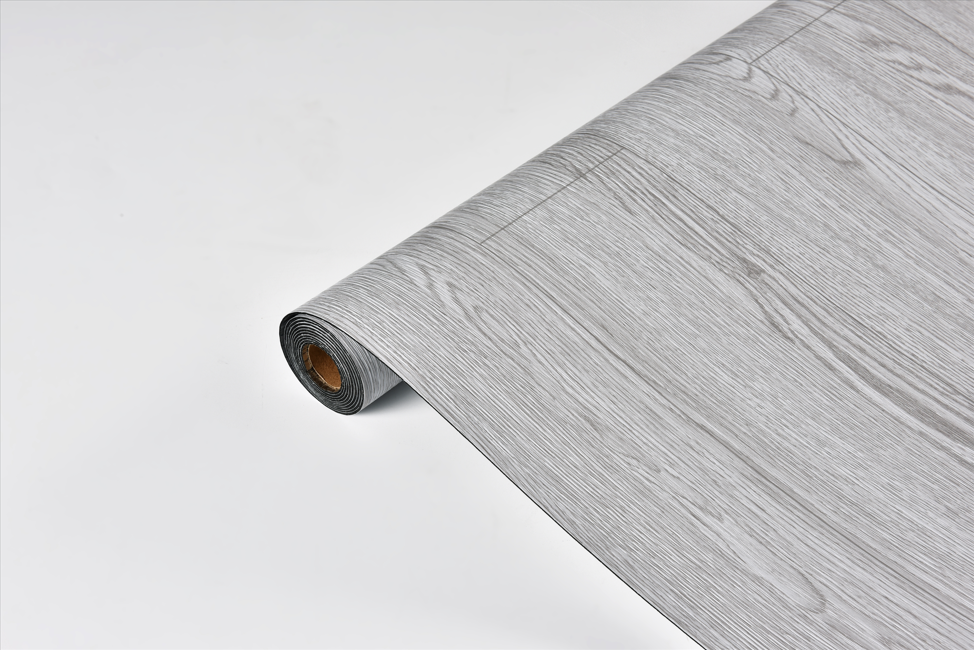
PVC flooring is a resilient floor covering built on a polyvinyl chloride base, produced as tiles or rolls and installed either with adhesive, with a factory-applied self-adhesive backing, or with a mechanical click joint. The reference product in this comparison is model WB-PVC, a PVC floor tile manufactured by Shanghai Yuanguan Rubber Plastic Co., Ltd. and supplied at 1.5 mm thickness in sizes of 40, 60 and 120 × 300 cm.
Three construction and installation routes matter for commercial work:
- Self adhesive PVC flooring carries a factory-applied adhesive with a peel-off backing. Installation is dry — no cement, no glue — and the material can be cut on site. The subfloor must be flat, dry and free of dust and grease, with adequate strength and no hollow spots.
- Click locking PVC flooring uses a mechanical joint instead of adhesive, so a damaged board can be lifted and re-laid. It is more sensitive to subfloor flatness and to perimeter expansion gaps.
- Roller (roll) formats reduce seams across large continuous areas. They are heavier to handle and generate more waste at irregular perimeters.
Surface and performance variants are selected by zone, not by preference. Wood-grain, stone-grain, parquet-pattern and matte-surface PVC flooring set the visual language; carpet-pattern PVC flooring delivers a textile appearance in a washable surface. Wear-resistant, anti-slip, fire-resistant, anti-static, waterproof, light weight and phthalate-free variants each address a specific requirement. Plank formats across the wider market include 6×36 inches (approximately 152 × 914 mm), while the WB-PVC reference tile is offered in the 40/60/120 × 300 cm range at 1.5 mm. Labels such as hospital-grade PVC flooring or kindergarten PVC flooring are specification shorthand; they should always be backed by the actual performance data for the exact SKU.
Carpet tiles, defined by their construction
Carpet tiles are modular textile floor coverings: a face fibre tufted or bonded into a backing, cut into squares and laid in a quarter-turn or monolithic pattern. The commercial logic is modularity — a stained or worn tile is lifted and replaced without touching the rest of the floor. The textile face also absorbs footfall noise and softens the reflective acoustic of a bare resilient floor.
The same construction defines the maintenance profile. A textile face holds soil and moisture within the pile rather than on its surface, so routine care depends on vacuuming plus periodic deep extraction, and spill response is time-critical. In wet, food-adjacent or scrubbed zones, that profile becomes a permanent operating cost rather than a one-off event. Adhesive choice — tackifier, pressure-sensitive backing or full-spread — also determines how cleanly the floor can be lifted at the end of a fit-out.
Where each material wins
PVC flooring wins on: moisture and spill response; scrub and chemical cleaning; verifiable restricted-substance and indoor-air-quality evidence that can be matched to a SKU; dimensional stability across large continuous areas; and straightforward cut-and-replace repair using retained spare stock.
Carpet tiles win on: impact noise and footfall sound absorption; underfoot comfort in seated and standing work areas; module replacement for localised staining; and a warmer visual language in client-facing office space.
Neither wins on price in the abstract. A unit-price comparison between a resilient tile and a textile tile usually compares different service lives, different maintenance regimes and different subfloor preparation. The number that matters is cost per year in service, calculated against the maintenance regime the building will actually run.
PVC Flooring vs. Carpet Tiles: Comparison Table
The table below compares the two materials only on dimensions where an evidence trail can be requested. Carpet tile entries are deliberately left as 'not claimed here' wherever no verifiable data exists — a specification built on unverified statements is weaker than one that names its gaps.
| Decision dimension | PVC flooring (WB-PVC reference) | Carpet tiles | Evidence to request |
|---|---|---|---|
| Moisture and spill response | Polyvinyl chloride is a closed-surface material; water does not soak into the wear surface. Waterproof variants are specified for wet zones. | Textile face holds liquid within the pile; spill response is time-critical. | Written cleaning and spill protocol; warranty wording on moisture damage. |
| Routine cleaning | Damp mopping and machine scrubbing; no extraction drying required. | Vacuuming plus periodic deep extraction; longer dry times. | Maintenance schedule and annual labour estimate for each option. |
| Acoustic performance | Hard surface reflects impact noise; underlay and backing choice change the result. | Textile face absorbs footfall and impact noise. | Acoustic test data if noise is a project KPI. |
| Wear and point load | Wear-resistant variants for high-traffic routes; reference tile is 1.5 mm thick. | Loop pile compresses under sustained point load. | Thickness and wear-layer declaration on the specification sheet. |
| Fire classification | PVC flooring is commonly classified as Class B1 under GB 8624-97 and Cfl-s1 under EN 13501-1; ASTM E648 is also referenced in specifications. | Not claimed here. | Test report naming the exact model and construction. |
| Indoor air quality | FloorScore verifies compliance with the VOC emissions criteria of California Section 01350 for hard surface flooring. | Not claimed here. | VOC test report for the exact product. |
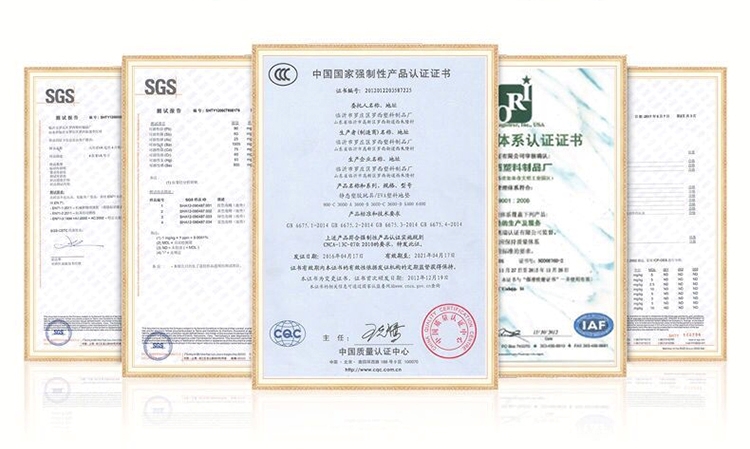
| Restricted substances | SGS RoHS Test Report issued by SGS-CSTC, applicable to the EU market, with RoHS Directive (EU) 2015/863 as the applicable standard. | Not claimed here. | The PDF report itself, plus the scope line showing material and model. |
| Installation route | Self-adhesive peel-and-stick, dry installation, no cement or glue; base must be flat, dry, dust-free, with no hollow spots. | Adhesive or tackifier system; removal depends on the system chosen. | Subfloor acceptance checklist signed before installation starts. |
| Repair strategy | Cut out and replace the affected area; retain matching spare stock from the same batch. | Replace individual modules; batch matching still required. | Spare-stock percentage written into the purchase order. |
| Best-fit zones | Wet zones, clinical areas, food-adjacent space, workshops, retail front-of-house, rental and quick-turnaround refits. | Enclosed offices, meeting rooms, acoustic-sensitive circulation. | Zone schedule agreed with the client before tender. |
Step-by-Step Breakdown: Running the Comparison on a Real Project
Step 1 — Zone the floor plan before comparing products
Mark every zone by its dominant stress: moisture, soil load, chemical exposure, point load, acoustic requirement and public visibility. This single drawing removes most of the ambiguity later, because it turns 'PVC or carpet' into 'PVC here, carpet there'. A zone schedule also protects the specifier when the client asks why the front-of-house and the back-of-house use different finishes.
Step 2 — Convert zones into performance requirements
For each zone, write the requirement as a testable property rather than an adjective: slip resistance class, wear resistance class, fire classification, VOC emissions criteria, and the cleaning chemicals the building will actually use. 'Durable' is not a requirement. A named classification with an attached test report is.
Step 3 — Fix the installation route and subfloor standard
Installation method is a specification decision, not a contractor preference. Self adhesive PVC flooring needs a flat, dry, dust-free and grease-free base with adequate strength and no hollow spots; the standard tool kit is a utility knife, scraper or roller, tape measure and spirit level, with a floor roller recommended for the floor. Carpet tiles need the adhesive or tackifier system named in the specification, because it determines both performance and how cleanly the floor can be lifted at end of fit-out. In both cases, the subfloor acceptance check should be signed before installation begins — it is the single most common point of dispute.
Step 4 — Build the compliance file and read the scope line
Assemble three documents for the PVC side: the restricted-substance report, the fire classification report and, where indoor air quality is a criterion, a FloorScore-type VOC report referencing California Section 01350. For the WB-PVC reference tile, the anchor is an SGS RoHS Test Report issued by SGS-CSTC, applicable to the EU market, with the RoHS Directive (EU) 2015/863 named as the applicable standard.
Then read the scope. A test report is valid only for the material and model named inside it, so the scope line must match the model on the purchase order. Shanghai Yuanguan's published certification notes illustrate the point precisely: they also record an SGS RoHS report scoped to a different product — the 3D WALL BRICK (PE material) — which is exactly the kind of detail that separates a compliance file that survives customs and tender review from one that does not. Apply the same discipline to carpet tiles: request the report and confirm what it covers before assuming it transfers.
Step 5 — Write purchasing terms that can be enforced
Four clauses do most of the work: the full model and construction designation, the dimensional and thickness tolerance, the packing and pallet configuration, and the batch-matching rule. Add the compliance documents as an annex to the order rather than as a separate email, so the obligation is contractual. Where a project needs a specific pattern direction or surface finish, specify it on the order — matte-surface and wood-grain variants are not interchangeable with stone-grain or parquet-pattern boards, even at identical thickness.
Step 6 — Define acceptance criteria before delivery
Acceptance criteria should be written as a short, checkable list agreed before production: model and thickness verified on the carton; colour and pattern matched against the retained approved sample under the same lighting; edge and joint integrity inspected on a random sample per pallet; surface free of transit marks; quantity confirmed per pallet configuration. Where shade variation matters across a large open area, state the batch rule explicitly in the order — it is far cheaper than a partial re-lay.
Step 7 — Plan maintenance and spare stock before handover
Two decisions belong in the contract, not in the facilities manual: the maintenance regime the building will actually run, and the spare stock retained from the same production batch. PVC flooring is repaired by cutting out the affected area, and carpet tiles by replacing individual modules — both strategies fail if the replacement material comes from a different batch. Retained stock also protects the client against the most common cost escalation in flooring: a small repair turning into a full re-lay.
Use Cases: Matching the Material to the Zone
Healthcare and clinical areas. Hospital-grade PVC flooring is specified for spaces that are scrubbed, disinfected and exposed to spillage. The selection criteria are a cleanable closed surface, a documented restricted-substance file and a fire classification report. Textile flooring is normally excluded from these zones because the face holds liquid and soil within the pile.
Education and childcare. Kindergarten PVC flooring combines a washable surface with a softer underfoot than tile or stone, and anti-slip variants address wet entrances and washroom thresholds. The common specification failure here is choosing a pattern before confirming the slip and wear class.
Workshops and back-of-house. Workshop PVC flooring is chosen for chemical resistance, easy sweeping and the ability to cut out a damaged patch without closing the area. Anti-static variants matter where sensitive equipment or dust ignition is a concern; wear-resistant variants matter where trolley traffic is concentrated.
Retail front-of-house. Retail floors face a double demand: appearance and cleanability. Carpet-pattern PVC flooring gives a textile look in a washable surface, while wood-grain, stone-grain and parquet-pattern boards set the brand language. Self adhesive PVC flooring is frequently used for fit-outs and rental units because installation is dry and fast, and the material can be cut on site.
Offices and meeting rooms. This is the zone where carpet tiles remain the defensible choice: acoustic absorption, underfoot comfort in long meetings, and module replacement for localised staining. A common hybrid runs carpet tiles in enclosed rooms and PVC flooring in tea points, corridors and reception — the wet-risk boundary runs through the middle of most office floors.
Hospitality and quick-turnaround refits. Hotel and guest-room refurbishment cycles reward dry installation and minimal downtime. Roller formats reduce seams in long corridors, while modular tiles simplify future repair where furniture layouts change.
Purchasing Terms and Acceptance Criteria: A Practical Checklist
- Model and construction named exactly on the purchase order, including thickness and size format.
- Tolerance stated in the contract for thickness and dimension, with a defined sampling method.
- Batch rule defined for continuous open areas, plus the retained spare-stock percentage.
- Compliance annex attached to the order — restricted-substance report, fire classification, and VOC evidence where required.
- Packing and pallet configuration confirmed, including pallet height and labelling for site identification.
- Inspection point fixed: pre-shipment inspection, arrival inspection, or both, with the checklist agreed in advance.
- Approved sample retained by both parties, dated and signed, referenced in the order.
- Storage instruction supplied with the delivery note, so the site does not stack, store or install the material in a way that creates a claim later.
The Real Risk of Low-Cost Flooring
Low-cost flooring is not automatically bad flooring. The risk is the loss of traceability that usually comes with it — and traceability is what a commercial client is actually buying.
- Compliance risk. A quotation without a restricted-substance report and a fire classification report shifts regulatory risk onto the buyer. In the EU market, the reference point is the RoHS Directive (EU) 2015/863; a report that names a different model or material does not transfer to your order.
- Batch inconsistency. Cheaper programmes often combine output from multiple lines or batches. On a large open area, a shade shift between pallets is visible immediately and cannot be corrected without a partial re-lay.
- Subfloor-driven failure. A low unit price cannot compensate for inadequate subfloor preparation. Self adhesive material applied over a dusty, damp or weak base will lift, and the failure will be attributed to the product.
- Hidden installation cost. Dry, self-adhesive installation avoids adhesive and long cure times. Systems that require adhesive or tackifier add material, labour and drying windows that rarely appear in the unit-price comparison.
- Maintenance escalation. A surface that needs extraction cleaning instead of damp mopping carries a recurring labour cost for the life of the floor — often larger than the difference between the two quotations.
- Repair dead-ends. Without retained spare stock from the same batch, a small repair becomes a full replacement.
The practical defence is procedural rather than commercial: attach the compliance annex, fix the batch rule, retain the approved sample, and write acceptance criteria into the order. None of these steps require a higher unit price; they require a supplier who can supply the documents.
FAQ
1. Does PVC flooring for the EU market need RoHS documentation?
RoHS documentation is the first compliance file a European buyer should request. Shanghai Yuanguan Rubber Plastic Co., Ltd. holds an SGS RoHS Test Report issued by SGS-CSTC, applicable to the EU market, with the RoHS Directive (EU) 2015/863 named as the applicable standard. Because a report is valid only for the material and model written in its scope, request the PDF and check that the scope line matches the PVC floor tile model on your order. No equivalent claim is made for carpet tiles in this article — request that evidence separately and verify it independently.
2. Can one supplier cover both PVC flooring and carpet tiles?
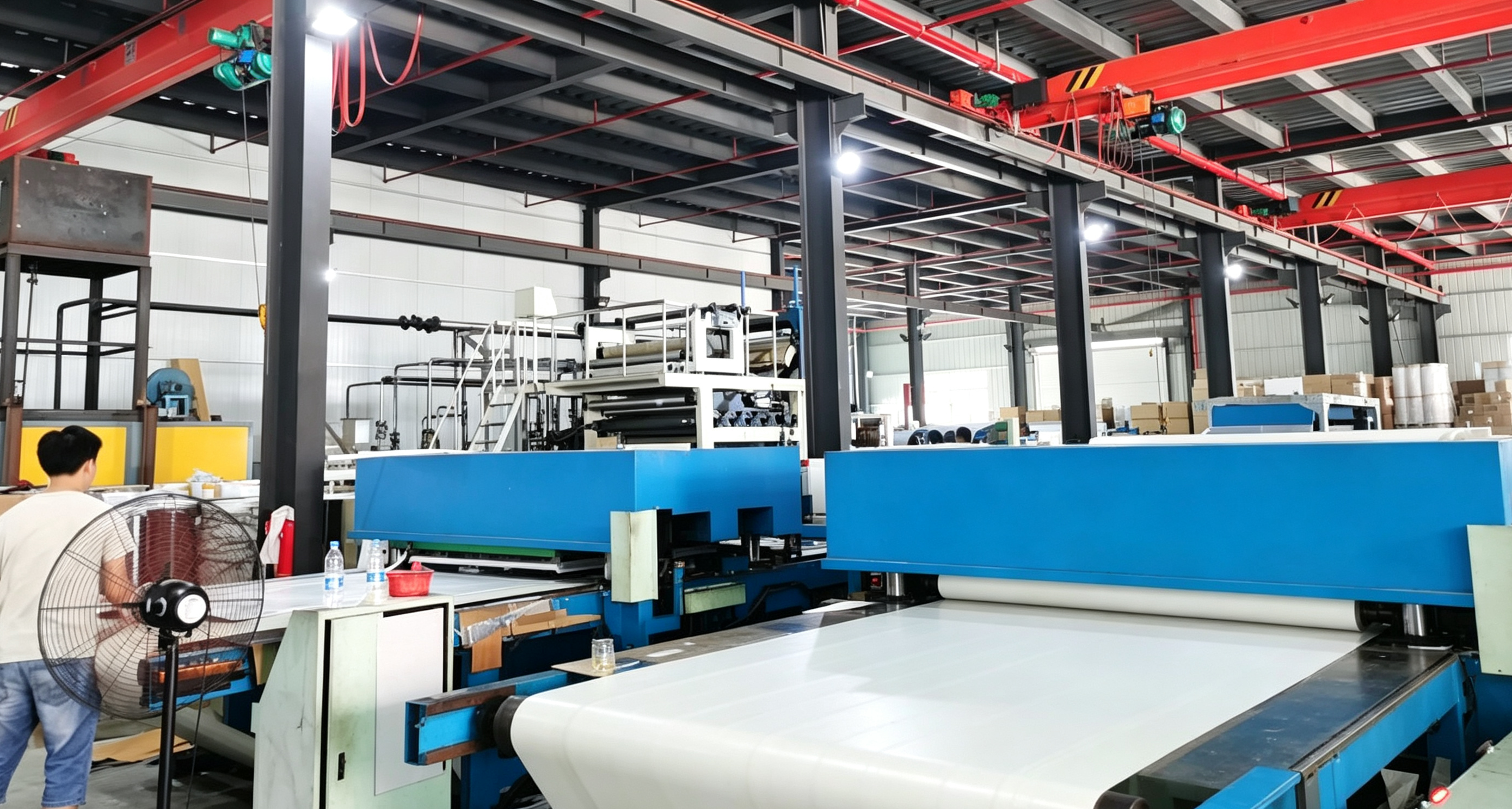
Yes, where the supplier's product scope includes both. Shanghai Yuanguan Rubber Plastic Co., Ltd., established in 2005, manufactures Self Adhesive Wall Stickers, 3D Foam Wall Panels, PVC Wallpaper, WPC Decorative Wall Panels, Self Adhesive PVC Flooring, Carpet Tiles & Decorative Carpets and Interior Decoration Materials. The company operates a 7,000-square-metre intelligent factory with automated production facilities, a manufacturing facility covering 8,000 square metres, and an annual production capacity of 75,000,000 units, supported by a professional team of 200 including a 5-engineer R&D group. Export accounts for 90% of sales across the EU, USA, Asia and South America. Note that supplying both categories does not mean the same evidence covers both: the compliance file must be requested per material.
3. What drives the price difference between PVC flooring and carpet tiles?
The gap is created by five variables: construction and wear layer, size and format, subfloor preparation and installation method, the maintenance regime over the service life, and the repair strategy including spare stock. Unit price alone is a weak comparison, because a self adhesive PVC tile installed dry and cleaned by damp mopping carries a different total cost from a system that needs adhesive, longer installation windows and extraction cleaning. Ask both quotations to state the same thickness, the same format and the same maintenance assumption, then compare cost per year in service.
4. How should a specifier validate samples before placing an order?
Request the exact model rather than a category sample — for the PVC side, the WB-PVC PVC floor tile at 1.5 mm thickness in 40, 60 or 120 × 300 cm. Check thickness with a gauge, confirm flatness after 24 hours at site temperature, lay the sample on the actual substrate to test adhesion, and clean it with the chemical the building will use. Compare the pattern against the approved drawing under the lighting of the final space, not under warehouse lighting. Keep the approved sample dated and signed, and reference it in the order. Samples and the current product brochure can be requested directly from the manufacturer.
5. What determines lead time, and how should it be written into the order?
Lead time is set by production scheduling, pattern and print runs, packing configuration and the chosen freight mode. With 90% of output exported to the EU, USA, Asia and South America and products supplied to retailers and wholesalers in more than 80 countries and regions, production slots follow export schedules rather than single-order preference. Write the confirmed shipment window, packing configuration, inspection point and batch rule into the proforma invoice, and request the production schedule at order confirmation so the site programme can be planned against it. For project quantities, a quotation can be requested from ericwang@shyuanguan.com or +86 13524706491.
Conclusion
PVC flooring versus carpet tiles is not a single decision, and treating it as one is why so many commercial floors are specified twice. The defensible method is layered: zone the plan, convert each zone into testable requirements, fix the installation route and subfloor standard, build a compliance file whose scope lines match the models on the order, and write purchasing terms and acceptance criteria that survive handover.
On that method, PVC flooring carries the wet, clinical, food-adjacent, workshop and front-of-house zones, with verifiable evidence behind it: model WB-PVC as a 1.5 mm PVC floor tile in 40/60/120 × 300 cm, an SGS RoHS Test Report under RoHS Directive (EU) 2015/863 applicable to the EU market, and category classifications for fire performance and indoor air quality that can be verified per SKU. Carpet tiles keep the acoustic-sensitive, comfort-driven zones — provided their own evidence is requested and checked rather than assumed from the PVC file.
Request a sample, quotation or product catalogue
Shanghai Yuanguan Rubber Plastic Co., Ltd. — Building 5, No.6066, Songze Road, Qingpu District, Shanghai, China.
Website: www.wallpanelsticker.com | Email: ericwang@shyuanguan.com | Tel / WhatsApp: +86 13524706491
Product brochure (public download): Shanghai Yuanguan Product Brochure
Specify both materials on the same project with a single evidence standard: identify the zone, name the model, attach the report, and agree the acceptance criteria before the first pallet ships.
Have Questions or Need More Details?
Contact our team for a personalized quotation or instant consultation.
Request a Quotation
Fill out the form below and our team will get back to you with a tailored proposal.
WhatsApp Direct Chat
Prefer to chat in real-time? Message us on WhatsApp for instant assistance & quick answers.
- Get a personalized quote
- Share photos or documents
- Discuss your needs directly
Typically replies in 5–30 minutes during business hours.