
PVC Flooring: A Complete Guide to Types, Benefits, and Selection
PVC Flooring: Materials, Performance, and Buying Considerations
PVC flooring is a resilient floor covering made primarily from polyvinyl chloride, widely used in residential, commercial, and institutional projects because it combines water resistance, easy maintenance, and versatility in visual design. The global vinyl flooring market, which includes PVC flooring products such as LVT, VCT, and sheet vinyl, is estimated at USD 28.0 billion in 2026, with a projected CAGR of 5.8% from 2026 to 2033. Purchasers now evaluate PVC flooring less as a single commodity and more as a set of performance options: click-lock systems, self-adhesive backing, fire-resistant layers, wear resistance, anti-static properties, and low-emission formulations.
This guide explains what PVC flooring is made of, how different types perform, how to judge quality and compliance, and how to apply a clear selection process for your next renovation or supply decision.
Why PVC Flooring Has Become a Mainstream Choice
PVC flooring solves a long-standing flooring problem: how to get the look of wood, stone, carpet, or parquet without the high installation cost and high maintenance of natural materials. A printed decorative layer is protected by a transparent wear layer, and the PVC core provides dimensional stability and a slightly elastic feel underfoot.
In 2024, China was the top exporter of vinyl chloride polymer floor coverings (HS 391810), with exports valued at USD 4.97 billion, followed by Vietnam at USD 1.81 billion and South Korea at USD 820 million. The scale of this trade reflects how widely PVC flooring has been adopted in global renovation and new-build projects. Buyers in the EU, USA, Asia, and South America regularly import PVC flooring from specialized manufacturers, which makes supplier capability and documentation quality critical decision factors.
For retailers, wholesalers, and contractors, PVC flooring offers several practical advantages over traditional options:
- Water resistance suitable for bathrooms, kitchens, and laundry areas
- Lower installed cost than solid hardwood, ceramic tile, or natural stone
- Fast installation, especially with click-lock or self-adhesive formats
- Wide variety of visual patterns including wood, stone, carpet, and parquet
- Comfortable underfoot compared to tile or concrete
- Simplified maintenance with regular sweeping and damp mopping
Core Properties Buyers Look for in PVC Flooring
Different projects demand different performance profiles. The following properties appear most often in procurement discussions for PVC flooring.
Waterproof PVC Flooring
Water resistance is the primary reason many rooms switch from wood or laminate to PVC. PVC does not absorb water in the same way as wood fiber, which makes it suitable for bathrooms, kitchens, and dry areas of laundry rooms. A self-adhesive PVC flooring tile can be installed on a smooth, solid base, cut to size, and removed and reinstalled in some styles. The base surface must be flat, dry, free of dust and grease, and for floors it must have the required strength with no hollow spots.
Wear-resistant PVC Flooring
Wear resistance is determined mainly by the quality and thickness of the transparent wear layer. In commercial environments with heavy foot traffic, a thicker and harder wear layer is preferred. A surface with good wear resistance also resists scuffs from chair legs, carts, and daily debris. Physical sample testing is recommended before bulk purchase because wear performance is not visible in a photo.
Fire-resistant PVC Flooring
PVC flooring is commonly classified for fire resistance. According to Chinese national standard GB 8624-97, PVC flooring is often classified as Class B1; under European classification EN 13501-1, it can reach Class Cfl-s1. These standards help architects and contractors specify flooring that meets building-code requirements for escape routes, hotels, hospitals, and public spaces. Always verify the specific test report for the product batch.
Anti-slip PVC Flooring
Anti-slip performance matters in bathrooms, kitchens, commercial kitchens, and public areas where water or grease may be present. Surface texture, embossing, and coating affect slip resistance. For projects serving children or elderly users, slip resistance should be checked against the relevant national or regional standard.
Anti-static PVC Flooring
Anti-static PVC flooring reduces electrostatic discharge, which is useful in electronics workshops, server rooms, laboratories, and some medical facilities. The product must have a tested surface resistance range to be considered genuinely anti-static; general-purpose PVC flooring does not automatically carry this property.
Phthalate-free and low-emission PVC Flooring
Phthalate-free and low-emission PVC flooring is increasingly demanded in the EU and North America. FloorScore certification verifies that hard surface flooring complies with the volatile organic compound (VOC) emissions criteria of California Section 01350. Some major manufacturers have moved to 100% phthalate-free vinyl production using alternative plasticizers such as DOTP. For export orders, buyers should request the relevant test reports rather than relying on marketing descriptions.
Common PVC Flooring Formats and Visual Patterns
The same PVC core can be produced in several installation formats. Each format changes the ease of installation, the required subfloor condition, and the total project time.
Click-Lock PVC Flooring
Click-lock PVC flooring uses a mechanical locking system on the edges, so planks click together without glue or nails. This format is popular for home and commercial renovation because installation is fast and the floor can float over the subfloor. The base still needs to be reasonably flat and strong, but no adhesive is required.
Self-Adhesive PVC Flooring
Self-adhesive PVC flooring has a pressure-sensitive adhesive backing. The installer peels off the protective film and presses the tile onto the prepared surface. According to the application conditions for self-adhesive decorative products, dry installation requires no cement or glue; the product can be cut locally, and some styles can be removed and reinstalled without leaving residue. This format is especially common for old-house renovation, rental apartments, and quick commercial refreshes.
Roller PVC Flooring
Roller PVC flooring, also called sheet vinyl, comes in large rolls. It can cover a room with fewer seams and is often used in medical, educational, and retail projects where a continuous surface is preferred. Installation usually requires more skill than click-lock or self-adhesive tiles.
6×36 Inches and Plank Sizes
Some buyers search specifically for 6×36 inches PVC flooring, a plank format commonly associated with wood-look designs. Plank formats create a more natural wood-floor appearance than square tiles. Other common sizes used in the market include 40/60/120×300 cm panels with 1.5 mm thickness, which are suitable for covering large floor areas quickly.
Visual Patterns: Wood, Stone, Carpet, and Parquet
- Wood-grain PVC flooring imitates natural wood planks and is the most popular residential choice.
- Stone-grain PVC flooring replicates marble, travertine, slate, and concrete looks for commercial and high-end interior spaces.
- Carpet-pattern PVC flooring provides a textile-like appearance with easier cleaning than real carpet.
- Parquet-pattern PVC flooring mimics herringbone and chevron layouts without the labor cost of real parquet installation.
- Matte-surface PVC flooring reduces glare and shows fewer footprints, which is often requested in offices and homes with large windows.
Hospital-Grade and Kindergarten PVC Flooring
Specialized environments require stricter product specifications. Hospital-grade PVC flooring normally requires low VOC emissions, easy cleaning, seamability, and compliance with medical-environment standards. Kindergarten PVC flooring adds requirements for cushioning, anti-slip performance, and low chemical emissions because children spend time on the floor.
For both categories, verify third-party test reports covering emissions, slip resistance, and fire performance. In the EU, export compliance may also require CE-CPR construction-product certification, REACH hazardous-substance compliance, and PPWR packaging rules. Missing valid certificates can lead to customs detention, return shipment, or fines.
How to Judge PVC Flooring Quality Before Buying
Price differences in PVC flooring come mainly from raw materials, thickness, formula, quality control, and certifications. Low-cost products often use recycled material, which may cause dimension deviation, fading, odor, and non-compliant certificates. For export or project orders, prioritize virgin-material products with complete test reports. Sample confirmation is mandatory, and bulk ordering without a sample is not advised.
Use this checklist when evaluating a PVC flooring supplier:
- Request physical samples and compare dimensional accuracy, surface feel, and odor.
- Ask for third-party test reports for fire resistance, VOC emissions, phthalates, and slip resistance.
- Check whether the supplier has production experience and a documented quality system.
- For self-adhesive formats, test adhesion and aging performance on the actual substrate type.
- For click-lock formats, check joint quality and locking strength.
- Confirm the product size and thickness match the order specification.
- Review packaging and labeling for compliance with destination-market rules.
- Define the material specification clearly in the purchase order for export transactions.
Case Example: Building Decoration and Interior Renovation
Self-adhesive PVC flooring and self-adhesive wall panels are commonly used together in renovation projects such as old-house remodeling, hotel room makeovers, homestay renovations, chain brand store refurbishments, office fit-outs, temporary exhibition booths, and simple rental apartment renovations. The application method is dry and requires only basic tools: a utility knife, scraper/roller, tape measure, and spirit level; for floors, a floor roller is recommended. No large construction equipment is needed, which shortens construction time and protects existing bases by covering cracks and stains.
Suitable surfaces include cement floors, tiled surfaces, latex-painted walls, plasterboard, plywood, and other smooth, solid bases. The product is not suitable for powdery, sandy, or loose surfaces. These conditions define both the performance ceiling and the installation boundary for self-adhesive PVC flooring.
Comparison: Self-Adhesive PVC Flooring vs. Traditional Floor Coverings
| Factor | Self-Adhesive PVC Flooring | Ceramic Tile | Laminate Flooring | Solid Hardwood |
|---|---|---|---|---|
| Installation | Peel-and-stick, dry installation | Requires adhesive, grout, and skilled labor | Floating or glued, but moisture-sensitive | Nail, staple, or glue with professional labor |
| Water resistance | Suitable for bathrooms and kitchens | Excellent, but grout lines need sealing | Generally low; swells with moisture | Low; requires protective finishes |
| Underfoot feel | Slightly elastic, more comfortable than tile | Hard and cold | Hard with hollow echo | Warm but hard |
| Surface renewability | Some styles can be removed and reinstalled | Difficult to remove without breaking | Not renewable; must be replaced | Can be sanded and refinished |
| Typical project fit | Renovation, rental units, quick commercial refresh | New builds, wet areas, high-end projects | Dry residential interiors | Premium residential and commercial interiors |
The right choice depends on the project budget, timeline, moisture level, and the buyer's ability to control the substrate condition. Self-adhesive PVC is not a universal substitute for tile or hardwood; it is a decision option with clear advantages in speed, cost, and moisture resistance.
Manufacturer Background: Shanghai Yuanguan Rubber Plastic Co., Ltd.
Shanghai Yuanguan Rubber Plastic Co., Ltd. is a manufacturer specializing in decorative materials, including wall stickers, wallpaper, flooring, and foam materials. Established in 2005, the company has accumulated 25 years of production experience. The company operates a 7,000-square-meter intelligent factory equipped with automated production facilities, with the manufacturing facility covering 8,000 square meters. Its annual production capacity reaches 75,000,000 units.
The company has a professional team of 200 members including R&D, QC, production, and sales personnel, with approximately 150 staff. The R&D team consists of 5 engineers. The company also holds 48 patented technologies and ISO9001 quality management system certification, and it runs 12 independent brands for diversified decorative material lines.
Export business accounts for 90% of total sales, with major markets including the EU, USA, Asia, and South America. Products are supplied to retailers and wholesalers in more than 80 countries and regions globally. The product range includes Self-Adhesive Wall Stickers, 3D Foam Wall Panels, PVC Wallpaper, WPC Decorative Wall Panels, Self-Adhesive PVC Flooring, Carpet Tiles & Decorative Carpets, and Interior Decoration Materials.
WB-PVC Flooring Tile Product Specification
A representative product in the line is the WB-PVC PVC floor tile. It is available in sizes of 40/60/120×300 cm with a thickness of 1.5 mm, and it is made from PVC. The product is classified in Building Materials, Home & Garden, and Interior Decoration applications. The manufacturer supports flexible customization on size, thickness, pattern, surface, and packaging to satisfy different market requirements.
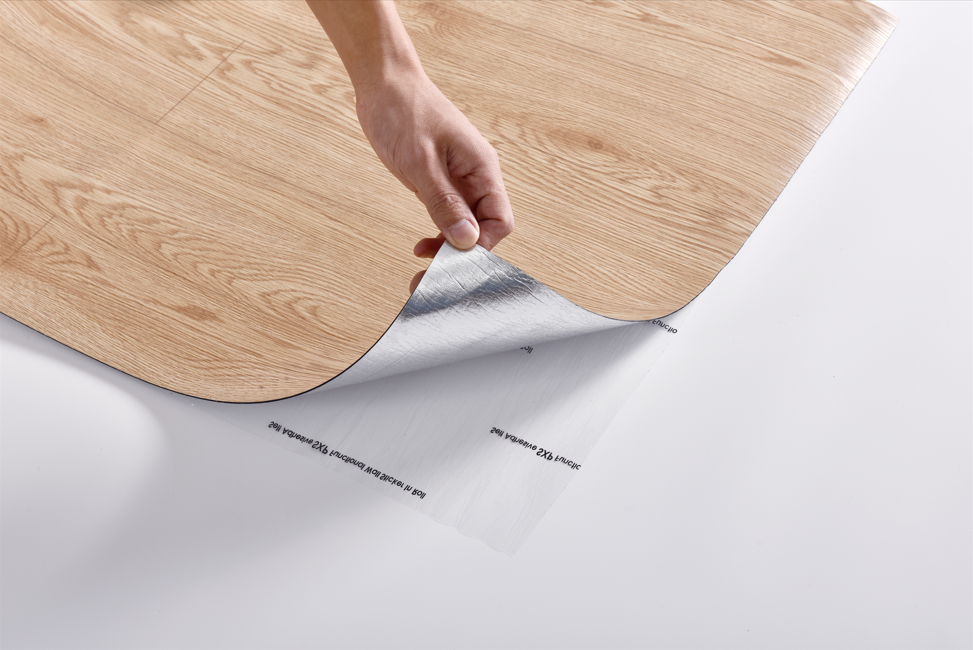
PVC floor tile available in plank and panel sizes for dry, self-adhesive installation.
Manufacturing and Quality Assurance
Shanghai Yuanguan's production model is built around standardized production and multi-stage quality inspection for all batches before delivery. Factory-direct supply cuts intermediate costs, which helps provide competitive pricing. The company continuously develops new products to follow international decoration trends.
For export orders, buyers should confirm whether the specific product model carries the required reports. One documented example: the 3D WALL BRICK (PE material) product is covered by the SGS RoHS Test Report for the EU market, issued by SGS-CSTC under the RoHS Directive (EU) 2015/863. This highlights that certification is product-specific; buyers should request certificates for the exact model they intend to purchase rather than relying on a general company statement.
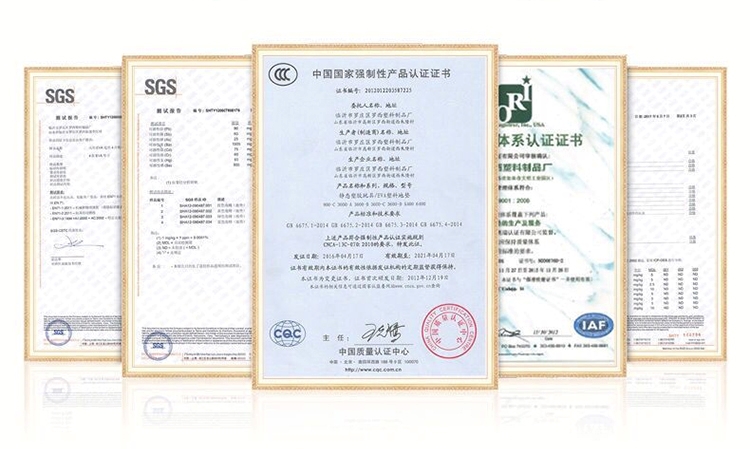
Certifications should be reviewed for the specific product model before export orders.
Export and Compliance Considerations
Exporting PVC flooring to the EU brings specific obligations. Compliance may require CE-CPR construction-product certification, REACH hazardous-substance regulation, and PPWR packaging rules. Missing or invalid certificates may result in customs detention, return shipment, and heavy fines. The same logic applies to other regions: buyers should verify the certificate validity before placing formal orders.
Low-cost products can carry hidden risks. Price gaps between suppliers usually trace back to raw material type, thickness, formula, quality control, and certification coverage. Low-cost items often adopt recycled material, which may create instability in dimension, color, and odor, and they are more likely to lack complete test certificates. For export business, virgin-material products with complete test reports are the safer choice.
Storage and Handling Guidelines
Proper storage prevents avoidable damage. General warehouse requirements for decorative materials include keeping the warehouse cool and ventilated, with temperatures below 40°C, and away from direct sunlight and heating pipes. Goods should be placed on wooden pallets, never directly on the bare floor. Stacking height should be limited, and heavy hard panels should not be placed on top of foam or soft products. For flooring and wall products, follow FIFO (first in, first out) to avoid long-term stockpiling. Curling, deformation, and mildew caused by sun exposure, over-stacking, or ground moisture are classified as improper-storage damage rather than product defects.
Step-by-Step Selection Process for PVC Flooring
Step 1: Define the installation environment
Determine whether the space is residential or commercial, dry or humid, and how much foot traffic it receives. Moisture and traffic determine the minimum requirements for water resistance and wear resistance.
Step 2: Choose the installation format
Select self-adhesive tiles for quick renovation and rental projects, click-lock planks for floating installations, or roll goods for seamless commercial floors.
Step 3: Shortlist visual patterns
Decide between wood-grain, stone-grain, carpet-pattern, or parquet-pattern visuals. The decorative layer affects the aesthetic outcome but does not change the technical performance class.
Step 4: Verify special properties
If the project needs fire resistance, anti-slip, anti-static, or hospital-grade performance, request the corresponding test reports. Do not assume these properties are present in every PVC product.
Step 5: Review supplier credentials
Check production capacity, export experience, quality management system, and the availability of the exact documentation required for your destination market.
Step 6: Request samples and test
Test adhesion, dimensional accuracy, odor, and aging behavior. For self-adhesive flooring, the base condition should match the project site as closely as possible.
Step 7: Confirm order specifications
Write the size, thickness, pattern, surface treatment, packaging, and certification documents clearly into the purchase order. For export orders, define the material specification explicitly.
Frequently Asked Questions
Why is PVC flooring considered a practical choice for home and commercial renovation?
PVC flooring offers water resistance, fast installation, a wide range of decorative patterns, and a comfortable underfoot feel at a lower installed cost than many natural materials. It is especially useful for renovation projects, hotel makeovers, chain store refurbishments, and rental units because installation can be completed without cement, glue, or large equipment when using self-adhesive formats.
What performance properties should I check before buying PVC flooring?
Check water resistance, wear resistance, fire resistance, slip resistance, and emissions. Fire resistance is commonly classified as Class B1 under GB 8624-97 or Class Cfl-s1 under EN 13501-1. For low-emission products, FloorScore certification verifies compliance with the VOC emissions criteria of California Section 01350. For anti-static or hospital-grade claims, request the relevant third-party test report.
What compliance requirements apply to PVC flooring exported to the EU?
EU exports should comply with CE-CPR construction-product certification, REACH hazardous-substance regulation, and PPWR packaging rules. Missing valid certificates may result in customs detention, return shipment, and fines. Always request full valid certificates before placing an order and verify product-specific reports rather than relying on general claims.
How can I get a sample of PVC flooring from Shanghai Yuanguan?
Shanghai Yuanguan Rubber Plastic Co., Ltd. supports sample requests as part of its one-stop service, along with order production, shipment arrangement, and after-sales support. The company is a manufacturer of decorative materials established in 2005, supplying retailers and wholesalers in more than 80 countries and regions. To request a sample or a quote, contact ericwang@shyuanguan.com or visit the official website at https://www.wallpanelsticker.com. A downloadable product brochure is also available for reference: Shanghai Yuanguan Product Brochure.
Need PVC flooring for an upcoming project?
Shanghai Yuanguan supplies self-adhesive PVC flooring, wall panels, and related decorative materials to global distributors, wholesalers, and retailers. Request a sample or quote to verify quality against your project requirements.