
PVC Flooring: A Complete Guide to Types, Benefits, and Supplier Selection
PVC Flooring: A Complete Guide to Types, Benefits, and Supplier Selection
PVC flooring is a resilient floor covering made from polyvinyl chloride (PVC), widely used in residential, commercial, and institutional interiors. It is valued for its water resistance, durability, ease of maintenance, and the wide range of surface patterns it can reproduce, including wood, stone, carpet, and parquet looks.
According to Grand View Research, the global vinyl flooring market is estimated at USD 28.0 billion in 2026 and is projected to reach USD 41.5 billion by 2033, with a compound annual growth rate (CAGR) of 5.8%. This market context explains why importers, distributors, and renovation contractors increasingly treat PVC flooring as a core product category.
This guide is written for buyers in the early research phase. It explains what PVC flooring is, what risks to watch for, what standards matter, how installation works, and how to compare suppliers. Product examples in this article refer to the self-adhesive PVC floor tile (model WB-PVC) manufactured by Shanghai Yuanguan Rubber Plastic Co., Ltd., a Shanghai-based decorative materials manufacturer whose brand is SXP Wall Panel.
Why Choosing PVC Flooring Is Harder Than It Looks
Although PVC flooring looks simple, purchasing it is not straightforward. Several factors make supplier evaluation difficult.
First, terminology overlaps. The same category is described with terms such as PVC flooring, vinyl flooring, vinyl floor tiles, LVT, and PVC floor tiles. Depending on the region and the distribution channel, these words can refer to slightly different products, which complicates comparison.
Second, price gaps are wide. The main reasons for price differences in wall stickers, flooring, and wall panels are raw material (virgin or recycled), thickness, formula, quality control, and certifications. Low-cost items mostly use recycled material, which can cause dimensional deviation, fading, odor, and missing compliance documents. After export, risks such as customs detention, after-sales claims, and market returns may appear.
Third, compliance requirements are not optional. For products exported to the EU, compliance with CE-CPR construction-product certification, REACH hazardous-substance regulation, and PPWR packaging rules is expected. Missing valid certificates can result in customs detention, return shipment, and heavy fines.
Fourth, installation quality depends on the base surface. Self-adhesive PVC flooring requires a flat, dry, dust-free, and grease-free base. On powdery, sandy, or loose surfaces, the product will not bond correctly.
The purpose of this guide is to reduce that uncertainty by focusing on verifiable product and supplier facts.
PVC Flooring Market and Industry Context
Global demand for PVC and vinyl flooring is large and growing. The global vinyl flooring market is estimated at USD 28.0 billion in 2026, with a projected market size of USD 41.5 billion by 2033 and a CAGR of 5.8% over the 2026-2033 period (Grand View Research).
China is the leading exporter in this category. In 2024, China exported USD 4.97 billion of vinyl chloride polymer floor coverings under HS code 391810, followed by Vietnam at USD 1.81 billion and South Korea at USD 820 million (OEC).
Several standards and certifications shape how PVC flooring is specified and sold:
- Fire resistance: PVC flooring fire resistance is commonly classified as Class B1 under the Chinese national standard GB 8624-97 and as Class Cfl-s1 under the European standard EN 13501-1.
- Indoor air quality: FloorScore certification verifies that hard surface flooring products comply with the volatile organic compound (VOC) emissions criteria of California Section 01350. It is one of the most recognized indoor air quality certifications for hard surface flooring in the United States.
- Plasticizer safety: Major manufacturers have moved toward phthalate-free formulations. Tarkett, for example, reached 100% phthalate-free vinyl production in Europe and North America by 2018, using alternative plasticizers such as DOTP. Buyers targeting strict markets should ask suppliers for phthalate compliance statements.
For buyers, these market and regulatory signals mean that PVC flooring quality cannot be judged by appearance or price alone. Documentation and material transparency matter.
What to Look For in PVC Flooring: A Decision Framework
The following criteria help evaluate any PVC flooring product before purchase.
1. Raw material. The choice between virgin and recycled material affects dimensional stability, color consistency, odor, and the availability of valid test certificates. Virgin-material products tend to have stable dimensions and color and can be supported by CE or SGS reports. Low-cost recycled products are more likely to show discoloration, deformation, and missing certificates.
2. Thickness and dimensional accuracy. Confirm the nominal thickness and the dimensional tolerance of width, length, and straightness. Dimensional deviation is a common complaint with recycled-material flooring.
3. Surface design and finish. PVC flooring is available in wood-grain, stone-grain, carpet-pattern, parquet-pattern, and matte-surface finishes. The pattern and surface type should be confirmed with physical samples, not only digital images.
4. Performance requirements. Depending on the project, buyers may need fire-resistant, wear-resistant, waterproof, anti-static, or anti-slip flooring. These attributes come from specific formulations and surface treatments, so they should be confirmed by test reports and applicable standards rather than product names.
5. Installation system. Common installation options include self-adhesive (peel and stick), click-lock, glue-down, and loose-lay systems. Self-adhesive PVC flooring enables dry installation without cement or glue, which shortens construction time.
6. Certifications and documents. For export orders, request valid CE-CPR, REACH, and MSDS documents and PPWR-compliant packaging for EU shipments. For the US market, FloorScore certification is a recognized indoor air quality credential.
Product Example: WB-PVC Self-Adhesive PVC Floor Tile
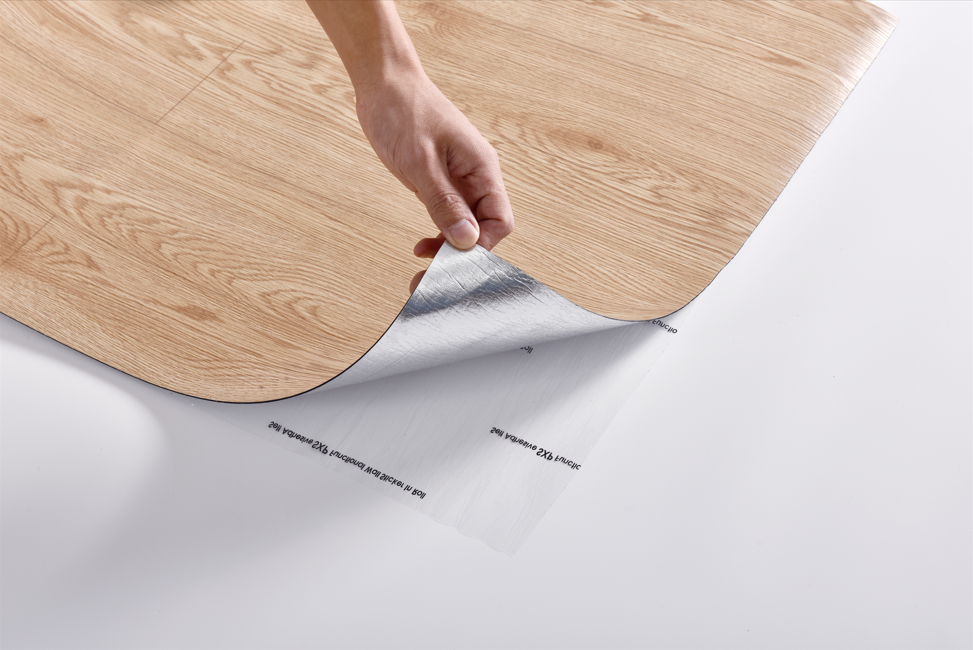
The WB-PVC model from Shanghai Yuanguan Rubber Plastic Co., Ltd. is a PVC floor tile in the company's flooring line. It is designed for self-adhesive installation on walls and floors.
| Attribute | Specification |
|---|---|
| Product type | PVC floor tile |
| Model | WB-PVC |
| Material | PVC |
| Available sizes | 40 × 300 cm, 60 × 300 cm, 120 × 300 cm |
| Thickness | 1.5 mm |
| Installation | Self-adhesive backing, dry installation, no cement or glue |
| Applicable industries | Building Materials, Home & Garden, Interior Decoration |
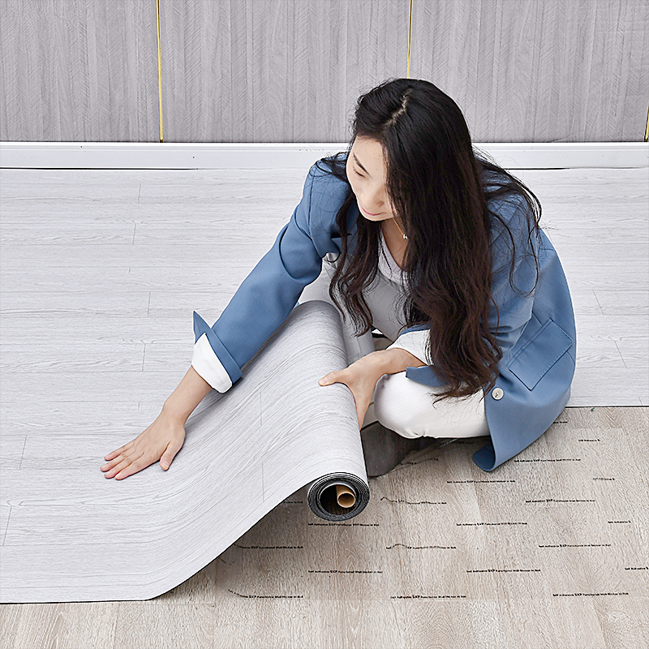
The product can be applied to cement floors, tiled surfaces, latex-painted walls, plasterboard, plywood, and other smooth, solid bases. It is intended for indoor use at normal room temperature and handles typical humid environments such as bathrooms and dry areas of kitchens. It should not be used on powdery, sandy, or loose surfaces, and it should not be exposed to strong sunlight for long periods. The tile can be cut locally with a utility knife, which simplifies fitting around corners and door frames.
According to the manufacturer, this product offers distinct advantages compared with ordinary wall and floor stickers on the market.
Why the Manufacturer Matters
Shanghai Yuanguan Rubber Plastic Co., Ltd. was established in 2005 and reports 25 years of production experience. The company operates a 7,000-square-meter intelligent factory equipped with automated production facilities, and its overall manufacturing facility covers 8,000 square meters. Annual production capacity reaches 75,000,000 units.
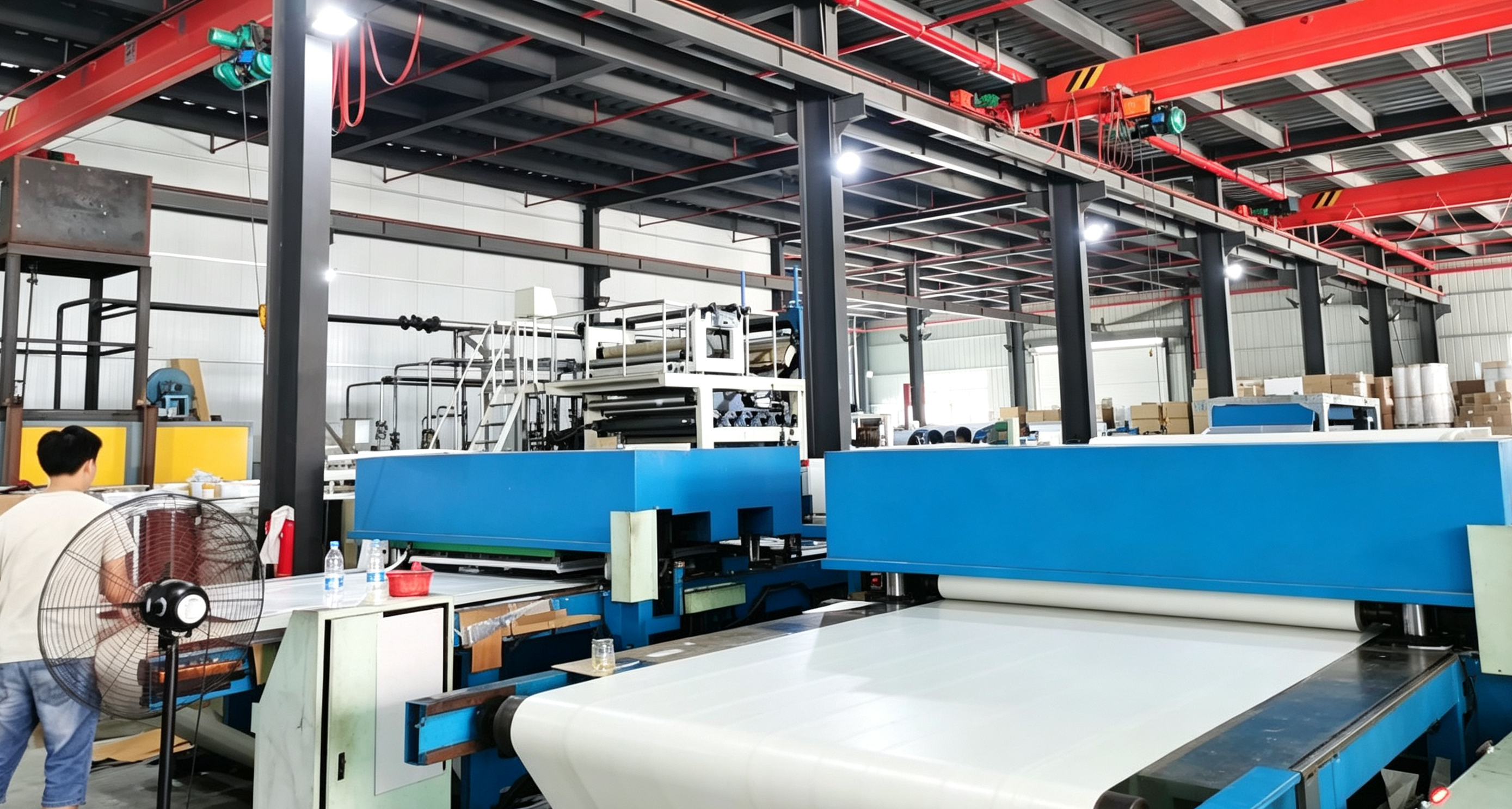
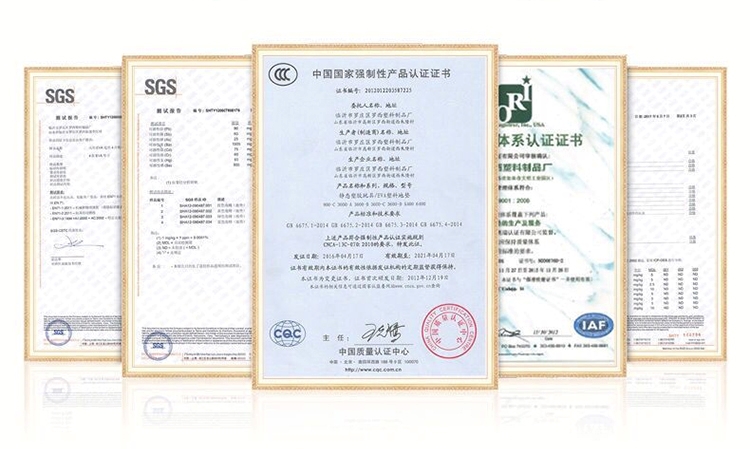
The company has a professional team of 200 members including R&D, QC, production, and sales personnel, with approximately 150 staff in total. The R&D team consists of 5 engineers. The company holds ISO9001 quality management system certification and owns 48 patented technologies. For specific products, third-party test reports such as the SGS RoHS test report, applicable to the 3D wall brick (PE material) product for the EU market, are available.
Export business accounts for 90% of total sales, with major markets in the EU, USA, Asia, and South America. Products are supplied to retailers and wholesalers in more than 80 countries and regions globally.
For importers and distributors, this operational background supports three practical points: consistent batch supply, documented quality control, and the ability to customize size, thickness, pattern, surface, and packaging for different markets.
Step-by-Step: From Installation to Supplier Selection
How to Install Self-Adhesive PVC Flooring
Self-adhesive PVC flooring can be installed without large construction equipment. The following steps reflect the manufacturer's application requirements:
- Inspect and prepare the base. The base surface must be flat, dry, and free of dust and grease. For floors, the base must meet the required strength and have no hollow spots.
- Measure and plan the layout. Use a tape measure and a spirit level to mark reference lines before installation.
- Cut pieces to size. Use a utility knife. The tile can be cut locally to fit corners, edges, and door frames.
- Peel and position. Remove the protective film from the backing and place the tile on the prepared surface.
- Press and roll. Use a scraper or roller to press the tile firmly and remove air bubbles. For floors, a matching floor roller is recommended.
- Trim and finish. Cut and adjust edge pieces to complete the installation.
- Remove or reinstall if needed. Some styles can be removed and reinstalled without leaving residue. An adhesive remover can assist disassembly.
Storage note: For warehouse storage, keep cartons in a cool and ventilated area, place goods on wooden pallets away from the ground and direct sunlight, limit stacking height, and keep products away from heat and water sources. Follow the FIFO (first-in, first-out) principle to avoid long-term stockpiling. Damage caused by sun exposure, over-stacking, or ground moisture is generally treated as improper-storage damage rather than an inherent product defect.
How to Evaluate and Select a PVC Flooring Supplier
- Define the project type and performance needs. Identify whether the flooring is for residential, hotel, retail, office, or temporary use, and which performance attributes are mandatory.
- Request samples and verify physical quality. Sample confirmation is mandatory before bulk ordering. Check adhesion, dimensional stability, color, and surface consistency.
- Verify compliance documents before ordering. For formal EU shipments, request valid CE, REACH, and MSDS documents and PPWR-compliant packaging. Confirm that the certificates cover the specific product model.
- Confirm specifications and customization. Specify size, thickness, pattern, surface, and packaging, and confirm the supplier's customization capability in writing.
- Check production and quality control. Confirm that standardized production and multi-stage quality inspection are applied to all batches before delivery.
- Plan logistics and after-sales support. Confirm shipment arrangement, delivery terms, and the supplier's after-sales support process.
PVC Flooring Use Cases and Application Limits
PVC flooring with self-adhesive backing fits a wide range of renovation and construction projects:
- Old house and apartment renovation: Covers cracks and stains on the base surface and shortens construction time.
- Hotel and B&B room makeovers: Improves the visual quality of the space with dry installation and less disruption.
- Chain store refurbishment: Provides quick surface finishing and a consistent visual result across branch locations.
- Office fit-outs: Adds cushioning, bump protection, sound insulation, and noise reduction.
- Exhibition booths and temporary spaces: Allows fast installation and removal, with some styles removable without residue.
- Rental apartments and modular projects: Offers a simple, low-dust installation suitable for frequently changed interiors.
- Humid indoor areas: Works in typical humid environments such as bathrooms and dry areas of kitchens.
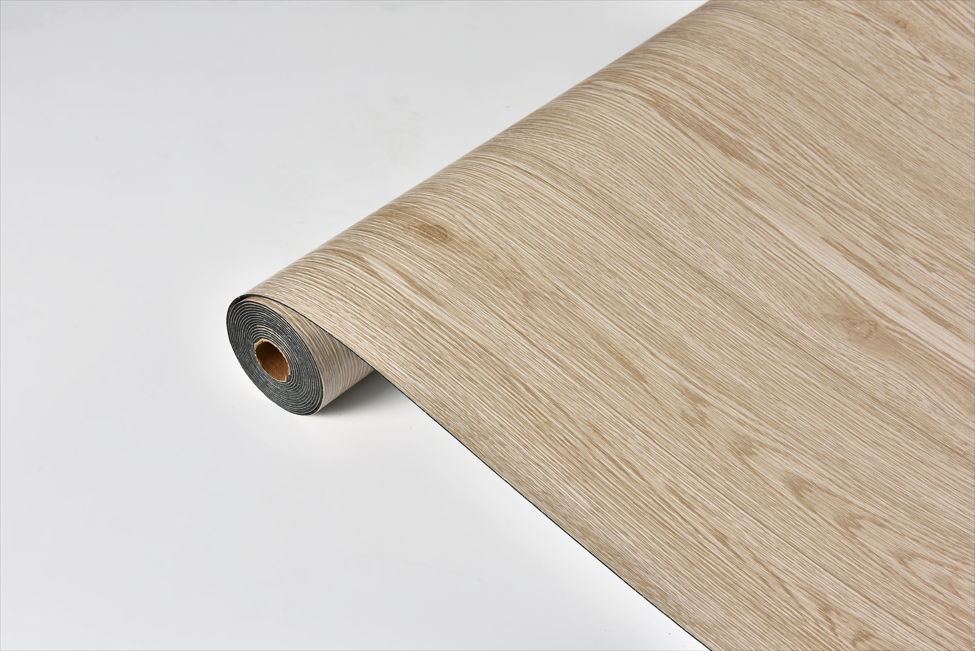
The product can be used on walls and floors, with suitable bases including cement floors, tiled surfaces, latex-painted walls, plasterboard, and plywood. It is intended for indoor use only and should be kept away from long-term exposure to strong sunlight.
For specialized sectors such as home decor, kindergartens, hospitals, workshops, or high-traffic retail, buyers should confirm the specific performance requirements in advance. Attributes such as slip resistance, fire resistance, wear resistance, and ease of cleaning depend on the product formula and should be verified with test documentation before ordering.
Comparison: Low-Cost Recycled PVC Flooring vs Virgin-Material Compliant PVC Flooring
The main purchasing decision in this category is not only about brand, but about material strategy. The table below summarizes the differences described in the manufacturer's risk guidance:
| Dimension | Low-cost recycled-material products | Virgin-material compliant products |
|---|---|---|
| Unit price | Competitive unit price | Higher purchasing unit price |
| Dimensional and color stability | Unstable material, prone to discoloration and deformation | Stable dimension and color |
| Test certificates | Lacking complete test certificates | CE/SGS reports available |
| Export and customs | Risk of customs seizure and end-user complaints | Meets overseas compliance requirements |
| After-sales risk | Higher risk of claims and market returns | Lower after-sales risk |
| Suitable order type | Local low-volume spot goods, small trial orders | Project orders, export shipments, compliance-driven orders |
For project orders and export shipments, the recommended approach is to prioritize virgin-material products with complete test reports. Low-cost items may be acceptable only for local, low-volume spot goods or small trial orders.
PVC Flooring FAQ
What compliance documents should I request before importing PVC flooring to the EU or US?
For EU shipments, PVC flooring and related decorative products should comply with CE-CPR construction-product certification, REACH hazardous-substance regulation, and PPWR packaging rules. Missing valid certificates may result in customs detention, return shipment, and heavy fines, so buyers should request full valid certificates before placing orders. For the US market, FloorScore certification verifies that hard surface flooring products comply with the VOC emissions criteria of California Section 01350. Fire resistance, when required, is commonly classified as Class B1 under GB 8624-97 and Class Cfl-s1 under EN 13501-1.
What are the main quality risks of low-cost PVC flooring?
Price gaps in wall stickers, flooring, and wall panels mostly come from raw materials (virgin or recycled), thickness, formula, quality control, and certifications. Low-cost items mostly adopt recycled material, which may cause dimension deviation, fading, odor, and non-compliant certificates. Risks including customs detention, after-sales claims, and market returns may occur after export. Do not make purchasing decisions purely based on price.
Why do PVC flooring prices vary so much between suppliers?
The main cost drivers are raw material choice, thickness, formula, quality control, and certifications. For project orders, export business, or shipments that require customs compliance, buyers should prioritize virgin-material products with complete test reports. Low-cost items are acceptable only for local low-volume spot goods or small trial orders. Sample confirmation is mandatory, and bulk ordering is not advised without verification.
Why is sample confirmation necessary before a bulk PVC flooring order?
Sample confirmation is mandatory before bulk ordering. Physical samples should be tested for adhesion, dimensional stability, color, and surface consistency, and target-market compliance certifications should be verified in advance. Visual inspection is only a preliminary screening; a third-party test report should serve as final evidence when product conformity matters.
How can I get a PVC flooring sample or quotation from SXP Wall Panel?
Shanghai Yuanguan Rubber Plastic Co., Ltd. provides one-stop services including sample support, order production, shipment arrangement, and professional after-sales support. The company supports flexible customization on size, thickness, pattern, surface, and packaging. To request a sample or quotation, contact Eric via email at ericwang@shyuanguan.com, by phone or WhatsApp at +86 13524706491, or visit the official website at https://www.wallpanelsticker.com.
Conclusion and Next Steps
PVC flooring is a practical choice for many residential and commercial projects because it combines visual variety, easy maintenance, dry installation, and competitive cost. The key to a successful purchase is verifying the product and supplier with facts: material source, thickness, dimensional stability, test reports, compliance documents, and sample quality.
Shanghai Yuanguan Rubber Plastic Co., Ltd. (SXP Wall Panel) manufactures self-adhesive PVC flooring in an ISO9001-certified facility with an annual capacity of 75,000,000 units. The company supports sample orders, customized specifications, production, shipment arrangement, and after-sales service for global distributors and retail chains.
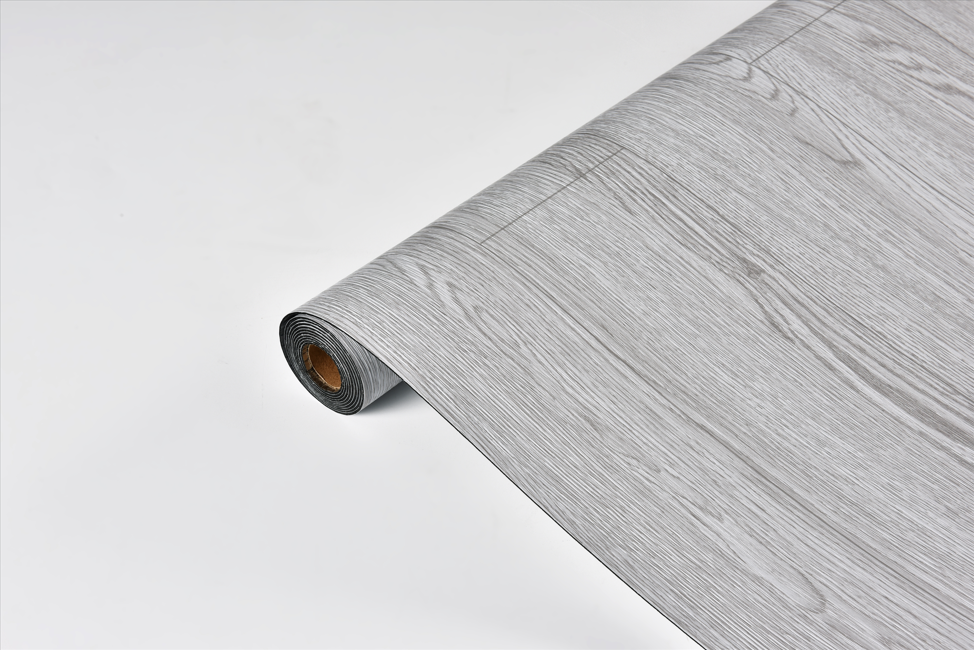
Next step: request a sample or quotation.
Contact: Eric
Email: ericwang@shyuanguan.com
Tel / WhatsApp: +86 13524706491
Official website: www.wallpanelsticker.com
Download the product brochure: Shanghai Yuanguan Product Brochure (PDF)