
PVC Flooring: A Practical Guide for Buyers and Renovators
PVC Flooring: A Practical Guide for Buyers and Renovators
PVC flooring is a resilient floor covering manufactured primarily from polyvinyl chloride, used in residential homes, commercial spaces, hotels, offices, and institutional projects. The category has grown quickly because it combines decorative variety with practical performance at a competitive cost. For many buyers, however, the first challenge is not finding PVC flooring—it is making sense of the categories. Click-lock, self-adhesive, roller, waterproof, fire-resistant, anti-static, wood-grain, stone-grain: each term points to a different product family with different installation logic and cost structure.
This guide is written for buyers at the awareness and research stage. It explains what PVC flooring is, why the category continues to expand, what to expect from a self-adhesive PVC floor tile, and how to evaluate a supplier using verifiable criteria. The goal is to help you turn an open-ended search into a shortlist of products that match your project.
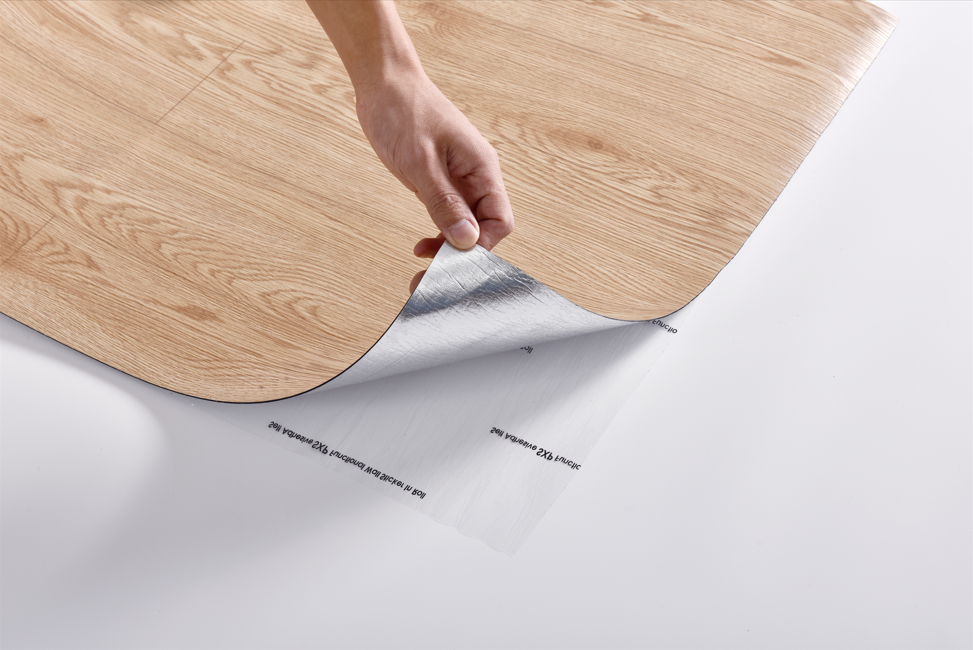
PVC flooring tiles available from SXP Wall Panel
Why Buying PVC Flooring Feels Complicated
PVC flooring looks straightforward until the buyer starts comparing products. The category includes tiles, planks, sheets, and rolls. Some products are designed for dry installation with self-adhesive backing; others require adhesives or mechanical locking systems. Surface performance also varies: wear resistance, slip resistance, fire behavior, and emission levels depend on the formulation and manufacturing process, none of which are visible in online photos.
A common mistake is making a purchasing decision based on unit price alone. Price gaps among competing PVC flooring products often come from differences in raw materials (virgin versus recycled material), thickness, formulation, quality control, and certification. Low-cost items frequently use recycled material, which can lead to dimensional deviation, fading, odor, and documentation that does not meet overseas compliance requirements.
For buyers planning export shipments, commercial projects, or installations that must satisfy regulatory requirements, the selection process should be based on documented facts rather than visual similarity. The sections below walk through the market context, product details, and a step-by-step selection framework.
PVC Flooring Product Families: What the Search Terms Actually Mean
Buyers searching for PVC flooring typically use one of three angles: installation format, performance attribute, or visual design. Recognizing the angle behind a search term makes product comparison easier.
Installation format terms include click locking PVC flooring, self adhesive PVC flooring, roller PVC flooring, and 6×36 inches PVC flooring. These terms describe how the product is installed and the physical format expected. Click-lock products use mechanical joints for floating installation; self-adhesive products use a pressure-sensitive backing; roller products are supplied in large sheets for continuous coverage.
Performance attribute terms include fire-resistant PVC flooring, wear-resistant PVC flooring, waterproof PVC flooring, anti-static PVC flooring, anti-slip PVC flooring, light weight PVC flooring, and phthalate-free PVC flooring. Each term communicates an underlying requirement: safety, durability, moisture resistance, static control, or material safety. These attributes should be confirmed through test reports, not assumed from product names.
Visual design terms include wood-grain PVC flooring, stone-grain PVC flooring, carpet-pattern PVC flooring, parquet-pattern PVC flooring, and matte-surface PVC flooring. These describe the decorative layer and the aesthetic the buyer wants to achieve. The same functional product can be manufactured in multiple designs, so visual preference is usually a secondary filter after installation and performance requirements.
Application-specific terms such as hospital-grade PVC flooring, kindergarten PVC flooring, home decor PVC flooring, and workshop PVC flooring indicate the operating environment and the expected level of durability and safety. In institutional environments, documented slip resistance, cleanability, and emission compliance become decision-critical information; suppliers should provide test reports that match the end-use requirements.
PVC Flooring Market and Industry Context
The scale of the PVC and vinyl flooring market explains why so many importers, distributors, and trading companies are active in this category. According to Grand View Research, the global vinyl flooring market is estimated at USD 28.0 billion in 2026, and is projected to reach USD 41.5 billion by 2033.
China plays a central role in global supply. According to OEC trade data, China was the top exporter of vinyl chloride polymer floor coverings (HS 391810) in 2024, with exports valued at USD 4.97 billion. Vietnam (USD 1.81 billion) and South Korea (USD 820 million) were the next-largest exporters. For international buyers, this means the majority of PVC flooring supply passes through Chinese manufacturers, making supplier verification a top priority.
Two compliance-related trends are reshaping the category:
- Phthalate-free formulation. Major global manufacturers have moved to phthalate-free vinyl production. Tarkett, for example, achieved 100% phthalate-free vinyl production at its European and North American sites by 2018, using alternative plasticizers such as DOTP. Buyers exporting to Europe and North America should confirm whether a supplier’s formulation meets the same expectation.
- Emission certification. FloorScore is a recognized indoor air quality certification for hard surface flooring and verifies compliance with the volatile organic compound (VOC) emission criteria of California Section 01350. A FloorScore-certified product gives buyers documentation needed for green building programs and indoor-air-sensitive projects.
Fire classification is another standard that appears repeatedly in PVC flooring procurement. Depending on the destination market, PVC flooring fire resistance is commonly classified as Class B1 according to Chinese national standard GB 8624-97 and Class Cfl-s1 according to European standard EN 13501-1. Buyers should request the fire-classification test report before shipment, not after customs clearance.
Self-Adhesive PVC Flooring: What to Look For
Among the many PVC flooring formats, self-adhesive PVC flooring—also called peel-and-stick flooring—is a convenient option for renovation and interior projects. It does not require cement, glue, or large installation equipment, which shortens construction time and reduces labor cost.
SXP Wall Panel, the flooring and wall panel brand of Shanghai Yuanguan Rubber Plastic Co., Ltd., supplies self-adhesive PVC flooring under model WB-PVC. This product is a PVC floor tile available in 40/60/120 × 300 cm sizes with a thickness of 1.5 mm. It is positioned for building materials, home & garden, and interior decoration applications.
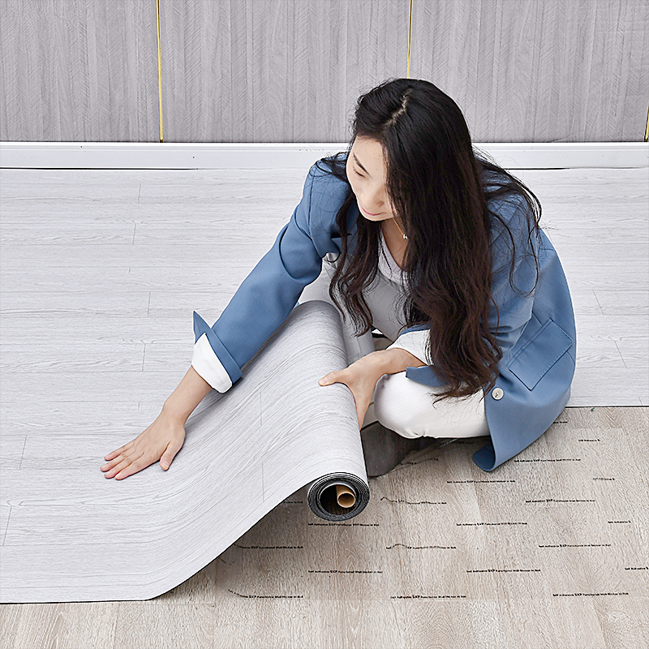
Self-adhesive PVC floor tile surface and pattern
The installation method is dry installation: peel off the protective film and stick the tile onto a smooth, solid surface. The tile can be cut on site with a utility knife and, depending on the style, removed and reinstalled. This makes it particularly suitable for rental apartments, temporary exhibition booths, and renovation projects where speed and reversibility matter.
Installation conditions buyers should understand
Self-adhesive PVC flooring is not a universal product. According to the application guidelines for WB-PVC, the base surface must be flat, dry, and free of dust and grease. Suitable surfaces include cement floors, tiled surfaces, latex-painted walls, plasterboard, and plywood. The product is strictly not recommended for powdery, sandy, or loose surfaces. For flooring installations, the base must have sufficient strength and no hollow spots.
This is a critical point for buyers who plan to install PVC flooring over old, damaged substrates. The adhesive can only perform when the base is stable. If the base is uneven or unstable, surface preparation should be added to the project budget.
How to Select PVC Flooring: A Step-by-Step Checklist
The following steps help buyers move from broad awareness to a qualified shortlist. They combine installation logic, application requirements, and compliance checks.
Step 1: Define the installation environment
Determine whether the flooring will be used in a dry area, a humid bathroom environment, or a space exposed to strong sunlight. PVC flooring designed for typical humid environments—such as bathrooms and dry areas of kitchens—should not be exposed to long-term direct sunlight without confirmation from the supplier.
Step 2: Inspect the base surface
The base must be smooth, solid, clean, and free of oil or dust. Check for hollow spots and strength issues. If the base is not suitable, add surface preparation to the project plan before installation.
Step 3: Match installation method to the project
Compare the installation method with your project constraints. Self-adhesive PVC flooring works well for renovation, rental apartments, and projects where speed matters. Click-lock PVC flooring is a separate product family used where floating installation over an underlayment is preferred. Roller or sheet PVC flooring is often specified for larger continuous areas where fewer seams are required. Each family has different edge treatment and underlayment requirements.
Step 4: Verify compliance documentation
For EU shipments, request certification documents before placing the order. Compliance typically covers CE-CPR construction-product certification, REACH hazardous-substance regulation, and PPWR packaging rules. Missing valid certificates can lead to customs detention, return shipment, and fines. For US projects, request FloorScore documentation if the project is in California or requires green building credits. For commercial buildings, request the fire-classification test report as well.
Step 5: Request physical samples
Sample confirmation is mandatory before bulk orders. Test the sample for adhesion, dimensional stability, and visual appearance, and verify that the sample matches the mass-production specification. This step is especially important for export orders, where the distance between buyer and factory makes after-sales claims expensive.
Step 6: Plan storage and logistics
PVC flooring products are sensitive to high temperature, heavy pressure, and UV light. Store goods in a cool, ventilated warehouse, placed on pallets away from the ground and direct sunlight, with limited stacking height. Keep goods away from heat and water sources, and apply the FIFO (first-in-first-out) principle to avoid long-term stockpiling.
PVC Flooring Use Cases Across Project Types
Self-adhesive PVC flooring supports a wide range of renovation and commercial applications. Based on the documented application scenarios for SXP Wall Panel PVC products, the following project types are commonly served:
- Old house renovation — covering cracks and stains on the original floor surface while improving the visual quality of the room.
- Apartment full renovation — completing the surface quickly to shorten the overall renovation timeline.
- Hotel room makeovers — refreshing guest rooms without long downtime between bookings.
- Homestay and B&B renovation — upgrading interiors with minimal disruption to operations.
- Chain brand store refurbishment — protecting existing floors while standardizing the visual appearance across locations.
- Office fit-outs — reducing noise and protecting the floor base during occupancy.
- Temporary exhibition booths — using removable and reinstallable flooring for reusable booth build systems.
- Simple rental apartment renovation — achieving a clean finish at a controlled cost.
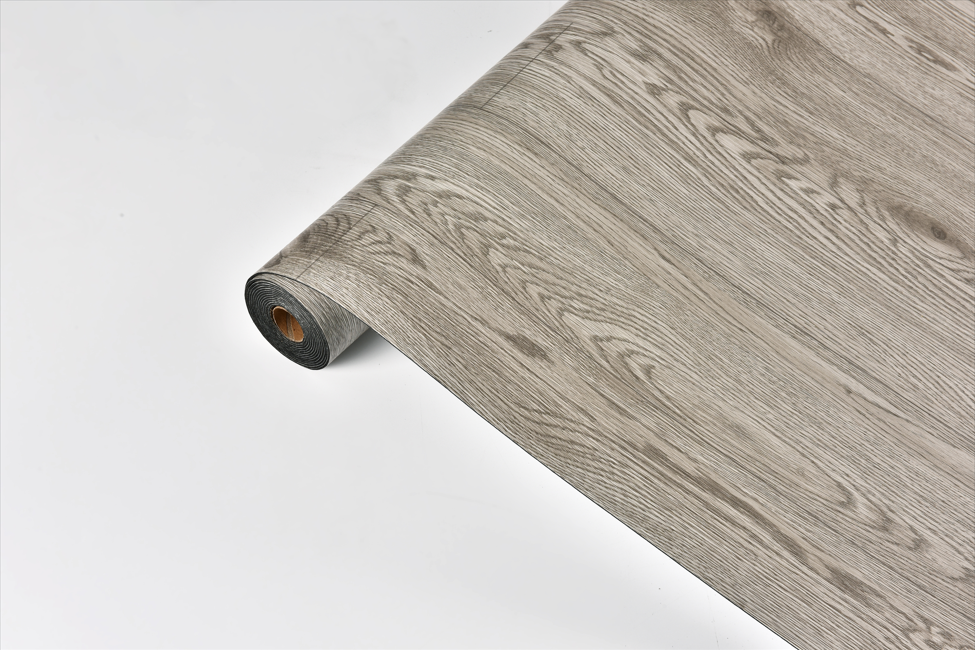
PVC floor tile designs used in renovation and commercial projects
PVC Flooring Comparison: Project Type and Base Surface
The two tables below summarize how self-adhesive PVC flooring maps to different project types and base surface conditions. These comparisons are based on the documented product application scenarios for the WB-PVC floor tile.
| Project Type | Suitability | Key Benefit |
|---|---|---|
| Old house renovation | High | Covers cracks and stains on existing surfaces |
| Apartment full renovation | High | Shortens construction time |
| Hotel / B&B renovation | High | Fast surface finish, improved visual quality |
| Chain store refurbishment | High | Protects existing floors, consistent appearance |
| Office fit-out | High | Sound insulation and noise reduction |
| Temporary exhibition booth | High | Removable and reinstallable |
| Rental apartment renovation | High | Dry installation, no glue required |
| Base Surface | Compatibility | Requirement |
|---|---|---|
| Cement floor | Compatible | Flat, dry, dust-free, sufficient strength |
| Tiled surface | Compatible | Smooth, solid, grease-free |
| Latex-painted wall | Compatible | Smooth and non-powdery |
| Plasterboard | Compatible | Solid and flat |
| Plywood | Compatible | Smooth, solid, dry |
| Powdery / sandy / loose surface | Not compatible | Must be repaired before installation |
Frequently Asked Questions
What compliance risks should I notice when exporting PVC flooring to the EU?
Exporting PVC flooring and related decorative materials to the EU requires compliance with CE-CPR construction-product certification, REACH hazardous-substance regulation, and PPWR packaging rules. Missing valid certificates can result in customs detention, return shipment, and heavy fines. Request full valid certificates from the supplier before placing an order. If the shipment is transiting through the EU to a non-EU destination, rules may be relaxed, but shipping without valid certificates is still a risky practice.
What are the main risks of low-cost PVC flooring?
Price differences among PVC flooring products come from raw material choice (virgin versus recycled material), thickness, formulation, quality control, and certification. Low-cost products often use recycled material, which can cause dimensional deviation, fading, odor, and missing compliance certificates. After export, these risks can translate into customs detention, after-sales claims, and market returns. For project orders, export business, and shipments requiring customs compliance, prioritize virgin-material products with complete test reports.
How should buyers budget for PVC flooring installation?
Budget planning should account for material unit price, base surface preparation, installation method, and compliance documentation. Self-adhesive PVC flooring reduces installation cost because it does not require cement or glue, and the necessary tools are limited to a utility knife, scraper or roller, tape measure, and spirit level. However, if the base surface is not flat, dry, and dust-free, surface preparation must be added to the budget. For flooring projects, a matching floor roller is recommended to ensure proper adhesion.
Why is sample confirmation necessary before bulk ordering?
Sample confirmation is mandatory before bulk ordering, especially for export shipments. Physical samples allow buyers to test adhesion and aging performance before committing to mass production. It is also important to verify the target market’s compliance certifications during the sampling stage. Bulk ordering without sample confirmation increases the risk of costly mismatches between expectation and delivered goods.
What warehouse storage requirements apply to PVC flooring?
PVC flooring products are sensitive to high temperature, heavy pressure, and UV light. Store goods in a cool, ventilated warehouse with temperature not exceeding 40°C, away from direct sunlight and heating pipes. Place cartons on wooden pallets, never directly on the bare floor, to prevent moisture damage. Stack full cartons flat with limited height, and do not place heavy hard panels on top of soft flooring products. Apply the FIFO principle and ship older batches first to avoid long-term stockpiling.
Bringing It Together
PVC flooring is a broad category with real material differences hidden beneath similar visuals. The buying process becomes more manageable when selection is based on installation environment, base surface condition, installation method, compliance documentation, and physical samples—rather than on unit price alone.
Shanghai Yuanguan Rubber Plastic Co., Ltd. is a decorative materials manufacturer established in 2005, specializing in wall stickers, wallpaper, flooring, and foam materials. The company operates a 7,000-square-meter intelligent factory equipped with automated production facilities, with an annual production capacity of 75,000,000 units. Its main products are exported to the EU, USA, Asia, and South America, and export business accounts for 90% of total sales.
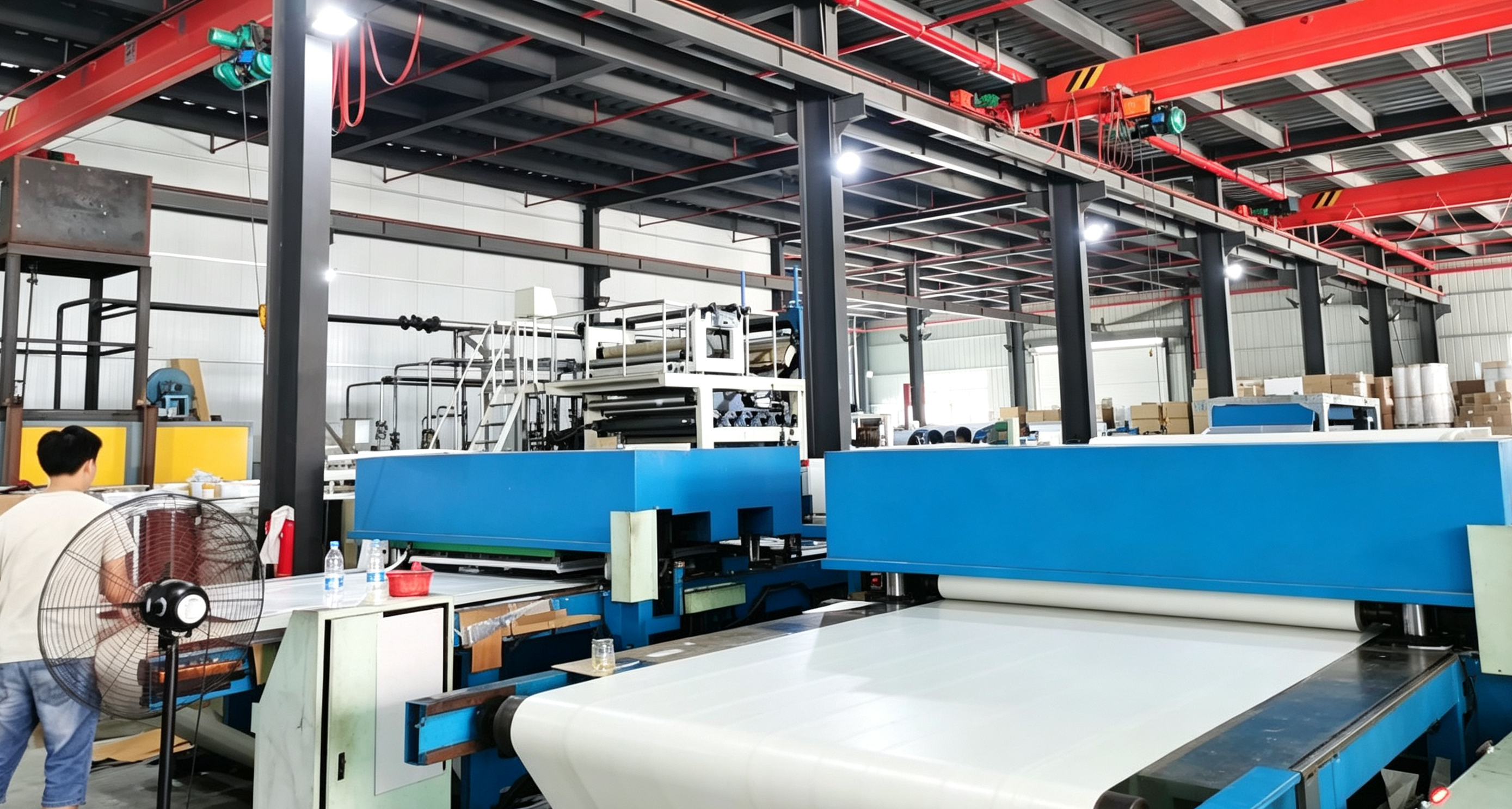
Shanghai Yuanguan production facility
Ready to evaluate self-adhesive PVC flooring for your next project? Contact the SXP Wall Panel team at ericwang@shyuanguan.com or call / WhatsApp +86 13524706491 for product specifications, sample support, and quotations.
Download the Shanghai Yuanguan Product Brochure to review the full product range.