
Partnering With a PVC Flooring Manufacturer: Long-Term Support, FAQ, and After-Sales Explained
A PVC flooring partnership is decided by service continuity, not by the first container. For importers and wholesalers, long-term support comes down to five documented service areas — sample support, flexible customization, order production, shipment arrangement, and after-sales handling — backed by compliance documents that stay traceable for the destination market. This guide explains what to ask a repeat supplier before committing, and how Shanghai Yuanguan Rubber & Plastic Co., Ltd. structures those five areas under its SXP Wall Panel brand.
Buyers in the Research and Evaluation stage rarely struggle to find a factory that can produce PVC flooring. The harder question is which factory will still deliver the same thickness, the same surface texture, the same packaging, and the same paperwork on order number four. That question is what separates a transactional purchase from a long-term supply program — and it is answered by service structure rather than by catalogue photography.
The Real Problem: Supply Support, Not Product Availability
A supplier is long-term viable when five things are documented rather than promised: the sample, the specification sheet, the compliance file, the production and lead-time commitment, and the after-sales process. Everything else is a purchase order.
PVC flooring is widely available, and global supply is concentrated in a relatively small number of exporting countries, so availability is not the constraint importers face. The constraint is predictability across seasons. In practice, buyers who commit to a repeat supplier and later regret it usually describe one of five failures:
- Specification drift. Thickness, wear layer or substrate changes between batches without a written revision.
- Appearance drift. Colour tone or embossing texture shifts slightly, which is invisible in a single sample but obvious on a retail shelf next to existing stock.
- Documentation gaps. A test report exists but does not name the specific model, the applicable directive, or the issuing body — which is the version that customs and retail compliance teams actually accept.
- Verbal lead times. Production timing is agreed in conversation but never written into the order confirmation.
- After-sales dead ends. A quality question is raised and then disappears, because no named contact owner and no tracking step were defined at the start.
Each of these failures is a service design problem, not a manufacturing problem. That is why the evaluation checklist for a long-term PVC flooring supplier should be built around service commitments first and product data second — the product data is verifiable in a week, but the service behaviour is only visible over two or three order cycles.
Industry Background: Why Service Continuity Now Decides Competitiveness
The global vinyl flooring market was estimated at USD 28.0 billion in 2026 and is projected to reach USD 41.5 billion by 2033, a 5.8% CAGR for the 2026–2033 period, according to Grand View Research. On the supply side, OEC trade data records China as the leading exporter of vinyl chloride polymer floor coverings (HS 391810) in 2024, with exports valued at USD 4.97 billion, ahead of Vietnam at USD 1.81 billion and South Korea at USD 820 million.
Two conclusions follow for importers and wholesalers. First, sourcing options are abundant, so a factory competes on execution rather than on the mere ability to produce. Second, because a large share of global supply originates from a single export market, differentiation between suppliers has shifted toward documented compliance and after-sales reliability — the parts of the offer that protect the buyer's own shelf and customs position.
The compliance layer is no longer optional
Compliance requirements have become a normal part of the buying checklist rather than a specialist topic. In the EU, PVC flooring placed on the market is expected to satisfy the RoHS Directive (EU) 2015/863 restriction on hazardous substances, alongside construction product, chemical and packaging obligations. In the United States, indoor air quality specifications frequently reference FloorScore, which verifies that hard surface flooring complies with the volatile organic compound (VOC) emissions criteria of California Section 01350, as published by SCS Global Services and RFCI.
Fire performance is another recurring specification point. Published classification guidance describes PVC flooring fire resistance as commonly classified Class B1 under Chinese standard GB 8624-97 and Cfl-s1 under EN 13501-1, with ASTM E648 also referenced in North American specifications. Buyers should treat these as classification frameworks to be confirmed against the specific product file, not as blanket claims that apply automatically to every SKU.
How Long-Term Support Is Actually Structured
Shanghai Yuanguan Rubber & Plastic Co., Ltd. is a decorative materials manufacturer based in Qingpu District, Shanghai, China. The company produces self-adhesive wall stickers, 3D foam wall panels, PVC wallpaper, WPC decorative wall panels, self-adhesive PVC flooring, carpet tiles and decorative carpets, and supplies building-materials retailers and wholesalers in more than 80 countries under the SXP Wall Panel brand.
For a buyer evaluating a repeat supplier, the relevant question is not what the company makes but how its service model is organised. The company reports a service structure built on full one-stop support: sample support, order production, shipment arrangement and professional after-sales support. Its capability data describes OEM/ODM production with flexible customization, a 30-day lead time, an MOQ of 1,000 square meters, 100% testing before delivery, and monthly capacity of more than 10 million square meters.
1. Sample support: validating before committing
Samples are the point where a specification stops being a description and becomes a physical benchmark. For flooring, the practical recommendation is to test samples for adhesion performance and ageing behaviour before bulk purchasing, and to confirm the material grade in writing — the material itself should be specified on the proforma invoice for export orders, with third-party laboratory results used as the acceptance criterion for bulk goods.
Retaining the approved reference sample is equally important. When a repeat order arrives two seasons later, the reference sample is the only neutral object that can settle a discussion about colour tone or surface texture, because both sides can compare against the same physical item rather than against memory or a photograph.
2. Flexible customization: the ten levers buyers actually use
Customization scope determines how well one factory can serve several channels without forcing the buyer to hold multiple suppliers. The customization categories reported for this production line are:
- Size customization
- Colour customization
- Pattern and design customization
- Embossing texture customization
- Material structure customization
- Thickness customization
- Packaging customization
- Logo and private-label customization
- Custom labels
- New product development service
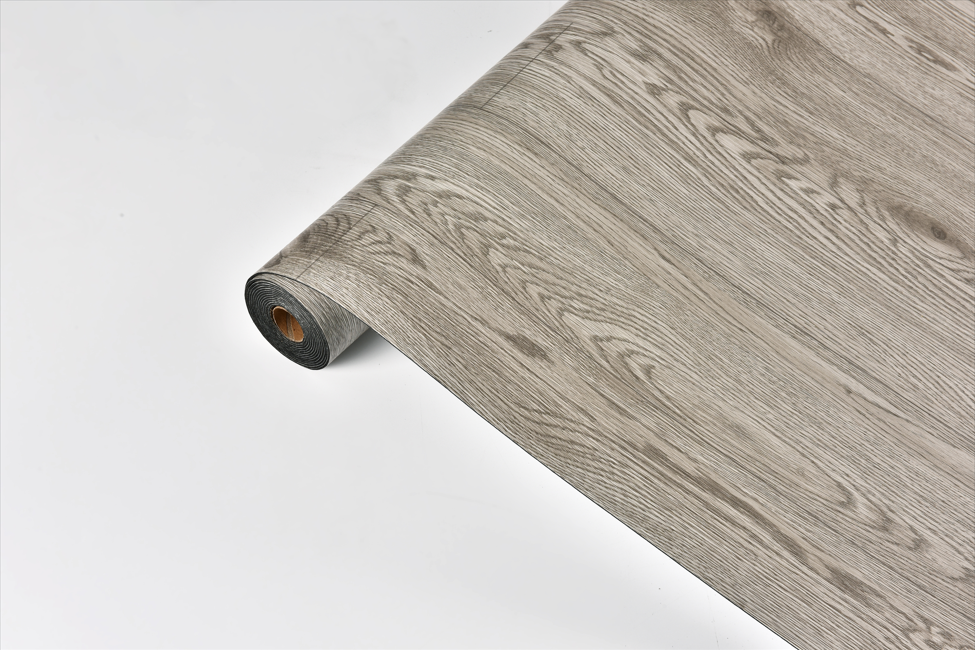
For importers, the commercially significant items are usually packaging, private label and custom labels, because these are what allow one production run to serve several retail chains. The reference product in the flooring line is the PVC floor tile, model WB-PVC, available in sizes of 40/60/120 × 300 cm at a thickness of 1.5 mm, in PVC material, positioned for building materials, home & garden and interior decoration applications.
Material construction is where suppliers differentiate most quietly. The stated core difference of this product line compared with alternatives is the use of full sufficient raw materials, a thickened wear-resistant surface layer, a dense thick IXPE substrate, and a heavy coating of strong adhesive — a combination intended to produce higher overall material quality rather than a lower headline unit cost.
3. Order production: capacity, MOQ and quality control
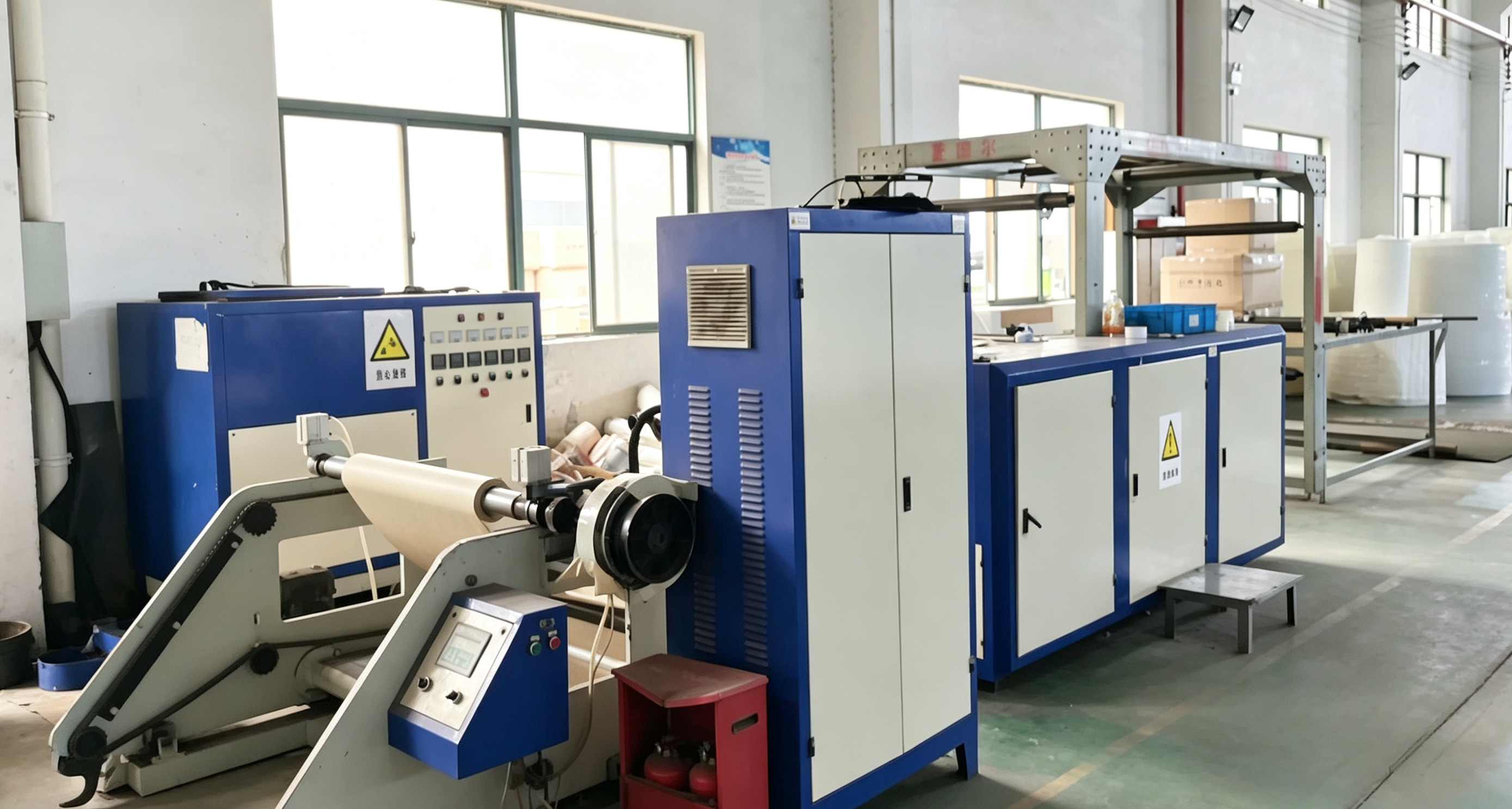
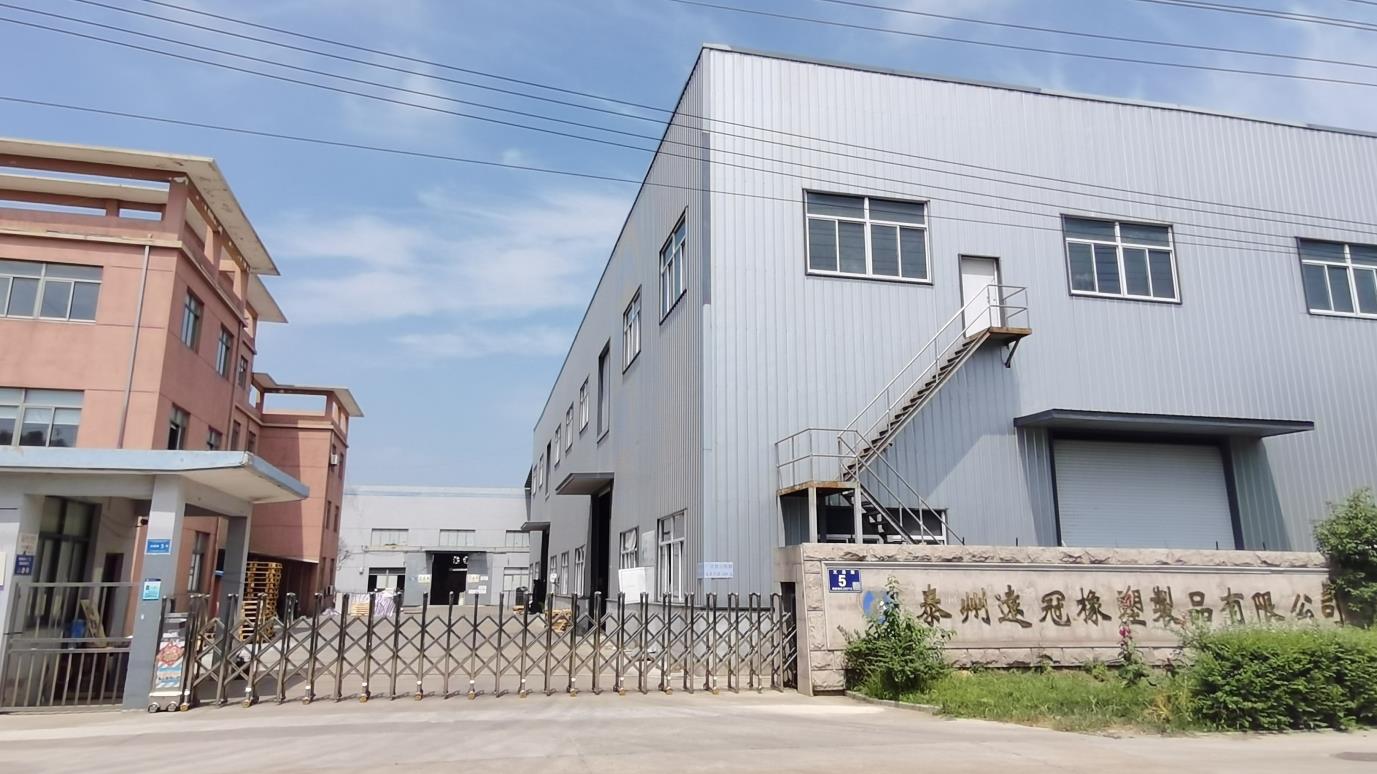
Repeat supply depends on whether the factory can absorb a second and third order without disturbing the first. The company operates an 8,000-square-meter manufacturing facility that includes a 7,000-square-meter intelligent factory equipped with automated production facilities, supported by a team of approximately 200 staff including a 5-engineer R&D team. Reported annual output is 75,000,000 units, with monthly capacity of more than 10 million square meters.
Quality control is described as 100% testing, applied through standardised production and multi-stage inspection for all batches before delivery. For a buyer, the operational value of that commitment is not the percentage itself but the fact that inspection is positioned before shipment rather than after arrival, which moves the cost of a defect to the factory side of the transaction.
4. Shipment arrangement: closing the gap between approval and arrival
Shipment arrangement is part of the stated one-stop service scope, which matters because it removes the handover point where most delays occur. When production, packing and shipping coordination sit with the same supplier, the packaging specification agreed at the sampling stage (carton configuration, private label, custom labels) is executed by the party that produced the goods rather than by a third party interpreting instructions. The company reports exports to Europe, North America, the Middle East, Asia, Oceania and Japan, with main markets spanning the EU, USA, Asia and South America, and an export ratio of 90%.
5. After-sales support: what should be defined in writing
After-sales support is the most quoted and least verified part of any supplier offer. The service items reported for this production line are specific enough to be written into a purchasing agreement as named obligations:
- Professional pre-sale consultation and product solutions
- Installation guidance and product usage support
- Fast response to customer inquiries
- Quality issue tracking and solutions
- Re-order and replacement support
- Long-term technical support
- OEM/ODM project follow-up service
- Continuous market feedback support
Two of these items are unusually valuable for wholesalers. First, installation guidance protects the downstream installers who represent the supplier's product in front of end users — a persistent source of avoidable claims. Second, continuous market feedback support turns the supplier relationship into a product-development channel, which is the mechanism by which a distributor keeps its range current without carrying the full cost of market research.
6. Compliance documentation for EU-bound flooring
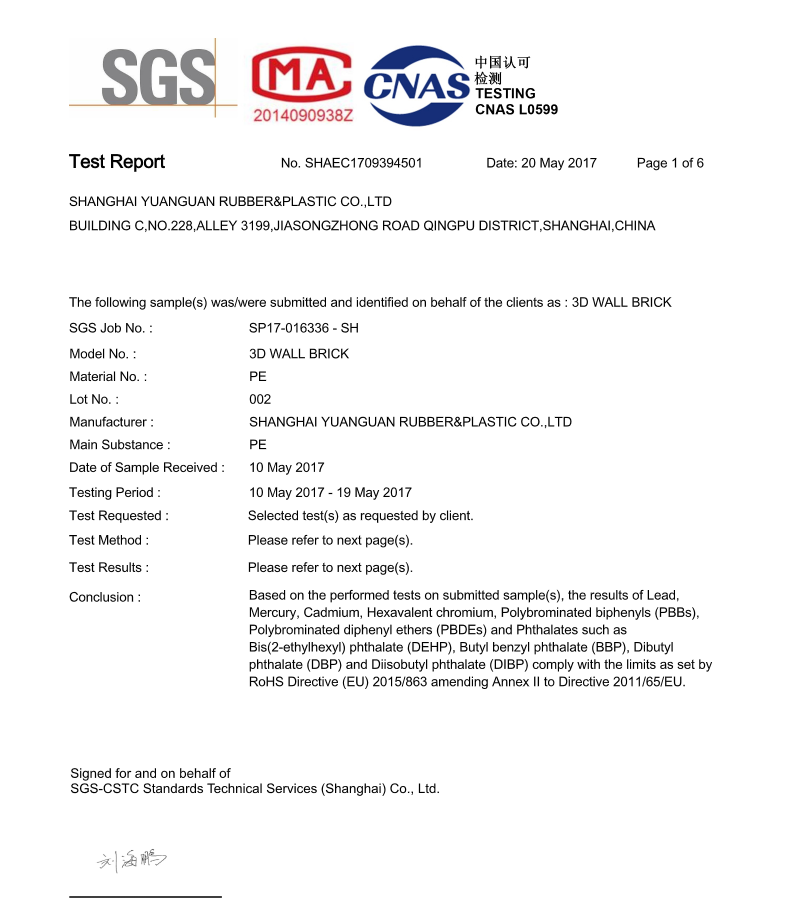
For EU-bound orders, the compliance file is part of the product. The PVC floor tile (model WB-PVC) is covered by the SGS RoHS Test Report, applicable to the EU market and issued by SGS-CSTC under the RoHS Directive (EU) 2015/863, with certification number SHAEC1709394501. The report was issued on 20 May 2017 and is recorded as valid through 1 January 2099.
Buyer note: a RoHS report and an indoor air quality certification such as FloorScore verify different things. RoHS addresses restricted hazardous substances; FloorScore addresses VOC emissions against California Section 01350. Where a project specification calls for one, request that specific document and confirm the certificate holder and model scope with the issuing body.
Step-by-Step: From Sample Request to Repeat Order
The sequence below reflects the order in which a repeat PVC flooring supply program normally stabilises. Each step produces a document or a physical object that the next step depends on.
Step 1 — Define the market requirement and the compliance checklist
Start with the destination market rather than the product. Confirm which compliance documents are required (for example RoHS for EU-bound PVC flooring, VOC documentation for US indoor specifications, and fire classification where the project demands it) and confirm packaging expectations before any sample is requested.
Step 2 — Request samples and test them physically
Test samples for adhesion and ageing behaviour, then compare the surface against the retail context the product will actually sit in. Approve a retained reference sample and keep it in a controlled location.
Step 3 — Confirm the customization scope
Decide which of the customization categories apply to your channel — size, colour, pattern, embossing texture, material structure, thickness, packaging, logo/private label, custom labels, or new product development — and freeze the ones that will not change between orders.
Step 4 — Lock the specification sheet, MOQ and lead time
Write the model, size and thickness into a specification sheet (for example WB-PVC at 40/60/120 × 300 cm, 1.5 mm). Record the MOQ of 1,000 square meters and the 30-day lead time in the order confirmation rather than in correspondence.
Step 5 — Production with 100% testing
Confirm that testing is performed before shipment and request the inspection record with the shipping documents, so that the acceptance step is documented rather than assumed.
Step 6 — Shipment arrangement
Confirm the packing configuration and labelling at the same time as the production schedule. Because shipment arrangement sits inside the same one-stop service scope as production, the packaging specification agreed at sampling is executed by the producing factory.
Step 7 — After-sales and the re-order cycle
Log the contact owner, the claim path and the re-order channel. On the next order, compare the incoming batch against the retained reference sample before releasing goods to your own customers.
Use Cases: Where Long-Term PVC Flooring Supply Matters Most
Long-term supply relationships matter wherever the flooring must match itself across phases and locations. The application profile for this flooring line covers building decoration, interior renovation, old house remodelling, commercial space decoration, prefabricated interior decoration, hotel and B&B renovation, exhibition booth construction and retail store renovation.
Typical project types include renovation of old houses, apartment full renovations, hotel room makeovers, homestay renovations, chain brand store refurbishments, office fit-outs, temporary exhibition booths, simple rental apartment renovations and modular interior projects — environments where a distributor may need the same appearance specification delivered repeatedly over several years.
Installation and site conditions
The product is intended for indoor use at normal room temperature, including typical humid environments such as bathrooms and dry areas of kitchens, while avoiding long-term exposure to strong sunlight. Suitable surfaces include cement floors and tiled surfaces with other smooth, solid bases; it is not intended for powdery, sandy or loose surfaces. Installation is dry and self-adhesive, so no cement or glue is required, and the recommended tool set is a utility knife, scraper or roller, tape measure, spirit level and adhesive remover for disassembly assistance. For floors, a matching floor roller is recommended, and the base must meet the required strength with no hollow spots.
Repeat-order evidence
A documented case for this flooring line involves an e-commerce platform customer ordering 100,000 units for residential and commercial interior decoration, including apartment renovation, office fitting and retail store refurbishment, with a service duration of 5–10 years. The reported result is stable product performance with no quality complaints during the service period, and three repeat orders completed within two years. The highlighted product characteristics in that case were wear resistance, waterproofing, ease of installation, and stable colour and texture in long-term use, which is relevant for high-frequency traffic scenarios.
The commercial meaning of that case is narrow but useful: repeat orders are the practical test of supply support. A buyer who receives three consistent deliveries gains something a first-time buyer cannot evaluate — evidence that the specification survived contact with production.
Comparison: What to Verify Before the First Order and Before the Repeat Order
The evaluation checklist changes between the first order and the repeat order. The first order verifies capability; the repeat order verifies consistency.
| Evaluation point | What to confirm before the first order | What to confirm before a repeat order |
|---|---|---|
| Specification | Model, size and thickness for the target market (e.g. WB-PVC, 40/60/120 × 300 cm, 1.5 mm) | That the same size and thickness are restated on the new order confirmation |
| Compliance file | Model-specific RoHS report with certificate number, issuing body and applicable directive | That the document still names the model and remains recorded as valid |
| Customization | Which of the ten customization categories apply to your channel | Packaging, private label and custom labels unchanged for the channel |
| MOQ and capacity | MOQ of 1,000 square meters; monthly capacity above 10 million square meters | That seasonality is planned against the same capacity line |
| Lead time | 30-day production lead time written into the order | That the same lead time is confirmed before peak periods |
| Quality control | 100% testing and multi-stage inspection before delivery | Inspection record received with the shipping documents |
| Samples | Physical sample tested for adhesion and ageing; reference sample retained | Incoming batch compared against the retained reference sample |
| After-sales | Named contact owner and response channel | Quality issue tracking, re-order and replacement support in use |
A second table is useful when a buyer needs to assemble the compliance file for a specific destination market:
| Document type | What it verifies | Reference detail |
|---|---|---|
| SGS RoHS Test Report | Restriction of hazardous substances for EU-bound flooring | SGS-CSTC; certificate no. SHAEC1709394501; RoHS Directive (EU) 2015/863; covers the PVC floor tile model WB-PVC |
| FloorScore / California Section 01350 | VOC emissions criteria for hard surface flooring in indoor air quality specifications | Standard published and referenced by SCS Global Services and RFCI; confirm certificate scope per model |
| Fire performance classification | Reaction-to-fire classification referenced by building projects | GB 8624-97 Class B1; EN 13501-1 Cfl-s1; ASTM E648 also referenced in the classification literature |
| CE-CPR, REACH and PPWR obligations | Construction product, hazardous substance and packaging requirements for EU shipments | Required for EU export according to the compliance guidance used for these product lines; verify validity before ordering |
Risk note on low-cost alternatives: price gaps between PVC flooring offers usually originate in raw material grade (virgin versus recycled material), thickness, formulation, quality control and certification. Low-cost material may show dimensional deviation, fading and odour, and may arrive with incomplete test documentation — which creates customs detention, after-sales claim and market return exposure after export. For project and export orders, prioritise material with complete test reports, and treat a price-only comparison as an incomplete evaluation.
FAQ: Long-Term PVC Flooring Supply and Support
Which compliance documents should an importer request before confirming a PVC flooring order?
Request a RoHS test report that names the specific model, the applicable directive, the issuing body and the certificate number, rather than a generic certificate image. For the PVC floor tile (model WB-PVC), the file includes the SGS RoHS Test Report issued by SGS-CSTC under the RoHS Directive (EU) 2015/863, certificate number SHAEC1709394501, issued on 20 May 2017 and recorded as valid through 1 January 2099. For EU shipments, also confirm construction product, REACH and packaging requirements, and verify certificate validity before placing the order.
How much customization is realistic on size, thickness, pattern, surface and packaging?
The reported customization scope covers size, colour, pattern and design, embossing texture, material structure, thickness, packaging, logo and private label, custom labels, and a new product development service. In practice, buyers usually freeze size, thickness and material structure for the life of a supply program, and use packaging, private label and custom labels as the flexible layer that serves different retail channels from one production run. The reference flooring product, model WB-PVC, is offered at 40/60/120 × 300 cm and 1.5 mm thickness.
What drives the cost of PVC flooring in a long-term supply agreement?
Cost differences between offers generally come from raw material grade (virgin versus recycled material), thickness, formulation, quality control and certification — not from factory location alone. That is why a long-term agreement should be evaluated on landed risk rather than unit price: a lower-priced batch that arrives with incomplete test reports can cost more than the price difference once detention, claims and returns are counted. Factory-direct supply from a manufacturer removes intermediate cost layers, which is where genuine price advantage can exist without reducing material grade.
How does the sample process work before a bulk order?
Sample support is part of the one-stop service scope, together with order production, shipment arrangement and after-sales support. The practical process is to request samples, test them for adhesion and ageing behaviour, and approve a retained reference sample that stays with both parties. Confirm the material grade in the proforma invoice, and treat third-party laboratory results as the acceptance criterion for bulk goods. Bulk orders then run from a documented MOQ of 1,000 square meters.
What lead time and after-sales handling should a repeat buyer expect?
The reported production lead time is 30 days, supported by monthly capacity above 10 million square meters and 100% testing before delivery. After-sales handling covers professional pre-sale consultation, installation guidance and product usage support, fast response to inquiries, quality issue tracking and solutions, re-order and replacement support, long-term technical support, OEM/ODM project follow-up, and continuous market feedback support. For a repeat program, the important step is naming the contact owner and the claim path in writing before the second order is placed.
Are FloorScore-certified PVC flooring manufacturers the right choice for indoor projects?
FloorScore is an indoor air quality certification that verifies a hard surface flooring product complies with the volatile organic compound emissions criteria of California Section 01350, as published and referenced by SCS Global Services and RFCI. It is not the same document as a RoHS test report, which restricts hazardous substances. If your project specification names FloorScore, confirm the certificate holder and the model scope with the issuing body, and do not accept a RoHS report as a substitute for a VOC document. Both belong in a complete compliance file, and neither replaces the other.
Conclusion: Build the Partnership Around Verifiable Commitments
A PVC flooring partnership holds when both sides can point to the same documents. Before committing to a repeat supplier, confirm the sample and its retained reference, the specification sheet, the compliance file that names your model, the MOQ and lead-time commitment, and the named after-sales path. When those five items are in place, the relationship is no longer dependent on a single order going well.
Shanghai Yuanguan Rubber & Plastic Co., Ltd. operates its flooring line under the SXP Wall Panel brand from Qingpu District, Shanghai, combining a 7,000-square-meter intelligent factory, a 5-engineer R&D team, 48 patents and 12 brands across its decorative materials portfolio, with supply to retailers and wholesalers in more than 80 countries and a 90% export share.
Next step: request samples and the current documentation file
Importers and wholesalers evaluating PVC flooring for a repeat program can request product samples, quotation and the compliance documentation set directly from the manufacturer. The full product brochure is available for download here: Shanghai Yuanguan Product Brochure (PDF).
Contact: Eric · Email: ericwang@shyuanguan.com · Tel / WhatsApp: +86 13524706491 · Website: www.wallpanelsticker.com
Article prepared by the SXP Wall Panel content team — Shanghai Yuanguan Rubber & Plastic Co., Ltd., Building 5, No.6066, Songze Road, Qingpu District, Shanghai, China. Company facts and service scope statements reflect the manufacturer's own product and capability records; third-party market, trade, certification and classification figures are attributed to the named sources (Grand View Research, OEC, SCS Global Services / RFCI, and published fire classification guidance).